Core summary
The G02 X4 xDrive30i offers more petrol performance without moving to six cylinders. Its 30i badge is not a displacement figure.
The X4 30i combines the G02's coupe-style SUV body with the stronger conventional petrol four-cylinder choice. It sits between the 20i and the six-cylinder performance versions in purpose, rather than representing a three-litre engine.
Cariary would shortlist it when the X4 shape is a conscious preference and the 20i does not meet the intended driving requirement. If the practical case for the body is still uncertain, resolve that first; extra acceleration does not change the rear roofline or load opening.
History & generations
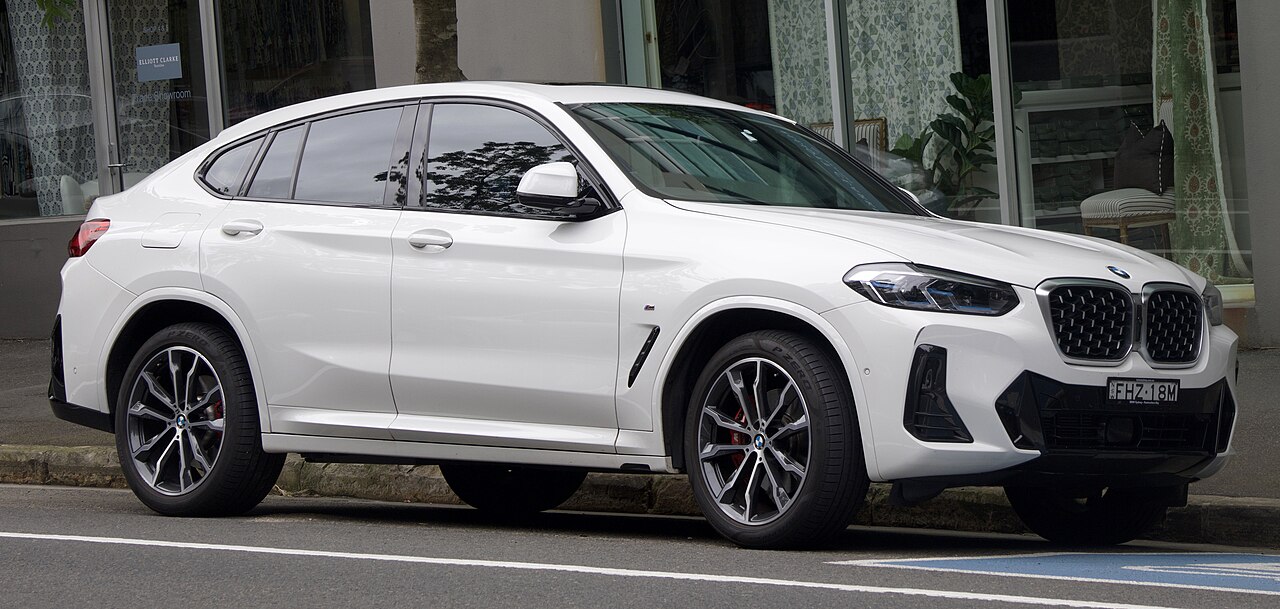
The G02 is the second-generation X4 introduced in 2018 and facelifted in 2021. This profile keeps it separate from the older F26, even where familiar badges appear in advertisements. The white gallery car is a later G02 xDrive30i M Sport photographed in 2024.
A later photograph does not make launch specifications universally applicable. Check the production date and original national specification before comparing power, emissions figures or equipment with another 30i.
Body, platform & design
Front and rear views show the same white xDrive30i, with the derivative badge visible at the back. The sloping upper body is a defining reason to choose an X4 instead of the more upright X3. It is also the feature that makes a passenger and luggage test important.
Try rear entry, seated headroom and the space required to close the tailgate above your normal load. Visual appeal can be worth a practical compromise, but it should be an informed purchase.

Engine & drivetrain
The 2018 Netherlands launch specification lists a 2.0-litre turbo four with 185 kW/252 PS and 350 Nm. The 2021 global facelift release quotes 180 kW/245 PS. Both figures are dated metric references; local-market ratings can differ. The xDrive30i uses an eight-speed automatic and AWD.
Test the response at normal road speeds and check for smooth shifts once warm. Ask about software modifications. The 30i is still a four-cylinder, so buyers seeking six-cylinder character should compare the M40i rather than infer it from the badge.
Trim differences
M Sport is not the same as M40i or X4 M. Bumpers, wheels and interior trim can make a 30i look more aggressive without changing its engine-model identity. Confirm the equipment list before paying for a supposed performance upgrade.
Seats, lighting, assistance and suspension options should be evaluated individually. A more powerful model with an unsuitable wheel specification can be a less pleasant daily purchase than a carefully chosen lower-output car.
Interior & seating
The G02's five-seat layout needs testing with real occupants. Set the driver's seat, then check the space behind it and the centre rear position. If children will travel regularly, install the intended seat and assess access through the door opening.
Check the infotainment, camera views and climate controls while stationary. The engine upgrade over a 20i does not automatically include better seats or every connected function. Verify operation rather than relying on an equipment description copied into the advertisement.
Efficiency & range
The 30i is a performance choice within a petrol SUV range, not an economy promise. Compare consumption only across equivalent test cycles and specifications. Large wheels, heavy traffic and short trips can alter the real-world result.
A useful budget includes insurance, tyres and servicing as well as petrol. If the car's stronger acceleration rarely matters in daily use, a 20i in better condition may make more sense. If it matters often, the additional cost can be a deliberate preference rather than an accounting mistake.
Safety & equipment
The stronger engine increases the importance of sound tyres and brakes, not the certainty of safety. Have an inspector check wear patterns, repair evidence and the suitability of the tyre set for xDrive. Investigate vibration or warning messages before purchase.
Verify which assistance features are installed and whether repaired sensors or glass were calibrated. Check campaigns by VIN. No equipment package replaces judgement about speed, grip and stopping distance.
Strengths
The 30i is a plausible middle ground for someone committed to the X4's body style. It offers an engine step beyond the 20i without requiring the buyer to pursue the M40i's different six-cylinder proposition or the X4 M's performance focus.
Its value is strongest when the specification is coherent: suitable tyres, comfortable seats, useful assistance and documented maintenance. Those details make the car's performance usable in daily life rather than merely attractive on paper.
A balanced X4 choice if the body style is already right for you. Compare output by year and market, and do not let an engine upgrade distract from passenger fit.
Considerations
Avoid treating every 30i as identical across countries and years. The launch-to-facelift output difference alone shows why a number in an online listing needs context. Documents and VIN-specific information should resolve discrepancies before a deposit.
An independent inspection should address leaks, cooling-system condition, diagnostic faults, suspension and any tuning history. These are checks for an individual car, not proof of a model-wide defect. Keep a repair reserve rather than spending the entire budget on the most recent registration.
Recommended use
The strongest buyer wants the X4 shape, accepts its rear packaging and benefits from the 30i's additional performance on normal routes. It can be a poor fit if the styling is incidental and family practicality is the actual priority.
Compare an X3 30i for the body question and an X4 20i for the engine question. Keeping those decisions separate makes it easier to identify what you are paying for and what you could comfortably do without.
Rivals & related
A Mercedes-Benz GLC Coupe in an appropriate petrol specification is a natural comparison. An Audi Q5 Sportback offers another interpretation of the same broad idea. Match age, engine and equipment rather than assuming similarly priced vehicles have equivalent powertrains.
The BMW X3 30i remains the more upright internal alternative. If SUV height is unnecessary, a suitable estate or liftback may meet the carrying requirement without adopting the same roof and seating compromises.
FAQ
Q: Is xDrive30i a three-litre six-cylinder?
A: No. This G02 version uses a 2.0-litre turbo four.
Q: Why do two sources show different power?
A: Year and market matter; launch and facelift metric ratings differ.
Q: Is an M Sport car an X4 M?
A: No. Styling does not change its model identity.
Q: Does 30i have more rear space than 20i?
A: No. The engine choice does not change the G02 body format.
What makes the BMW X4 30i different?
A balanced X4 choice if the body style is already right for you. Compare output by year and market, and do not let an engine upgrade distract from passenger fit.
Who should consider it?
Coupe-style SUV with stronger four-cylinder performance
Sources & updates
Manufacturer references below identify the dated generations and specifications used here. Buying assessments are Cariary editorial analysis, not a claimed first-hand road test or a diagnosis of an individual vehicle. Photographs carry their own credits and licences. Confirm exact ratings, equipment and campaign status for the production date and original market of the car you are considering.
- BMW X4 engine specifications, Netherlands 2018 →
- Second-generation BMW X4, February 2018 →
- BMW X3 and X4 facelift, global June 2021 →
View all official references (2 more)
- Photograph — White BMW X4 xDrive30i M Sport G02 front and side →LuvsMG481; CC BY-SA 4.0
- Photograph — White BMW X4 xDrive30i G02 rear with badge →LuvsMG481; CC BY-SA 4.0
Last editorial review: September 20, 2026. Specifications remain market- and model-year-specific.