Core summary
The JX1 GV80 SUV combines a comfort-oriented cabin with several market-specific powertrain and seating choices. This profile concerns the conventional SUV, not the separately styled GV80 Coupe.
The JX1 GV80 is the conventional SUV in this profile; the GV80 Coupe is a separate body proposition. Its range combines different engines and seating packages, so a single performance or passenger-capacity number would be misleading. The dated reference below is Genesis’ US 2025 update, not a universal specification for every country.
History & generations
The 2025 US update is particularly relevant when comparing cabins: Genesis introduced a 27-inch OLED display combining the instrument and infotainment presentation. An earlier GV80 therefore should not be described using the updated dashboard simply because it belongs to the same generation. Exterior similarity can conceal a substantial difference in the way the driver interacts with the car.
Body, platform & design
The conventional roof and rear body should be considered separately from the Coupe’s more tapered design. For family use, the meaningful comparison is the loading opening and the space available with passengers aboard. Choosing the standard SUV for this reason is not a lesser styling choice; it reflects a different job for the body.
.jpg)
Engine & drivetrain
Genesis’ US 2025 release lists a 2.5-litre turbocharged four-cylinder producing 300 hp and a 3.5-litre twin-turbo V6 producing 375 hp. These figures are tied to that release. The larger engine is not evidence of a different body generation, and specifications from other-market diesel versions do not belong in either of these petrol descriptions.
Trim differences
In the cited US range, 2.5T and 3.5T identify engine choices while names such as Advanced and Prestige identify equipment packages. The release also distinguishes a 3.5T Advanced configuration with a third row. It is consequently inaccurate to describe every GV80 as either five-seat or seven-seat without identifying its package and market.
Interior & seating
The refreshed display is a clear reason to compare an earlier and later cabin in person. Seating is an independent decision: an occasional third row may be useful, but its presence does not establish adult comfort or luggage capacity with all seats occupied. For a five-person household, second-row space can matter more than an extra pair of occasional seats.
Efficiency & range
Estimate the four-cylinder and V6 fuel budgets separately using the exact local specification. The 300-versus-375 hp comparison does not quantify consumption. For a buyer who rarely needs additional acceleration, the larger engine should justify its costs through a specific preference rather than a belief that a premium SUV requires six cylinders.
Safety & equipment
The manufacturer describes driver-assistance equipment, but this article does not assign a crash rating or certify an individual car’s systems. On a vehicle with optional seating, use the correct handbook to establish child-seat positions. A third-row package and a driver-assistance package solve different needs; neither substitutes for the other.
Strengths
The GV80’s appeal is the combination of a distinctive luxury cabin and an SUV body intended for ordinary passenger travel. Its engine and seating choices allow different versions of that idea. A well-matched four-cylinder specification can be more coherent than a V6 bought at the expense of the cabin features the owner values daily.
The conventional GV80 is a luxury-SUV choice first. The important upgrade is the specification that improves the journeys and seating positions you actually use, not simply the larger engine.
Considerations
Avoid importing the GV80 Coupe’s specifications into a conventional-SUV listing. Also separate the facelifted cabin from earlier JX1 interiors when comparing used prices. Those are concrete differences that should be resolved before evaluating whether a particular advertisement is good value; the generation name alone is not enough.
Recommended use
It suits a buyer seeking family or executive transport with a luxury emphasis, especially when the second row is used regularly. If seven passengers are a frequent requirement rather than an occasional one, compare the actual third-row package with vehicles designed around sustained three-row use.
Rivals & related
The BMW X5 and Mercedes-Benz GLE are useful luxury-SUV references, matched for engine and equipment. An Acura MDX becomes more relevant when three-row family use is central. The smaller GV70 is the internal alternative when the GV80’s additional size serves no regular passenger or luggage need.
FAQ
Q: Is the GV80 Coupe covered by the same body description?
A: No. This page concerns the conventional SUV.
Q: Does every GV80 seat seven?
A: No. Seating depends on the version and market.
Q: Does a 2025 cabin description apply to an earlier JX1?
A: Not automatically; the display and interior update are important distinctions.
What makes the Genesis GV80 different?
The conventional GV80 is a luxury-SUV choice first. The important upgrade is the specification that improves the journeys and seating positions you actually use, not simply the larger engine.
Who should consider it?
Refined family and executive travel
Sources & updates
Manufacturer references: Genesis: US 2025 GV80 launch specification. Direct links are listed below. These dated references identify the model years and markets discussed; they do not establish a universal specification.
Comparisons and suitability judgements are Cariary editorial analysis, not a first-hand road test. Photograph credits and captions identify illustrative vehicles; photographs alone do not verify trim or equipment.
- Genesis: US 2025 GV80 launch specification →Dated manufacturer specification; editorial analysis distinguished in text.
- Official model information →
- Manufacturer media archive →
View all official references (2 more)
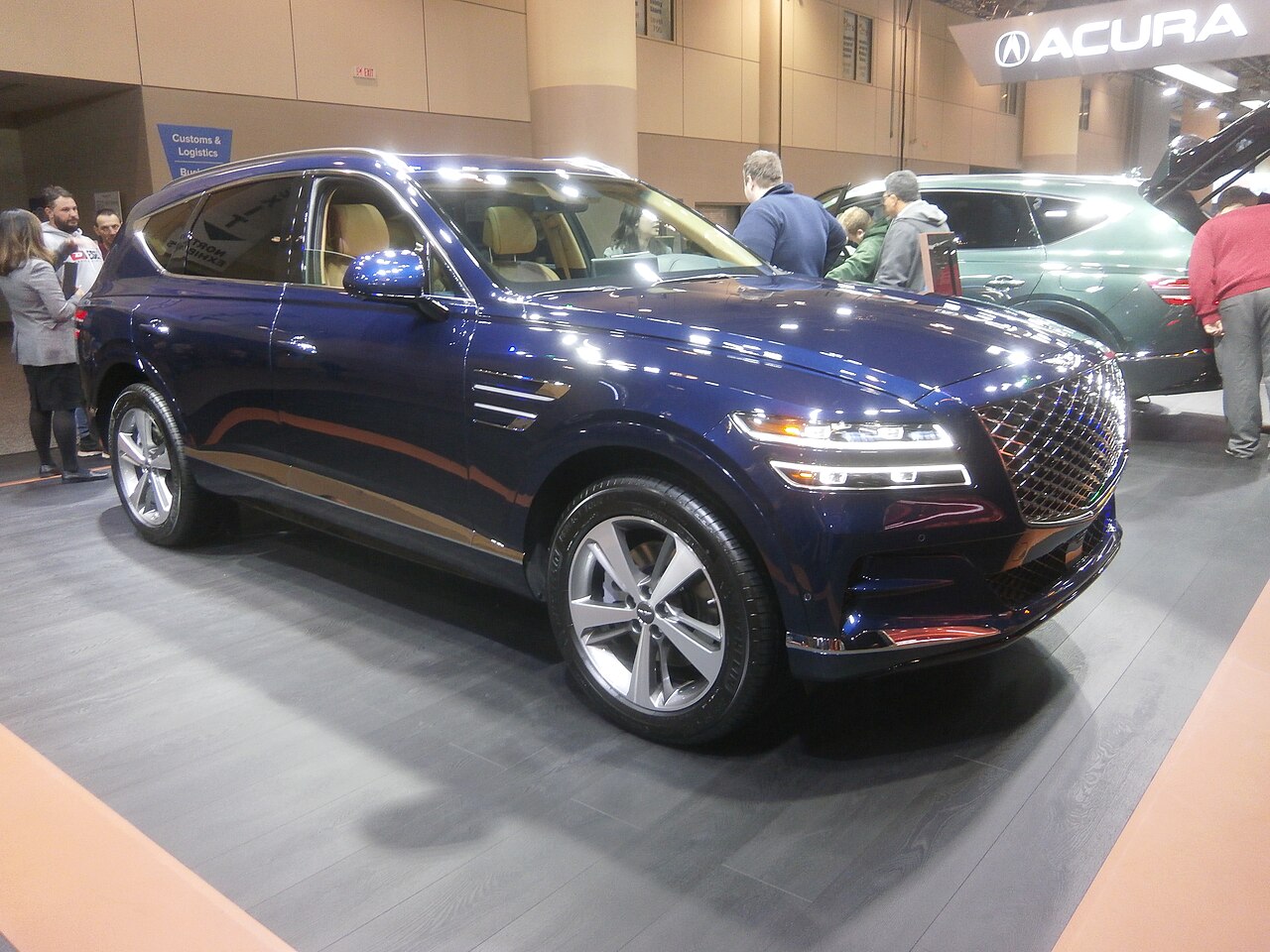
- Photograph — Blue 2021 Genesis GV80, front three-quarter view →CChanSonichu; CC BY-SA 4.0
- Photograph — Blue 2021 Genesis GV80, rear three-quarter view →CChanSonichu; CC BY-SA 4.0
Last editorial review: September 20, 2026 — vehicle-specific editorial revision. Specifications remain market- and model-year-specific.