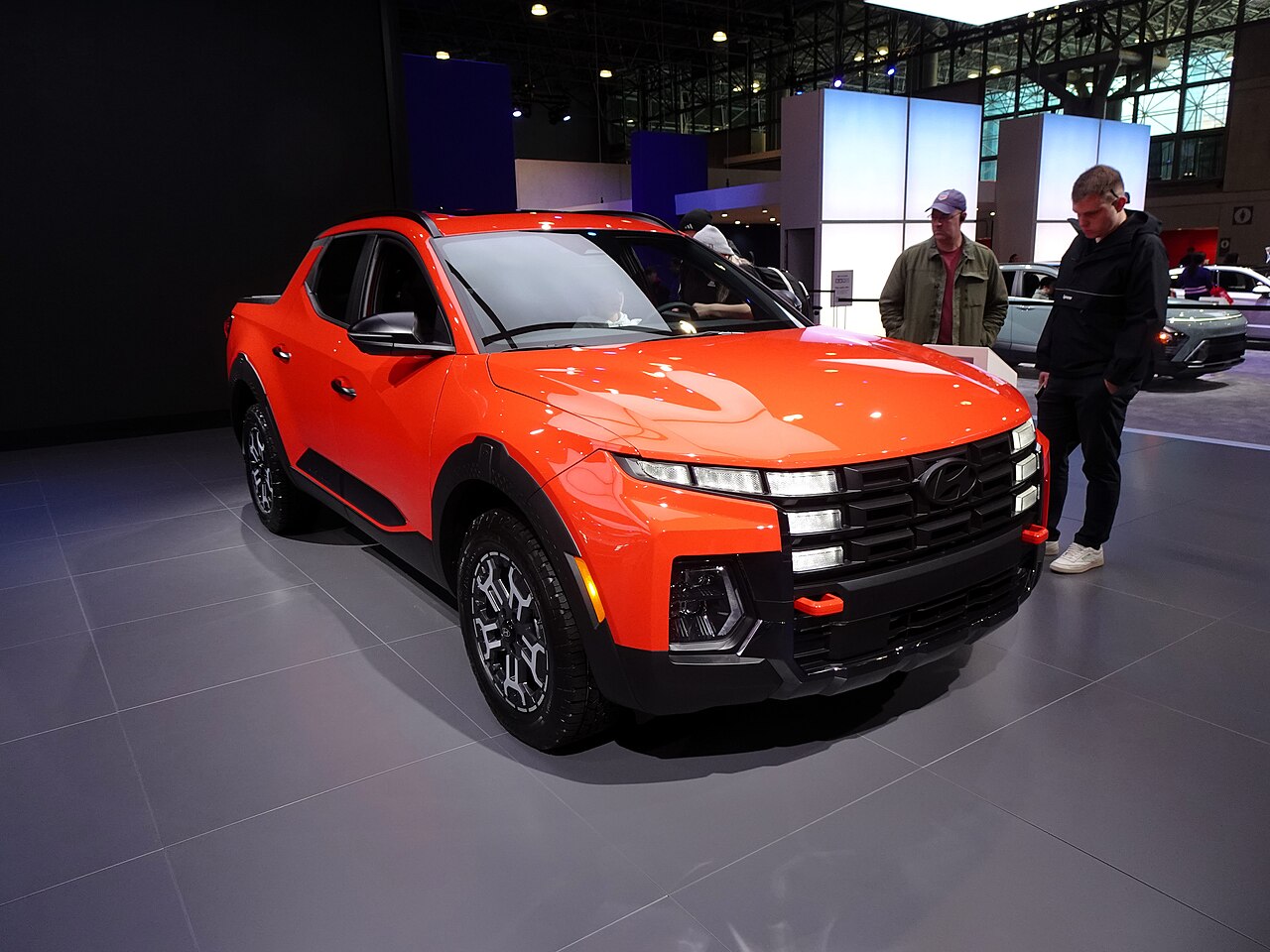
Core summary
The Hyundai Santa Cruz blends a compact crossover cabin with a short open bed. Its appeal is not maximum payload or towing; it is the ability to commute comfortably during the week and carry muddy, tall or awkward gear when a conventional cargo area is inconvenient.
Hyundai Santa Cruz is a compact pickup designed for daily driving, outdoor gear and light-duty hauling. The Hyundai Santa Cruz blends a compact crossover cabin with a short open bed. Its appeal is not maximum payload or towing; it is the ability to commute comfortably during the week and carry muddy, tall or awkward gear when a conventional cargo area is inconvenient.
For the 2026 U.S. model year, Hyundai lists SE, SEL, SEL Activity, XRT and Limited trims. The naturally aspirated 2.5-liter engine is paired with an eight-speed automatic; XRT and Limited use the stronger turbocharged 2.5-liter and an eight-speed dual-clutch transmission. Those details define the current model more accurately than the badge alone, because equipment and specifications can change by market and model year.
The best purchase decision starts with the intended job. Buyers should confirm drivetrain, seating, wheel size, driver-assistance equipment and warranty on the exact vehicle, then use a test drive to judge visibility, ride and control logic.
History & generations
Hyundai Santa Cruz belongs to a nameplate whose current form is described here as first generation, facelifted for 2025. Its production period is 2021-present. The model’s development reflects changing buyer demand for electrification, crossover packaging, technology and stronger everyday usability.
A generational label is important when researching used vehicles. Earlier versions, regional derivatives and concept cars may use different engines, dimensions or cabin systems. Photos and reviews should therefore be matched to model year and market rather than treated as universal evidence.
Body, platform & design
Hyundai Santa Cruz uses a front-engine · transverse arrangement. The exterior balances brand identity with the packaging needed for compact pickup duties. Proportion, glass area and wheel choice shape both its appearance and the ease of placing it in traffic.
The bed is about 52 inches long and includes a lockable underfloor compartment. That measurement or functional detail is more useful than styling language because it affects garages, parking, loading and daily access. Larger wheels can sharpen appearance but usually increase tire cost and can reduce low-speed ride comfort.
_(53624691402).jpg)
Engine & drivetrain
2.5L four-cylinder petrol; available 2.5L turbo defines the current powertrain range, with front-wheel drive or htrac all-wheel drive. The naturally aspirated 2.5-liter engine is paired with an eight-speed automatic; XRT and Limited use the stronger turbocharged 2.5-liter and an eight-speed dual-clutch transmission.
Performance numbers describe capability, not the whole driving experience. Transmission calibration, pedal response, regenerative behavior where applicable, vehicle mass and tire choice determine how naturally the car responds in ordinary traffic. Buyers should test both gentle and full-load acceleration.

Trim differences
SE and SEL establish the value end of the range, SEL Activity adds popular convenience equipment, and XRT and Limited combine the turbo engine with standard HTRAC all-wheel drive. XRT emphasizes the outdoors look and useful hardware; Limited is the richer road-oriented specification.
Trim labels can change between model years and countries. Compare the original window sticker or official build data, paying particular attention to powertrain, active safety, seat configuration, wheel size, towing hardware and charging equipment where relevant. Cosmetic packages should come after those functional choices.

Interior & seating
The cabin follows Hyundai crossover practice with two adult-friendly front seats, a three-place rear bench and familiar digital controls. The rear row is useful for passengers on normal trips, although legroom and seatback angle cannot match a longer crew-cab pickup. Storage beneath the rear seat and the sealed bed compartment help separate valuables from dirty equipment.
Published seating capacity is 5, but comfort depends on occupant size and trip length. Bring child seats, luggage or work equipment to the showroom when those items are central to the purchase. Interface speed, physical controls and phone integration also deserve testing before ownership.
_rear_view.jpg)
Efficiency & range
Hyundai lists 2026 front-drive non-turbo versions at 22 mpg city, 30 highway and 25 combined. Turbo all-wheel-drive versions trade some economy for stronger acceleration and towing performance. Actual consumption will vary with speed, temperature, tires, payload and use of the bed or roof accessories.
Official ratings are controlled comparisons rather than promises. Route, climate, speed, tire pressure, payload and driving style can produce a wide range of real results. A complete operating-cost comparison should also include energy price, insurance, tires, maintenance and depreciation.
Safety & equipment
Current equipment includes Hyundai SmartSense driver assistance, with Forward Collision-Avoidance Assist, Lane Keeping Assist and Driver Attention Warning among the core technologies. Higher trims add broader parking and blind-zone support. Fitment should always be checked against the exact model year and window sticker.
No assistance package makes the vehicle autonomous. Verify warning lamps, cameras and sensors during inspection, check the owner’s manual for operating limits, and use the VIN at the NHTSA recall database. Correct tires, clear glass and an alert driver remain the foundation.
Strengths
Hyundai Santa Cruz is strongest when used for daily driving, outdoor gear and light-duty hauling. Its identity is coherent: The Hyundai Santa Cruz blends a compact crossover cabin with a short open bed. Its appeal is not maximum payload or towing; it is the ability to commute comfortably during the week and carry muddy, tall or awkward gear when a conventional cargo area is inconvenient.
The practical advantages are the features that reduce friction every day—appropriate passenger space, predictable controls, a suitable drivetrain and enough flexibility for the owner’s recurring load. A well-chosen lower trim can deliver these strengths as effectively as an expensive flagship.
Hyundai Santa Cruz is a convincing choice for daily driving, outdoor gear and light-duty hauling when its packaging, running costs and exact equipment match the buyer's routine.
Considerations
The compromises follow from the same priorities. Size, mass, roofline, wheel choice, fuel or charging needs and performance hardware can create costs or restrictions that a brochure does not show. Buyers should measure their parking space, price replacement tires and obtain an insurance quote.
Specifications also vary by year and market. Confirm the exact vehicle rather than assuming that a review of another version applies. A pre-purchase inspection and complete service history remain important even when a vehicle is covered by warranty.
Recommended use
The clearest owner is someone who genuinely needs daily driving, outdoor gear and light-duty hauling. That person will benefit from the model’s packaging and will be more likely to accept its size, cost and technical complexity.
A meaningful test route should include rough pavement, highway merging, parking and the roads used most often. Families should load their largest regular items; towing buyers should calculate payload and tongue weight; EV buyers should map home and route charging.

Rivals & related
The Ford Maverick is the closest direct alternative and offers hybrid efficiency. The Honda Ridgeline is larger, smoother and more capable, but also more expensive and less compact. Conventional midsize pickups such as the Toyota Tacoma and Ford Ranger provide greater truck capability at the cost of size, ride and urban ease.
Compare like with like: same model year, drivetrain, seating arrangement and essential equipment. Transaction price, warranty, dealer access, tire cost and energy use may matter more over several years than a small difference in acceleration or screen size.
FAQ
What is the Hyundai Santa Cruz? It is a compact pickup with 5 seats and front-wheel drive or htrac all-wheel drive.
What should be checked before buying? Confirm model year, powertrain, drivetrain, wheel size, assistance features, recall completion and service history on the exact VIN.
Who is it best for? It suits drivers seeking daily driving, outdoor gear and light-duty hauling, provided its size and running costs fit their routine.
What makes the Hyundai Santa Cruz different?
Hyundai Santa Cruz is a convincing choice for daily driving, outdoor gear and light-duty hauling when its packaging, running costs and exact equipment match the buyer's routine.
Who should consider it?
Daily driving, outdoor gear and light-duty hauling
Sources & updates
This profile prioritizes manufacturer material for current specifications and uses the NHTSA database for VIN-specific recall checks. Figures can change with model year, market and equipment, so the linked official pages should be revisited before a purchase decision.
Image captions identify the vehicle and view without claiming details that cannot be seen. Licensing and creator credit are retained for Wikimedia Commons material; manufacturer images are labeled as such.
- 2026 Hyundai Santa Cruz official overview →Official manufacturer reference for current model information.
- 2026 Hyundai Santa Cruz specifications →Official manufacturer reference for current model information.
- NHTSA recall lookup →Official VIN-based U.S. recall reference.
Last editorial review: September 15, 2026. Specifications remain market- and model-year-specific.