Core summary
The C257 CLS 300 d pairs a low roofline with diesel economy. Rear-seat headroom and access are the practical trade-offs to assess before choosing it over an E-Class.
The CLS asks a different question from a conventional executive sedan: how much practicality is the buyer willing to trade for a lower, more tapered silhouette? The 300 d puts a diesel drivetrain into that design-led package. This profile uses the C257 generation and identifies the updated 2021 European diesel separately from earlier cars.
History & generations
Mercedes announced the updated CLS for European delivery from August 2021. The changes included the front-end treatment and steering wheel, while the CLS 300 d 4MATIC mild-hybrid derivative had been introduced in March. Consequently, registration year alone is a poor way to identify the precise combination of exterior and drivetrain.
Body, platform & design
The coupe-style roof is the defining visual decision, even though there are four passenger doors. Its practical test is rear access: try entering without adjusting the front seat for the demonstration. Buyers carrying tall adults frequently should make this a deciding test rather than assuming an executive-car footprint guarantees executive-sedan headroom.

Engine & drivetrain
The cited updated CLS 300 d 4MATIC uses the OM 654 M four-cylinder diesel, rated at 195 kW/265 PS and 550 Nm. A 48-volt integrated starter-generator can provide a temporary 15 kW boost. These are facelift-era European specifications, not a claim that every earlier CLS 300 d has this engine or electrical system.
Trim differences
AMG Line styling does not make the diesel a Mercedes-AMG CLS 53. The latter is a separate performance derivative. For a 300 d, establish the drivetrain revision first, then decide whether the appearance package and wheel specification are worth the asking-price difference. A photographed grille is not sufficient evidence of what is under the bonnet.
Interior & seating
The buying exercise should include both rear seats and the boot opening. A low roof can be an acceptable compromise for two adults travelling with occasional passengers, but a poor choice for regular adult rear-seat use. Test the controls on the actual car as well: a later steering-wheel design is a meaningful difference in daily interaction.
Efficiency & range
Diesel economy is most relevant if longer journeys are frequent. Compare the 300 d with the petrol alternative using the same annual mileage and local fuel prices. The mild-hybrid system is not a substitute for a plug-in drivetrain and does not make this a car to buy for externally charged electric commuting.
Safety & equipment
The 2021 manufacturer description distinguishes the optional Driving Assistance Package from the basic car. Do not assume its functions are present because the steering wheel looks modern. Ask for a demonstration of the systems fitted, keeping the driver fully responsible; this profile makes no claim of autonomous operation.
Strengths
The distinctive shape gives this car a reason to exist alongside more conventional sedans. For a buyer satisfied with the space, that can be a valid preference rather than an irrational one. The diesel version then aligns that preference with substantial road mileage instead of making performance the only justification.
The CLS 300 d is a design-led long-distance choice. Buy it because the shape matters to you, after checking that the rear-seat compromises do not matter more.
Considerations
The key used-car trap is mixing specifications: an earlier 300 d, an updated 300 d 4MATIC and an AMG-styled example can be described loosely in advertisements. Resolve the exact drivetrain before estimating servicing and comparing prices. Have diesel emissions-system concerns assessed professionally, rather than interpreting the absence of a warning message as proof of health.
Recommended use
Consider it for a couple or owner-driver who regularly travels between cities and values the exterior design. It is less convincing when easy rear access is a daily requirement. Taking the usual rear passenger to the viewing is likely to reveal more than extending a solo test drive.
Rivals & related
The Audi A7 offers another design-led executive-car approach; assess the loading arrangement as well as the cabin. A same-era E-Class is the internal benchmark for deciding whether the CLS shape is worth its compromises. Compare a BMW 6 Series Gran Turismo only if its very different body concept and local availability suit the search.
FAQ
Q: Is the CLS 300 d a six-cylinder diesel?
A: Not the cited updated 2021 version; it uses a four-cylinder diesel.
Q: Does AMG Line mean CLS 53 performance?
A: No. Styling and engine derivative are different matters.
Q: Is the mild hybrid externally rechargeable?
A: No. It is not a plug-in hybrid.
What makes the Mercedes-Benz CLS 300 d different?
The CLS 300 d is a design-led long-distance choice. Buy it because the shape matters to you, after checking that the rear-seat compromises do not matter more.
Who should consider it?
Long-distance driving with coupe-style design
Sources & updates
Specification reference: Mercedes-Benz: 2021 CLS update and diesel specifications. The linked manufacturer material identifies the edition used here; specifications are not universal across years or countries.
The buying comparisons and suitability judgements are Cariary editorial analysis, not claims from a road test. Existing photograph credits identify the photographed generation and any unverified trim; an illustrative photograph is not proof of equipment.
- Official model information →
- Manufacturer media archive →
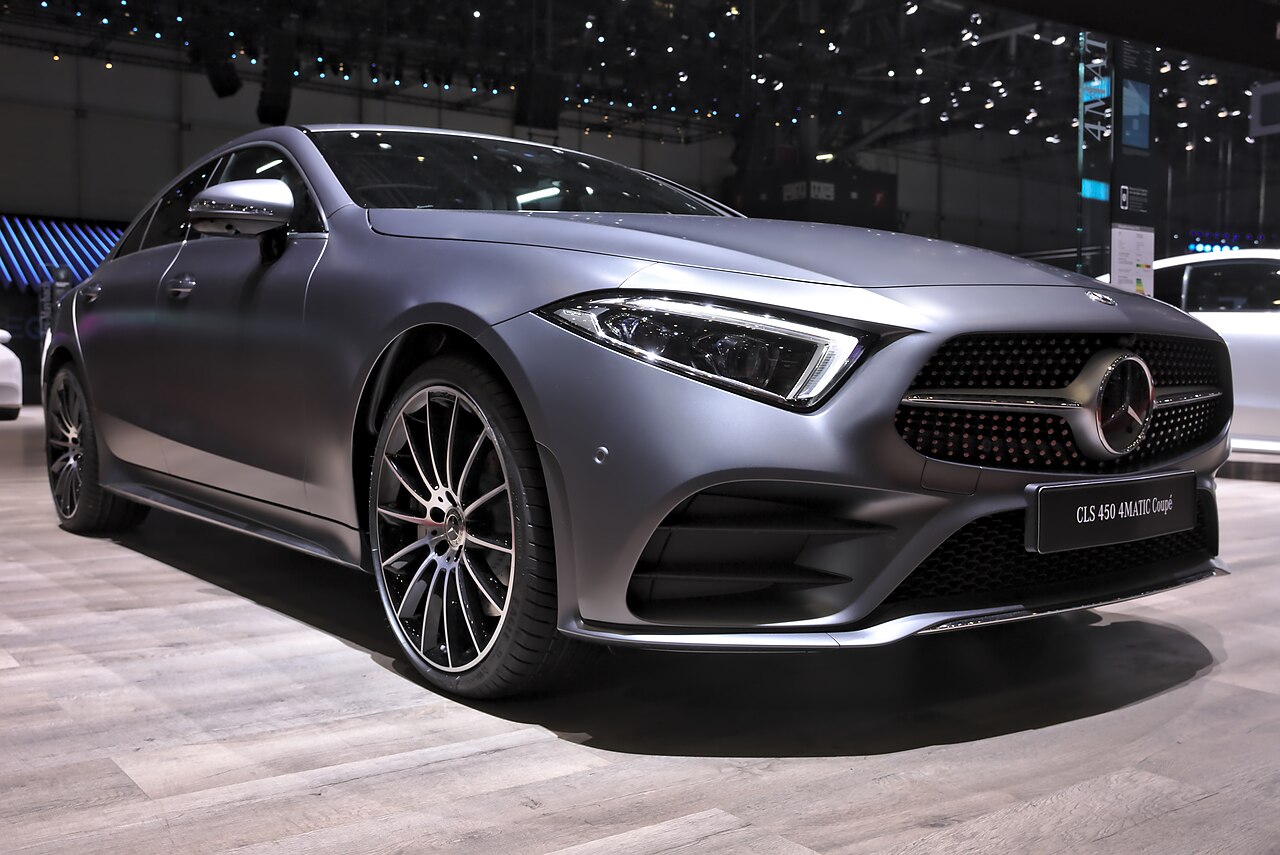
- Photograph — Mercedes-Benz CLS 450 4MATIC C257, front three-quarter view →Alexander Migl; CC BY-SA 4.0
View all official references (2 more)
- Photograph — Mercedes-Benz CLS 450 4MATIC C257, rear three-quarter view →Alexander Migl; CC BY-SA 4.0
- Mercedes-Benz: 2021 CLS update and diesel specifications →Dated specification reference; suitability comments are editorial analysis.
Last editorial review: September 20, 2026 — vehicle-specific editorial revision. Specifications remain market- and model-year-specific.