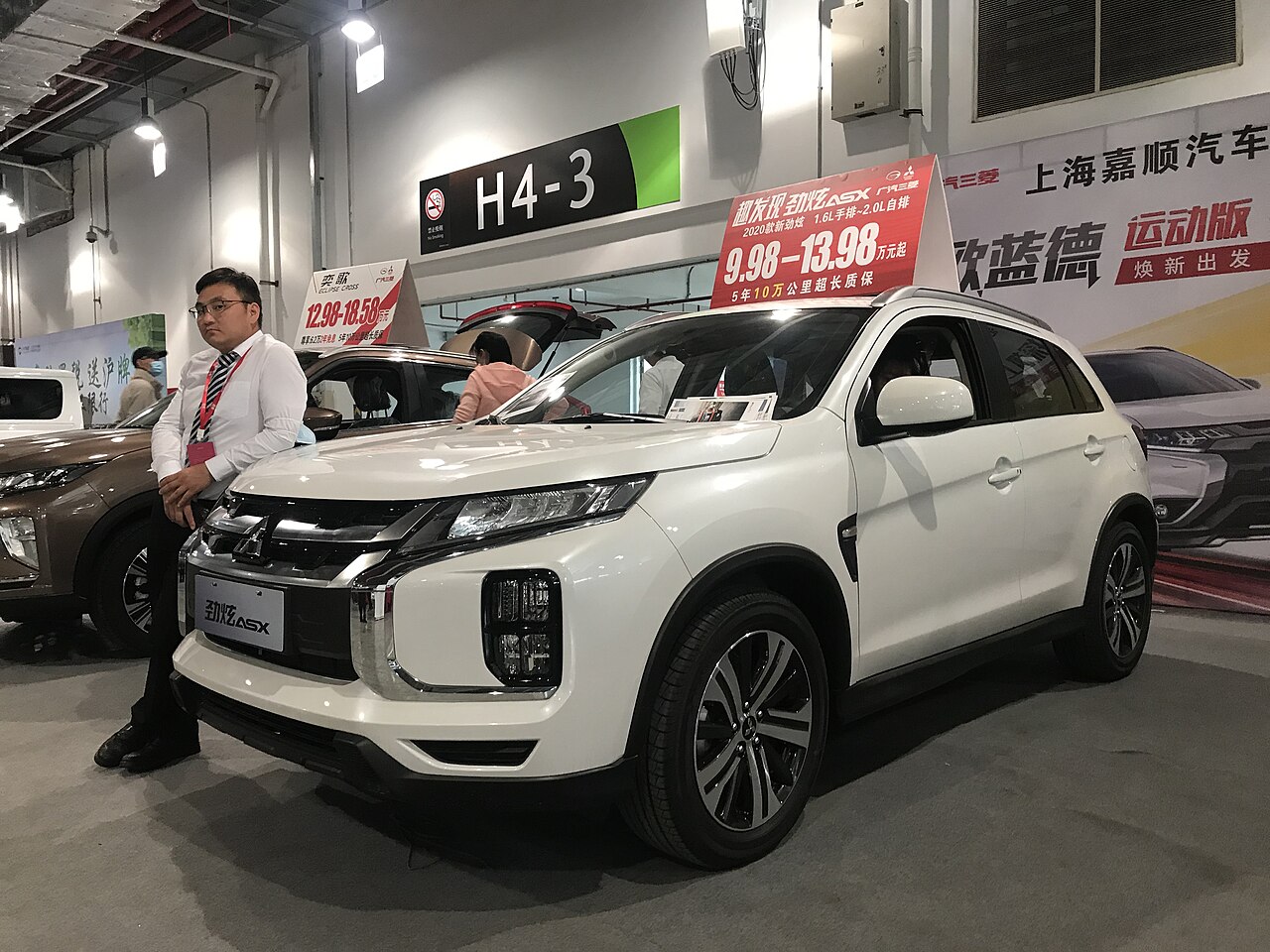
Core summary
The Mitsubishi Outlander Sport is a compact five-seat crossover built around simple controls, naturally aspirated four-cylinder engines and all-wheel traction in recent U.S. form. Its mature design is less sophisticated than the newest rivals, but that same straightforward character can suit buyers who value predictable operation over novelty.
The Mitsubishi Outlander Sport is the smallest crossover in Mitsubishi's U.S. range. It is distinct from the larger Outlander despite the shared name. The current U.S. formula combines a five-seat body, a continuously variable transmission, naturally aspirated four-cylinder power and Mitsubishi All-Wheel Control. The result is a vehicle aimed at routine commuting, poor-weather confidence and light family use rather than speed or serious off-road travel.
Two engines define recent U.S. specifications. The 2.0-liter four-cylinder produces 148 horsepower and 145 pound-feet of torque, while the 2.4-liter produces 168 horsepower and 167 pound-feet. Both prioritize predictable response and conventional maintenance over high-output turbocharged performance. The platform's long production life brings a familiar, proven layout, although it also leaves the cabin, refinement and driver-assistance suite behind several newer competitors.
The sensible buying case depends on price, warranty coverage and priorities. Drivers seeking maximum rear-seat space, quick acceleration or the newest interface will find stronger alternatives. Drivers who prefer straightforward controls and standard all-wheel traction may value the Outlander Sport's uncomplicated approach.
History & generations
Mitsubishi introduced the first-generation ASX in 2010, using the RVR name in Japan and Outlander Sport in the United States. The three names refer to regional versions of the same compact crossover family, while the larger Outlander remains a separate vehicle. This distinction matters because specifications, images and parts for the two Outlander nameplates are not interchangeable.
The original body has received several substantial facelifts rather than a full U.S.-market generational replacement. The latest major update adopted Mitsubishi's Dynamic Shield front treatment, slimmer upper lighting elements and a more upright nose. Mechanical changes have been evolutionary, with the U.S. range continuing around naturally aspirated 2.0- and 2.4-liter engines and a continuously variable transmission. The long lifecycle explains both the car's mechanical familiarity and its older packaging compared with recently redesigned rivals.
Body, platform & design
The Outlander Sport uses compact crossover proportions: a short overall footprint, five doors, an upright seating position and a rear hatch. The front-engine transverse layout places the powertrain across the nose, leaving the center of the body for passengers and luggage. Its 2019-era third facelift brought the exterior closer to newer Mitsubishi products through the layered Dynamic Shield grille, high-mounted daytime-running lamps and lower main lighting units.
The body is easy to place in traffic and parking spaces, which supports the model's urban role. A relatively upright roof also improves access compared with a low hatchback. Styling packages such as Trail Edition and Ralliart change wheels, graphics and exterior details, but they do not transform the fundamental road-focused architecture. Wheel choice deserves practical attention because larger wheels can raise tire replacement cost and reduce impact comfort without adding passenger or cargo space.

Engine & drivetrain
Recent U.S. versions use a 2.0-liter naturally aspirated four-cylinder rated at 148 horsepower and 145 pound-feet, or a 2.4-liter four-cylinder rated at 168 horsepower and 167 pound-feet. A continuously variable transmission connects both engines to the driveline. The 2.0-liter is adequate for routine city travel, while the 2.4-liter offers a more useful reserve for highway merging, gradients and a cabin full of passengers.
The CVT varies its ratio continuously instead of stepping through a fixed set of gears. Under gentle use this helps keep the engine near an economical operating speed. Under heavy acceleration it can hold higher engine speed for longer, creating a different sound and response from a conventional automatic. Mitsubishi's All-Wheel Control distributes drive for added traction in rain, snow and loose conditions. It is an all-weather road system rather than a substitute for low-range gearing, specialized tires or dedicated off-road hardware.

Trim differences
Mitsubishi has used S, ES, LE, SE and SEL designations in recent U.S. lineups, supplemented by appearance-focused Trail Edition and Ralliart versions. Trim availability changes by model year, so a used vehicle should be identified from its VIN and original window sticker instead of appearance alone. The most important mechanical distinction is the engine: the 2.4-liter provides stronger output than the 2.0-liter.
After powertrain, compare active-safety equipment, heated-seat availability, infotainment, wheel size and exterior lighting. Appearance editions can be attractive, but they should not take priority over tire condition, maintenance history or the equipment used every day. Upper trims may provide a better cabin specification; an entry trim can be the better value when its safety and convenience features already match the buyer's needs.
.jpg)
Interior & seating
The cabin seats five and favors a conventional control layout. The elevated seating position eases entry and provides a clearer view over surrounding traffic than a low passenger car. Physical switchgear reduces the learning curve, while recent U.S. equipment has included an 8-inch smartphone-link display with Apple CarPlay and Android Auto compatibility on relevant versions. Screen, audio, upholstery and seat-heating specifications depend on trim and model year.
Rear-seat width is appropriate for two adults or children on regular trips; three-across use is possible but shoulder room reflects the narrow body. The hatch and folding rear seat handle groceries, luggage and compact outdoor equipment. Families carrying large strollers, several suitcases or bulky sports gear should test their real load before buying, because a larger compact crossover can provide noticeably more usable volume and rear-passenger space.

Efficiency & range
Official U.S. fuel-economy values differ by engine and model year. For 2026 EPA-listed configurations, the 2.0-liter four-wheel-drive version is rated at 23 mpg city, 29 mpg highway and 26 mpg combined. The 2.4-liter four-wheel-drive version is rated at 23 mpg city, 28 mpg highway and 25 mpg combined. These controlled-cycle ratings are most useful for comparison with vehicles tested to the same standard.
Real consumption changes with temperature, speed, traffic, tire pressure, payload and driving style. All-wheel drive adds traction hardware, while larger wheels can increase rolling and replacement costs. Buyers comparing used examples should also consider fuel grade, annual distance, insurance and maintenance rather than treating a one-mpg difference as the entire ownership equation.
Safety & equipment
Recent Mitsubishi specifications identify Forward Collision Mitigation, Lane Departure Warning and Automatic High Beam among the model's driver-assistance technologies, with exact fitment dependent on model year and trim. Conventional stability control, airbags, anti-lock braking and a reversing camera form part of the wider safety package. These systems assist an attentive driver and do not create hands-free or autonomous operation.
Safety equipment changes during a long production run, so the exact vehicle matters more than the nameplate. Buyers should confirm the original equipment, test warning lamps and camera operation, and enter the VIN in the NHTSA recall database. Tire age, matching tread, brake condition and evidence of previous collision repair remain essential parts of a pre-purchase inspection, especially on an all-wheel-drive vehicle.
Strengths
The Outlander Sport's strengths are clarity and accessibility. Its compact dimensions are useful in cities, the cabin controls are familiar, and recent U.S. versions provide all-wheel traction without requiring a high-performance engine. The naturally aspirated powertrains avoid the response characteristics of small turbocharged engines, while the mature platform has a long service history.
A strong dealer discount or remaining warranty can make the model particularly relevant. It offers the seating height and hatchback utility buyers expect from a small crossover without pretending to be a premium or high-performance product. For owners who simply need predictable daily transport through varied weather, that honesty can be more valuable than an elaborate screen or an aggressive specification sheet.
The Outlander Sport is most coherent as an uncomplicated small crossover: modest in performance, familiar in operation and useful when value and all-weather traction matter more than the newest cabin technology.
Considerations
Performance is modest, particularly with the 2.0-liter engine and several passengers aboard. The CVT's sustained engine speed under acceleration may also feel unfamiliar to drivers accustomed to stepped gear changes. Cabin presentation, noise isolation and digital features reflect an older design, and newer rivals often provide more rear-seat space or broader driver-assistance capability.
The shared Outlander name creates a research trap: parts, specifications and reviews for the larger Outlander do not automatically apply to the Outlander Sport. Prospective owners should also price tires for the fitted wheel size, verify the service schedule and inspect CVT operation. A complete history and independent inspection are more useful than generalized reliability claims about the entire model line.
Recommended use
The clearest fit is a driver who wants a small, easy-to-operate crossover for commuting and regular poor-weather use. The upright body, five-seat layout and hatch support errands, short family journeys and weekend luggage. The 2.4-liter is the more appropriate choice for frequent highway driving or heavier loads; the 2.0-liter can satisfy lighter urban use when purchase price is the priority.
It is less suitable for buyers who need a spacious three-across rear seat, frequent heavy cargo, quick acceleration or specialized trail ability. The best test drive should include a highway merge, a rough local road and the buyer's usual parking space. Loading the largest recurring item into the cargo area is also more revealing than relying on a published volume alone.

Rivals & related
Direct alternatives include the Subaru Crosstrek, Honda HR-V, Toyota Corolla Cross, Mazda CX-30 and Hyundai Kona. The Crosstrek is the natural all-wheel-drive comparison. The CX-30 emphasizes cabin finish and road manners, while the HR-V and Corolla Cross focus on everyday packaging. The Kona offers a newer interface and a broader powertrain personality in selected trims.
Within Mitsubishi's range, the Eclipse Cross is a more style-led compact crossover and the Outlander is a larger vehicle with different seating and powertrain choices. A fair comparison should align model year, drivetrain and standard equipment, then include transaction price, warranty, fuel use and tire cost. The Outlander Sport's case is strongest when its simpler specification and pricing create a genuine ownership advantage.
FAQ
Is the Outlander Sport the same vehicle as the Outlander? No. The Outlander Sport is a smaller five-seat crossover; the Outlander is a separate, larger model. What engines are offered? Recent U.S. versions use a 148-hp 2.0-liter four-cylinder or a 168-hp 2.4-liter four-cylinder, depending on trim and model year.
Does it use a normal automatic transmission? It uses a continuously variable transmission. Is it intended for serious off-road driving? All-Wheel Control improves traction, but the vehicle lacks the specialized gearing and hardware of a dedicated off-road SUV. What should a used-car buyer check first? Confirm the VIN, recall completion, maintenance record, CVT behavior and matching tire condition before purchase.
What makes the Mitsubishi Outlander Sport different?
The Outlander Sport is most coherent as an uncomplicated small crossover: modest in performance, familiar in operation and useful when value and all-weather traction matter more than the newest cabin technology.
Who should consider it?
Urban commuting, winter traction and simple small-SUV duty
Sources & updates
Cariary reviewed Mitsubishi Motors North America's official product and press material, Mitsubishi's current model-year parts listings, U.S. EPA fuel-economy records and the NHTSA recall tool. Power, economy and equipment figures in this profile are tied to cited U.S.-market configurations. Other markets use the ASX or RVR names and can have different engines, drivetrains and trim structures.
Sources are linked to the claims they support and should be revisited when Mitsubishi changes the U.S. range or replaces the current generation. Pricing is intentionally excluded from the core specification because advertised amounts and incentives change more quickly than the vehicle's engineering. Vehicle-specific equipment and recall completion should always be confirmed from the VIN and original documentation.
- Mitsubishi Motors North America: Outlander Sport Trail Edition and specifications →Official U.S. manufacturer newsroom reference for engines, output, drivetrain and equipment.
- Mitsubishi Motors: 2026 Outlander Sport model and engine listings →Official model-year reference for current U.S. engine and trim coverage.
- U.S. Department of Energy: 2026 Outlander Sport fuel economy →Official U.S. fuel-economy record for the 2.0-liter four-wheel-drive configuration.
View all official references (1 more)
- NHTSA recall lookup →Official VIN-based U.S. safety recall reference.
Last editorial review: September 15, 2026. Specifications remain market- and model-year-specific.