Core summary
Polestar 3 combines five-seat SUV packaging with distinct single- and dual-motor choices. Its earlier 400-volt cars must be distinguished from the newer 800-volt update.
Polestar 3 is a five-seat battery-electric SUV. This page uses the 400-volt specification shown on Polestar's US technical page at review time, rather than silently assigning newer global hardware to earlier vehicles.
The most important buying distinction is not a paint or wheel package. It is the combination of model year, electrical architecture and motor arrangement. Establish those before comparing two listings that both say Polestar 3.
History & generations
Customer production began in 2024. Polestar subsequently announced an 800-volt update for model year 2026, with rollout differing between markets. The manufacturer's US support page specifically discusses the staged introduction.
A software or computing upgrade must not be assumed to convert the battery architecture of an older vehicle. Ask for the actual build specification rather than treating every online statement about the latest Polestar 3 as retroactive.
Body, platform & design
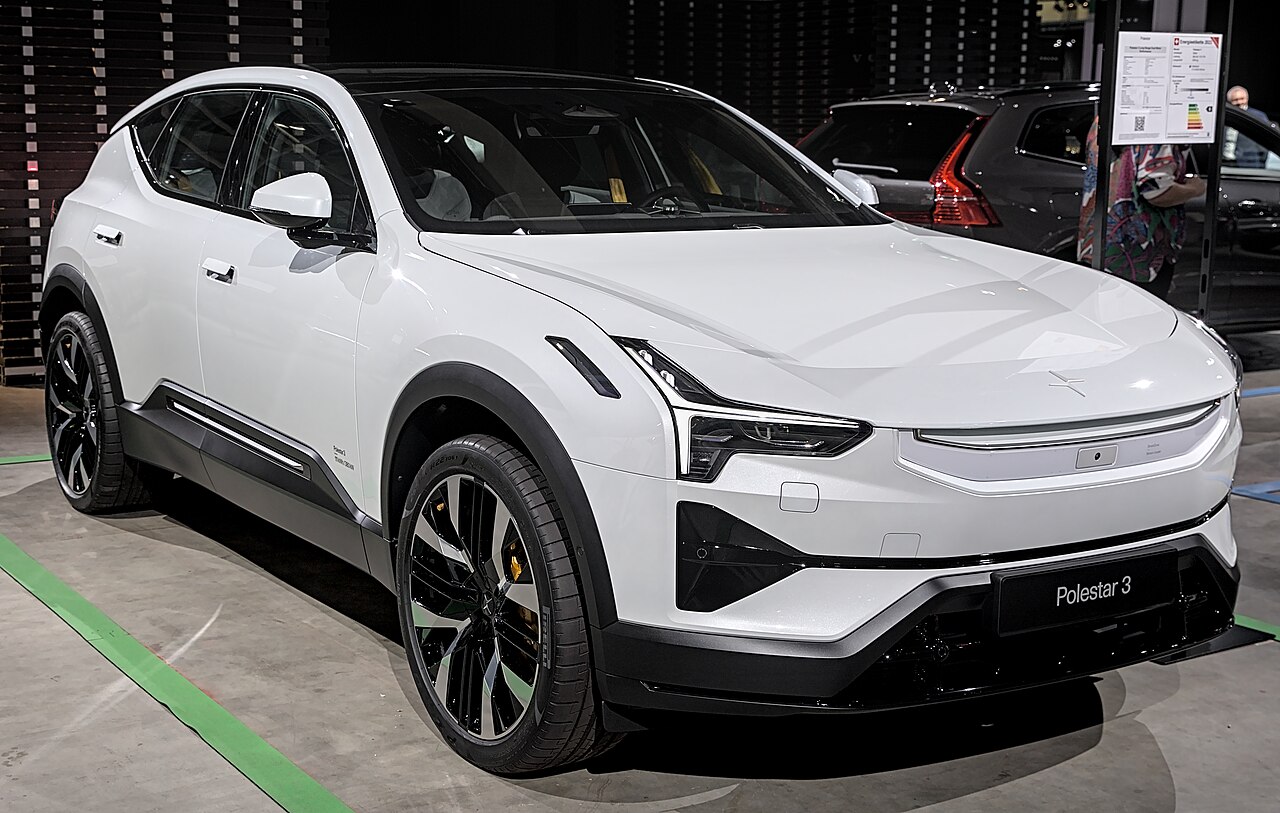
The first-generation body has a relatively low SUV silhouette and a five-seat cabin. The gallery shows an early white display car and a separate cabin view. It does not claim to document the later electrical update visually.
When viewing the car, assess the rear opening and loading floor with normal luggage. A wide body and large wheels can look convincing in a showroom while still requiring careful checks against your parking space.

Engine & drivetrain
The cited US 400-volt table lists 220 kW for Single motor, 360 kW for Dual motor and 380 kW with the Performance pack. Single motor drives the rear wheels; the dual-motor versions provide AWD.
Using kW avoids confusion with horsepower conventions on regional pages. The 111-kWh battery belongs to this referenced configuration. Do not substitute the battery or charging figures of the newer 800-volt range.
Trim differences
Single motor deserves consideration when range and a simpler configuration matter more than maximum acceleration. Dual motor adds another set of performance and traction priorities. Performance pack should be assessed as a deliberate choice rather than an automatic requirement.
Polestar's US table also distinguishes coil springs on Single motor from air suspension on Dual motor. Test the actual arrangement and wheel size; a drive in one version does not fully answer how another will feel.
Interior & seating
The cabin photograph shows the separate driver display and portrait central screen. Try the controls you use repeatedly, including demisting, navigation and seat settings, before deciding that the layout suits you.
Five seats do not guarantee that three specific child seats or three adults will fit comfortably across the rear. Bring the relevant equipment and passengers. Check the luggage area and charging-cable storage at the same time.
Efficiency & range
For the referenced 400-volt car, Polestar lists peak DC charging of 250 kW and an indicative 10–80% time of 30 minutes. These are conditional figures, not a constant rate throughout every stop.
Plan around temperature, battery preconditioning and the chargers on your route. A newer 350-kW headline from the 800-volt update is not evidence that an earlier US car will achieve it. Home charging remains the most useful practical starting point.
Safety & equipment
Demonstrate the fitted assistance and camera functions and confirm the software status. Driver monitoring and assisted steering should be understood as support systems, not permission to stop supervising the road.
For a used vehicle, check campaigns, warranty and battery documentation. Test AC and DC charging where practical and confirm that the supplied keys and account transfer are complete before taking ownership.
Strengths
Polestar 3 provides a distinct design-led alternative to familiar premium SUVs. The five-seat focus can appeal to buyers who do not need to carry a third row and would rather assess the cabin on that basis.
Its motor choices also allow a meaningful decision between a range-oriented rear-drive configuration and stronger dual-motor performance. That is more useful than choosing purely by the largest output number.
Verify the electrical architecture and model year before comparing range or charging claims. For an existing 400-volt US car, choose between single and dual motor on actual needs rather than a newer global headline.
Considerations
Fast-moving technical updates can make stock comparisons confusing. A discounted earlier car may still be a sensible purchase, but its value should be judged using its own battery, charging capability and warranty.
Check local servicing access and tyre prices. Also spend time with the screen-based interface; liking the exterior is not enough if routine cabin controls feel awkward in everyday use.
Recommended use
Shortlist Polestar 3 when five-seat electric travel fits the household and reliable charging is available. Compare Single motor first if long-distance range matters more than rapid acceleration.
Choose Dual motor or Performance pack because their specific benefits match your use. If the newest charging architecture is essential, verify the vehicle itself instead of relying on a generic model advertisement.
Rivals & related
BMW iX and Mercedes-Benz EQE SUV are relevant premium-electric comparisons, with very different cabins and option structures. Compare the actual model year and charging specification.
Polestar 4 offers a coupe-like alternative with a camera-based rear view, while Volvo EX90 addresses a different seating brief. Neither is simply another trim of Polestar 3.
FAQ
Is every Polestar 3 an 800-volt car? No. Earlier 400-volt vehicles remain a separate specification.
Does Single motor have AWD? No; it is rear-wheel drive.
Are there seven seats? No; Polestar 3 has five.
Does an OTA update automatically change battery voltage? No; software updates should not be confused with a different electrical architecture.
What makes the Polestar 3 different?
Verify the electrical architecture and model year before comparing range or charging claims. For an existing 400-volt US car, choose between single and dual motor on actual needs rather than a newer global headline.
Who should consider it?
Premium electric family travel with home charging
Sources & updates
Manufacturer references identify the dated specifications used here. Cariary buying assessments are editorial analysis, not a claimed first-hand road test or a diagnosis of an individual vehicle. Photographs carry individual source and licence credits. Confirm the exact build, market and equipment before purchase; photographs of another trim do not establish your car’s specification.
- Polestar 3 US specifications →
- Polestar 3 US support and update information →
- Polestar 2025 results and 2026 technical update →
View all official references (2 more)
- Photograph — White Polestar 3 at Auto Zurich 2023 →Alexander-93; CC BY-SA 4.0
- Photograph — Polestar 3 left-hand-drive cabin and central touchscreen →Alexander-93; CC BY-SA 4.0
Last editorial review: September 20, 2026. Specifications remain market- and model-year-specific.