Core summary
Polestar 4’s defining choice is not just its motor: the coupe-style body replaces a conventional rear window with a camera-based rearward view.
Polestar 4 is a five-seat electric crossover with a coupe-like roof and no conventional rear window. This first-generation profile uses the referenced US motor and battery specification, while the gallery includes international examples.
Cariary's starting point is the rear-view experience. A buyer who is comfortable with the camera display can then weigh range, acceleration and equipment. Someone who dislikes it should not assume that more power will resolve that basic ergonomic concern.
History & generations
The model was unveiled in 2023, with production beginning that year and broader market introduction following in 2024. It is a distinct model from Polestar 3, not simply a smaller trim with identical hardware.
Production location and market specification can differ. When comparing a local car with an international review, verify the model year, motor arrangement and charging details rather than borrowing every figure attached to the Polestar name.
Body, platform & design
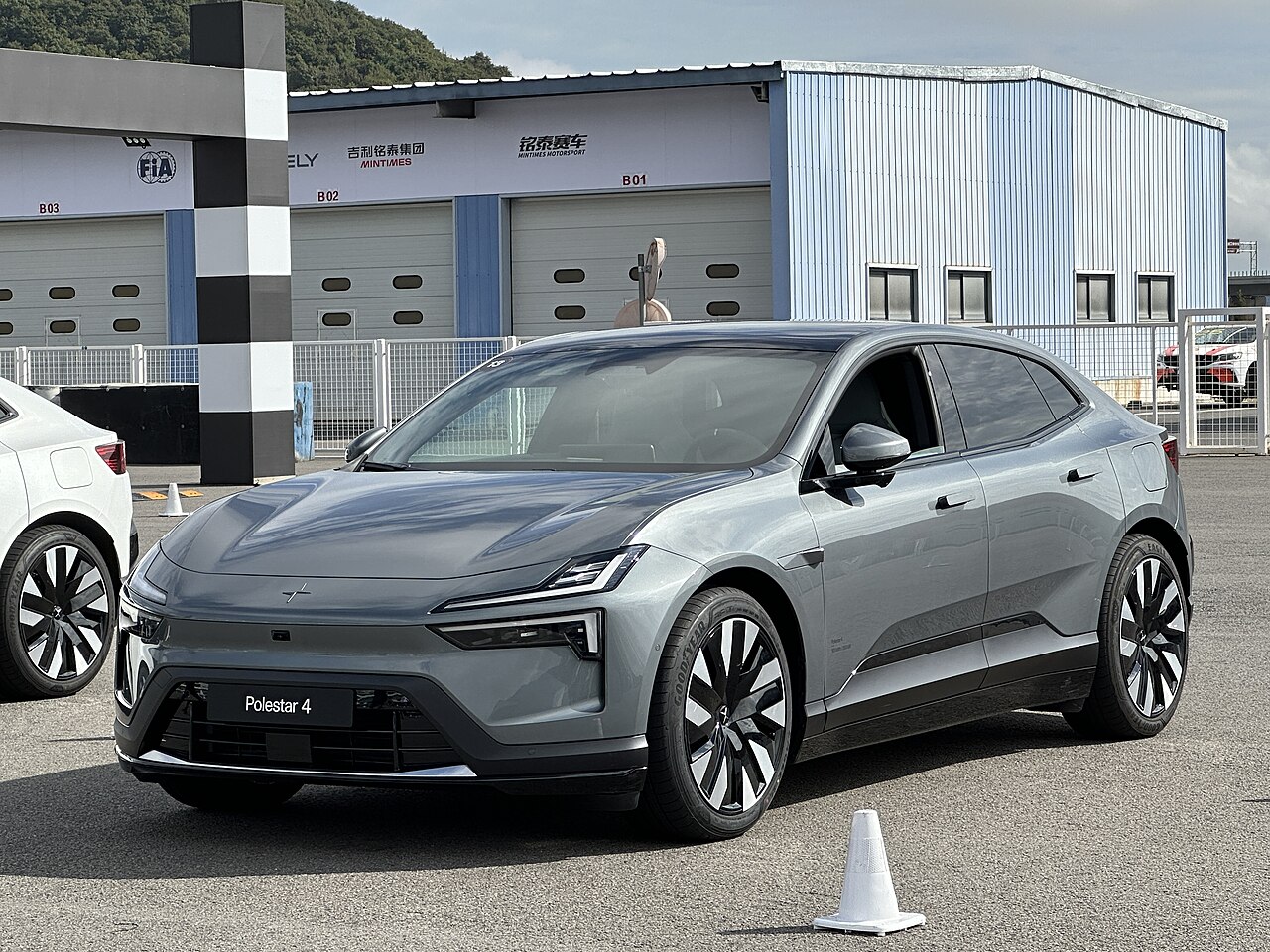
The missing rear glass is a deliberate part of the body concept. The rear photograph makes that difference visible, while the front views show the low nose and sloping roof. A hatch opening still provides luggage access.
During a viewing, test rear-seat headroom and loading space directly. Coupe styling does not tell you how your particular passengers or bags will fit, and a showroom photograph cannot reproduce the view from the driving position.

Engine & drivetrain
The referenced specification gives Rear motor 200 kW and Dual motor 400 kW. Rear motor is RWD; Dual motor adds AWD. Polestar lists 0–60 mph in 6.9 and 3.7 seconds respectively for the US configurations.
The Performance pack is not a third, higher-output engine in that table. Treat chassis equipment and motor output as separate decisions rather than duplicating appearance or handling packages as new powertrains.

Trim differences
A range-focused buyer should investigate Rear motor first. Dual motor is relevant when its acceleration or driven front axle is specifically wanted, but the extra output does not enlarge the cabin.
The current US equipment table differentiates Performance-pack chassis hardware. Confirm the actual pack and model year, then test it. Optional audio, seating and display features may have more daily value to a particular owner than maximum acceleration.
Interior & seating
The rear-view display can show the camera feed, while its mirror mode is useful for looking at rear passengers rather than through a nonexistent rear window. Demonstrate this distinction before setting off.
Try the central screen and routine climate functions with the seat adjusted normally. Ask rear passengers to test their own seating position and controls. Digital novelty is only useful if everyone who regularly uses the car is comfortable with it.
Efficiency & range
The cited US technical page describes a 400-volt, 100-kWh battery. For trip planning, compare the exact version's rated range and charging specification rather than importing Polestar 3's newer 800-volt claims.
Use a realistic motorway route and a reserve margin when planning stops. Temperature, speed and charger availability matter. A home charging routine can be more important to day-to-day satisfaction than a small difference between published range figures.
Safety & equipment
Inspect the rear camera image in rain, darkness and bright light where a demonstration permits. Learn the cleaning and visibility guidance in the owner's manual and understand the role of the exterior mirrors.
Confirm fitted driver-assistance features and software updates. These do not make the vehicle autonomous. On a used example, test charging, key functions and account transfer as part of the handover.
Strengths
Polestar 4 offers a distinctive body and cabin proposition rather than another conventional SUV silhouette. For buyers who enjoy its approach, the digital rear view can become part of the attraction instead of a compromise.
The two motor choices also allow a clear trade-off. A buyer can select the design without automatically paying for the strongest acceleration, keeping the decision closer to everyday needs.
Try the digital mirror in daylight and darkness before deciding. If it suits you, the rear-motor model deserves consideration before automatically selecting the faster dual-motor version.
Considerations
The camera-based view is an individual preference that cannot be settled by a photograph or another driver's verdict. Allow enough time to adapt during a test, but do not dismiss persistent discomfort.
Check the parking footprint and wheel-related running costs. Also compare the exact option package; a review vehicle's premium cabin equipment may not be included in a lower-priced stock car.
Recommended use
Consider Polestar 4 when electric travel fits your household and the coupe-like form is a positive preference. Use the camera demonstration as an early decision point before spending time on trim colours.
Rear motor can be the sensible starting point for ordinary commuting and touring. Dual motor is a deliberate performance choice, not a prerequisite for enjoying the basic design.
Rivals & related
Tesla Model Y and Porsche Macan Electric provide contrasting electric-crossover approaches. Compare their interfaces and service access as well as performance and price.
Polestar 3 is the internal alternative for a different SUV shape. Volvo EC40 is another coupe-roof idea, but size, packaging and technical generation differ enough to require a separate assessment.
FAQ
Does Polestar 4 have a rear window? No; rearward vision uses a camera display.
Does Performance pack mean more than 400 kW? Not in the cited US table.
Is Rear motor AWD? No.
Does it use the same newer 800-volt system as updated Polestar 3? The configuration covered here is 400 volt.
What makes the Polestar 4 different?
Try the digital mirror in daylight and darkness before deciding. If it suits you, the rear-motor model deserves consideration before automatically selecting the faster dual-motor version.
Who should consider it?
Electric family travel for buyers comfortable with a digital rear view
Sources & updates
Manufacturer references identify the dated specifications used here. Cariary buying assessments are editorial analysis, not a claimed first-hand road test or a diagnosis of an individual vehicle. Photographs carry individual source and licence credits. Confirm the exact build, market and equipment before purchase; photographs of another trim do not establish your car’s specification.
- Polestar 4 US technical specifications →
- Polestar 4 manufacturer model background →
- Polestar 4 performance overview →
View all official references (3 more)
- Photograph — Grey Polestar 4 front and side →JustAnotherCarDesigner; CC0
- Photograph — Grey Polestar 4 rear without a conventional rear window →JustAnotherCarDesigner; CC0
- Photograph — Gold Polestar 4 at Auto Zurich 2024 →Alexander-93; CC BY-SA 4.0
Last editorial review: September 20, 2026. Specifications remain market- and model-year-specific.