Quick Take
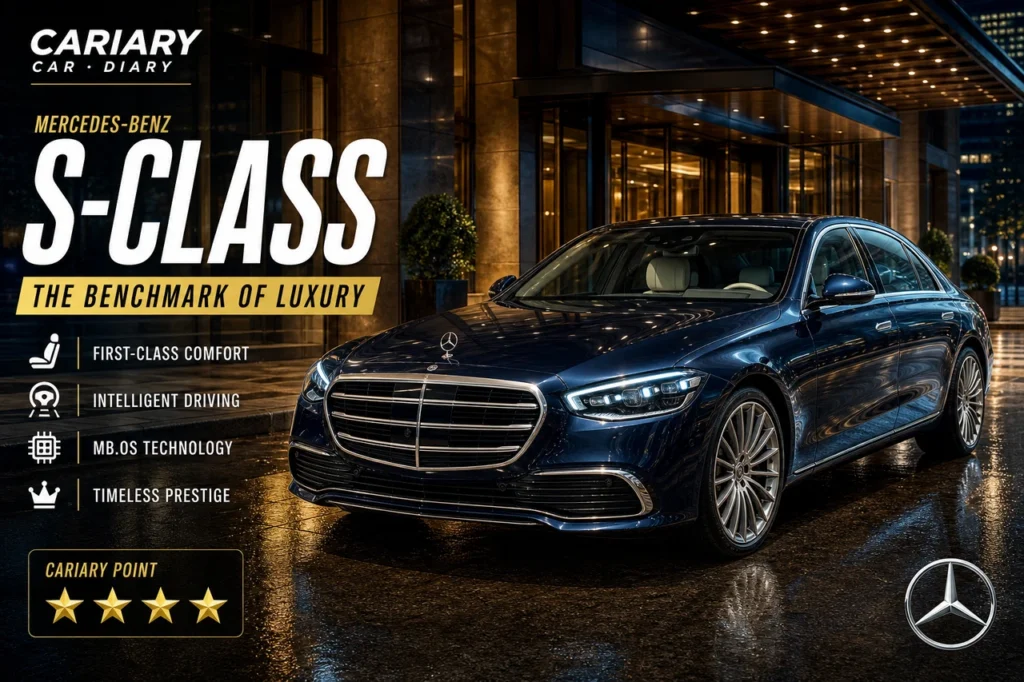
The Mercedes-Benz S-Class is not just a large luxury sedan.
It is the car many people picture first when they hear the words “executive car,” “flagship sedan,” or “chauffeur-driven luxury.” BMW has the 7 Series. Audi has the A8. Lexus has the LS. Genesis has the G90. But the S-Class still feels like the reference point.
Cariary personally has a soft spot for Mercedes-Benz. Among the German three, Mercedes is the brand that has left the strongest emotional impression. Part of that comes from owning a W213 E200 for about a year. On paper, that car was not powerful. It had around 184 hp and roughly 300 Nm of torque, depending on market specification. But even that relatively modest E-Class made every driving mode feel distinct, from Comfort to Sport and Sport Plus.
That was the moment Mercedes made sense emotionally.
The E-Class showed how Mercedes could make even an ordinary sedan feel special. The S-Class takes that same idea and turns it into the brand’s highest expression.
What Is It?
The Mercedes-Benz S-Class is Mercedes’ flagship luxury sedan.
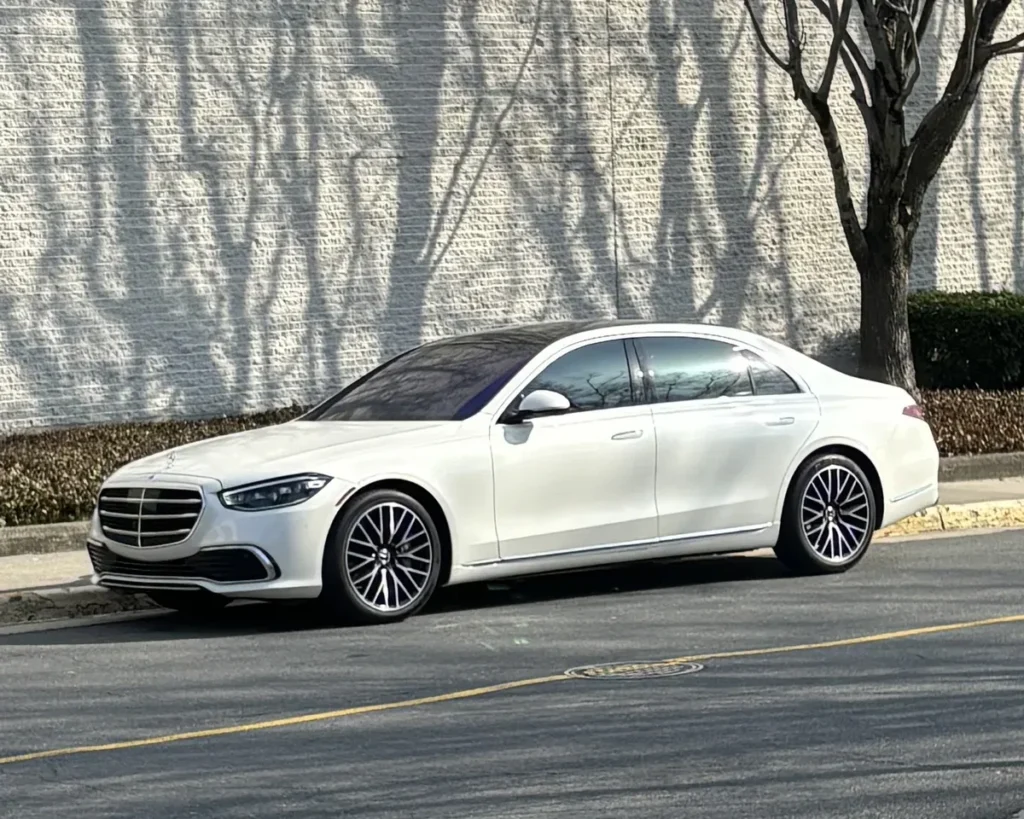
Image: OWS Photography, CC BY 4.0, via Wikimedia Commons
It sits above the E-Class and represents the most traditional version of Mercedes luxury: quietness, comfort, technology, rear-seat presence, and understated authority.
In the United States, the 2026 S-Class lineup includes models such as the S 500 4MATIC, S 580e 4MATIC plug-in hybrid, and S 580 4MATIC. In other markets, especially Europe and parts of Asia, diesel versions such as S 400 d or S 450 d may be available depending on local regulation and market structure.
That matters for global readers.
The S-Class is not sold the same way everywhere. A Korean or European buyer may think about diesel long-wheelbase executive sedans. A U.S. buyer is more likely to see gasoline mild-hybrid or plug-in hybrid models. And above the regular S-Class, Maybach versions move the car into a more ceremonial chauffeur-driven world.
Why This Car Exists
The S-Class exists because Mercedes-Benz has always needed one car to say: this is what the brand can do at its best.
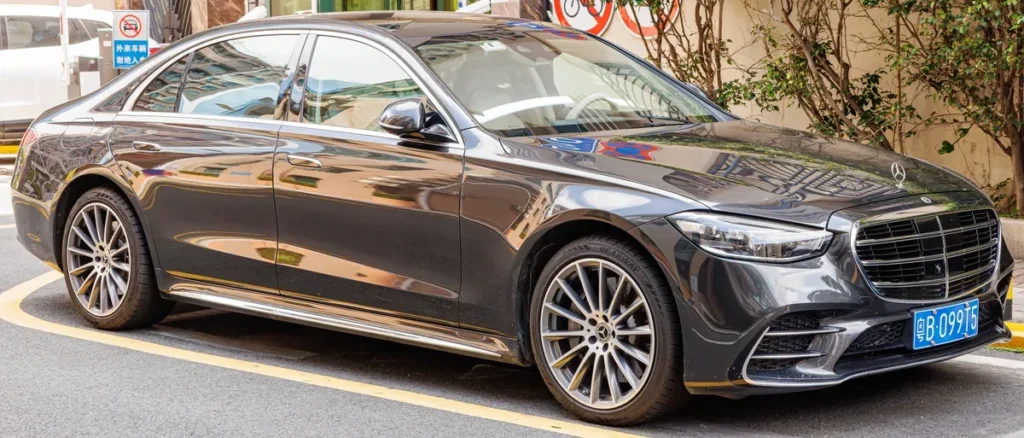
Image: Dinkun Chen, CC BY-SA 4.0, via Wikimedia Commons
The C-Class and E-Class matter because they sell in larger numbers. SUVs matter because the market has moved toward high seating positions and family practicality. But the S-Class remains the technological and emotional flagship.
It is the car that carries Mercedes’ luxury image into the future.
That is why the S-Class has historically introduced or popularized major comfort, safety, and convenience technologies before they spread downward. Buyers may not know every system name, but they understand the result: the S-Class is supposed to feel calmer, quieter, and more complete than ordinary cars.
It is not only transportation. It is Mercedes-Benz making a statement about what a luxury car should feel like.
Key Specs and Real-World Meaning
For 2026 in the U.S., Mercedes-Benz lists the S 500 4MATIC with 442 hp and 413 lb-ft of torque, the S 580e 4MATIC plug-in hybrid with 503 hp combined and 553 lb-ft combined, and the S 580 4MATIC with 496 hp and 516 lb-ft of torque.
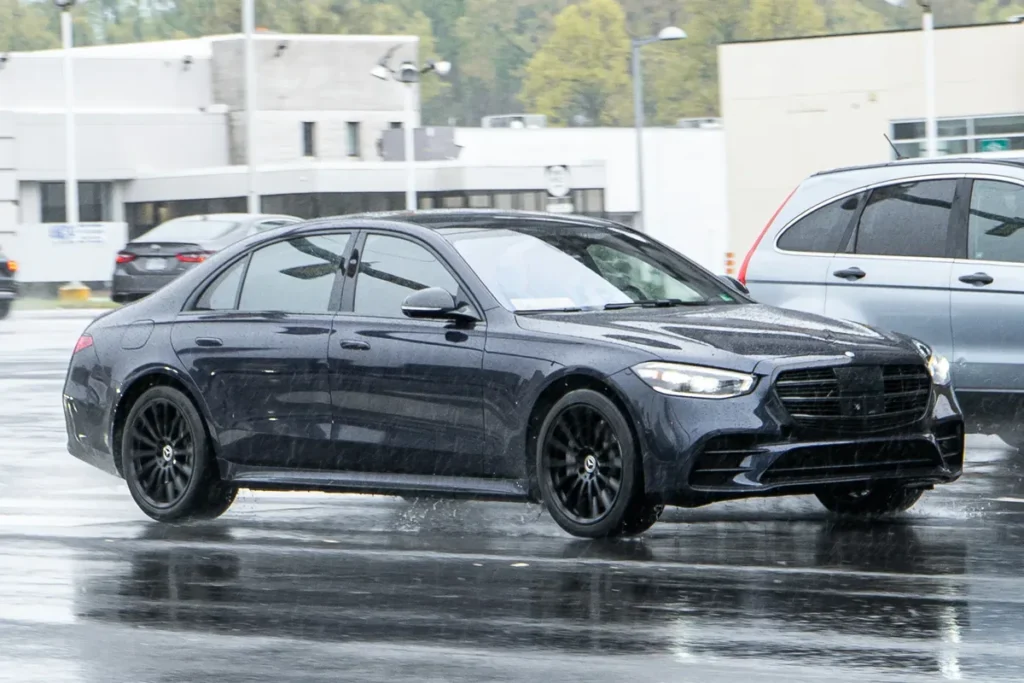
Image: OWS Photography, CC BY 4.0, via Wikimedia Commons
Those numbers are strong, but the S-Class is not mainly about acceleration.
An S 580 can move quickly, but the deeper point is effortlessness. The car should not feel like it is trying hard. Power should arrive quietly. Passing should feel easy. The cabin should remain calm. The driver should not need to prove anything.
That is the S-Class way.
It is not a sports sedan. It is a car designed to make speed feel less stressful.
Diesel, Gasoline, and What Buyers Should Actually Choose
In some markets, diesel S-Class models such as S 400 d or S 450 d remain attractive because they offer strong torque and long-distance efficiency. For highway-heavy driving, diesel can still make practical sense.
But Cariary would personally lean gasoline.
Diesel engines are efficient, but over time, vibration and sound can become harder to ignore, especially in a car whose entire purpose is quiet luxury. In a smaller or more utility-focused vehicle, that tradeoff may be acceptable. In an S-Class, the buyer is paying for smoothness.
If the budget allows, gasoline or plug-in hybrid versions fit the S-Class character better.
The diesel S-Class may be logical. The gasoline S-Class feels more emotionally correct.
Design and Identity
The S-Class design is not trying to shock anyone.
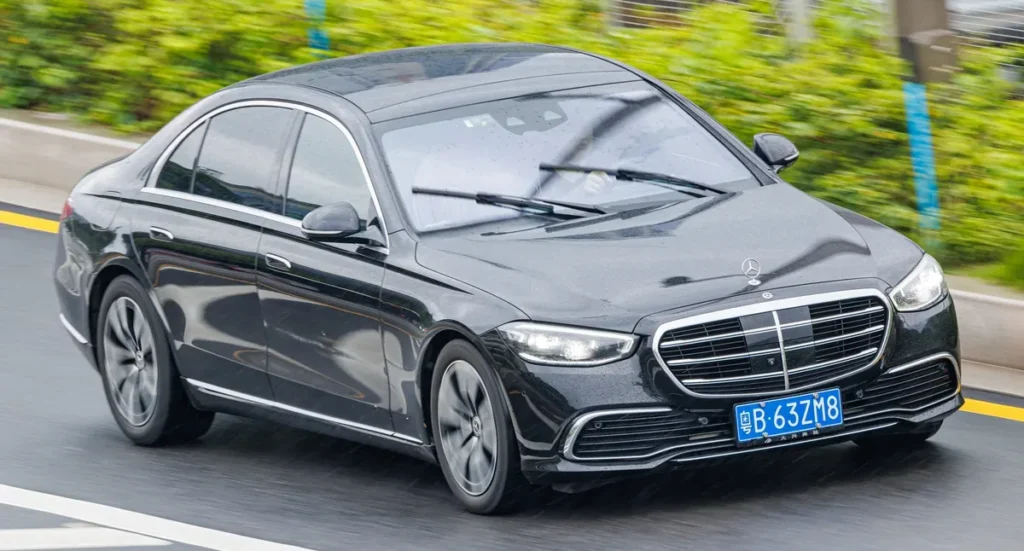
Image: Dinkun Chen, CC BY-SA 4.0, via Wikimedia Commons
That is important.
A flagship luxury sedan should not look like it is chasing trends too aggressively. The S-Class uses long, clean surfaces, a formal roofline, and enough chrome and lighting detail to feel expensive without becoming visually loud.
The design works because it understands the buyer.
An S-Class owner does not need the car to scream for attention. The badge, length, stance, and calmness already say enough. In black, it can look official and serious. In lighter colors, it becomes more elegant and less intimidating.
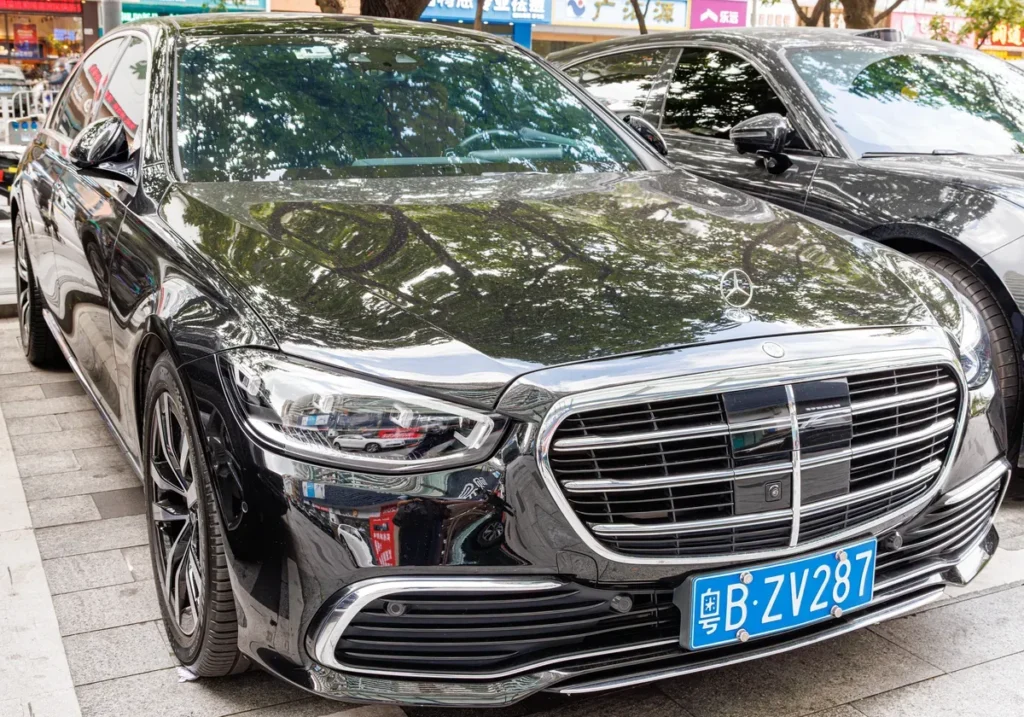
Image: Dinkun Chen, CC BY-SA 4.0, via Wikimedia Commons
This is also where Mercedes still has an advantage over BMW and Audi. BMW often feels more driver-focused. Audi often feels more technical. Mercedes still knows how to make a sedan feel emotionally luxurious before you even start driving.
Interior and Emotional Luxury
The S-Class cabin is where Mercedes-Benz usually separates itself from the German rivals.
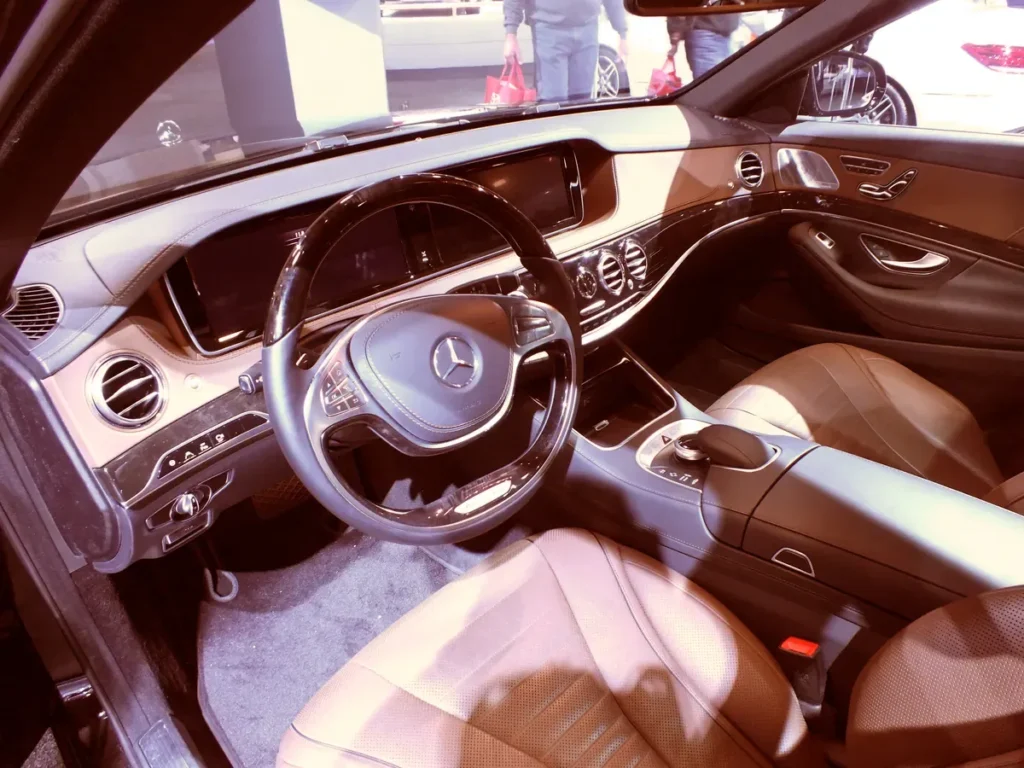
Image: A. Bailey, CC BY-SA 3.0, via Wikimedia Commons
Image note: this is a previous-generation S-Class interior reference, used to illustrate Mercedes’ long-running cabin philosophy. Current W223 interiors use a more screen-heavy, modern layout.
Cariary’s personal W213 E200 ownership experience matters here. That car was not an S-Class, but even the E-Class interior felt special. The ambient lighting, dashboard design, material atmosphere, and nighttime cabin experience were far more emotionally satisfying than the spec sheet suggested.
BMW and Audi make excellent interiors. But Mercedes has a particular ability to make the cabin feel beautiful, especially at night.
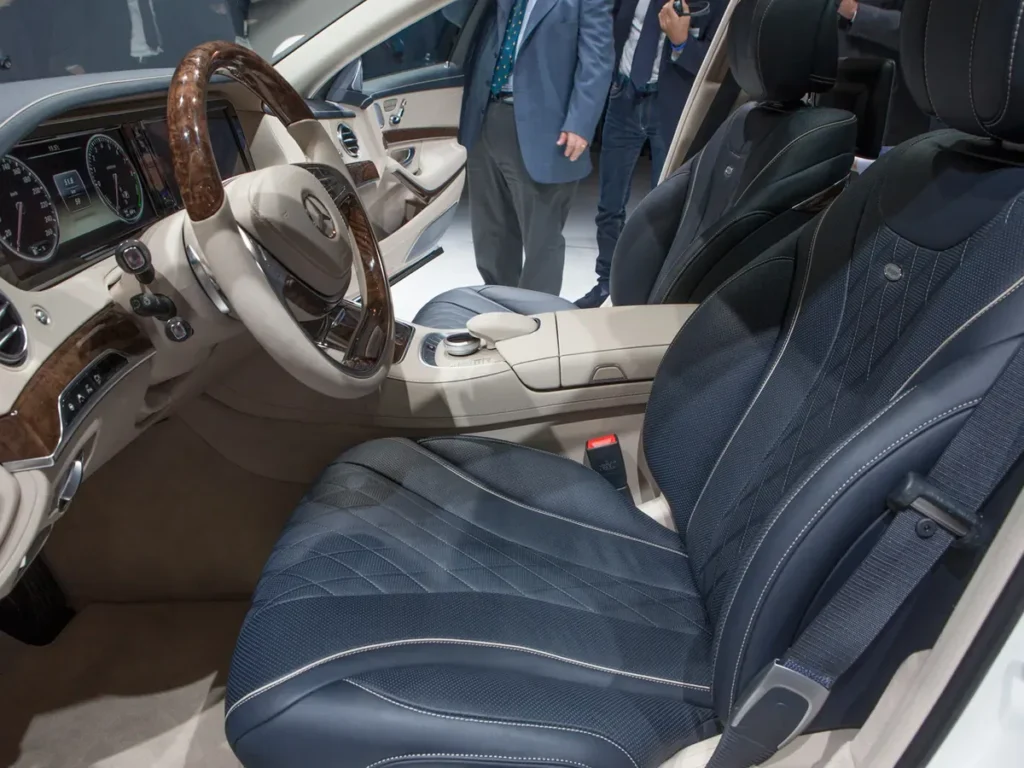
Image: Navigator84, CC BY 3.0, via Wikimedia Commons
That is why the S-Class has such strong emotional pull. It is not only comfortable. It makes the person inside feel like they are in something important.
Owner-Driven and Chauffeur-Driven Appeal
The S-Class is unusual because it works from both seats.
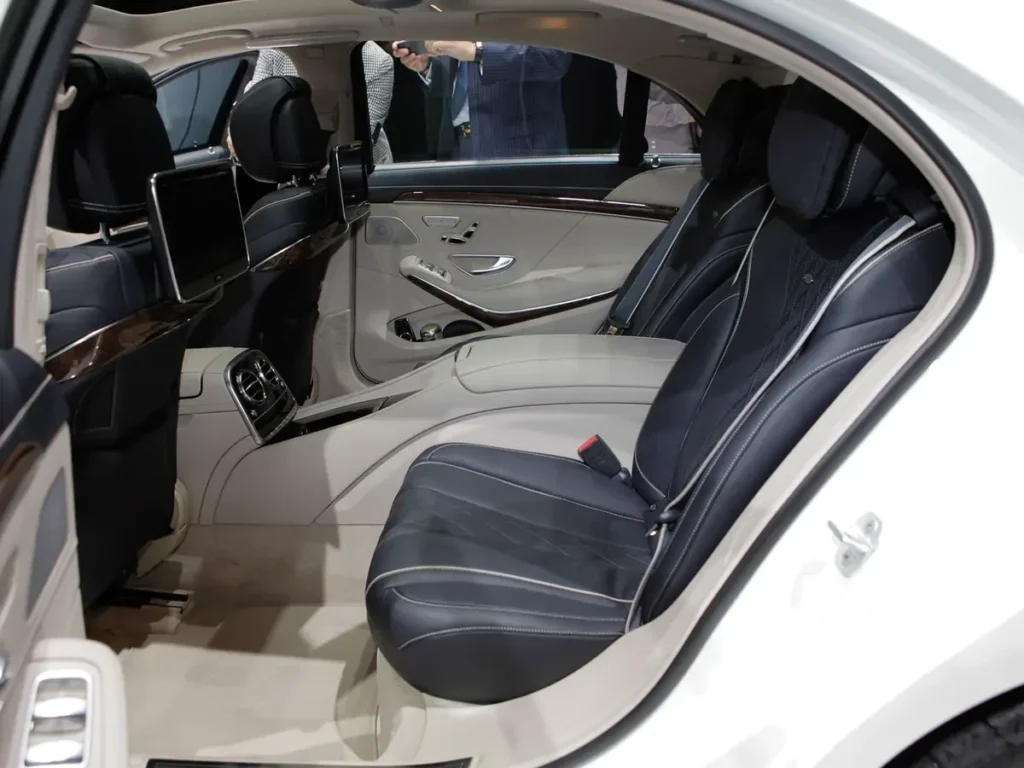
Image: Navigator84, CC BY 3.0, via Wikimedia Commons
Image note: this is a previous-generation S-Class rear-seat reference, used to illustrate the model’s long-running rear-seat luxury role.
As an owner-driven car, the S-Class gives the driver quiet power, comfort, technology, and status. It is a car you can drive yourself and still feel like the main character.
As a chauffeur-driven car, especially in long-wheelbase or Maybach form, the meaning changes. The rear seat becomes the center. The car becomes less about driving and more about being carried.
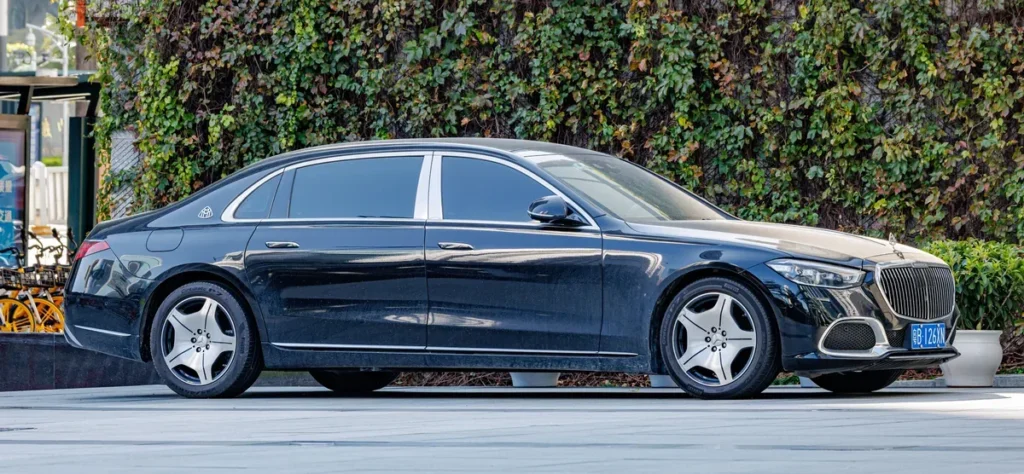
Image: Dinkun Chen, CC BY-SA 4.0, via Wikimedia Commons
That dual identity is one reason the S-Class has stayed so strong. Many cars are good for drivers. Many cars are good for passengers. The S-Class has spent decades trying to satisfy both.
Short Wheelbase vs Long Wheelbase
In some markets, lower or diesel S-Class trims may be more commonly associated with shorter body configurations, while long-wheelbase versions are preferred for chauffeur use. Exact availability depends heavily on region.
But here is the buyer reality: unless you are a corporate chairman, government official, hotel fleet buyer, or someone regularly using a driver, the standard or shorter S-Class can already feel more than luxurious enough.
The long-wheelbase S-Class adds rear-seat space and status. It does not automatically make the car better for every owner.
If you drive yourself most of the time, a standard-wheelbase or less extravagant configuration may actually feel more balanced.
Rear-Axle Steering
Rear-axle steering is one of the most useful technologies in the modern S-Class.
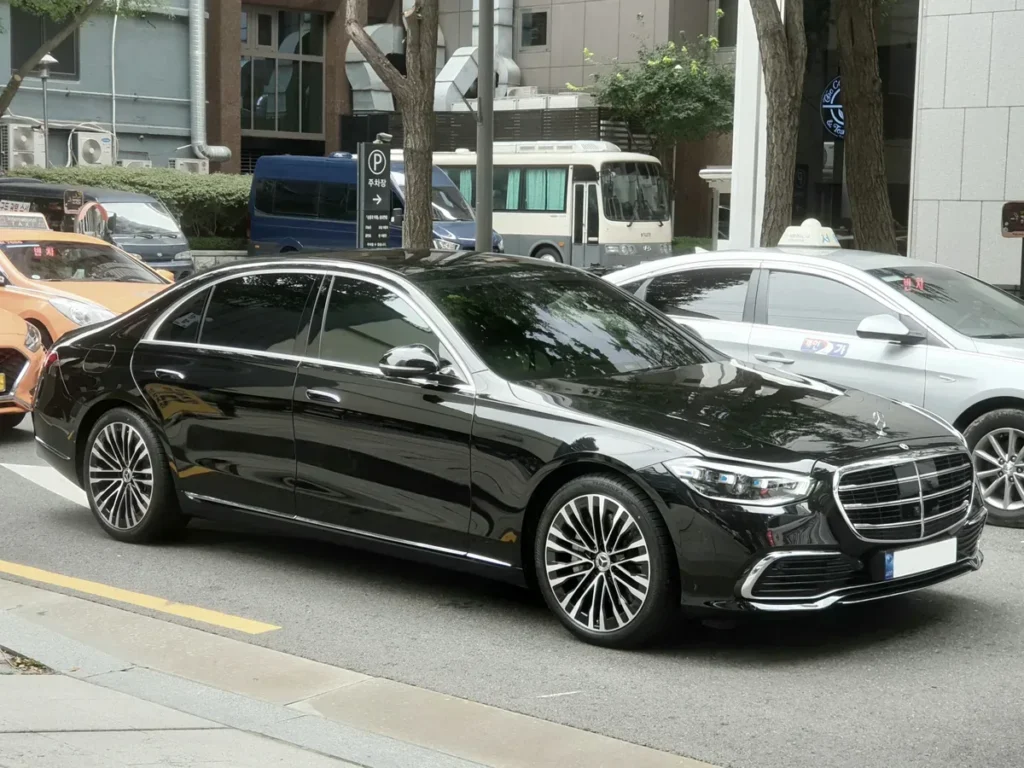
Image: Damian B Oh, CC BY-SA 4.0, via Wikimedia Commons
The idea is simple. At low speeds, the rear wheels can turn slightly in the opposite direction from the front wheels. That makes the car feel shorter when parking, turning, or making a U-turn. At higher speeds, the rear wheels can turn in the same direction as the front wheels, helping stability.
Mercedes-Benz says the S-Class can use rear-axle steering with up to 10 degrees of rear-wheel angle, reducing the turning circle by up to about two meters depending on version.
That is not a small difference.
Large sedans can feel awkward in narrow roads, parking garages, and tight U-turns. Rear-axle steering makes the S-Class feel less intimidating in those moments.
One important correction: Mercedes-Benz was not the first company in history to use rear-wheel steering. Earlier systems appeared from other manufacturers decades ago. But Mercedes made the technology feel especially meaningful in the modern luxury flagship context, because the S-Class is exactly the kind of long car that benefits from it.
Price-to-Value Judgment
The S-Class is expensive, and it should be judged honestly.
In the U.S., the 2026 S 500 starts around $119,500, while the S 580 and S 580e sit above that before options. Maybach versions move much higher.
That means the buyer is not paying for transportation. The buyer is paying for silence, social meaning, technology, cabin atmosphere, rear-seat comfort, and the feeling of owning the luxury sedan benchmark.
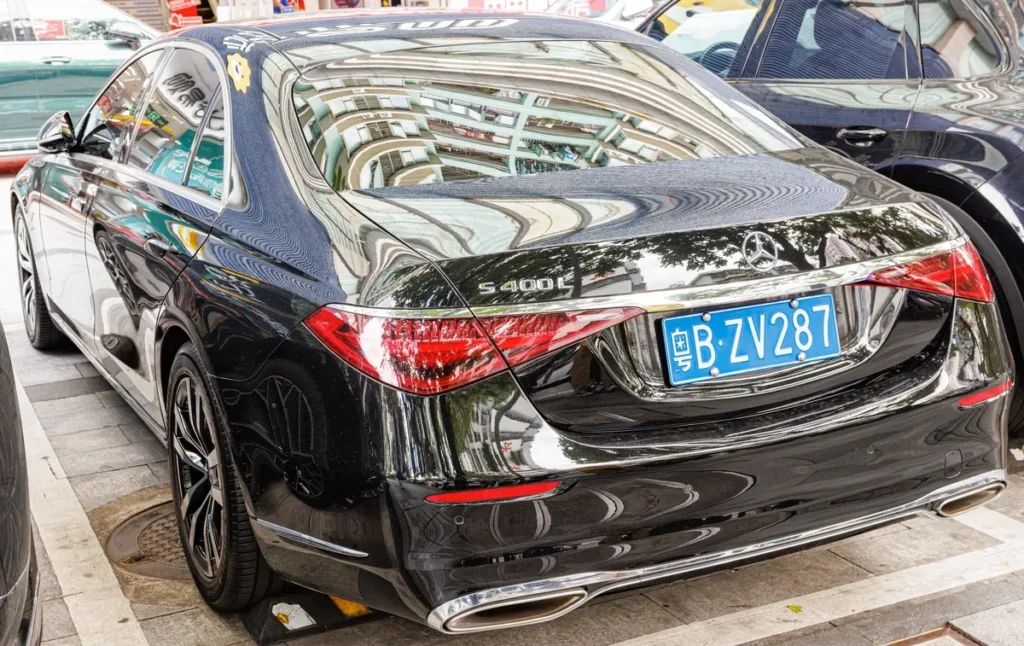
Image: Dinkun Chen, CC BY-SA 4.0, via Wikimedia Commons
A Genesis G90 can offer strong value. A BMW 7 Series may feel more modern or more driver-focused. An Audi A8 may feel quieter in personality. But the S-Class still has the strongest symbolic value.
That matters in this segment.
Luxury flagship buyers are not only asking, “What do I get for the money?” They are also asking, “What does this car say when I arrive?”
The S-Class still answers that better than most.
Competitor Comparison
The BMW 7 Series is the closest German rival for buyers who want a more technology-heavy, sometimes more visually assertive flagship sedan. It may appeal more to buyers who want presence with a modern edge.
The Audi A8 is quieter and more understated. It is excellent for buyers who like technical calm, but it does not carry the same emotional status as the S-Class.
The Genesis G90 offers impressive comfort and value. It can make the S-Class look expensive, but Mercedes still has more global luxury authority.
The Lexus LS is durable, quiet, and refined, but it no longer defines the flagship sedan conversation the way it once did.
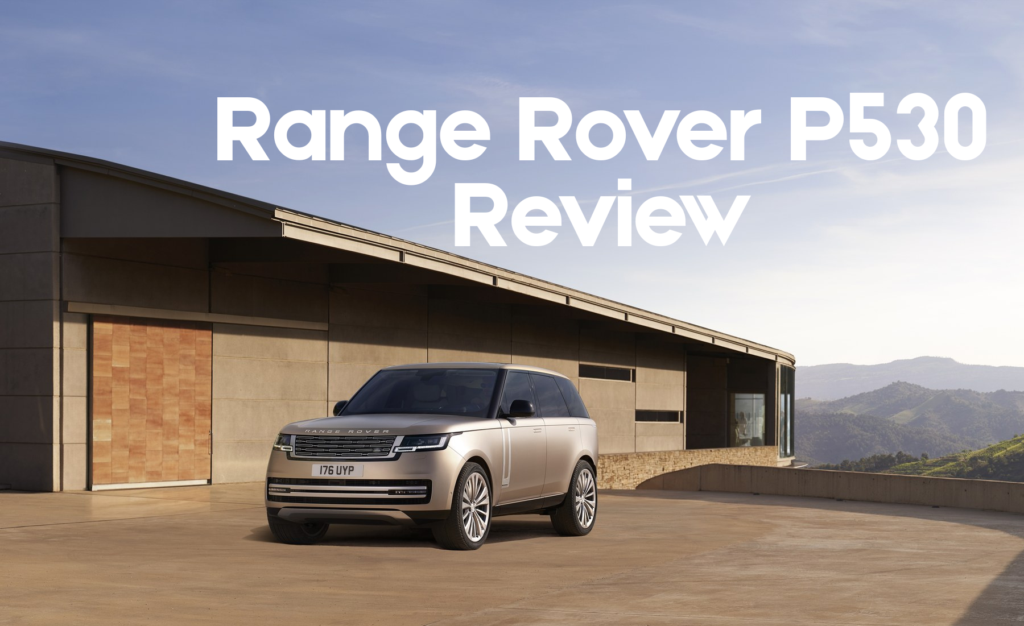
The Range Rover P530 is not a sedan, but it matters because many modern luxury buyers now choose an SUV instead of an S-Class. The Range Rover offers the elevated seating position and luxury SUV image; the S-Class offers the traditional sedan definition of elegance.
Recommended For
The Mercedes-Benz S-Class is recommended for buyers who want the safest choice in the flagship luxury sedan world.
It makes sense for someone who values cabin beauty, quietness, brand prestige, rear-seat comfort, and long-term symbolic value. It also works for buyers who want one car that can feel appropriate at a hotel entrance, office building, family event, or long highway drive.
If you want the car that most people still recognize as the luxury sedan benchmark, the S-Class is the answer.
Not Recommended For
The S-Class is not recommended for buyers who want low ownership cost, easy DIY maintenance, or a sporty driving personality.
It is also not ideal for buyers who mainly want practicality. Large luxury SUVs may fit modern family life better. The S-Class is still a sedan, and that means lower seating, a separate trunk, and less cargo flexibility than an SUV.
Diesel versions may not be ideal for buyers who are especially sensitive to vibration or long-term refinement. They can make sense, but gasoline and plug-in hybrid versions usually fit the S-Class character better.
Buyer Verdict
The Mercedes-Benz S-Class remains the luxury sedan that everyone else has to answer.
It is not perfect. It is expensive. It can be complex. Some buyers may prefer the commanding position of a Range Rover or GLS. Others may prefer the design drama of a BMW 7 Series.
But the S-Class still has something rare: it feels like the default answer.
When people imagine a luxury sedan, many still imagine something like this. Long body. Quiet cabin. Beautiful lighting. Smooth power. Rear-seat dignity. A badge that does not need explanation.
That is why the S-Class survives even as the world moves toward SUVs.
Cariary Perspective
Cariary personally understands why Mercedes-Benz creates loyalty.
The W213 E200 was not the fastest car. It was not the most powerful car. But it had a kind of emotional polish that stayed in memory: the ambient lighting, the interior atmosphere, the way each driving mode felt intentionally tuned, and the feeling when stepping out of the car.
If an E-Class can leave that impression, the S-Class is the fullest version of that Mercedes idea.
Cariary also sees the S-Class as a future bucket-list car. Not necessarily to own for two years and trade in, but to keep, maintain carefully, learn its small parts, and experience what Mercedes luxury feels like over a long period of time.
That is the difference between liking a car and respecting what it represents.
The S-Class is not simply an expensive sedan. It is the car Mercedes built to prove that luxury can be felt before it is explained.
One-Line Verdict
The Mercedes-Benz S-Class is still the luxury sedan benchmark because it makes comfort, status, technology, and emotional cabin beauty feel like one complete idea.
FAQ
Is the Mercedes-Benz S-Class still the best luxury sedan?
It depends on what the buyer values, but the S-Class remains the benchmark for traditional luxury sedan identity. The BMW 7 Series, Audi A8, Genesis G90, and Lexus LS all compete, but the S-Class still has the strongest global image.
Should I buy a diesel or gasoline S-Class?
Diesel can make sense for long-distance efficiency in markets where it is available. But for maximum refinement, smoothness, and long-term luxury feel, gasoline or plug-in hybrid versions usually fit the S-Class better.
Is the S-Class good for owner-driven use?
Yes. The S-Class works well as an owner-driven car because it offers comfort, power, technology, and prestige. Long-wheelbase and Maybach versions lean more toward chauffeur-driven use.
Is rear-axle steering useful in the S-Class?
Yes. Rear-axle steering helps a large sedan feel easier to maneuver in parking lots, narrow streets, and U-turns. Mercedes offers systems with up to 10 degrees of rear-wheel steering depending on configuration.
Was Mercedes-Benz the first brand to use rear-wheel steering?
No. Rear-wheel steering existed before the current S-Class. Mercedes was not the first in automotive history, but the S-Class uses the technology in a way that feels especially useful because of the car’s size and luxury mission.
Is the Maybach S-Class worth it over the regular S-Class?
The Maybach is worth considering if rear-seat luxury, ceremony, and status matter more than value. For many owner-drivers, a regular S-Class is already more than enough.
Related Cars
BMW 7 Series
Audi A8
Genesis G90
Lexus LS
Mercedes-Benz E-Class
Range Rover P530
Mercedes-Maybach S-Class
Data Reference Date
August 6, 2026