I started looking into how to watch Le Mans with a fairly simple picture in my head: three drivers share a car and keep it running for 24 hours. That is true, but it barely explains why the race becomes so absorbing once you understand what the teams are managing.
A prototype flashes past a GT car. One team keeps its worn tires. Another brings its quickest driver back for the night. A car drops out of the lead to refuel, yet its engineer may be perfectly happy. Each of those moments can make sense even when the timing screen initially suggests otherwise.
The 24 Hours of Le Mans rewards speed, but also the ability to keep making good decisions as the conditions change. Let us work through the pieces that make those decisions easier to follow.
Quick Summary
- Le Mans is a timed endurance race in France, with the leading classified car determined primarily by completed laps and then finishing order.
- Hypercar, LMP2 and LMGT3 share the circuit, with separate class victories as well as an overall winner.
- Three drivers share a car, but the car’s identity and accumulated result stay the same when its driver changes.
- Fuel, tires, traffic, weather, repairs and driver rotation all influence the result.
- Start by following one car and its class rivals. A pit stop can explain a position change better than the latest lap time.
1. How to Watch Le Mans: Start With the Clock and the Class
The race takes place at the Circuit de la Sarthe near Le Mans, France. Its lap is more than 13 kilometers long and combines permanent racing facilities with roads normally used by public traffic. Those roads are closed for the event. This is why Le Mans looks so different from a compact, purpose-built grand prix circuit.
The field takes a rolling start. The famous historical image of drivers running across the track to their cars is not how the modern race begins.
Once racing starts, the target is to complete the greatest distance within the race’s finishing procedure. The cars do not stop wherever they happen to be when the clock reaches zero: the checkered flag and finish line determine the conclusion.
Imagine three eligible finishers completing 389, 388 and 386 laps. The 389-lap car finishes ahead. If two cars complete the same number of laps, their order at the finish separates them. These are illustrative numbers, not a result from a particular edition.
There is an important qualification: completing many laps alone does not guarantee classification. The regulations also impose finishing and minimum-distance conditions. Penalties can change the final result, so the official classification matters more than a screenshot taken just before the flag. The ACO’s Le Mans regulations are the reference for these conditions.
A famous race inside a bigger championship
Le Mans is also a round of the FIA World Endurance Championship, usually shortened to WEC. The season includes endurance races of different lengths. Winning Le Mans brings its own enormous prestige and contributes to the relevant WEC championship standings.
For eligible championship entries, the Le Mans race-points scale awards 50, 36, 30, 24, 20, 16, 12, 8, 4 and 2 points to the first ten positions. That is twice the normal six-hour race scale. Pole position can add a further point under the applicable championship rules. See the official WEC points explanation.
Do not assume every class appearing at Le Mans also runs the full WEC season. In the current format, Hypercar and LMGT3 are the full-season categories; LMP2 joins them at Le Mans. Its class win remains a major achievement without being a full-season WEC LMP2 championship round.
2. Understand the Three Races Sharing One Circuit
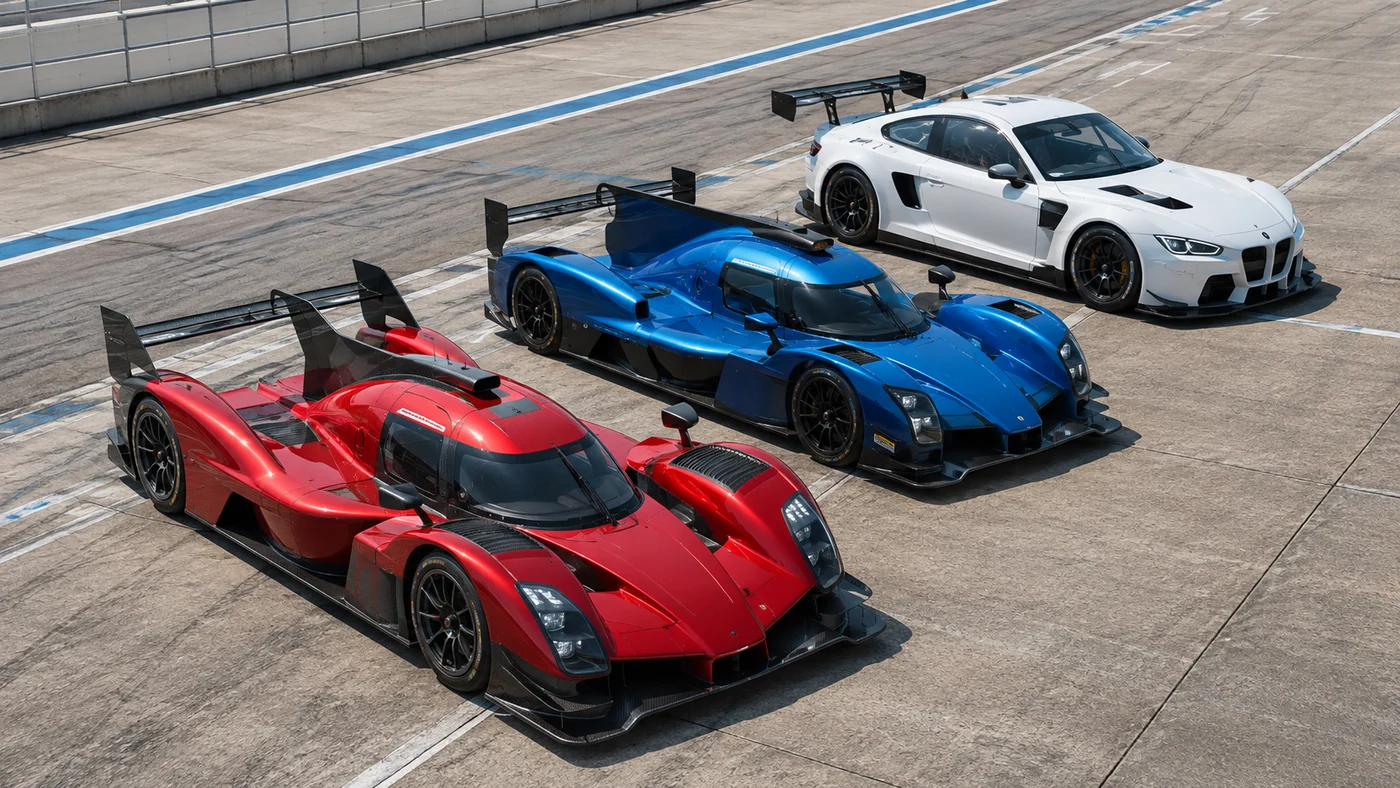
The first useful distinction is between a prototype and a GT car. A prototype is designed specifically as a racing machine. A GT racer retains a recognizable connection to a production sports car, although its safety equipment, aerodynamics and mechanical preparation are extensively changed for competition.
| Class | What you are looking at | The main battle |
|---|---|---|
| Hypercar | Top-level racing prototypes built to LMH or LMDh rules | Overall victory and the Hypercar class |
| LMP2 | Prototypes built around tightly controlled technical packages | LMP2 class victory |
| LMGT3 | Production-based GT racing cars | LMGT3 class victory |
Hypercar: the overall contenders
Hypercar combines two technical routes. Le Mans Hypercar, or LMH, gives manufacturers substantial design freedom within its rules. Le Mans Daytona h, or LMDh, uses an approved chassis basis and standardized hybrid components alongside manufacturer-specific elements. The ACO’s explanation of LMH and LMDh sets out the basic distinction.
Both compete in the same category. Hybrid power is not universal: an LMH car can use a non-hybrid layout. Around 500 kW is a useful sense of the performance level, not a fixed output that every car uses throughout every event. Minimum weights start around 1,030 kg in the regulatory framework, while Balance of Performance can set different operating parameters.
Balance of Performance, or BoP, adjusts parameters such as weight and permitted power to bring different designs into a comparable performance window. It does not erase differences in tire use, execution or reliability. The WEC Hypercar overview explains the category’s controlled-performance approach.
Ferrari, Toyota, BMW, Cadillac and Aston Martin are useful examples, with Genesis joining the 2026 field alongside other manufacturers. Porsche’s 963 belongs to recent Hypercar history, but Porsche was absent from the 2026 Le Mans Hypercar entry list. It still appeared through its LMGT3 program. Manufacturer lists need a year attached; check the official 2026 Le Mans entry announcement rather than assuming last year’s grid carried over.
LMP2: controlled hardware, demanding competition
LMP2 cars may look like smaller relatives of the Hypercars, but they compete under a separate rule set. Approved chassis and a common engine formula constrain spending and technical freedom. That shifts attention toward setup, driver execution, traffic and team operations.
Independent teams are central to the category. LMP2 is normally quicker over a lap than LMGT3 and slower than Hypercar, but that is an overall tendency, not a promise at every braking zone or in every weather condition.
LMGT3: familiar shapes doing unfamiliar work
LMGT3 is often the easiest entry point for a new viewer. A Porsche 911, Ford Mustang or Corvette-based racer gives you a shape you can recognize before you learn every team’s name. Ferrari, BMW, Mercedes-AMG, Aston Martin, McLaren and Lexus also provide examples of this production-based approach in the modern category.
Familiar bodywork does not mean an ordinary road car with stickers. Roll cages, racing tires, aerodynamic changes and endurance preparation give these cars a very different working life. The official LMGT3 introduction describes the category and its professional-amateur format.
An LMGT3 car can be well down the overall order and still win its class. Being passed by a prototype is usually expected. Losing a place to another LMGT3 car is a different story entirely.
3. Read Traffic as Part of the Competition
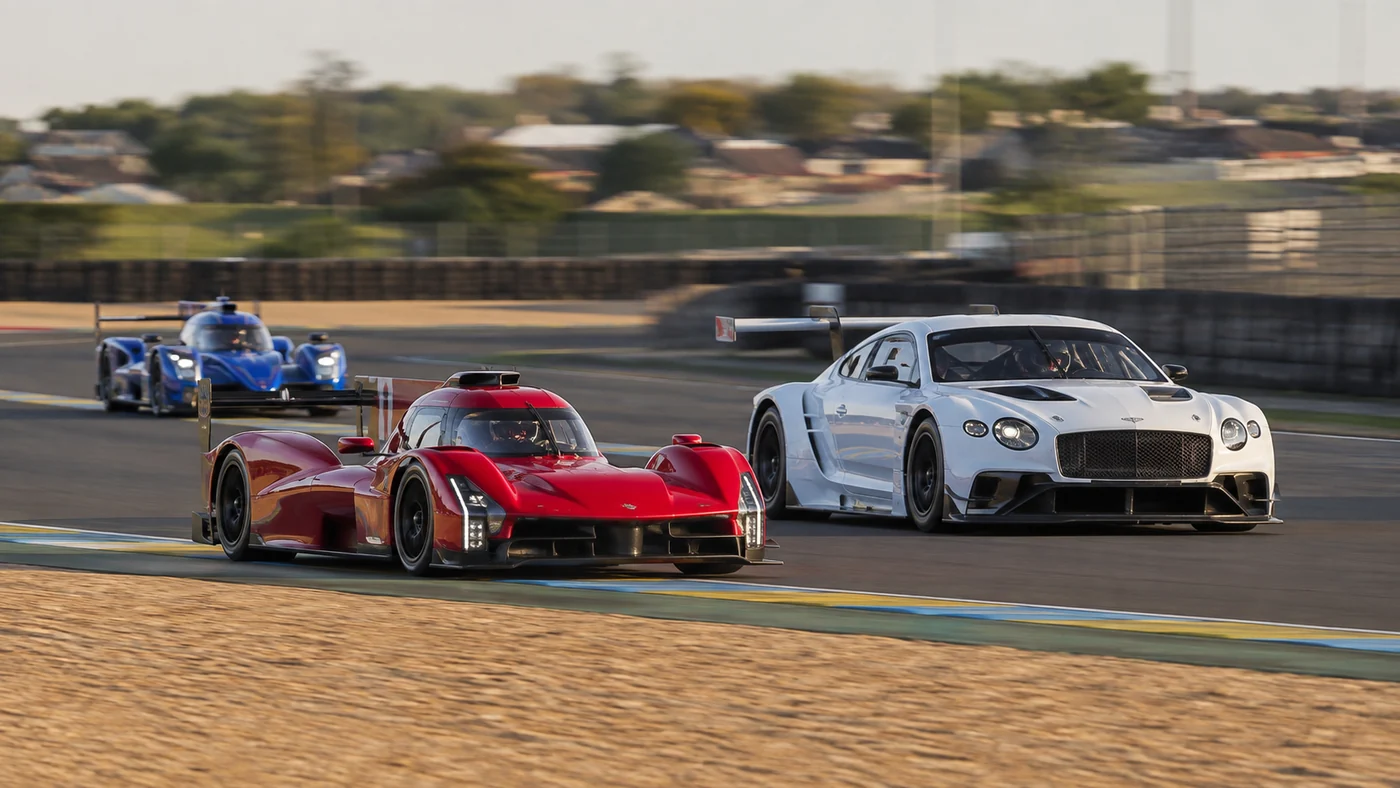
A fast prototype repeatedly catches slower GT cars. Meanwhile, those GT drivers may be fighting over tenths of a second in their own race. Neither side gets an empty road simply because it would be convenient.
Predictability is central. A GT driver should not make a sudden move just to appear helpful, and a prototype driver cannot treat a closing gap as an entitlement. Both must judge the situation, with the overtaking driver responsible for executing a safe pass under the sporting rules.
Here is a fictional example. Two Hypercars arrive one second apart. The first reaches a GT car early enough to pass before a corner. The second has to wait until the exit. A two-second delay turns a one-second gap into three, even if the following driver made no mistake.
This is why a single slow lap does not automatically mean tire failure or a suddenly uncompetitive car. Watch where the traffic was encountered, then compare several laps.
At night, the same decision becomes harder
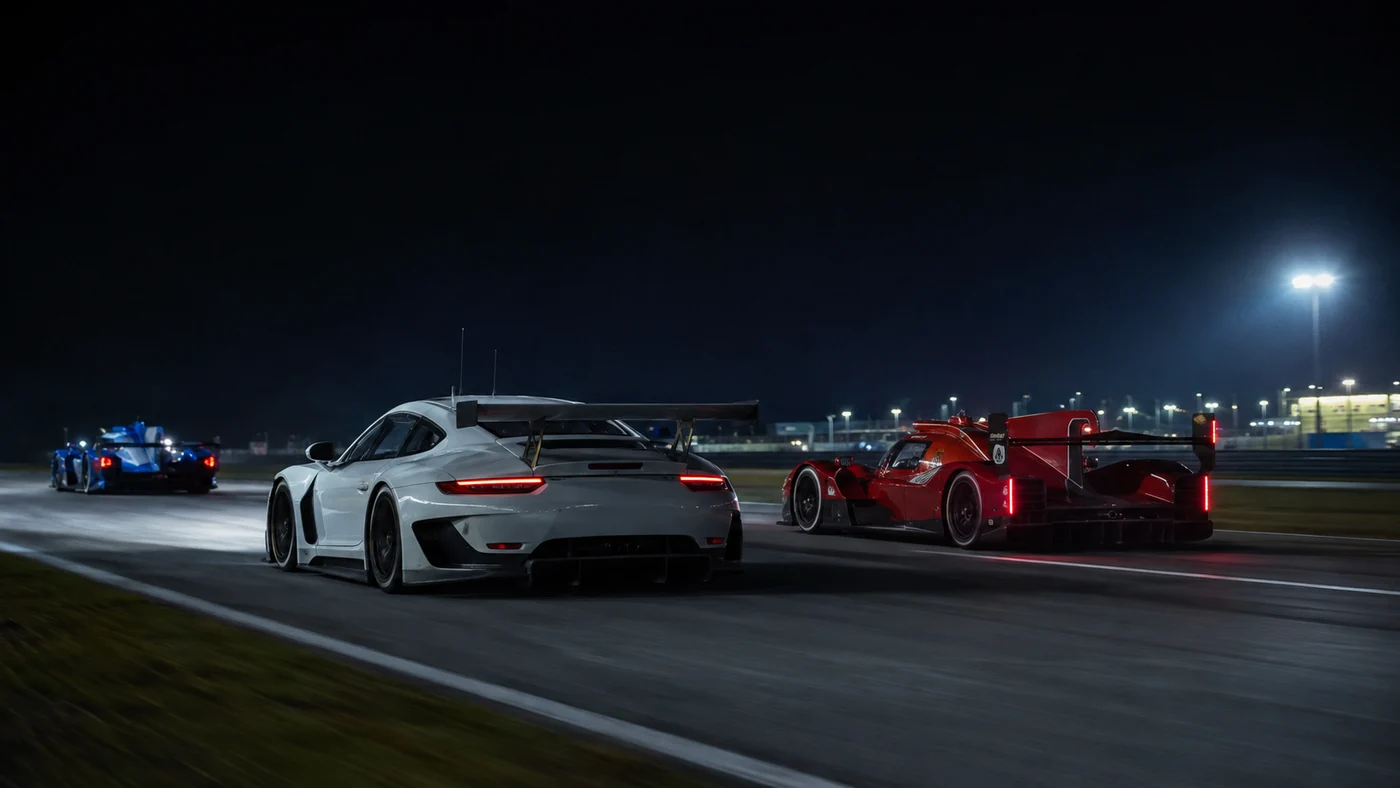
In darkness, headlights announce another car before its body shape is clear. Mirrors, rear-facing camera systems where fitted, closing speed and track familiarity all help a driver work out what is approaching.
The task is not merely to see a light. It is to decide how quickly that car will arrive, whether a pass can be completed before the next corner, and whether another rival is hiding behind it.
On an onboard camera, listen to the engine note and watch the driver’s timing. A short lift that looks cautious may create a cleaner exit and avoid a much bigger loss. Night racing rewards judgment as much as bravery.
4. Follow the Car Number, Then the Driver
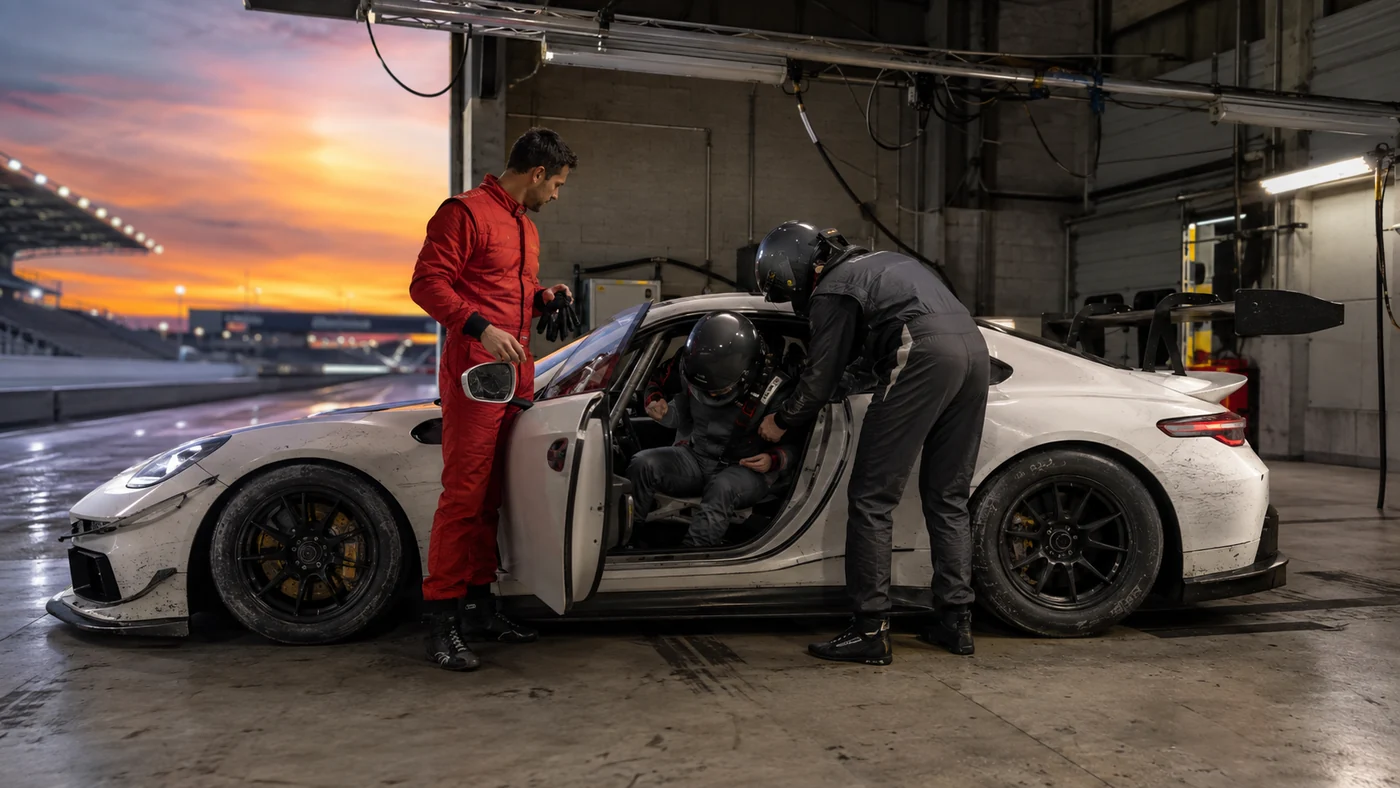
Three drivers share each car at modern Le Mans. The number belongs to the entry, so its lap count and position do not reset when a new driver climbs in. Track the car number first, and use the broadcast’s current-driver field to see who is driving now.
FIA driver categories are a separate system from car classes. They consider career results, performance and other criteria; they are not a live scoreboard of talent.
| Driver category | Useful starting point | What it does not prove |
|---|---|---|
| Platinum | Drivers meeting the highest career and performance criteria | That they will be fastest in every car or condition |
| Gold | Drivers with substantial competitive credentials | A guaranteed gap to every Silver driver |
| Silver | A broad group that includes developing professionals and other eligible drivers | That the driver is necessarily a part-time amateur |
| Bronze | Often associated with amateur or gentleman-driver competition | That the driver is inexperienced or incapable of excellent pace |
The FIA driver categorisation resources explain the formal system. Treat the labels as rules for assembling crews, not personality descriptions.
LMGT3 lineups must include at least one Bronze driver and another driver rated Bronze or Silver. The remaining seat can be occupied by a higher-rated professional. This is why an established factory driver and an amateur can share the same car. WEC describes the requirement in its championship guide.
Winning GT3 does not automatically promote you
Hypercar seats are highly competitive, often within manufacturer-backed programs. Drivers can arrive through single-seaters, GT racing or prototypes. There is no automatic LMGT3-to-LMP2-to-Hypercar promotion ladder.
Nor is everyone in Hypercar necessarily Platinum. A talented Silver-rated professional can race there. The machinery’s category tells you which competition the car entered, not everything about its driver’s ability.
Pace is only one part of a driver’s contribution
Suppose two drivers in the same GT car average 3:58 and 4:03 in otherwise comparable conditions. That fictional five-second difference becomes 50 seconds across ten laps. It is not a typical Platinum-versus-Bronze measurement: weather, fuel, tires and traffic make real comparisons much messier.
Consistency also matters. A driver who avoids contact, preserves tires and handles traffic cleanly can protect time that never appears in a fastest-lap headline. For the team, a productive two-hour spell is more useful than one brilliant lap followed by an avoidable repair.
5. Understand Stints, Rotation and Human Endurance
A stint usually means the running between pit stops. The driver can stay aboard while the team refuels, then begin another stint. A driver stint and a tire stint are related ideas, but they do not have to end together.
Double-stinting can mean a driver completes two successive runs or a tire set survives two runs. Listen for what the commentator is referring to. A tire change does not necessarily mean a driver change, and a driver change does not require all four tires to be replaced.
One spell in the cockpit may last roughly one to three hours across successive runs, depending on strategy and interruptions. There is no universal timer that says every driver swaps after exactly an hour. Le Mans imposes driving-time limits and class-specific minimum requirements; the 2026 supplementary rules include a maximum of four hours in any six-hour period. Exact requirements should be checked against the event’s final regulations and decisions.
Teams plan around driver strengths, mandatory driving time, fatigue and the forecast. A driver who is particularly comfortable in rain may become more valuable when the clouds arrive, but that plan still has to fit the rules and the rest schedule.

Outside the car, eating, drinking, cooling down and resting are part of the job. Sleep is squeezed between debriefs and the next call to drive. Inside, the driver must repeatedly brake from very high speed, process radio messages and negotiate traffic without letting fatigue turn a routine decision into contact.
That is what makes this a human endurance contest as well as a mechanical one. Three drivers do not remove fatigue; they make managing it possible.
6. Watch Fuel, Energy and Tires as One Strategy
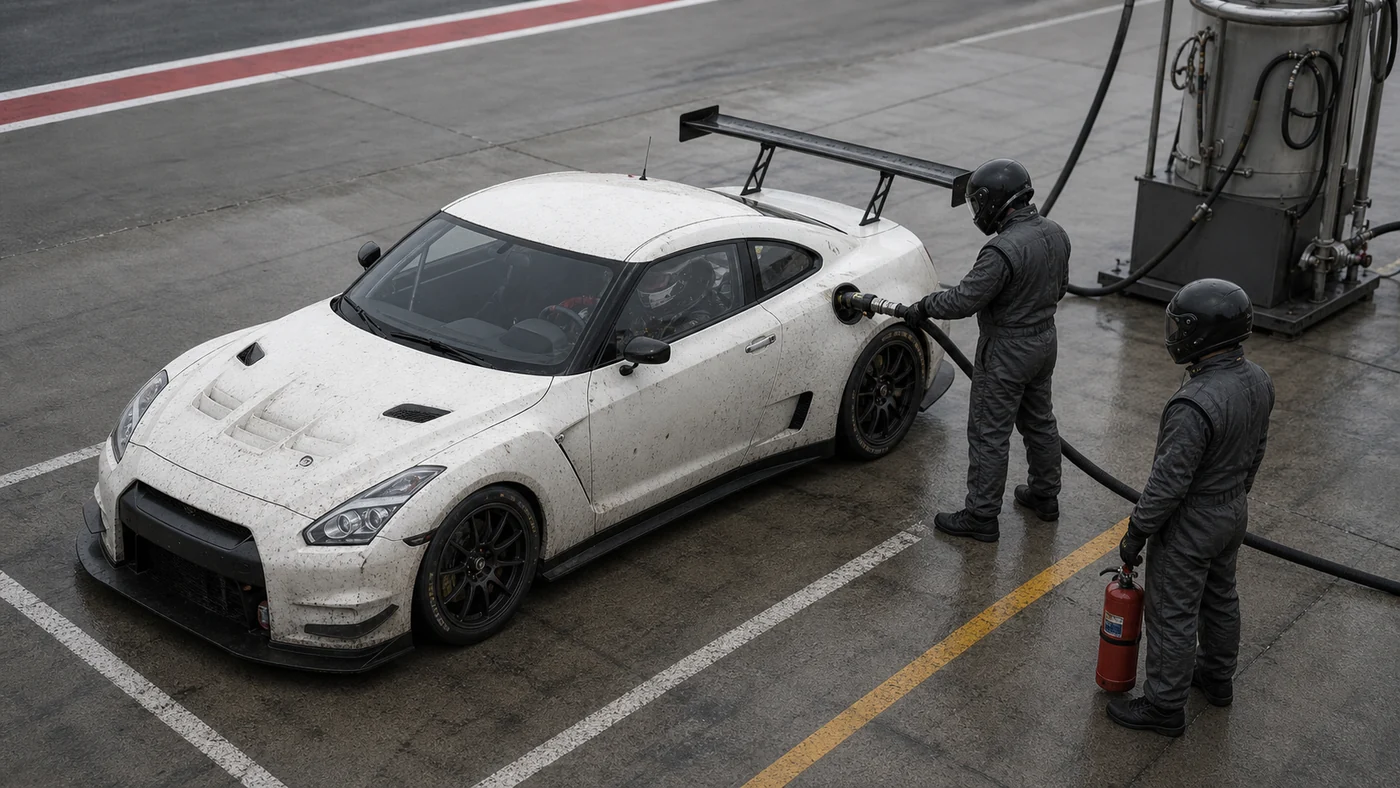
Refueling creates a basic question: how much useful racing can this car complete before it must return? Modern Hypercar and LMGT3 coverage can also show a Virtual Energy Tank, representing the regulated stint-energy picture rather than simply a dashboard petrol gauge. The WEC’s explanation of its live energy features helps distinguish these quantities.
Saving enough to stretch a run can change when a team stops. Across a race, it might reduce the number of stops or the size of a late fuel top-up. It is not automatic: the team has to recover more time than it sacrifices while saving.
Lift and coast is one tool. The driver releases the accelerator before the normal braking point, allows the car to roll briefly, then brakes. Less time at full power can save fuel and reduce the energy that the brakes must absorb. The cost is usually some lap time.
Imagine lapping 0.6 seconds slower on each of 40 laps while saving enough fuel to avoid a hypothetical 45-second net stop loss. The pace cost is 24 seconds, leaving a theoretical 21-second benefit. Those numbers are an illustration, not a measured Le Mans strategy. The key is that the saving must actually eliminate or shorten the stop, and changing race conditions can overturn the calculation.
Why keeping old tires can be clever
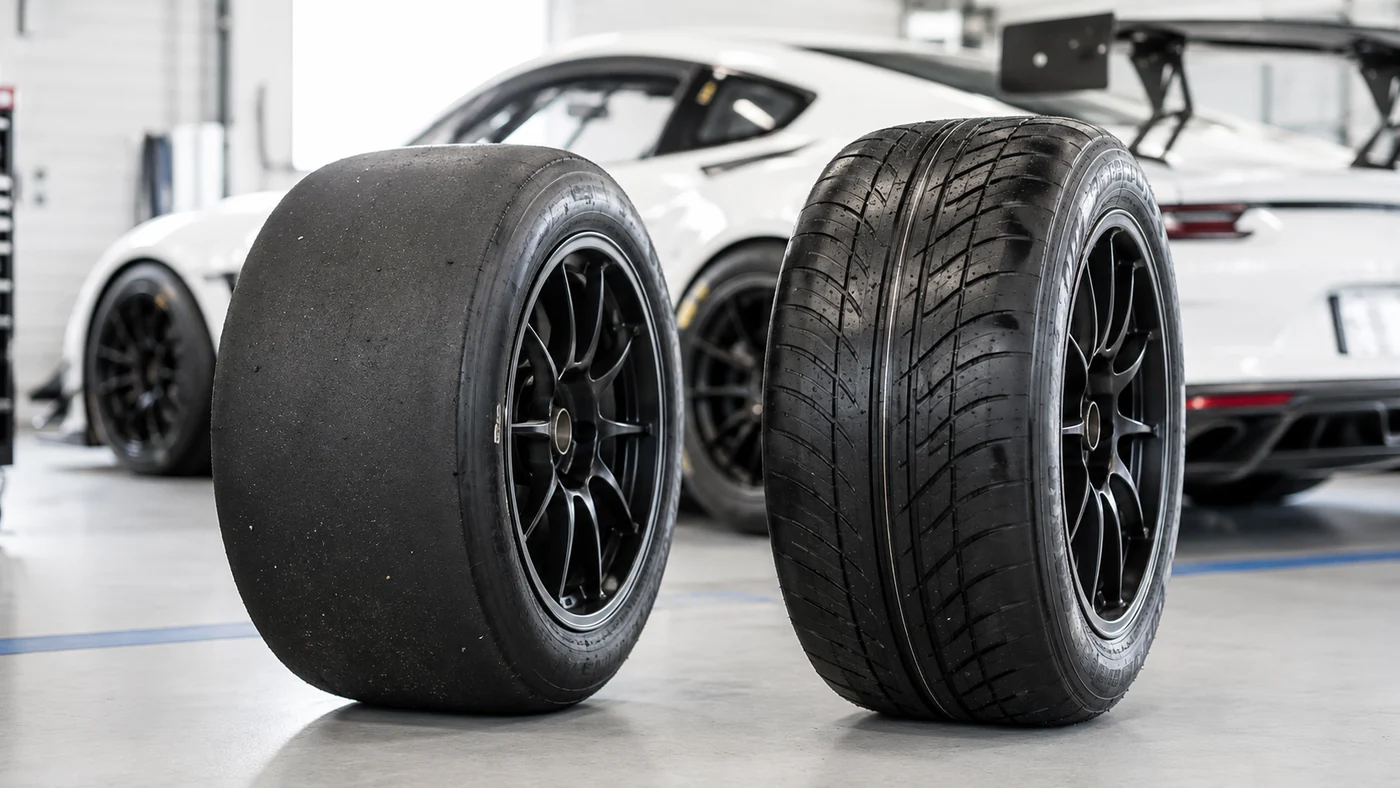
Tires need not be replaced at every fuel stop. A usable set may remain on the car through successive stints, saving service time and conserving the allocation. But wear, heat cycles, damage and changing track conditions can make keeping them costly.
Consider another simplified calculation. If a tire change adds 20 seconds and fresh tires gain one second per lap, the gain takes about 20 laps to repay the stop cost. Cold-tire behavior, traffic and a rain shower can all change that result. The extra service time is illustrative, not a fixed rulebook duration.
Multi-stinting is real, not just a theoretical trick. Michelin reported regular triple and quadruple stints among its partners at the 2026 event. Its Le Mans tire report makes the endurance requirement tangible.
For the 2026 race, Michelin supplied Hypercar, while Goodyear supplied LMP2 and LMGT3. Goodyear’s event tire notes distinguish the dry and wet options. Do not assume every class has the same compounds or the same choice available at each stop.
Slicks, rain tires and a changing road
A slick has no drainage tread across its running surface. In suitable dry conditions, its uninterrupted rubber surface helps deliver racing grip. Wet tires use grooves to move water away and a construction and compound intended for wet operation. Water between a slick and the road can sharply reduce grip.
At Le Mans, afternoon heat becomes a cooler night and then morning. Tire pressures and operating temperatures change with it. A compound that feels comfortable at one point can become harder to use later.
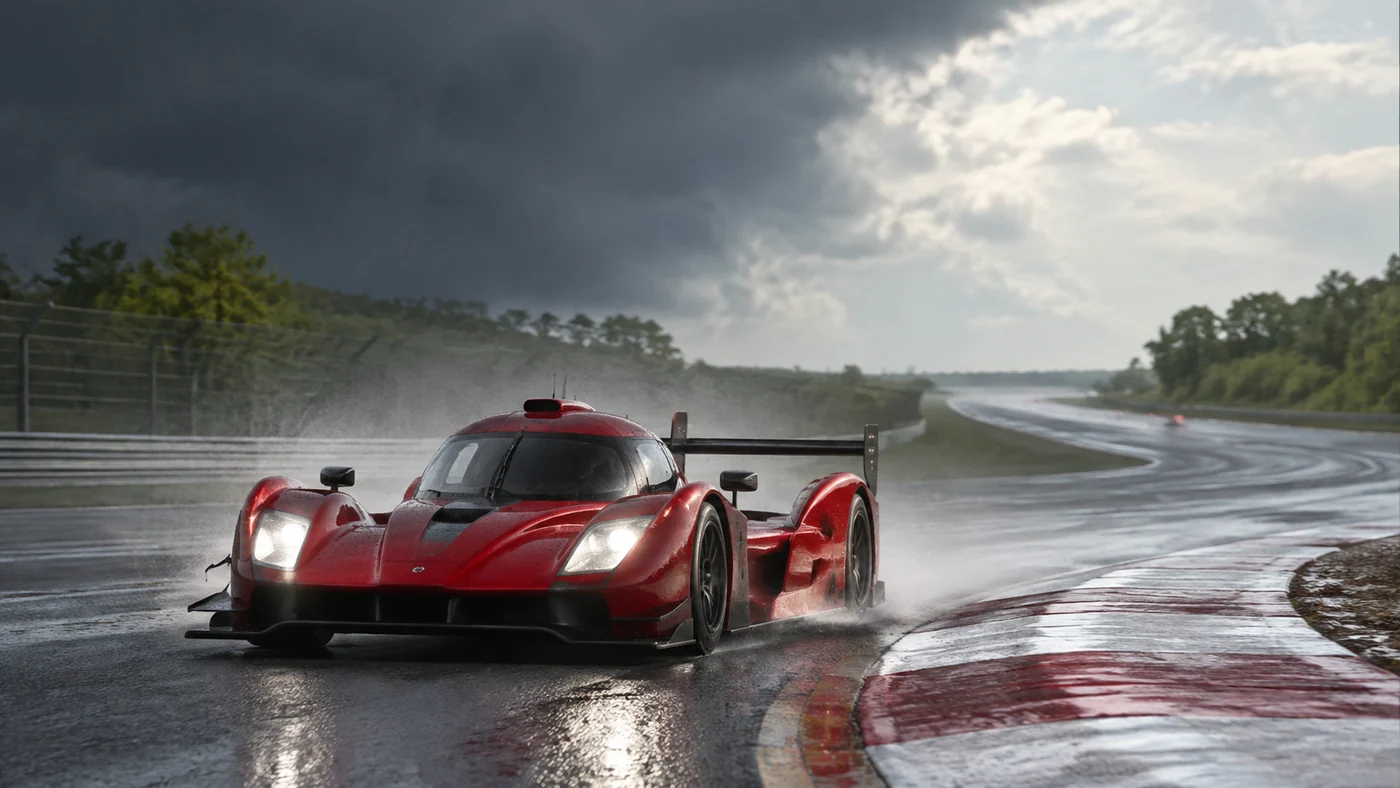
Rain makes the choice more awkward because the circuit is so long. One sector can be wet while another is comparatively dry. The engineer is weighing current grip, rainfall intensity, radar, the next lap and the time lost by stopping.
Fresh rubber is not a universal answer, and neither is staying out. Watch the lap after the decision: that is where its consequences start becoming visible.
7. Notice Repairs, Neutralizations and the Changing Leaderboard
A scheduled stop and an unscheduled garage visit tell very different stories. Routine fuel and service time belongs in the team’s plan. Repairs consume time that must somehow be recovered, assuming the car can return at all.
This is why the quickest car does not always win. A car gaining one second per lap over 100 laps earns 100 seconds. A single fictional three-minute repair costs 180. Raw pace matters enormously, but it cannot make downtime disappear.
Not every repair means retirement. Teams may replace damaged parts and return to chase a class position or salvage a result. Reliability includes serviceability: how efficiently the crew can diagnose and fix a problem also matters.
Race control can interrupt normal competition. A local Slow Zone limits speed to 80 km/h in the affected section and prevents overtaking there; racing can continue elsewhere. A Full Course Yellow applies restrictions around the whole course. Safety Cars control the field under their own procedure, while a red flag suspends the race. These mechanisms are not interchangeable.
The ACO’s explanation of race-control procedures introduces the purpose of Slow Zones. Use the current event regulations for the detailed Safety Car and restart procedure, which has changed over time.
For a viewer, the immediate questions are practical: which cars had already stopped, which still owe a stop, and which gaps are affected by the intervention? A sudden change in the order may be strategic rather than a series of on-track overtakes.
8. Build a Viewing Routine You Can Actually Enjoy
You do not need to stay awake for the entire race to follow it. Choose one entry, remember its number and identify two rivals in the same class. Then check the following whenever you return to the coverage.
| Timing-screen item | The question it answers |
|---|---|
| Class position | Is my car winning its own race? |
| Completed laps and gap | Is the rival seconds away or a whole lap ahead? |
| Current driver | Has the lineup rotated since I last checked? |
| Last stop and stint age | Could this position be temporary? |
| Recent lap times | Is the pace trend changing across several laps? |
| Track status | Are the gaps being shaped by a Slow Zone or Safety Car? |
Treat a displayed interval carefully: the gap to the car ahead and the gap to the class leader are different measurements. Broadcast layouts vary, so read the label before interpreting the number.
Watch the start to learn the field, return around dusk to see the transition, sample a night onboard, and come back in the morning to understand who survived. Leave time for the closing phase, when remaining fuel, worn tires and class gaps become especially consequential. This is a viewing suggestion, not a promise that the decisive incident waits for a convenient hour.
For access, start with the official Le Mans viewing information and FIAWEC+. Availability, rights, live coverage and replay access depend on the event and your location, so check before purchasing. This guide uses 2026 as its rules reference; do not read that year’s broadcast listing as a guaranteed schedule for the next edition.
How it compares with F1, WRC and NASCAR
| Motorsport | A useful viewing emphasis | What that description leaves out |
|---|---|---|
| F1 | Precision, aerodynamic performance and tire strategy | Fuel efficiency, reliability and teamwork also matter |
| WRC | Adapting to changing roads with pace notes | Stage strategy and vehicle preservation matter too |
| NASCAR | Positioning, traffic, drafting and restarts | Drafting varies greatly by track; tires and fuel remain important |
| Le Mans | Sustaining pace across classes, drivers and changing conditions | It still contains close tactical fights and outright speed |
Calling Le Mans more strategic than NASCAR is not very useful. They ask teams to solve different combinations of problems. NASCAR’s immediate positioning battles and Le Mans’ longer resource decisions both reward preparation and quick thinking.
Our NASCAR viewing guide, WRC beginner guide and F1 beginner guide explore those differences in more detail.
Common Misconceptions
The overall order is not the whole story. A GT car can be having the race of its life while prototypes repeatedly lap it.
The fastest driver cannot simply do all the driving. Lineup requirements, driving-time rules and physical recovery shape the rotation.
A pit stop does not always bring fresh tires or a new driver. Those decisions can be separated.
An energy bar is not automatically a battery-charge indicator. Know which quantity the broadcast is showing.
A cautious-looking move does not necessarily show a lack of commitment. It may protect a tire, save energy or avoid a risky pass that would cost much more than a brief lift.
Cariary Thoughts
What changed my understanding was the realization that the cars sharing a camera shot may be trying to achieve completely different things. I initially saw the slower car as something the prototype had to get past. Now I see two competitions briefly occupying the same piece of road.
The tire decisions are just as interesting. Keeping an old set sounds like accepting a disadvantage until you include the pit time, remaining allocation and forecast. A choice that looks conservative for one lap can be sensible across the next few hours.
I would still begin with a car I like. There is no need to pretend that an attractive shape, an engine sound or a familiar manufacturer is an unsophisticated reason to care. The deeper understanding can grow from following that car’s decisions.
For me, learning how to watch Le Mans means gradually replacing one question, “Who is fastest?”, with several better ones. Who has stopped? Who is driving? What are they trying to preserve? And what will this decision cost them after sunrise?
One-line Summary
Le Mans rewards the team that turns speed, shared driving, traffic judgment and careful resource use into the strongest complete 24-hour race.
FAQ
How is the Le Mans winner decided?
Classification primarily follows completed laps and then finishing order, subject to the event’s finishing requirements and penalties. The fastest single lap does not decide the winner.
Why do different classes race together?
The event accommodates separate prototype and GT competitions on one circuit. Each class has its own victory, while their interaction creates the traffic management that defines endurance racing.
How many drivers share a Le Mans car?
Three drivers share each entry at modern Le Mans. They rotate through pit stops while the car keeps its number, completed laps and race position.
Does winning LMGT3 automatically lead to Hypercar?
No. They are car categories, not automatic promotion levels. Manufacturer selection, experience, performance and available seats determine a driver’s next opportunity.
How often do Le Mans cars change tires?
There is no fixed lap interval. Teams balance wear, temperatures, damage, allocation, weather and service time, sometimes keeping a set across several fuel stints.
What does double stint mean?
It means completing two successive runs with the same driver or the same tire set, depending on the context. Refueling can happen between them without changing both.
Is Le Mans part of WEC?
Yes. Hypercar and LMGT3 contest the full WEC season, while LMP2 additionally appears at Le Mans with its own class competition.
What is the easiest way to start watching?
Follow one car number, compare it with rivals in the same class, and keep checking its current driver and last pit stop. Official coverage and timing help explain changes that television alone may miss.
Related Thoughts
References
- ACO: Le Mans regulations and current event documents
- FIA WEC: official regulations and committee decisions
- FIA WEC: Hypercar explained
- FIA WEC: LMGT3 explained
- FIA WEC: 2026 Le Mans entry announcement
- FIA: driver categorisation
- FIA WEC: championship points
- FIA WEC: virtual energy and viewing tools
- Michelin: 2026 Le Mans tire performance
- Goodyear: Le Mans racing tire notes
Data Reference Date: September 6, 2026. Rules and entry examples refer to the 2026 edition. Numerical strategy scenarios are illustrative, not measured race results. Supporting images are AI-generated Cariary editorial illustrations, not photographs of actual competitors or events.

