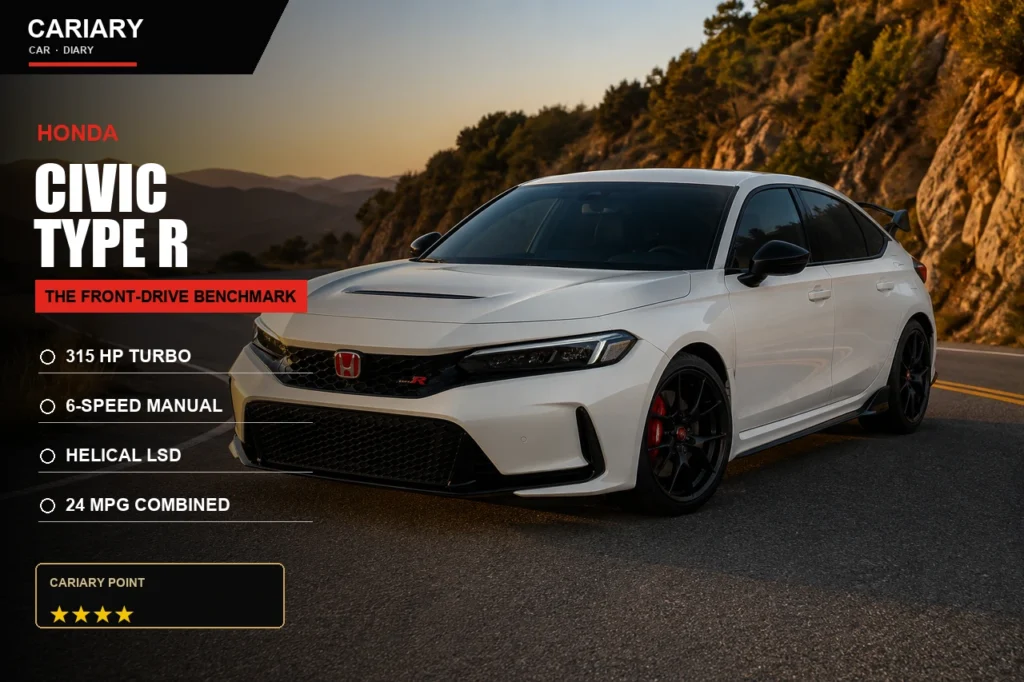
CARIARYCAR · DIARY · PERSPECTIVE
Cover: AI-generated Cariary editorial illustration, checked against current Honda Civic Type R references. It is not road-test photography.
This Honda Civic Type R Review asks how one front-wheel-drive hatchback can function as a track tool, commuter and practical family car without losing a clear identity. The 2026 FL5 is less visually frantic than earlier Type Rs, but its engineering remains focused: 315 hp, one manual transmission, a helical limited-slip differential and carefully managed front suspension geometry.
Cariary has not road-tested this vehicle. This is a research-based buyer review of the 2026 U.S.-market FL5 Civic Type R using Honda specifications and licensed current-generation photographs. Data was checked September 7, 2026.
Drivers who want a precise manual car, genuine cargo utility and repeatable performance.
Honda Civic Type R Review: Key Specifications
| Engine | 2.0-liter turbocharged inline-four |
|---|---|
| Output | 315 hp / 310 lb-ft |
| Transmission | 6-speed manual with rev matching |
| Drive | Front-wheel drive with helical LSD |
| EPA rating | 22/28/24 mpg city/highway/combined |
| Starting MSRP | $47,395 |
Table of Contents
- Why the Honda Civic Type R Formula Works
- Honda Civic Type R Review: Engine and Gearbox
- The Front Axle Is the Main Engineering Story
- A More Mature Type R Shape
- A Driver-Focused Cabin That Still Works Daily
- Price, Fuel and Consumables
- Choosing It Over an AWD Performance Car
- Honda Civic Type R Review: Cariary Perspective
- Who Should Buy It?
- FAQ
Why the Honda Civic Type R Formula Works
The Type R starts with a normal Civic’s basic virtues: useful doors, a wide hatch opening, good forward visibility and controls designed for frequent use. Honda then concentrates its performance work around response, cooling and repeatability rather than adding a second driven axle or an automatic gearbox.
That restraint gives the car a coherent purpose. It is quick enough to be serious, but the steering, pedal placement and gearshift remain central to the experience. Buyers are paying for calibration and integration, not only horsepower.
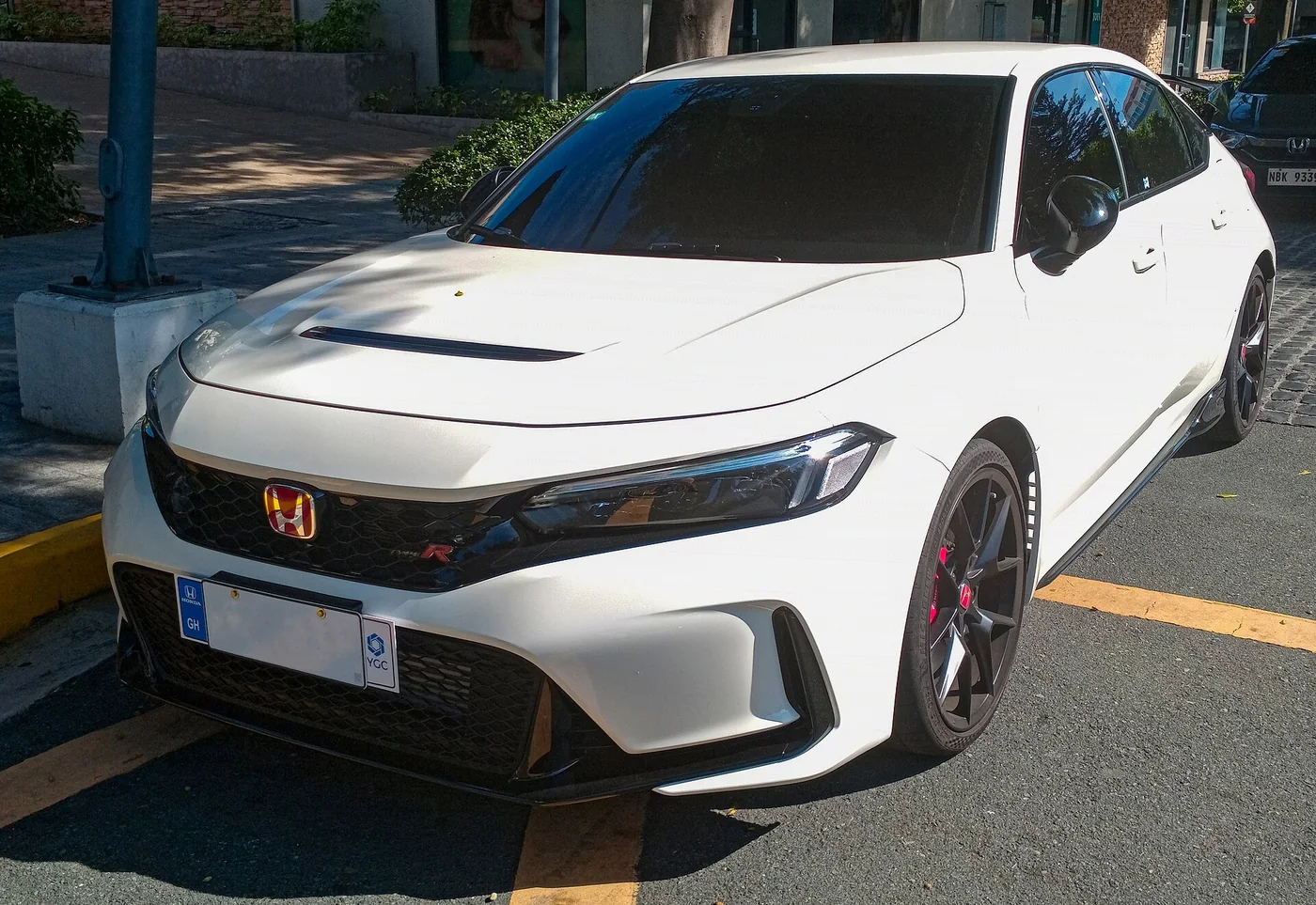
Honda Civic Type R Review: Engine and Gearbox
The 2.0-liter turbocharged four-cylinder produces 315 hp at 6,500 rpm and 310 lb-ft from 2,600 to 4,000 rpm. A lightweight single-mass flywheel and rev-match control support the six-speed manual. There is no automatic option, which strengthens the car’s identity while narrowing its audience.
Front-wheel drive places power delivery and steering through the same tires. The helical limited-slip differential helps distribute torque across the front axle, while the dual-axis front suspension reduces the steering disturbance that high output can create. Those systems do not repeal physics; they make the available grip easier to use.
The Front Axle Is the Main Engineering Story
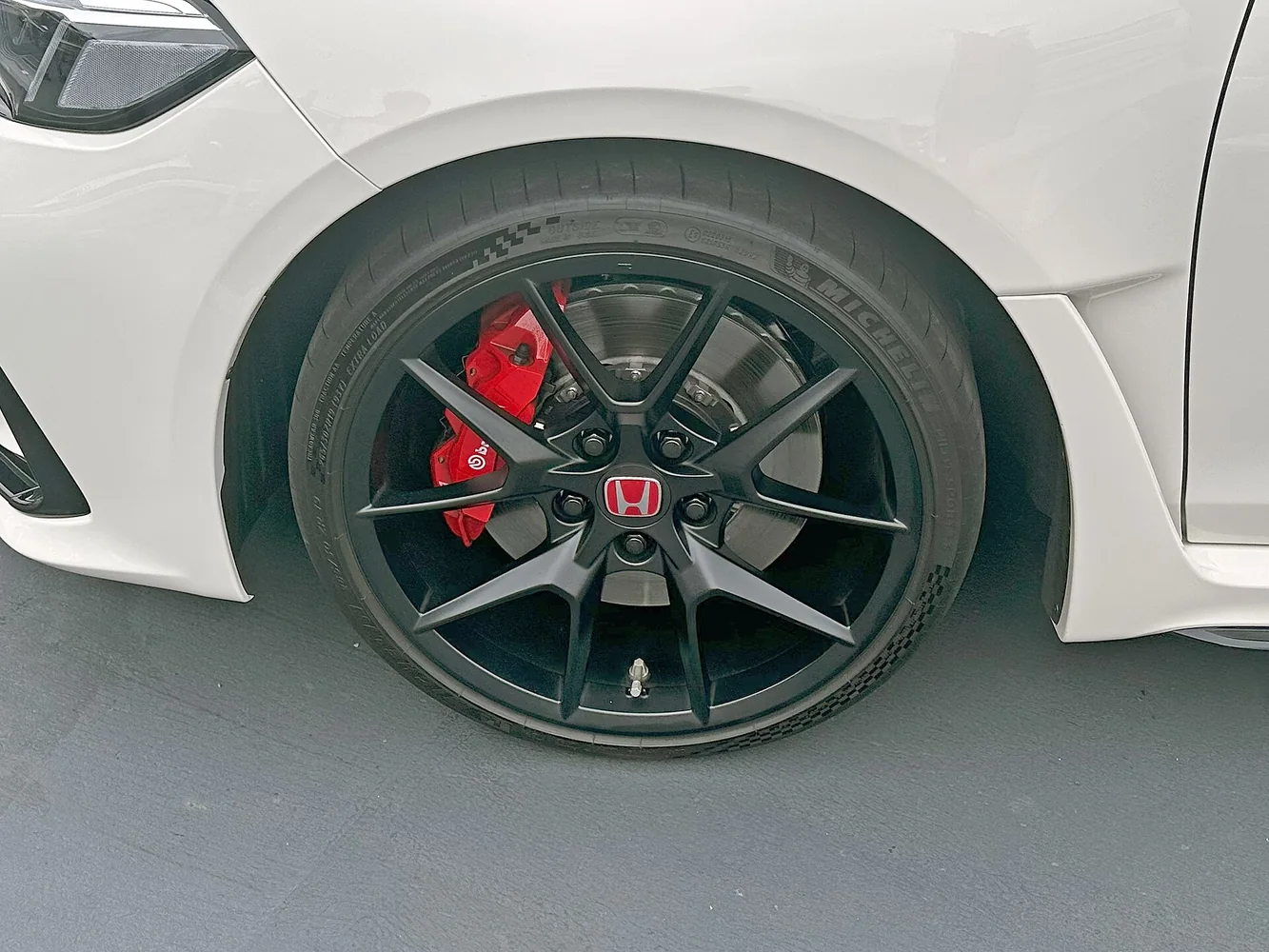
Honda uses adaptive dampers, dual-pinion variable-ratio steering and 265/30ZR19 Michelin Pilot Sport 4S tires. Four-piston Brembo front calipers act on 13.8-inch two-piece rotors. The hardware explains why tire condition, alignment and brake fluid matter more than cosmetic options on a used example.
Comfort mode can soften the dampers, but short sidewalls and performance seats still shape every commute. A proper test drive should include coarse pavement and highway cruising, not only a smooth corner.
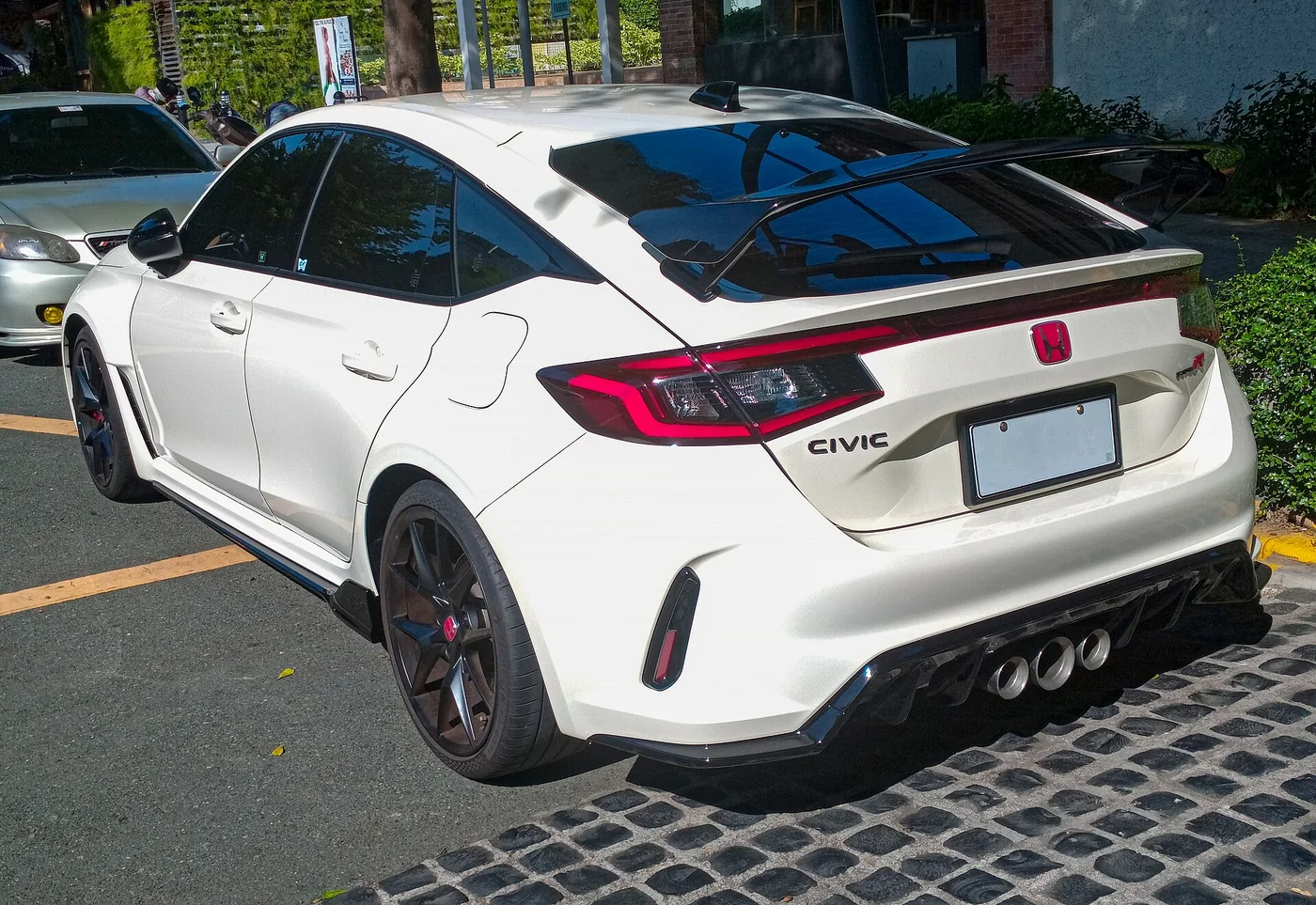
A More Mature Type R Shape
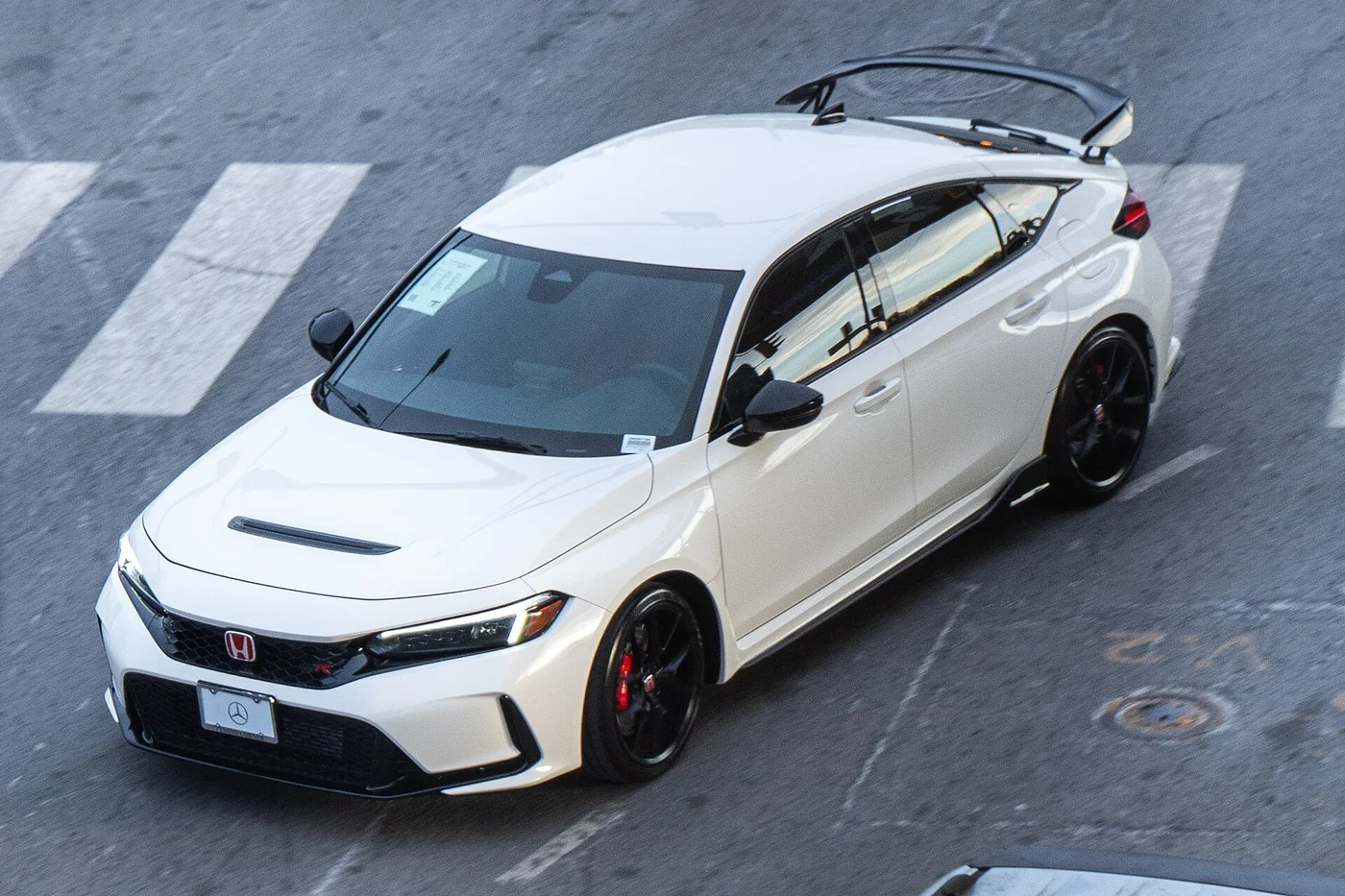
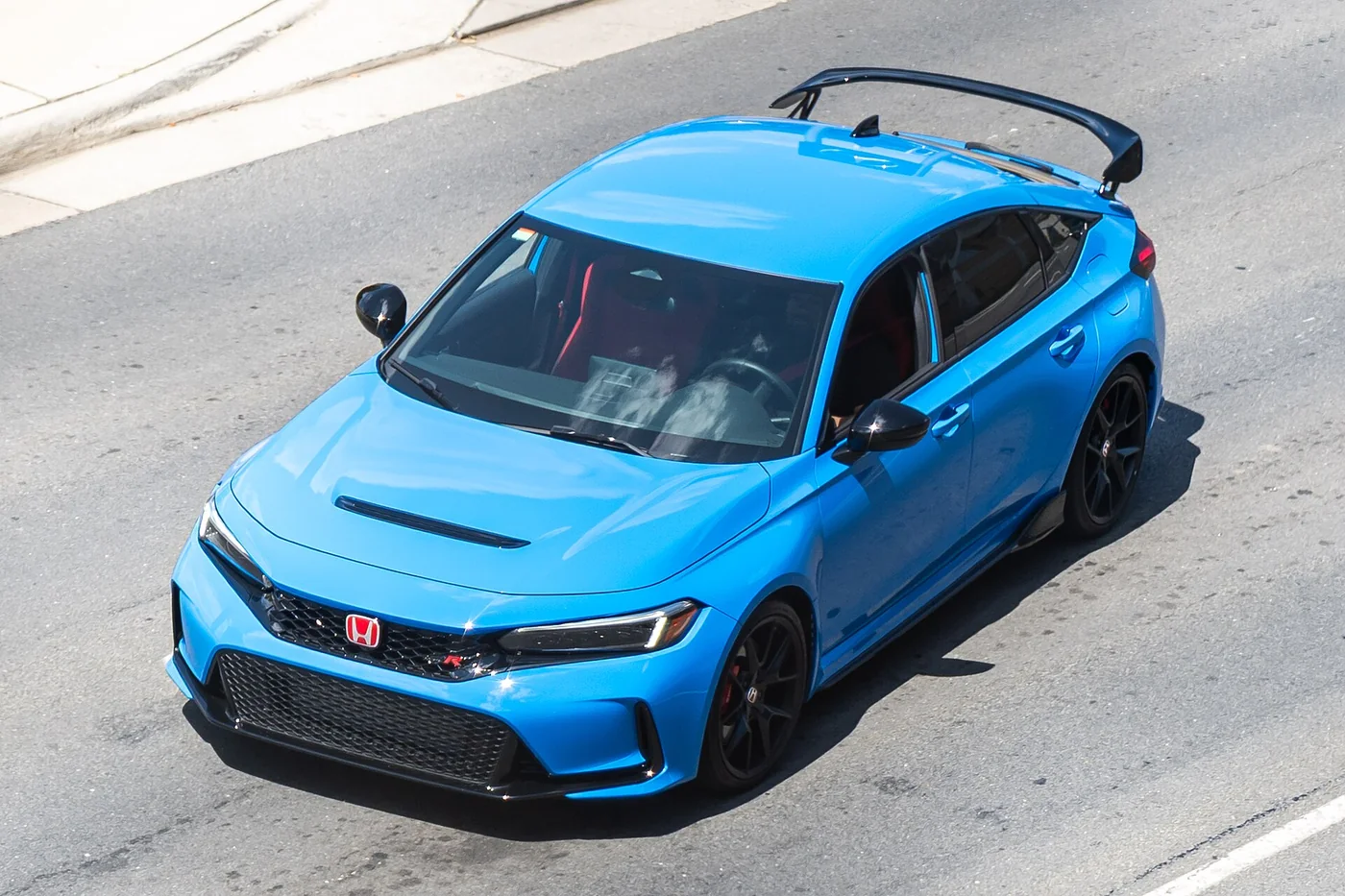
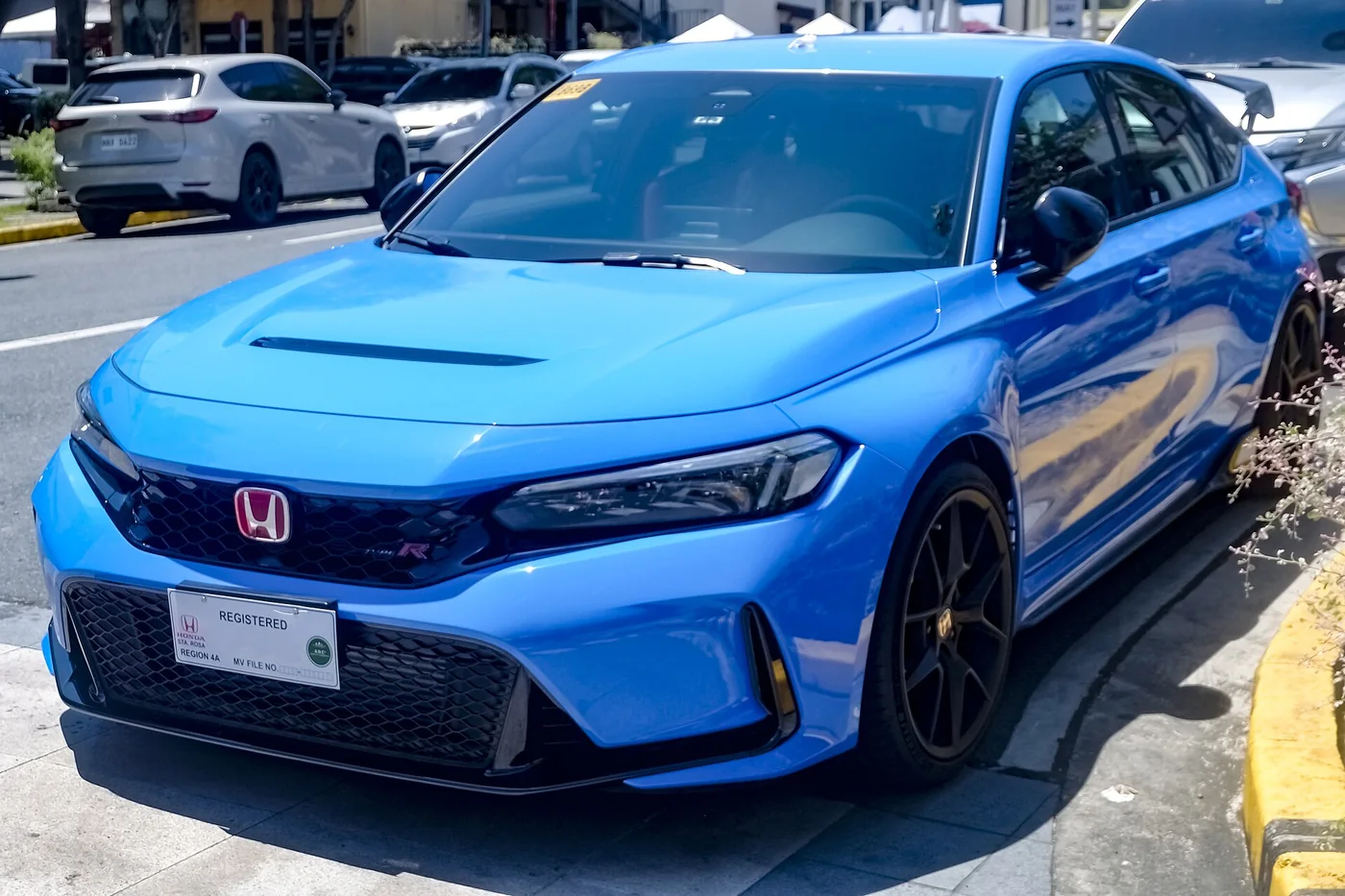
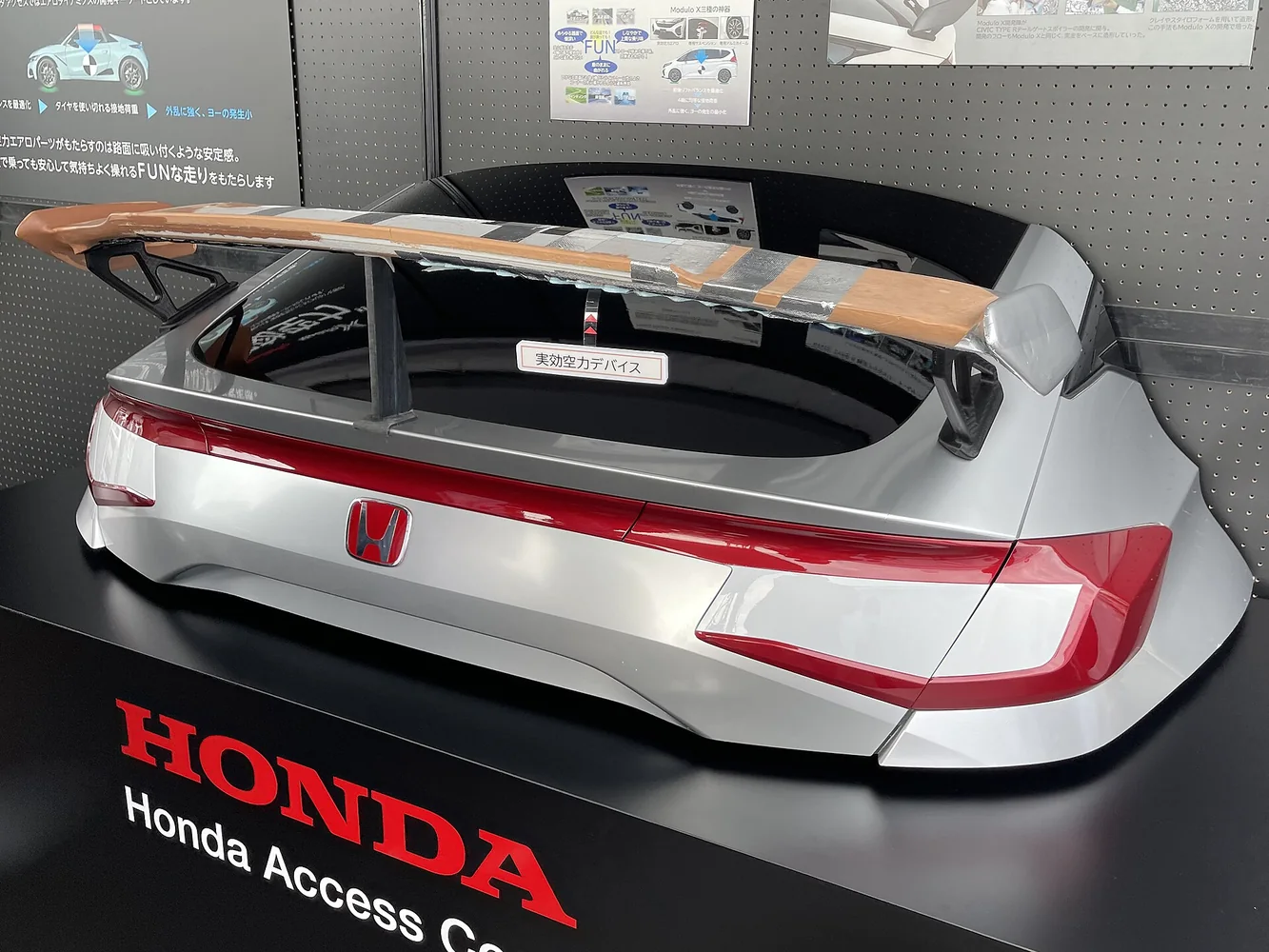
The FL5 uses a lower, wider stance and cleaner surfaces than its predecessor. Functional openings feed cooling air, front fender outlets manage pressure and the rear wing uses die-cast aluminum stays. The result looks calmer without hiding its purpose.
The large wing remains a visibility and taste decision. It sits below the main rearward sightline for many drivers, but buyers should confirm how it interacts with their seating position and garage habits.
A Driver-Focused Cabin That Still Works Daily
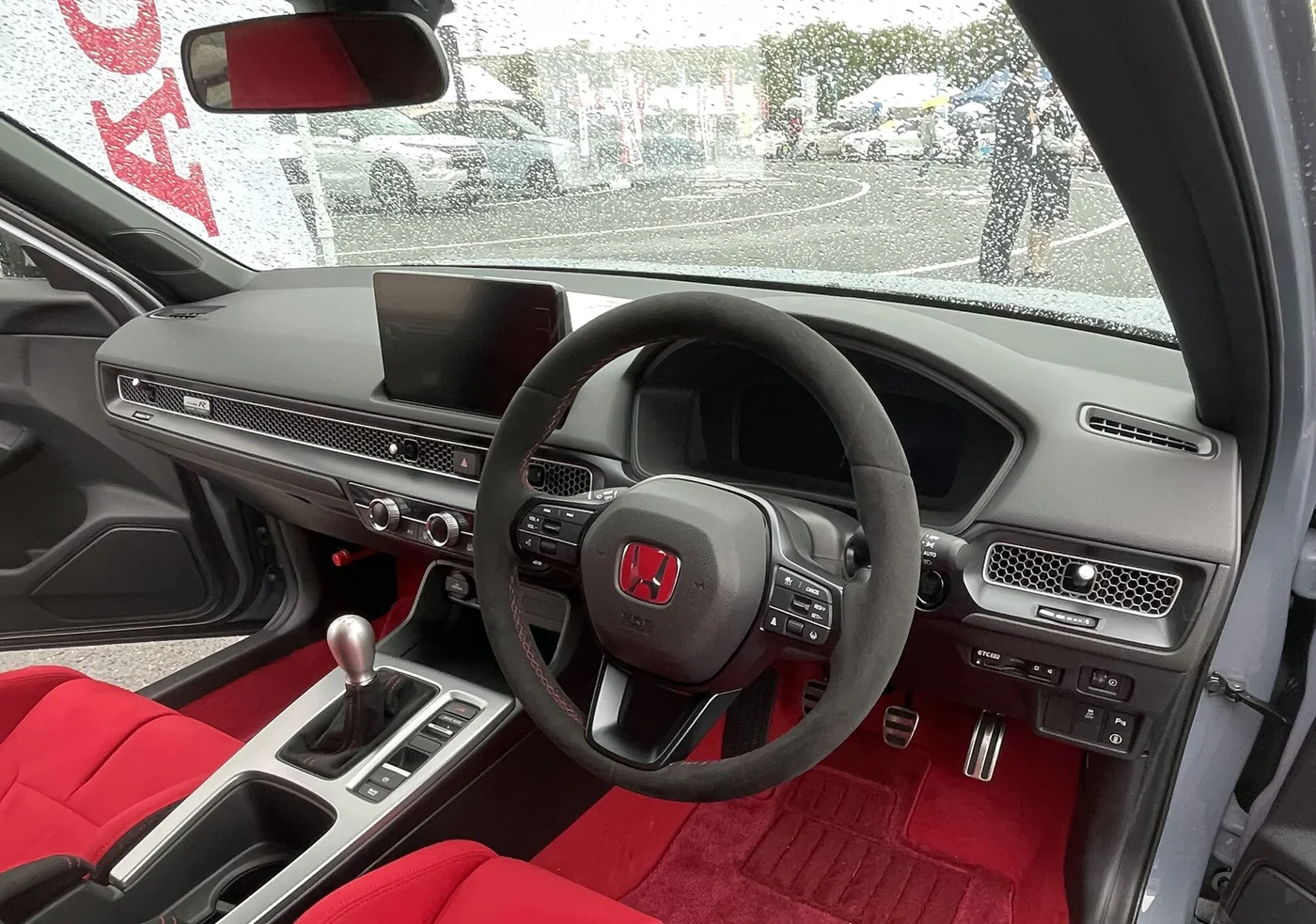
The metal shift knob, red seats and digital +R display make the special-car intent obvious. The underlying Civic layout keeps climate and infotainment functions familiar. Wide sightlines and a relatively low cowl reduce the mental effort of placing the car in traffic.
The deep front bolsters deserve a long sit before purchase. They support hard cornering but body shape determines comfort. Rear passengers get a usable hatchback cabin, while the broad cargo opening is more practical than the sedan silhouettes of many performance rivals.
Price, Fuel and Consumables
This Honda Civic Type R Review uses Honda’s 2026 price of $47,395 before destination and accessories. EPA ratings are 22 mpg city, 28 highway and 24 combined. Regular fuel is permitted, although premium is recommended for full performance.
The hidden budget is in 265-section summer tires, brake pads, rotors and track-day heat. Owners in cold climates need a second tire strategy. The car’s Honda badge does not make track consumables inexpensive.
Choosing It Over an AWD Performance Car
An all-wheel-drive rival can launch harder and feel calmer in poor weather. A rear-drive coupe can offer a more adjustable balance. The Type R answers with low mass for its practicality, excellent controls and a cabin that can carry people and gear.
The decision should follow use. Repeated winter driving, automatic-only households or a preference for effortless straight-line speed point elsewhere. Drivers who value shift quality, front-axle precision and daily cargo space will understand the premium.
Honda Civic Type R Review: Cariary Perspective
The Civic Type R earns four stars. Its powertrain, manual controls, cooling and front suspension form one of the clearest performance-car packages available at any price. It also remains useful enough to be the only car in a household.
The missing star reflects price, tire and brake costs, a firm daily temperament and the absence of an automatic. Those are not design mistakes, but they limit buyer fit. The Type R is best remembered as a practical car made exceptional by disciplined engineering.
Who Should Buy This Car?
Recommended For
Drivers who want a precise manual car, genuine cargo utility and repeatable performance.
Not Recommended For
Drivers who need an automatic, quiet ride, inexpensive tires or dependable winter grip without a second tire set.
One-Line Verdict: The missing star reflects price, tire and brake costs, a firm daily temperament and the absence of an automatic. Those are not design mistakes, but they limit buyer fit. The Type R is best remembered as a practical car made exceptional by disciplined engineering.
Frequently Asked Questions
Is the 2026 Civic Type R automatic?
No. Honda offers it only with a six-speed manual transmission.
How much power does it make?
The 2.0-liter turbocharged engine produces 315 hp and 310 lb-ft.
What fuel economy does it get?
Honda lists EPA ratings of 22 city, 28 highway and 24 mpg combined.
Why is it front-wheel drive?
The Type R develops the Civic platform’s front-drive layout with a helical limited-slip differential and dual-axis front suspension.
Data Reference
- Honda: 2026 Civic Type R overview, accessed September 7, 2026.
- Honda: 2026 Civic Type R specifications, accessed September 7, 2026.
Image credits and Creative Commons licenses are linked directly beneath each photograph.
Continue exploring buyer-focused reviews on the Cariary homepage.

