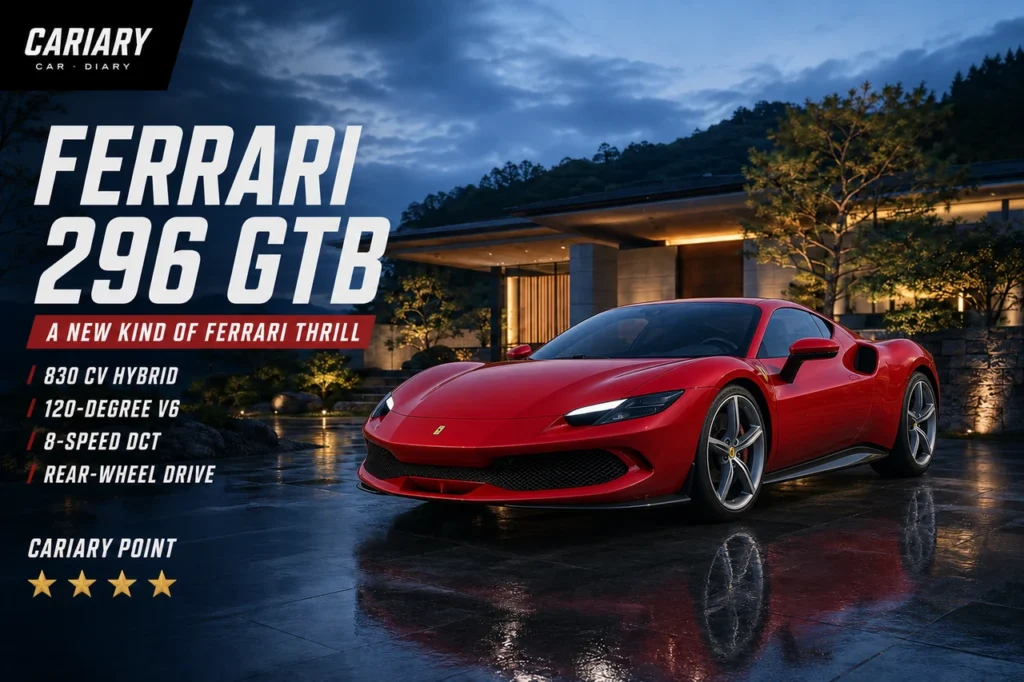
CARIARYCAR · DIARY · PERSPECTIVE
Cover: AI-generated Cariary editorial illustration, visually checked against the specified vehicle. It is not road-test photography.
This Ferrari 296 GTB review begins with the anxiety that often accompanies a smaller engine: has something important been lost, even when the performance has increased? For a Ferrari buyer, cylinder count carries emotion as well as engineering. The 296 does not make that attachment foolish. It asks whether a new arrangement can provide its own reason to care.
The result is a particularly interesting buyer’s car. Its compact-looking body and rear-wheel-drive layout suggest focus, while the plug-in hybrid system introduces another layer of decisions, controls and ownership checks. Cariary awards four stars for the strength of the concept and its extraordinary potential, with the qualification that specification and condition matter far more than the headline output.
This research-based Ferrari 296 GTB review concerns the original standard-production hybrid coupe launched in 2021, with early production cars used as photographic references. It does not cover the GTS or 296 Speciale. Cariary has not road-tested it; independent test results and Assetto Fiorano differences are explicitly attributed.
Four stars: a compelling new interpretation of Ferrari performance. The cabin interface, enormous capability and hybrid ownership responsibilities demand a considered buyer.
Ferrari 296 GTB review: Key Specifications
| Reference model | Original Ferrari 296 GTB coupe; standard specification |
|---|---|
| Combustion engine | 2,992 cc twin-turbo V6, 120-degree bank angle |
| Combined maximum output | 830 cv (610 kW), in Qualify mode |
| Battery capacity | 7.45 kWh, manufacturer figure |
| Transmission / driven wheels | Eight-speed dual-clutch / rear wheels |
| Manufacturer 0–100 km/h | 2.9 seconds |
| Seats | Two |
| Source | Ferrari’s 296 GTB launch technical dossier |
Ferrari 296 GTB Review: A Different Kind of Occasion
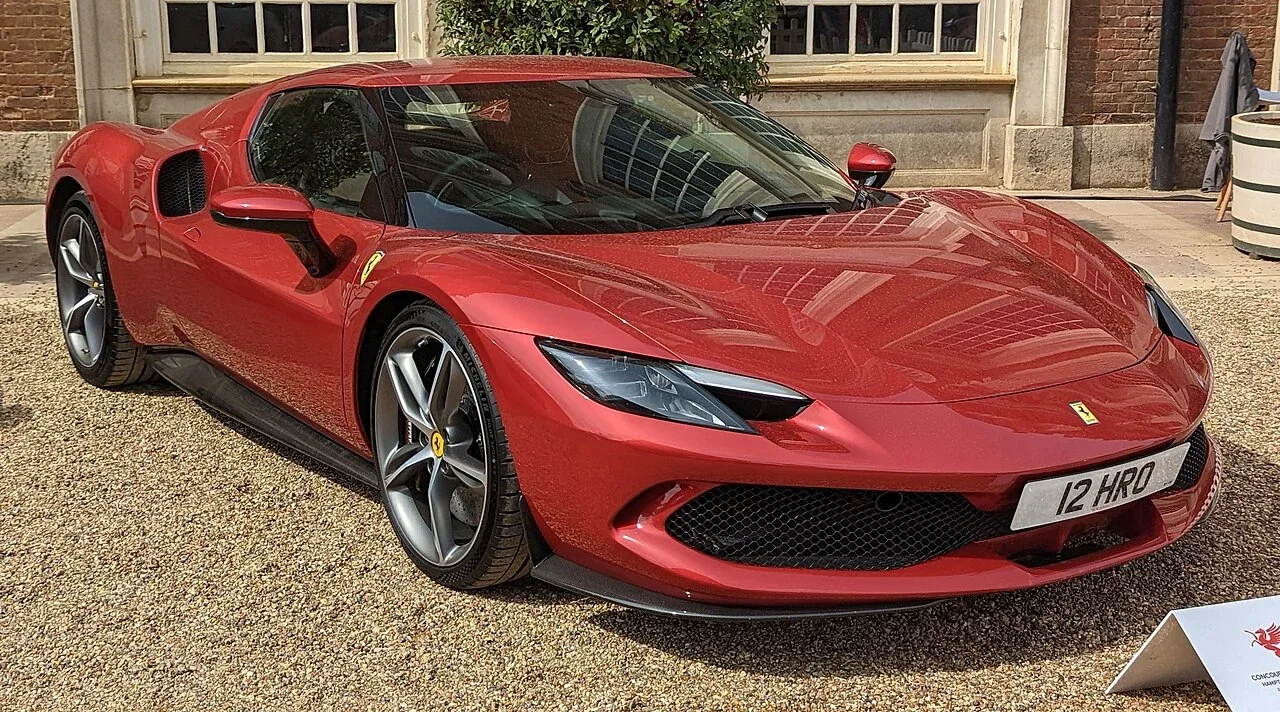
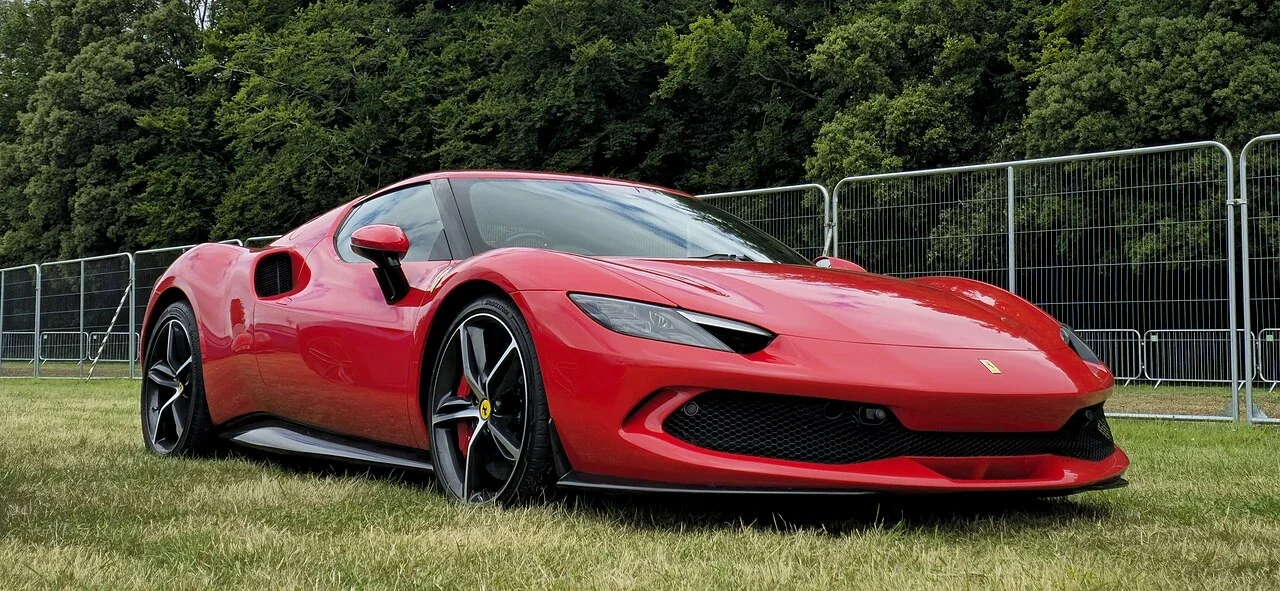
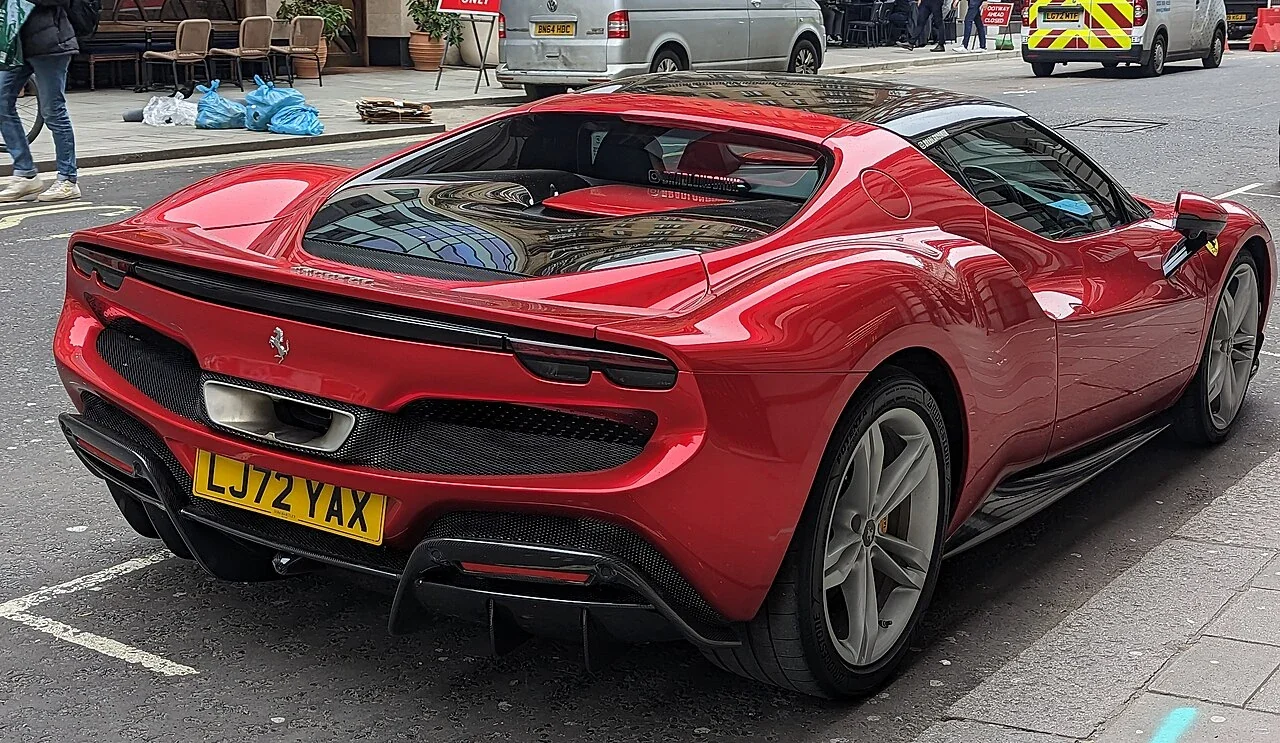
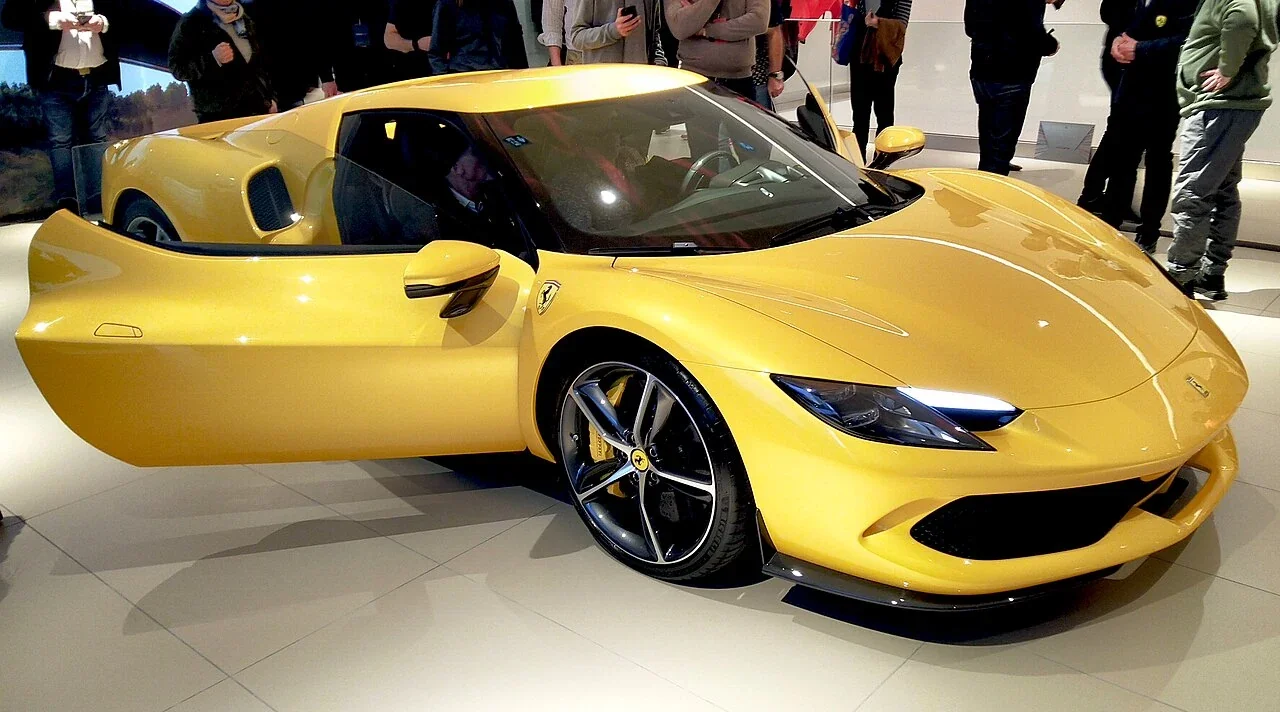
The 296’s shape is unusually persuasive when viewed without a specification sheet beside it. There is a clean relationship between the short-looking cabin, the muscular rear quarters and the openings in the body. It feels purposeful without requiring an enormous fixed wing to explain what sort of car it is.
That visual restraint is valuable. A supercar can make every journey feel like a public performance, which is not always what its owner wants. The 296 still attracts attention, but its appeal can be appreciated through proportion and surface rather than an accumulation of dramatic attachments.
Cariary sees the design as an argument for giving the car a fair hearing on its own terms. A buyer disappointed by the idea of a V6 might discover that the complete object still supplies the sense of occasion they wanted.
Equally, if a particular engine configuration is central to your dream, that preference should remain part of the decision. An expensive purchase is not improved by convincing yourself that an emotional objection does not count.
The V6 Hybrid: Understand the Layout Before the Numbers
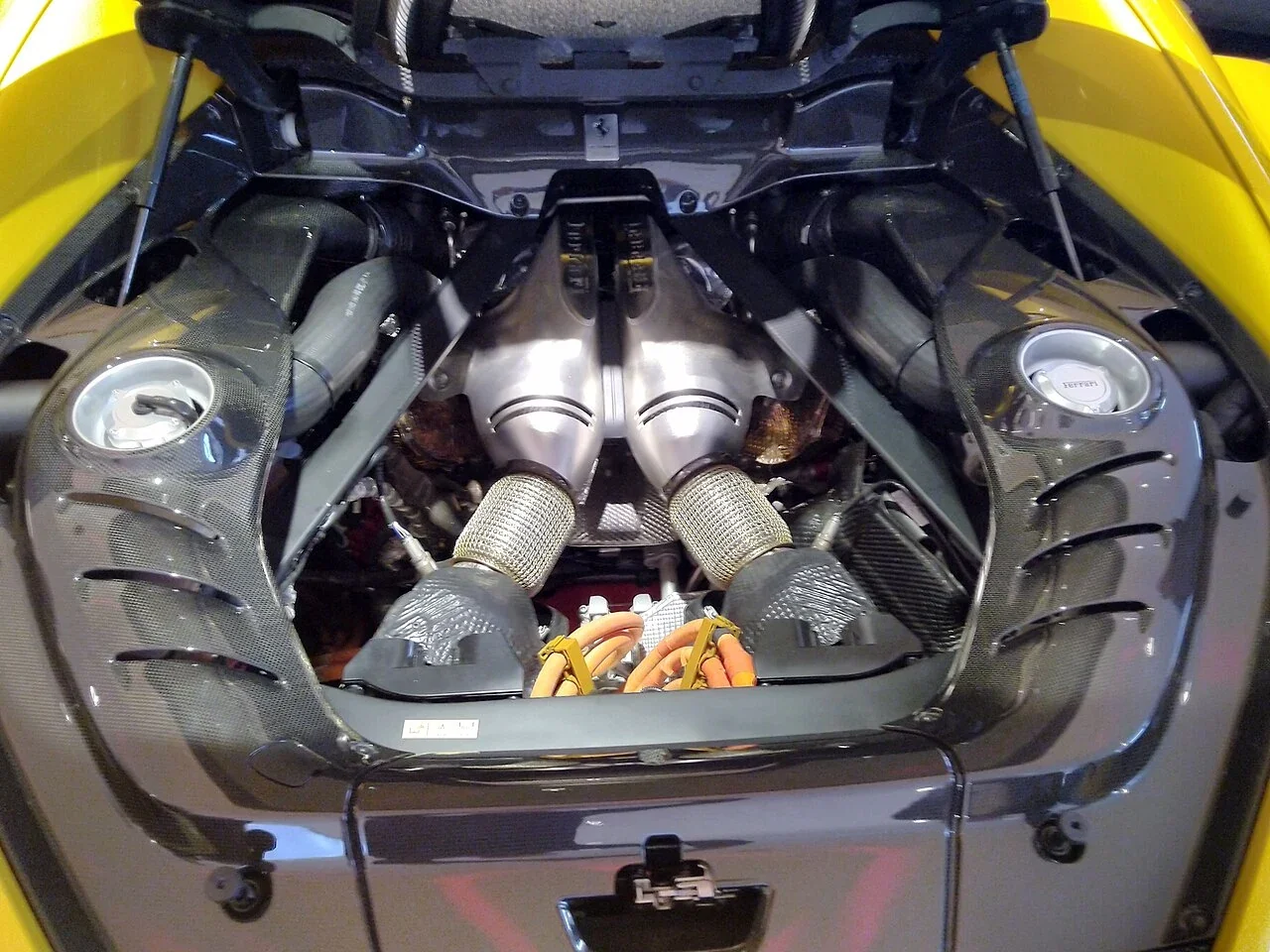
Ferrari’s technical dossier places the electric motor between the engine and gearbox, with a clutch that allows the combustion engine to be disconnected. The twin turbochargers sit within the wide V of the engine. The real engine-bay photograph below shows the installation; it is not a cutaway revealing every internal component.
The useful consequence for a buyer is that the car’s personality can change with its operating state. An electric departure and a fully active hybrid powertrain are different experiences inside the same vehicle. Understanding that transition is part of understanding the 296.
The combined 830 cv figure should not be described as the V6’s output alone, nor silently relabeled as 830 U.S. horsepower. The system figure refers to the engine and electrical contribution together, under the manufacturer’s stated conditions.
This Ferrari 296 GTB review treats the hybrid system as a core part of the car’s character. It is not simply an economy accessory attached to a traditional supercar. Buyers should be interested in how the whole system operates, rather than assuming that the battery can be ignored after purchase.
Battery State and Drive Modes Belong in the Test Drive
The original 296 GTB provides eDrive, Hybrid, Performance and Qualify power-management modes. Ferrari describes different priorities for electric running, automatic management, sustained readiness and maximum performance. A demonstration that begins with an unspecified battery state and one selected mode tells an incomplete story.
Ask the seller to explain the displays and demonstrate normal charging. Learn how the car behaves during a quiet departure, how the engine joins the process and what the chosen mode is intended to prioritize. These are practical questions, not an invitation to experiment with unfamiliar settings at speed.
Ferrari’s electric-distance claim is up to 25 kilometers with a charged battery. It is a manufacturer claim, not an EPA range figure or a promise for every temperature and route. The more relevant ownership question is whether you can charge conveniently where the car is stored.
A sensible Ferrari 296 GTB review should therefore discuss the garage as well as the road. Access to appropriate charging, a clear storage routine and confidence with the controls can make the technology feel manageable. Without those, even an impressive system can become something the owner avoids using.
Extraordinary Speed Does Not Settle the Buying Decision
In its test of a 2022 Assetto Fiorano car, Car and Driver recorded 60 mph in 2.4 seconds, using a one-foot rollout. That result belongs to that tested specification and procedure. It is not directly comparable with Ferrari’s 0–100 km/h claim. The same review highlighted control-interface frustrations and the test car’s road-use compromises.
Those numbers establish the scale of performance, but they do not explain what ownership will feel like. There are few ordinary journeys on which the difference between extremely fast and even faster can be explored responsibly. The quality of the response, the sense of control and the pleasure of the surroundings remain relevant much more often.
Cariary would use a demonstration to assess confidence rather than bravery. Can you judge the car’s width? Are the inputs understandable? Do you feel able to place it accurately at normal speeds? A supercar that makes you tense during routine use may deliver less pleasure than its capability suggests.
This Ferrari 296 GTB review is interested in performance that strengthens the relationship with the driver. The impressive part is not merely what the car can achieve, but whether its owner can find meaningful enjoyment well below the most dramatic numbers.
Assetto Fiorano: The More Serious Option May Be Wrong for You
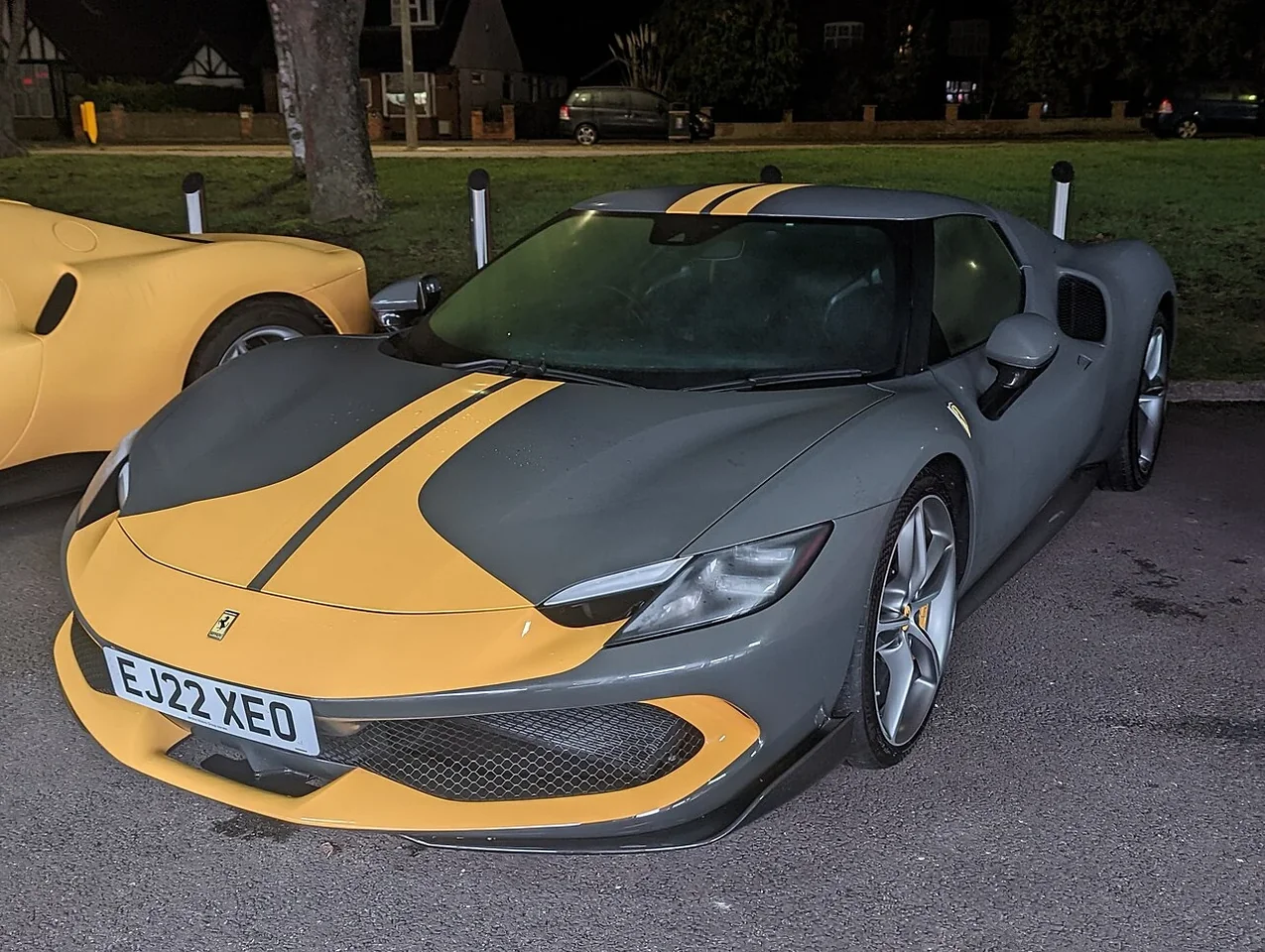
Ferrari’s Assetto Fiorano package adds track-focused Multimatic dampers and lightweight measures. It should be treated as a distinct specification choice, not as a decorative label that automatically makes a used car more desirable for every purpose.
A buyer planning regular road use should compare the standard car carefully. Evaluate the suspension and seat specification, confirm the fitted tires and check ground-clearance assistance on the actual example. Equipment should be verified from documentation and inspection rather than inferred from a stripe or a sales description.
Track-focused tires also need to be judged against climate and use. A setup selected for a demanding circuit session may be inconvenient for an owner who mostly travels in changing weather or leaves the car parked for long periods.
The recommendation in this Ferrari 296 GTB review is to buy the intended use, not the most aggressive name. If circuit work is a real part of the plan, the package deserves close consideration. If it is mainly a fantasy attached to a road car, the standard specification may provide the more satisfying ownership experience.
A Beautiful Cockpit Still Needs an Interface Test
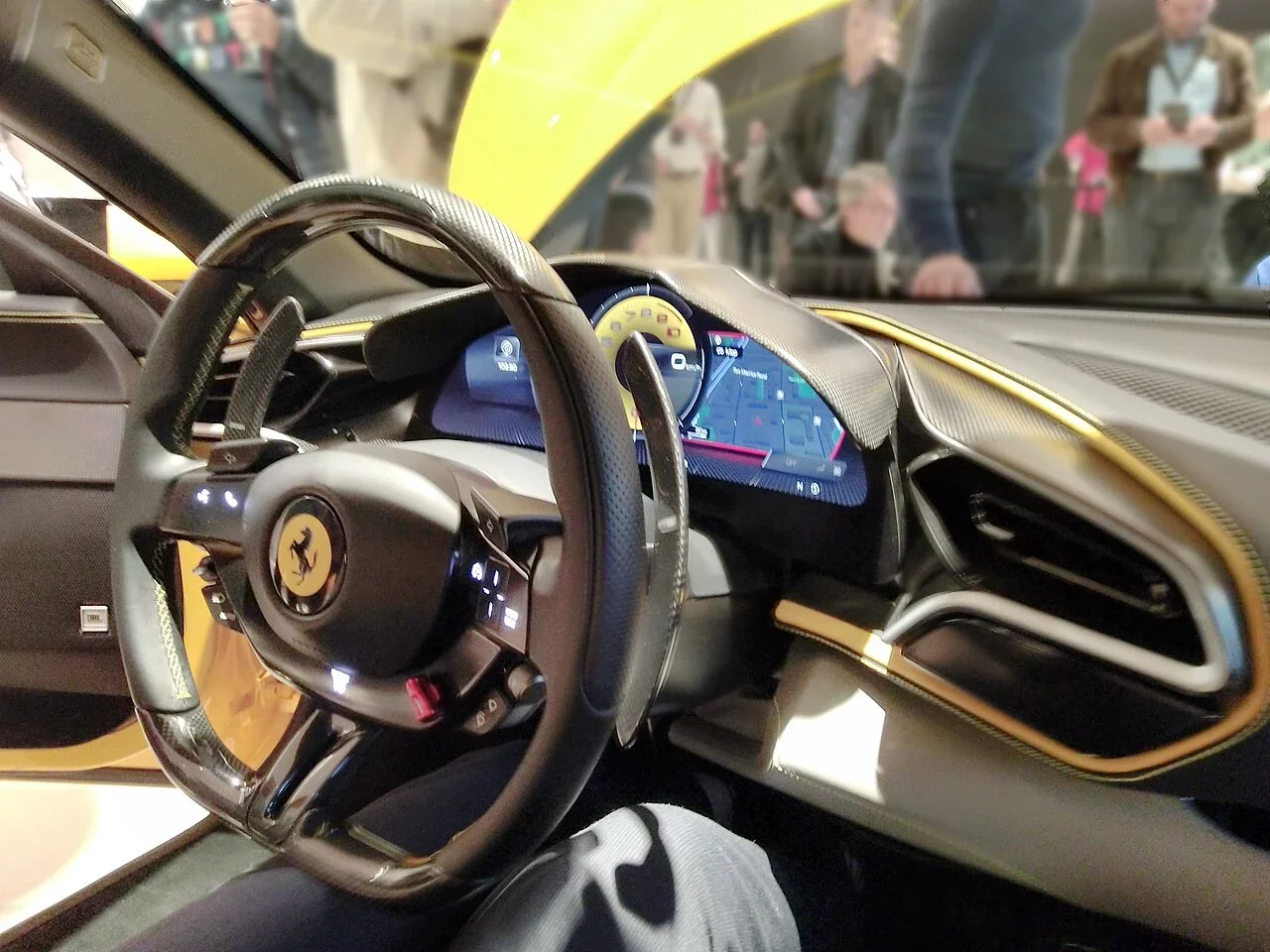
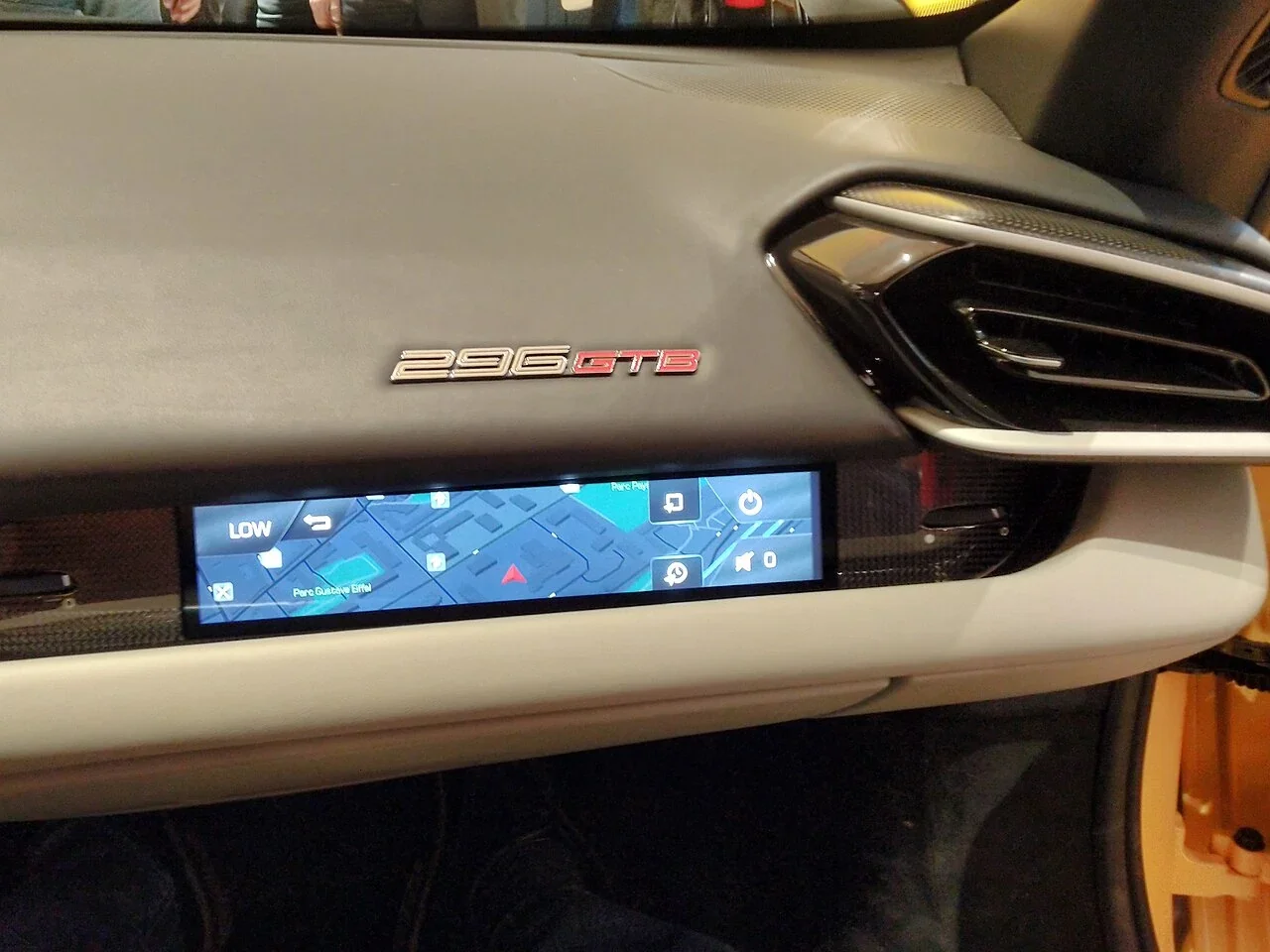
The early 296 cabin puts a great deal of control around the steering wheel and the driver’s display. It looks concentrated and modern, but visual simplicity is not the same as simple operation. The passenger display adds to the atmosphere without resolving the driver’s learning curve.
During an inspection, work through the ordinary tasks while parked: start-up, mirrors, climate, audio and navigation. Check that you can return to the information you want without feeling lost. Repeat the exercise after a short interruption. The second attempt is often more revealing than following a salesperson’s practiced demonstration.
Try the seat for more than a few minutes. Check the reach to the pedals, the view ahead and the movement required to get out beside another vehicle. Carbon surfaces and attractive upholstery cannot compensate for a driving position that creates discomfort.
Photographs in this Ferrari 296 GTB review show early production references. Confirm the actual controls, fitted options and any manufacturer-supported updates on the car being considered. Do not assume that every listing, model year or market has an identical cockpit.
Ownership: Maintenance Coverage Is Not a Complete Budget
Ferrari introduced the 296 GTB with a seven-year scheduled-maintenance program. That is meaningful, but scheduled servicing is not the same thing as comprehensive repair coverage. It should not be read as a promise that every battery, tire, brake or unexpected fault is included.
Ask an authorized dealer to confirm the remaining program eligibility and the separate warranty position in writing for the exact vehicle. Request the service history, outstanding campaign status and a diagnostic inspection appropriate to the hybrid system. A reassuring dashboard at one viewing is not a substitute for that record.
Inspect charging operation, supplied equipment, underbody condition and evidence of repairs. Establish how the car has been stored and maintained between journeys. These are prudent checks for a complex high-performance purchase, not an allegation of a specific widespread defect.
This Ferrari 296 GTB review avoids assigning a speculative future resale value or declaring long-term reliability from a short road test. A buyer can make a better decision by obtaining current insurance, servicing and consumable quotes for the exact car.
Leave a reserve beyond the purchase price. A car can be affordable to acquire and uncomfortable to keep. That distinction matters especially when the emotional attraction encourages you to stretch for the most striking specification.
Ferrari 296 GTB Review: Choose the Future You Actually Want
The closest comparison is not always another car with a similar acceleration time. Some buyers will be drawn to the naturally aspirated character discussed in our Lamborghini Huracán review. Others will want to explore the different hybrid proposition of the Ferrari SF90, or the approach taken by the McLaren 750S.
Use those alternatives to identify the experience you would miss. Is it the sound and response of a particular engine type, the visual presence, the controls, or the feeling of mastering a new technology? Answering that question is more useful than constructing a ranking from isolated test results.
Cariary finds the standard 296 GTB especially interesting for a buyer who welcomes its hybrid character and wants the car to make sense on the road. It is harder to recommend to someone who regards the electrical system as an unwelcome obligation or intends to buy solely from an image and a power figure.
The final Ferrari 296 GTB review verdict is that the smaller engine has not made the ownership decision smaller. This remains a serious, emotional purchase with serious practical questions. Four stars recognize the appeal while leaving room for those questions to change an individual buyer’s answer.
Choose a well-documented car whose specification fits your use, learn the systems and allow the complete experience to make its case. The 296 is most convincing when it is chosen deliberately, rather than accepted as the unavoidable replacement for a different dream.
Who Should Buy It?
Recommended For
Buyers interested in the hybrid experience itself, willing to learn the controls and able to support specialist inspection, charging and ownership costs.
Not Recommended For
Buyers whose central requirement is a specific non-hybrid engine character, effortless controls or supercar ownership without detailed technical and financial preparation.
One-Line Verdict: The 296 GTB makes a convincing case for a different Ferrari experience, provided you want the complete car rather than only its power figure.
Frequently Asked Questions
Is the 296 GTB all-wheel drive?
No. The original 296 GTB sends drive to the rear wheels. Do not confuse its layout with the SF90’s.
Does the V6 alone produce 830 cv?
No. The 830 cv maximum is the combined hybrid-system figure specified by Ferrari, not combustion-engine output alone.
Is Assetto Fiorano essential?
No. It is a specialized choice. Road-focused buyers should compare standard suspension, fitted tires, seat comfort and clearance equipment before preferring the track-oriented package.
Does seven-year maintenance cover every repair?
No. Scheduled maintenance and repair warranty are different. Confirm eligibility, exclusions and remaining coverage for the exact car with an authorized dealer.
Further Reading and Data Reference
Data reference date: September 7, 2026. Specifications and attributed test observations are linked where discussed. Cariary Point is an editorial buyer-fit assessment, not an owner road-test score or reliability rating.
Explore more Cariary car reviews and buyer perspectives.

