CARIARYCAR · DIARY · PERSPECTIVE
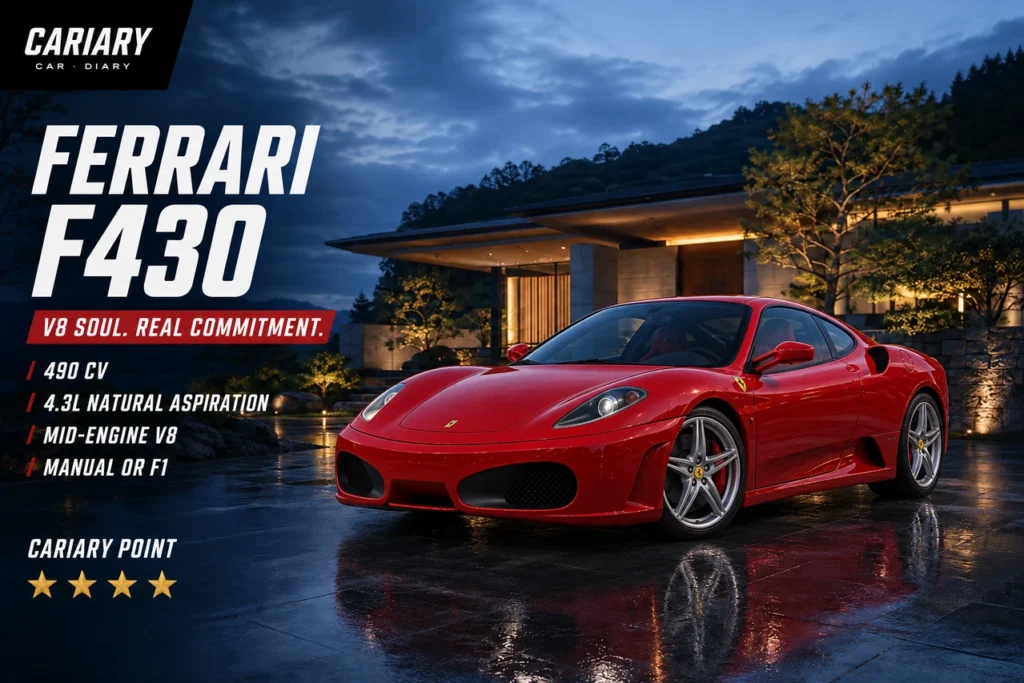
Cover: AI-generated Cariary editorial illustration, checked against the specified vehicle. It is not road-test photography.
This Ferrari F430 review begins with a choice that a photograph cannot settle: do you want the ritual of a manual shift, or the period character of Ferrari’s F1 paddles? Both versions share the same fundamental attraction, but living with them is not the same experience.
The F430 is interesting because it sits at a transition. The engine still asks for revs, the cabin remains focused on driving, and electronics increasingly help manage what reaches the road. Cariary sees a strong argument for this combination, provided the buyer understands what an older Ferrari actually asks in return.
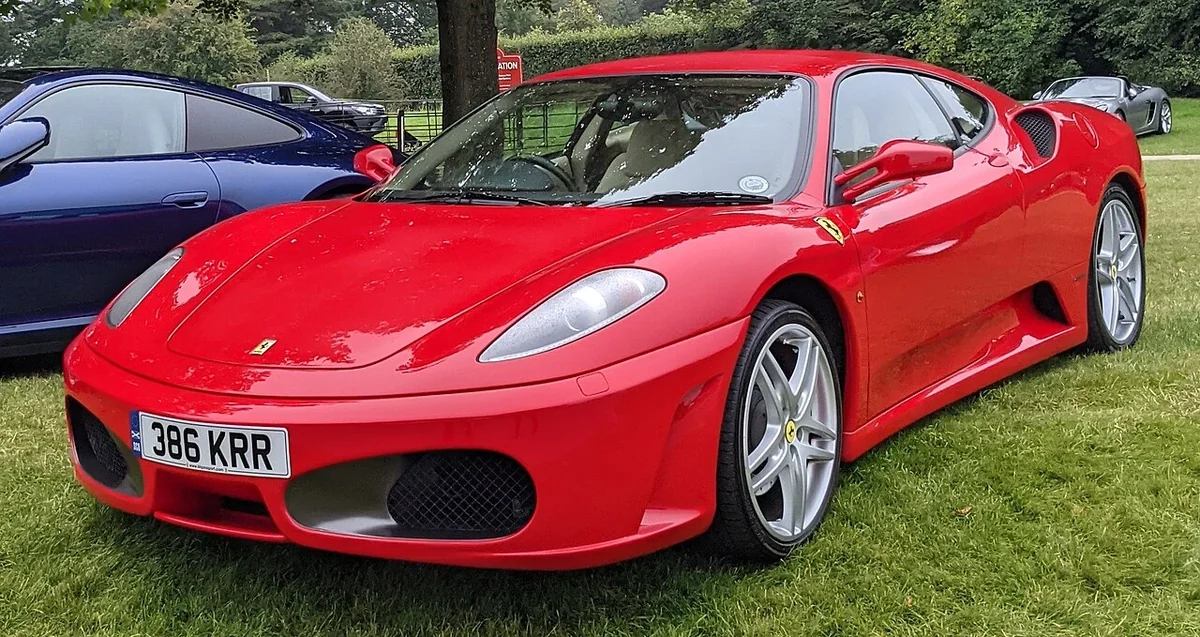
This research-based review covers the standard F430 Berlinetta coupe, using Ferrari’s 2005 European specification as the reference. It excludes the Spider, Challenge and 430 Scuderia. Photographs include different production years. Cariary has not road-tested these cars.
4/5 for buyers seeking a naturally aspirated mid-engined Ferrari with substantial involvement. The engine and sense of occasion are powerful attractions; transmission behavior, age and specialist ownership requirements keep the recommendation conditional.
Ferrari F430: Key Specifications
| Reference | Standard 2005 European Berlinetta coupe |
|---|---|
| Engine | 4,308 cc naturally aspirated V8 |
| Output / torque | 490 CV at 8,500 rpm / 465 Nm |
| Transmission | 6-speed manual or F1 automated manual |
| Drive / seats | Rear-wheel drive / 2 |
| Kerb / dry weight | 1,450 kg / 1,350 kg, distinct Ferrari figures |
| 0–100 km/h | 4.0 seconds, Ferrari claim |
Ferrari F430: A Shape With Mechanical Presence
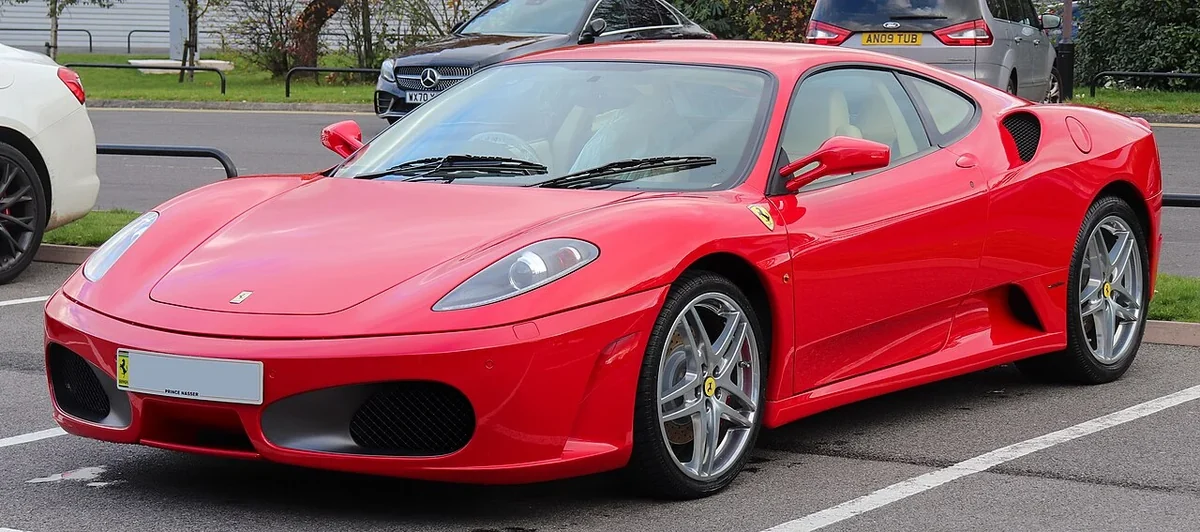
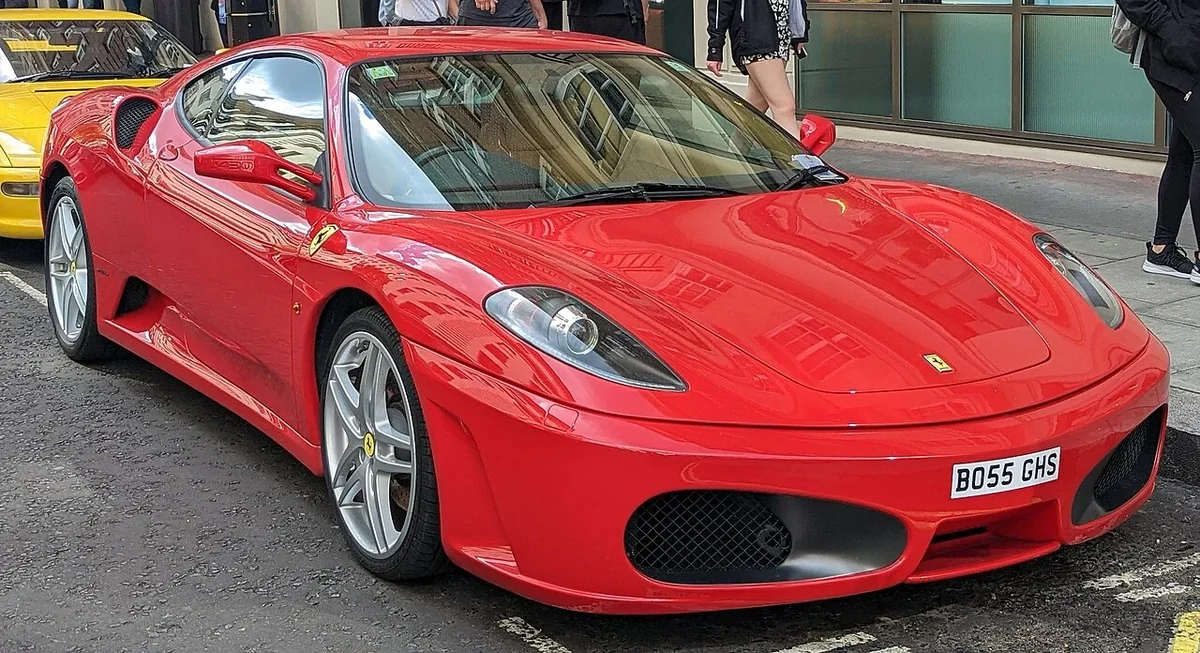
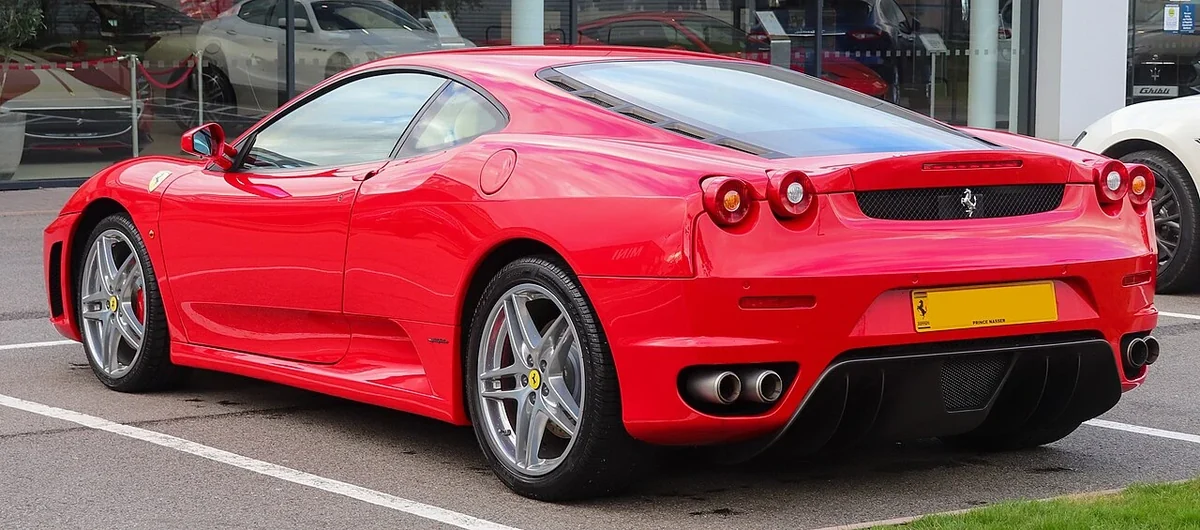
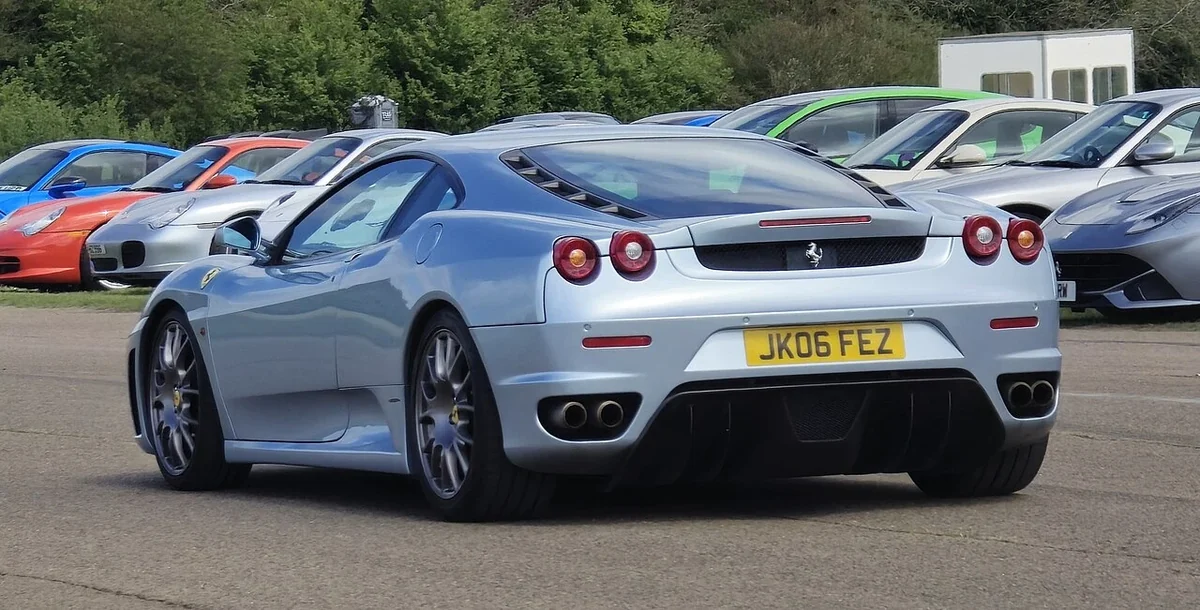
The large front openings and exposed rear engine compartment make the F430 feel purposeful without the complex surfaces of a more recent supercar. It still looks dramatic, but the appeal is easy to read. The low cabin, broad rear and compact nose place the engine at the center of its visual story.
Look beyond the color at a viewing. Panel alignment, finish consistency and damage around low edges deserve attention. A neatly presented car can still have an incomplete repair history. Ask which panels have been refinished and why, and have the explanation assessed independently rather than treating any repaint as automatically good or bad.
The 4.3-Liter V8 Is the Main Event
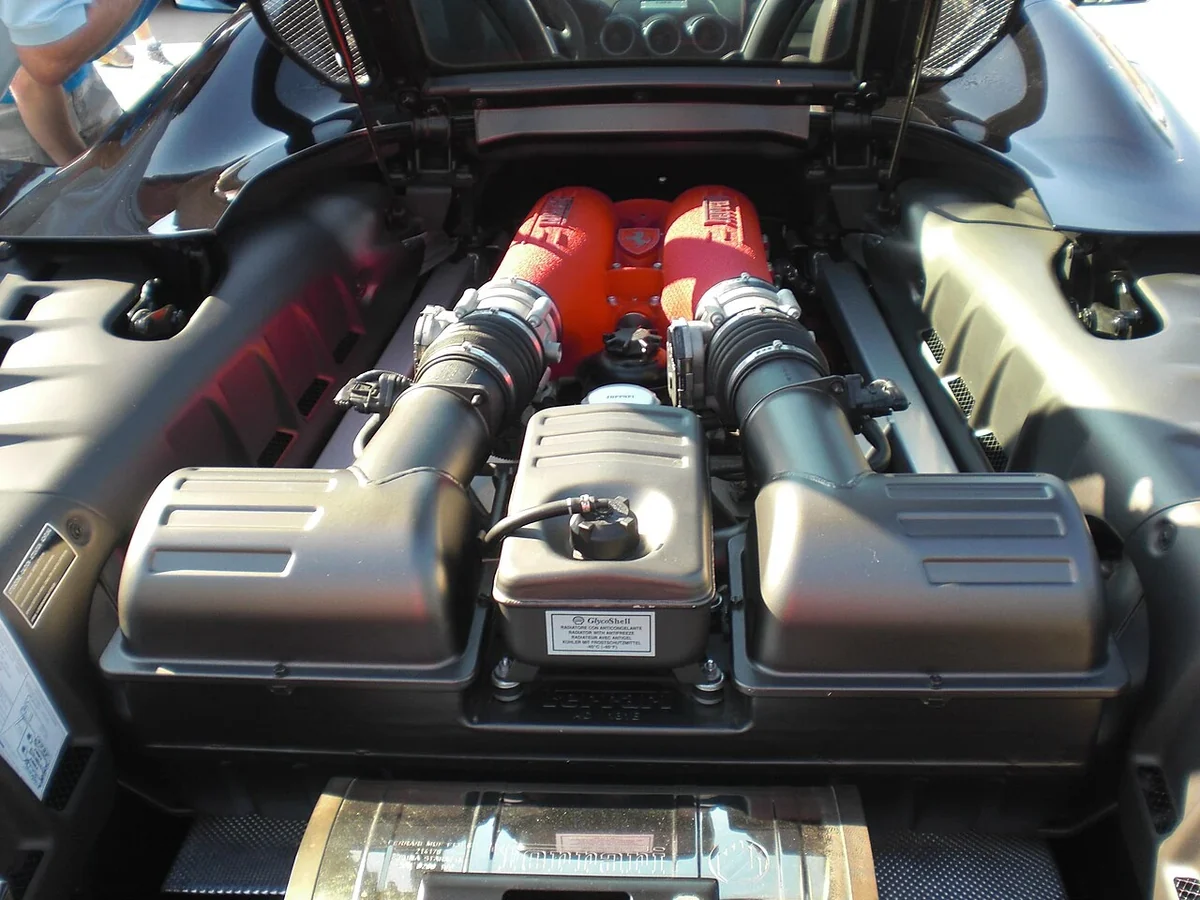
Ferrari’s original F430 brochure specifies a naturally aspirated V8 and the European figures listed above. CV is a metric power unit; replacing it casually with U.S. horsepower creates a misleading comparison. Dry and kerb mass also describe different conditions, so the lighter number is not a ready-to-drive weight.
The ownership appeal is an engine whose build toward higher revs is part of the occasion. That is a different purchase from effortless low-speed acceleration alone. You should want the sound and response enough to tolerate the attention they bring. If the main objective is easy, quiet speed, a less theatrical car may be more satisfying over a normal week.
Manual or F1: Decide Before You Shop
The F1 option is an automated manual, not the dual-clutch transmission found in later Ferraris. A paddle does not tell you what lies behind it. Its clutch-based operation should be understood on its own terms, particularly when evaluating low-speed behavior. A manual adds a clutch pedal and a different layer of driver participation.
Drive the transmission type you actually intend to buy. Check behavior when warm as well as cold, ask a specialist to interpret diagnostic information and establish the history of clutch and related work. A converted car must be described and assessed as a conversion. Factory specification, workmanship and documentation are separate questions, and none should be inferred from a metal shift gate alone.
Ferrari F430 Handling: Electronics With a Purpose
The original brochure describes E-Diff and the steering-wheel manettino as parts of the car’s coordinated control strategy. They do not remove the need for appropriate tires, smooth inputs or judgment. An explanation that portrays this Ferrari as entirely free of electronic intervention is as misleading as one that suggests electronics can fix every mistake.
In its period F430 road test, Car and Driver praised the responsive steering and cornering composure. Its acceleration measurements came from Ferrari’s Fiorano circuit with a one-direction test setup, so they should not be treated as a universal road result. Cariary’s emphasis is on preserving coherent handling in the car you buy.
A Focused Cabin Still Needs to Fit You
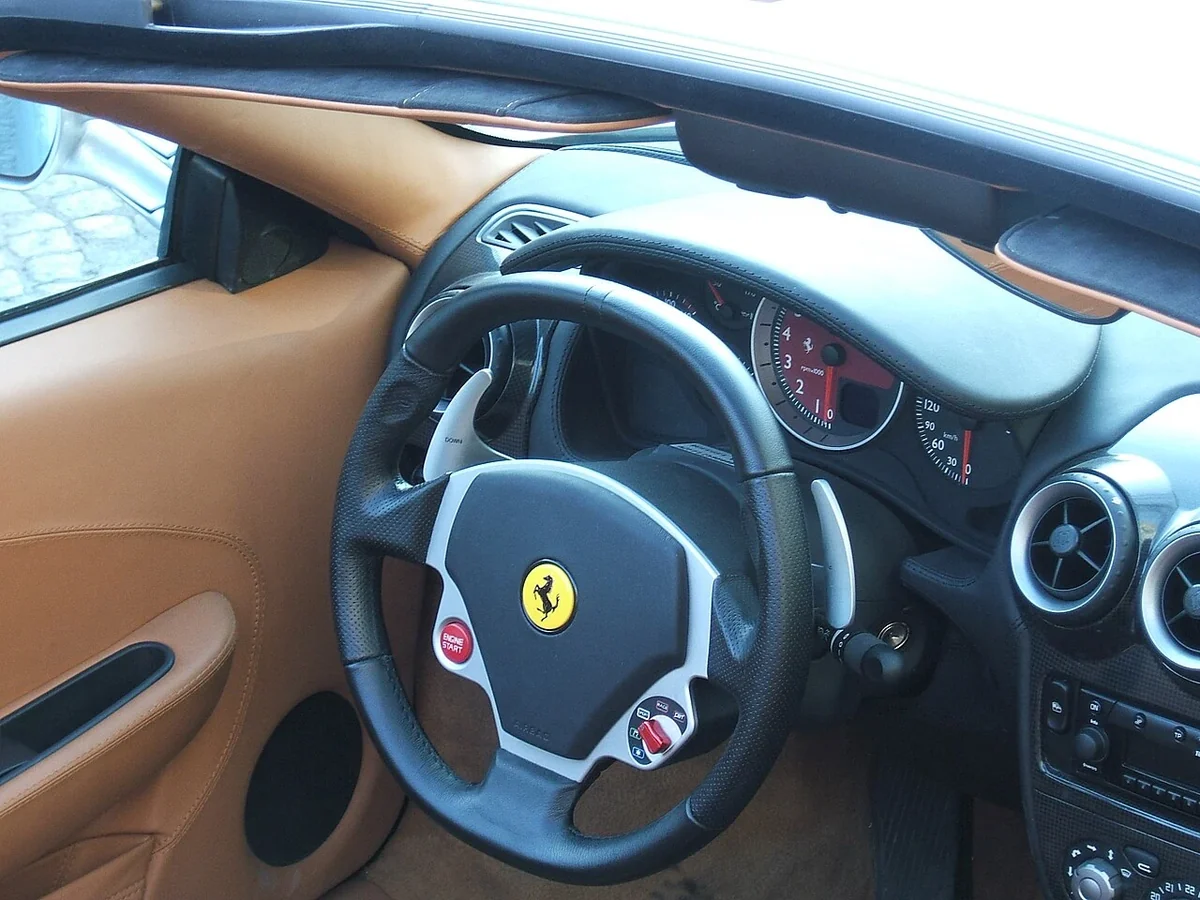
The driving position should be checked with the shoes and clothing you normally use. Make sure the seat supports you, the wheel and pedals align naturally and the controls are legible. A supercar can be spectacular in a short video yet become an awkward place to spend an afternoon if you never properly tested the fit.
Try the low-speed tasks too: entering a parking space, seeing around the rear quarters and opening the door in a realistic gap. These are not trivial objections to an exotic car. They determine whether you will comfortably use it or repeatedly leave it at home. Equipment and trim vary between examples, so the photographed cabin is not a promise of a particular advertisement’s specification.
Condition Matters More Than a Tempting Price
Commission an independent Ferrari specialist inspection before committing. Request dated service records, a diagnostic assessment, underbody examination and clear documentation of modifications. The aim is to understand what needs attention now, what is approaching and what cannot be established from the available history. A clean exterior is only one part of that picture.
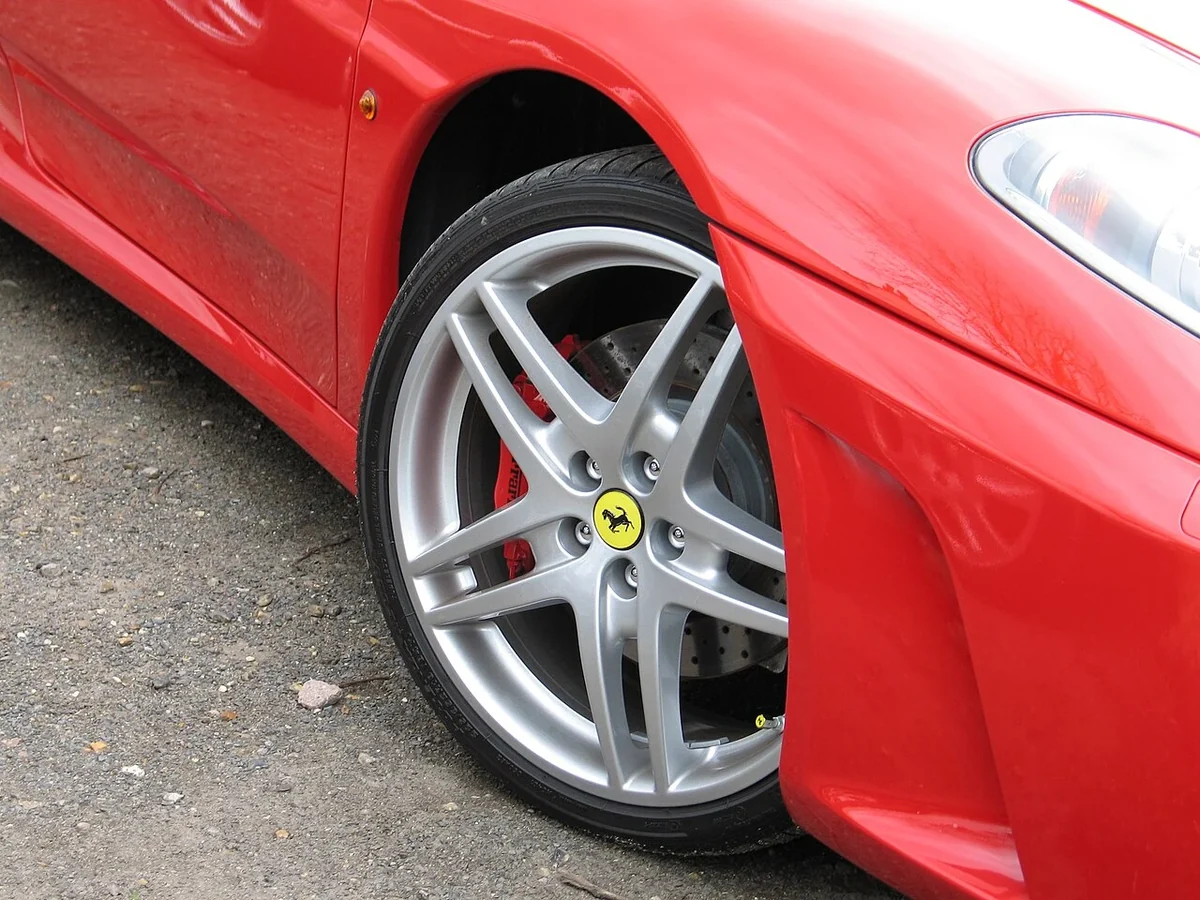
Brake specification deserves particular attention: carbon-ceramic brakes were optional in the early reference brochure, so do not assume every car has the same hardware. Ask for an assessment of the fitted discs, pads and tires, plus suspension, leaks and exhaust condition. Obtain car-specific quotations. A low advertised price loses meaning if the necessary remedial work absorbs the saving.
F430 or 458 Italia?
The Ferrari 458 Italia review explores the next step in Ferrari’s naturally aspirated V8 line. The newer car’s different transmission and broader performance capability do not make the F430’s appeal disappear. They make it more important to identify the experience you are seeking.
The Lamborghini Gallardo review provides another period comparison with a distinct engine identity and ownership brief. Compare actual examples rather than abstract reputations. A well-supported car that fits your preferences is a better starting point than winning an argument about which badge should be more desirable.
Why the Ferrari F430 Earns Four Cariary Stars
The F430 earns four stars because its attraction is substantial and lasting. It combines a visually legible mid-engine layout, a naturally aspirated V8 and meaningful transmission choice. This is the kind of car that can make a planned drive feel like an event before the journey even begins.
The fifth star is withheld because access, age, low-speed transmission expectations and specialist support place real conditions on enjoyment. That is not a claim that every F430 is troublesome. It is a recommendation to buy a documented example for the experience it actually delivers, with the time and budget to keep that experience intact.
Who Should Buy It?
Recommended For
An enthusiast who wants an expressive naturally aspirated Ferrari and can plan around specialist maintenance and the chosen gearbox.
Not Recommended For
A buyer seeking modern automatic smoothness, discreet daily use or an exotic car whose purchase price leaves no reserve for inspection and repairs.
One-Line Verdict: The F430 is a compelling Ferrari experience when you choose the gearbox deliberately and buy the individual car carefully.
Frequently Asked Questions
Is the F1 gearbox a dual-clutch?
No. The F430 F1 uses an automated manual transmission. Its behavior differs from a later dual-clutch Ferrari.
Does this review cover the Scuderia?
No. It evaluates the standard Berlinetta coupe; Scuderia equipment and performance should not be mixed into it.
Were ceramic brakes standard on every Ferrari F430?
No. The early reference brochure lists them as an option. Verify the equipment and condition of each car.
Which transmission should I choose?
Try both if possible. Choose the involvement and low-speed behavior you enjoy, then verify originality and maintenance history.
Is four stars a reliability score?
No. It is Cariary’s assessment of appeal and ownership fit, not a measured failure rate or a warranty prediction.
Further Reading and Data Reference
Data reference date: September 13, 2026. Official specifications and attributed test observations are linked where discussed. Cariary Point is an editorial buyer-fit assessment, not an owner road-test score or reliability rating.
Explore more Cariary car reviews and buyer perspectives.

