CARIARYCAR · DIARY · PERSPECTIVE
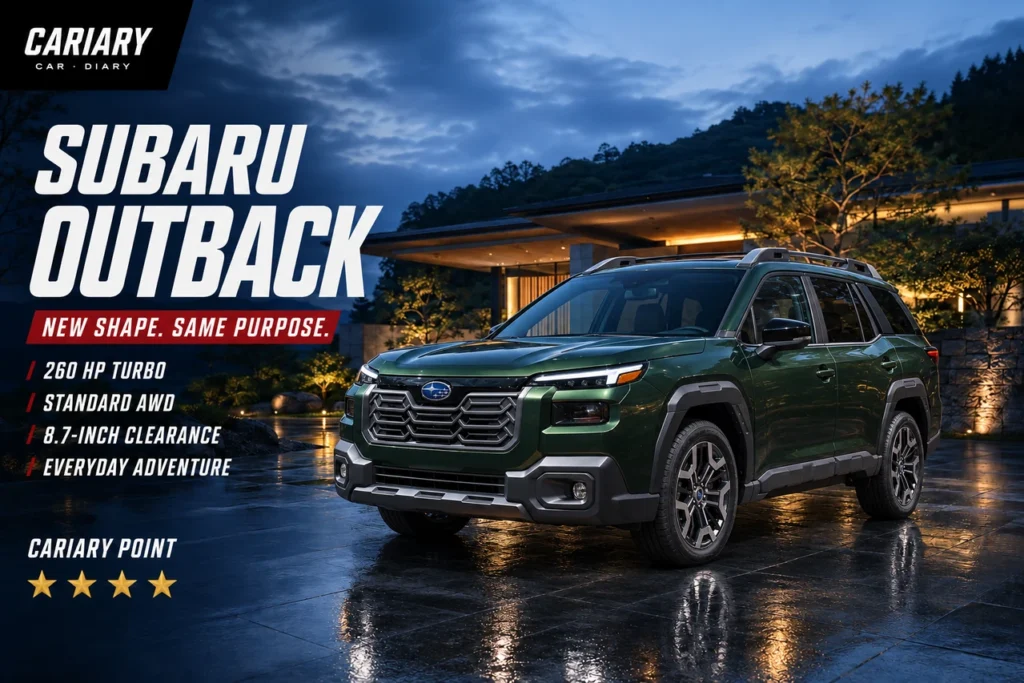
Cover: AI-generated Cariary editorial illustration, checked against the specified vehicle. It is not road-test photography.
This Subaru Outback review asks whether a car can change its shape without losing its purpose. The 2026 model is taller-looking, more upright and much less shy about presenting itself as an SUV. For a name that appealed to people who did not necessarily want a conventional SUV, that is a meaningful change.
The argument is easy to reduce to styling. Some people see a more confident adventure vehicle; others see another familiar shape disappearing into the crossover crowd. Cariary is interested in the question behind that disagreement: did Subaru spend its effort making the vehicle easier to live with, or merely easier to market?
The answer is mixed in a useful way. A more practical cabin interface and generous all-weather mission deserve attention. So do the higher entry price and the absence of an electrified alternative in this U.S. model range. The new Outback is not explained by one photograph, and it is not automatically improved just because it looks tougher.
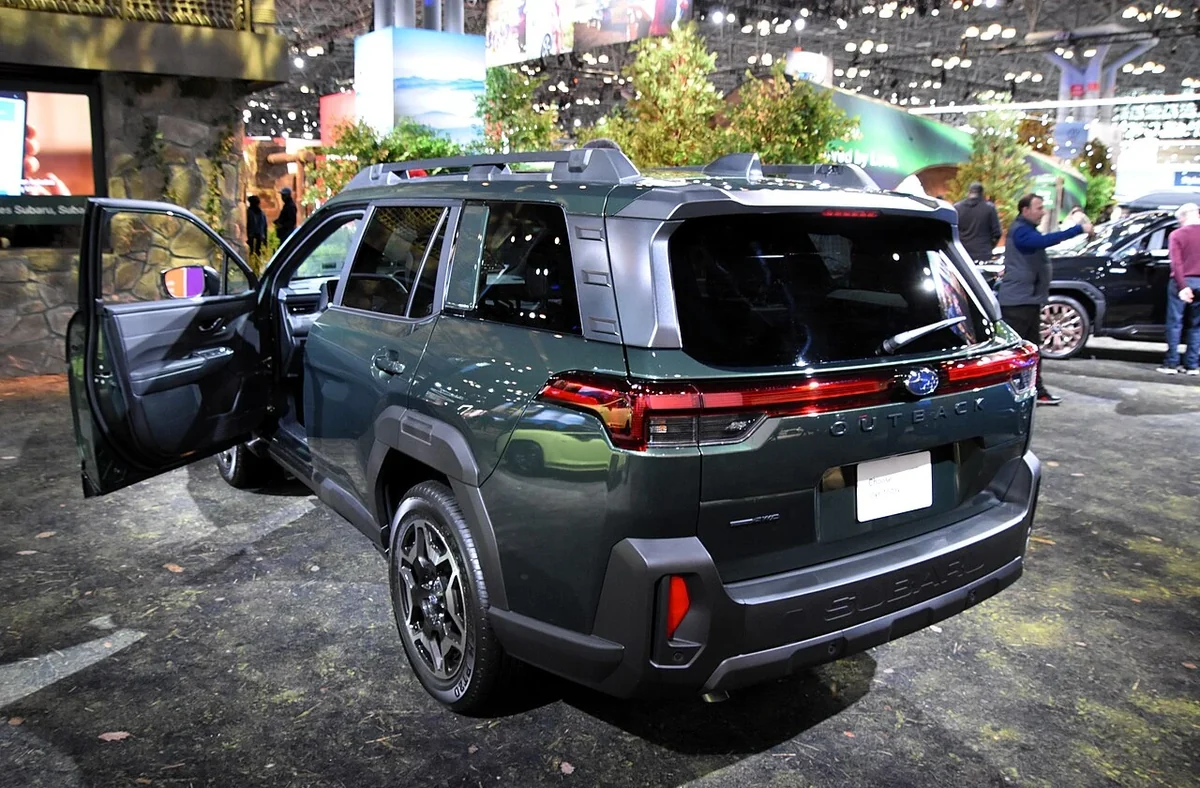
Scope: all-new seventh-generation 2026 U.S. Subaru Outback, including the standard 2.5-liter, turbo XT and Wilderness variants. Show prototypes are identified in photo captions. This is a research-based review; Cariary has not road-tested this vehicle.
Four stars for a useful two-row package, standard AWD and thoughtful everyday controls. Its more anonymous SUV identity, fuel-economy limitations and expensive upper trims prevent an unconditional recommendation.
Subaru Outback: Key Specifications
| Standard engine | 2.5-liter naturally aspirated boxer four; 180 hp and 178 lb-ft |
|---|---|
| XT / Wilderness | 2.4-liter turbo boxer four; 260 hp and 277 lb-ft |
| Transmission / drive | Lineartronic CVT and standard Symmetrical AWD |
| Seating | Five seats in two rows |
| Ground clearance | 8.7 inches normally; 9.5 inches for Wilderness |
| Entry price | Premium: $34,995 MSRP plus $1,450 destination in Subaru’s 2026 launch pricing; taxes/options extra |
| Cabin interface | 12.1-inch landscape touchscreen and separate physical climate controls |
1. What Changed When the Wagon Became an SUV?
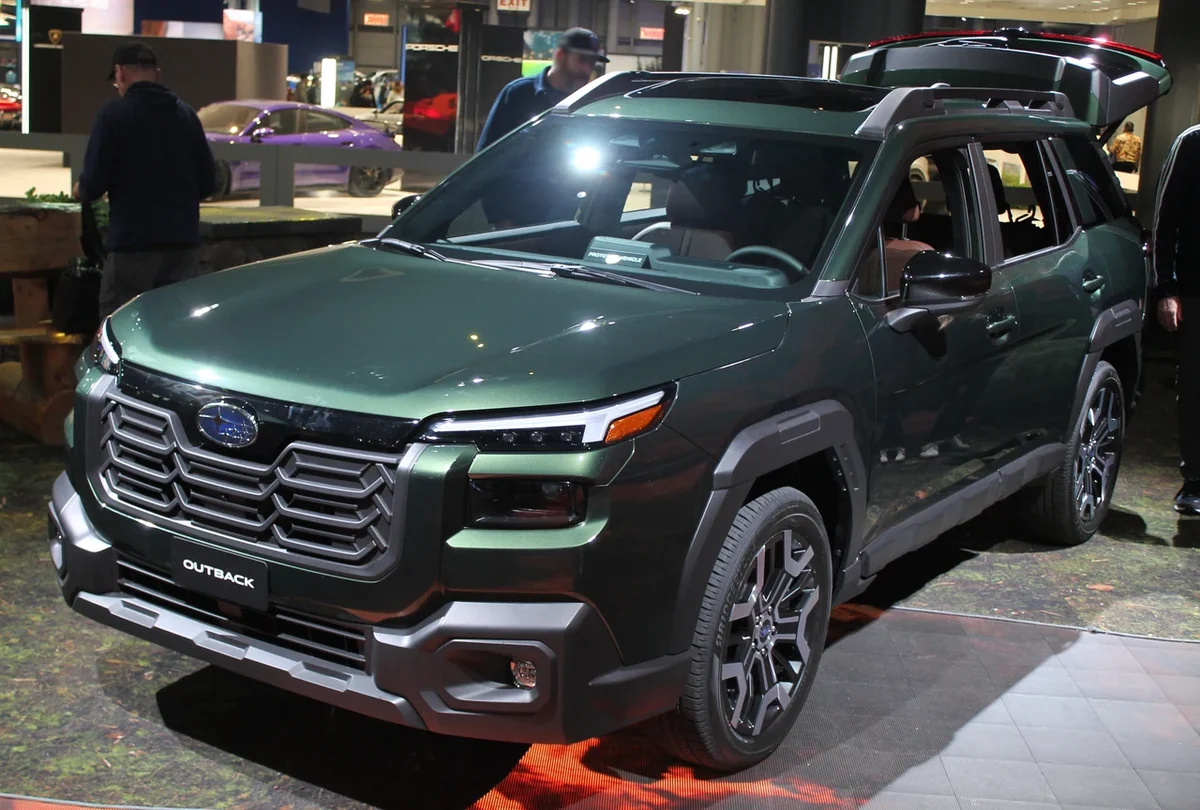
Subaru’s launch announcement explicitly links the new styling direction to the end of Legacy sedan production. That context matters. The Outback is no longer visually obliged to look like the raised companion to a familiar sedan. Its design can now pursue the buyers and uses associated with the Outback name itself.
For longtime enthusiasts, the loss is not simply a lower roofline. The older shape suggested a different answer to the family-car problem: keep the useful length of a wagon, add clearance, and avoid the theatrical bulk of a truck. The new upright front end makes the message much more conventional, even if the underlying mission remains recognizable.
Cariary would separate affection from function here. It is reasonable to miss the older silhouette. It is equally reasonable for a buyer to prefer a more upright cabin. The new Subaru Outback deserves evaluation as a daily tool, but its design also demonstrates how a successful niche product can gradually become part of the mainstream it once stood apart from.
2. More Useful Space Matters More Than Looking Bigger
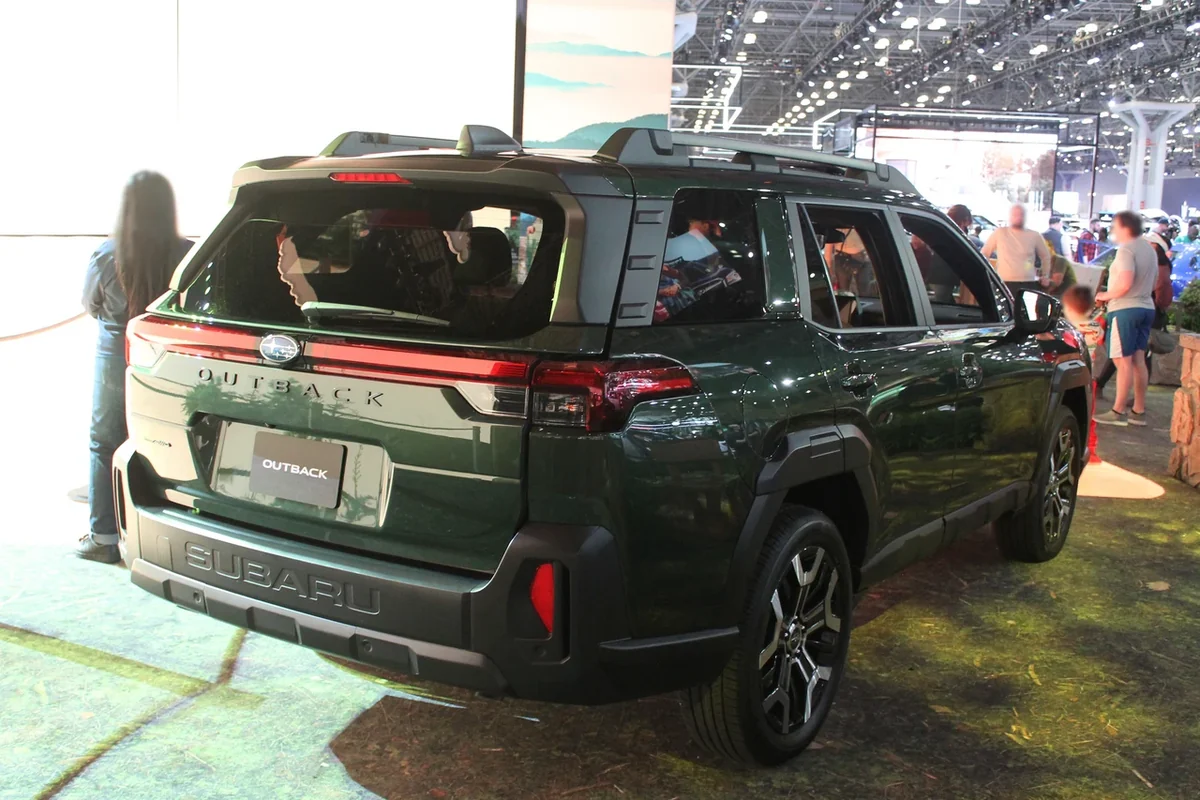
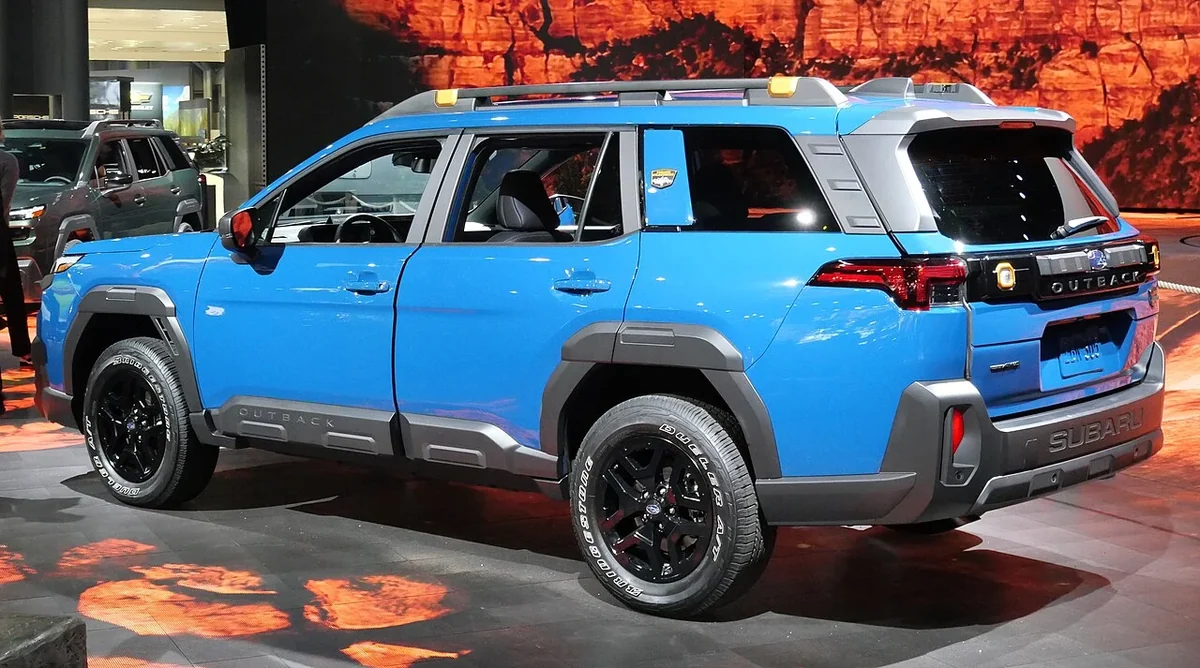
The boxier profile promises a more useful space above the floor, not just an imposing face in the mirror. That distinction is important because luggage and passengers occupy shapes rather than advertising categories. A squared-off rear opening can make a difference to awkward objects even when a vehicle has not become dramatically longer.
There are still only two seating rows. For people who carry four or five occupants, that can be an advantage: the vehicle can concentrate on the seats and cargo area they actually use. For a household that needs six seats twice a week, however, no amount of outdoor character can replace the missing row.
Try the cargo area with the things that define your routine. A dog crate, folded stroller or camping box can expose an awkward fit that a single volume figure hides. Also try reaching the roof rails. Their usefulness depends on the owner being able to lift and secure the load safely, not merely on the presence of sturdy-looking hardware above the doors.
3. The Best Cabin Change May Be the Simplest
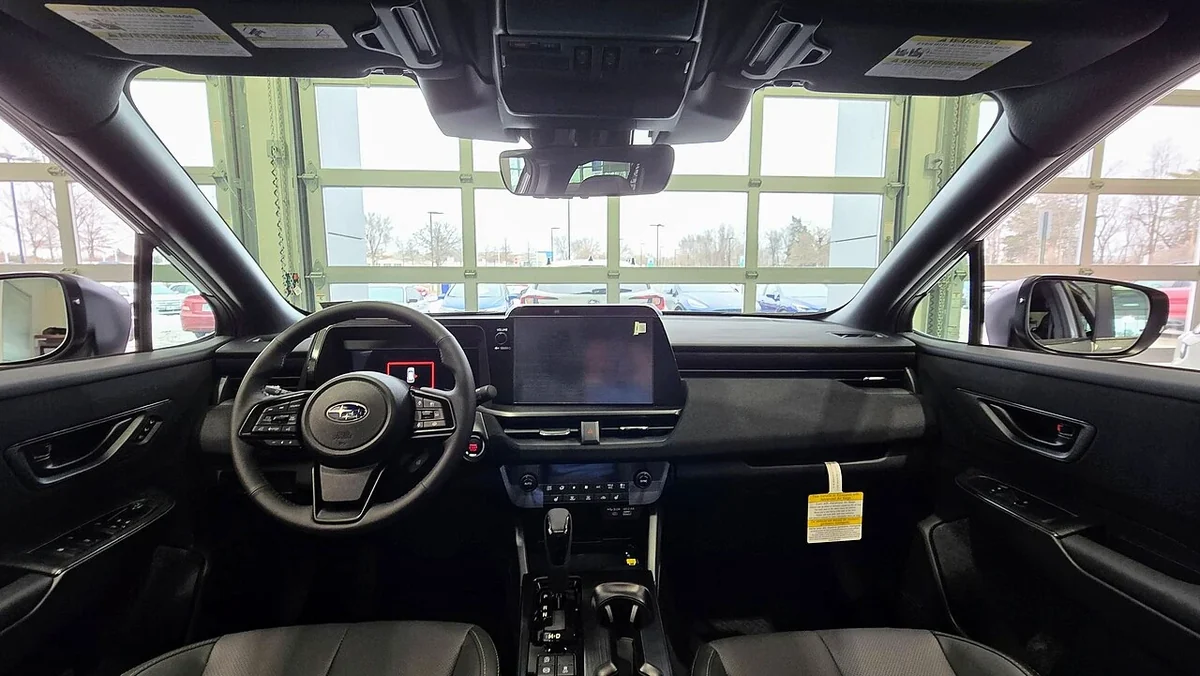
The new landscape display is visible immediately, but the separate climate-control panel may be the more valuable change. Temperature and fan adjustments are repetitive tasks. A dedicated knob or button lets the driver develop a familiar movement rather than repeatedly locating a target inside a changing screen layout.
This is a useful reminder that progress in a car interior does not always mean removing hardware. A clean dashboard can still have controls you can recognize by position and feel. The 2026 Outback combines a digital instrument display with a more conventional approach to everyday interactions, and that balance fits its practical personality.
The larger screen still needs to prove itself in your own routine. Connect your phone, check the route display and try changing a setting while parked. A good interface should not demand that every passenger becomes a software enthusiast. Cariary finds the design direction encouraging because it treats usability as part of the vehicle’s character, rather than as a detail hidden behind the display dimensions.
4. 180 HP or 260 HP Changes the Ownership Case
The standard 2.5-liter engine and the turbocharged 2.4-liter address different expectations. The first is a choice for drivers content with measured progress; the second creates more reserve for loaded travel and overtaking. Both use a CVT, so neither should be approached as a conventional automatic with eight physical forward gears. The manual mode simulates ratios.
In its 2026 Touring XT instrumented test, Car and Driver recorded 6.2 seconds to 60 mph. It also criticized uneven turbo response and vague steering, while praising ride comfort. These are attributed observations from that specific test, not Cariary driving impressions. They are a useful warning against assuming that more power automatically creates a more satisfying driving experience.
The best test drive therefore includes ordinary transitions: leaving a junction, increasing speed gently and requesting a brief burst of acceleration. A dramatic full-throttle run reveals only one part of the relationship. For someone attracted to the Outback as a calm long-distance companion, predictability can matter more than the quickest number on a specification sheet.
5. Wilderness Is a Hardware Choice, Not Just a Look
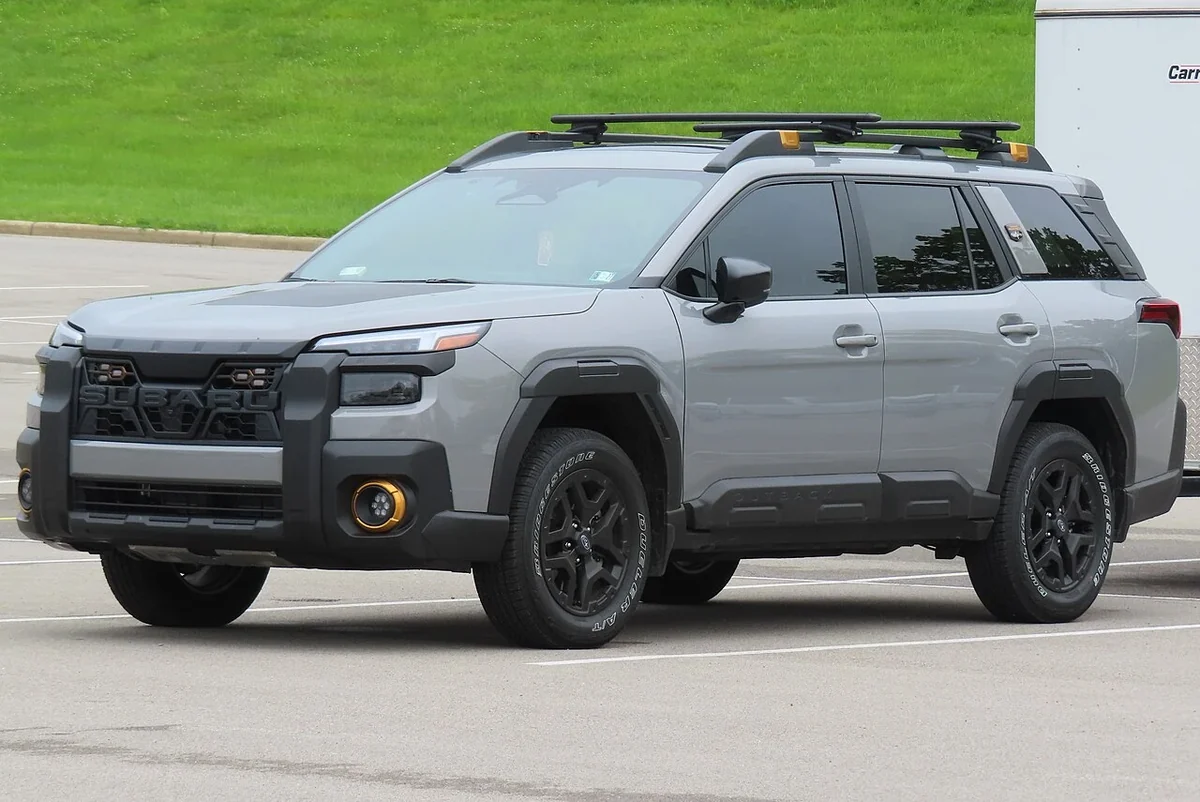
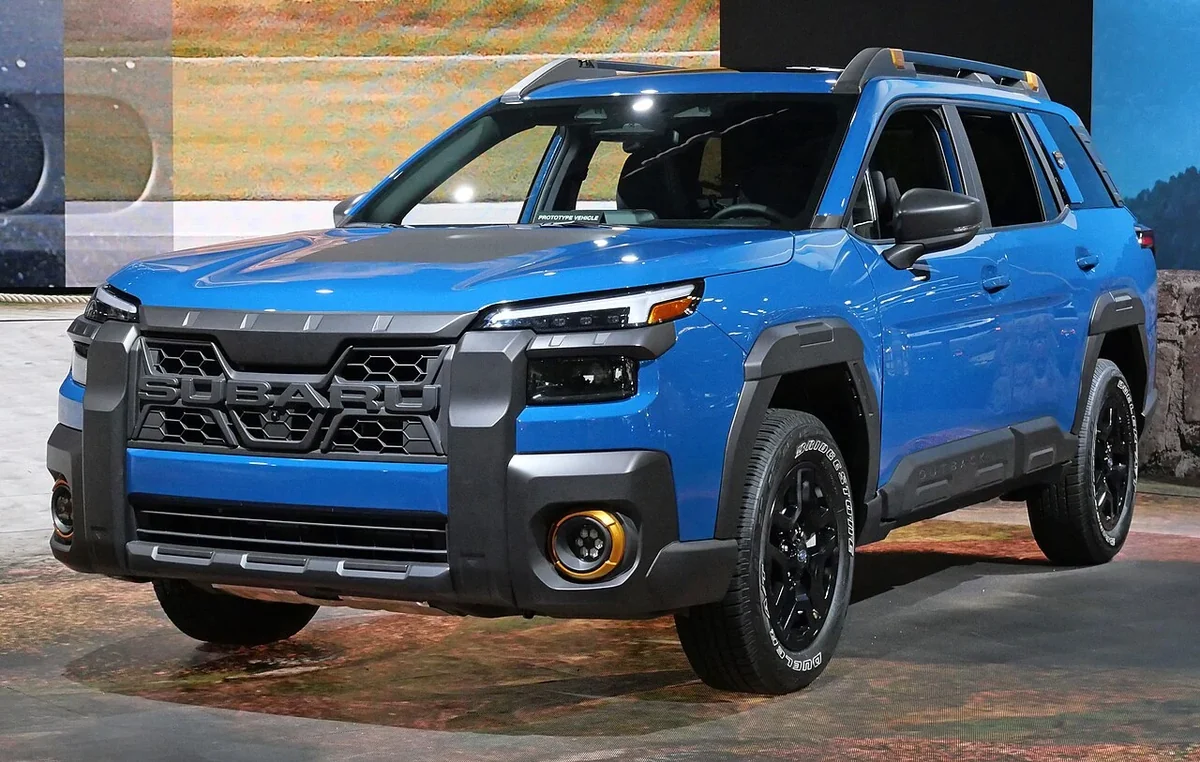
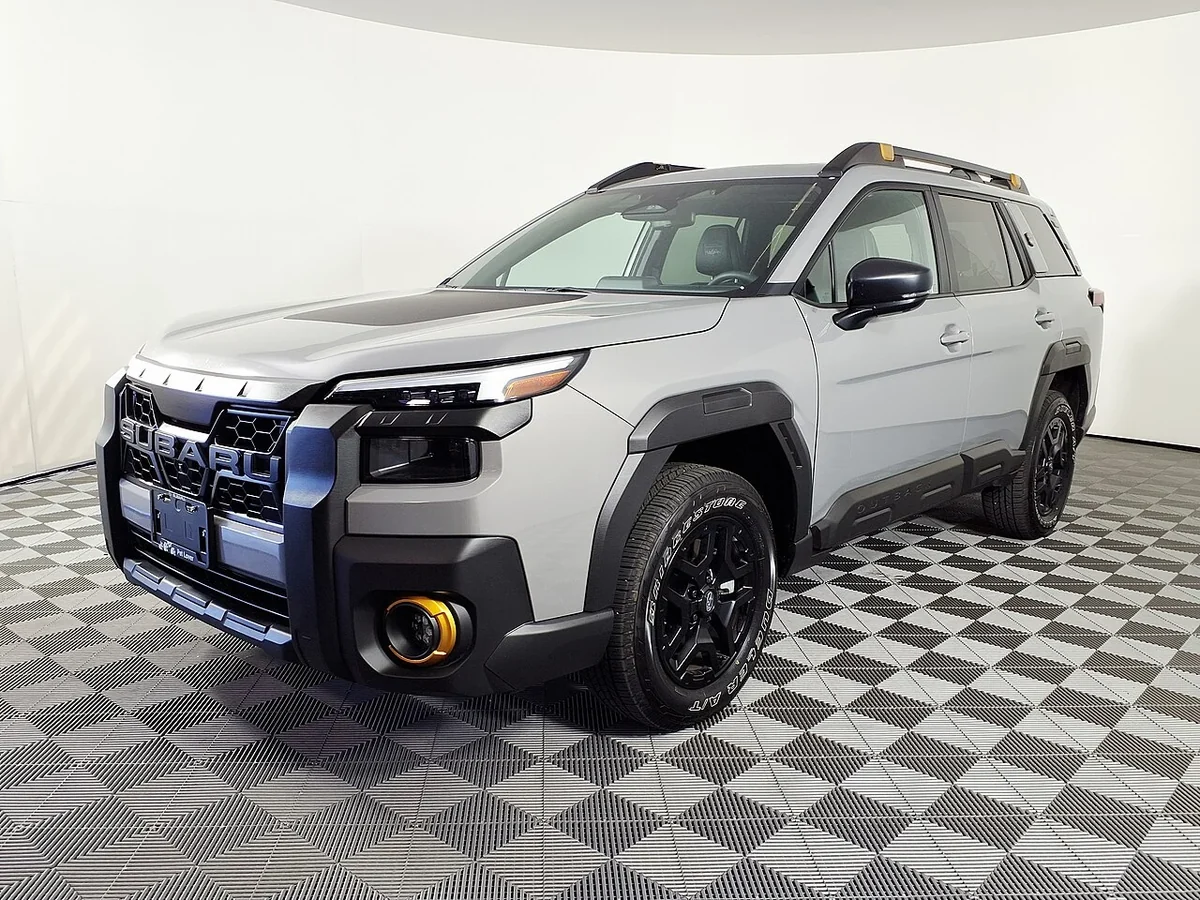
The Wilderness raises ground clearance to 9.5 inches and adds all-terrain tires on 17-inch wheels, electronically controlled dampers and trim-specific exterior protection. That gives it a more focused reason to exist than a styling package alone. Buyers who regularly encounter rough access roads have a meaningful set of differences to evaluate.
But greater capability is only valuable when the use case calls for it. Tire choice can affect road noise and response; additional clearance does not make every trail appropriate for the vehicle. A route still needs to be assessed for surface, obstacles, recovery options and the limitations of the loaded car.
For predominantly paved commuting, a regular Outback can be the more coherent purchase. It already has substantial clearance and AWD. Choosing Wilderness because it photographs better is understandable, but it should be recognized as a preference rather than disguised as necessity. Cariary would buy the equipment for the journeys that recur, not for one imaginary adventure used to justify every compromise.
6. The Missing Hybrid Is Part of the Story
The 2026 U.S. Outback range offers gasoline engines rather than a hybrid option. That matters in a market where electrified family crossovers have become a normal comparison, not an unusual alternative. Buyers who like Subaru’s practical character can still find themselves questioning the fuel costs of this particular model.
The correct comparison is between vehicles that meet the same needs. A smaller hybrid with less suitable loading space is not automatically better because its consumption number is lower. Conversely, buying the Outback’s extra outdoor capability for a purely urban routine may mean paying for a strength you rarely use.
Consider where the vehicle will spend most of its miles. Slow traffic, sustained freeway travel and regular unpaved access create different priorities. The absence of a charging cable may simplify ownership, but that is also true of many full hybrids. The Outback must earn its place through its complete package; the Subaru badge alone cannot close the efficiency discussion.
7. The Price Ladder Deserves a Fresh Look
The former entry-level Base trim is gone, leaving Premium as the starting point. That makes the lowest advertised price more substantial, even though the opening specification is better equipped. A returning owner should therefore compare the complete equipment and transaction price, not assume the new car occupies precisely the same budget position as the old one.
At launch, Limited XT was listed at $44,365 and Wilderness at $44,995 before destination. Their proximity creates a revealing choice: more road-oriented equipment with turbo power, or a more specialized outdoor package. Touring XT reaches $47,995 before destination and options. At that level, you should consider what the money buys outside the Subaru showroom too.
Premium is the sensible starting point if you do not require turbo performance. Limited XT is worth considering when loaded highway travel makes stronger acceleration useful. Wilderness should remain tied to a genuine use case. These are buyer-fit recommendations, not a claim that one trim produces the best ownership outcome for every driver or every local price.
8. The Subaru Outback Still Has a Clear Job
The strongest case for the Subaru Outback is a household that wants a comfortable two-row vehicle and regularly uses its weather and rough-road versatility. Its appeal is the continuity between the weekday and the weekend: one car should carry people, shopping, muddy equipment and holiday luggage without requiring a different identity for each task.
That does not make it a substitute for a dedicated off-roader. Our discussion of AWD and traction explains why driven wheels and stopping grip are different questions. Tires and sensible judgment remain essential. Capability should reduce friction in an owner’s real life, not create an excuse to ignore the limits of the road.
Cariary gives the new Outback four stars because its practical improvements are substantial enough to survive the styling argument. The cabin priorities and broad utility make sense. The fifth star is held back by an increasingly crowded competitive position: upper trims are expensive, there is no hybrid option here, and the design no longer supplies quite the same alternative-to-everything-else charm.
Who Should Buy It?
Recommended For
Drivers who need a two-row family vehicle for mixed weather, long journeys and recurring rough-road access, and who value practical controls over cabin spectacle.
Not Recommended For
Buyers whose main priorities are maximum urban fuel economy, a third row, sharp sports-sedan responses or preserving the outgoing model’s wagon-like appearance.
One-Line Verdict: The shape became more conventional, but the most convincing reason to buy an Outback is still the life it makes easier.
Frequently Asked Questions
Is the 2026 Subaru Outback a new generation?
Yes. It is the seventh-generation model. Its upright exterior and new dashboard distinguish it from the previous generation; earlier Outback interior photos do not accurately show the 2026 cabin.
Does every Subaru Outback have AWD?
All trims in the 2026 U.S. range have Subaru Symmetrical AWD. It helps apply driving force, but tires and conditions still determine available grip and braking performance.
Which Outback models have the turbo engine?
Limited XT, Touring XT and Wilderness use the 260-hp 2.4-liter turbo boxer. Premium, Limited and Touring use the 180-hp 2.5-liter naturally aspirated engine.
Is there a 2026 U.S. Outback Hybrid?
The verified U.S. 2026 range discussed here does not include a hybrid. Do not confuse another Subaru model’s hybrid availability with the Outback specification.
Is Wilderness the best Outback for everyone?
No. Its tires, clearance and dampers are valuable when the terrain calls for them. Regular paved-road use can favor a standard trim, especially when cost and everyday road manners matter most.
Further Reading and Data Reference
Data reference date: October 2, 2026. Official specifications and attributed test observations are linked where discussed. Cariary Point is an editorial buyer-fit assessment, not an owner road-test score or reliability rating.
Explore more Cariary car reviews and buyer perspectives.