CARIARYCAR · DIARY · PERSPECTIVE
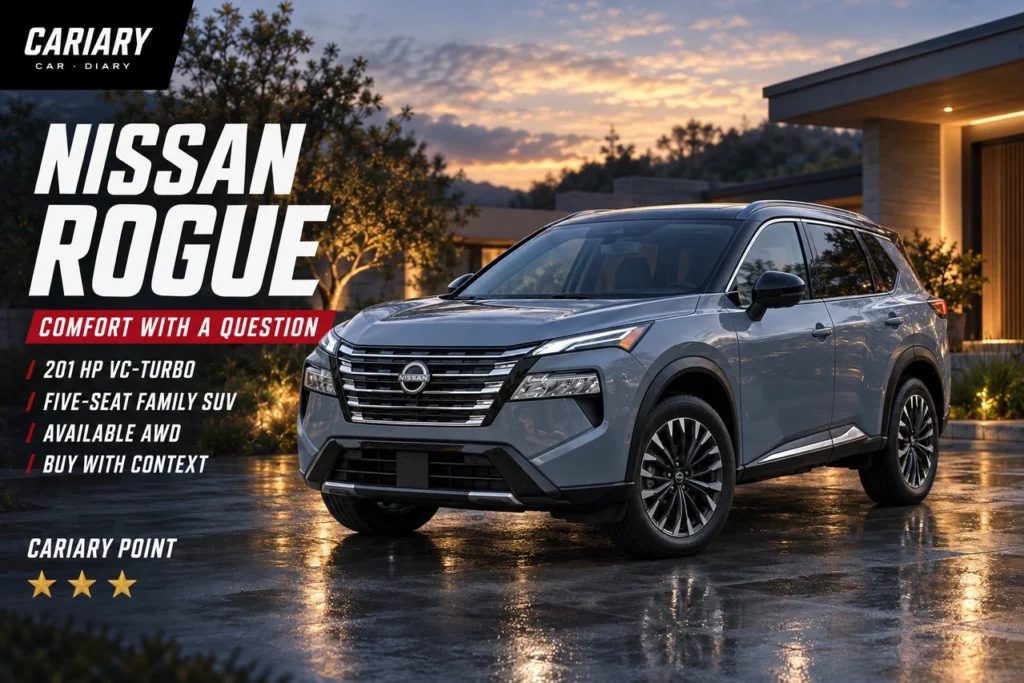
Cover: AI-generated Cariary editorial illustration, checked against the specified vehicle. It is not road-test photography.
This Nissan Rogue Review starts with the things a family actually notices: getting into the back seat, putting bags away and arriving without unnecessary fuss. The Rogue’s attraction is not a heroic image. It is the promise that ordinary journeys can require less effort.
The complication sits beneath that familiar shape. Nissan uses an unusually ambitious variable-compression turbo engine in a vehicle many buyers choose precisely because they want a straightforward daily companion. That contrast is the most interesting part of the story.
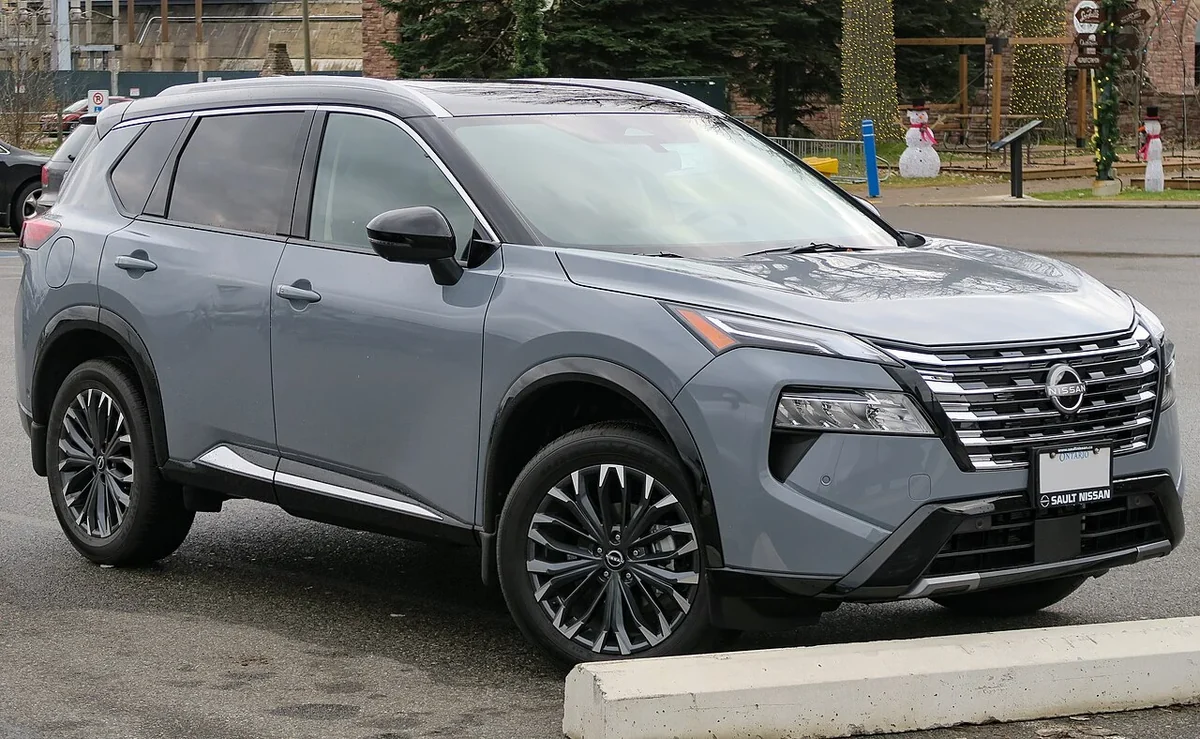
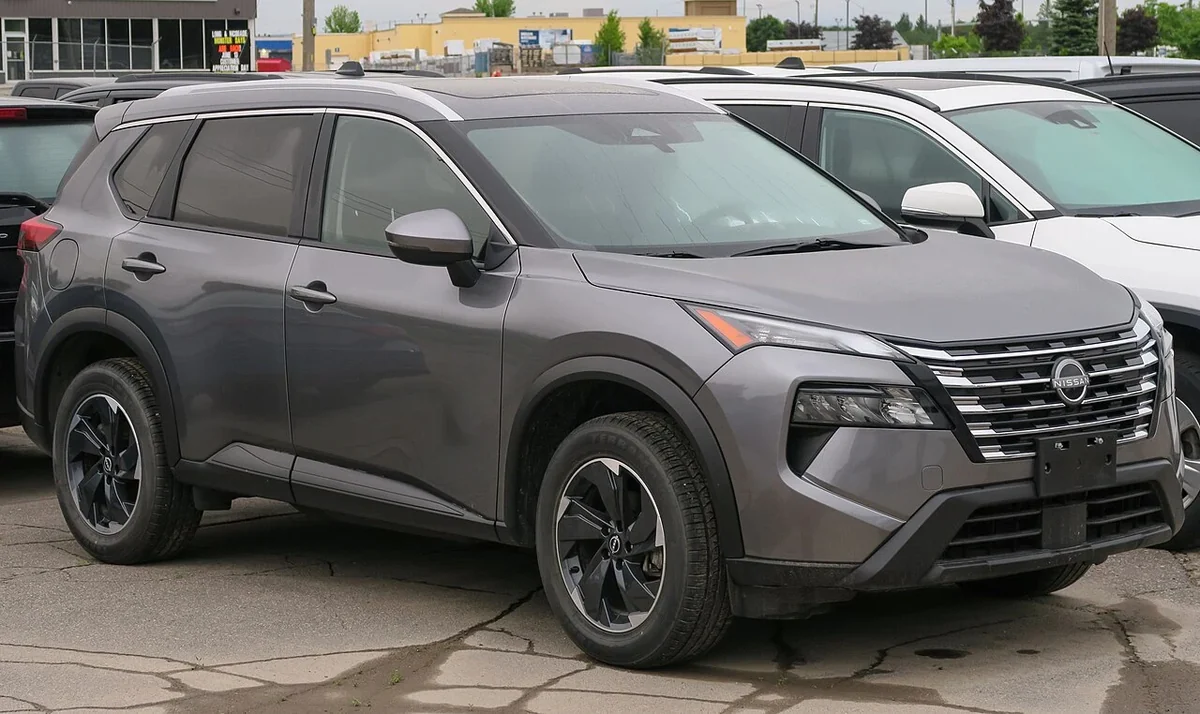
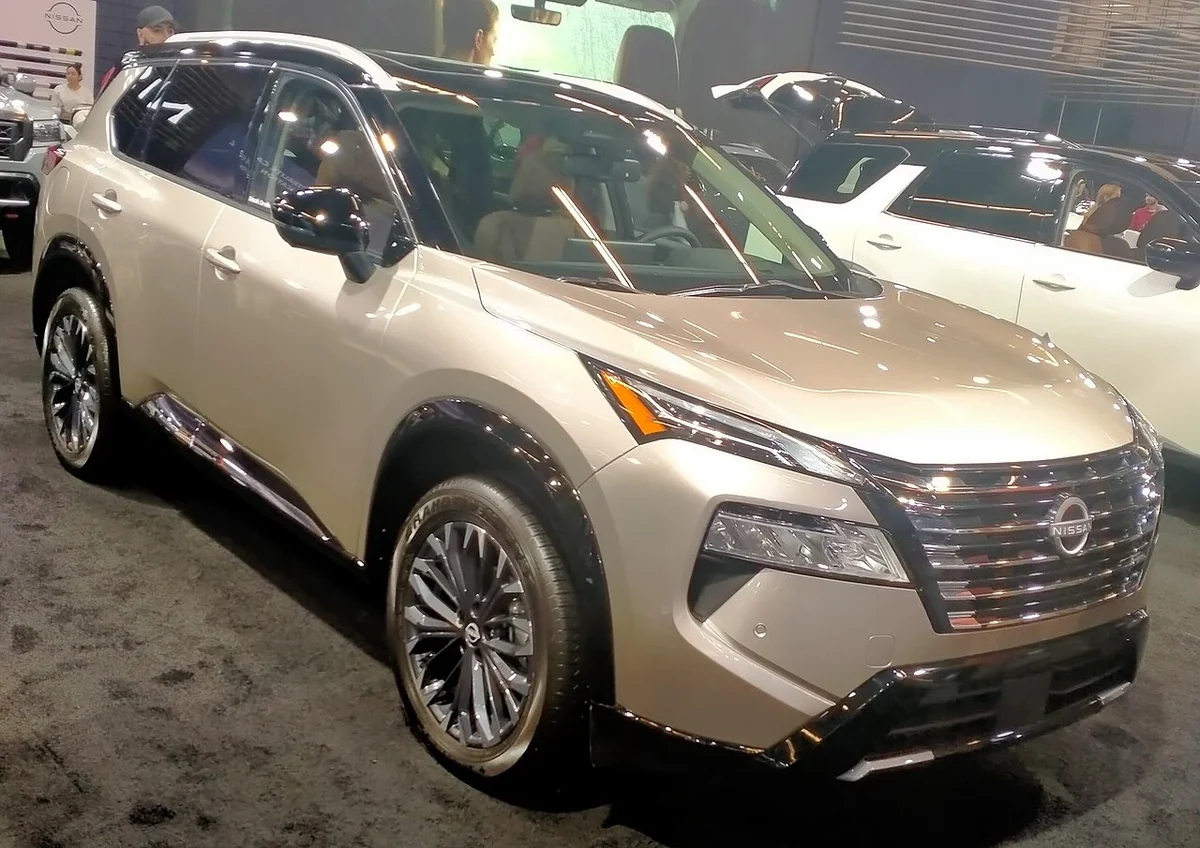
Scope: U.S. 2026.5 gasoline Rogue, facelifted third-generation T33. This is not the Rogue Plug-in Hybrid or an overseas X-Trail e-Power review. Earlier-model photographs are labeled. Cariary has not road-tested this vehicle.
Three stars: a useful, appealing family package with a more conditional ownership recommendation. Earlier-year VC-Turbo recall history warrants careful model-year and VIN research; it does not prove a defect in the 2026.5 car.
Nissan Rogue Review: Key Specifications
| Engine / output | 1.5-liter VC-Turbo three-cylinder; 201 hp / 225 lb-ft |
|---|---|
| Transmission / seating | Xtronic CVT / five seats |
| Drive | FWD or AWD by grade; Rock Creek and Platinum are AWD |
| EPA reference | S/SV FWD: 29 city / 36 highway / 32 combined mpg; trim-dependent |
| Starting MSRP | $29,490 S FWD + $1,575 destination; taxes and other charges extra |
| Reference | Nissan’s 2026 Rogue press kit; Nissan’s 2026.5 pricing announcement |
1. Nissan Rogue Review: Useful Before It Is Exciting
Some cars ask you to admire how much engineering they contain. The Rogue is more persuasive when it makes the engineering disappear behind a manageable daily routine. A parent reaching around a child seat or a passenger looking for somewhere to put a phone has a different definition of good design from a track-day driver.
That is not a lesser form of enthusiasm. An ordinary car can become memorable because it consistently removes small annoyances. The relevant test is whether its layout continues to make sense when everyone is tired, the weather is poor and the boot is already half full. This Nissan Rogue Review values that kind of usefulness.
2. Why Such a Clever Engine in a Family SUV?
Nissan’s 2026 Rogue press kit specifies 201 hp and 225 lb-ft from a 1.5-liter three-cylinder VC-Turbo engine. Variable compression lets the engine change its compression ratio to suit operating conditions. The aim is to reconcile efficiency at lighter loads with useful power when more is demanded.
The important context is that displacement and cylinder count do not tell the whole story. A small turbo engine can provide the torque needed for everyday driving, but the resulting experience also depends on transmission behavior and response. Its sophistication should be judged by what it delivers, not admired as an end in itself.
Try a steady incline and a normal merging maneuver during a legal test drive. Listen to whether engine speed and vehicle acceleration feel naturally related to you. A CVT does not need to imitate fixed gears to be mechanically valid, but you are allowed to dislike its particular sound or response. That personal reaction belongs in the decision.
3. Recall Context Needs Precision, Not Panic
NHTSA’s 26V080 recall acknowledgment, dated February 18, 2026, identifies certain 2023–2025 Rogue vehicles with VC-Turbo engines in a campaign concerning bearing damage and possible engine failure. It does not list model year 2026 in that campaign. That boundary matters.
It would be irresponsible to turn this into “every new Rogue has the same defect.” It would be equally unhelpful to treat the absence of one model year from one campaign as proof of permanent reliability. A recall document establishes a defined population and problem; it does not settle the durability of every related vehicle.
For the Nissan Rogue Review ownership assessment, check the exact VIN through NHTSA’s recall lookup and ask the dealer for a written explanation of applicable campaigns and warranty coverage. If shopping used, confirm completion records rather than assuming a seller’s model-year description answers the question.
This is why Cariary stops at three stars. It is a cautious buyer-fit judgment based on the need for more ownership due diligence, not an invented failure-rate statistic or a claim that we have diagnosed the 2026.5 engine. Buyers who want the least uncertainty may reasonably prefer a different shortlist.
4. Family Access Is a Real Design Feature
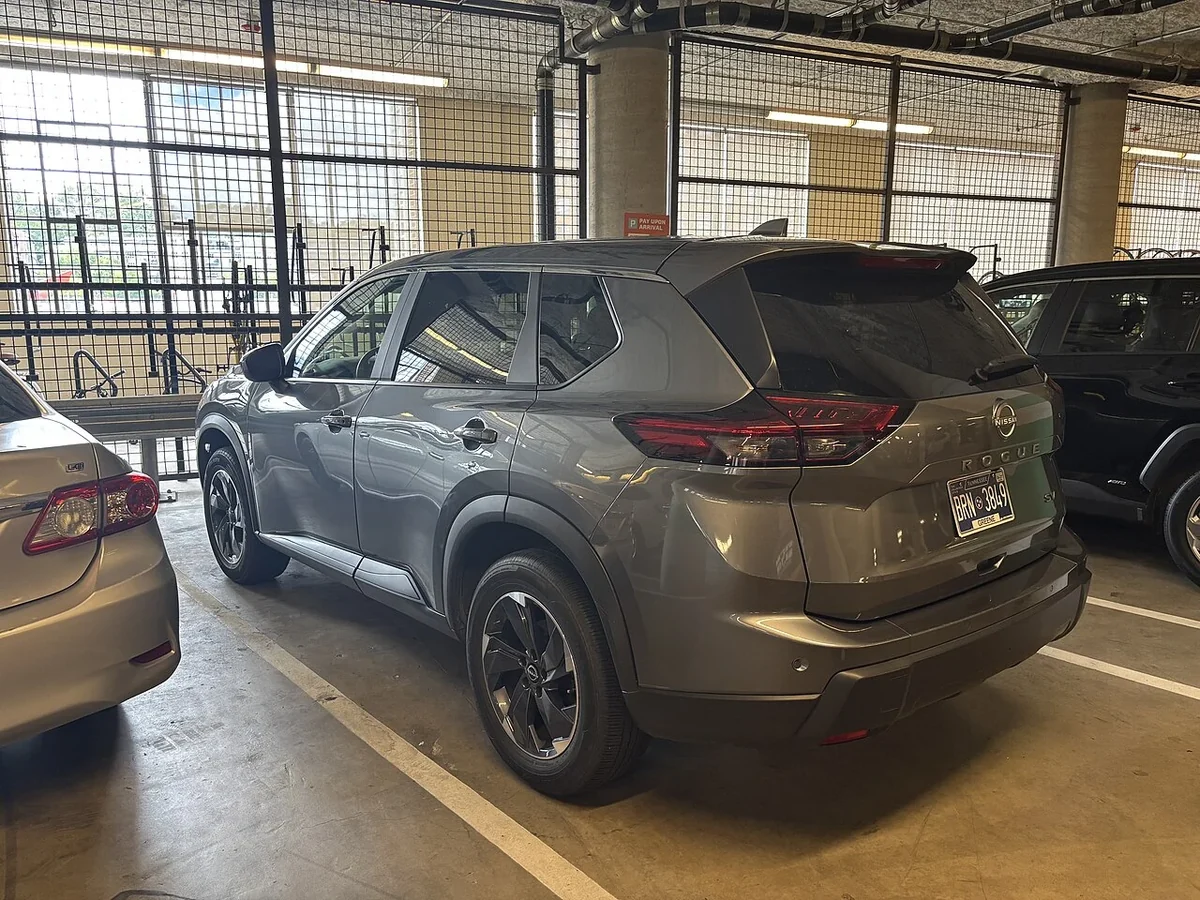
Nissan highlights rear doors that open close to 90 degrees and a reclining, split-folding second row in Nissan’s 2026 Rogue press kit. These are less glamorous than horsepower, but they can matter every time someone has to reach into the back.
A wide-opening door only helps if there is space beside the vehicle to use it. Try the car in the kind of parking bay you actually encounter, and bring your child seat if that is part of your life. Check the space left for the front passenger after installation; a brochure cannot account for every seat and adult combination.
For luggage, test the ordinary configuration first. Folded-seat maximum capacity is the wrong priority if you normally travel with rear passengers. The Rogue’s appeal should be visible with the family aboard, not only after the family has been asked to get out. That is the practical standard behind this Nissan Rogue Review.
5. Dark Armor and Rock Creek Answer Different Questions
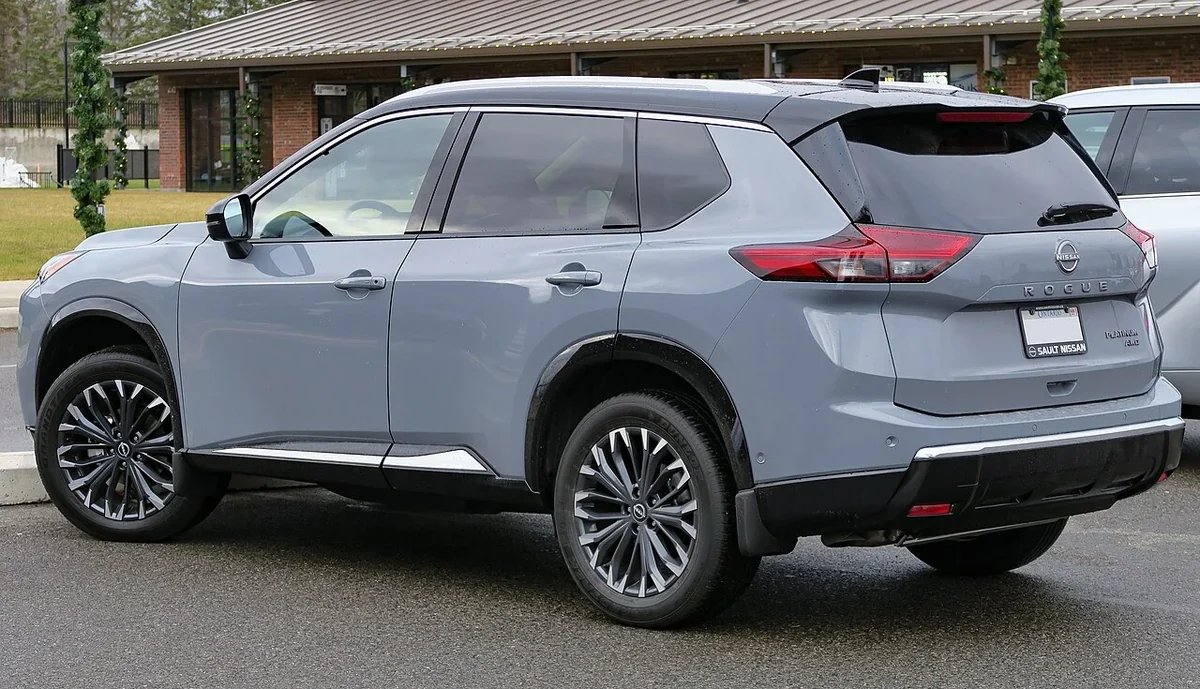
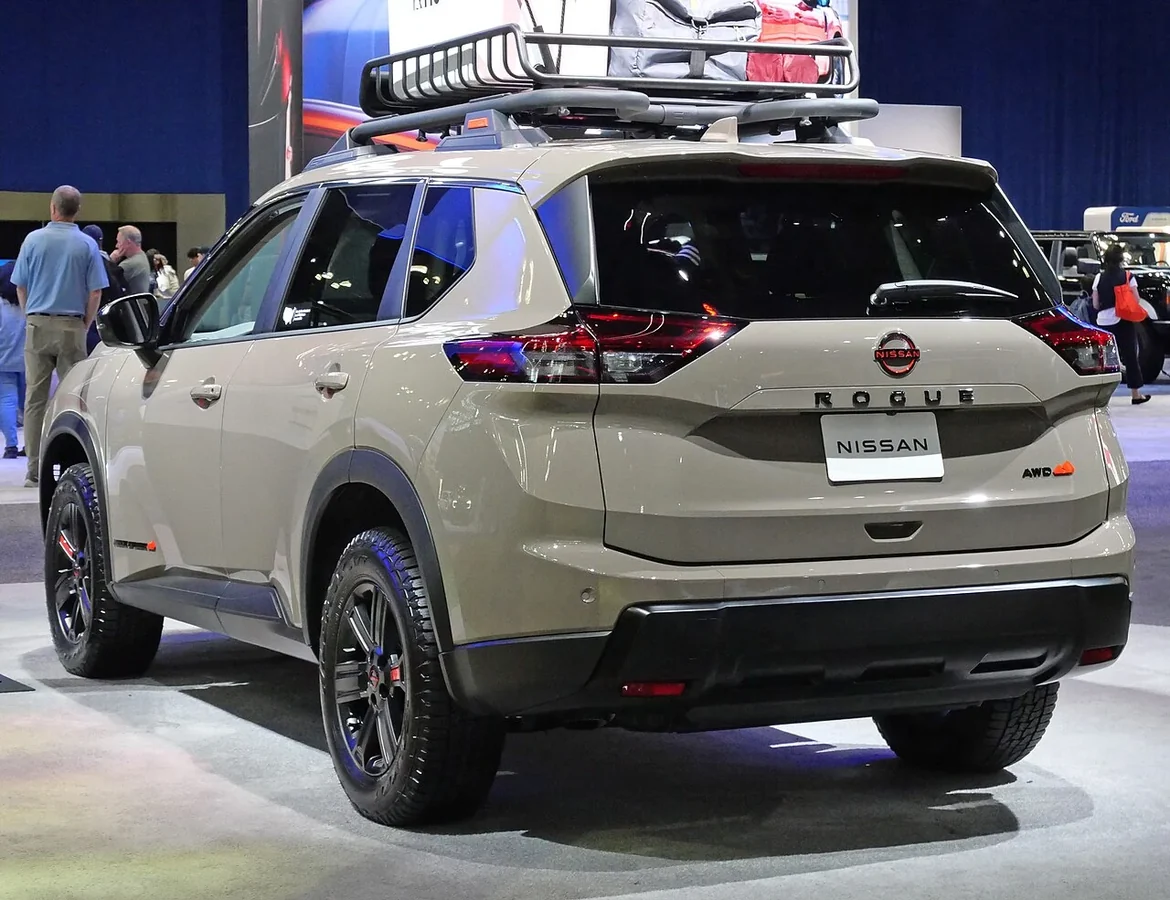
Nissan’s 2026.5 pricing announcement describes the 2026.5 range as S, SV, Dark Armor, Rock Creek and Platinum. Dark Armor adds a distinctive appearance and convenience equipment; Rock Creek adds an outdoor-oriented package. Neither name should be read as an entirely different engine.
Dark Armor is for someone who wants the everyday Rogue with a more deliberate visual identity. Rock Creek’s all-terrain tires, roof rack and terrain-related equipment make more sense if your weekends actually involve rougher access roads. A roof basket looks purposeful, but its usefulness depends on whether you will load it.
Do not turn an outdoorsy trim into a mental substitute for a dedicated off-roader. Clearance, tires, the surface and the driver’s choices still set limits. Conversely, a buyer who loves the look does not need to invent an expedition to justify that preference—just acknowledge that part of the purchase is aesthetic.
Technology: Check the Exact Car, Not the Best Photograph
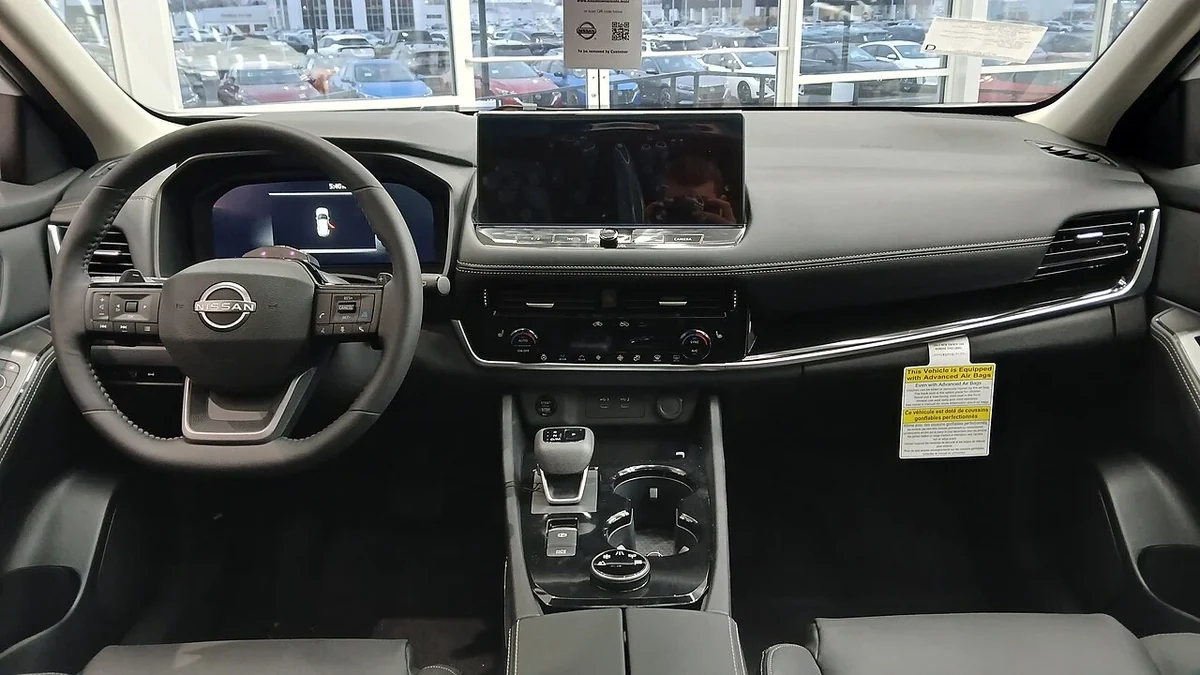
The upper-trim cabin photographs can create an impression that every Rogue has the same screen and connected services. For the 2026.5 U.S. range, Nissan reserves the 12.3-inch system with Google built-in for Platinum; the other grades use an 8-inch center screen. Confirm the equipment on the specific vehicle.
A larger screen is useful when it makes information easier to understand. It is less useful if you are paying primarily for an appearance you enjoyed in a photograph. Pair your own phone, load a familiar route and try the climate controls before treating the flagship as necessary.
Our Nissan Rogue Review would put a comfortable seat, intuitive controls and the right equipment ahead of a maximum screen diagonal. Ask what remains functional without an ongoing connected-service subscription. The cost and behavior after a trial expires are part of the ownership experience too.
Value Depends on the Quote and Your Confidence
The 2026.5 S FWD starts at $29,490 before the $1,575 destination charge in Nissan’s 2026.5 pricing announcement; Platinum AWD starts at $39,390 before destination. That spread is large enough to change the alternatives worth considering. Taxes, options and dealer charges are additional.
At the lower end, the Rogue can make a clear case as a family vehicle whose appeal comes from use rather than status. At the upper end, buyers should be especially sure they value the cabin equipment and are comfortable with the ownership questions discussed above. An attractive monthly payment does not answer either issue.
Compare total price, finance terms and expected mileage before deciding that a discount makes the risk conversation irrelevant. For another approach to everyday SUV buying, read our Toyota RAV4 review. The purpose is to compare priorities, not pretend one specification sheet settles every household’s choice.
Cariary Perspective: A Good Idea With Conditions
The Nissan Rogue Review conclusion is deliberately mixed. We can appreciate the thoughtful family orientation while declining to turn that appreciation into an unconditional recommendation. That is more useful than either dismissing the whole car or allowing a comfortable cabin to end the discussion.
Three stars mean “consider carefully,” not “avoid automatically.” A well-priced example with the right equipment and clearly understood ownership terms may suit a household very well. The buyer should know why it suits them—and what still needs checking—before the keys become theirs.
Who Should Buy It?
Recommended For
Families who prioritize access, useful equipment and everyday convenience, and who will verify the exact vehicle’s history, campaigns and warranty before buying.
Not Recommended For
Buyers seeking a simple, low-uncertainty powertrain story; drivers wanting a performance SUV, or anyone assuming this gasoline Rogue has e-Power or plug-in propulsion.
One-Line Verdict: The Rogue understands family life, but its clever engine makes an informed purchase more important than an impulsive one.
Frequently Asked Questions
Is the 2026.5 Rogue included in recall 26V080?
The cited February 2026 acknowledgment lists certain 2023–2025 Rogue vehicles, not model year 2026. Check the actual VIN for current applicable recalls; this is not a blanket statement that no campaign can apply.
Does Dark Armor have more power?
No. The gasoline range uses the same stated 201-hp VC-Turbo output. The grade’s attraction is its appearance and equipment.
Is the Rogue reviewed here a hybrid?
No. This Nissan Rogue Review covers the U.S. gasoline model, not Rogue Plug-in Hybrid or X-Trail e-Power.
Why only three Cariary stars?
Useful family packaging earns credit, while the ownership due diligence and powertrain context make our recommendation more conditional than a four-star all-rounder.
Further Reading and Data Reference
Data reference date: October 3, 2026. Official specifications and attributed test observations are linked where discussed. Cariary Point is an editorial buyer-fit assessment, not an owner road-test score or reliability rating.
Explore more Cariary car reviews and buyer perspectives.