CARIARYCAR · DIARY · PERSPECTIVE
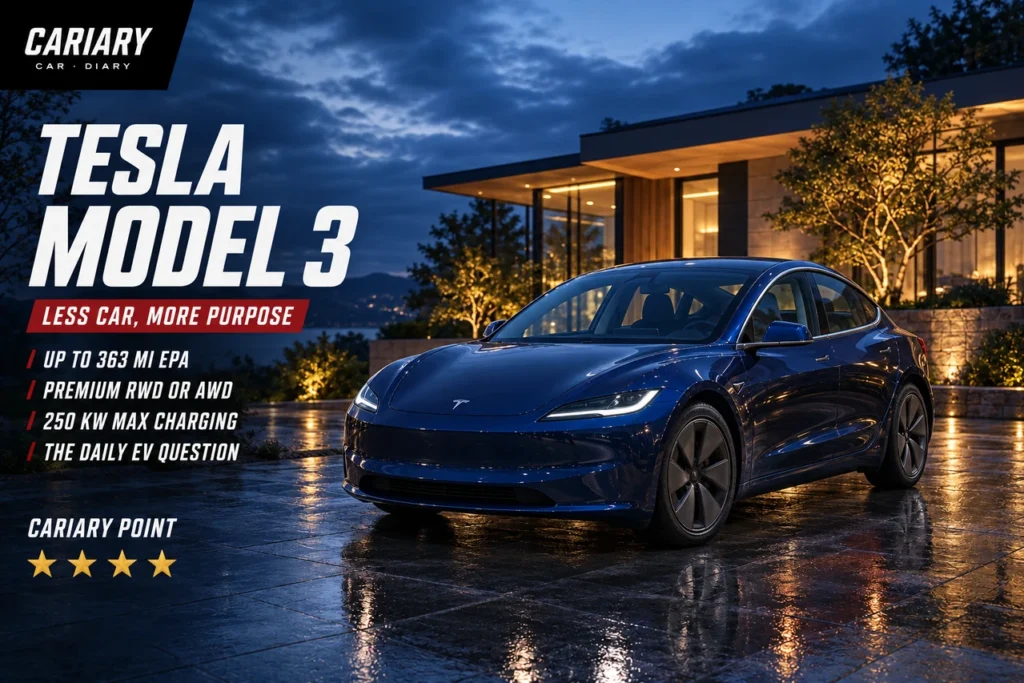
Cover: AI-generated Cariary editorial illustration, checked against the specified vehicle. It is not road-test photography.
This Tesla Model 3 Review starts with a question that acceleration charts cannot answer: does removing familiar parts of a car make everyday driving easier, or merely different? The current Premium version makes a persuasive case for the electric sedan, but the answer depends on your habits as much as its range.
Cariary likes the Model 3 most when it is considered as a complete daily tool. Its shape, software and charging routine belong to the same idea: reduce the friction of using a car. The interesting part is where that idea succeeds for one driver and creates friction for another.
Scope: current U.S. Model 3 Premium RWD and AWD specifications checked October 3, 2026, in the refreshed generation commonly called Highland. Base Model 3 and Performance are separate specifications. Tesla changes equipment during production, so verify the actual order. Research-based buyer review; no first-hand Cariary road test is claimed.
Four stars for a convincing combination of range, useful performance and a coherent electric-sedan concept. Screen dependence, the sedan opening and charging access keep it from being an effortless recommendation for every household.
Tesla Model 3 Review: Key Specifications
| Versions | Premium Rear-Wheel Drive / Dual Motor All-Wheel Drive |
|---|---|
| EPA-estimated range | 363 miles RWD / 346 miles AWD |
| Manufacturer 0–60 mph | 4.9 seconds RWD / 3.8 seconds AWD on the current U.S. page |
| Maximum DC charging | 250 kW; a peak capability, not a sustained session average |
| Seats / advertised cargo | Five / 24 cu ft total advertised cargo |
| Displays | 15.4-inch center; 8-inch rear |
| Reference | Tesla’s current U.S. Model 3 specifications |
1. Tesla Model 3 Review: The Sedan Still Has a Point
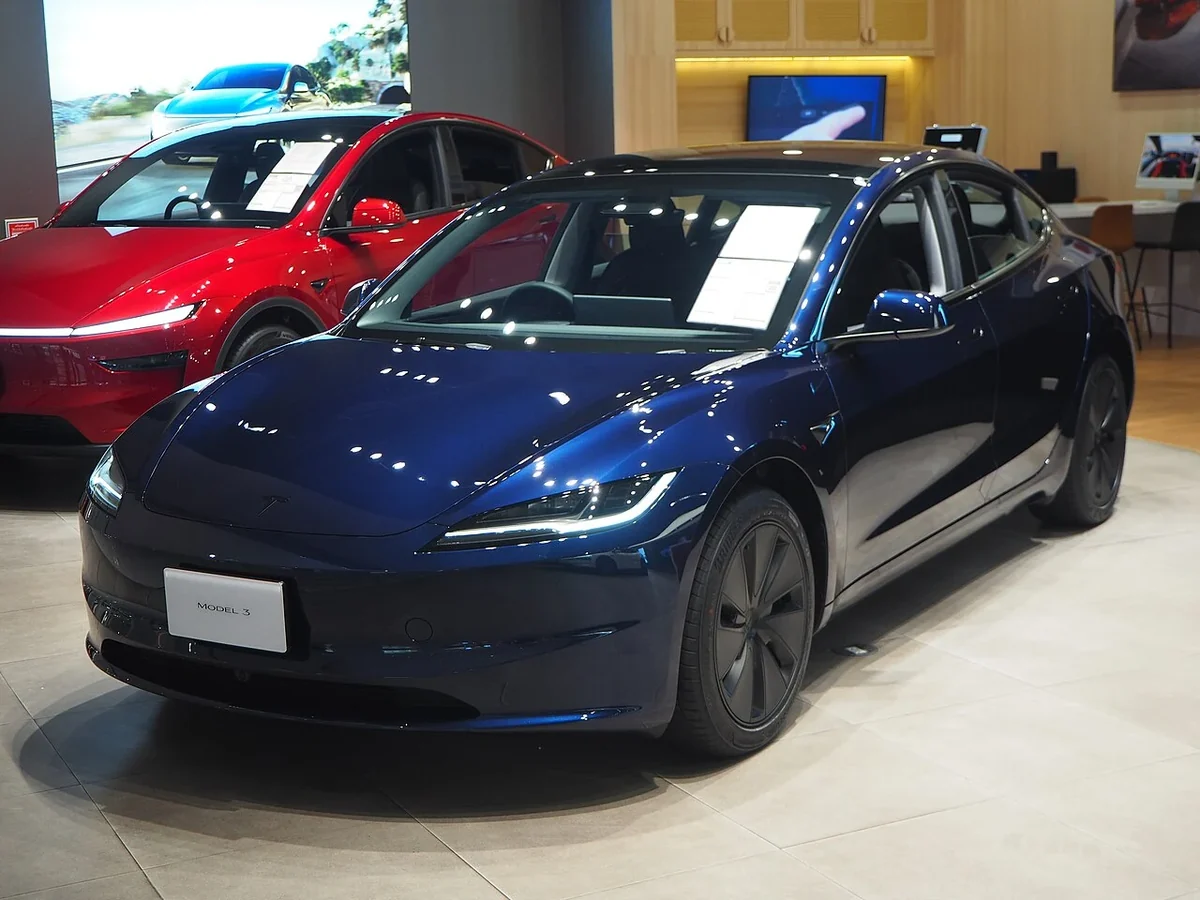
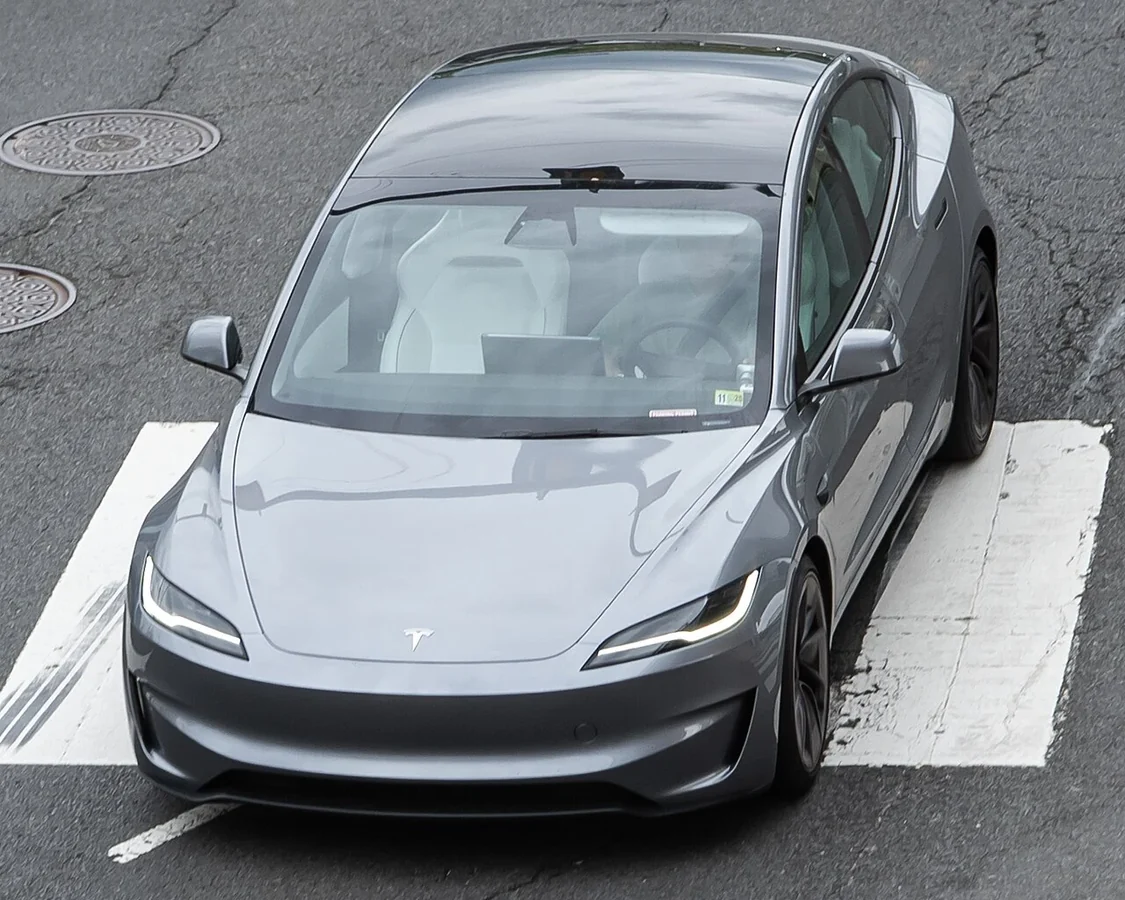
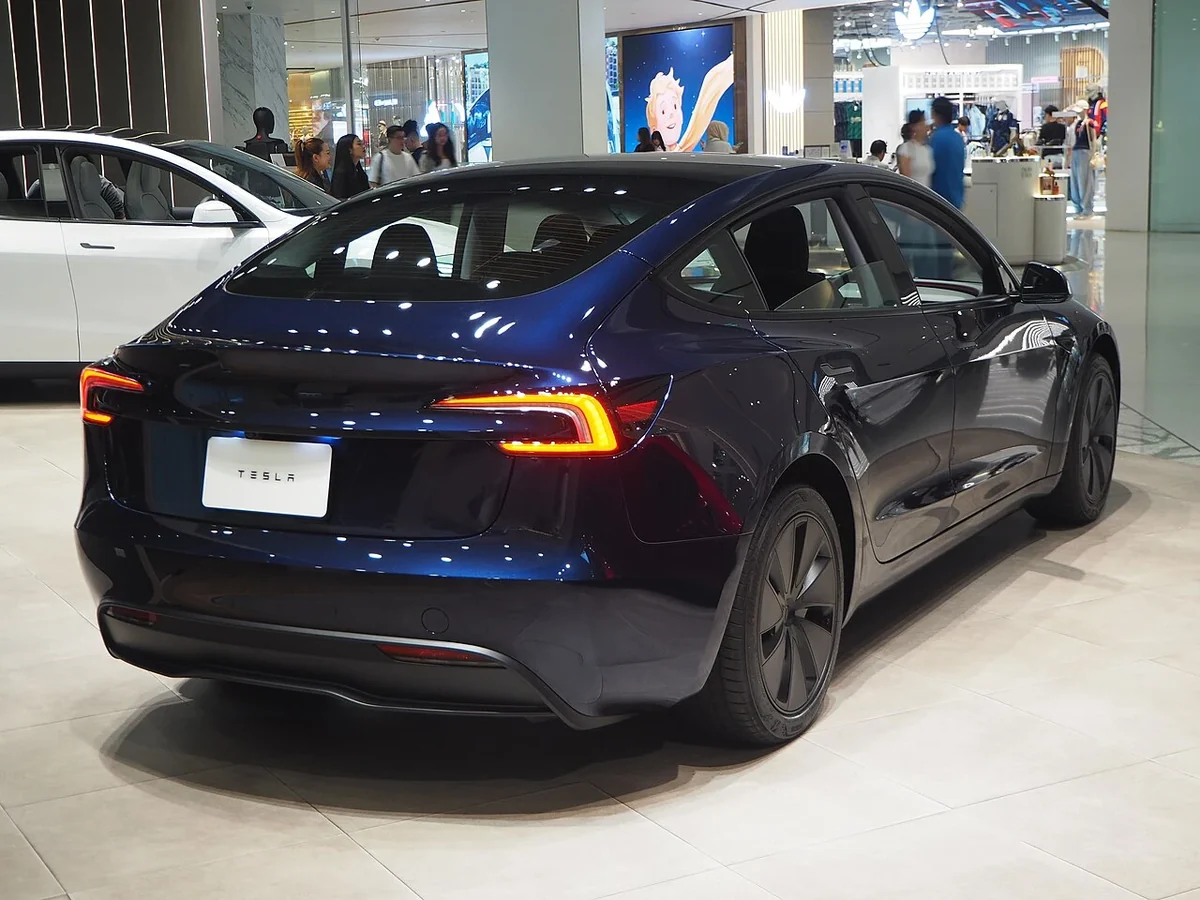
The Model 3 is interesting partly because it does not solve every problem by becoming taller. A low roof, a distinct trunk and a compact-looking cabin give it a different visual attitude from the crossovers that dominate family shopping lists. It looks like a car for someone who still wants to sit in the vehicle rather than above the journey.
That is an interpretation of the design, not a measured handling verdict. A low silhouette does not tell us the steering quality, damping or tire grip. It does, however, make the choice more meaningful: if you do not need a tall load opening or easy high-seat access, an SUV is not automatically the most suitable default.
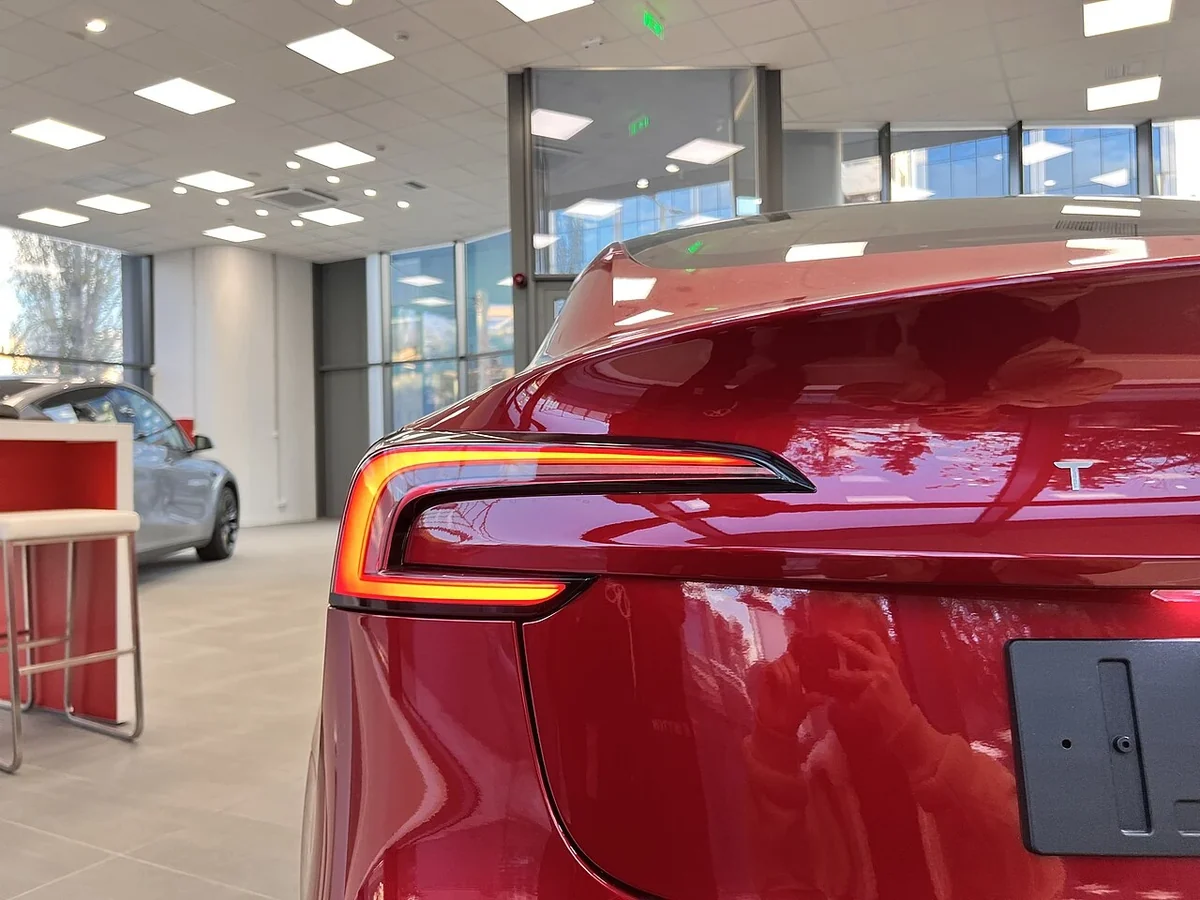
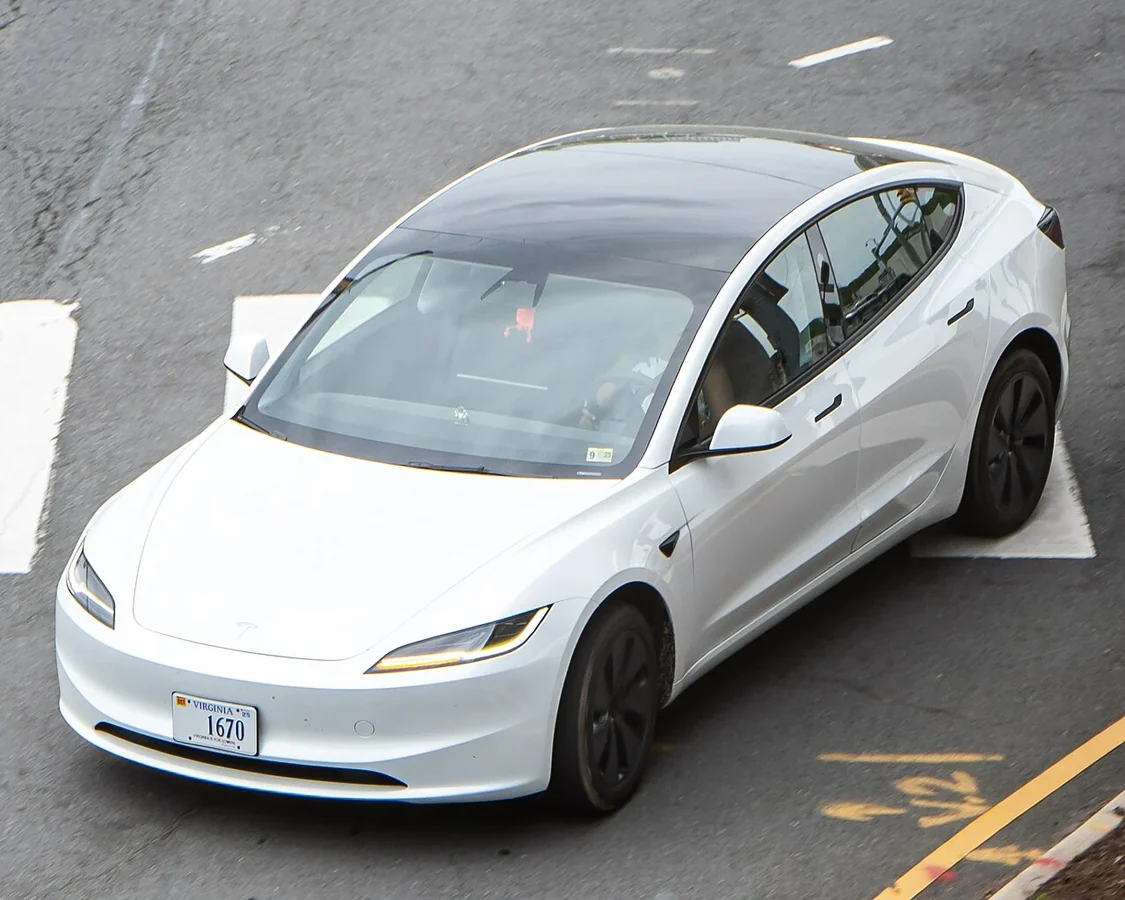
The facelift’s narrow lamps and cleaner front end strengthen that restrained character. Cariary’s interest is less in whether the car looks futuristic than whether it will remain visually calm after the showroom novelty disappears. A design can be distinctive without needing a larger grille or another decorative vent.
2. Range Is Valuable When It Creates Margin
Tesla’s current U.S. Model 3 specifications lists 363 EPA-estimated miles for Premium RWD and 346 for Premium AWD. These are reference estimates, not a guarantee of the distance you will cover at motorway speed in winter. The distinction matters more than the temptation to repeat the largest number.
For a driver who charges at home, extra range can mean fewer evenings thinking about plugging in. On a long trip, it can mean another possible stopping place. Those are useful freedoms. They should not be confused with a promise that every journey can be planned to the last advertised mile.
This Tesla Model 3 Review would choose a realistic route over a range contest. Map your longest regular journey, the charging options along it and the reserve you want at arrival. A car with more headline range can still be inconvenient if the useful charger is in the wrong place. Conversely, a shorter-range car can work beautifully when the routine is easy.
3. Minimalism Has to Work With Your Hands
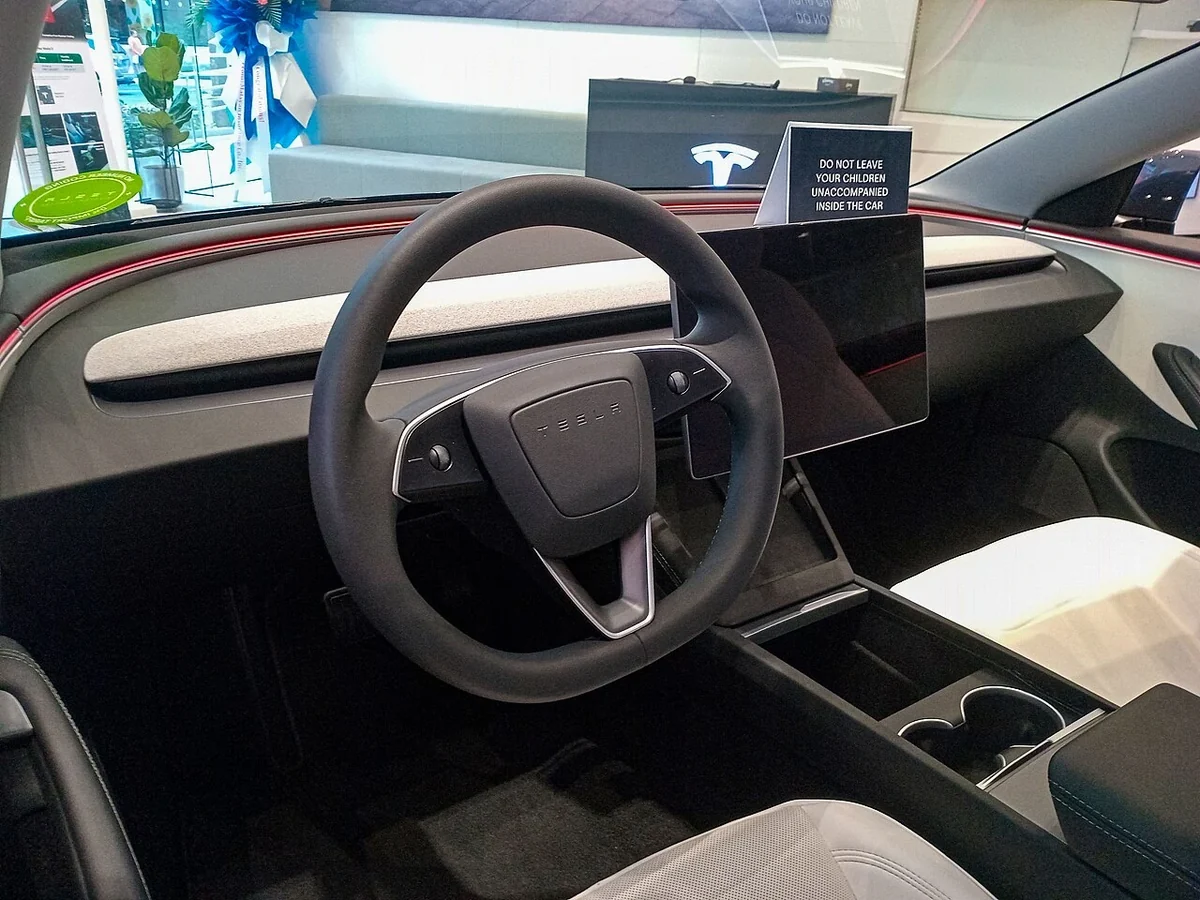
The central screen is not merely a large accessory; it organizes the Model 3 experience. The current Premium specification combines a 15.4-inch front display with an 8-inch rear screen. That is an appealingly clean arrangement, but the absence of a conventional instrument cluster changes where the driver looks for information.
Spend time performing ordinary tasks while parked: adjust airflow, find the trip information, select a driving direction and understand the backup controls described in the manual. Check the actual car’s indicators and steering-wheel controls rather than assuming an early Highland video describes today’s equipment. Tesla’s production changes make that precaution particularly worthwhile.
The point is not that screens are bad. It is that simplicity in a photograph and simplicity in use are different achievements. Our Tesla Model 3 Review gives the interior credit for consistency while leaving room for a buyer who finds a conventional control layout less demanding. Neither preference requires pretending the other driver is behind the times.
4. The Best Charging Stop May Be the One You Skip
The current Premium models advertise a 250-kW maximum charging rate in Tesla’s current U.S. Model 3 specifications. A peak rate is only one moment in a charging session: battery temperature, arrival charge level and the charger all influence the actual result. Do not multiply 250 kW by an hour and treat that as a realistic refueling schedule.
The more compelling ownership change is starting a normal day with enough energy already aboard. For a household with a suitable home installation, charging becomes something that happens while life continues elsewhere. That can be a stronger benefit than a dramatic acceleration run, because it is repeated hundreds of times.
If you depend on public charging, reverse the calculation. Visit the sites you would really use, look at their access and prices, and account for the time spent getting there. The same Model 3 can feel wonderfully convenient in one parking situation and unnecessarily complicated in another. Charging convenience is partly a property of your address.
5. A Big Volume Does Not Make a Big Opening
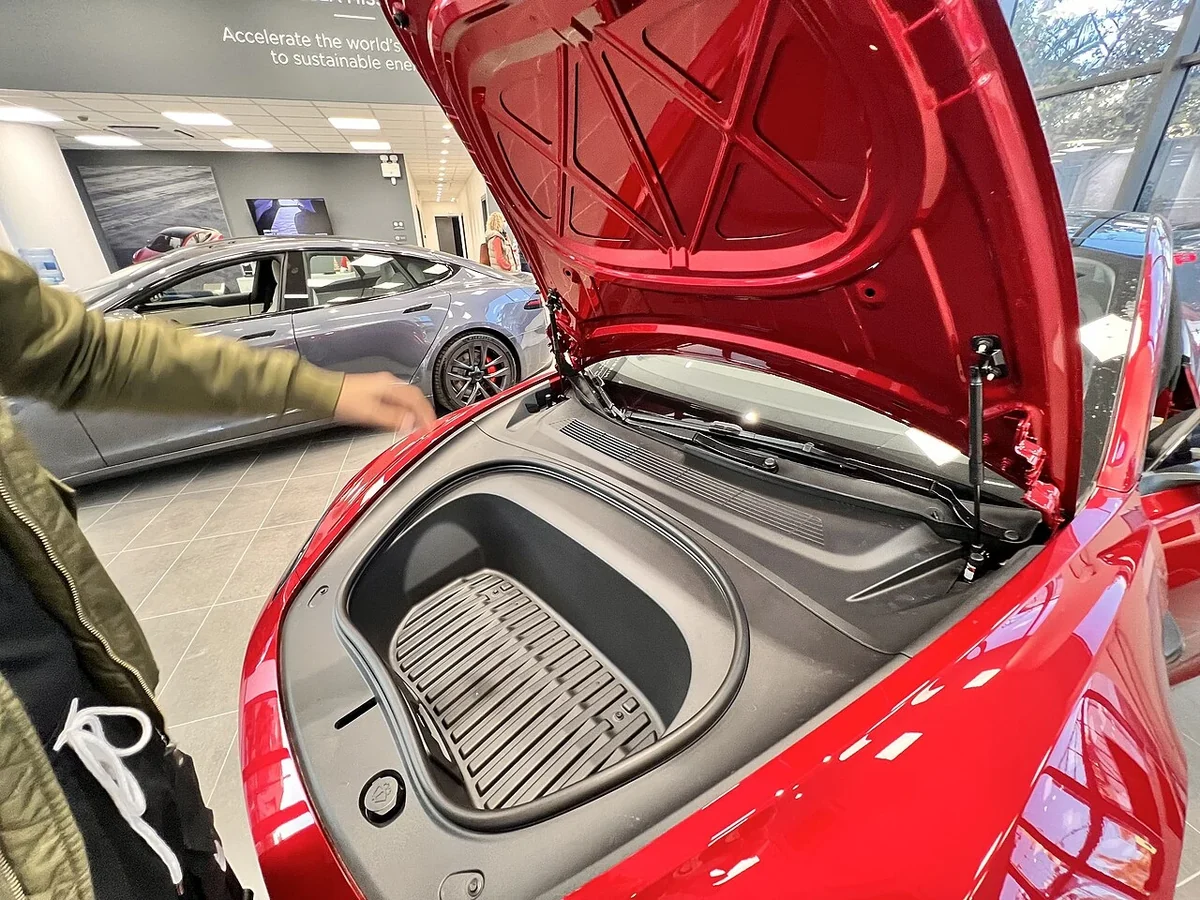
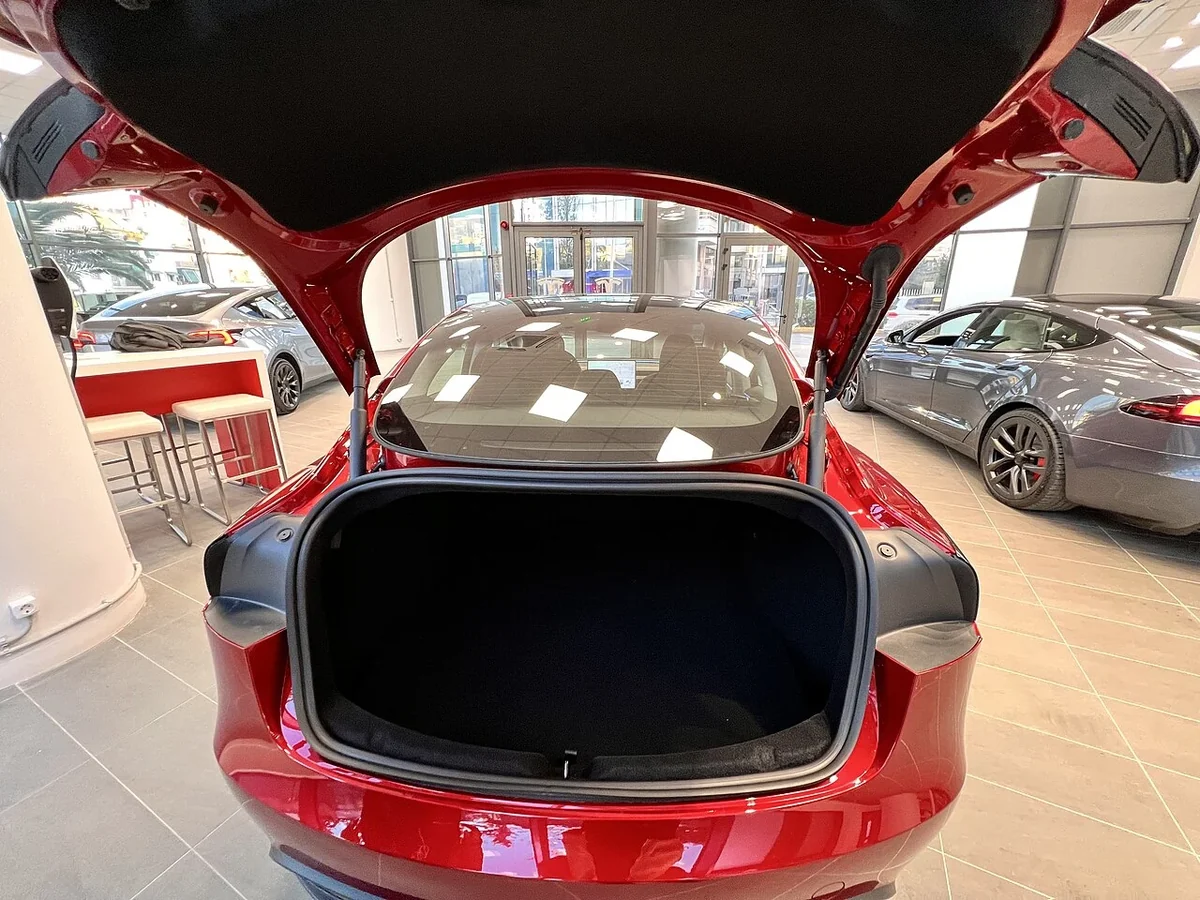
The advertised 24-cubic-foot cargo figure should not be mistaken for one uninterrupted space behind a hatch. The Model 3 has a sedan trunk and separate front storage. That distribution is useful for organizing smaller items, but it cannot change the shape of the rear opening.
A stroller, a musical instrument case and soft weekend bags all make different demands. Bring the awkward item rather than comparing volume alone. Also try the rear seat with the front seat set for the person who normally drives; roof clearance and foot placement are personal questions, not numbers that a specification table can settle.
For this Tesla Model 3 Review, the sedan body is both the attraction and the limit. It makes the car feel visually focused, but households constantly moving bulky objects may prefer a crossover. Our Model YL review explores a different, market-specific six-seat family solution; its availability and specifications should not be assumed to match the U.S. range.
6. Premium AWD Is Already a Serious Performance Claim
Tesla currently quotes 4.9 seconds to 60 mph for Premium RWD and 3.8 for Premium AWD. These are manufacturer figures from Tesla’s current U.S. Model 3 specifications, not times measured by Cariary. Older articles may show a different AWD number, which is why the date and exact version are stated here.
The useful question is whether the quicker version changes the driving you actually do. A strong acceleration figure does not tell you how naturally the brake pedal feels, how the seat supports you after two hours or how confidently you judge the front corners in a tight garage. Those impressions need a test drive of the relevant specification.
Premium RWD can therefore be a deliberate choice rather than a compromise made in embarrassment. It prioritizes the longer stated range. AWD adds another driven axle and a stronger acceleration claim, but tire choice still governs much of what happens when grip is poor. Neither version makes the separate Performance model a necessary purchase.
7. Buy the Car You Can Use Today
Avoid justifying the purchase with a future capability that has not been delivered to the car you are buying. Tesla explicitly describes Full Self-Driving (Supervised) as driver assistance requiring attention; it does not make the vehicle autonomous. The name should never substitute for understanding the current operating limits.
Compare the live cash price and complete quote rather than treating a lease headline, fuel-saving estimate or temporary promotion as the purchase price. Obtain an insurance quote, price replacement tires and check local service access. Software convenience and physical repair logistics are different parts of the same ownership decision.
Battery chemistry is another place to resist assumptions. We do not assign an unsupported cell chemistry or pack capacity to every Premium car. Cariary’s NCM versus LFP battery guide explains why those differences matter, but the exact vehicle documentation remains the reference. This Tesla Model 3 Review rates the proposition, not an unproven long-term reliability outcome.
8. Cariary Perspective: Efficiency Can Be a Personality
The Model 3 is most appealing when the owner’s life and the car’s assumptions agree. A suitable place to charge, a preference for a low sedan and a willingness to learn the interface turn its unusual choices into a coherent routine. In that setting, efficiency becomes something more interesting than an economy statistic.
Four stars acknowledge that coherence without declaring it universal. A driver who misses familiar controls or regularly struggles with the trunk opening is not using the car incorrectly. They may simply need a different answer. The Model 3 deserves attention because it asks a clear question about what a daily car should contain—and what it can leave out.
The final Tesla Model 3 Review recommendation is to test the routine, not just the launch. Sit in the back, load your luggage and plan a charging week. If those unglamorous exercises work, the car’s performance becomes a bonus rather than a distraction from a mismatch.
Who Should Buy It?
Recommended For
Drivers with dependable charging who want an efficient five-seat sedan, useful performance and a consistent digital interface; buyers willing to verify the current production specification.
Not Recommended For
Households needing a large hatch opening, drivers strongly attached to conventional instruments and controls, or anyone relying on future autonomous capability to justify the purchase.
One-Line Verdict: The Model 3 makes a strong case for the electric sedan when its simple-looking design also makes your actual week simpler.
Frequently Asked Questions
Which Model 3 does this review cover?
The current U.S. Premium RWD and AWD versions, checked October 3, 2026. Base Model 3 and Performance have different specifications.
Which Premium has the longest stated range?
Premium RWD: 363 EPA-estimated miles, versus 346 for AWD on the current U.S. page. Actual range depends on conditions.
Is Full Self-Driving autonomous?
No. Tesla says Full Self-Driving (Supervised) requires an attentive driver and does not make the car autonomous.
Why four Cariary stars?
The range, sedan identity and charging routine can work very well together, but interface preferences and household practicality prevent an unconditional recommendation.
Further Reading and Data Reference
Data reference date: October 3, 2026. Official specifications and attributed test observations are linked where discussed. Cariary Point is an editorial buyer-fit assessment, not an owner road-test score or reliability rating.
Explore more Cariary car reviews and buyer perspectives.