CARIARYCAR · DIARY · PERSPECTIVE
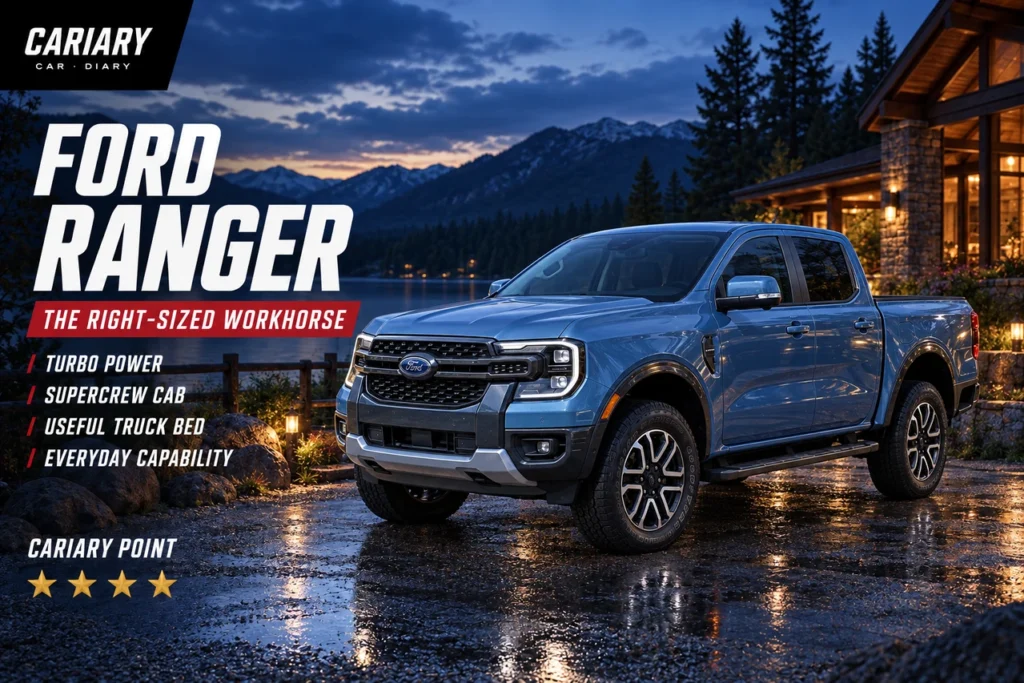
Cover: AI-generated Cariary editorial illustration, checked against the specified vehicle. It is not road-test photography.
This Ford Ranger Review looks past the most dramatic model in the brochure. The Raptor supplies the spectacle, but the ordinary Ranger deserves attention for a more difficult balancing act: useful truck capability in a package an owner can live with every day.
That does not make it a small vehicle, or an automatic replacement for a family crossover. It makes the Ranger an interesting middle-ground decision. The right buyer needs an open bed and genuine truck ability, while wanting to avoid buying size and specialization simply because they are available.
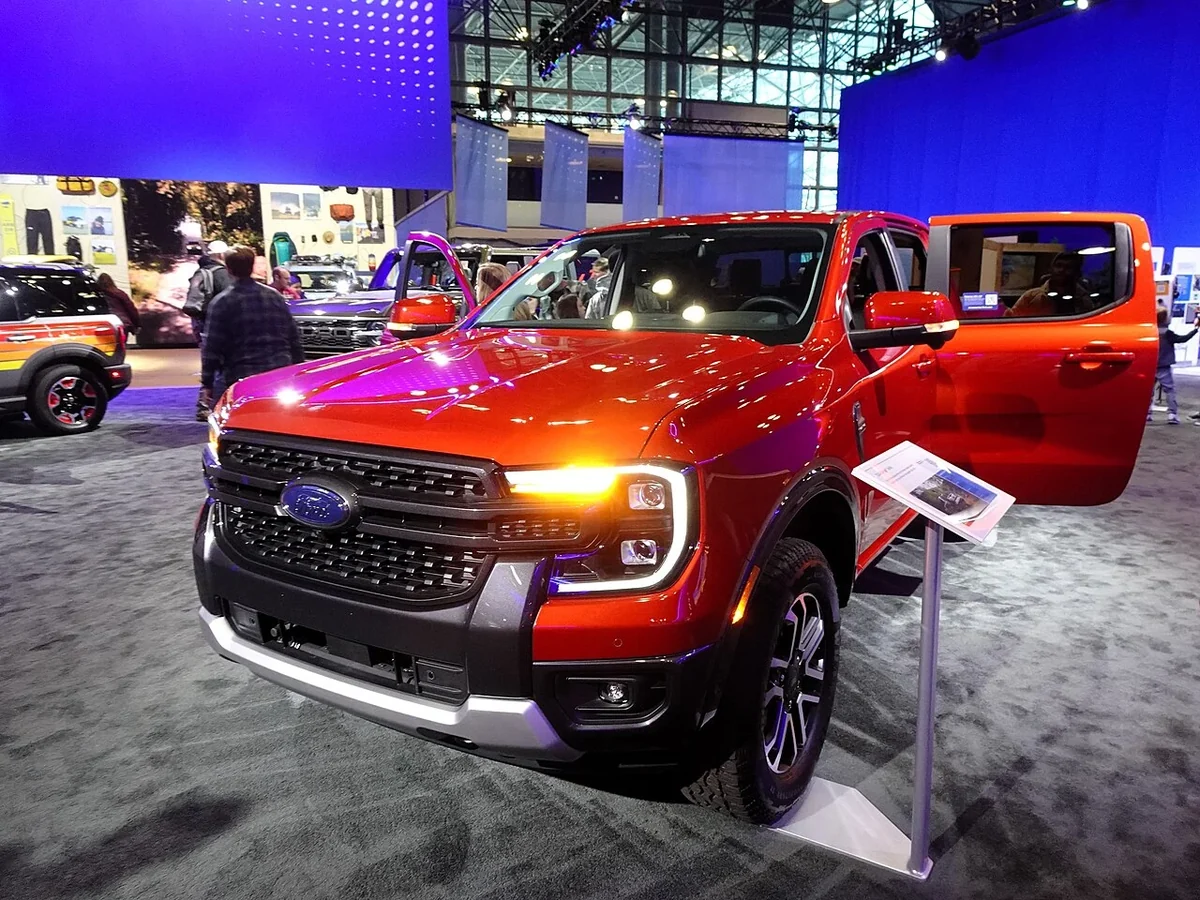
Scope: current-generation Ford Ranger, U.S. model year 2026, primarily XL/XLT/Lariat. Raptor is discussed separately. Research-based buyer review, not a Cariary road test. Photographs identify earlier current-generation and overseas examples; global diesel and plug-in specifications are not applied to U.S. trucks.
Four stars for a coherent midsize-truck package, useful engine choice and strong configuration-dependent capability. A single U.S. cab/bed format, option costs and the compromises of pickup ownership prevent an unqualified five-star recommendation.
Ford Ranger Review: Key Specifications
| Reference market | United States · MY2026 · SuperCrew · five seats |
|---|---|
| Standard engine | 2.3-liter EcoBoost · 270 hp / 310 lb-ft |
| Optional engine | 2.7-liter EcoBoost V6 · 315 hp / 400 lb-ft on XLT/Lariat |
| Transmission | Ten-speed automatic |
| Maximum available towing | 7,500 lb on qualifying non-Raptor models with required equipment |
| Maximum available payload | 1,767 lb; configuration dependent |
| Advertised base MSRP | XL $33,550; delivery, taxes, options and dealer terms require a full quote |
1. Ford Ranger Review: The Ordinary Truck Is the Story
The most expensive version of a vehicle often becomes its public identity. That can be misleading with a pickup because specialist equipment changes the job the vehicle is designed to do. A high-performance off-road derivative is fascinating, but its purpose is not identical to that of a truck carrying tools, bikes or weekend supplies.
The ordinary Ranger has a quieter argument. It offers a truck bed, a crew cab and a choice of turbocharged engines without requiring the owner to adopt the Raptor’s priorities. That can be more relevant to a buyer whose longest adventure most weeks is navigating a crowded hardware-store car park.
This Ford Ranger Review treats that buyer as the main character. The question is not whether the truck creates the strongest first impression. It is whether the combination of size, access, payload and equipment makes the tasks in your life easier often enough to justify choosing a pickup in the first place.
2. More Torque Is a Choice, Not an Obligation
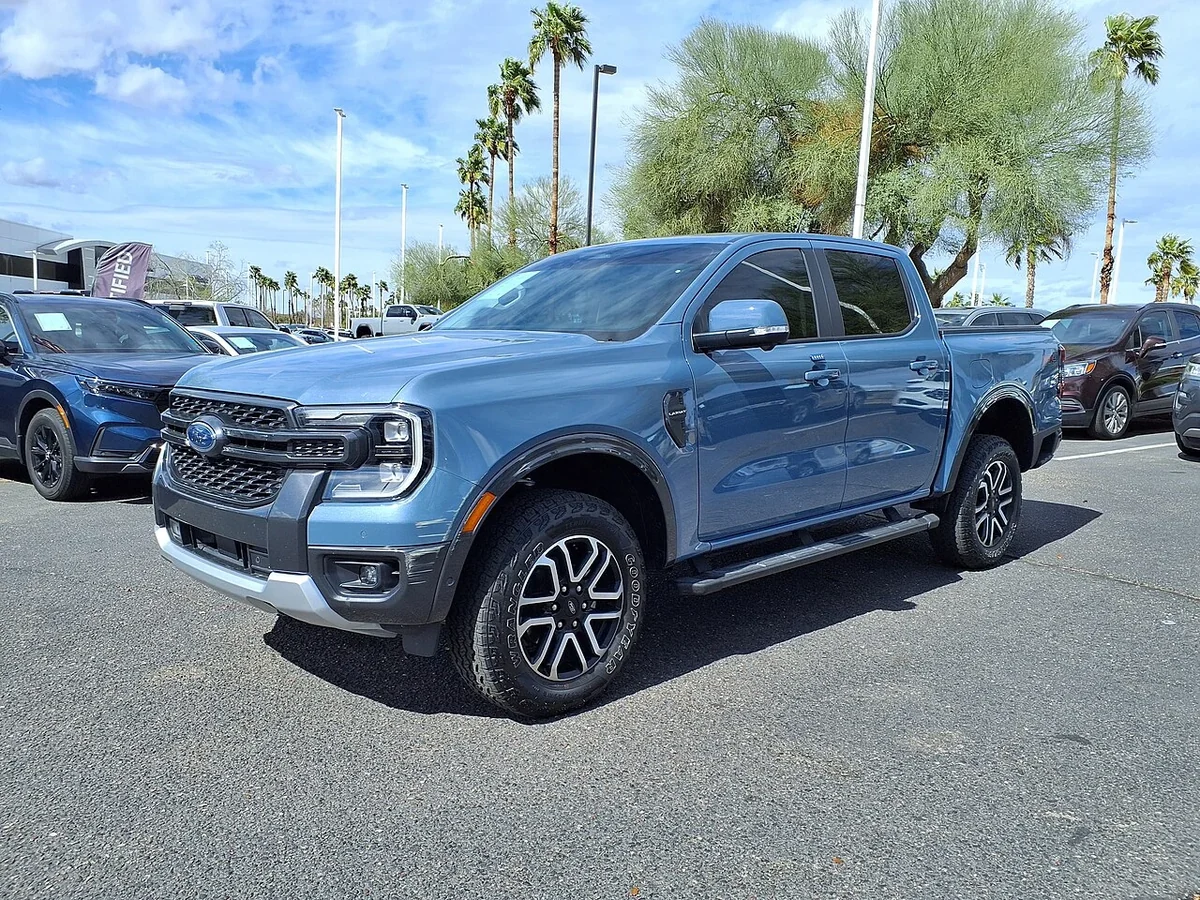
Ford’s U.S. 2026 Ranger specifications lists the standard 2.3-liter EcoBoost at 270 hp and 310 lb-ft, and the available 2.7-liter V6 at 315 hp and 400 lb-ft. The latter is offered on XLT and Lariat. These are manufacturer ratings, not Cariary measurements, and the applicable fuel and specification notes should be checked for the vehicle being ordered.
The bigger engine has an obvious appeal to an owner who wants stronger performance. The more useful question is whether that appeal survives the full quotation and the way the truck will be used. A vehicle chosen mostly for commuting and occasional light carrying may not need every available increment of output.
Do not infer a higher certified tow limit just from a larger engine. The complete configuration matters. On a test drive, assess low-speed response and how the automatic behaves through the speeds you commonly use. A specification advantage becomes an ownership advantage only if you appreciate it frequently enough to justify the cost.
3. SuperCrew Simplicity Has a Boundary
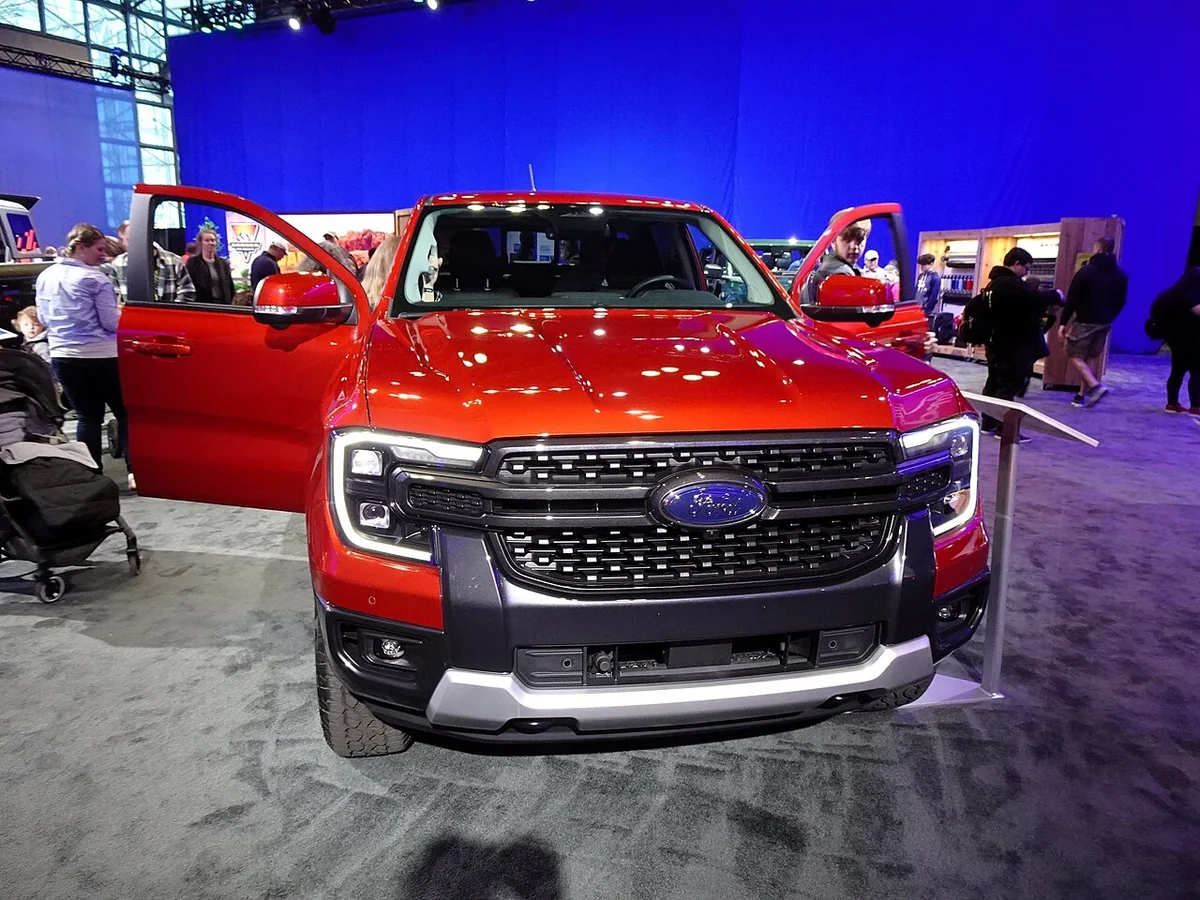
The U.S. Ranger centers on a five-seat SuperCrew cab and a five-foot bed. That makes the showroom choice easier than a sprawling matrix of cab and bed combinations, but it also removes an escape route for buyers whose needs fall outside that format. A simpler range can be convenient and restrictive at the same time.
If you regularly carry longer objects, measure them against the bed and consider how they will be secured. If you regularly carry adults in the second row, try that row with the front seats set correctly. Rear access, foot space and the angle of the seatback are better evaluated with people than with a brochure.
This is where the Tacoma’s cab choices become a useful comparison rather than a brand argument. A two-seat work layout may serve one owner better, while a consistent crew-cab format suits another. The meaningful difference is the task each vehicle accommodates. There is no prize for buying a configuration that makes your ordinary day unnecessarily awkward.
4. The 7,500-Pound Headline Needs Its Conditions
Ford advertises up to 7,500 pounds of towing for qualifying non-Raptor Rangers and a separate maximum payload of 1,767 pounds on its current U.S. page. The required equipment and exact configuration matter. Consult Ford’s towing guides and the truck’s labels before planning around either number.
The two headline maxima must not be treated as quantities you can automatically combine. A trailer places tongue load on the truck, while people, tools and accessories also use payload. A loaded family trip can therefore reach a constraint that an empty-trailer comparison conceals. The payload sticker on the actual vehicle is more useful than an enthusiastic salesperson’s memory.
Assistance equipment can make a towing task easier to manage, but it cannot change the certified limits. Ask for the specific package requirements and confirm what the trailer weighs when ready to travel. This is not a reason to dismiss the Ranger’s capability; it is how to turn a promising headline into a plan that makes sense.
5. Raptor Is a Different Brief, Not a Mandatory Upgrade
The U.S. Raptor uses a 3.0-liter twin-turbo V6, with Ford quoting 405 hp and 430 lb-ft. It also has specialized suspension and off-road hardware. Those changes explain why it attracts attention, but they should not be read as proof that it is the better choice for every task an ordinary Ranger owner performs.
If the Raptor is the vehicle you actually want, assess it as its own purchase. Its price, dimensions, tires and capability limits deserve their own comparison. Do not borrow the ordinary truck’s maximum tow figure or assume that an increase in performance raises every other rating at the same time.
The regular Ranger can therefore be a deliberate enthusiast choice. An owner may enjoy engineering that solves useful problems without needing the most spectacular derivative. There is something satisfying about a truck selected with a clear purpose: the capability is there because it is used, rather than because a badge made the less expensive model seem incomplete.
6. A Truck Interior Must Work With Real Hands
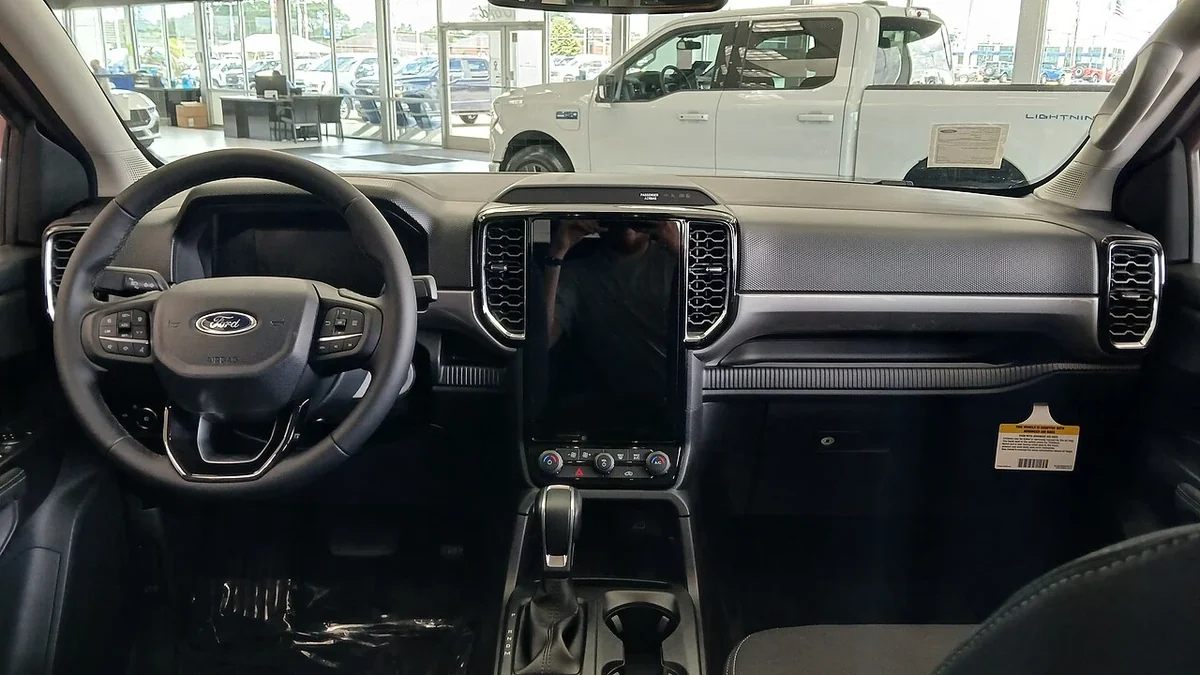
The Ranger uses a portrait-oriented center display, with an available 12-inch screen and related camera features. A tall screen can make navigation and camera imagery easy to see, but screen size alone does not measure usability. Test the tasks you will repeat, including temperature adjustments, phone connection and switching views while parked.
The cabin should also work when your hands are full and your belongings are ordinary. Check bottle storage, the space for a phone cable, the location of charging ports and how easily you can reach the rear storage area. A pickup interior is not merely a place to admire materials; it is where daily objects accumulate.
Ford’s available convenience equipment includes a 400-watt outlet system. That rating should prompt a check of the appliance you intend to use, not an assumption that any tool can be powered. The right equipment list starts with specific needs. This Ford Ranger Review gives practical usefulness more weight than the number of features a salesman can demonstrate in five minutes.
7. Be Careful With Global Ranger Advice
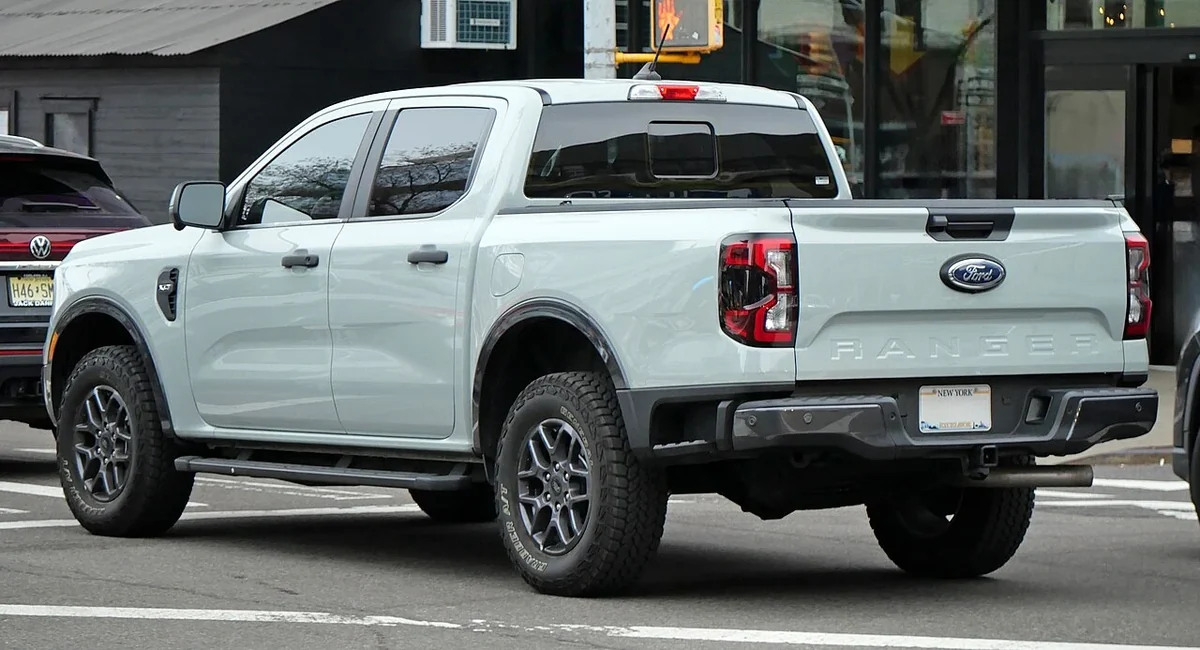
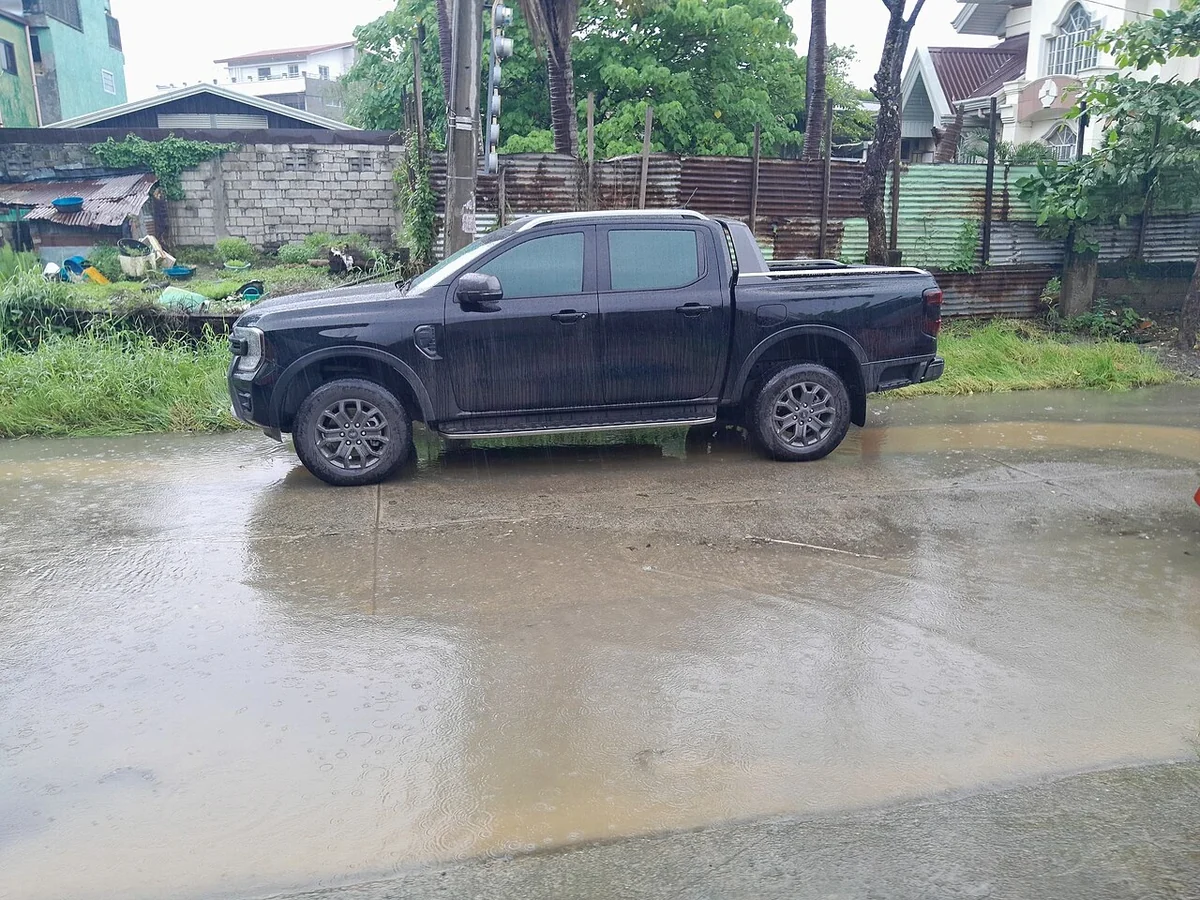
The Ranger is sold in many markets, and photographs or reviews from another country can look immediately relevant. However, familiar bodywork does not prove an identical engine, transmission, trim or towing certification. Global diesel, plug-in and Wildtrak information should not be silently transferred into a U.S. buying decision.
The overseas photograph below is included to make that distinction visible: it illustrates the wider Ranger family and its shared current-generation design, not the equipment of an American XLT or Lariat. When researching a purchase, identify the market and model year before comparing numbers. A beautifully detailed review of the wrong version can still lead to a poor decision.
Drivetrain terminology deserves similar care. Read FWD, RWD and AWD explained for the underlying ideas, then consult the actual truck’s operating instructions. Tire selection, road conditions and the permitted use of a particular four-wheel-drive mode matter. A badge cannot replace those details, especially when information from different markets is mixed together.
8. The Best Ranger May Be the One You Stop Adding To
The current Ford page advertises the XL from $33,550, XLT from $35,575 and Lariat from $43,955. These are starting MSRP references, not complete out-the-door quotations. Delivery, options, tax and dealer terms must be added or verified, and an optioned truck can move far away from the first price that attracted you.
Build a short list of essential equipment and a separate list of desirable extras. If an upgrade solves a repeated problem, it deserves consideration. If it mostly makes the truck resemble a different model, pause and compare the total with alternatives. This approach is particularly useful with pickups, where capability, appearance and convenience packages can overlap.
Four stars reflect a convincing middle-ground truck, not a promise of perfect reliability or universal suitability. Check service requirements, insurance and tires, using Cariary’s maintenance guide as a starting framework. The Ranger makes the strongest case when its open bed and capability belong to your real life. Without those needs, its compromises become much harder to justify.
Who Should Buy It?
Recommended For
Buyers who regularly need an open bed and a crew cab, value a choice of gasoline turbo engines, and can match towing or hauling needs to the exact truck rather than a lineup headline.
Not Recommended For
Owners requiring a different U.S. cab/bed format, households primarily shopping for passenger comfort, or buyers assuming Raptor performance and ordinary Ranger towing maxima belong to one specification.
One-Line Verdict: The ordinary Ranger is worth noticing because useful capability can be more rewarding than the most dramatic badge.
Frequently Asked Questions
Is the U.S. 2026 Ranger available with a diesel?
The U.S. lineup discussed here uses EcoBoost gasoline engines. Diesel specifications from other Ranger markets do not apply to these trucks.
Which models offer the 2.7-liter V6?
Ford lists it as available on XLT and Lariat. Confirm the required drivetrain and packages in the current order configuration.
Does every Ranger tow 7,500 pounds?
No. That is a maximum for qualifying non-Raptor configurations with the required equipment. Check the exact vehicle and loaded trailer.
Is the Ranger Raptor the best everyday Ranger?
Not automatically. Its specialized performance brief is appealing, but it should be judged against your budget and actual use rather than treated as a universal upgrade.
Why four stars in this Ford Ranger Review?
The regular truck offers a coherent balance of capability and usability. Cab/bed limitations, option costs and pickup compromises make the recommendation conditional.
Further Reading and Data Reference
Data reference date: October 3, 2026. Official specifications and attributed test observations are linked where discussed. Cariary Point is an editorial buyer-fit assessment, not an owner road-test score or reliability rating.
Explore more Cariary car reviews and buyer perspectives.

