Searching for the best tire brand sounds straightforward until the usual answers start contradicting each other. Michelin has a premium reputation. Pirelli supplies Formula 1. Continental keeps appearing in performance comparisons. Surely one of them must be the obvious winner?
I wanted to understand that question too. What became clear is that a tire is not one ability wrapped in black rubber. It is a collection of decisions about braking, temperature, noise, comfort, wear and the car underneath it.
A famous logo can tell us who made it. It cannot, by itself, tell us whether that particular tire suits a rainy commute, a winter morning or repeated laps on a circuit.
Quick Summary
- Michelin’s reputation deserves attention, but neither its name nor a higher price guarantees first place in every test.
- Pirelli’s F1 role demonstrates specialist capability. A sole-supplier championship is not a head-to-head road-tire comparison.
- Start with the right category, exact model and vehicle specification before comparing brands.
- Wet braking, aquaplaning resistance, cabin noise and tread life are different measurements. No single score explains everything.
- The useful question is which tire fits your car, climate and actual driving, supported by relevant tests and proper maintenance.
1. The Best Tire Brand Question Starts With the Wrong Unit
We often talk about tires the way we talk about car brands: comfortable, sporty, expensive or good value. Those associations can help us recognize a range, but they become unreliable when we turn them into promises.
Michelin’s Pilot Sport, Primacy and CrossClimate names do not describe the same task. Broadly, they point toward performance, road comfort and seasonal versatility respectively. Even within those families, the exact generation and regional version matter. A Pilot Sport summer tire and a Pilot Sport all-season tire are not interchangeable just because they share two words.
The same applies to Pirelli P Zero and Cinturato, or Bridgestone Potenza and Turanza. Comparing two brands without naming the products can mean comparing a sports tire with a touring tire and then blaming the logo for their differences.
Think of shoes. A running shoe is not inferior because it loses to a hiking boot on a muddy trail. It may be excellent at a different job. Tires deserve the same context.
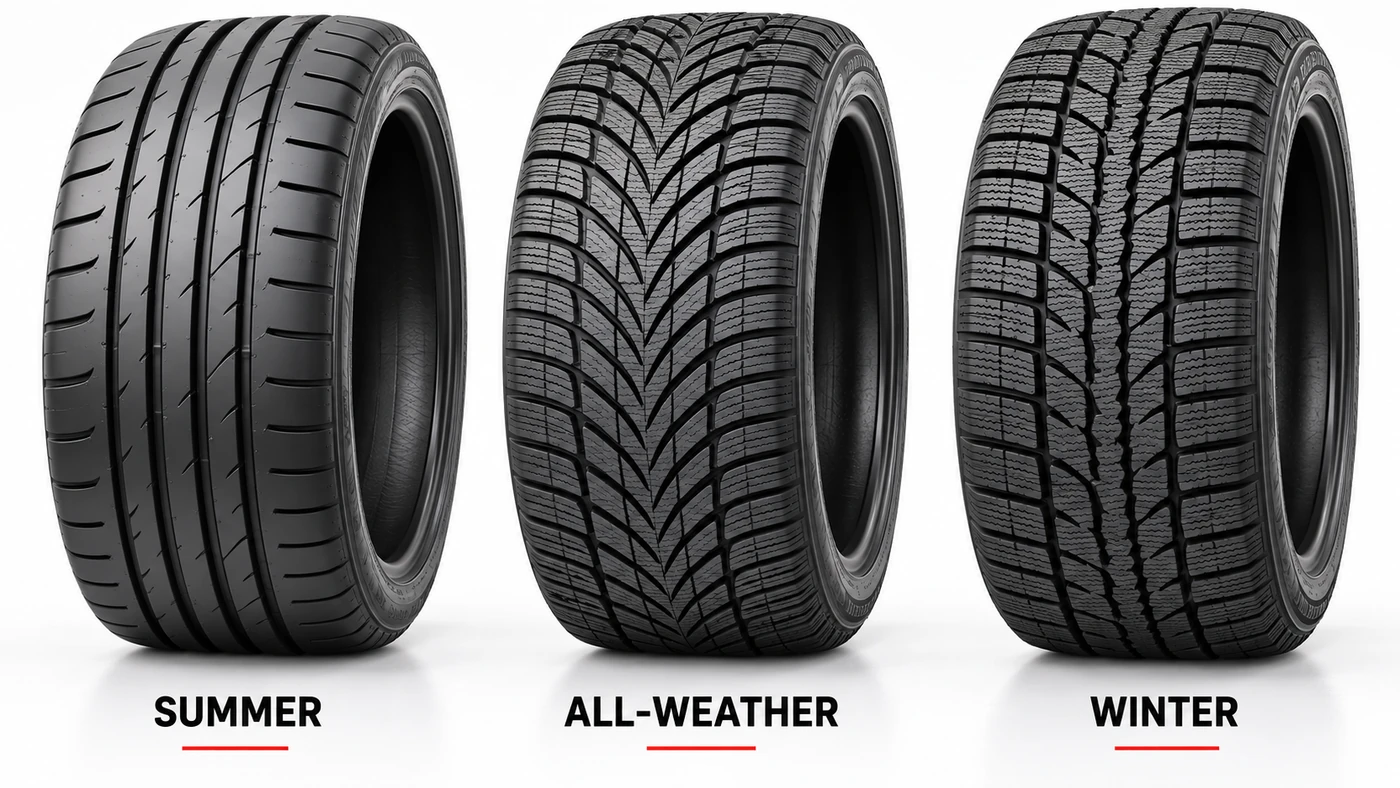
Category Comes Before Reputation
| Category | Main purpose | What the label alone cannot promise |
|---|---|---|
| Performance summer | Responsive handling and grip in suitable warmer conditions | Winter suitability, quietness or long life |
| Touring | Everyday comfort, refinement and distance | A particular season rating; touring tires can have different seasonal designs |
| All-season / all-weather | A broader operating range | Equal snow and ice ability across every product or market |
| Winter | Operation in cold-weather conditions, with designs targeting snow or ice differently | Identical performance on snow, ice and wet asphalt |
| Track-focused | Performance under specific circuit conditions | Good cold, wet or everyday behavior |
The terminology needs care. In North America, all-weather commonly distinguishes tires with a severe-snow qualification from conventional all-season products. European all-season naming can cover products serving that role. Check the actual markings rather than translating the category name literally.
The three-peak mountain snowflake symbol, often shortened to 3PMSF, indicates that a tire meets a standardized snow-performance requirement. It is not a promise of equal ice grip or equivalence to every dedicated winter tire. The European Commission’s tire-label explanation distinguishes snow and ice indications.
2. Michelin’s Price Is a Clue, Not a Verdict
Why can a Michelin quotation look expensive? A premium tire’s development may involve materials research, repeated testing, vehicle-specific tuning and manufacturing controls. There is also distribution, local availability, retailer pricing and brand positioning. Without a cost breakdown, we cannot honestly assign a percentage of the price to engineering or marketing.
Nor is Michelin necessarily the most expensive option in every size or country. Compare the same size, specification, installed services and sale conditions before drawing that conclusion.
The more interesting idea is balanced performance. It is easy to appreciate one dramatic number, such as a short dry stopping distance. It is harder to develop a tire that also behaves well in rain, avoids excessive energy loss, rides acceptably and remains useful over time.
That helps explain the appeal of Michelin’s broad premium positioning. But balance is a development ambition, not proof that every Michelin product has fewer weaknesses than its competitors. Other manufacturers are working on the same problems.
Is Michelin Actually the Best in Independent Tests?
A useful counterexample comes from Tyre Reviews’ 2025 performance-summer test, covering seven products in 225/40 R18. Its published results credited Continental SportContact 7 with the shortest dry braking, Pirelli P Zero PZ5 with the shortest wet braking, and Bridgestone Potenza Sport with the fastest wet handling. Michelin Pilot Sport 4 S received a strong comfort assessment but did not lead those three measurements.
That is one test in one size, not a permanent ranking. Crucially, it tested Pilot Sport 4 S, not Pilot Sport 5. Swapping the name would turn a useful comparison into a misleading claim. See the original test and results.
My takeaway is not that Michelin lost and another brand won forever. It is that different disciplines can produce different leaders even before we change the vehicle, size or weather.
Price can help frame a shortlist. It cannot replace those questions.
3. Pirelli in F1 and Michelin at Le Mans Prove Different Things
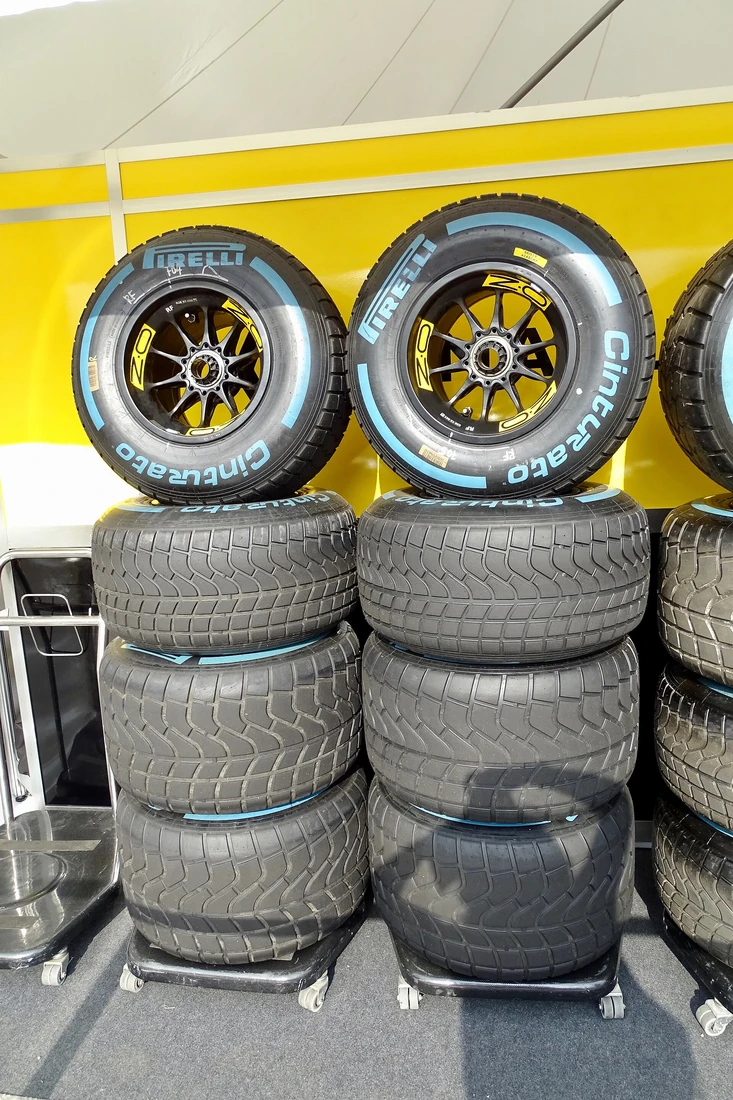
Seeing Pirelli on every Formula 1 car is powerful advertising. It is also evidence of the capability required to support a demanding global championship.
However, F1 is not currently a tire contest between Pirelli, Michelin and Bridgestone. Pirelli is the championship’s single supplier, with the FIA confirming the arrangement through 2028. All teams operate within that supply framework.
Winning a race on Pirelli tires therefore does not establish that Pirelli beat rival tire manufacturers in the same race. A sole-supplier contract is a credential, not a universal comparative verdict.
Racing Tires Work to a Racing Brief
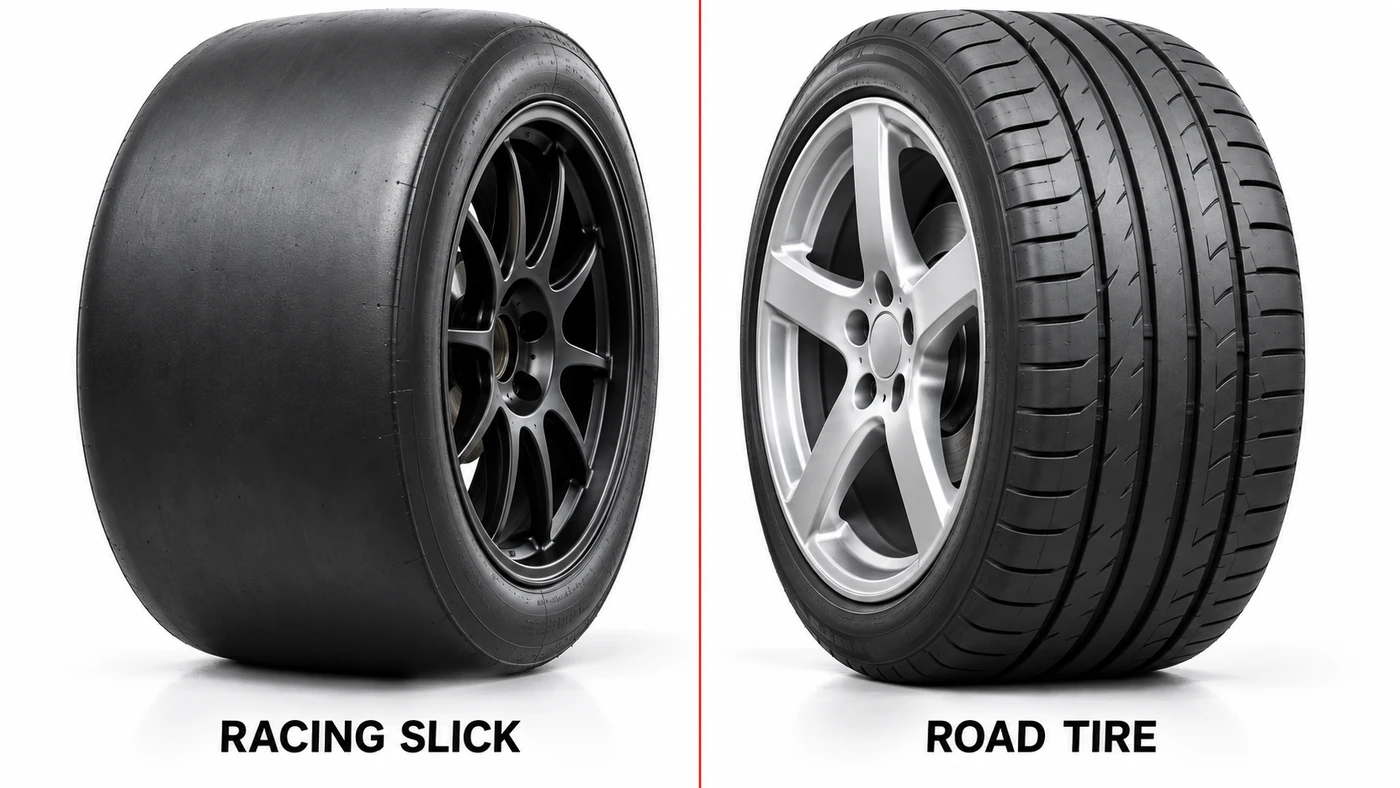
A dry racing slick has no tread grooves because its task does not include clearing standing water in ordinary road use. Rain tires need a different design. Even within a race weekend, the appropriate answer changes with conditions.
Formula 1 adds temperature management, high loads, available compounds and strategy. Tire degradation means a loss of performance during use; it is not always the same thing as visibly wearing away the rubber. Overheating can cost grip before the tread looks dramatically different.
The longest-lasting tire is not automatically the tire that best meets a championship’s brief. But that does not mean every F1 tire is deliberately designed to fail quickly. Performance and degradation targets change with regulations and development priorities. The official F1 tire introduction explains the role of compounds and operating conditions.
A road tire faces a different routine: ordinary journeys, cold departures, changing weather, noise expectations and a much longer service life. The same company can be highly capable in both settings without using the same design.
Apply the Same Logic to Michelin
Michelin is the exclusive tire supplier for WEC Hypercar, the top category seen at Le Mans, with its agreement extended through 2032. That is not the same as supplying every car in the championship: Goodyear supplies LMGT3.
Endurance racing emphasizes performance across stints, changing temperatures and the management of a long event. It does not mean one set of tires lasts the entire 24 hours, or that warm-up and peak grip cease to matter.
Our Le Mans beginner guide explains why classes and strategy change what we are watching.
Racing can develop materials knowledge, simulation methods and understanding of heat and construction. That knowledge still has to be translated into a road product with a different brief. Neither an F1 contract nor a Le Mans result tells us which replacement tire will be quieter on our commute.
4. Tire Engineering Is About More Than Maximum Grip
When a tire rolls, its tread and structure continually deform. When it brakes or turns, the contact with the road must transmit forces. Engineers are shaping both the rubber’s behavior and the structure supporting it.
The compound is the formulated rubber mixture. The carcass is the load-carrying structure beneath the visible tread and sidewall. Changing either can affect more than one characteristic at once.
Wet Braking Is Not Aquaplaning Resistance
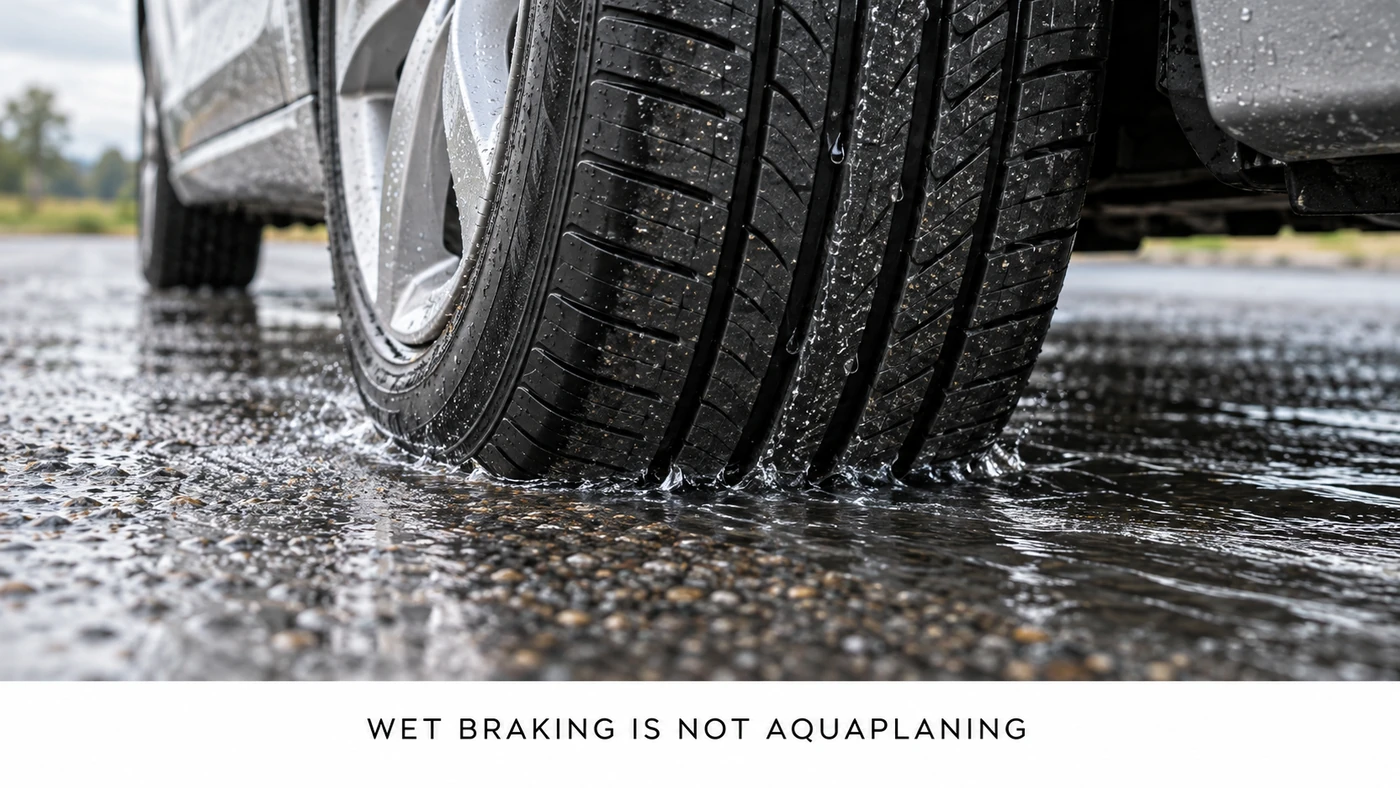
Wet braking asks how effectively a tire slows a vehicle on a specified wet surface. Aquaplaning happens when water increasingly separates the tire from the road, reducing useful contact.
Water drainage, tread depth, road texture, speed and load matter, but grooves alone do not explain wet grip. Rubber properties matter too. A dramatic-looking tread is not a substitute for testing.
This is why a tire can perform well in wet braking without leading a deeper-water aquaplaning test. Those measurements describe related situations, not identical ones.
Does More Grip Always Mean Faster Wear?
It is tempting to say soft rubber grips and wears quickly, while hard rubber lasts and slides. That is too simple.
Rubber behavior changes with temperature and the way it is deformed. Compound chemistry, construction, tread design, alignment and how the car is driven all influence the outcome. Pressing a fingernail into a tire is not a meaningful prediction of its braking distance or useful life.
There are real compromises, but development can improve several properties together. Continental’s explanation of silica-based tire development describes progress in wet performance and rolling resistance rather than a fixed rule that one must always worsen.
Rolling resistance is the energy loss associated with a tire rolling under load. Reducing it can help fuel consumption or EV range. It is still only one part of the vehicle’s energy use, and one part of the tire’s job.
Response, Comfort and Noise Are Not One Slider
A structure that resists deformation can help a tire respond promptly to steering, but may also transmit impacts differently. Sidewall height, pressure, tread blocks and the car’s suspension complicate the relationship.
Noise is another problem again. Tread pattern, road surface, cavity resonance and the vehicle’s sound isolation all contribute. We should not turn “firmer sidewall” into “always louder.”
For the connection between tire grip and the car’s ability to stop or turn, our brake and tire basics guide gives the wider picture.
5. Ten Brands, Many Different Product Personalities
Brand identity is useful as a map of what a company offers, not as a shortcut to a test result. The families below illustrate that breadth. Availability, names and individual specifications vary by region; the rows are not ranked.
| Brand | Familiar product families | What the range helps us notice |
|---|---|---|
| Michelin | Pilot Sport, Primacy, CrossClimate | Performance, touring and seasonal versatility coexist under one logo |
| Continental | SportContact, PremiumContact | Sport-oriented and broader everyday priorities are separate product choices |
| Pirelli | P Zero, Cinturato, Scorpion | Performance, road-use and SUV families span different applications |
| Bridgestone | Potenza, Turanza, Alenza | Sports, touring and SUV-oriented ranges cannot be judged as one tire |
| Goodyear | Eagle F1, EfficientGrip, Vector | Performance, efficiency-focused road use and seasonal versatility |
| Hankook | Ventus, iON, Dynapro, Kinergy | Performance, EV-focused development, SUV and everyday ranges |
| Kumho | ECSTA, Majesty, CRUGEN, Road Venture | Performance, comfort-oriented and SUV/off-road offerings |
| Yokohama | ADVAN, BluEarth, GEOLANDAR | Performance, efficiency-oriented road products and SUV/off-road choices |
| Toyo | Proxes, Open Country | Sports-road and SUV/off-road applications |
| Falken | AZENIS, WILDPEAK, SINCERA | Performance, SUV/off-road and touring applications |
The familiar shorthand is understandable: Michelin for balance, Continental for braking and precision, Pirelli for performance-car associations. Toyo and Falken also have strong identities among enthusiasts and off-road owners.
But those are associations, not measurements of every product. A Pirelli touring tire need not behave like a P Zero. A Michelin track-focused tire need not prioritize ride comfort. A Continental is not automatically harsh.
Hankook and Kumho also deserve to be evaluated at product level, not dismissed through an old “European premium versus Korean budget” assumption. Hankook’s iON range, for example, explicitly addresses electric-vehicle requirements. That establishes a development focus; it does not establish a win against every competing EV tire.
Similarly, a manufacturer’s country of origin cannot rank a tire’s wet braking or noise. The exact product, generation and specification are the meaningful units.
6. The Same Name Can Hide Different Fitments
Two tires can carry the same commercial name without being identical in construction or tuning.
An original-equipment, or OE, version may be developed around a particular vehicle’s requirements. Homologation here means the relevant vehicle-maker approval, not a universal award.
For example, Porsche’s N-marked tires are developed and approved for the relevant Porsche application. Other manufacturers use their own markings, such as BMW’s star and Mercedes-Benz’s MO designations. The marking must be interpreted for the actual vehicle and specification.
Changes can involve the compound or structure and the balance between response, refinement and efficiency. An approval for one car does not make that version the best choice for every other car.
Read the Whole Sidewall
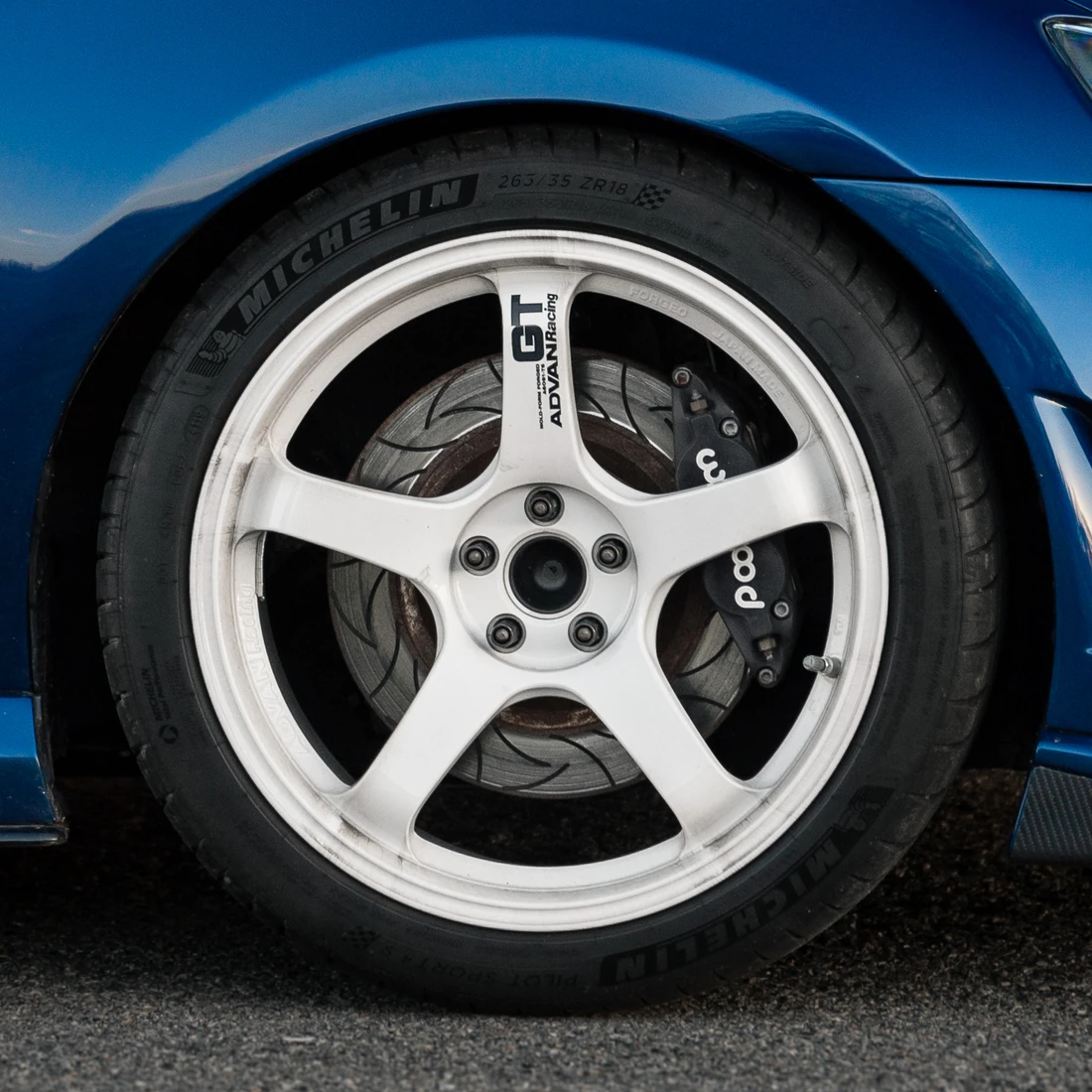
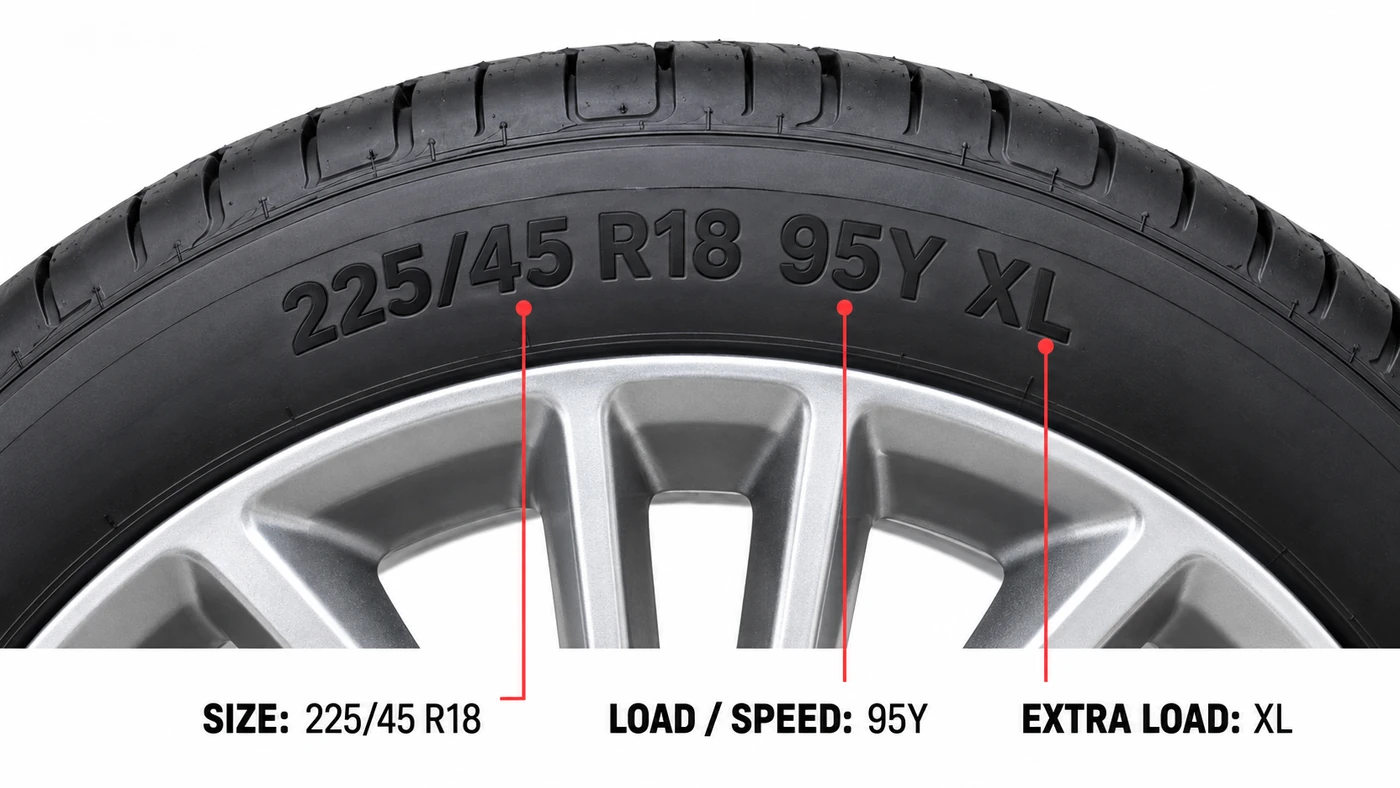
In the fictional example 225/45 R18 95Y XL, 225 describes nominal section width in millimeters. The 45 is the sidewall-height ratio, R indicates radial construction, and 18 is the rim diameter in inches. The 95 is a load-index code, Y is a speed category, and XL denotes an extra-load specification.
Those markings are not instructions to fit this tire to your car. Follow the vehicle’s approved size, load and speed requirements, pressure guidance and any other specified fitment conditions. A higher speed category is not permission to exceed road limits.
A test in one size should therefore be treated as evidence about that tested specification. It cannot prove that a much wider, lower-profile version will give exactly the same balance. The vehicle and test conditions also change the result.
Do EVs Need a Different Kind of Tire?
Some electric vehicles combine high mass, strong torque and an unusually quiet powertrain. That can bring load capacity, wear, efficiency and tire noise into sharper focus. It does not mean every EV is heavier than every combustion car, or that all EV tires form one performance category.
As Continental’s EV tire guidance emphasizes, the required size, load index, speed rating and driving conditions remain fundamental. An EV-oriented logo is not a substitute for those requirements. XL is not an EV-only label.
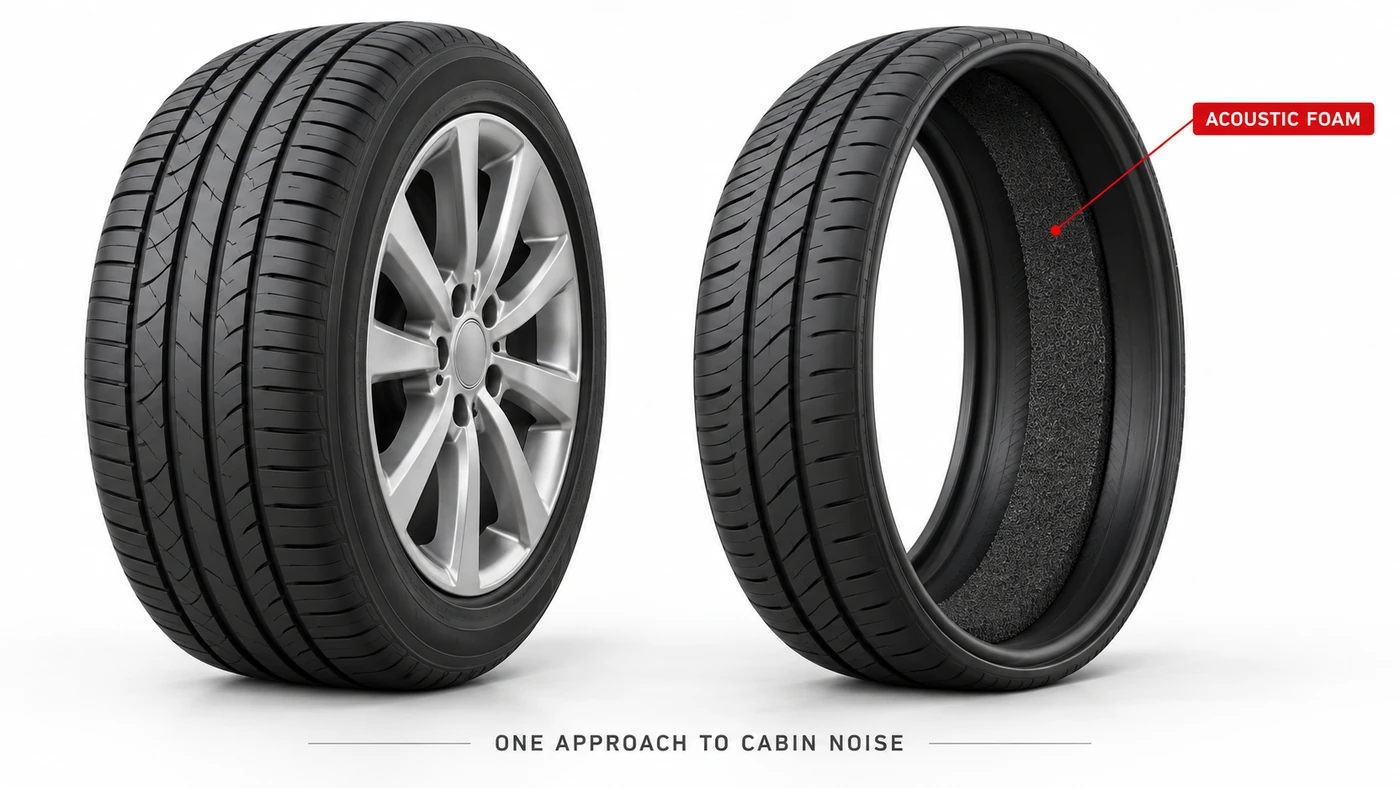
A quiet motor can also make road noise more noticeable. One response is acoustic foam inside the tire: Pirelli’s PNCS explanation describes material targeting resonance in the tire cavity. It is one noise-control approach, not a cure for every noise source, and not exclusive to EVs.
7. Read the Evidence in the Order You Actually Drive
An independent tire test is most useful when we read past its winner.
First check the date, exact models, size and specification. Then look at the test vehicle, conditions and measured disciplines. Finally, ask how the overall score weights those disciplines. A ranking that values steering feedback heavily answers a different question from one emphasizing wear and comfort.
Compare more than one reputable test where possible, especially for the same category and a relevant size. Owner reports can add long-term context, but different roads, vehicles, pressures and expectations make them less controlled evidence.
Match the Questions to the Journey
| Your usual use | Questions worth investigating |
|---|---|
| Daily commuting | How does it brake in rain and dry conditions? Is the ride and noise acceptable? |
| Enthusiastic road driving | How does steering response combine with wet behavior and predictable handling? |
| Frequent circuit use | What operating conditions and heat management does the exact tire require? |
| Long-distance travel | What evidence covers comfort, wear, efficiency and wet performance? |
| An electric vehicle | Does it meet the car’s load and fitment requirements, and what do relevant noise and efficiency tests show? |
| Snow and cold weather | Is the seasonal specification appropriate for the local conditions and legal requirements? |
Safety requirements come first. Personal priorities help distinguish suitable candidates; they do not make an unsuitable winter specification or inadequate load capacity acceptable.
Labels Help, but They Are Not a Complete Review
The EU tire label reports rolling-resistance efficiency, wet grip and external rolling noise, with qualifying snow or ice indications where applicable. External noise is not the same as the sound heard inside your cabin.
It does not give a complete account of steering feel, dry handling, ride comfort, aquaplaning or long-term wear. Use it to answer the questions it actually measures, then use other evidence for the rest.
Condition Can Matter More Than the Badge
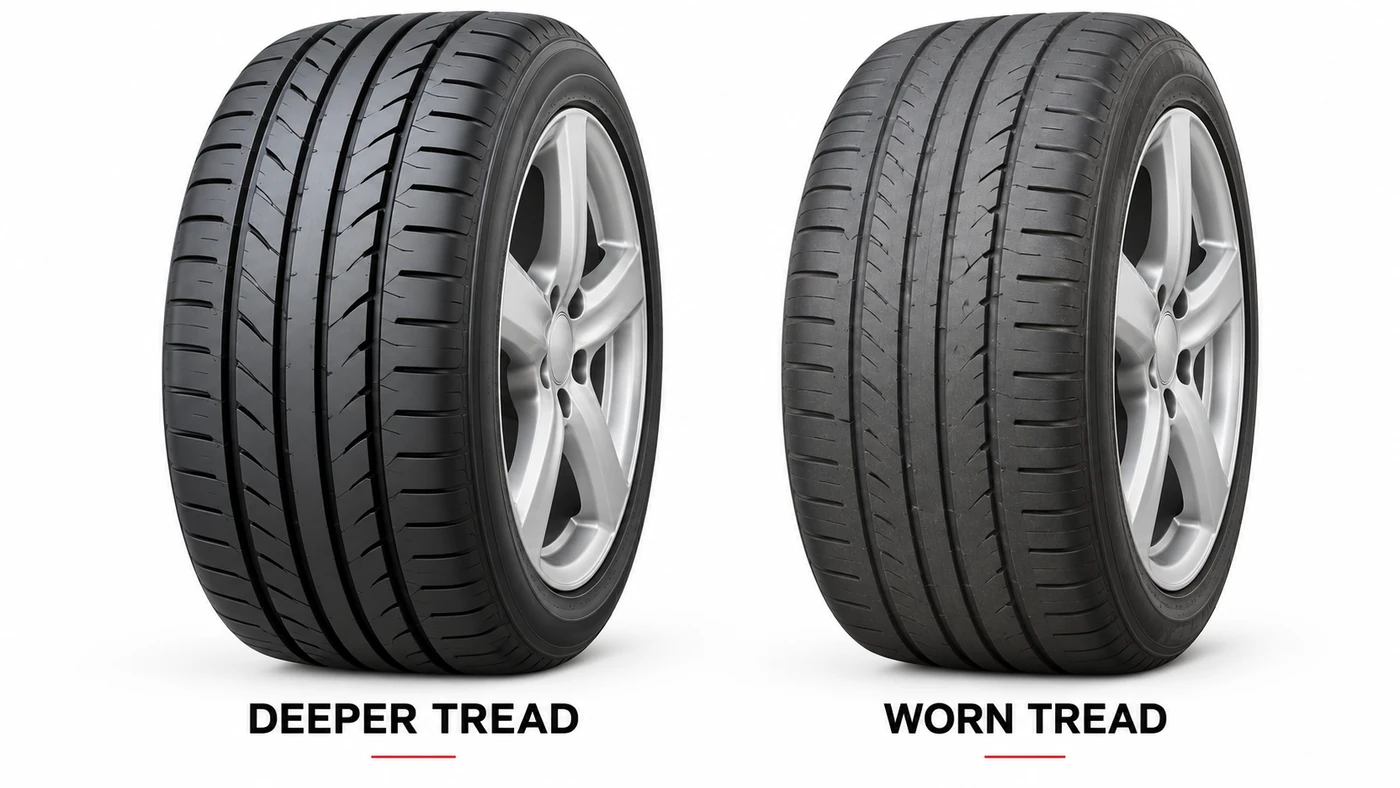
A once-excellent tire is not permanently excellent regardless of its pressure, damage or remaining tread. Check cold pressure against the vehicle placard or manual, not the maximum pressure molded into the tire sidewall. Inspect wear, damage and age in line with vehicle and tire-maker guidance.
NHTSA’s tire-safety guidance is a useful starting point. Visible damage, persistent pressure loss or unusual behavior warrants professional inspection rather than faith in a premium brand.
Our complete car maintenance guide connects those checks with the rest of the vehicle.
Cost still matters, but it belongs at the end of a meaningful comparison. An installed price and credible wear evidence can inform running costs; a cheap quotation alone cannot tell us the tire is good value. Equally, the most expensive option may offer a characteristic we rarely use rather than a universal improvement.
Common Misconceptions
“Michelin costs more, so it wins everything.” A price does not specify a test discipline, size or condition.
“Pirelli wins in F1, so its road tires beat all rivals.” A single-supplier championship does not provide that comparison.
“A softer compound always wears faster.” Tire behavior depends on formulation, temperature, construction and use, not one simple hardness scale.
“The quietest label means the quietest cabin.” External rolling-noise measurements do not directly describe interior sound.
“I liked this brand ten years ago, so its newest tire must be my best option.” Generations and competitors change. Repeat the product-level comparison.
Cariary Thoughts
I started with the same two shortcuts that make this topic appealing: Michelin’s premium reputation and Pirelli’s place in F1. Both feel like reassuring answers before we have even named a tire.
What changed my perspective was separating the company from the product and the product from the conditions. That does not make brand reputation worthless. It puts reputation in its proper place: a reason to investigate, not a reason to stop investigating.
The most interesting engineering is often the compromise we do not notice. A tire that brakes well in rain while remaining tolerable on a long journey may be doing a more relevant job for us than one with a spectacular circuit result.
This is a research-based explanation, not a claim that Cariary has personally driven every tire mentioned. The conclusion I can defend is narrower and more useful: ask the tire to solve your actual problem, then look for evidence that it does.
One-Line Summary
There is no single best tire brand for every situation: the meaningful answer is a specific tire, on a suitable car, in the conditions where it will actually be used.
FAQ
Is Michelin the Best Tire Brand?
It is a major premium manufacturer with a broad range, but no brand name guarantees the strongest result in every discipline. Compare the exact model, category and fitment using relevant evidence.
Why Are Michelin Tires Often Expensive?
Development, testing, vehicle-specific work and manufacturing are part of a premium tire business, alongside brand positioning and retail-market factors. Actual prices vary by product, size and region; a higher quotation is not proof of better performance in every area.
Is Pirelli Better Because It Supplies F1?
Its F1 role demonstrates specialist capability, but the championship uses a single supplier. That arrangement does not directly compare Pirelli road tires against competing road products.
Which Brand Has the Best Wet Grip or Longest Life?
Those are separate questions with product-specific answers. Wet braking, wet handling and aquaplaning resistance also differ from one another. Look for appropriate tests rather than transferring one result across an entire brand.
Is Continental Better Than Michelin?
It can outperform a particular Michelin in a particular test discipline, just as the opposite can occur. A useful comparison names both exact tires, the size and the conditions rather than declaring a permanent brand winner.
Are Hankook and Kumho Automatically Below European Brands?
No. Country of origin is not a measured performance category. Evaluate the relevant product and generation, including its fitment and independent test evidence.
What Do OE Approval Marks Mean?
They identify a vehicle-maker-specific approval or development specification. Same-name tires may differ, so check the precise application and the vehicle manufacturer’s requirements rather than assuming every marked version is interchangeable.
Which Tire Brand Is Best for an EV?
Begin with the vehicle’s required specification, then examine the particular tire’s wet performance, noise, efficiency and suitability for the conditions. The load index and approved fitment matter more than an EV logo alone.
Does Motorsport Experience Improve Road Tires?
It can contribute knowledge about materials, construction, simulation and heat. The road product still needs separate development and evaluation for its own operating conditions.
Should I Choose by Brand or Tire Model?
Start with the vehicle requirements and climate, identify the appropriate category, then compare exact models and specifications. Brand reputation is useful context, not the final answer.
References
The sources below distinguish original testing, championship supply arrangements, safety guidance and manufacturer product information. Manufacturer descriptions establish features and range names, not independent superiority.
- Tyre Reviews: original 2025 performance-summer comparison and same-test data explorer.
- FIA: Pirelli single-supplier extension, Michelin: WEC Hypercar agreement and Goodyear: LMGT3 supply.
- NHTSA: tire safety, European Commission: tire labels and Porsche: approved tires.
- Continental: silica development, EV fitment guidance and Pirelli: acoustic-foam technology.
- Product ranges: Michelin, Pirelli, Bridgestone, Goodyear, Hankook product catalog, Kumho, Yokohama, Toyo and Falken.