CARIARYCAR · DIARY · PERSPECTIVE
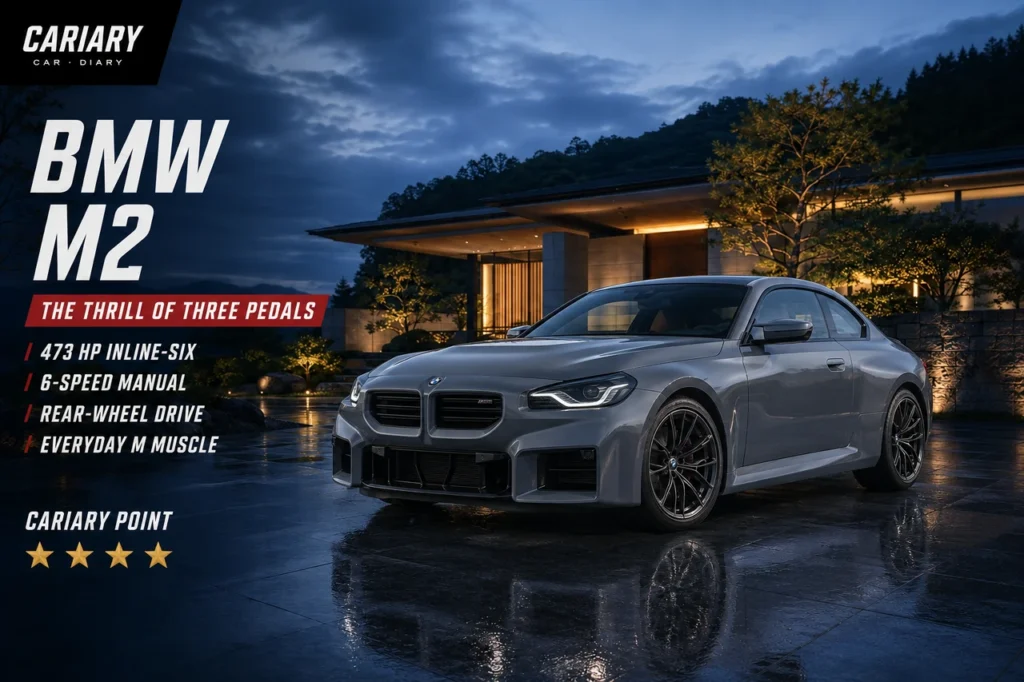
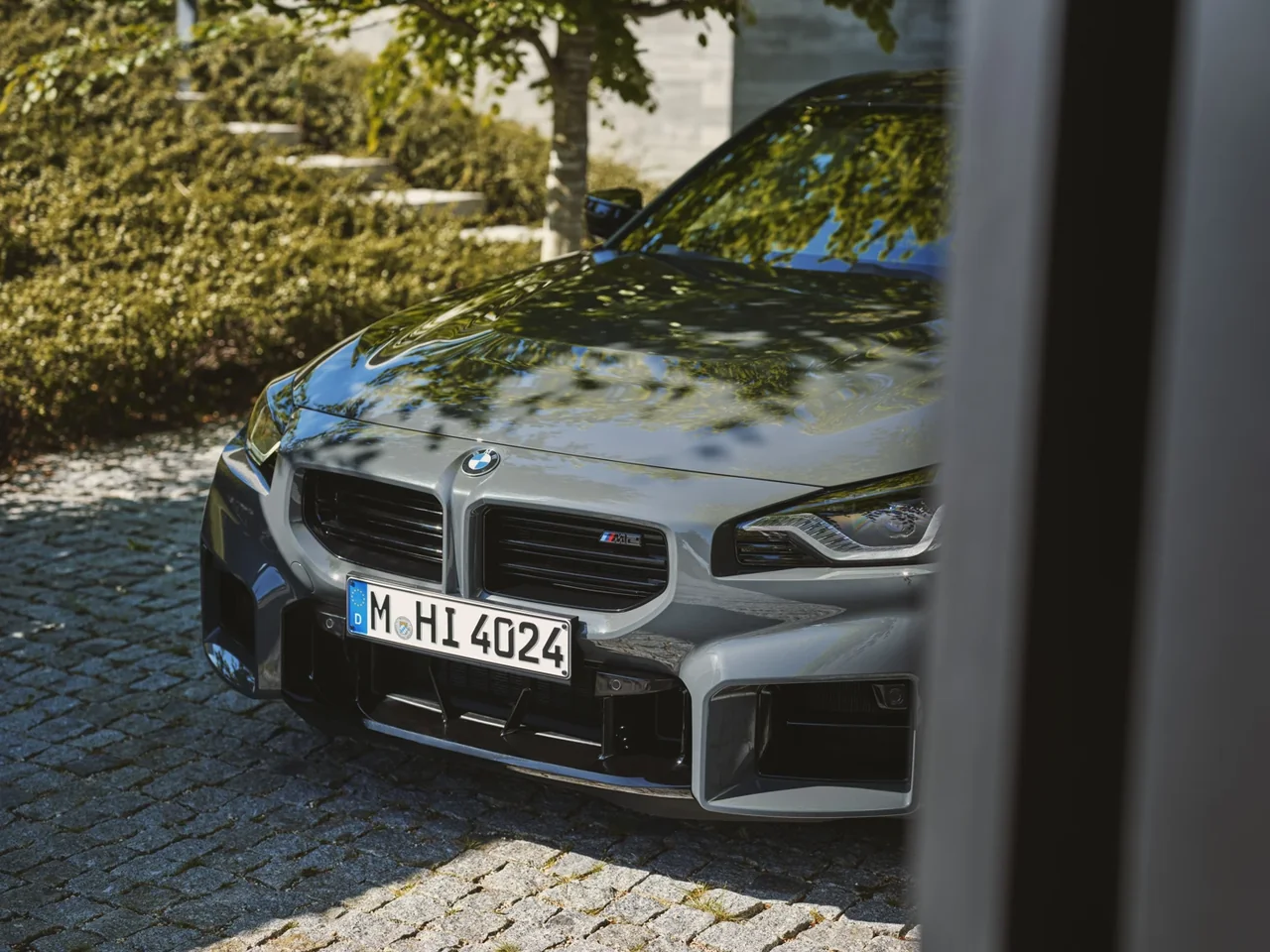
Cover: AI-generated Cariary editorial illustration, visually checked against the specified vehicle. It is not road-test photography.
This BMW M2 review starts with a choice that its power figure cannot settle: do you want the car to do more for you, or do you want more to do inside the car? The manual answers that question before the first fast corner. Its extra pedal asks for attention, timing and a willingness to accept that the fastest configuration might belong to somebody else.
The attraction is unusually complete. Here is a muscular coupe with room behind the front seats, a usable trunk and enough visual attitude to make a short errand feel like an occasion. Yet the M2 also carries substantial weight, expensive consumables and a dashboard that embraces touch controls. Old-school participation and modern BMW ownership arrive together.
This research-based BMW M2 review focuses on the refreshed 2025 U.S.-specification G87 coupe with the six-speed manual. It is not a Cariary road test. The automatic and announced 2027 M xDrive are identified separately; the M2 CS is outside this review.
Four stars: an unusually compelling combination of manual involvement and usable performance. Weight, rear access and running costs keep it from being an effortless recommendation for everyone.
BMW M2 review: Key Specifications
| Reference model | 2025 U.S. BMW M2 G87, six-speed manual |
|---|---|
| Engine / output | 3.0-liter twin-turbo inline-six / 473 hp |
| Manual torque | 406 lb-ft; automatic: 443 lb-ft |
| Driven wheels | Rear-wheel drive on the reviewed model |
| Manufacturer 0–60 mph | 4.1 seconds manual; 3.9 seconds automatic |
| Seats / trunk | Four / 13.8 cubic feet |
| Manufacturer curb weight | 3,814 lb manual |
| Source | BMW’s 2025 U.S. specification |
BMW M2 Review: Compact Shape, Serious Intent
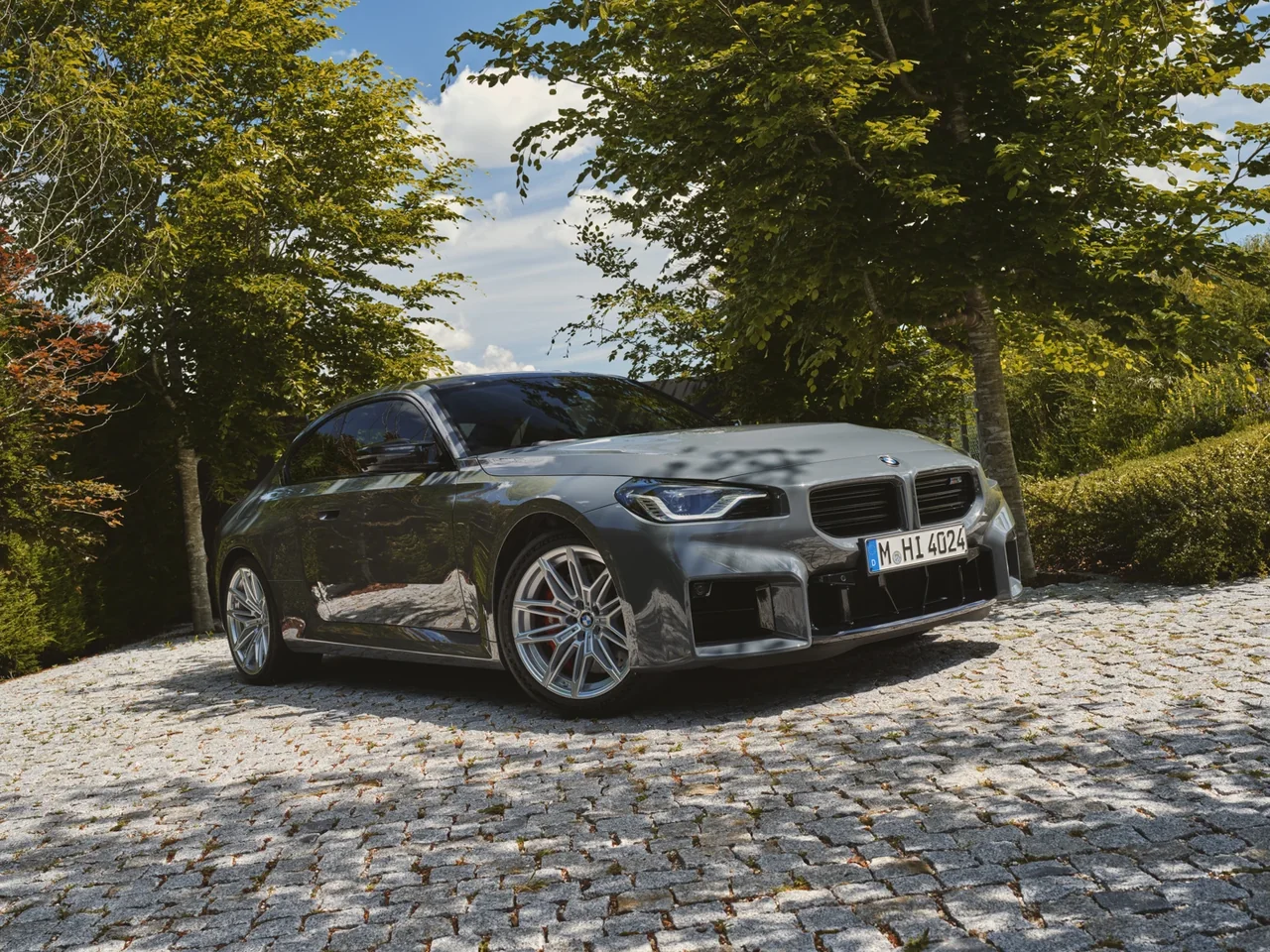
The M2’s squared-off face makes no attempt to disappear into traffic. Its stance feels deliberately blunt: a small coupe drawn with the shoulders of a larger performance car. Whether that looks confident or heavy-handed is personal. Cariary finds the design easier to understand when viewed as an expression of the car’s mechanical priorities, rather than as a search for traditional elegance.
That distinction matters when buying. A shape that photographs dramatically does not automatically become easy to place in a narrow garage. Check the approach to your parking space, the room available to open the long door and the view past the front corners. A compact badge is not a substitute for trying the actual space.
The more persuasive styling argument is that this car looks separate from a normal commuter. For the buyer who wants a car to feel like a deliberate choice, the visual commitment is part of the appeal. If you would prefer that performance remain discreet, the same design becomes a daily compromise.
The Manual Is the Point, Even When It Is Slower
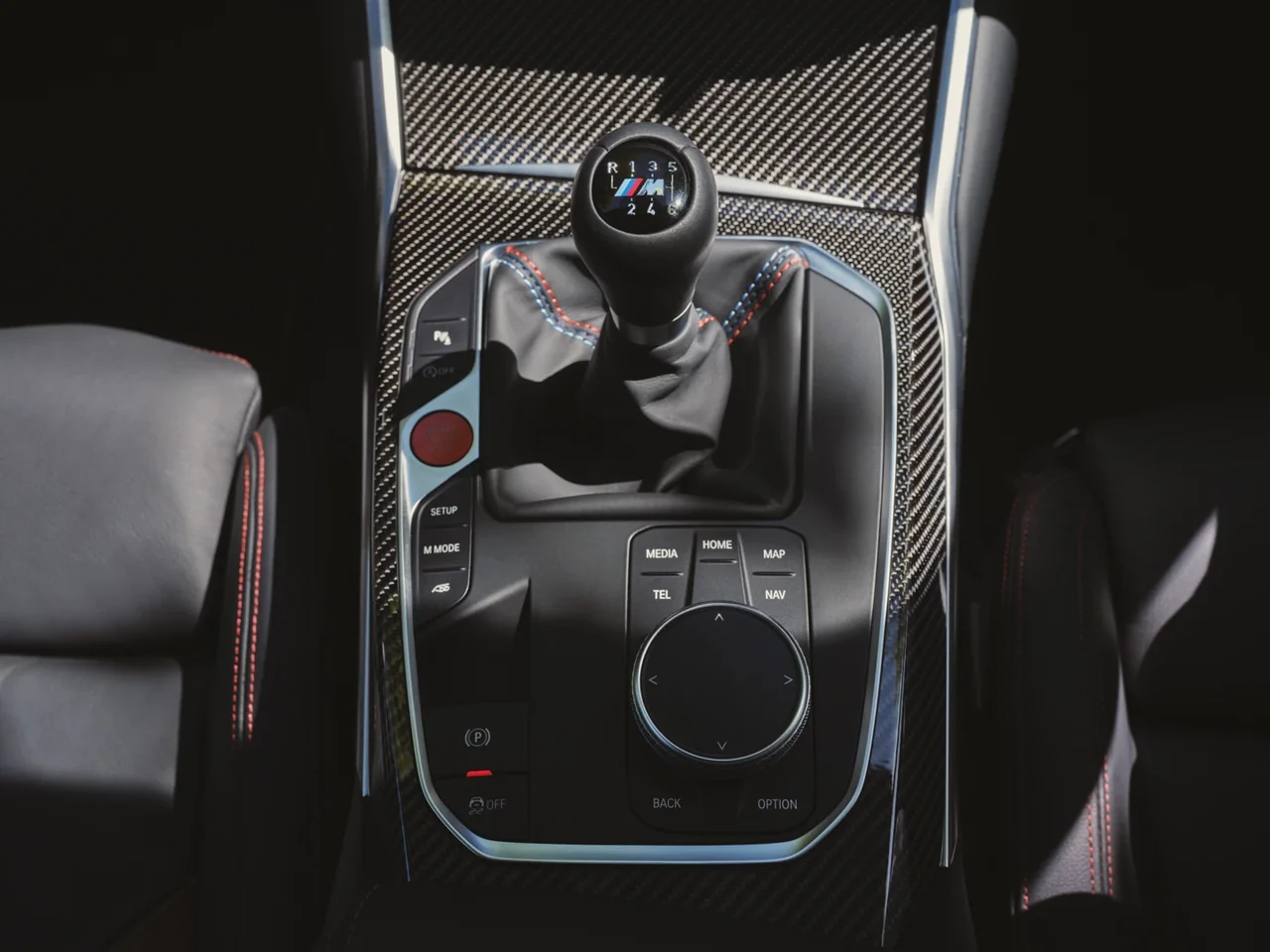
BMW gives the refreshed manual 473 hp but retains 406 lb-ft, while the eight-speed automatic receives 443 lb-ft. These are not identical powertrains separated only by shift speed. Treat online comparisons that assign both transmissions the same torque figure with care.
In its 2025 comparison test, Edmunds recorded 4.3 seconds to 60 mph for the manual and 3.9 for the automatic, while preferring the manual’s involvement. Those are independent measurements, not BMW’s manufacturer claims, and they should not be mixed into one supposedly definitive acceleration figure.
For this BMW M2 review, the manual’s value lies between those timed moments. Choosing a gear before a bend, coordinating a clean shift and judging when to let the engine work make the driver responsible for the rhythm. An automatic can be the better tool for congestion or competition; a manual can make the less dramatic journey more interesting.
Try the pedal relationship and shift reach with your usual shoes. Also try a slow crawl and a parking maneuver. A gearbox bought for a handful of weekend hours still has to suit the ordinary journeys that will make up most of its life.
A Powerful Engine Changes How You Use the Road
The straight-six gives the M2 a very different proposition from a light roadster that needs constant revs to feel busy. Its appeal is not confined to chasing the final few hundred rpm. A buyer can enjoy the act of selecting a gear and the engine’s response without treating every clear stretch of road as an acceleration test.
That abundance also creates a useful buying question: how much performance can you enjoy on the roads you actually use? If the answer is very little, a less powerful car may offer more room to explore its character. Buying the M2 makes most sense when you value the quality and availability of its performance, rather than expecting to exploit all of it.
Cariary would resist adding power immediately. Establish a baseline on standard hardware, understand the response and make sure the tires are appropriate for the conditions. A clean, well-maintained standard car is a stronger starting point than an impressive modification list with uncertain supporting work.
BMW M2 Review: Capability Still Has a Physical Cost
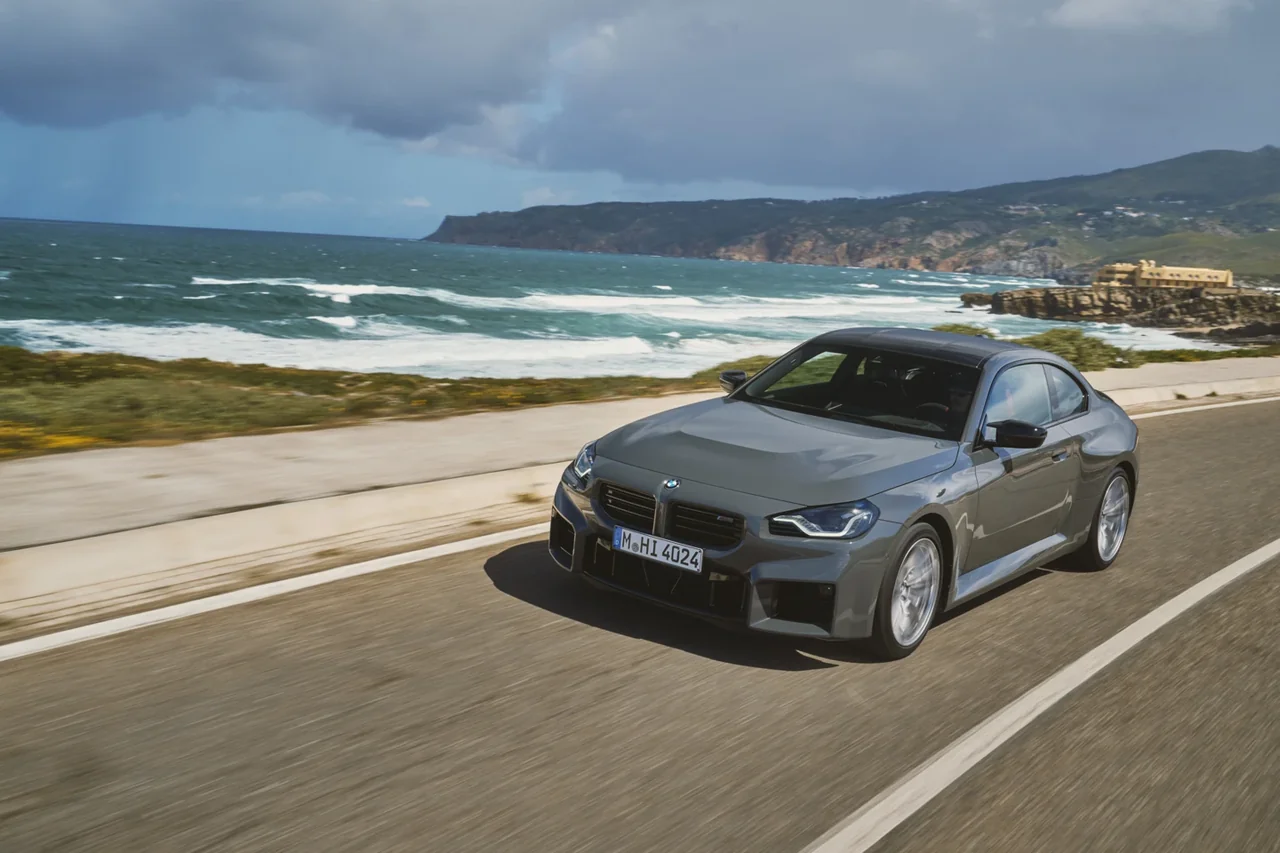
Standard adaptive suspension gives the driver adjustment, but a selectable setting cannot remove the basic realities of a heavy, wide-tired performance coupe. The relevant question is not whether the firmest mode feels serious. It is whether the most comfortable setup lets you relax over the broken surfaces you encounter every week.
Build a useful demonstration route: a patched urban road, a familiar expansion joint, a low-speed turn and a stretch at your normal cruising pace. Keep tire pressures correct and ask which tires are fitted. Otherwise you may end up judging an unusual tire choice or poor preparation instead of the car.
The BMW M2 review verdict depends heavily on this everyday test. A coupe that feels exciting for twenty minutes may feel demanding after a tiring day. Buyers who enjoy that constant sense of connection will interpret the same behavior differently from someone seeking a quiet, low-effort daily driver.
On a circuit, instruction and consistent maintenance matter more than an aggressive road setup. Do not mistake additional settings for additional skill, or assume that a familiar badge makes the limits easy to explore.
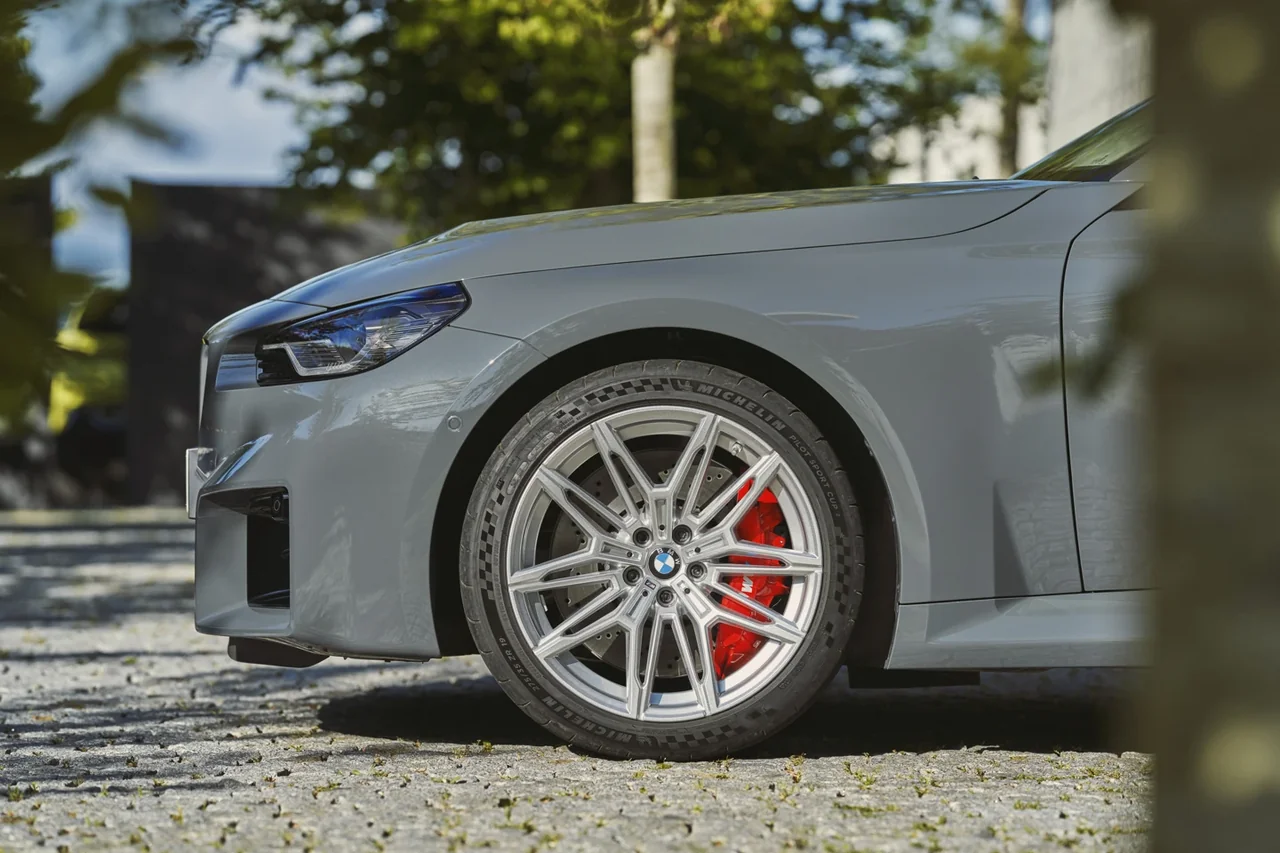
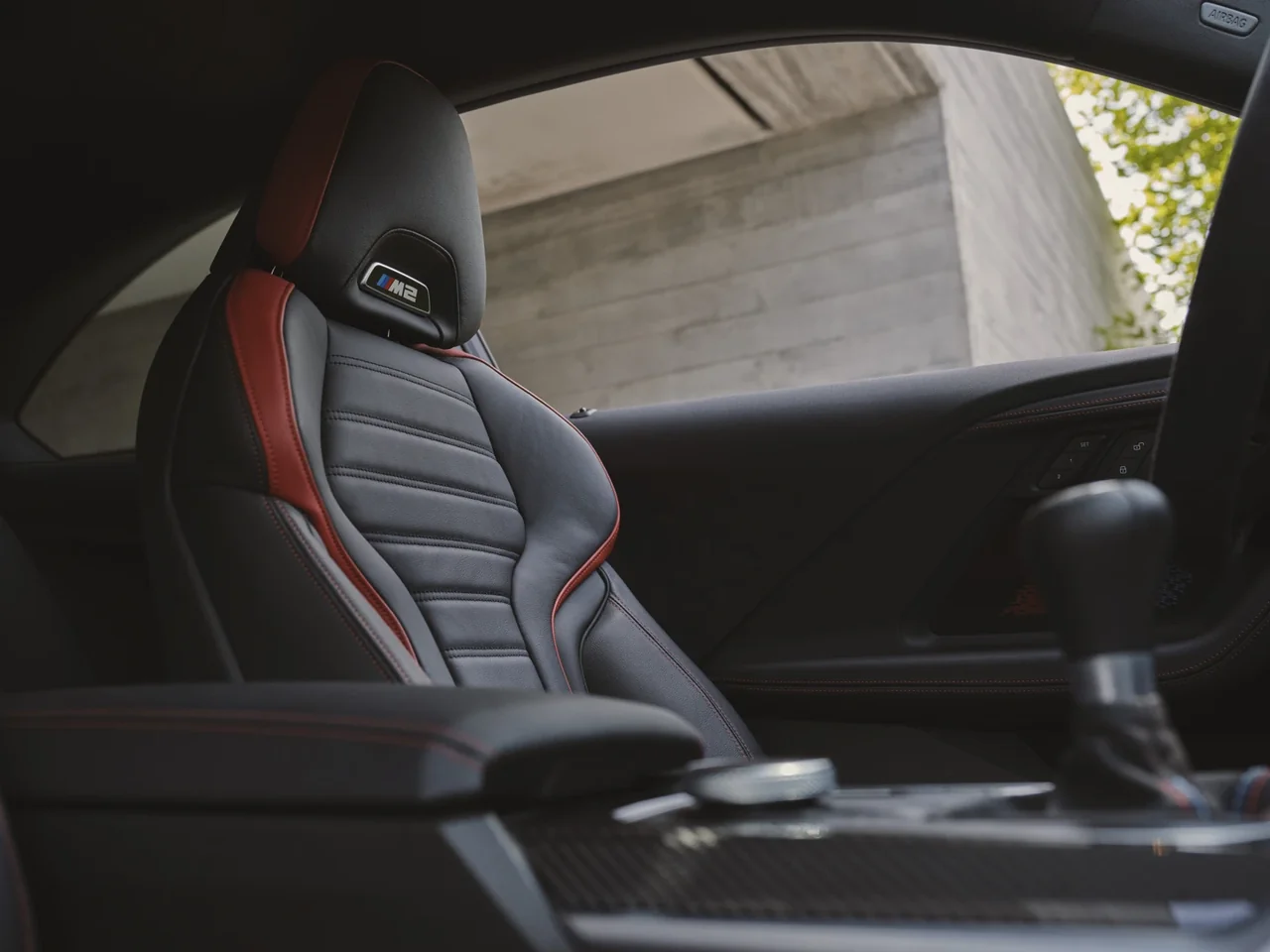
Carbon Seats Deserve a Longer Test Than the Screens
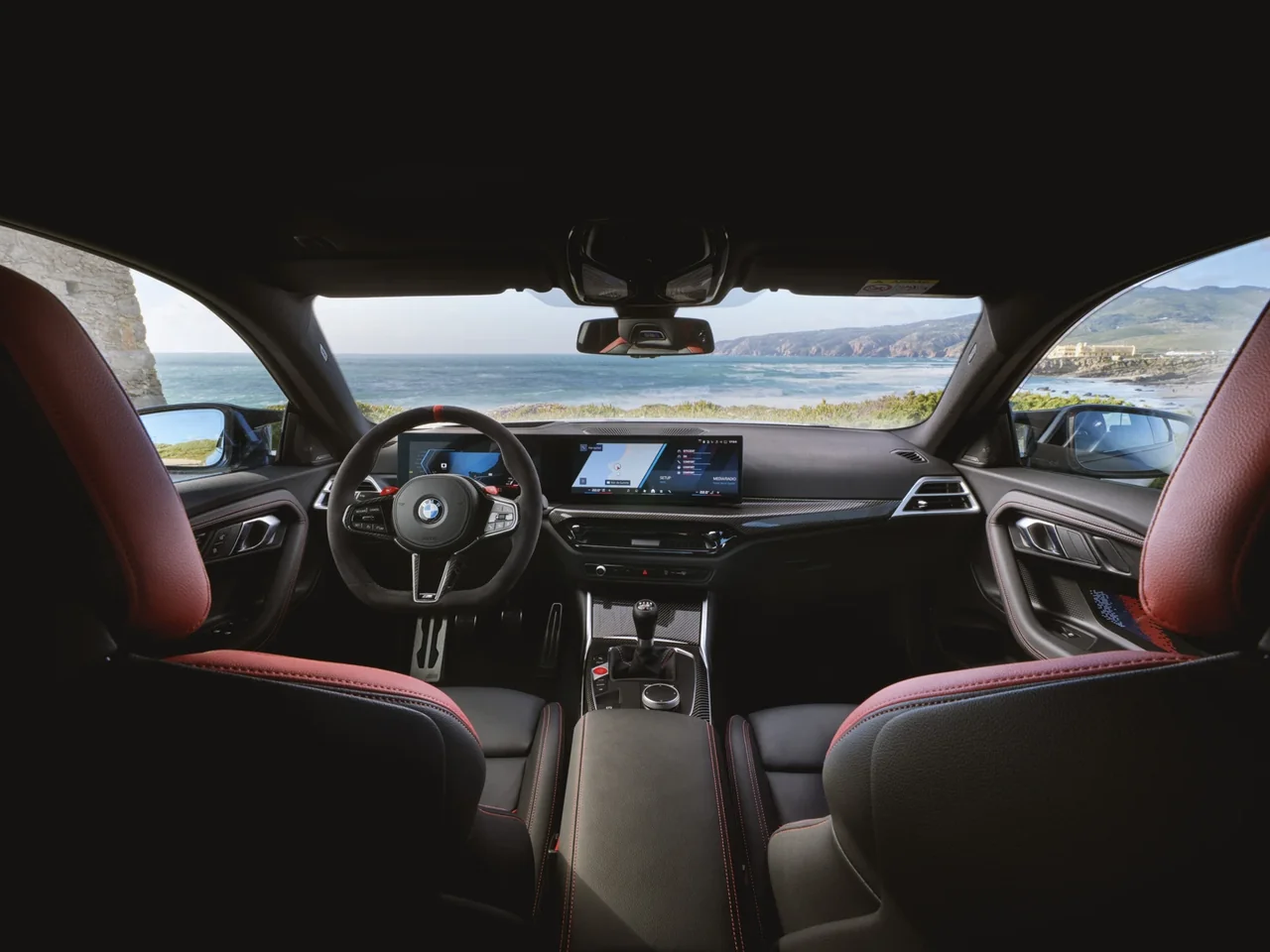
BMW’s 2025 update brought a new flat-bottomed steering wheel and iDrive 8.5, with climate operation on the display. Carbon bucket seats also became a standalone option. Those changes are easy to list; their value depends on the body and habits of the person using them.
Choose the seat before choosing the carbon finish. Sit long enough for pressure points to appear, work the pedals through their travel and get in and out several times. Then imagine repeating the exercise beside another parked car. A seat can be visually irresistible and still be the wrong specification for its owner.
The interface deserves a similar test. Set the temperature, change the airflow and return to navigation while parked. The issue is not whether a screen looks modern; it is whether the controls you use repeatedly are easy to reach and understand.
Cariary would prioritize a comfortable driving position and a specification you can operate confidently. Decorative options are easier to admire in a listing than to justify when they have displaced money from the equipment that improves every journey.
Four Seats Help, but Two Doors Still Matter
The rear seats and trunk make this BMW M2 review more than a weekend-toy discussion. The additional space can keep the car relevant when a pure two-seater would force you to take something else. A jacket, work bag or occasional extra passenger need not end the plan.
However, occasional usefulness and regular family duty are different standards. Check rear access with the front seats in the positions that the real occupants need. Bring the luggage you actually carry. A published cargo volume cannot tell you whether an awkward case fits through the opening.
If rear passengers are frequent, compare the routine with a BMW M3. If refinement matters more than the M2’s intensity, the BMW M340i offers a different starting point for the discussion. These alternatives are useful because they expose what the M2 buyer is choosing to prioritize.
The coupe becomes convincing when its limitations are small enough that you still reach for its keys. A more practical alternative is not automatically a better personal choice, but practicality should be tested rather than assumed.
Ownership: Inspect the Car Behind the Specification
A careful BMW M2 review must distinguish an appealing model from a good individual purchase. Ask for service records, the history of modifications and evidence of the correct maintenance after demanding use. A low odometer reading does not describe how those miles were accumulated.
Have a qualified specialist inspect tires, brakes, suspension, underbody damage and any signs of repair. For a manual, include clutch operation and shift quality in that assessment. These are sensible inspection priorities, not a claim that every M2 suffers from a particular defect.
Price the tires and brakes fitted to the exact car before deciding whether it is comfortably affordable. Our brake and tire guide explains why consumables can change the ownership experience of a performance car. Leave room in the budget for maintenance rather than spending everything on the most elaborate options.
For a new purchase, request an itemized current quote. Launch pricing from the 2025 announcement is historical information, not a September 2026 dealer offer. For a used purchase, compare condition and specification before allowing a smaller asking price to decide the outcome.
The New xDrive Does Not Replace the Manual’s Argument
BMW announced a 2027 M2 with M xDrive in June 2026. It pairs all-wheel drive with the eight-speed automatic. Consequently, it would be inaccurate to describe every current M2 choice as rear-wheel drive, or to imply that the new xDrive can be ordered with this review’s manual.
That addition makes the buying decision clearer. If traction and rapid acceleration are your main priorities, investigate the automatic alternatives. If shifting for yourself is the reason you are considering an M2, another configuration’s quicker launch does not invalidate that preference.
A Porsche 718 Cayman asks a different question about the value of a more dedicated two-seat layout. The M2’s case is broader: it offers involvement while leaving space for parts of ordinary life.
The final BMW M2 review recommendation is therefore specific. Buy the manual because you want its interaction and can live with the coupe’s physical demands. Do not buy it merely because a manual is supposed to be the enthusiast’s correct answer. The correct answer is the car you will actually enjoy using.
Who Should Buy It?
Recommended For
Drivers who actively want a manual, appreciate a strong straight-six and need more flexibility than a two-seat sports car provides.
Not Recommended For
Buyers expecting small-car lightness, effortless rear-seat access, low consumable costs or the quickest possible automatic launch.
One-Line Verdict: The M2 manual earns its appeal by giving you a meaningful job inside a genuinely useful performance coupe.
Frequently Asked Questions
Is the manual BMW M2 less powerful than the automatic?
Both reviewed 2025 U.S. versions make 473 hp. Their torque differs: 406 lb-ft for the manual and 443 lb-ft for the automatic.
Does this BMW M2 review cover the CS?
No. It covers the standard refreshed G87 manual. The CS and the announced automatic-only M xDrive require separate specification checks.
Would Cariary choose the carbon bucket seats?
Only after a proper fit and access test. For a regularly used car, comfort and ease of entry matter more than how striking the seat looks in a photograph.
Further Reading and Data Reference
Data reference date: September 7, 2026. Specifications and attributed test observations are linked where discussed. Cariary Point is an editorial buyer-fit assessment, not an owner road-test score or reliability rating.
For the broader model history and range, see the Cariary BMW M2 Coupe vehicle profile. This review focuses on the specification identified above.
Explore more Cariary car reviews and buyer perspectives.

