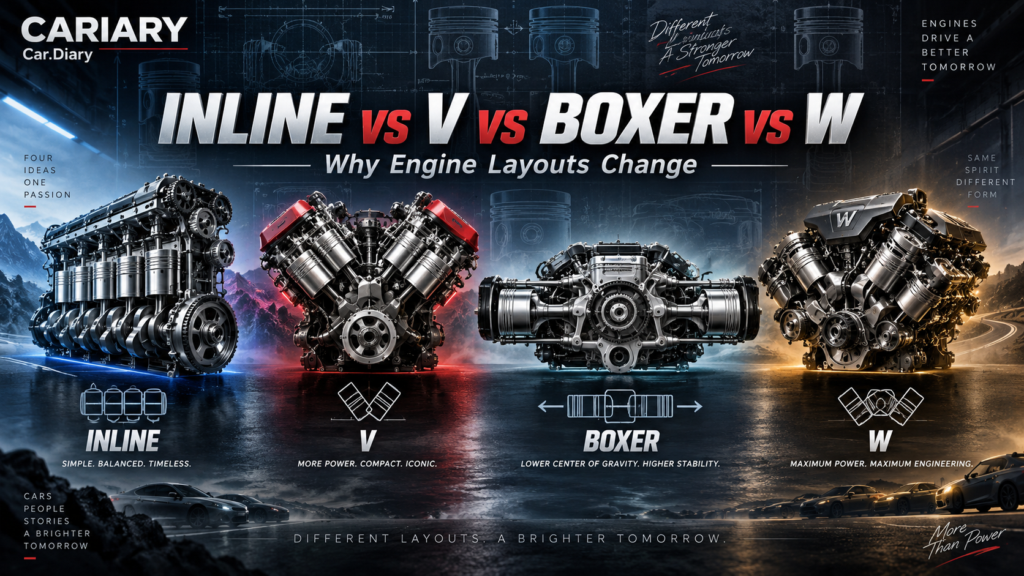
Engine layouts used to look like a ladder to me: four cylinders for ordinary cars, a V8 for something serious, and a V12 when money stopped being a concern. Then the exceptions started getting in the way. A BMW M3 can be spectacular with a straight-six. A Porsche 911 puts six cylinders almost flat. Bentley spent two decades fitting twelve into a W.
The better question is not which letter wins. It is what problem that arrangement helps the car solve. Length, width, height, vibration and the space left for everything else matter just as much as the badge on the engine cover.
Quick Summary
- An inline engine puts its cylinders in one row. It is relatively narrow, but adding cylinders makes it longer.
- A conventional V engine divides them between two banks, trading some width and complexity for a shorter package.
- A boxer lays its cylinders horizontally, helping keep engine mass low while requiring more lateral space.
- A Volkswagen-style W12 uses four staggered rows and one common crankshaft. It is not two complete engines connected together.
- None of these arrangements guarantees more power, better handling or a particular sound.
Start With the Parts, Not the Badge
A cylinder is the bore in which a piston travels. Combustion pushes the piston; a connecting rod transfers that force to the crankshaft, converting back-and-forth movement into rotation. A cylinder head closes the combustion chambers and, in most modern car engines, carries valves and related equipment.
A bank is a group of cylinders arranged together. An inline-six has six cylinders in one row. A conventional V6 has two banks of three. The number tells us how many cylinders there are; the letter describes how they are arranged.
That arrangement is separate from where the engine sits in the car. An inline engine can be mounted across the car, called transverse, or along it, called longitudinal. A V engine is not automatically rear-wheel drive, and a boxer does not automatically mean rear-engined.
It helps to separate three questions: what shape is the engine, where is it installed, and which wheels does it drive? Our Drivetrain Basics guide explores the last of those questions.
Why Inline Engines Are Such a Sensible Starting Point
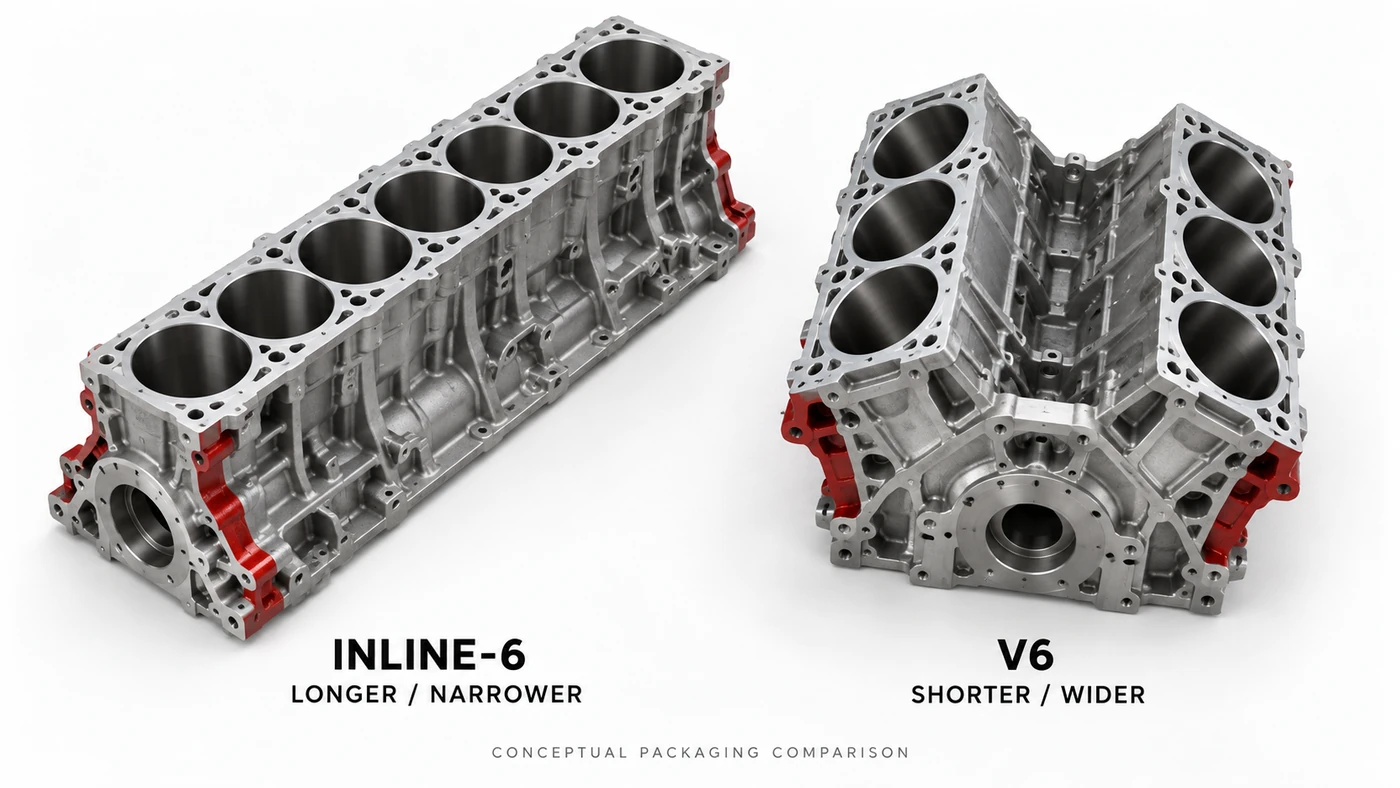
Put the cylinders in one row and several things become straightforward. A typical modern inline engine needs one cylinder head, rather than two. There is one main row of combustion chambers to serve with intake and exhaust plumbing. The core engine is narrow, leaving useful space beside it.
That can reduce manufacturing complexity and cost compared with a similar conventional two-bank engine. It can also make some maintenance tasks easier, although a tightly installed turbocharged inline engine is not automatically easy to service. The car around the engine still matters.
The inline-four is especially useful in transverse front-wheel-drive cars. Four cylinders fit across the engine bay while leaving room for the gearbox. It is a practical compromise between size, cost and the output that many cars need, rather than an admission that the manufacturer could not build something more exotic.
Nor does it impose a low performance ceiling. Displacement, airflow, boost pressure, combustion control and cooling can make two inline-fours behave very differently. Cylinder arrangement alone does not specify horsepower.
The Inline Problem: Every Extra Cylinder Needs Somewhere to Go
Imagine adding more seats to a single-row bench. The bench stays narrow, but it gets longer. Adding cylinders to an inline engine creates a similar packaging problem.
There must be room not just for each bore but for the structure between them, cooling passages, bearings and the equipment at the ends. A straight-eight therefore asks a different question of the engine bay than a four-cylinder does. Straight-eights existed; the arrangement is not physically impossible. It simply became difficult to justify in many modern passenger-car packages.
A longer crankshaft also needs careful engineering. Torsional vibration means the shaft twists and untwists slightly under the alternating loads of combustion. This is different from the whole engine shaking on its mounts.
Shaft length influences that behavior, but length is not a verdict on strength. Bearing support, material, journal dimensions and vibration dampers also matter. A well-designed straight-six can handle considerable output; a shorter crankshaft still needs proper analysis.
Why the Inline-Six Remains Special
The conventional inline-six has an important advantage: its piston arrangement can cancel the primary and secondary reciprocating forces and their associated rocking moments. In plain English, the moving parts counteract one another particularly well.
Primary forces repeat once per crankshaft revolution. Secondary forces repeat twice, arising from the geometry of the piston and connecting rod. This is why balancing an engine is more involved than simply putting equal weights on opposite sides.
Good inherent balance does not mean zero vibration of every kind. Combustion pulses, rotating accessories and crankshaft twist remain. It does mean engineers begin with a naturally smooth basic arrangement.
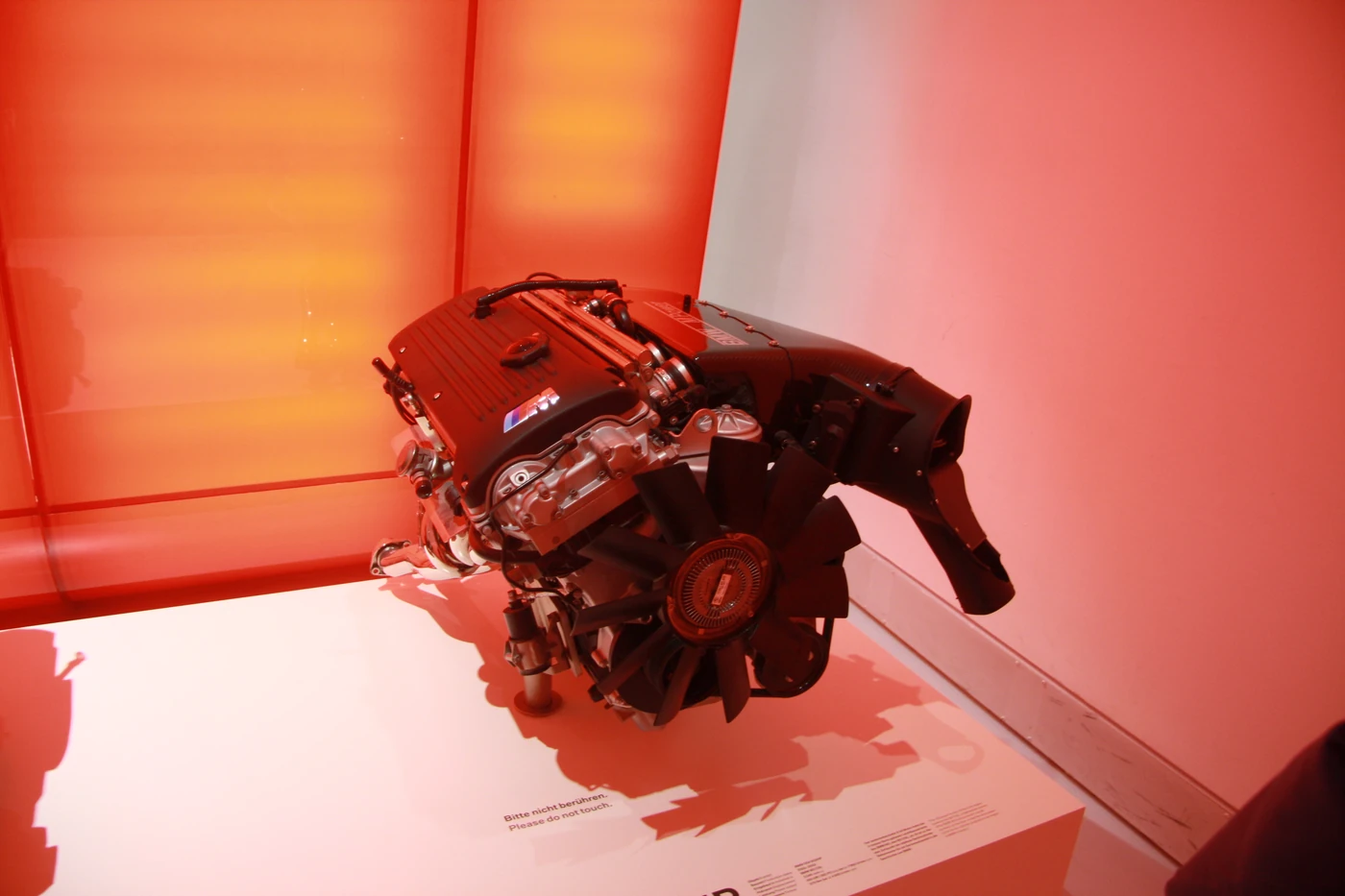
BMW has repeatedly paired that arrangement with longitudinal platforms. Its M3 and M4 engine discussion explains how the modern six-cylinder philosophy combines balance with a broad useful operating range. The S54 museum engine pictured here is an earlier example, not the current S58.
The M3 badge itself is a useful warning against fixed stereotypes: its history includes four-, six- and eight-cylinder engines. The straight-six is an engineering choice within that history, not the only engine an M3 has ever used.
V Engines Fold the Cylinder Count Into a Shorter Package
A conventional V8 places four cylinders in each bank. Instead of extending a single row to eight, it distributes them across two rows sharing one crankshaft. The result can be much shorter than a comparable straight-eight.
The trade is width. Two heads, more joints, more complicated exhaust routing and additional valve-drive requirements can also enter the picture. Some components can be shared or arranged cleverly, but the second bank is not free.
The angle between those banks affects the space the engine occupies. Crankshaft geometry and firing order must work with that angle, rather than treating the V shape as a cosmetic choice.
This is why “V engines are compact” needs a qualification: compact in which direction? A short engine may be wide, tall, or surrounded by substantial turbochargers and cooling hardware.
V6: Six Cylinders Where a Straight-Six May Not Fit
A V6 divides six cylinders into two banks of three. Its shorter length can be valuable when the engine and gearbox must fit across a car, or when a mid-engined vehicle has limited space between the cabin and rear axle.
That does not make every V6 smaller in every measurement, and it does not give it the same inherent balance as a conventional inline-six. Bank angle, crankpin arrangement, counterweights, mounts and sometimes balance shafts help manage its behavior.
A balance shaft carries deliberately offset weights. As it rotates, it creates forces intended to oppose particular engine vibrations. Not every V6 needs the same arrangement, so “all V6s need a balance shaft” is another shortcut worth avoiding.
For a manufacturer, the decision can be very practical: accept more balancing and two-bank complexity, but gain a six-cylinder powertrain that fits the intended platform.
V8: A Useful Package, Not an Automatic Torque Machine
The V8 became a performance icon partly because it accommodates substantial displacement without the length of eight cylinders in a row. That suits many front-engine, rear-drive vehicles as well as some mid-engined sports cars.
But the V shape does not generate torque by itself. Displacement and the pressure developed in the cylinders are crucial. A small, high-revving V8 and a large, lightly stressed V8 can have very different personalities; turbocharging changes the picture again.
Crankshaft design matters too. A cross-plane V8 has crank throws arranged in different planes, producing a cross-like pattern when viewed along the shaft. A flat-plane V8 places them in one plane. Their balancing requirements and exhaust pulse patterns differ.
That helps explain why one V8 can sound like a deep, uneven rumble while another has a sharper, higher-frequency voice. Exhaust manifolds, firing order, engine speed and sound treatment also contribute. “V8 sound” is not a single acoustic specification.
V10: A Character Built Around a Particular Brief
Ten cylinders provide five firing events per revolution in a four-stroke engine, compared with four for a V8. Designers can use the additional cylinders to divide a chosen displacement into smaller individual cylinders, but the result is not automatically lighter or faster-revving.
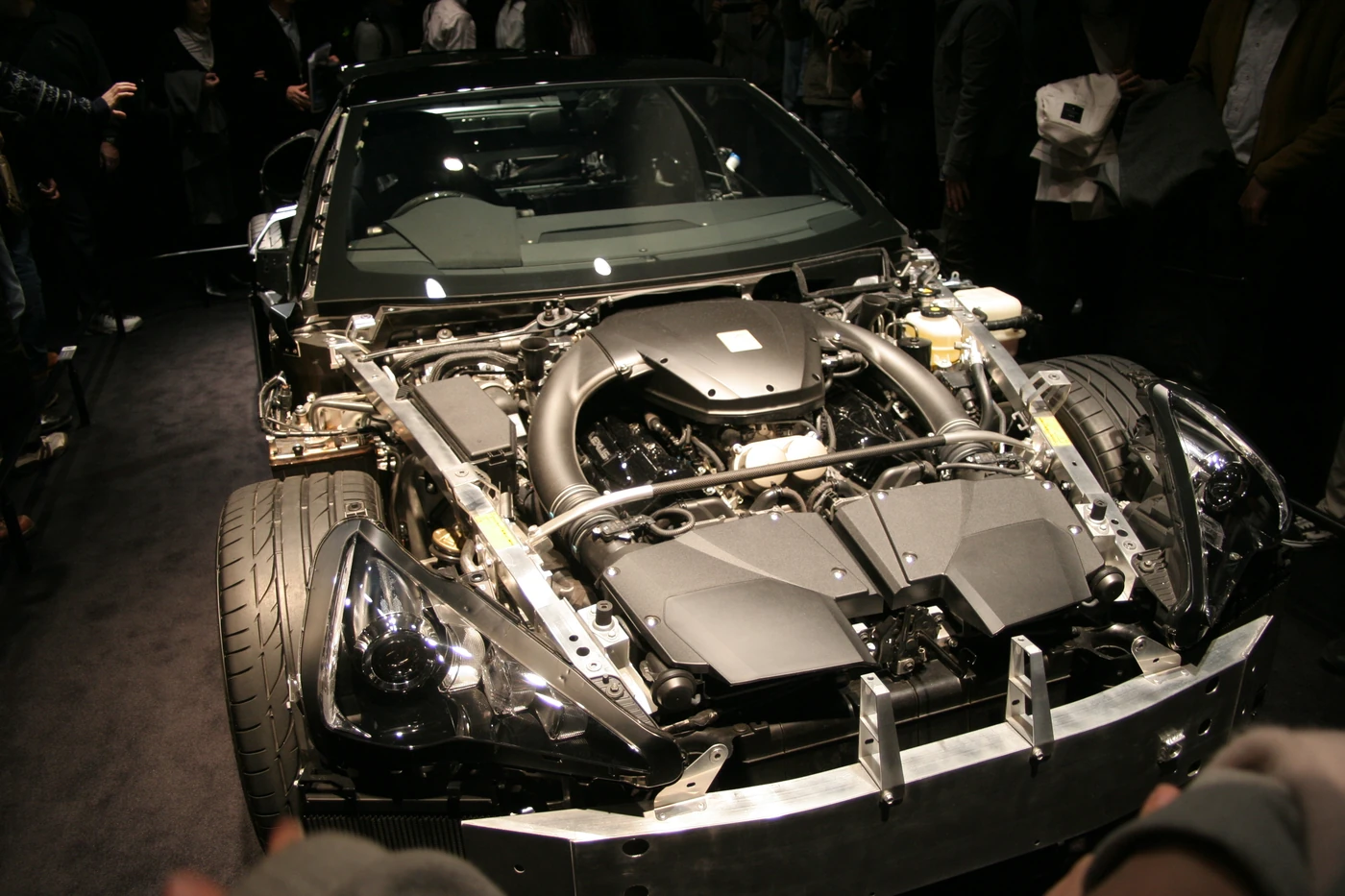
The original Lexus LFA is a particularly clear example of an engine developed for a specific goal. Toyota’s launch material describes its compact, lightweight 4.8-liter V10 as part of the car’s total response and weight-distribution strategy. Its size and high-speed behavior were achievements of that design, not universal V10 properties.
The Porsche Carrera GT, Lamborghini Gallardo and Huracan, and Audi R8 V10 also helped establish the layout’s association with exotic road cars. Yet the existence of lower-revving truck V10s should stop us from treating the cylinder count as a promise of a screaming redline.
V10 sits numerically between V8 and V12. Whether it also sits between them in weight, dimensions or refinement depends on the actual engines being compared.
V12: Frequent Combustion and Excellent Refinement Potential
A conventional V12 combines two six-cylinder banks. A well-designed version offers excellent mechanical balance, while twelve cylinders make the delivery of combustion events especially frequent.
For an evenly firing four-stroke engine, each cylinder fires once in two crankshaft revolutions. Divide 720 degrees by the cylinder count and the interval becomes easy to see:
| Cylinders | Firing interval | Events per crankshaft revolution |
|---|---|---|
| 4 | 180 degrees | 2 |
| 6 | 120 degrees | 3 |
| 8 | 90 degrees | 4 |
| 10 | 72 degrees | 5 |
| 12 | 60 degrees | 6 |
These are calculated intervals for even firing, not a firing order or a measurement of vibration. More frequent events can help make torque delivery feel continuous, but they do not explain every aspect of refinement.
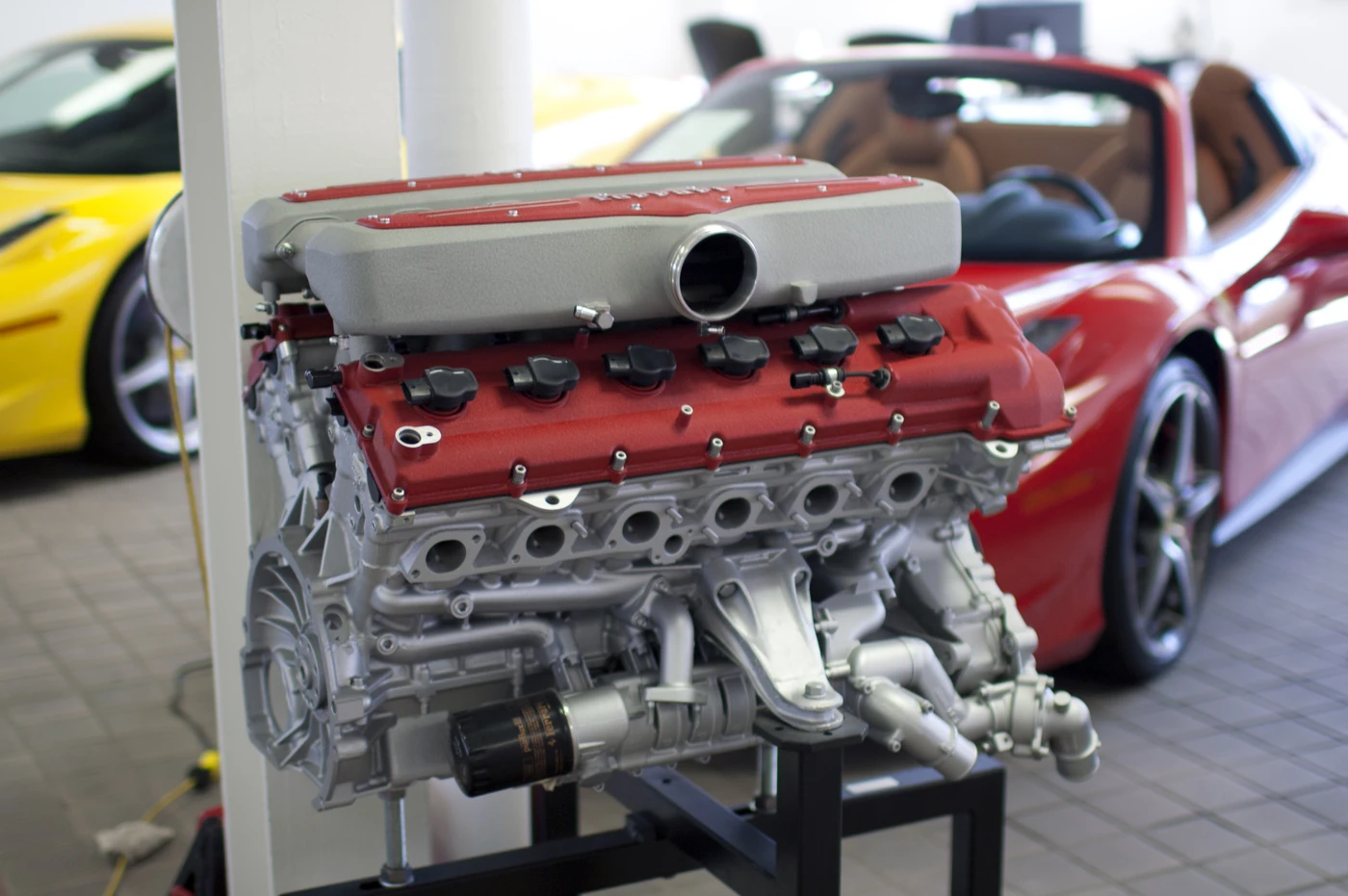
A 60-degree bank angle is a familiar V12 solution, but it is not a universal rule. Ferrari’s 12Cilindri technical specifications identify a 65-degree V12, for example. The pictured F140C is an earlier engine used in the 599 GTB Fiorano, not the 12Cilindri unit.
V12s can serve different purposes. Ferrari has used them to pursue response and high engine speeds; Rolls-Royce has used them for effortless, quiet delivery. The layout creates possibilities, while displacement, breathing, tuning and the rest of the car decide the experience.
Why not an inline-twelve? In a passenger car, the length and associated crankshaft and installation demands would usually be difficult to justify. Splitting twelve cylinders into two banks offers a far more workable starting point.
Boxer: Trade Height for Width
A boxer engine places its cylinders horizontally on opposite sides of the crankshaft. Instead of building upward, it spreads outward. This can let significant engine mass sit lower in the vehicle.
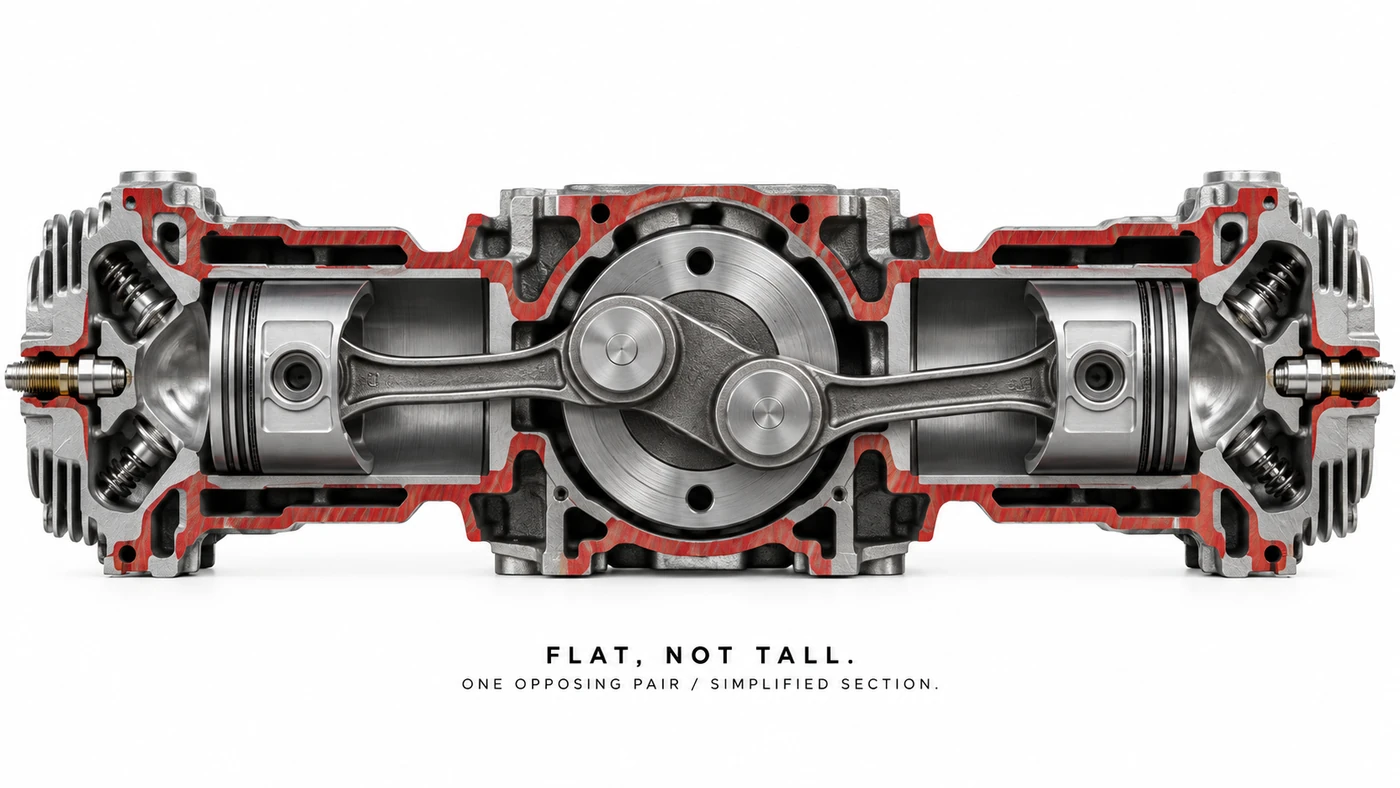
In a true boxer, corresponding opposing pistons use separate crankpins and move toward their respective outer cylinder heads together, then back inward together. Viewed across the engine, they move in opposite directions. A complete crankshaft staggers the connecting rods along its length; a simple front-view illustration cannot show every offset.
“Flat” describes the broad horizontal arrangement. “Boxer” describes a particular crank-and-piston relationship. In a 180-degree V engine, corresponding rods share a crankpin, so one piston moves outward while the other moves inward. All boxers are flat engines, but not every flat engine is a boxer.
The flat-six also has excellent inherent balance. A boxer-four should not simply be called perfectly vibration-free: the axial separation of its cylinders can leave rocking effects. Cylinder count and crankshaft arrangement still matter after the engine has been laid flat.
Why That Shape Makes Sense in a Porsche 911
The 911’s engine sits behind the rear axle. In that position, keeping the engine low is valuable, and a flat-six is a strong match for the architecture. Porsche’s explanation of its flat-engine tradition connects the arrangement with its compact, low-mounted sports-car package.
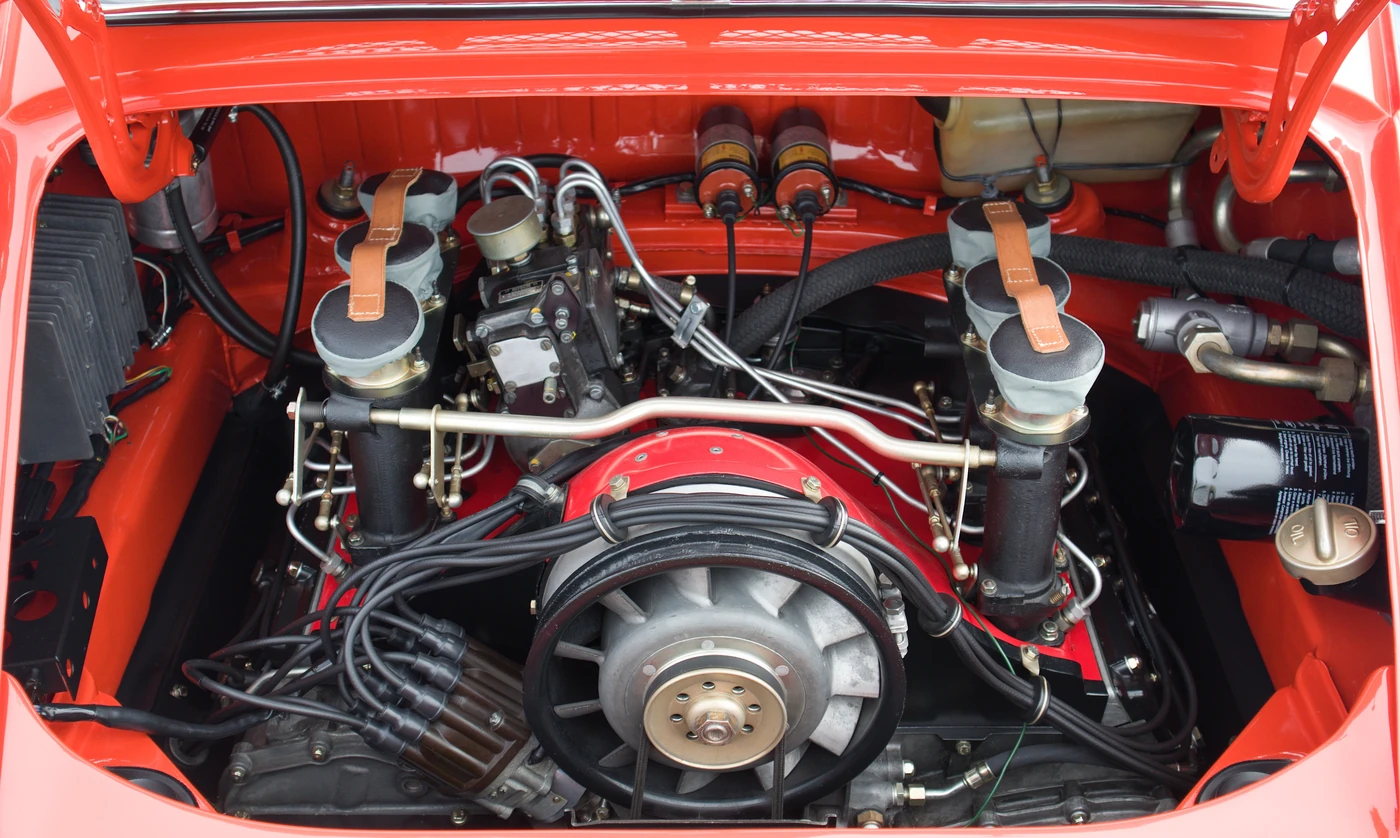
That does not mean a boxer guarantees superior handling. Overall center of gravity depends on the whole car, and body roll also depends on suspension geometry, springing and anti-roll control. Rear-engine weight distribution brings its own opportunities and challenges.
Subaru is a useful contrast: its boxer engines are installed at the front. The engine’s shape and its position in the car are separate decisions.
Width is the cost of the low layout. It can complicate exhaust routing, suspension clearance and access to components at the sides. Spark-plug access, for example, can be awkward in particular installations. The low engine is not necessarily the easiest one to work around.
W12: Four Rows, Twelve Pistons, One Crankshaft
Here we mean the Volkswagen Group’s W arrangement, not every historical engine called a W. Begin with a narrow-angle VR group: its cylinders are staggered closely rather than spread across a conventional wide V.
Combine two such six-cylinder groups around one crankshaft and the W12 has four rows of three cylinders. Each six-cylinder group uses one head, giving two heads overall, not four.
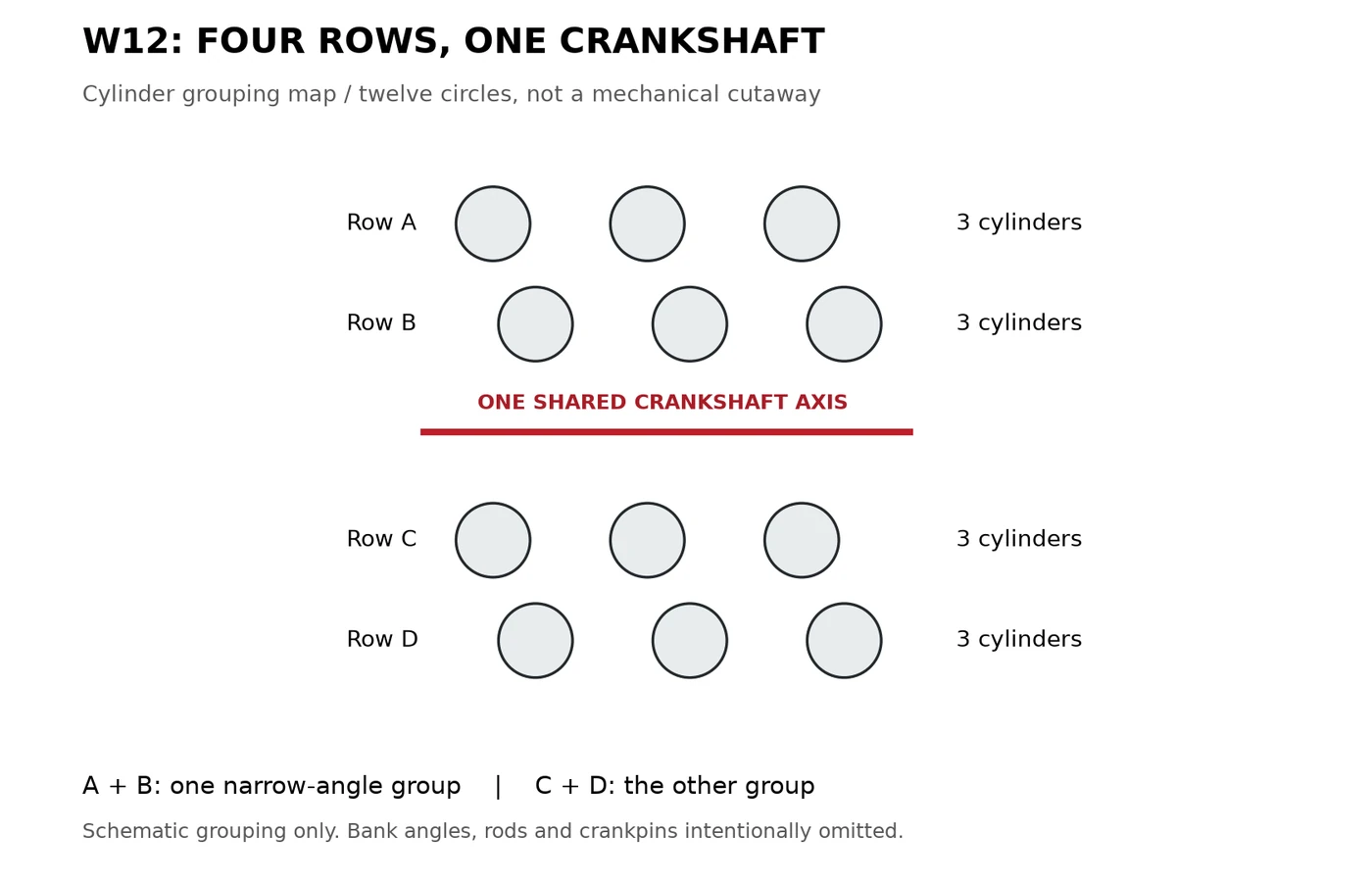
Volkswagen’s Self-Study Programme 248 describes the original W8/W12 concept with 15 degrees within each narrow group and 72 degrees between the groups. Those angles should not be transferred indiscriminately to every W engine.
“Two VR6s” is a useful mental starting point, not an assembly instruction. There are not two separate crankshafts geared together. The pistons and connecting rods act on one common crankshaft inside one engine.
The diagram is a counting map, not bore geometry, cylinder numbering, firing order or a crankpin drawing. Its purpose is to make the four rows unmistakable before we look at the complete engine.
Why Bentley Wanted That Packaging
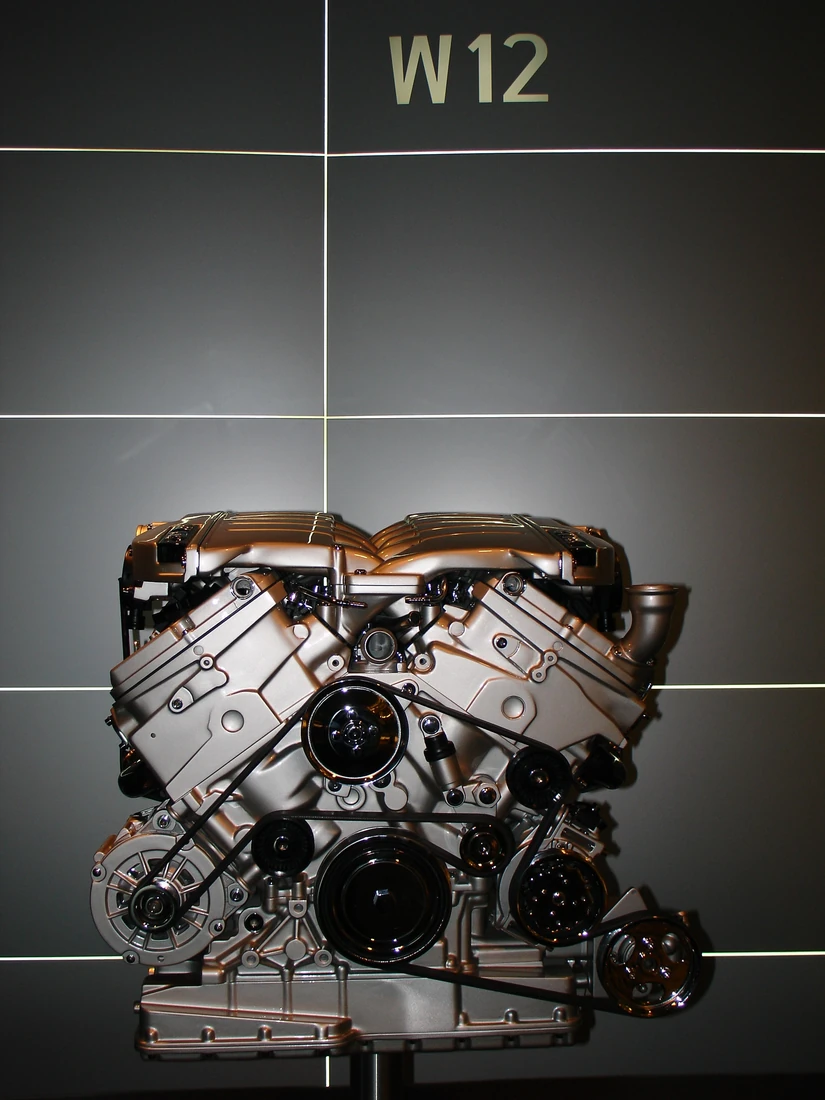
The compact length of a W12 made twelve-cylinder performance easier to package in a luxury car alongside the transmission, driven front axle and other equipment. The actual Volkswagen unit pictured above shows how much additional hardware surrounds the neat arrangement map.
Bentley made the W12 central to the original Continental GT, launched in 2003. In its retrospective on the final W12, Bentley describes the unit as 24 percent shorter than a conventional V12. That is Bentley’s comparison, not a universal dimension for every W12 versus every V12.
The attraction was refinement and strong output without an excessively long engine package. It did not eliminate complexity. Access, cooling passages, intake and exhaust routing, and the large number of moving parts still needed substantial engineering.
The same distinction applies to weight. A short package can save structure in some places, but a complete twelve-cylinder turbocharged powertrain remains substantial. “W is always heavier than V” is no more reliable than “W is always better.”
W8 and W16: Different Cars, Related Packaging Questions
Volkswagen’s Passat history records the W8’s arrival in 2001. Putting eight cylinders into a relatively conventional-looking Passat showed how unusual engine architecture could serve a familiar vehicle package. It was the longitudinal B5-era Passat, not evidence that every Passat platform could accept the same engine.
Bugatti pushed the cylinder-density idea much further with the W16. Its sixteen cylinders were arranged in four rows, with one crankshaft, while four turbochargers and extensive cooling equipment helped deliver the intended output.
Bugatti’s W16 engineering retrospective makes the surrounding challenge clear: the engine was only part of a demanding thermal and powertrain system. Compact longitudinal length does not mean a small cooling system, low manufacturing cost or simple maintenance.
W therefore tells us how cylinders were packaged. It does not independently explain the car’s horsepower, acceleration or top speed.
Engine Layouts Compared: What Each One Trades
These are broad tendencies between comparable designs, not dimensions or rankings of specific engines.
| Layout | Useful starting advantage | Main compromise |
|---|---|---|
| Inline-four | Narrow, typically one head, efficient to manufacture | Secondary shaking forces need attention; output depends on the complete design |
| Inline-six | Excellent inherent reciprocating balance | Length and installation space |
| V6 | Shorter six-cylinder package | Two-bank complexity and balancing choices |
| V8 | Eight cylinders without an eight-cylinder-long row | Width, additional parts and design-dependent vibration |
| V10 | Ten cylinders for a specific response, capacity or character target | Cost and complexity; high RPM is not automatic |
| V12 | Excellent refinement potential and frequent firing | Space, parts count, expense and frictional losses |
| Boxer | Low engine height and useful balance characteristics | Width and installation-dependent access |
| Volkswagen-style W | High cylinder count in a short longitudinal package | Dense mechanical, cooling and exhaust packaging |
Sound, Smoothness and Horsepower Are Different Questions
A smooth engine is not necessarily powerful. A powerful engine is not necessarily light. A memorable exhaust note does not prove good inherent mechanical balance.
The firing-interval table helps explain frequency, but the sound reaching our ears also reflects firing order, crankshaft design, manifold lengths, turbochargers and exhaust treatment. Two engines with the same cylinder count can therefore sound very different.
Likewise, more cylinders do not automatically mean more displacement. Divide the same total displacement among more cylinders and each individual cylinder becomes smaller. That may help a particular high-speed design, but extra pistons, rings, bearings and valves bring their own losses and demands.
For the connection between torque, RPM and output, Engine Power Basics is the next useful step. The layout is the physical arrangement in which that work happens, not the final performance number.
Why Some Layouts Fade While the Inline-Six Returns
Manufacturers have to justify an engine family across its development, manufacturing, emissions certification and service life. Turbocharging and hybrid assistance can meet many performance targets with fewer cylinders. That can weaken the business case for a specialized high-cylinder-count engine without making its engineering worthless.
Bentley’s last W12 was completed in July 2024. Yet the broader story is not simply “every unusual engine disappears.” Bugatti’s Tourbillon uses a new naturally aspirated V16 with hybrid assistance, rather than continuing the W16 arrangement. Bugatti was still describing that new engine’s development in its September 2026 sound report.
The inline-six can also fit modern production logic. BMW’s modular engine-family explanation describes common design principles and cylinder sizing across its inline engines. Shared architecture and manufacturing processes can be valuable, although that does not mean every component is interchangeable.
Engine history is not a one-way march from simple to sophisticated. A familiar arrangement can become newly attractive when the platform, supporting technology or production strategy changes.
Cariary Thoughts
What changed my view was separating the number of cylinders from the space they occupy. I had been reading an engine badge as a statement of ambition. Engineers also have to read it as a request for room.
The inline-six is particularly interesting because it refuses the idea that a straight row is merely the basic option. Its length is a genuine drawback, but its balance is a genuine reason to keep choosing it.
The W12 required a different kind of slowing down. “Two V6 engines” sounds simple, but it can leave entirely the wrong image in our heads. Four staggered rows sharing a crankshaft makes the reason for its existence much easier to understand.
None of that removes the emotion. It gives the emotion a foundation. The sound, proportions and response we associate with a car emerge from real decisions about where its parts should live and what compromises its engineers were willing to accept.
One-line Summary
Engine layout is not a performance hierarchy; it is a way of fitting cylinders, balance and character into the car’s available space.
FAQ
Why are V engines shorter than inline engines?
They divide the cylinders between two banks instead of extending one row. With comparable cylinder dimensions, that usually reduces length while increasing width. Accessories can change the dimensions of the complete installation.
Is a V8 better than an inline-six?
Not universally. A V8 may suit a particular displacement or packaging target, while an inline-six offers excellent inherent balance. Output, weight and the intended vehicle matter more than ranking the names.
Why is an inline-six so smooth?
Its conventional piston and crank arrangement balances primary and secondary reciprocating forces and moments. Combustion pulses and crankshaft torsion still exist, so inherent balance is not a claim of zero vibration.
Is a boxer the same as a flat engine?
Boxer is a type of flat engine. Its corresponding opposing pistons use separate crankpins and move outward together. A 180-degree V arrangement uses shared crankpins for opposing rods and has different piston motion.
Does a low boxer engine guarantee better handling?
No. It can help lower engine mass, but the whole vehicle’s weight distribution, suspension, tires and center of gravity determine its behavior. A useful packaging advantage is not a complete handling verdict.
Does a W12 have two crankshafts or four cylinder heads?
The Volkswagen-style W12 discussed here has one crankshaft and two heads. Its four staggered cylinder rows belong to two narrow-angle groups. Four rows should not be confused with four separate engines or heads.
Why did Bentley use a W12 rather than a conventional V12?
Compact length helped fit a twelve-cylinder powertrain into its luxury-car package. Refinement and strong performance were attractive, but required substantial engineering beyond the arrangement itself. Bentley ended W12 production in July 2024.
Do more cylinders always mean more horsepower?
No. Total displacement, airflow, boost, combustion pressure and operating speed matter. More cylinders also add parts and friction. Cylinder count helps describe an engine, but cannot predict its output on its own.
Related Thoughts
- Engine Power Basics: follow the relationship between torque, engine speed and horsepower.
- Drivetrain Basics: separate the engine arrangement from the route power takes to the wheels.
References
Data Reference Date: September 13, 2026. Historical engines and photographs are identified separately from current products.
- BMW M: M3 and M4 engine details.
- BMW M: engines through its history.
- NPTEL: multicylinder engine balance.
- Toyota: original Lexus LFA launch.
- Ferrari: 12Cilindri technical specifications.
- Porsche: the flat-engine tradition.
- Volkswagen: Self-Study Programme 248, The W Engine Concept, historical manufacturer training document, hosted by VAG-Technique.
- Volkswagen: Passat B5 history.
- Bentley: final W12 produced in Crewe.
- Bugatti: W16 development.
- Bugatti: Tourbillon V16 sound development.
- BMW: modular engine-family principles.

