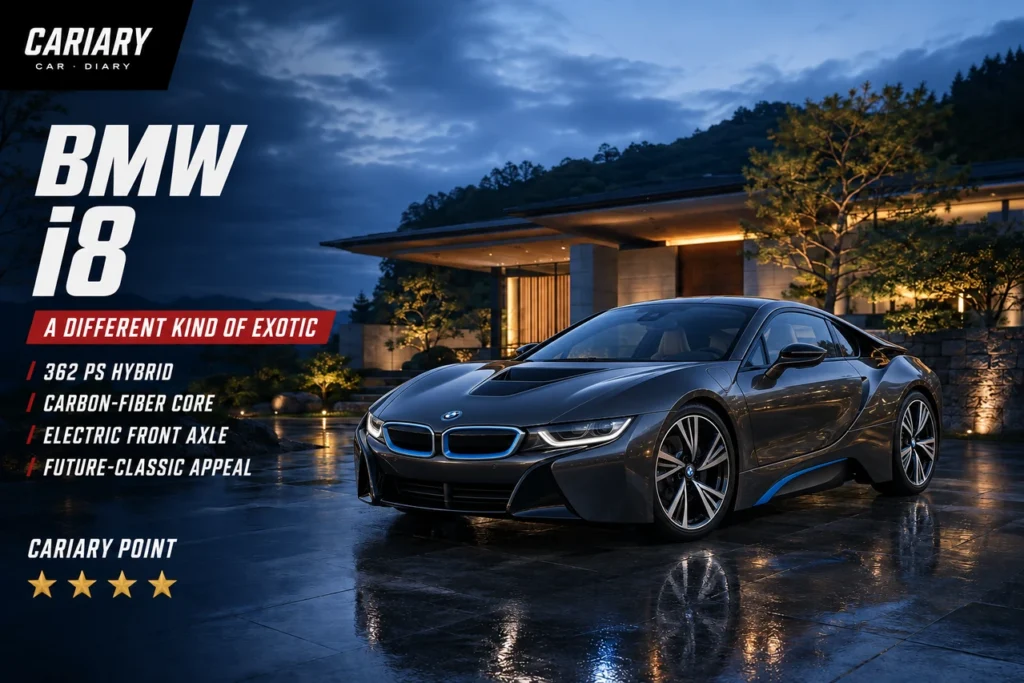
CARIARYCAR · DIARY · PERSPECTIVE
Cover: AI-generated Cariary editorial illustration, checked against the specified vehicle. It is not road-test photography.
This BMW i8 review starts with the question its silhouette almost invites: why put a three-cylinder engine in something that looks this exotic? The easy answer is to call it under-engined. The more interesting answer is that BMW divided the job of propulsion between two ends of the car.
That changes the buying question. An i8 is not simply a dramatic body waiting for a bigger engine. It is an attempt to make technical efficiency desirable enough to put on a bedroom wall. Cariary finds that ambition more compelling than a debate about how many cylinders an expensive coupe deserves.
This is a research-based review of the original 2014 European-specification I12 coupe, before the later battery and power upgrades. U.S. test results are identified separately. Cariary has not driven this car; photographs show early production examples and a technical display.
4/5: exceptional visual identity and an unusually coherent hybrid concept. The missing star reflects awkward access, limited accommodation and the specialist commitment of buying an aging, structurally unusual plug-in sports car. This is an editorial judgment, not a reliability score.
BMW i8: Key Specifications
| Reference | Original 2014 European I12 coupe |
|---|---|
| Powertrain | 1.5-liter turbocharged three-cylinder driving the rear wheels; electric propulsion at the front |
| System output | 266 kW / 362 PS (metric horsepower) |
| Official 0–100 km/h | 4.4 seconds |
| Battery / period electric range | 5.2 kWh usable; 37 km on the period EU test, not a current real-world promise |
| DIN unladen mass | 1,485 kg; measurement convention matters |
| Source | BMW’s final 2014 launch specifications |
BMW i8 Design: The Shape Sets a Trap
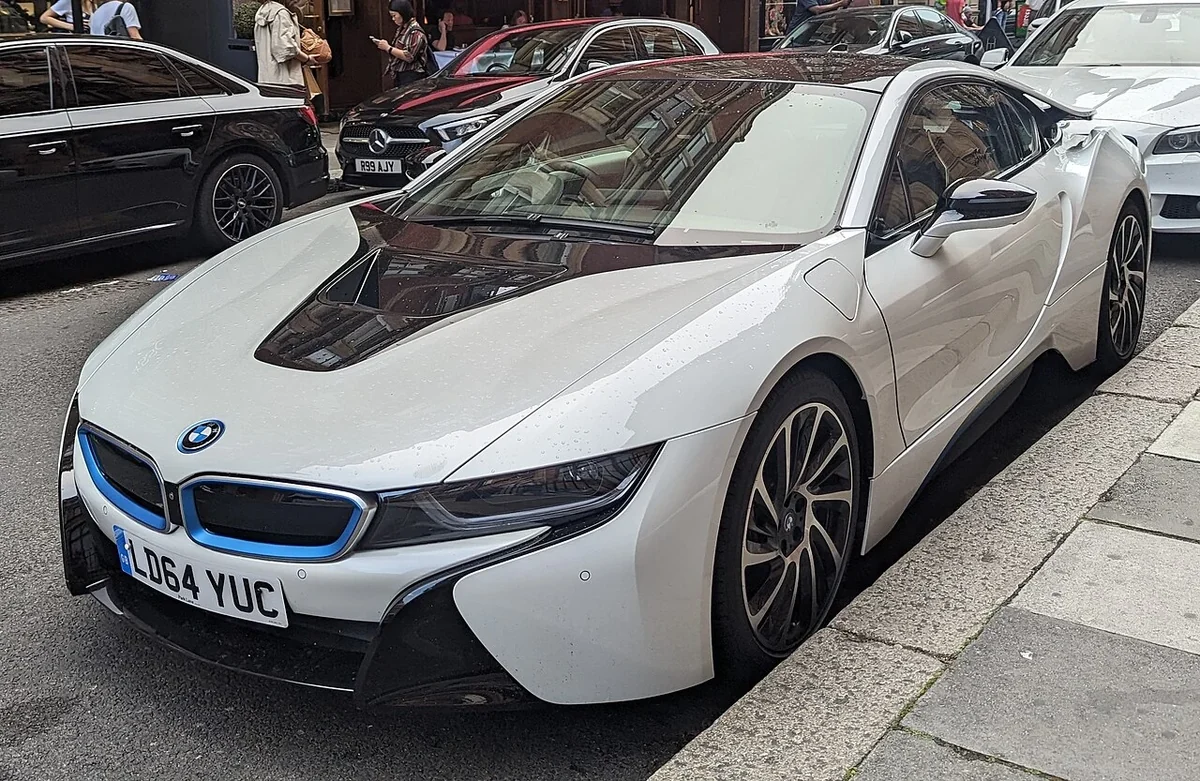
The low nose, rising doors and layered rear bodywork create expectations before the engine starts. We tend to read this shape as a promise of noise and excess. The BMW i8 makes that assumption uncomfortable: its visual drama belongs to a car that can also leave quietly.
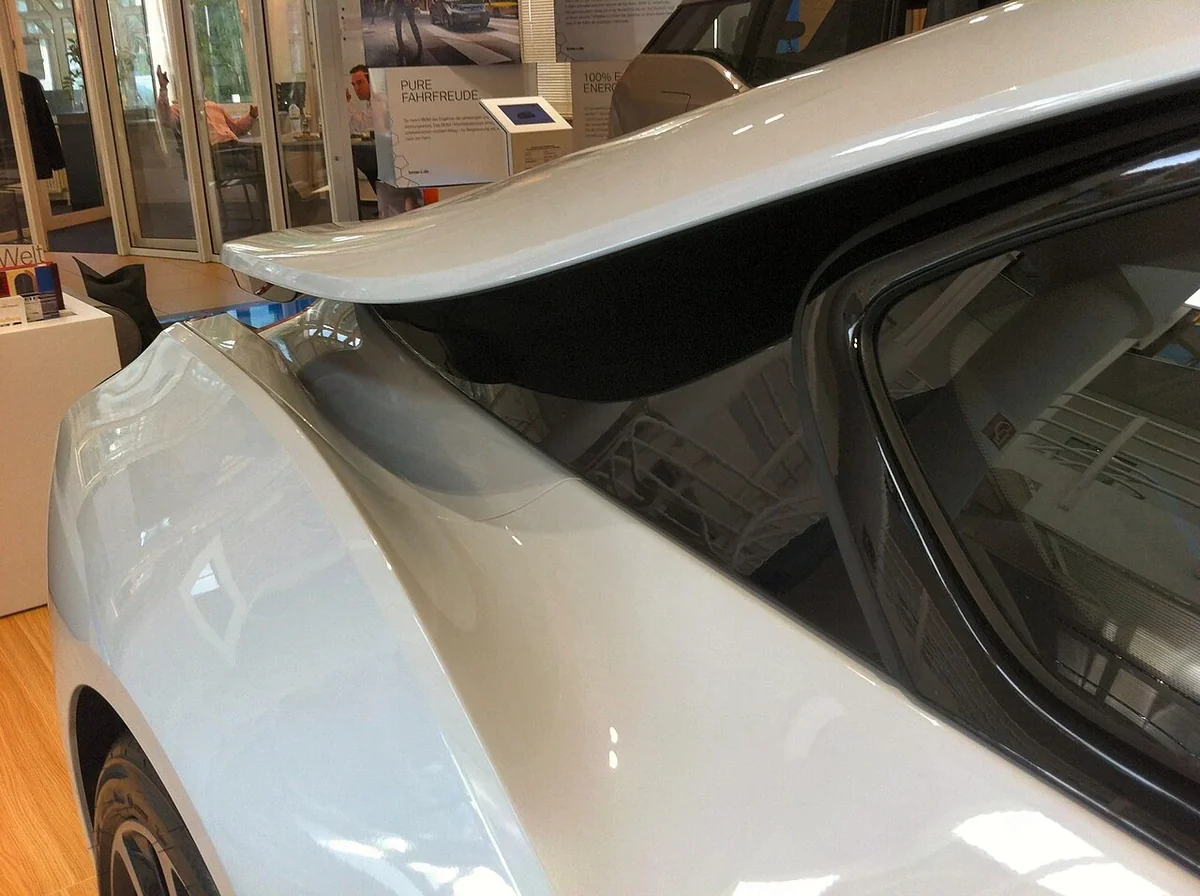
Look closely at the real photographs rather than just the cover illustration. Contrasting surfaces make the body appear assembled from overlapping layers. The blue accents provide an identity of their own; they do not need to imitate a traditional M-car cue. Cariary sees this as the source of the design’s continued interest. It presents an alternative idea of an exotic, rather than a smaller version of an existing one.
Three Cylinders, Two Axles, One Different Idea
BMW’s final 2014 launch specifications describe a rear combustion engine working with a front electric motor. The important distinction is functional: the electric hardware is part of how the car moves, not merely an accessory that operates a starter or smooths an idle.
That layout asks the reader to stop judging one component in isolation. A cylinder count describes the combustion engine; it does not describe the complete propulsion system. Equally, the presence of two driven axles does not mean a fixed mechanical connection is sending the same share of power to each axle in every situation.
The ownership implication is equally specific. You are buying the cooperation of several systems. A demonstration should include charging, electric operation and normal hybrid driving, not just a loud acceleration run. That is a proposed inspection approach, not a claim that these systems commonly fail.
Why the Carbon-Fiber Core Matters
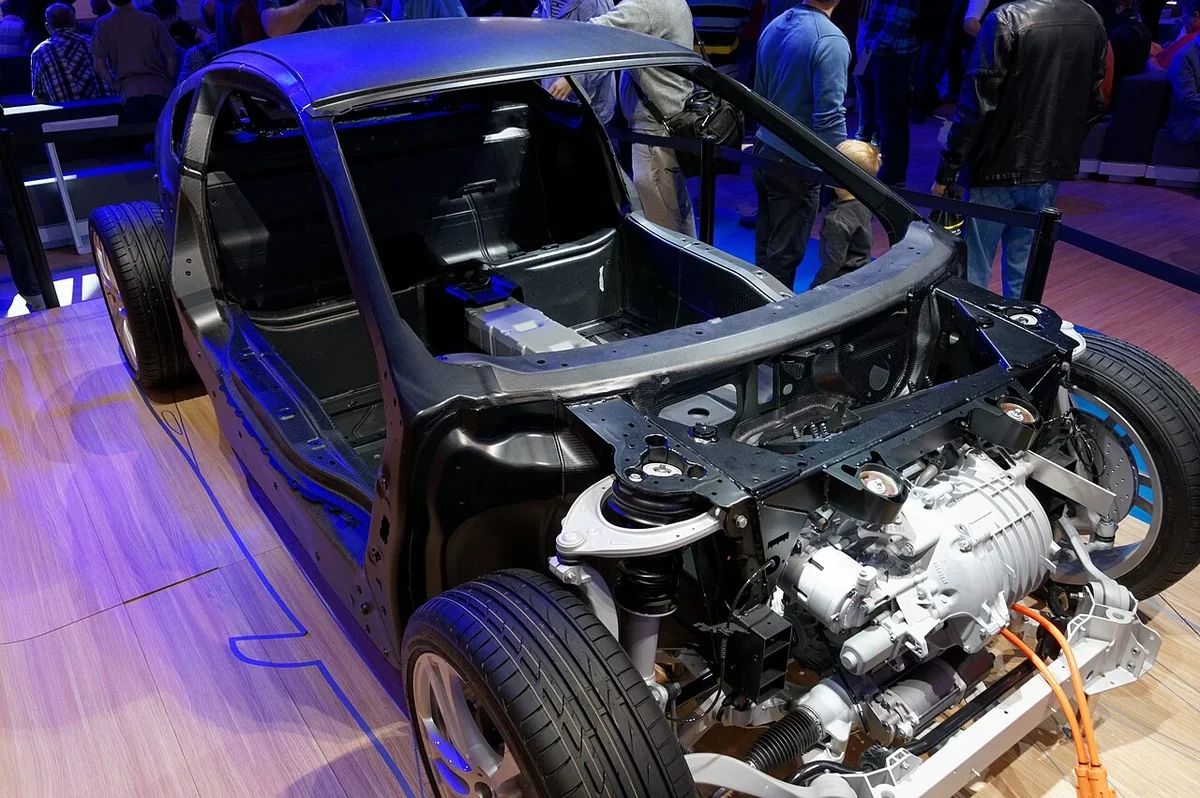
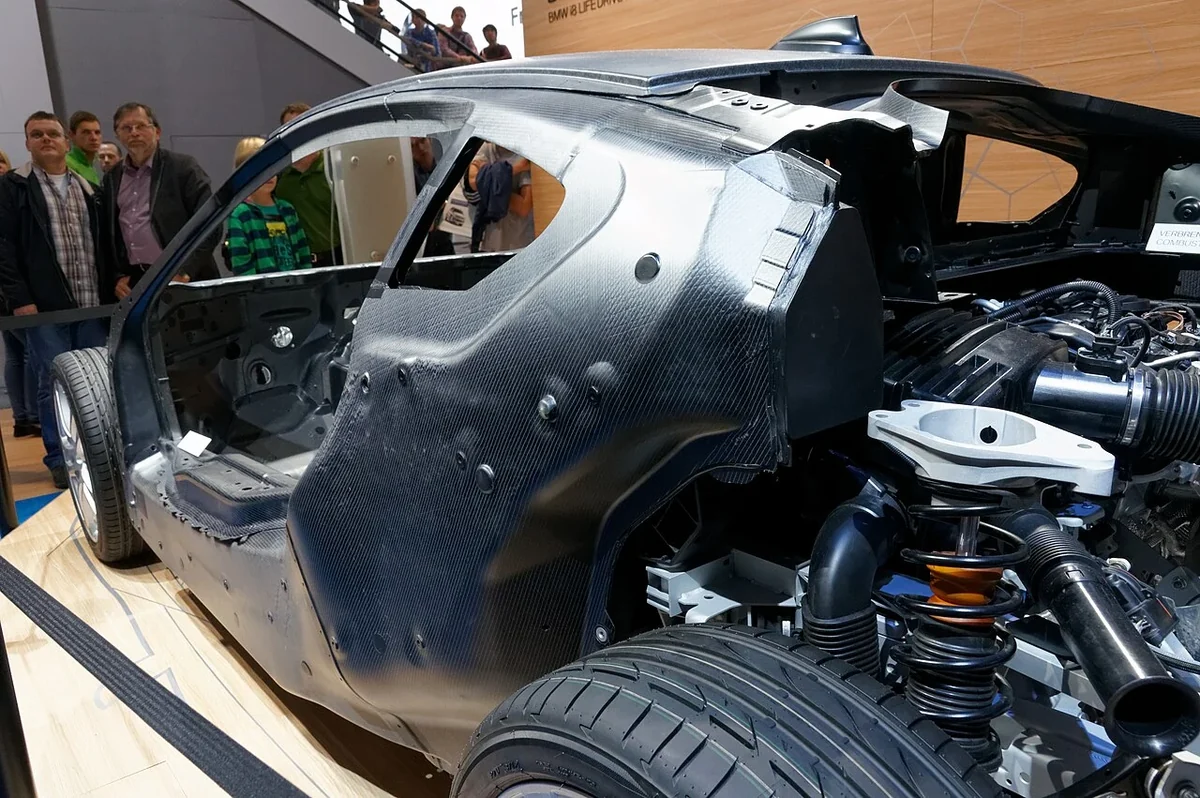
BMW’s production documentation separates a carbon-fiber-reinforced plastic passenger module from the chassis-related Drive module and thermoplastic exterior skin. The real display photograph below is useful precisely because it lets the reader see a vehicle underneath its styling.
This is more meaningful than decorative carbon weave on a console. Structure determines the starting point from which engineers package the occupants and mechanical systems. It also changes what competent inspection and repair require. A glossy exterior cannot establish the condition of the structure below it.
Our Car Structure Basics article explains why material choice, stiffness and mass must be considered together. The i8 is an especially interesting application of that idea: expensive lightweight construction helps make room in the overall concept for a battery and multiple sources of propulsion. Carbon fiber is a design tool here, not a universal certificate of superior handling.
BMW i8 Performance: Read the Test Conditions
Car and Driver’s 2014 U.S. test recorded 0–60 mph in 3.8 seconds and described an initially hesitant response followed by strong acceleration. Those are observations of its U.S. test car, not Cariary measurements and not the same test as the European 0–100 km/h claim.
The two acceleration numbers can coexist without either being wrong. Different speed endpoints, launch procedures and conditions change a result. For a prospective owner, the more revealing question is how easily the car supplies the response you want in the situations you actually encounter.
A launch-control number cannot tell you whether an ordinary overtaking maneuver feels natural, whether you enjoy the transition between operating modes, or whether the sound matches the visual theatre. Those are the questions to carry into a supervised test drive. Buy the experience you prefer, not the shortest number collected from several incompatible tests.
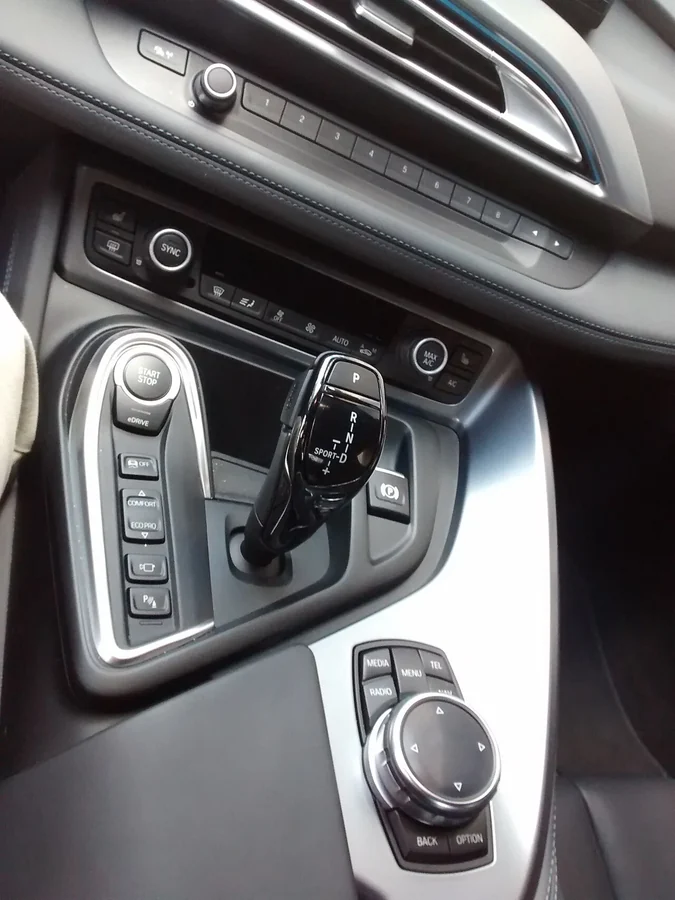
A Familiar Cockpit Inside an Unfamiliar Car
The cockpit photograph shows recognizable BMW controls inside a more sculpted environment. That visual familiarity is useful. A car can look extraordinary outside without turning every small action inside into a puzzle.
But familiarity should not be mistaken for the latest equipment. This review concerns the original coupe, and an individual car’s screens, options and retrofits require their own checks. Try navigation, phone connection and the controls you use every day. A photograph can show their arrangement; it cannot prove that the equipment on an advertised car works.
Cariary would put seating position and access ahead of a long option list. Sit in the car with the footwear and outerwear you normally use. The theatre of arrival is enjoyable only if the owner is comfortable repeating it when the weather and parking space are less cooperative.
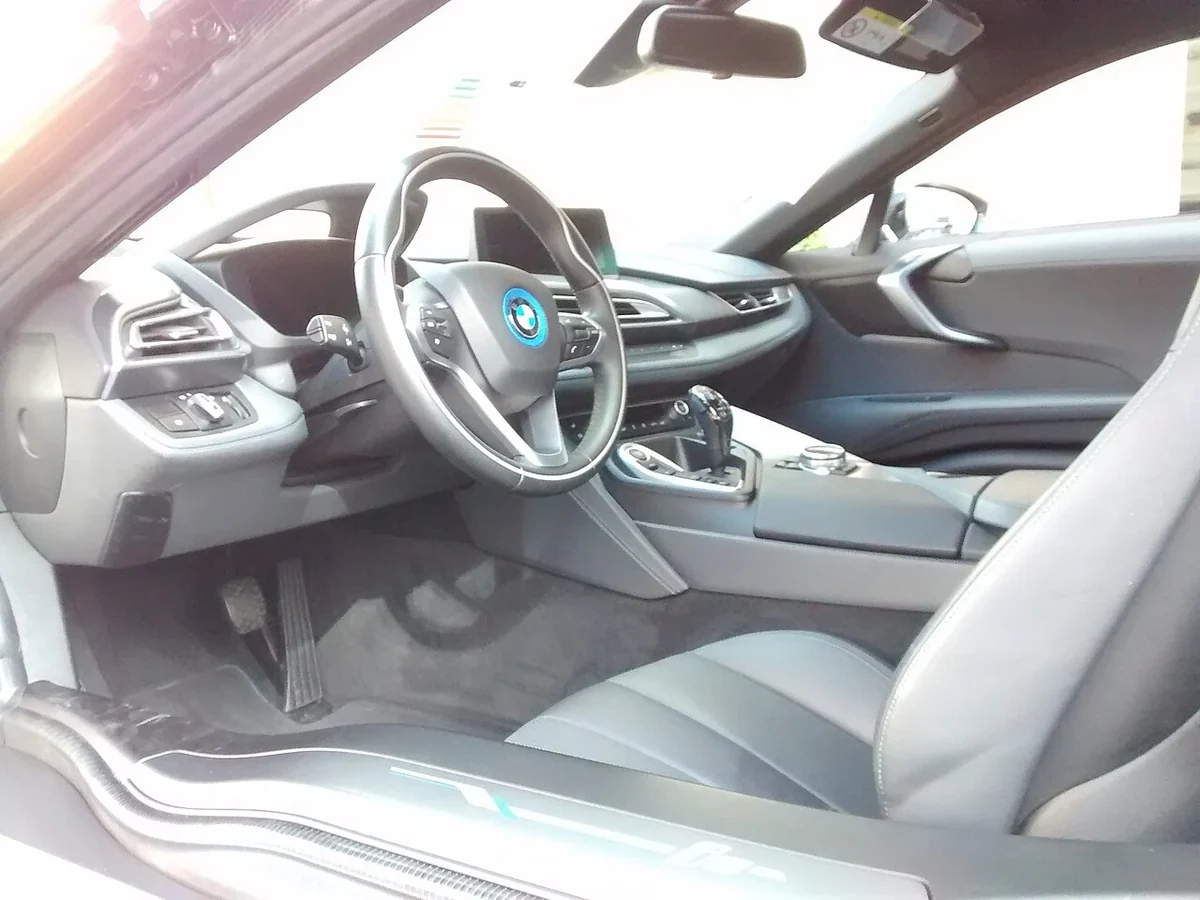
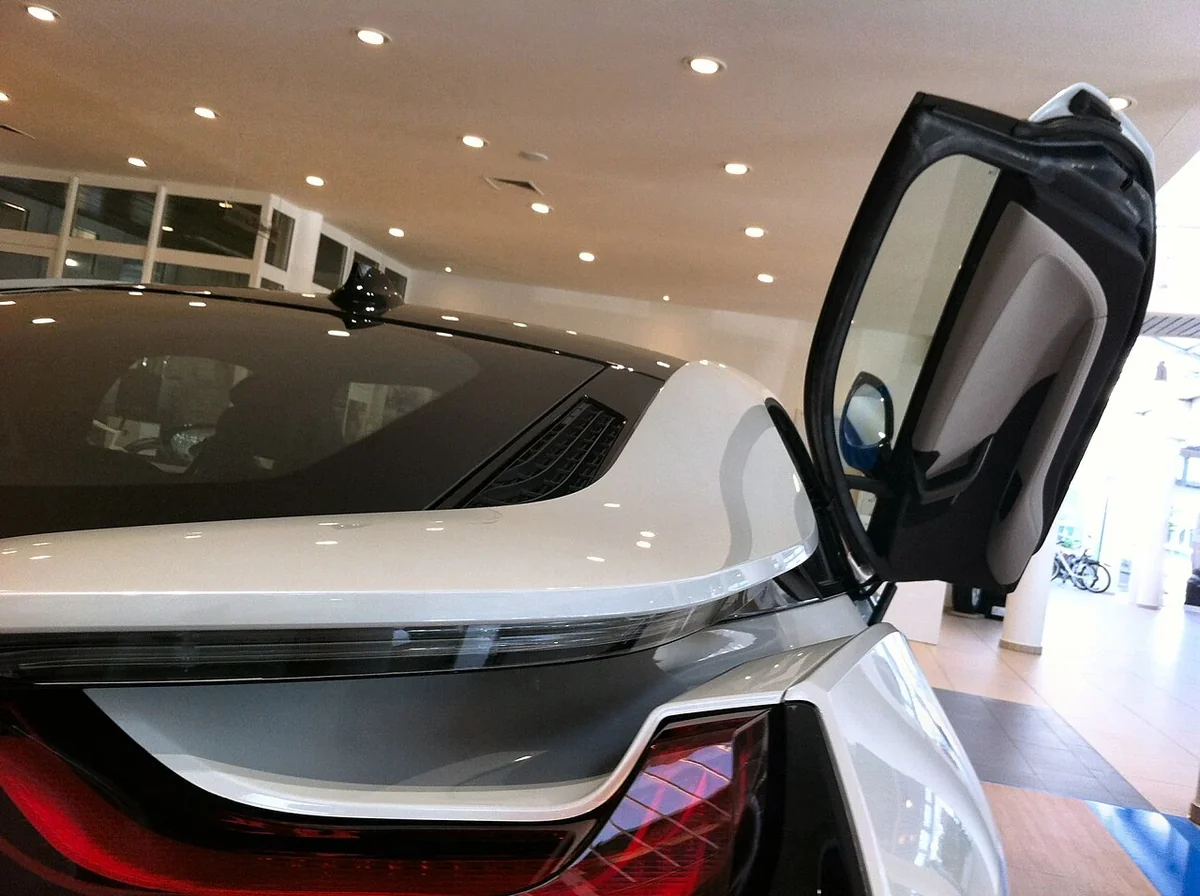
The Door Is Part of the Ownership Experience
A raised i8 door is almost a public performance. The photograph also makes the substantial sill and low seating area clear. These are things to try in person, not problems that an enthusiastic review can wish away.
Think about the places where the car will live: a narrow home garage, a covered parking bay, a sloping driveway. Check actual opening clearance rather than assuming an upward door needs no room beside the car. Take a passenger along if the car is meant for shared weekends.
This is where desirability and usability meet. A beautiful inconvenience can be entirely acceptable in an occasional car. The same inconvenience can become a reason to leave it at home when it is expected to do routine duty. The correct answer depends on the role you are buying it to fill.
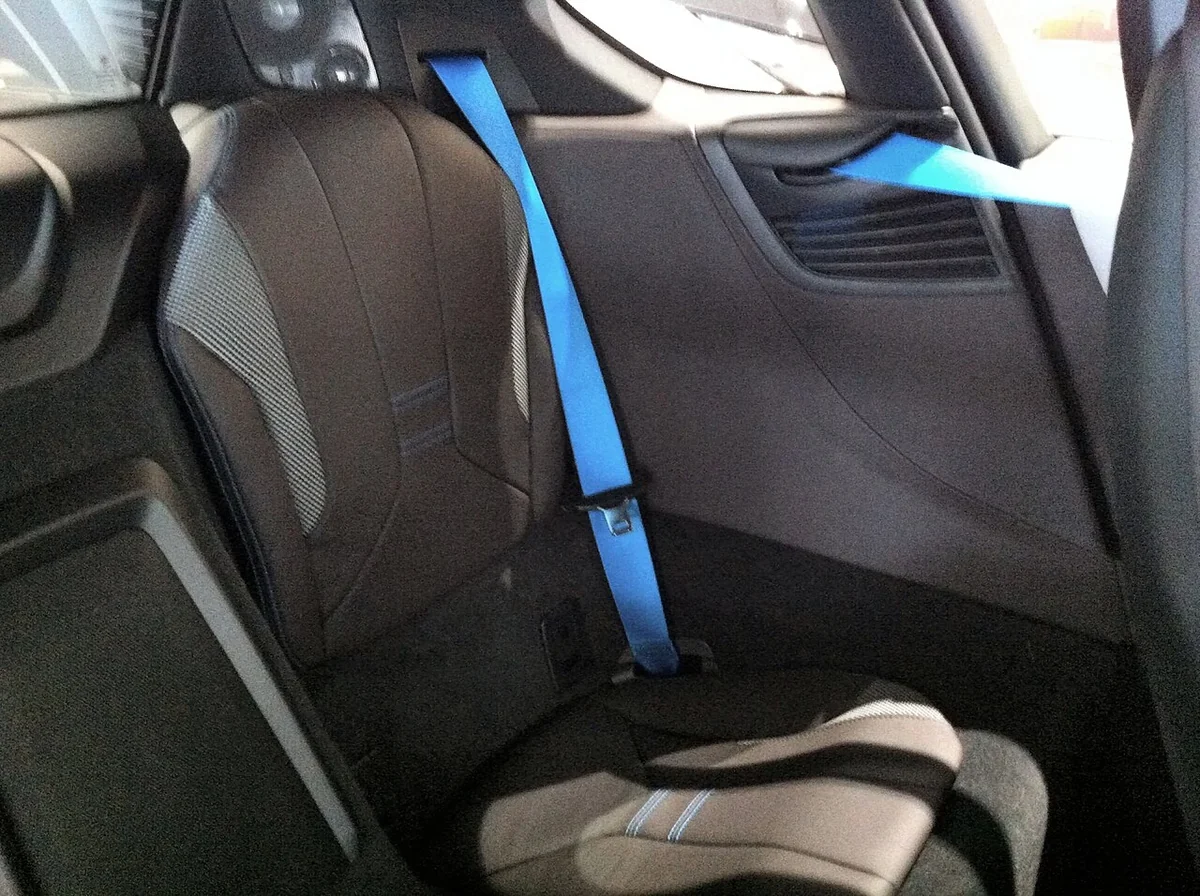
Small Rear Seats, Small Battery, Specific Expectations
The rear-seat photograph answers a question that the dramatic exterior hides: the coupe has extra seating positions, but their compactness is obvious. Treat them as accommodation to test with the actual occupants, rather than assuming the car offers the flexibility of a conventional four-seat coupe.
The early battery’s period electric-range figure also needs perspective. It belongs to a historic laboratory test and a new vehicle. Route, temperature and the condition of an individual used battery affect what an owner experiences. Do not value a used i8 by simply copying that old range into a commuting plan.
Ask for a charging demonstration and an appropriate specialist assessment. Work out where you would charge, how often, and whether that fits your routine. Plug-in capability has practical meaning when the routine supports it; an impressive badge cannot arrange a convenient charging place for you.
Cariary Perspective: Buy the BMW i8 Idea
The Lexus LC 500 is a useful philosophical comparison: a dramatic coupe whose attraction centers on a naturally aspirated V8 and grand-touring atmosphere. The i8 offers another kind of fascination. This is not a same-year price comparison; it is a way of identifying which experience you actually want.
A used asking price should be judged alongside inspection, service access, insurance and an allowance for unexpected work. Obtain local quotations instead of assuming that a depreciated purchase price has turned an exotic construction into an ordinary ownership proposition. Cariary is not assigning a universal current market value across countries.
Four stars recognize a car with an unusually memorable answer to a real engineering question. It loses the fifth because its access, space and specialist needs narrow the group of people who can enjoy that answer comfortably. The BMW i8 becomes more appealing when you stop asking it to be a conventional supercar—and more dangerous to your budget when you stop treating it as a complex used car.
Who Should Buy It?
Recommended For
A design-led enthusiast who wants the original hybrid concept, can charge conveniently, and has access to an i8-qualified inspection and service provider.
Not Recommended For
Someone seeking generous rear accommodation, effortless entry or a simple low-cost substitute for a conventional sports coupe.
One-Line Verdict: The BMW i8 makes its strongest case as an alternative vision of the exotic car, with ownership demands that deserve equally serious attention.
Frequently Asked Questions
Is the BMW i8 fully electric?
No. It is a plug-in hybrid combining a combustion engine and electric propulsion. The early coupe’s historic electric-range claim should not be treated as a guaranteed used-car range.
Does the i8 really have only three cylinders?
Its combustion engine does. That description leaves out the front electric drive, so it is an incomplete guide to the whole car’s performance.
Are 362 PS and 357 hp different versions?
Not necessarily. Metric PS and U.S. mechanical horsepower are different units. Compare model year, market and kW before assuming a change in output.
Is an early BMW i8 a sensible daily car?
It can suit a specific routine, but entry, passenger fit, luggage and charging need a practical trial. Its silhouette is not a substitute for that check.
What matters most when buying one used?
Documented history, an appropriate structural and hybrid-system inspection, functioning charging equipment and realistic local service access. Four stars are not a guarantee about an individual car.
Further Reading and Data Reference
Data reference date: September 27, 2026. Official specifications and attributed test observations are linked where discussed. Cariary Point is an editorial buyer-fit assessment, not an owner road-test score or reliability rating.
Explore more Cariary car reviews and buyer perspectives.

