CARIARYCAR · DIARY · PERSPECTIVE
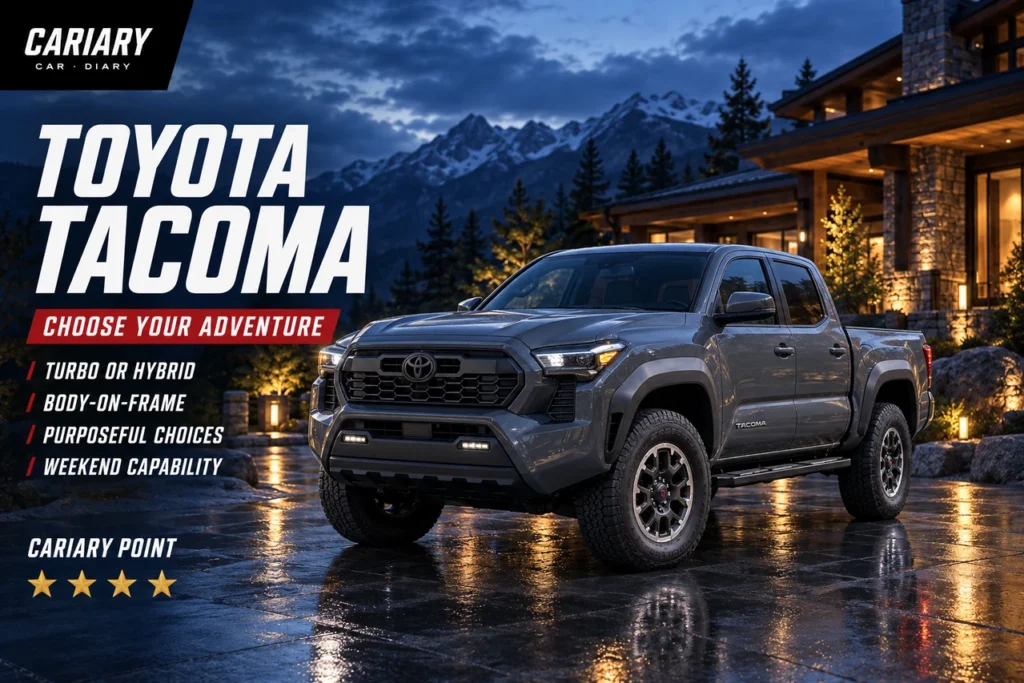
Cover: AI-generated Cariary editorial illustration, checked against the specified vehicle. It is not road-test photography.
This Toyota Tacoma Review asks a deceptively simple question: are you buying the truck for the adventure you genuinely do, or for the adventure suggested by its trim badge?
The current Tacoma makes that distinction unusually important. A two-seat work-oriented XtraCab, a manual-transmission Double Cab and a hybrid off-road flagship are not interchangeable versions of one ownership experience. Choosing well means understanding the differences before becoming attached to the image.
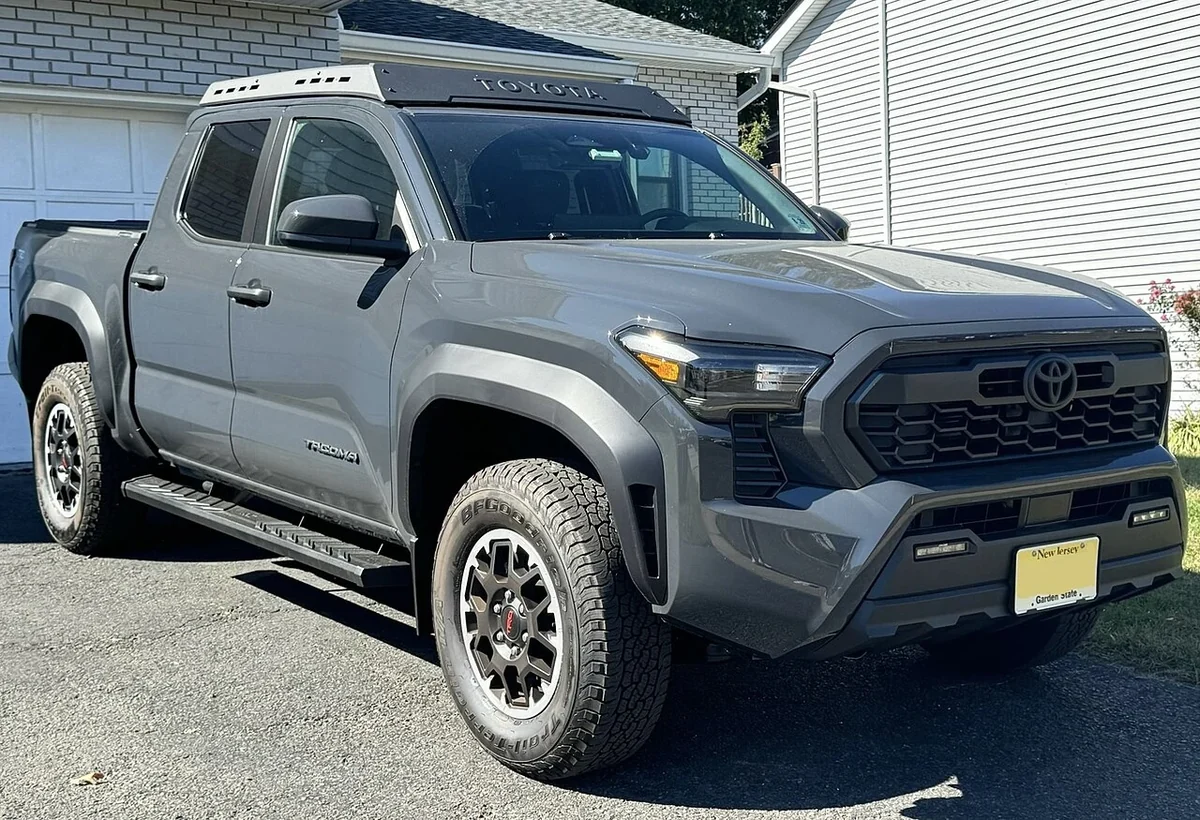
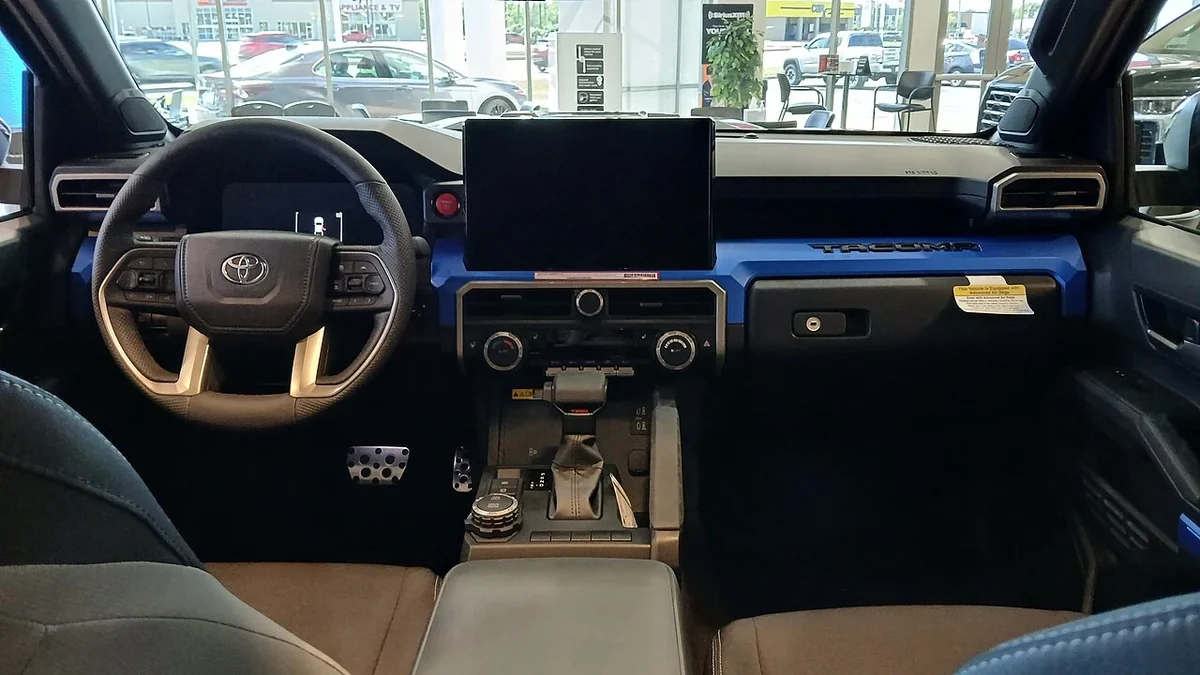
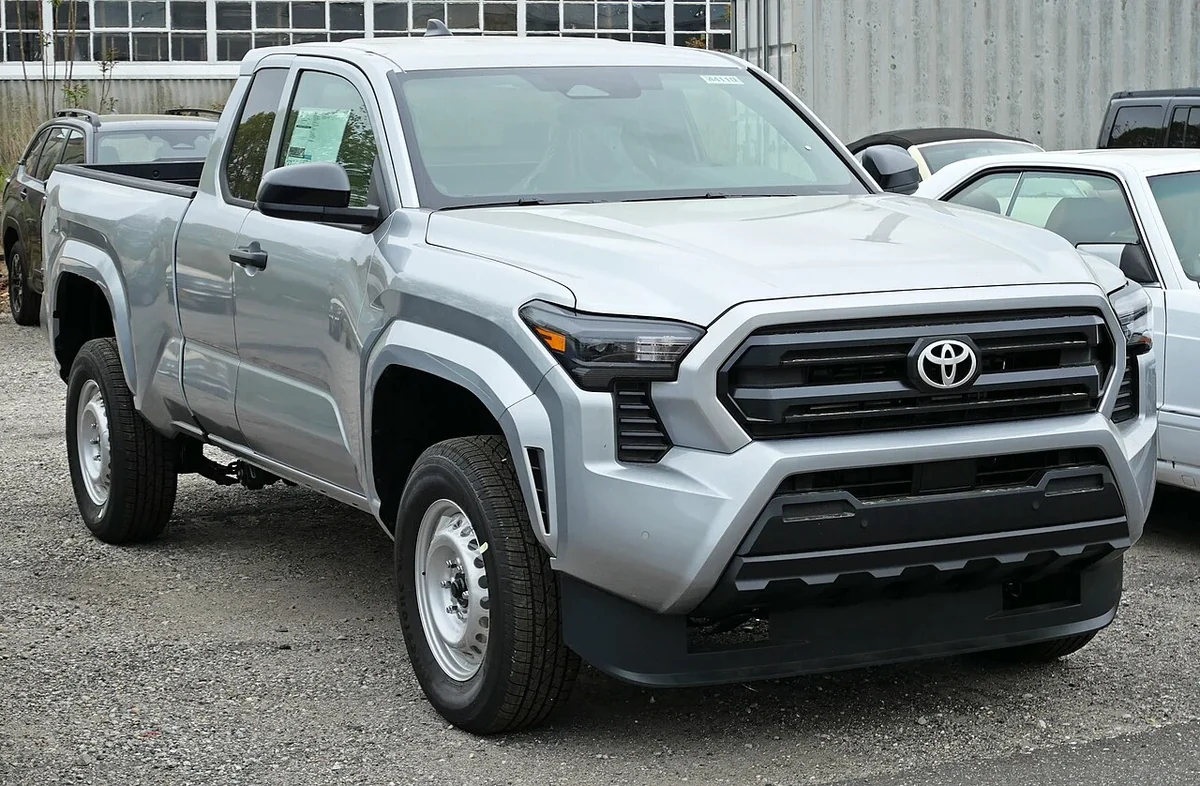
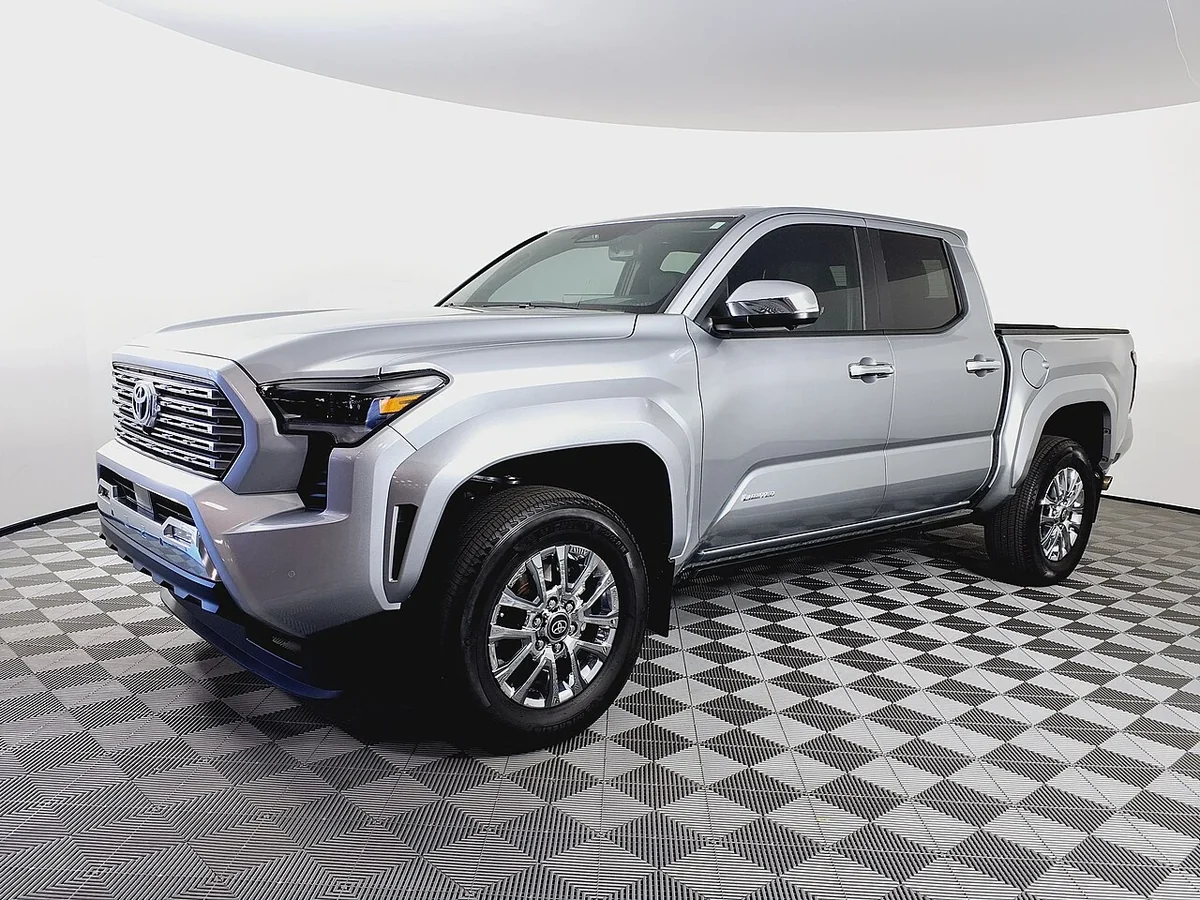
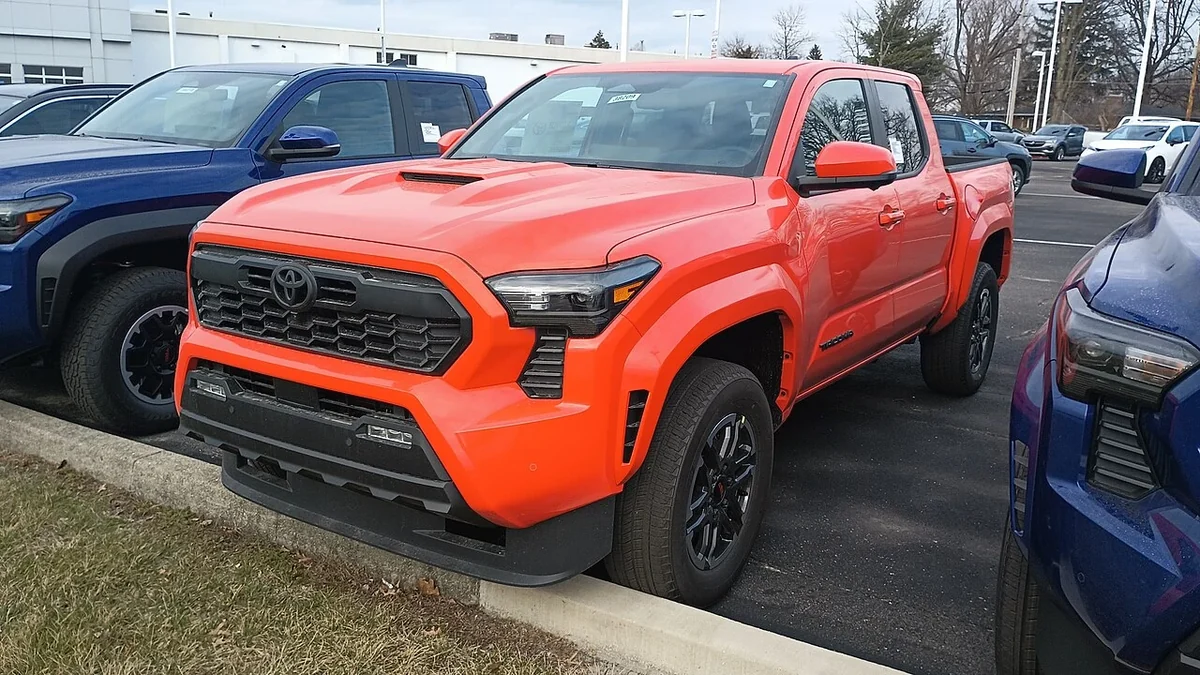
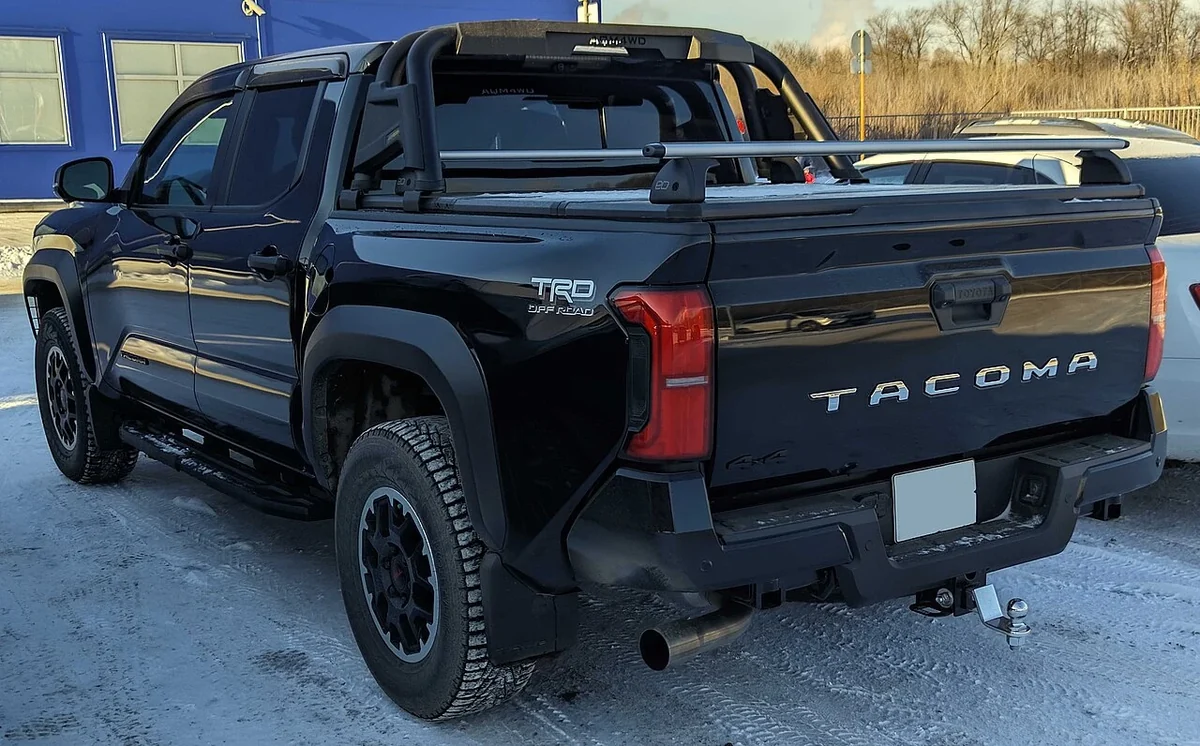
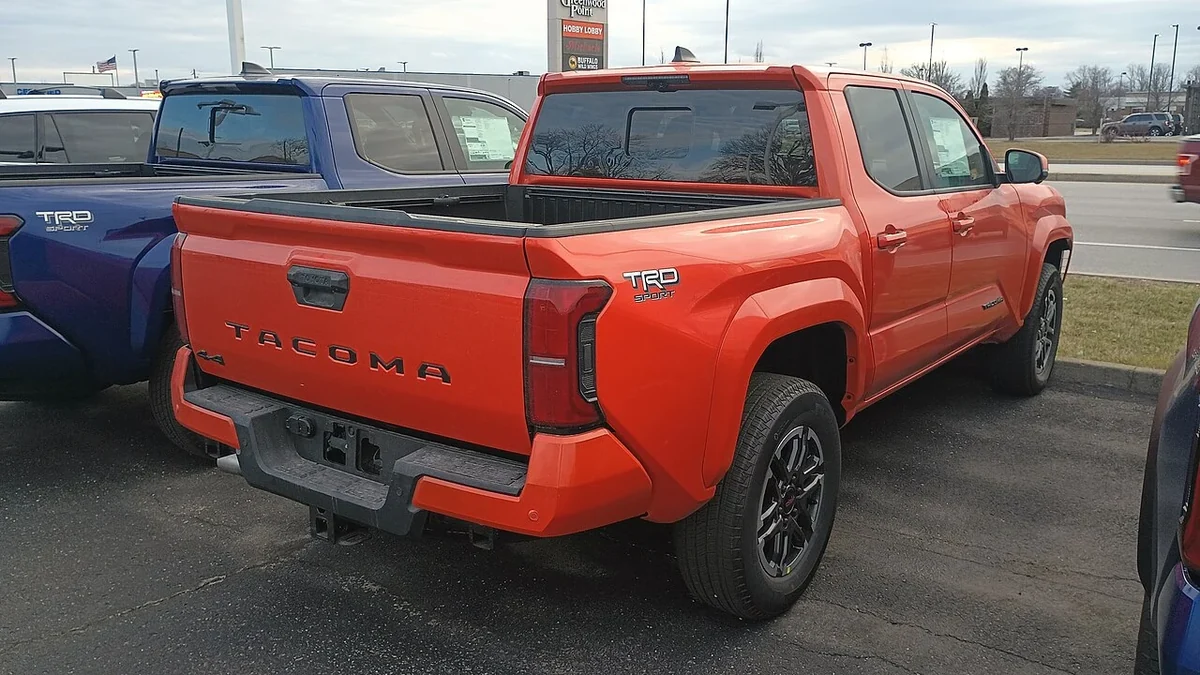
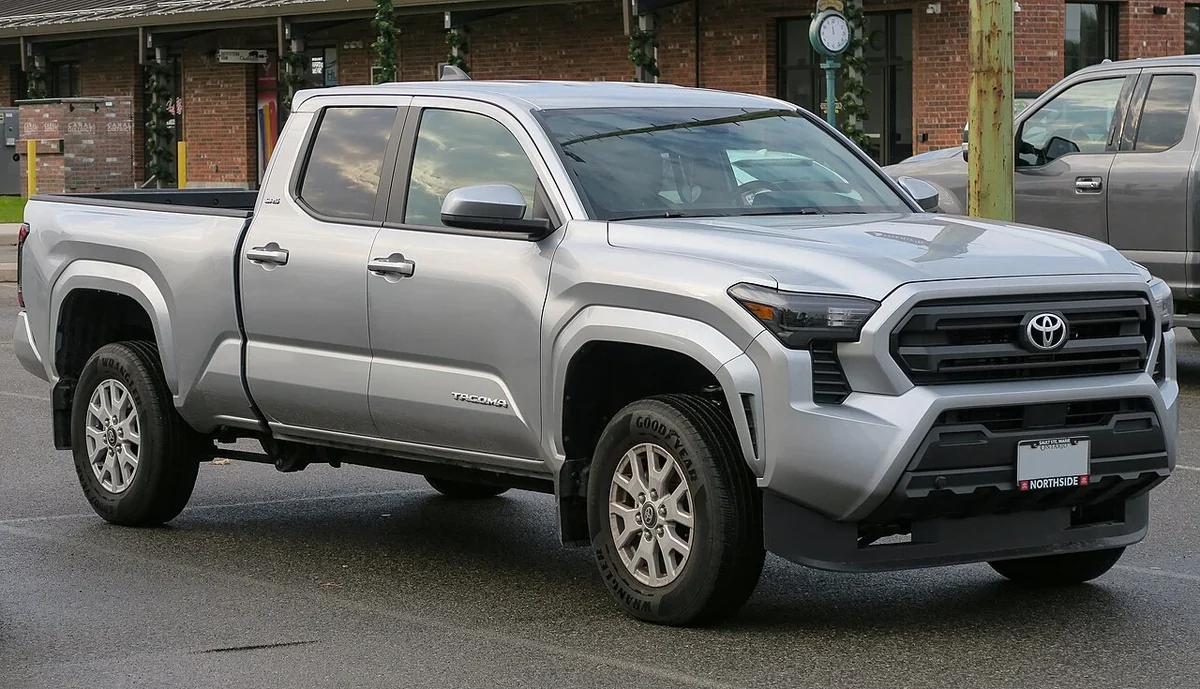
Scope: fourth-generation Toyota Tacoma, U.S. model year 2026. Research-based buyer review, not a Cariary road test. The actual photographs show 2024–2025 current-generation examples; model-year colors, equipment and accessories can differ.
Four stars for meaningful choice, a distinctive outdoor identity and useful cab and powertrain alternatives. Cost escalation, configuration-dependent capability and the compromises of using a pickup as a family car keep the assessment at four.
Toyota Tacoma Review: Key Specifications
| Reference market | United States · MY2026 · fourth generation |
|---|---|
| i-FORCE gasoline engine | 2.4-liter turbo · up to 278 hp and 317 lb-ft; output depends on version |
| i-FORCE MAX hybrid | Up to 326 hp and 465 lb-ft · eight-speed automatic |
| Manual option | Six-speed manual on selected non-hybrid i-FORCE versions |
| Cab choices | Two-seat XtraCab or Double Cab; available beds depend on grade |
| Maximum towing / payload | Up to 6,500 lb / up to 1,705 lb; separate configuration-dependent maxima |
| 2026 launch MSRP | From $32,145 excluding delivery and handling, options and taxes |
1. Toyota Tacoma Review: An Identity You Can Use
A pickup carries a promise that an ordinary crossover rarely makes: the possibility of bringing dirty, awkward or inconvenient equipment along without reorganizing the passenger cabin around it. The Tacoma adds a strong outdoor identity to that basic usefulness. Its appeal begins where a practical tool and a personal interest overlap.
The danger is assuming that the most visually adventurous version must be the most satisfying. Specialized hardware may be valuable on the right trip, but the costs and packaging remain with you on every ordinary journey. A truck can be emotionally appealing and rationally chosen; the goal is to make those two reasons agree.
For this Toyota Tacoma Review, the starting point is a list of real tasks. How often do you carry passengers? What is the longest object you move? Do you tow a loaded trailer, travel rough trails or mostly transport bikes and garden supplies? The answer should determine the cab and grade before a promotional photograph does.
2. Turbo and Hybrid Do Different Jobs
Toyota’s U.S. 2026 Tacoma release lists up to 278 hp and 317 lb-ft for the gasoline turbo powertrain, and up to 326 hp and 465 lb-ft for i-FORCE MAX. Those are lineup figures, not the output of every Tacoma. The hybrid uses an eight-speed automatic; a six-speed manual remains available on selected non-hybrid versions.
The useful interpretation is that electrification here is also a performance and capability decision. It should not be evaluated as though Toyota had simply enlarged the brief of a small economy hybrid. More available torque can be attractive, but it does not remove the need to check the truck’s certified payload, trailer limit or the cost of the configuration.
A manual Tacoma has a different emotional argument. It lets the owner participate in a way that an automatic cannot duplicate, while asking for more involvement in traffic and during slow maneuvering. Choose that participation because you enjoy it. Do not assume the manual, turbo automatic and hybrid all produce the same response just because the body panels look similar.
3. XtraCab Makes a Surprisingly Honest Choice
The XtraCab seats two and uses the area behind them for storage. That is an unusually clear admission of purpose in a market where many vehicles try to promise everything. For an owner who usually travels alone or with one passenger, protected space for tools and equipment can be more useful than rear seats that seldom carry anyone.
The limitation is equally clear: that storage area is not a place for extra passengers. If the Tacoma will become a family vehicle, investigate the Double Cab instead. Test rear-seat access with the actual front-seat positions, and bring a child seat if one is part of your routine. A second row on a specification sheet does not settle comfort for your household.
Bed length also belongs in the first conversation. A longer bed can solve a recurring carrying problem while making parking and maneuvering more demanding. Measure your garage with room to walk around the truck and operate the tailgate. The most useful truck is the one you can live with on the days when nothing exciting is happening.
4. The Badge Does Not Tell the Whole Suspension Story
The current generation uses a truck frame, with coil-spring multi-link rear suspension on most trims according to Toyota’s U.S. 2026 Tacoma release. The range also uses grade-specific damping: TRD Sport, TRD Off-Road, TRD Pro, Trailhunter and Limited are not merely different upholstery packages. Check the specific configuration rather than assuming every Tacoma has the same chassis setup.
Our guide to body-on-frame versus monocoque construction explains why this matters. A separate frame is part of the truck’s engineering brief, but it does not itself guarantee a particular ride quality. Spring rates, dampers, tires, load and seating position all contribute to what the occupants experience.
That makes an unladen test drive important. The truck you sample should resemble the one you intend to buy, including wheels and tires. Pay attention to small repeated bumps and how the rear responds after a larger undulation. The goal is not to declare one suspension design universally superior; it is to find the setup that fits the surfaces and loads you actually encounter.
5. TRD Pro and Trailhunter Are Different Answers
Toyota gives TRD Pro a racing-influenced off-road brief and Trailhunter an overlanding emphasis. Both use the hybrid powertrain, but their identities should not be collapsed into a single “top Tacoma” category. One purchase can prioritize specialized rough-terrain performance; another can prioritize the equipment and carrying needs associated with longer trips.
The factory approach has an obvious attraction: the components arrive as a defined package. It can simplify the buying decision for someone who knows the intended use. However, a package is not automatically economical for a driver who mainly wants the appearance. Identify the equipment you would actually use before treating its presence as value.
TRD Off-Road may be the more focused conversation for a buyer who needs meaningful trail hardware without immediately moving to a flagship. TRD Sport speaks to a different preference again. In this Toyota Tacoma Review, choosing a less expensive grade is not a failure of ambition. It can be evidence that the owner understands the job better than the marketing hierarchy does.
6. A Tow Rating Is the Beginning of the Calculation
Toyota lists up to 6,500 pounds of towing and up to 1,705 pounds of payload in Toyota’s U.S. 2026 Tacoma release. These are separate maxima for qualifying configurations, not a combined promise available on any truck on the lot. The precise vehicle’s labels and owner documentation govern the loading decision.
Passengers, cargo and accessories all use payload. Trailer tongue weight also becomes load carried by the truck. A seemingly modest trailer can therefore create a more complicated calculation once a family, camping equipment and aftermarket additions are aboard. Work with the loaded trailer weight, not an empty figure chosen because it makes the comparison easier.
Ask the dealer to identify the ratings for the exact VIN, confirm the required towing equipment, and explain any limits relevant to your trailer. Cameras and trailer-assistance features may help with maneuvering, but they do not increase a certified weight limit. Capability becomes useful only when the owner understands the conditions attached to it.
7. Technology Should Help the Truck Do Truck Things
The 2026 range offers an eight-inch standard or available 14-inch multimedia screen, with wireless phone integration. Larger displays can help show a camera view or navigation instructions, but their value should be assessed in the context of driving and loading a pickup. A feature that reduces uncertainty when maneuvering can matter more than an extra menu.
Try the physical controls, storage spaces and power outlets relevant to your use. Put your phone where it will actually sit. Check whether the cabin has a convenient place for gloves, a bottle and the small items that otherwise collect around the gear selector. The best utility often consists of ordinary actions that are easy to repeat.
Available connected features can also involve subscriptions and network coverage. Confirm the terms instead of assuming every demonstration remains included indefinitely. This is especially important for a vehicle bought around outdoor travel: a feature useful in a showroom with a strong signal may have different limits at a remote destination.
8. Buy the Life, Then Choose the Truck
The launch price starts at $32,145 before delivery and handling, according to Toyota’s dated release. That figure is a reference for the entry model, not the price of the truck pictured in every advertisement. Build the version you need and compare its full quotation with alternatives before attaching meaning to a base-price headline.
Toyota’s warranty and included maintenance have defined terms, but neither proves that an individual truck will be trouble-free. Review Cariary’s maintenance guide and the actual service schedule, including conditions for towing or demanding use. Ask about tire replacement costs and inspect accessories carefully. Equipment that makes the truck look ready for a trip can also change weight and upkeep.
The Tacoma earns four stars because its range lets owners make meaningful choices, and because its identity can correspond to real utility. It loses the fifth where expense and complexity outrun the intended use. The best Tacoma is the one whose capabilities you can explain with your own calendar, not just with the name on its tailgate.
Who Should Buy It?
Recommended For
Owners with regular pickup tasks who value distinct cab, transmission and off-road choices; outdoor enthusiasts willing to match the grade to real trips rather than buy the most expensive badge automatically.
Not Recommended For
Households that need effortless rear-seat space before open-bed utility, drivers who cannot comfortably park the chosen cab and bed, or buyers treating maximum tow figures as universal ratings.
One-Line Verdict: The Tacoma becomes a better truck when you stop shopping for a reputation and start choosing a configuration.
Frequently Asked Questions
Is every 2026 Tacoma a hybrid?
No. The lineup includes non-hybrid i-FORCE and i-FORCE MAX hybrid powertrains. The hybrid is standard on TRD Pro and Trailhunter and available on selected other grades.
Can you still buy a manual Tacoma?
Yes, a six-speed manual is offered on selected non-hybrid versions. Check the exact grade and configuration rather than assuming it is available throughout the range.
Does the XtraCab have rear passenger seats?
No. It is a two-seat configuration with storage behind the front seats. Buyers needing a second row should examine Double Cab models.
Can every Tacoma tow 6,500 pounds?
No. That is a maximum for qualifying versions. Equipment, passengers, cargo and the vehicle’s own ratings must be checked.
Why does this Toyota Tacoma Review give four stars?
The range has a strong identity and genuine utility, but expensive grades and specialized hardware only make sense when they match the owner’s use.
Further Reading and Data Reference
Data reference date: October 3, 2026. Official specifications and attributed test observations are linked where discussed. Cariary Point is an editorial buyer-fit assessment, not an owner road-test score or reliability rating.
Explore more Cariary car reviews and buyer perspectives.

