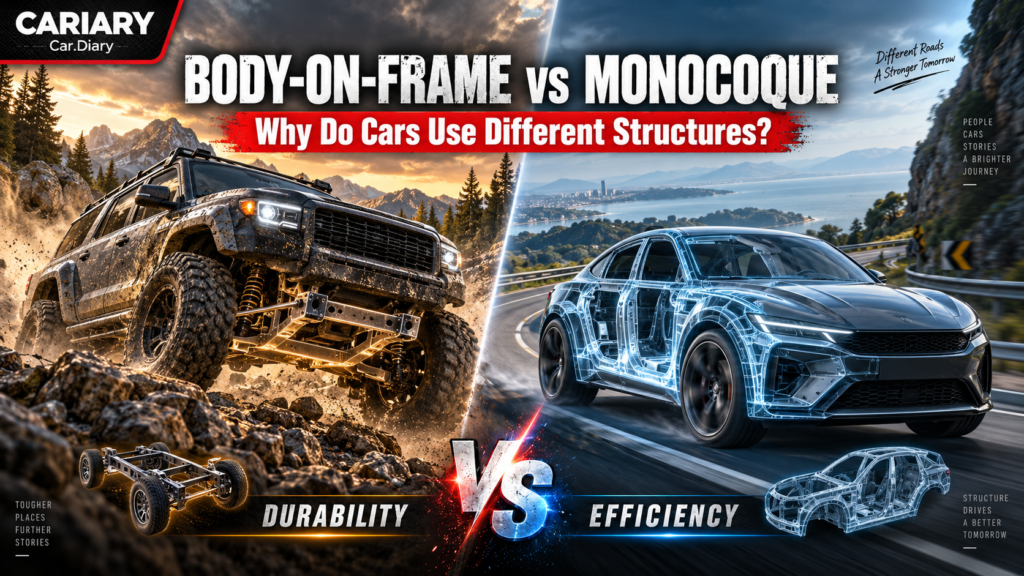
At first, Body-on-Frame vs Monocoque sounds like a simple comparison: one is strong, the other is light. But once we slow down and look at why different cars use different structures, the question becomes more interesting.
Why does a Toyota Land Cruiser still use a frame, while most sedans, crossovers, and sports cars use a monocoque or unibody structure? Is one actually better? Or are they solving different problems?
The short answer is this: a car's structure is not just about strength. It is about purpose.
Quick Summary
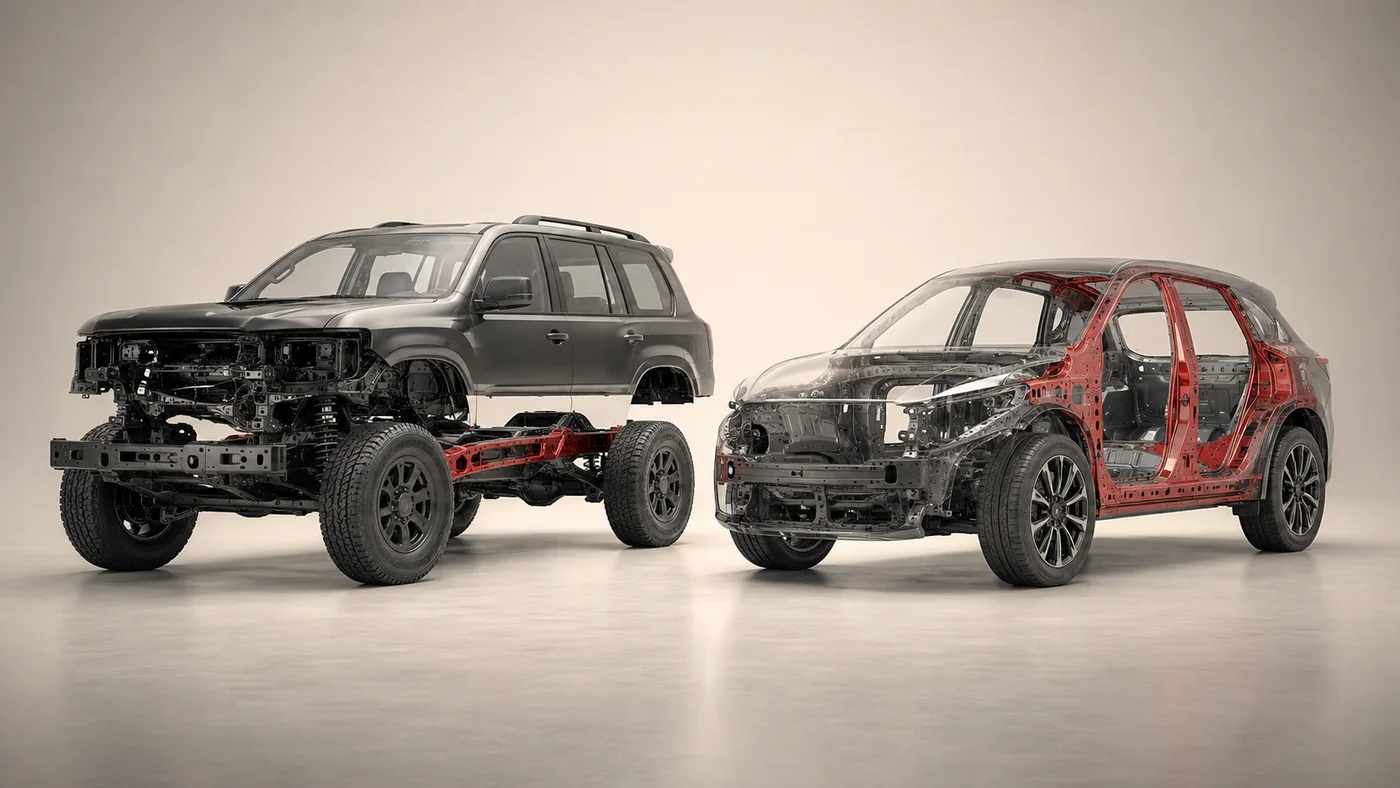
- Body-on-frame uses a separate structural frame with the body mounted on top.
- Monocoque, often called unibody, uses the body shell itself as the main structure.
- Body-on-frame is useful for towing, payload, rough-road durability, and special-purpose vehicles.
- Monocoque is usually better for weight, handling, efficiency, crash-energy packaging, and interior space.
- The better structure depends on the vehicle's mission, not on one simple ranking.
Why This Matters
Most of us do not think about a car's structure when we look at it. We notice the design, engine, interior, screen, wheels, or brand first.
But underneath all of that, the structure decides how the car carries weight, absorbs impacts, resists twisting, uses space, and feels on the road.
That is why a pickup truck feels different from a sports sedan. It is also why a serious off-roader can feel incredibly tough while a modern crossover feels quiet, efficient, and easy to drive.
Once we understand the structure, we understand the personality of the car more clearly.
What Body-on-Frame Actually Means
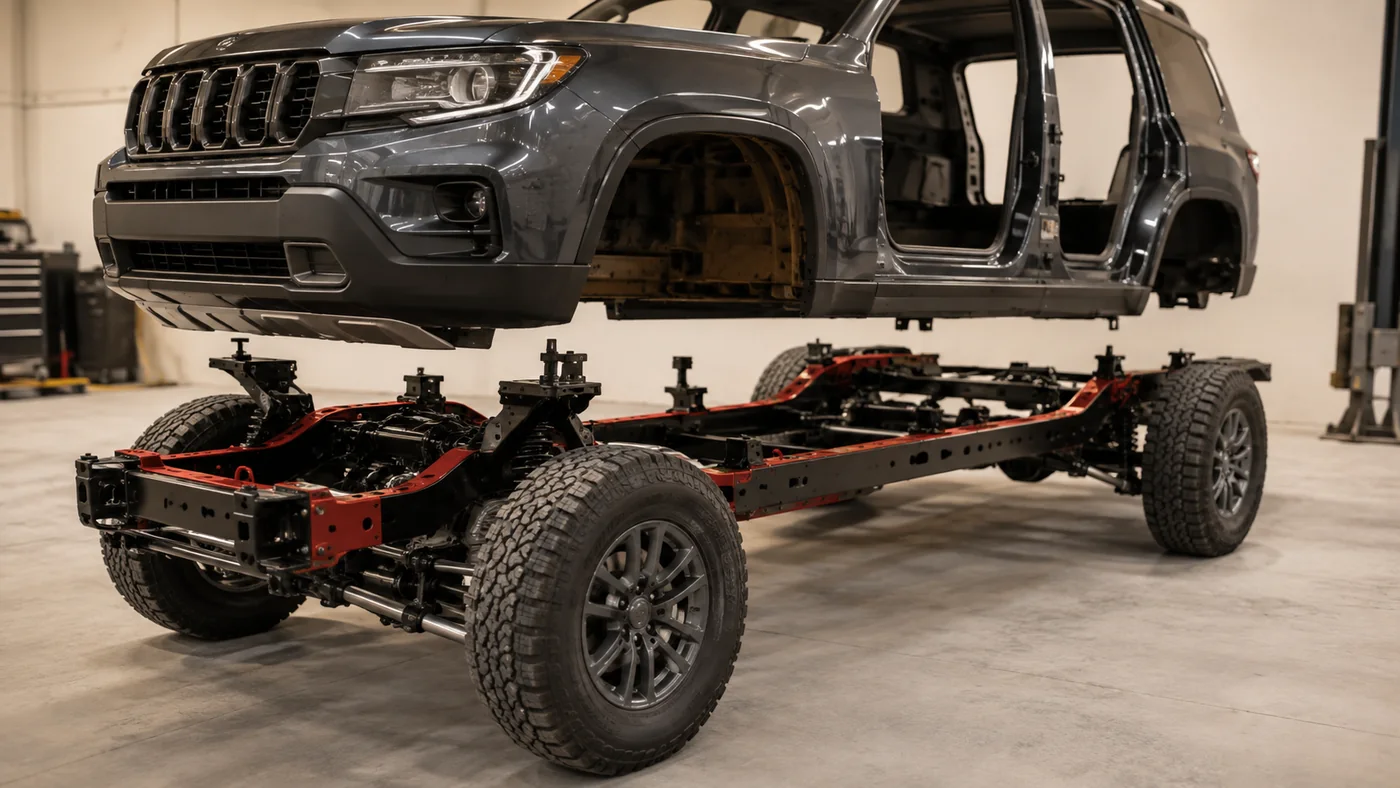
Body-on-frame means the vehicle has a separate strong frame underneath, and the body is mounted on top of it.
The easiest way to imagine it is a building with a strong steel skeleton first. The rooms, walls, and outer shape are built around that skeleton.
In a traditional body-on-frame vehicle, the frame carries much of the heavy structural work. The suspension, drivetrain, engine, and towing loads are connected to this strong base.
This is why the layout is often called a ladder frame. From above, many frames look a little like a ladder, with two long rails connected by crossmembers.
What Monocoque or Unibody Actually Means
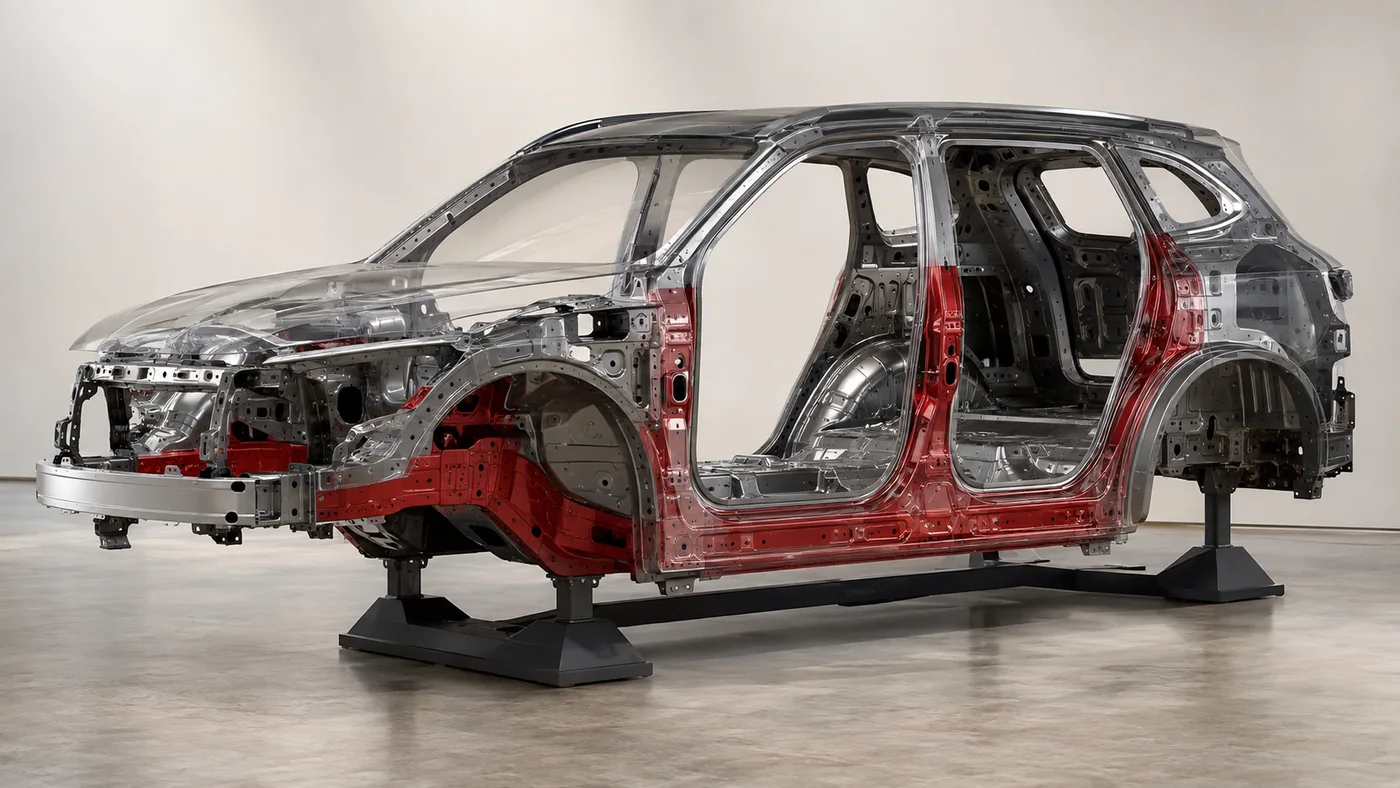
Monocoque, or unibody, works differently. Instead of putting the body on a separate frame, the body shell itself becomes part of the structure.
The floor, pillars, roof rails, side sills, and crash structures all work together to carry forces.
A simple way to think about it is this: in body-on-frame, the frame is the main skeleton. In monocoque, the whole body is the skeleton.
That is why monocoque cars can use material very efficiently. The same structure can support the cabin, hold the suspension, absorb crash energy, and shape the vehicle at the same time.
Why Early Cars Used Separate Frames
Early cars evolved from carriage and wagon-style thinking, so a strong chassis with a body mounted on top was a natural solution.
It was easier to build, easier to modify, and useful when roads were rough and vehicles had to carry heavy loads.
This also made manufacturing flexible. A company could use one frame and place different body styles on top of it.
That idea still matters today for commercial vehicles, trucks, military vehicles, camper conversions, and special-purpose vehicles. Body-on-frame survived because it is useful, not because the industry forgot how to move on.
How Body-on-Frame Works in Real Use
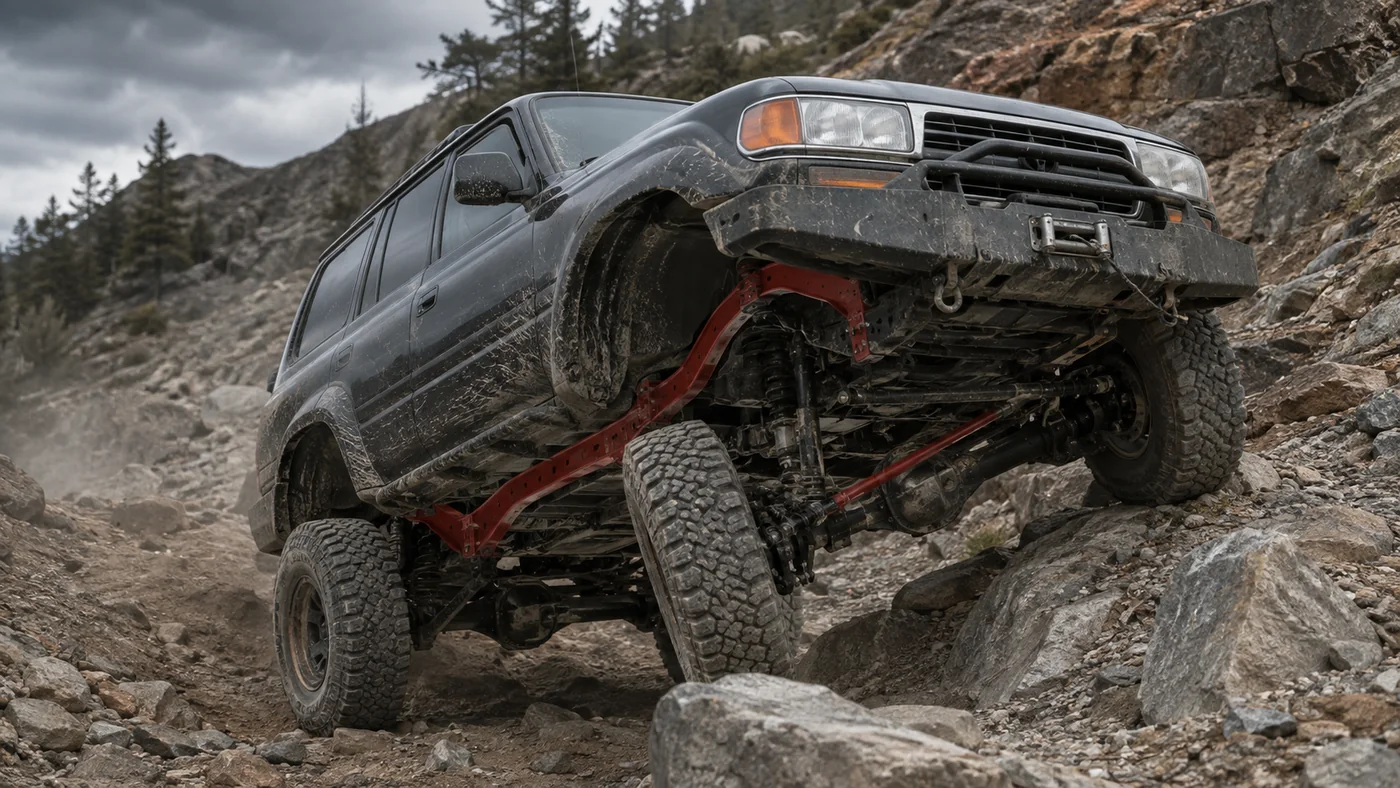
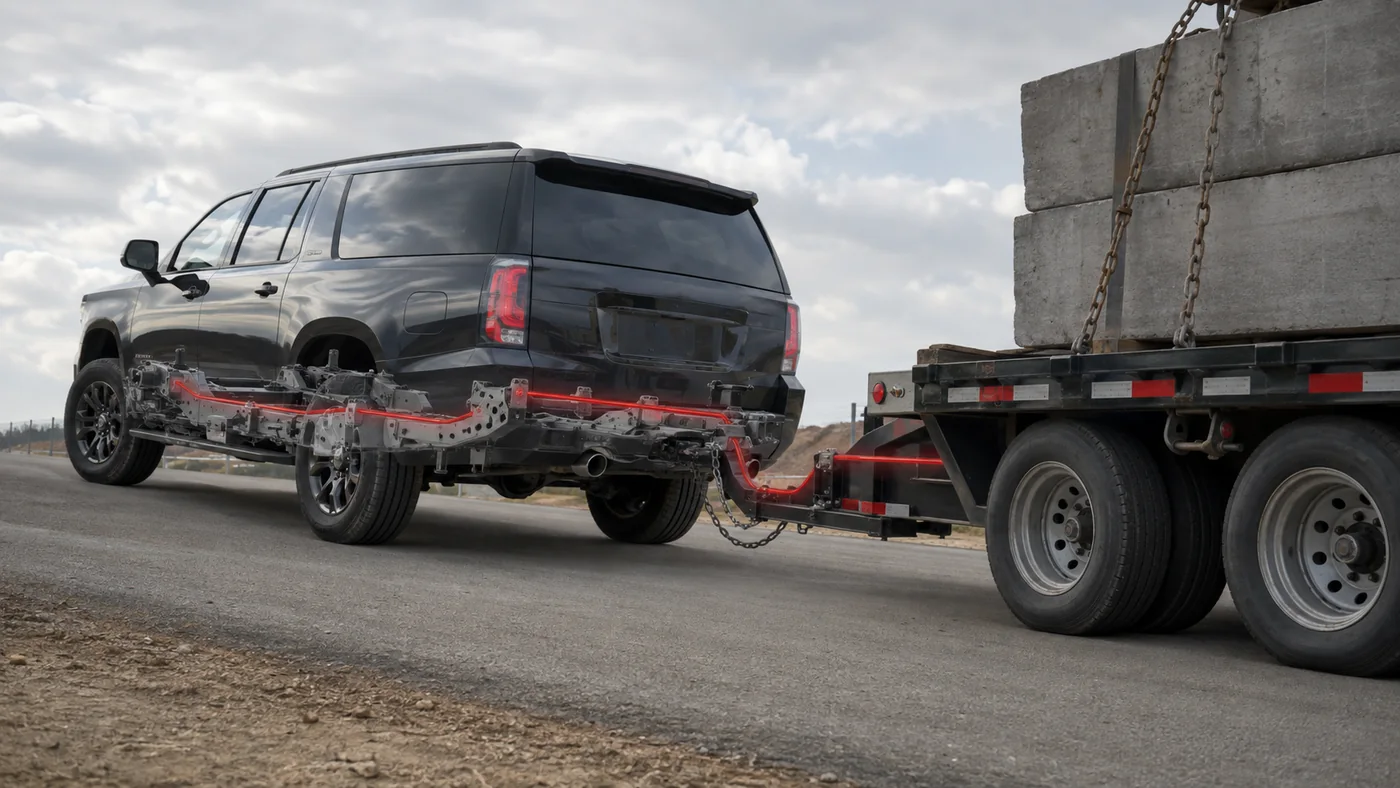
The biggest advantage of body-on-frame is not just that it is strong. The better explanation is that it is good at handling repeated heavy-duty stress.
When a pickup truck tows a heavy trailer, the load does not only pull on the body panels. It puts stress through the frame, suspension mounting points, drivetrain, and rear structure.
When an off-road vehicle climbs over rocks, the wheels may be at very different heights. One wheel may be compressed upward while another drops down. This twists the vehicle.
That twisting force is called torsion. Body-on-frame vehicles are often well suited to this because the frame can absorb a lot of that abuse.
Advantages of Body-on-Frame
The first advantage is durability under heavy use. This is why vehicles like the Toyota Land Cruiser, Mercedes-Benz G-Class, Jeep Wrangler, Ford Bronco, Ford F-150, Toyota Hilux, and many large trucks continue to use frame-based construction.
The second advantage is towing and payload. A strong frame gives engineers a solid foundation for carrying and pulling heavy loads.
The third advantage is off-road abuse. Body-on-frame vehicles are often designed for rough terrain, articulation, long-term durability, and repairability in difficult environments.
The fourth advantage is modification. Because the body and frame are separate, it can be easier to build campers, utility bodies, military versions, or heavily modified off-road vehicles.
Disadvantages of Body-on-Frame
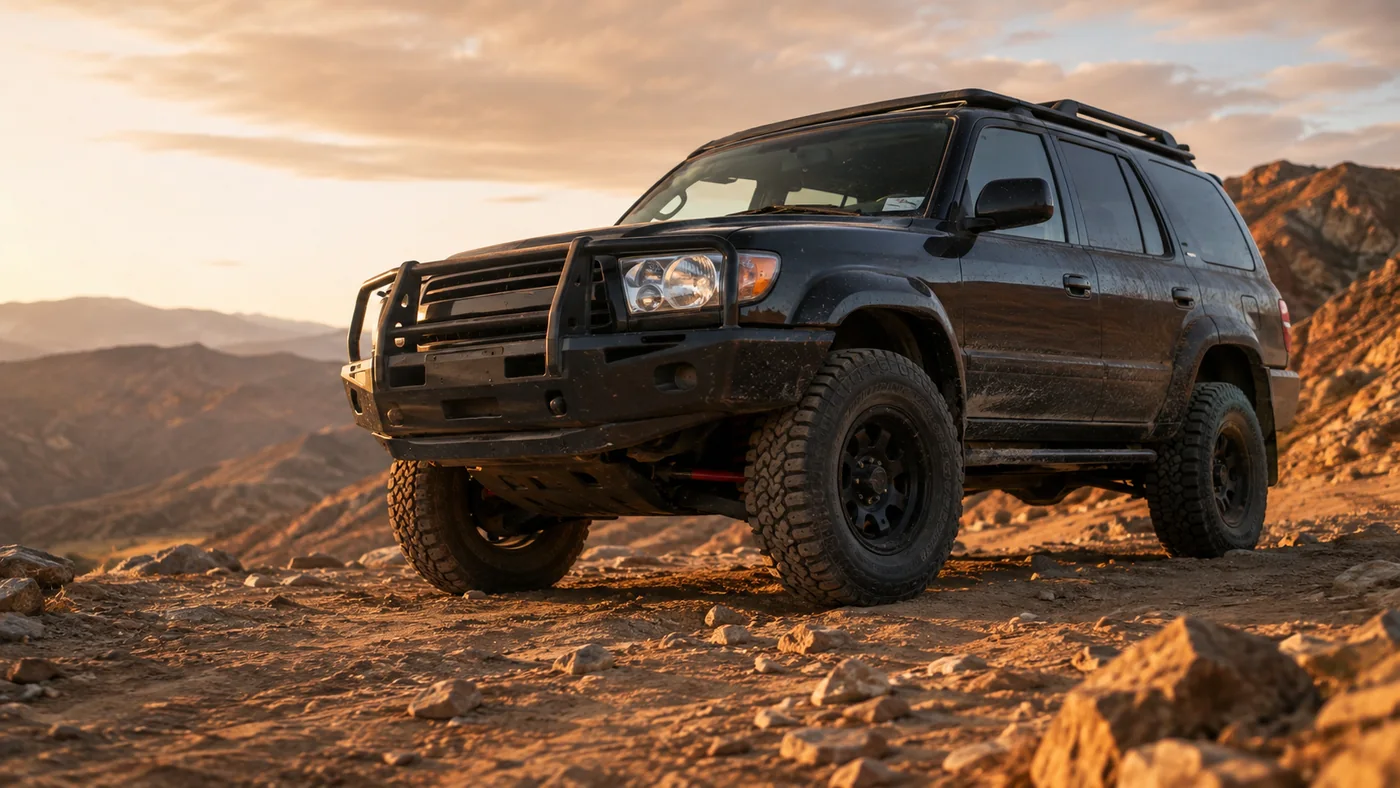
The main disadvantage is weight. If you have a separate frame and then place a body on top, there can be structural overlap. More material usually means more mass.
More mass affects almost everything. Acceleration becomes harder, braking becomes harder, fuel economy gets worse, and handling becomes less sharp.
Body-on-frame vehicles can also have a higher floor and a higher center of gravity. That may help ground clearance off-road, but it is usually not ideal for on-road handling.
Modern engineering has improved this a lot. Adaptive dampers, better bushings, stronger frames, improved suspension geometry, and electronic systems have made modern frame SUVs far more refined than older ones.
Why Most Passenger Cars Became Monocoque
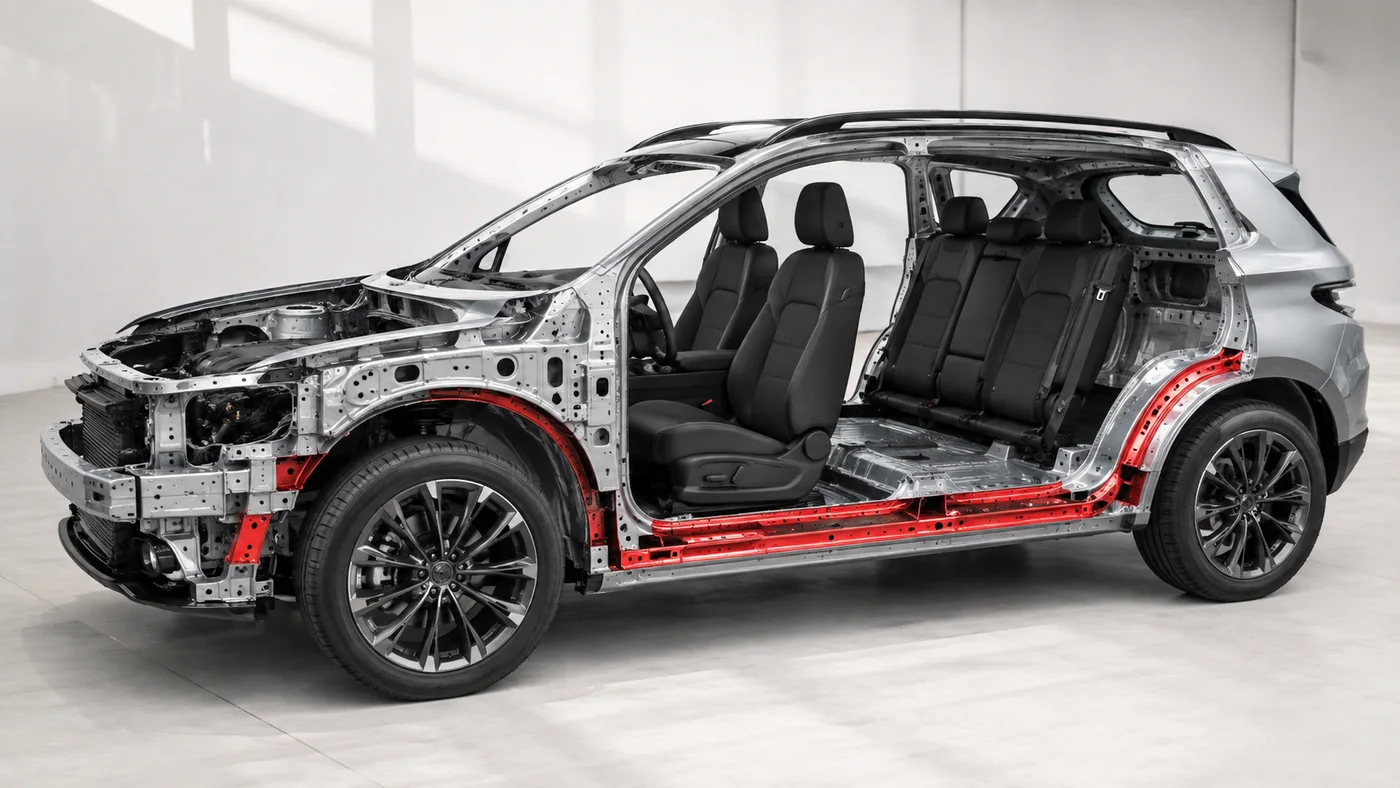
Most modern passenger cars are not designed primarily for towing, rock crawling, or military use.
They need to be comfortable, safe, efficient, spacious, quiet, affordable to produce, and easy to drive every day. That is exactly where monocoque makes sense.
Because the body itself carries loads, engineers can make every kilogram do more work. The structure can be lighter while still being strong in the places that matter.
This helps fuel economy, acceleration, braking, handling, ride comfort, and packaging. Without a large separate ladder frame under the floor, the cabin can often sit lower and use space more efficiently.
Why Sports Cars Use Monocoque Structures
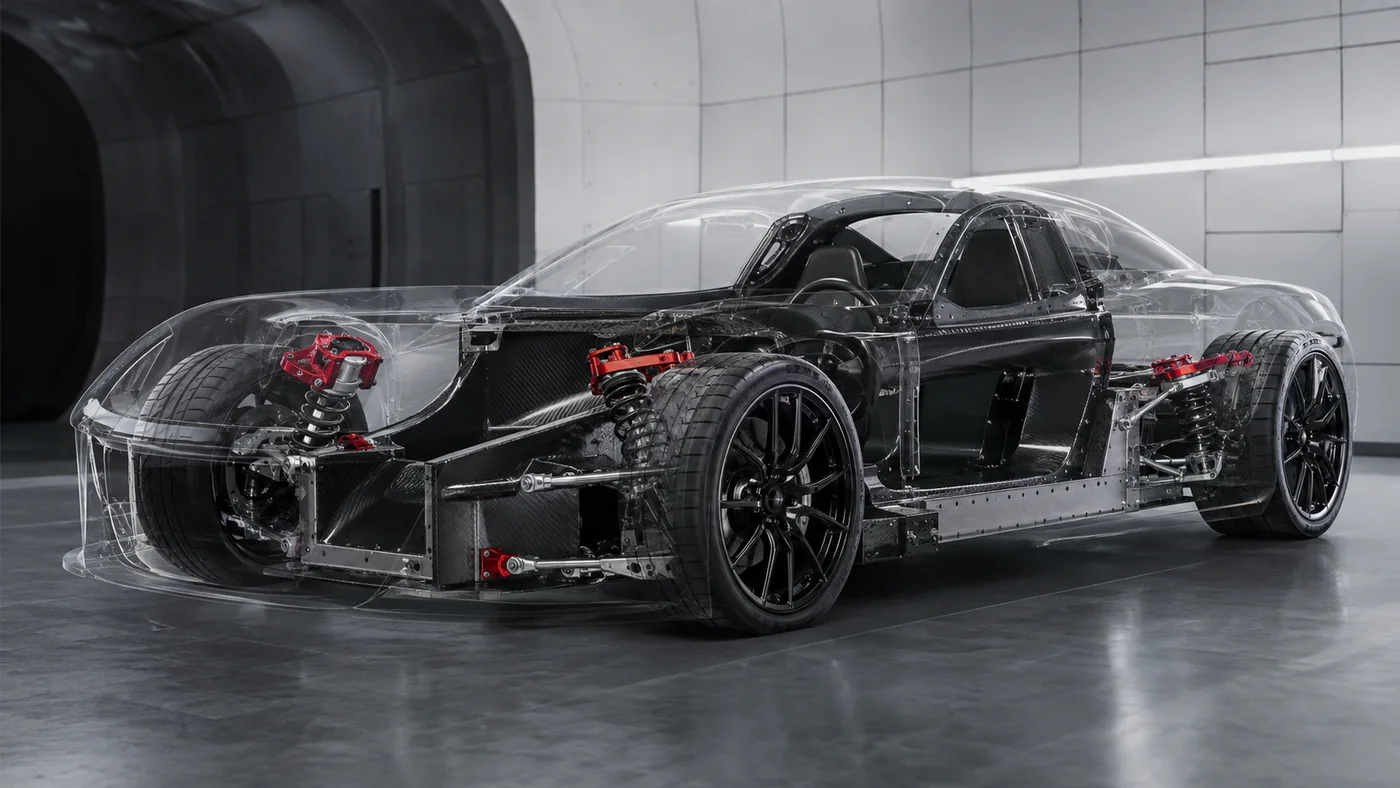
Sports cars care deeply about weight, stiffness, center of gravity, and suspension precision.
A stiff structure allows the suspension to do its job accurately. If the body flexes too much, the suspension geometry can change in ways the driver does not want.
Monocoque construction allows engineers to connect the suspension, body, cabin, and crash structure into one highly controlled package.
The goal is not simply to be strong. The goal is to be strong, light, stiff, predictable, and precise.
Is Monocoque Weak Off-Road?
This is one of the most common misunderstandings. Monocoque does not mean weak.
Modern unibody structures can be extremely strong. The modern Land Rover Defender is a useful example because it moved away from the old ladder-frame formula while still being engineered for serious off-road capability.
This does not mean every crossover is ready for extreme off-road use. It means the old rule is too simple.
The real question is how the whole vehicle is engineered: structure, suspension, drivetrain, ground clearance, tires, electronics, cooling, and durability testing.
Why Land Cruiser, G-Class, and Wrangler Still Use Frames
If monocoque is so efficient, why do vehicles like the Land Cruiser, G-Class, and Wrangler still use frame-based construction? Because their identity depends on extreme durability.
These vehicles are not only lifestyle SUVs. Their engineering story includes remote-area travel, harsh terrain, towing, long-term abuse, and modification.
Toyota describes the modern Land Cruiser's GA-F platform as a body-on-frame structure connected to strength and rigidity. Mercedes-Benz also continues to emphasize the G-Class ladder frame as part of its off-road character.
For these vehicles, the frame is not just tradition. It is part of the mission.
Which Structure Is Safer?
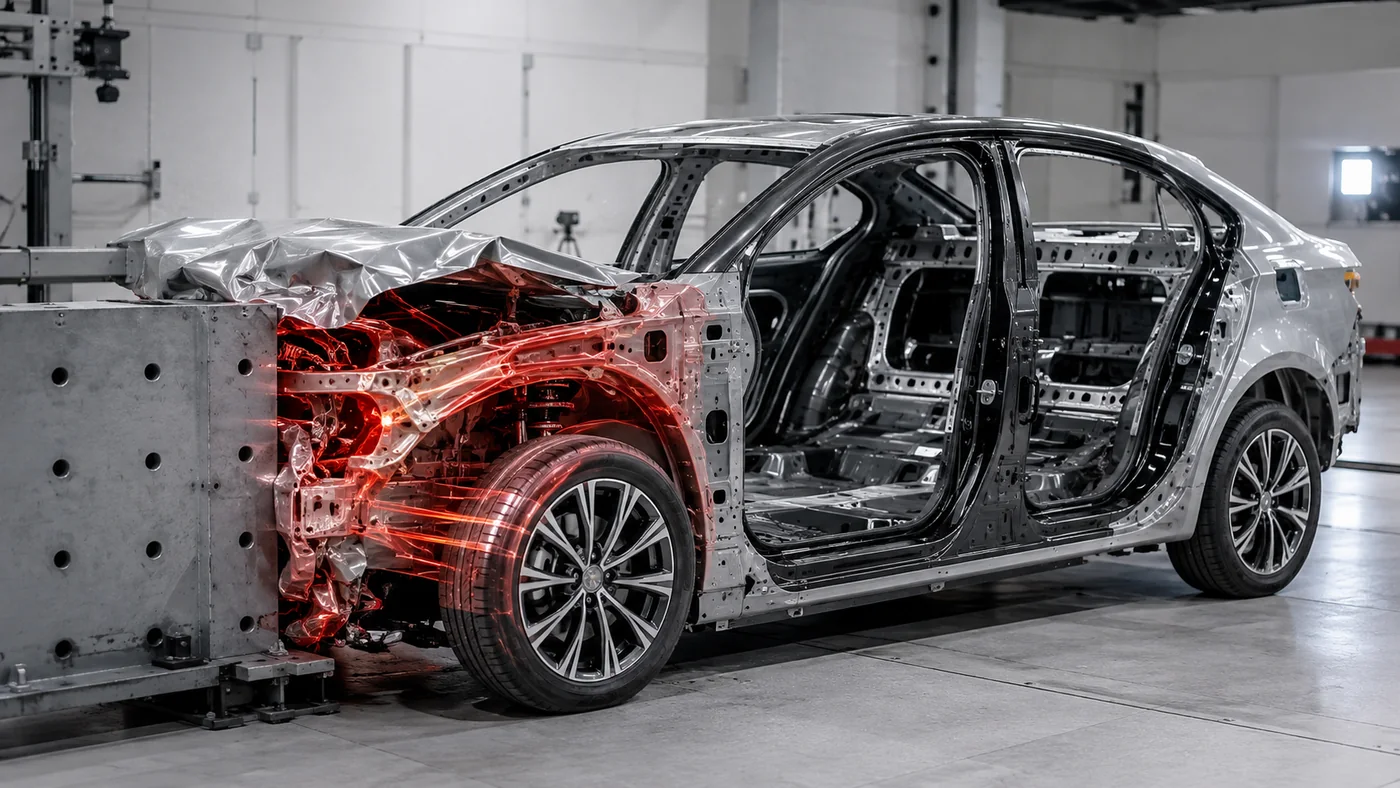
This is where we need to be careful. Many people assume that a stronger frame must be safer, but crash safety is not that simple.
In a crash, a car should not be completely rigid everywhere. Some parts should deform in a controlled way to absorb energy. Other parts, especially the passenger cell, should remain strong.
Modern safety engineering is about energy management. Crumple zones absorb crash energy. The safety cage protects occupants. The structure must decide where force goes.
So strong and safe are not the same word. A body-on-frame vehicle can be very safe, and a monocoque vehicle can be very safe. Safety depends on the full crash design, restraint systems, vehicle compatibility, and crash testing performance.
Packaging and Interior Space
Monocoque construction often gives engineers more freedom with interior packaging.
Because there is no large separate ladder frame under the body, the floor can often be lower. This helps passenger space, cargo space, entry height, aerodynamics, and center of gravity.
This is especially important for crossovers. A crossover has to look SUV-like, but it also has to drive like a normal car, offer good fuel economy, provide a comfortable cabin, and fit into everyday life.
That is why most modern crossovers are unibody vehicles. They are not trying to be heavy-duty trucks. They are trying to be efficient family cars with SUV-style practicality.
Common Misconceptions
Body-on-frame is always better for SUVs. Not always. It is better for certain SUV missions: heavy towing, severe off-road use, long-term rough-road durability, and modifications. For city SUVs and family crossovers, monocoque is usually more efficient.
Monocoque means weak. No. Modern monocoque structures can be very strong. Strength depends on design, materials, load paths, and testing, not only on the architecture name.
Frame vehicles are automatically safer. Not automatically. Crash safety is about how the structure manages energy. Controlled deformation and a strong passenger cell matter more than simple thickness.
Body-on-frame is outdated. Not really. It is older, but not obsolete. It survives where its strengths still matter.
Real-world Examples
The Toyota Land Cruiser is one of the clearest modern examples of why body-on-frame still exists. Its role is not only comfort or urban style. It has to survive difficult terrain and harsh environments.
The Mercedes-Benz G-Class is another example. Even though it has become a luxury icon, its ladder-frame foundation remains central to its character.
The Jeep Wrangler shows the same idea in a more open, adventure-focused way. It keeps a frame-based, off-road-first identity because that is the point of the vehicle.
On the other side, cars like the BMW 3 Series, Toyota Camry, Hyundai Sonata, Porsche 911, and most modern crossovers use monocoque or unibody construction because their priorities are different.
And then there is the modern Land Rover Defender, which makes the discussion more interesting. It shows that monocoque can be engineered for serious off-road capability when the whole vehicle is designed around that goal.
Advantages and Disadvantages at a Glance
Body-on-frame is best at towing, payload, rough terrain, repeated torsional abuse, and special vehicle conversion. Its main trade-offs are higher weight, higher floor height, less efficient packaging, and less precise on-road handling.
Monocoque is best at lower weight, better handling, efficiency, interior packaging, ride refinement, and modern crash-energy management. Its main trade-offs appear in extreme-duty towing, severe structural damage repair, and major body conversions.
The important point is not that one structure defeats the other. They simply prioritize different engineering problems.
Cariary Thoughts
What I found interesting while organizing this topic is that stronger is such a tempting word. It feels simple. It feels reassuring.
A frame looks strong, so we naturally want to say it is better. But cars are not judged by one requirement. A vehicle also has to brake, turn, save fuel, protect passengers, stay quiet, feel stable, carry people comfortably, and be affordable enough to build.
That is why monocoque did not replace frames because frames were bad. It replaced them because most passenger cars needed a different kind of intelligence: structural efficiency.
At the same time, body-on-frame is not just old-school nostalgia. In vehicles like the Land Cruiser or G-Class, it still makes sense because the mission still asks for it.
So maybe the real lesson is this: engineering is rarely about one perfect answer. It is about choosing the right compromise for the job.
One-line Summary
Body-on-frame is built to endure abuse, while monocoque is built to use structure efficiently.
FAQ
Is body-on-frame better than monocoque?
Not always. Body-on-frame is better for towing, heavy loads, off-road abuse, and special-purpose vehicles. Monocoque is usually better for normal passenger cars because it can be lighter, more efficient, and better packaged.
Why do trucks still use body-on-frame?
Trucks often need to tow, carry payload, handle rough use, and support different body configurations. A separate frame is useful for those heavy-duty jobs.
Why do most modern cars use monocoque construction?
Most cars need efficiency, safety packaging, interior space, comfort, and good handling more than extreme towing or off-road durability. Monocoque construction helps with those goals.
Is monocoque the same as unibody?
In normal automotive discussion, monocoque and unibody are often used in a similar way. Both describe a structure where the body shell itself carries much of the vehicle's structural load.
Is body-on-frame safer in a crash?
Not automatically. Crash safety depends on energy management, crumple zones, safety cage design, vehicle weight, restraint systems, and crash testing. A strong frame alone does not guarantee better safety.
Can a monocoque SUV be good off-road?
Yes. A monocoque SUV can be very capable if it is engineered properly. The modern Land Rover Defender is a good example of a serious off-road vehicle using monocoque architecture.
Why do sports cars usually use monocoque structures?
Sports cars benefit from low weight, high stiffness, precise suspension mounting, and a lower center of gravity. Monocoque construction helps engineers achieve those goals.
Related Thoughts
Internal link: [Insert link to “AWD vs 4WD Explained”]
Internal link: [Insert link to “Suspension Systems Explained”]
References
JLR Media Newsroom, New Defender
NHTSA, Vehicle safety and crash protection
Data Reference Date: September 5, 2026

