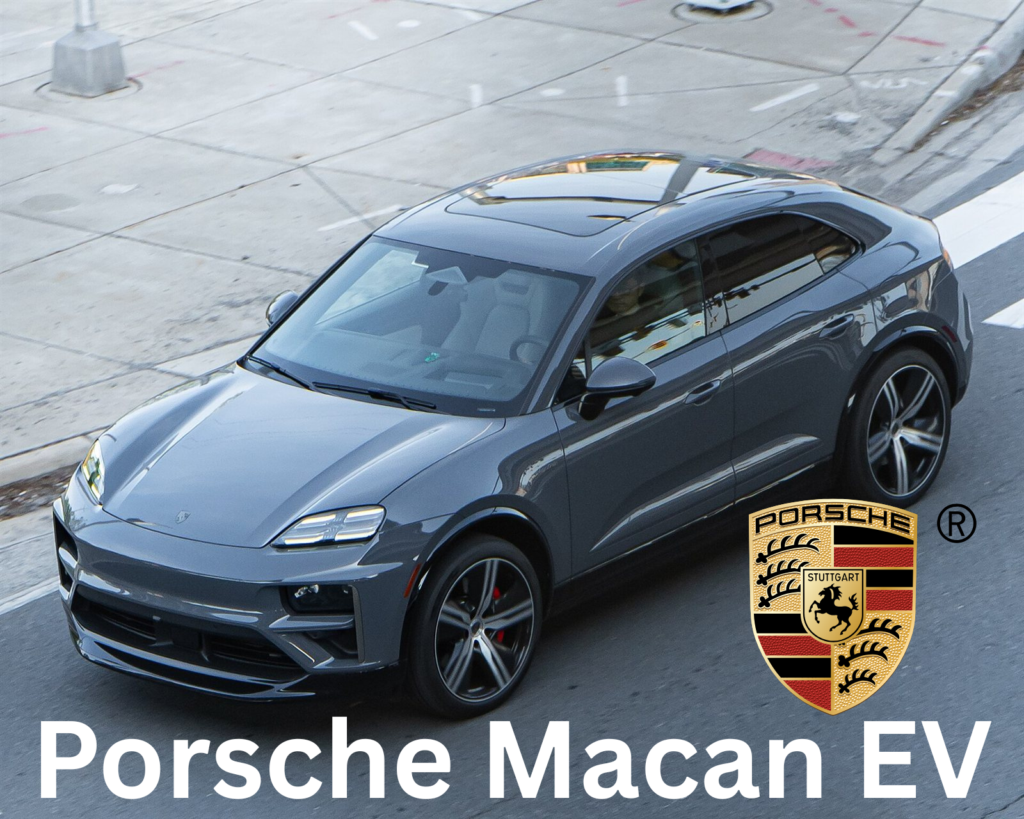
Image: OWS Photography, CC BY 4.0, via Wikimedia Commons
Quick Take
The Porsche Macan Electric is Porsche’s first all-electric SUV, and that makes it more important than a normal model change.
The Taycan proved that Porsche could build a serious electric performance car. The Macan Electric has a different job. It has to prove that Porsche can turn one of its most important SUVs into an EV without losing the reason people wanted a Macan in the first place.
That is the real question:
Can an electric Macan still feel like a Porsche, or is it just a fast luxury EV with a Porsche badge?
The early answer is encouraging. The Macan Electric looks more EV-like, drives with the instant response buyers expect from an electric car, and keeps enough Porsche logic in its chassis and cabin to feel intentional. But it also changes the Macan’s personality. This is no longer the compact Porsche SUV with an engine, gearbox, and exhaust note. It is a heavier, quieter, more digital SUV built around battery performance and electric response.
That is not automatically worse. It is just a different kind of Macan.
What Is the Porsche Macan Electric?
The Porsche Macan Electric is the second-generation Macan and Porsche’s first fully electric SUV. It sits below the Cayenne and competes with electric luxury SUVs such as the BMW iX, Mercedes-Benz EQE SUV, Audi Q6 e-tron, Genesis GV60, and Tesla Model Y Performance.
For global readers, the Macan has historically been Porsche’s smaller SUV. The original gas Macan became one of Porsche’s most important models because it gave buyers a compact SUV that still felt sharper than most luxury crossovers.
The electric version has to protect that idea in a very different form.
Porsche now sells multiple Macan Electric variants in the U.S., including the rear-wheel-drive Macan Electric, Macan 4 Electric, Macan 4S Electric, Macan GTS Electric, and Macan Turbo Electric. Porsche lists U.S. pricing from $80,300 for the base Macan Electric, with the Turbo Electric starting from $112,700.
Why This Car Exists
The Macan Electric exists because Porsche’s EV strategy cannot depend only on the Taycan.
The Taycan is a statement car. It shows that Porsche can make an electric sedan feel fast, expensive, and technically serious. But SUVs are where luxury buyers actually spend money. If Porsche wants electrification to feel normal inside the brand, it needs an electric SUV that people can imagine using every day.
That is why the Macan Electric matters. It is not just a new Macan. It is Porsche testing whether its most practical performance identity can survive the EV transition.
The old Macan worked because it made a compact SUV feel more like a Porsche than it had any right to. The electric Macan has to do the same thing without combustion sound, gearshifts, or exhaust. That means the character has to come from steering, chassis response, torque delivery, braking feel, and the way the car manages its weight.
Porsche’s start is good, but not simple. The Macan Electric is technically convincing. The bigger question is whether buyers who loved the old Macan’s mechanical feel will accept a quieter and more digital version of the same idea.
Key Specs and Real-World Meaning
The Macan Electric is built on the Volkswagen Group’s PPE electric platform, shared in concept with the Audi Q6 e-tron. It uses an 800-volt electrical architecture, which is important because it allows fast charging and supports the kind of performance Porsche wants from an EV.
Porsche lists 2026 U.S. Macan Electric variants from 355 hp in the rear-wheel-drive base model to 630 hp in the Macan Turbo Electric. Acceleration ranges from 5.4 seconds to 60 mph in the base model to 3.1 seconds in the Turbo. EPA range estimates reach up to 332 miles for the base Macan Electric, depending on trim.
The numbers are strong, but the meaning is clearer than the numbers.
The base Macan Electric is not slow. The Macan 4 and 4S are already quick enough for most buyers. The Turbo exists for the buyer who wants Porsche EV acceleration to feel dramatic. But the model that may make the most sense is not necessarily the fastest one. In an electric SUV, range, ride comfort, charging speed, and price matter as much as launch-control figures.
The Macan Electric also charges from 10% to 80% in about 21 minutes under ideal DC fast-charging conditions. That is one of the reasons the 800-volt system matters. It does not remove charging planning, but it makes long-distance EV use less painful if the charging network is ready.
Battery and Charging: Why NCM Matters
The Macan Electric uses a large lithium-ion battery, commonly listed around 100 kWh gross and about 95 kWh net, with NCM/NMC-type chemistry.
That matters for buyers.
As explained in Cariary’s NCM vs LFP battery guide,
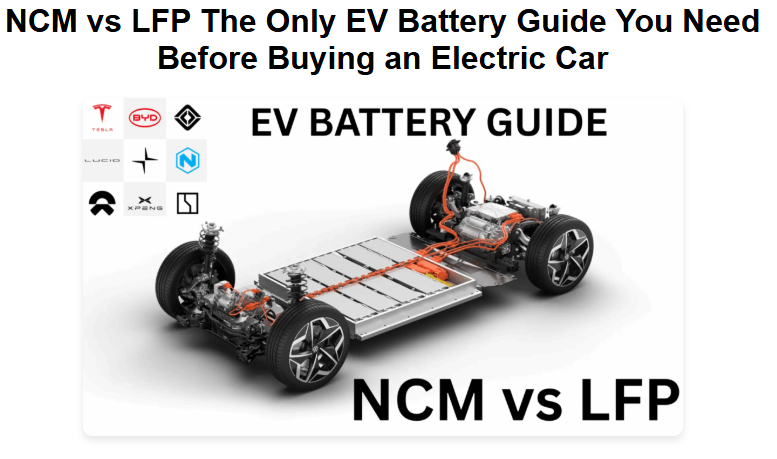
NCM batteries usually focus on energy density and performance. LFP batteries tend to be cheaper, simpler, and often easier to live with for buyers who prioritize durability and cost over peak performance.
Porsche choosing NCM makes sense here. The Macan Electric is not trying to be the cheapest EV SUV. It needs strong range, high output, fast charging, and repeatable performance. That is exactly where NCM chemistry usually fits better than LFP.
The buyer impact is simple: the Macan Electric’s battery choice supports the Porsche mission, but it also helps explain the price. This is a performance-luxury EV battery strategy, not a budget-EV strategy.
Design and Identity
The Macan Electric does look more like an EV, but Porsche did not turn it into a spaceship.
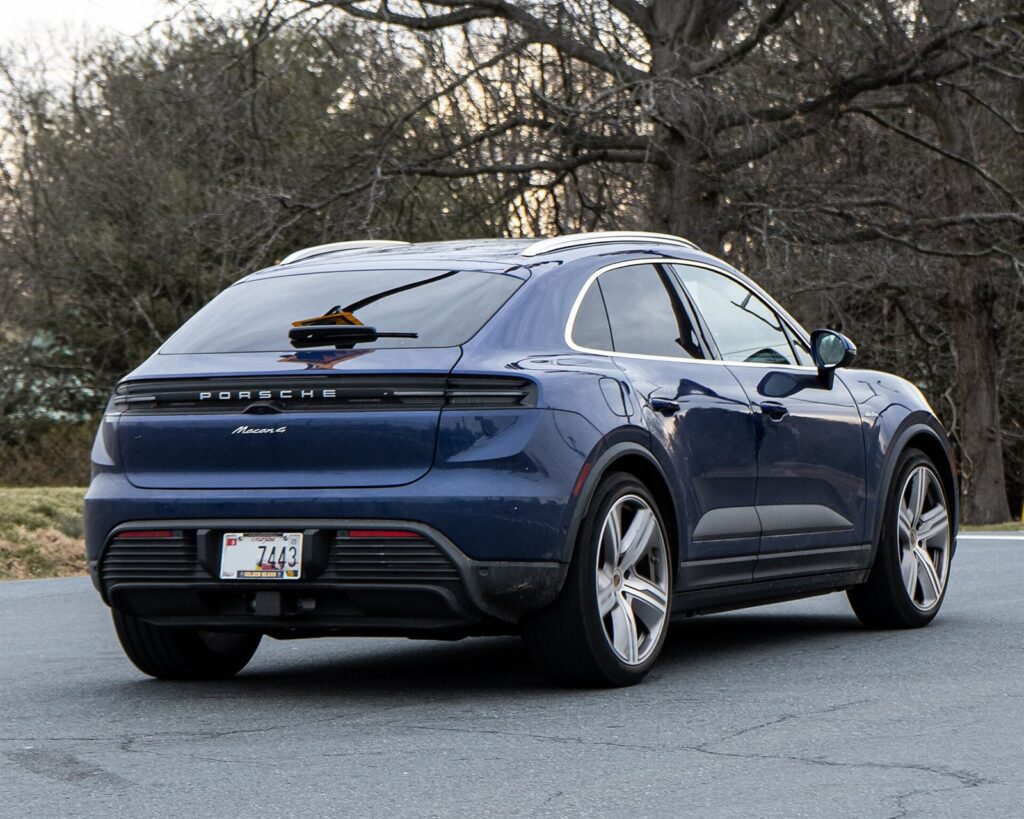
Image: OWS Photography, CC BY 4.0, via Wikimedia Commons
Compared with the gas Macan, the electric model has a smoother nose, slimmer upper lighting, a more aerodynamic body, and a cleaner rear design. The front end no longer needs the same combustion-engine cooling message, so the car can look lower and more sealed-off.
That said, it still has to look like a Macan. The roofline, compact SUV stance, and muscular rear shoulders keep it connected to the older car. Porsche did not make the design radically futuristic because that would risk losing the people who already understood the Macan.
The best way to read the design is this: the Macan Electric is clearly electric, but not embarrassed to still be a Porsche SUV.
Interior and Daily Use
Inside, the Macan Electric moves closer to the Taycan’s digital Porsche language.
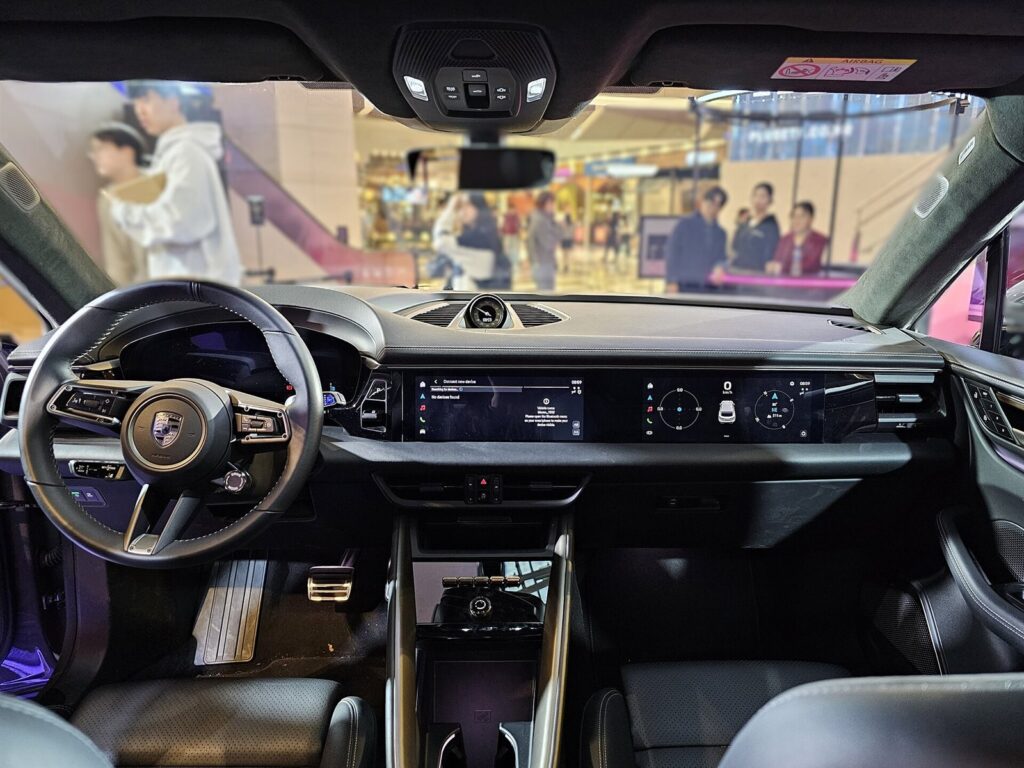
Image: Damian B Oh, CC BY-SA 4.0, via Wikimedia Commons
The cabin uses a curved digital instrument cluster, a central infotainment screen, and an available passenger display. It feels more screen-heavy than the old Macan, but Porsche still tries to keep the driver at the center of the layout.
That matters because many EV interiors become too minimal. Porsche cannot afford that. A Macan still has to feel like a driver’s car, even when it is electric.
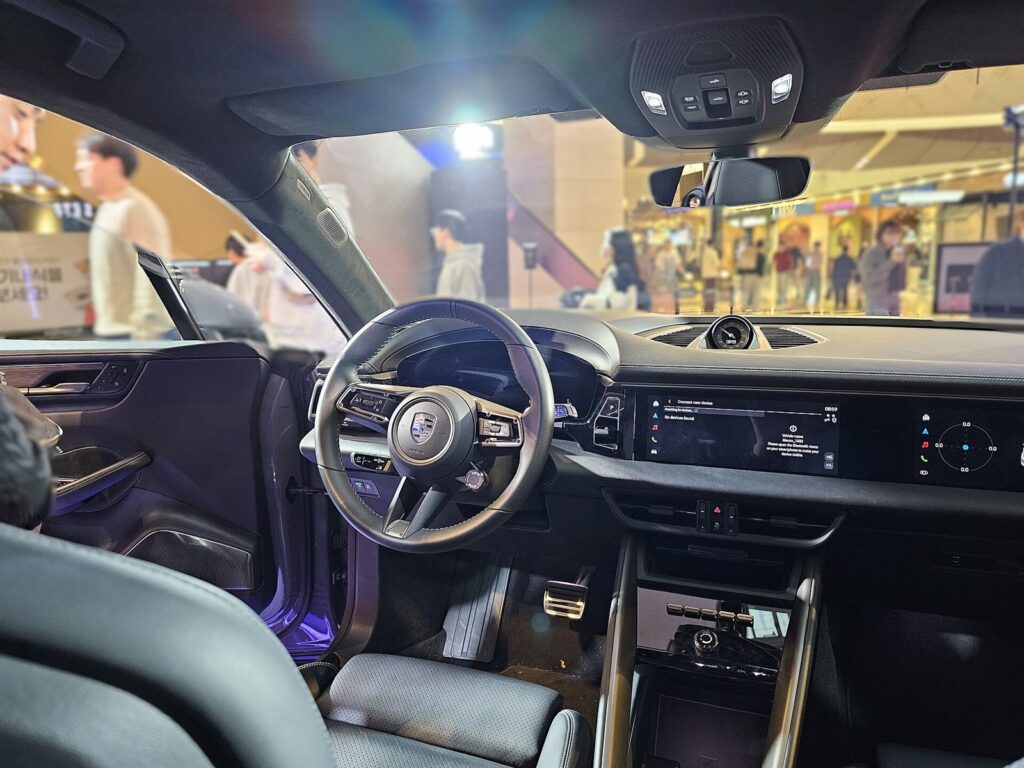
Image: Damian B Oh, CC BY-SA 4.0, via Wikimedia Commons
In daily use, the Macan Electric should be easier to live with than many performance SUVs. It is quiet, quick, and compact enough for city driving. But it is still a premium EV, which means buyers need to think about charging access, tire costs, insurance, and long-term battery confidence.
This is not a casual EV purchase. It is a Porsche purchase that happens to be electric.
What Changed from the Gas Macan?
The most obvious change is what disappeared.
There is no engine vibration. No PDK shift character. No exhaust note. No mechanical build-up as revs rise. The gas Macan’s appeal came from making a small SUV feel unusually alive. The electric Macan has to create that feeling in a different way.
The new version gives you instant torque, a lower battery-mounted center of gravity, faster response, and less noise. It should feel more effortless and more modern. But some buyers will miss the old car’s mechanical texture.
The gas Macan made sense to people who wanted a compact SUV that still felt like it had a sports-car habit. The Macan Electric makes sense to people who want that same compact Porsche SUV idea translated into EV speed and digital control.
That translation works, but it changes the language.
What About Exhaust Sound?
There is no exhaust, because there is no engine.
But Porsche does not leave the Macan Electric completely silent. Like the Taycan, the Macan Electric uses an artificial EV sound concept. Porsche describes the sound as part of the electric driving experience, and the official Macan page even lets users sample the acceleration sound.
The important point is that this is not a fake flat-six or fake V6 soundtrack. Porsche is not pretending the Macan Electric has an engine. It is creating a synthetic EV sound that gives the car some emotional feedback during acceleration and deceleration.
For some buyers, that will help. For others, it may feel unnecessary. But it is better understood as an EV performance sound than as a replacement for exhaust.
Price-to-Value Judgment
The Macan Electric is expensive, but the price is not surprising.
A base Macan Electric starts around the low-$80,000 range in the U.S., while the Turbo Electric moves well above $110,000 before options. That puts it into a serious luxury-EV space where buyers can also consider the BMW iX, Mercedes-Benz EQE SUV, Audi Q6 e-tron, Genesis Electrified GV70, and Tesla Model Y Performance.
The Macan Electric’s value is strongest if you care about Porsche tuning. It is not the cheapest EV SUV, not the roomiest, and not necessarily the most rational. But it gives buyers a more driver-focused electric SUV than most mainstream luxury EVs.
If you mainly want range per dollar, look elsewhere. If you want the most practical family EV, also look elsewhere. If you want a compact electric SUV that still tries to feel like a Porsche, the Macan Electric becomes much easier to understand.
Competitor Comparison
Audi Q6 e-tron
The Audi Q6 e-tron is the closest technical relative. It uses the same broader PPE electric platform idea, but it speaks a different language.
The Audi is calmer and more rational. The Porsche is more expensive and more focused on driver feel. If you want the technology without the Porsche price, the Q6 e-tron is the natural comparison. If you want the sharper version of the formula, the Macan Electric is the one to test.
BMW iX
The BMW iX is a larger and more unusual EV. It feels more like a dedicated electric luxury lounge than a compact performance SUV.
The iX makes more sense if you want space, range comfort, and a different kind of luxury experience. The Macan Electric makes more sense if size, handling, and Porsche identity matter more.
Mercedes-Benz EQE SUV
The EQE SUV is softer and more luxury-focused. It is more about comfort and cabin atmosphere than driver involvement.
That exposes the Macan Electric’s identity clearly. The Mercedes is for buyers who want EV luxury to feel calm. The Porsche is for buyers who still want the SUV to respond like it enjoys being driven.
Genesis Electrified GV70
Genesis is Hyundai Motor Group’s luxury brand, and the Electrified GV70 is a strong value-focused electric luxury SUV.
The Genesis can make the Macan Electric look expensive. But it does not carry Porsche’s performance-SUV identity. The GV70 is the smarter value play. The Macan Electric is the more emotional driver’s choice.
Tesla Model Y Performance
The Model Y Performance is much cheaper, quicker than many buyers expect, and far easier to justify as a practical EV.
But it is not a Porsche. The cabin, brand experience, steering feel, and emotional finish are different. Tesla wins the rational EV argument. Porsche wins if the buyer wants the EV to feel more special and more carefully tuned.
Recommended For
The Porsche Macan Electric is recommended for buyers who want:
- Porsche’s first electric SUV experience
- A compact luxury EV with real performance intent
- Fast charging and 800-volt architecture
- A more driver-focused alternative to many electric SUVs
- Taycan-style Porsche EV thinking in a more practical body
- A premium EV where brand identity matters
- Instant torque without giving up Porsche chassis tuning
The Macan Electric fits buyers who want an EV SUV, but do not want it to feel generic.
Not Recommended For
The Macan Electric is not ideal for buyers who want:
- The lowest-cost electric SUV
- Maximum range per dollar
- A traditional gas Porsche feel
- Real exhaust sound
- The most cargo space in the class
- Simple long-term ownership costs
- A luxury EV focused mainly on comfort
If you loved the gas Macan for its engine feel and mechanical sound, the electric version may not fully replace it. If you mainly want EV practicality, the Audi Q6 e-tron, BMW iX, Genesis Electrified GV70, or Tesla Model Y may make more sense.
Buyer Verdict
The Porsche Macan Electric is a strong start for Porsche’s first electric SUV.
It does not preserve everything people liked about the gas Macan. It cannot. But it does carry the Macan idea into the EV era better than many buyers might expect. The steering, performance focus, charging hardware, and battery strategy all show that Porsche took the transition seriously.
The Macan Electric is not just a Macan with the engine removed. It is Porsche’s attempt to rebuild the compact performance SUV around electricity.
That makes it important. And yes, as a first electric Porsche SUV, it starts well.
The next big test is already here: the Cayenne Electric has arrived as Porsche’s larger electric SUV move. That should be the next Porsche EV review, because if the Macan Electric shows whether Porsche can electrify its smaller SUV, the Cayenne Electric will show whether Porsche can do the same thing at the top of its SUV range.
One-Line Verdict
The Porsche Macan Electric is the first Porsche electric SUV that proves the brand can survive without exhaust sound, but not without driver focus.
FAQ
Is the Porsche Macan Electric Porsche’s first electric SUV?
Yes. The Taycan was Porsche’s first production EV, but the Macan Electric is Porsche’s first fully electric SUV.
Is the Porsche Macan Electric a good start for Porsche SUVs?
Yes. It is technically strong, fast-charging, and still focused on driving feel. The main question is whether gas Macan buyers will accept the quieter and more digital character.
What battery does the Porsche Macan Electric use?
The Macan Electric uses a large lithium-ion battery commonly listed around 100 kWh gross and about 95 kWh net, with NCM/NMC-type chemistry. This fits Porsche’s performance and charging priorities better than a cost-focused LFP strategy.
Is NCM better than LFP for the Macan Electric?
For this kind of Porsche, NCM makes sense because it supports high energy density, strong performance, and fast charging. LFP can be excellent for cost and durability, but it is not the obvious fit for a premium performance EV SUV.
How is the Macan Electric different from the gas Macan?
The Macan Electric removes the engine, exhaust, and gearbox feel. In return, it gives instant torque, a lower battery-based center of gravity, 800-volt charging, and a more digital cabin.
Does the Porsche Macan Electric have fake exhaust sound?
No. It does not fake a combustion exhaust. It uses a Porsche EV sound concept, similar in spirit to the Taycan, to give acceleration and deceleration more emotional feedback.
Is the Macan Electric better than the Audi Q6 e-tron?
The Audi Q6 e-tron is the calmer and more rational choice. The Macan Electric is the sharper and more Porsche-like version of the PPE electric SUV idea.
Should I wait for the Porsche Cayenne Electric?
If you need more space, towing ability, and a larger luxury SUV feel, the Cayenne Electric deserves attention. If you want the smaller and more agile Porsche EV SUV, the Macan Electric is the better fit.
Related Cars
- Porsche Taycan: Porsche’s first production EV and the emotional reference point for the Macan Electric
- Porsche Cayenne Electric: the next major Porsche electric SUV to review
- Audi Q6 e-tron: closest technical EV-platform relative
- BMW iX: larger electric luxury SUV alternative
- Mercedes-Benz EQE SUV: softer luxury-focused electric SUV rival
- Genesis Electrified GV70: stronger value-focused premium EV SUV
- Tesla Model Y Performance: cheaper and more rational performance EV alternative
- Porsche Macan Gas: the older combustion Macan for buyers who still want engine character
Data Reference Date
June 14, 2026