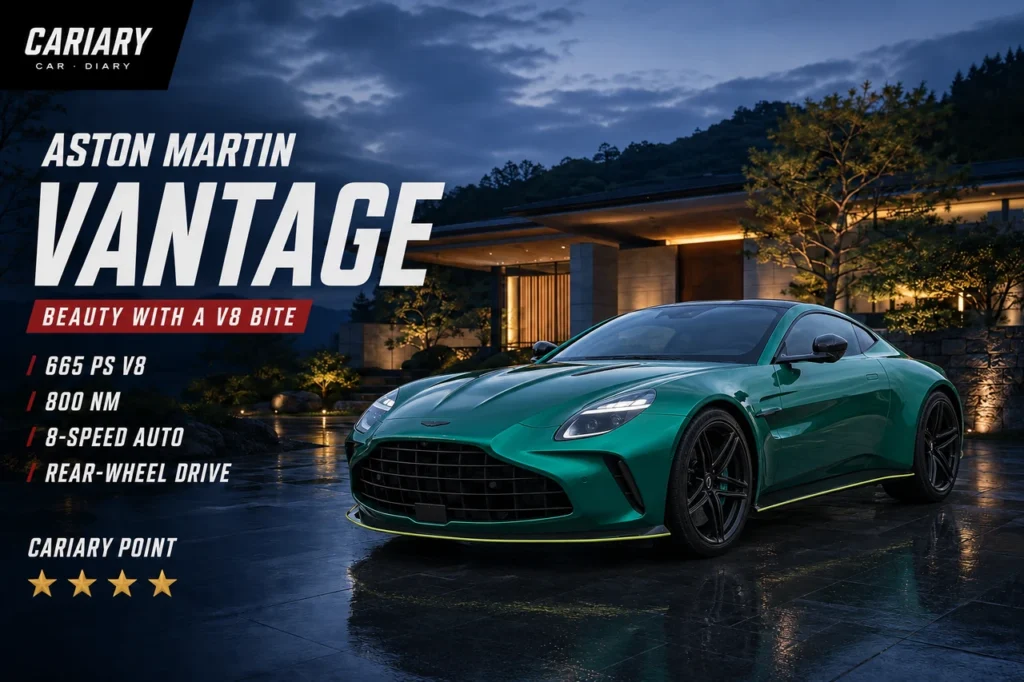
CARIARYCAR · DIARY · PERSPECTIVE
Cover: AI-generated Cariary editorial illustration, visually checked against the specified vehicle. It is not road-test photography.
The Aston Martin Vantage makes a persuasive argument before its engine starts: a long bonnet, a compact two-seat cabin and rear haunches that make its purpose easy to read. The question is whether that attraction survives the less glamorous parts of ownership—parking, rough roads, service appointments and journeys where there is no opportunity to use its power.
The 2024 update matters because the cabin finally became part of the reason to buy the car. A beautiful sports coupe should feel special during an ordinary twenty-minute trip, not demand that its owner wait for a perfect road to forgive everything else. This Vantage moves closer to that balance, while remaining a demanding purchase.
This research-based review covers the standard 665 PS V8 coupe introduced in February 2024, sold as a 2025 model in the U.S. It does not transfer the later Vantage S specification to this car. Cariary has not road-tested it; driving observations are attributed to their original tester. Photographs show this facelifted coupe. Data checked September 7, 2026.
Four stars: a compelling V8 sports car with a substantially improved interior and a clear rear-drive identity. Its width, expensive consumables and two-seat packaging keep it from being an effortless recommendation for every luxury-car buyer.
Aston Martin Vantage: Key Specifications
| Reference version | 2024-introduced standard Vantage coupe |
|---|---|
| Engine | 4.0-litre twin-turbo V8 |
| Manufacturer output | 665 PS / 800 Nm |
| Transmission / drive | 8-speed automatic / rear-wheel drive |
| Claimed 0–60 mph | 3.4 seconds |
| Seats | 2 |
What Changed in the Aston Martin Vantage?
The most useful way to identify this version is by its revised face and completely redesigned dashboard. Registration year alone is unreliable when comparing late stock and cars sold in different markets. An advert headed ‘Vantage’ can refer to a much older cabin, a previous F1 Edition or the later S, all of which change the buying calculation.
Aston Martin’s February 2024 launch specification establishes the 665 PS baseline used here. That output is metric horsepower; it should not be copied into a table as 665 U.S. hp. More fundamentally, this is a two-seat sports car. Buyers seeking the relaxed social usefulness of a larger grand tourer should start by checking the mission, before comparing badges.

The V8 Is Only Half of the Performance Story
The engine and automatic gearbox supply more pace than most road journeys can exploit. An 800 Nm rating also explains why conditions matter: the rear tyres must transmit that force while sharing their grip between accelerating and turning. A dramatic launch number says little about the reassurance a driver will feel on a damp, unfamiliar road.
Aston’s launch material describes additional cooling and a coordinated electronic rear differential, stability control and adaptive damping. Those are more meaningful than a power increase in isolation. They show why a fast car needs a complete system around the engine. For an owner, the priority should be maintaining that system in its intended condition rather than adding more output before learning what the standard car can do.
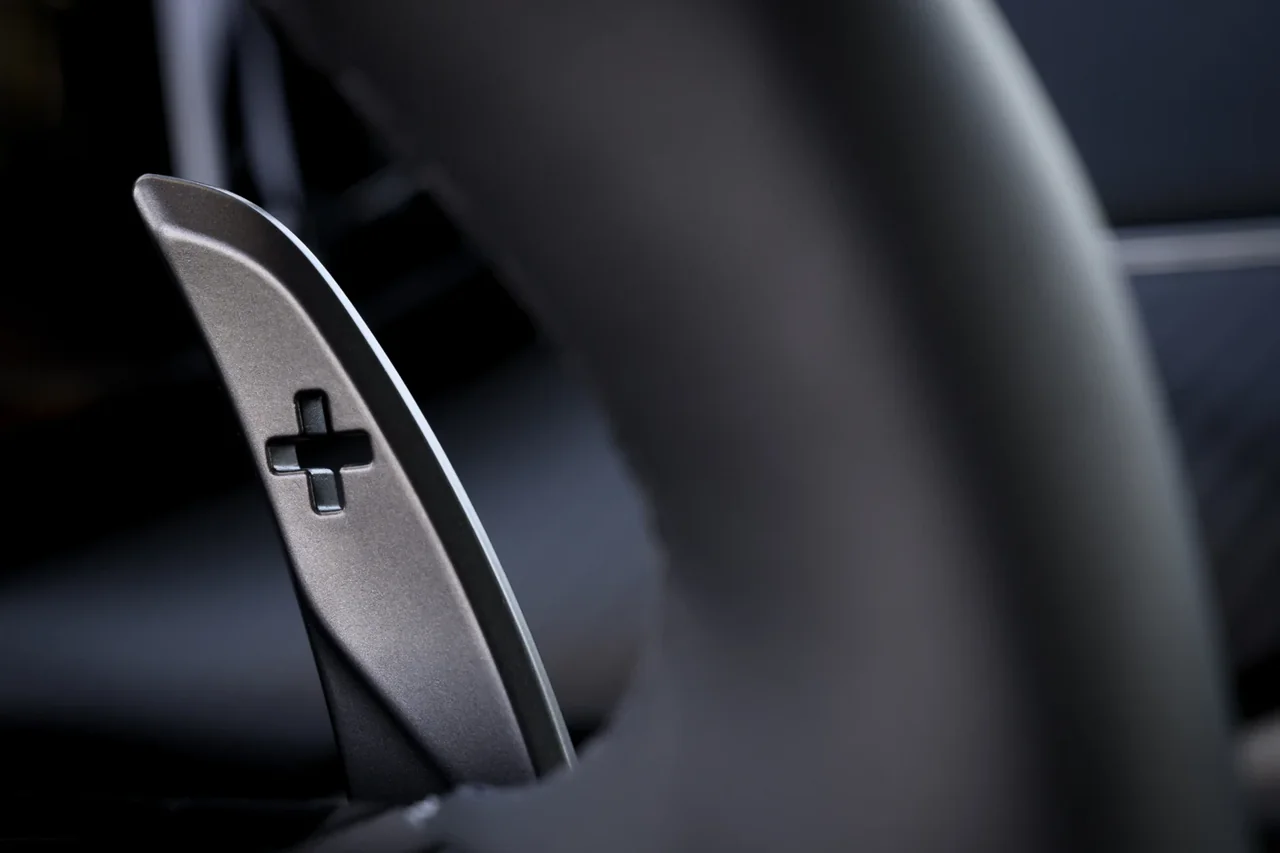
There is no manual option on this version. Decide whether that is a relief or a missing part of the experience. A driver who enjoys choosing gears with paddles may lose nothing; someone buying specifically for clutch-and-lever involvement should settle that question before falling for the shape.
Does the Handling Match the Appearance?
K.C. Colwell’s Car and Driver first drive praised the updated car’s balance, brake feel and unobtrusive assistance on the road. That is a tester’s assessment of the launch car, rather than evidence from a Cariary drive or a promise that every owner will find it comfortable.
The interesting implication is that the Vantage’s appeal extends beyond straight-line force. A purchase at this level should reward small inputs as well: the first movement of the steering, a clean downshift, a brake pedal that is easy to judge. Those sensations are available far more often than maximum acceleration.
During a test drive, ask for a route with patched surfaces and ordinary traffic. Keep the car in its normal road settings first. If it only feels satisfying at speeds or settings you will rarely use, the attraction may be better suited to occasional rental or track experience than ownership.
A Cabin You Should Assess While Parked
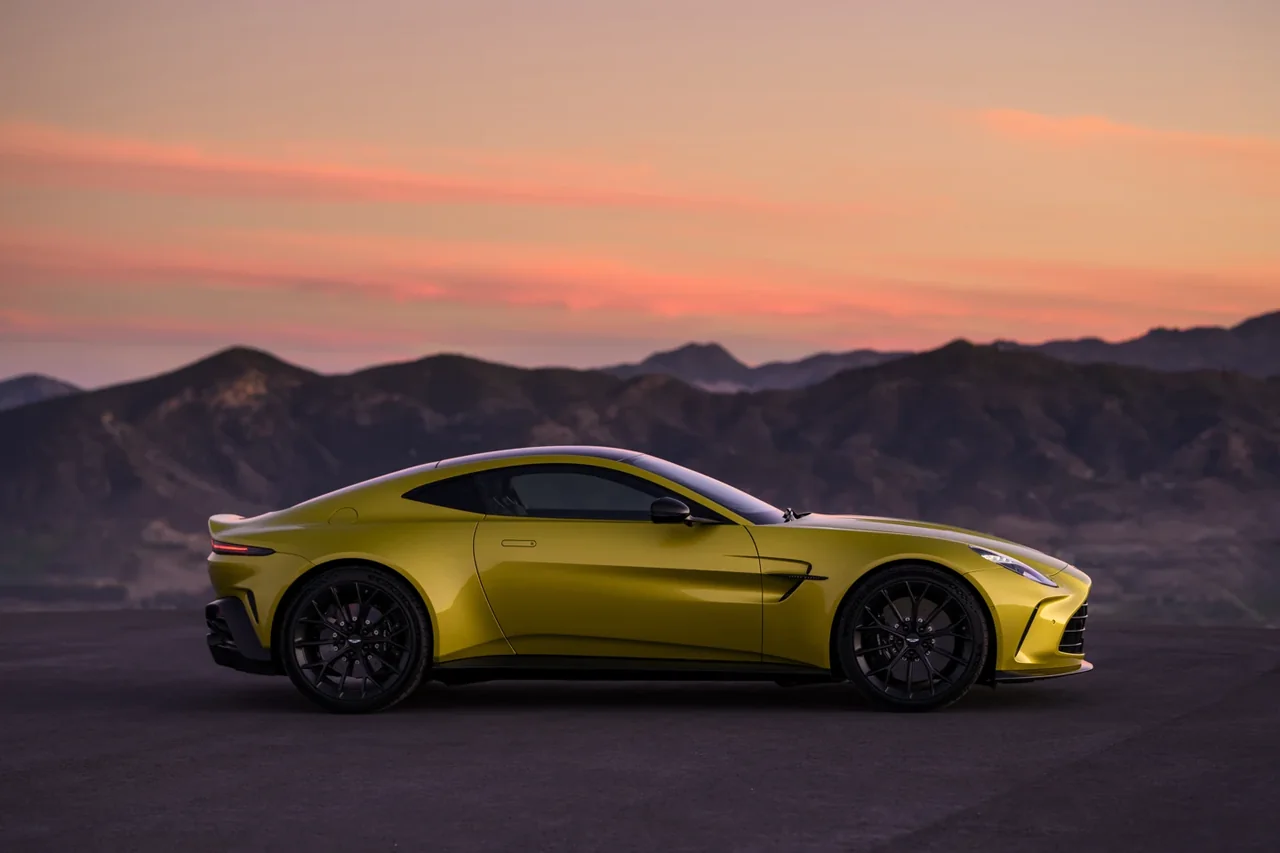
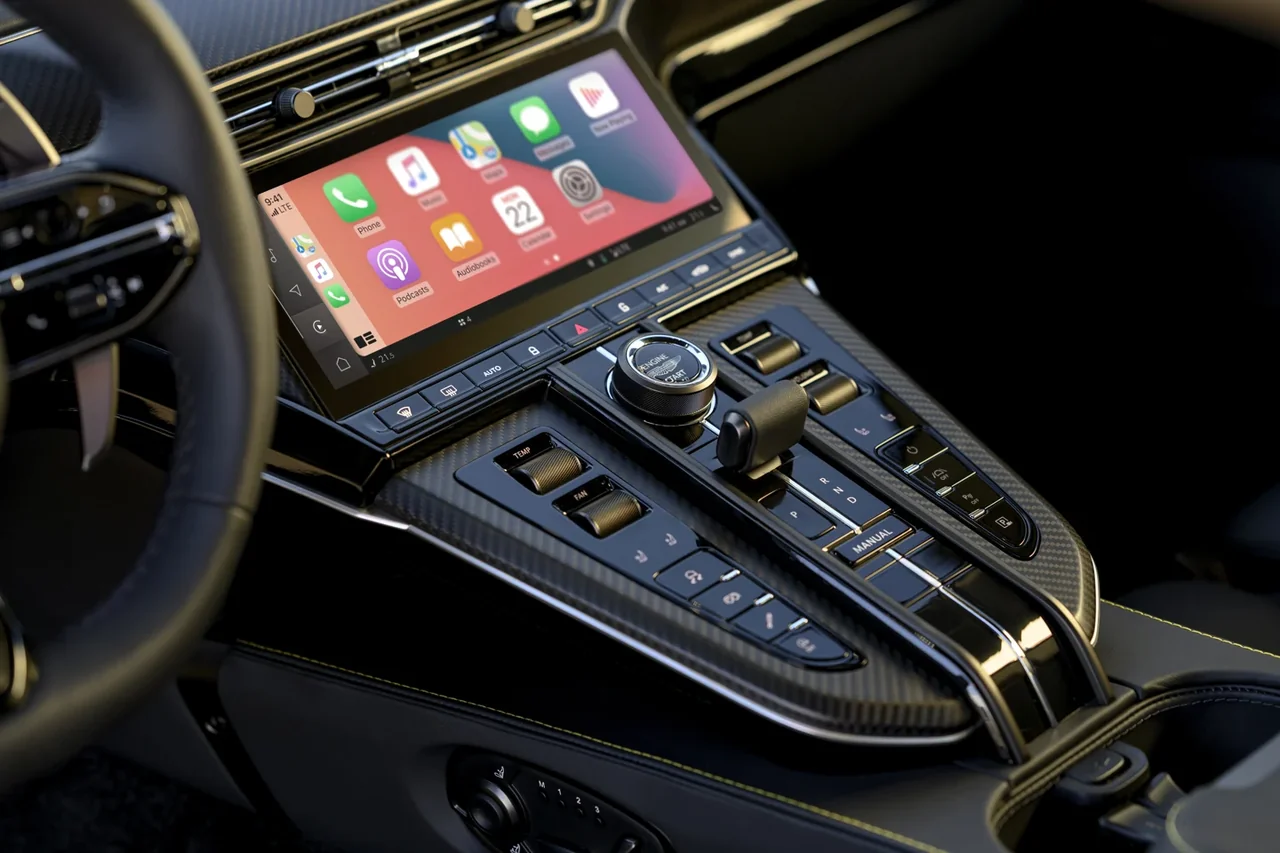
The new touchscreen and retained physical controls address different jobs. A map benefits from a large display; frequently changed functions benefit from controls that can be located without a search. The dashboard photograph below makes that separation clearer than a list of screen specifications.
Try those tasks in the exact car you are considering. Pair your own phone, set a destination, change the temperature and return to the navigation screen. Check the software version and demonstrate any advertised connected feature. A brochure promise from launch is not confirmation of the equipment or service status of a particular used example.
Seat comfort also needs time. An initially supportive bolster can become intrusive on a long journey, while a low driving position may be wonderful once seated and inconvenient at every stop. Both are legitimate considerations. A sports car does not become less special when its owner expects it to fit their body.
Width, Doors and the Trips Between Good Roads
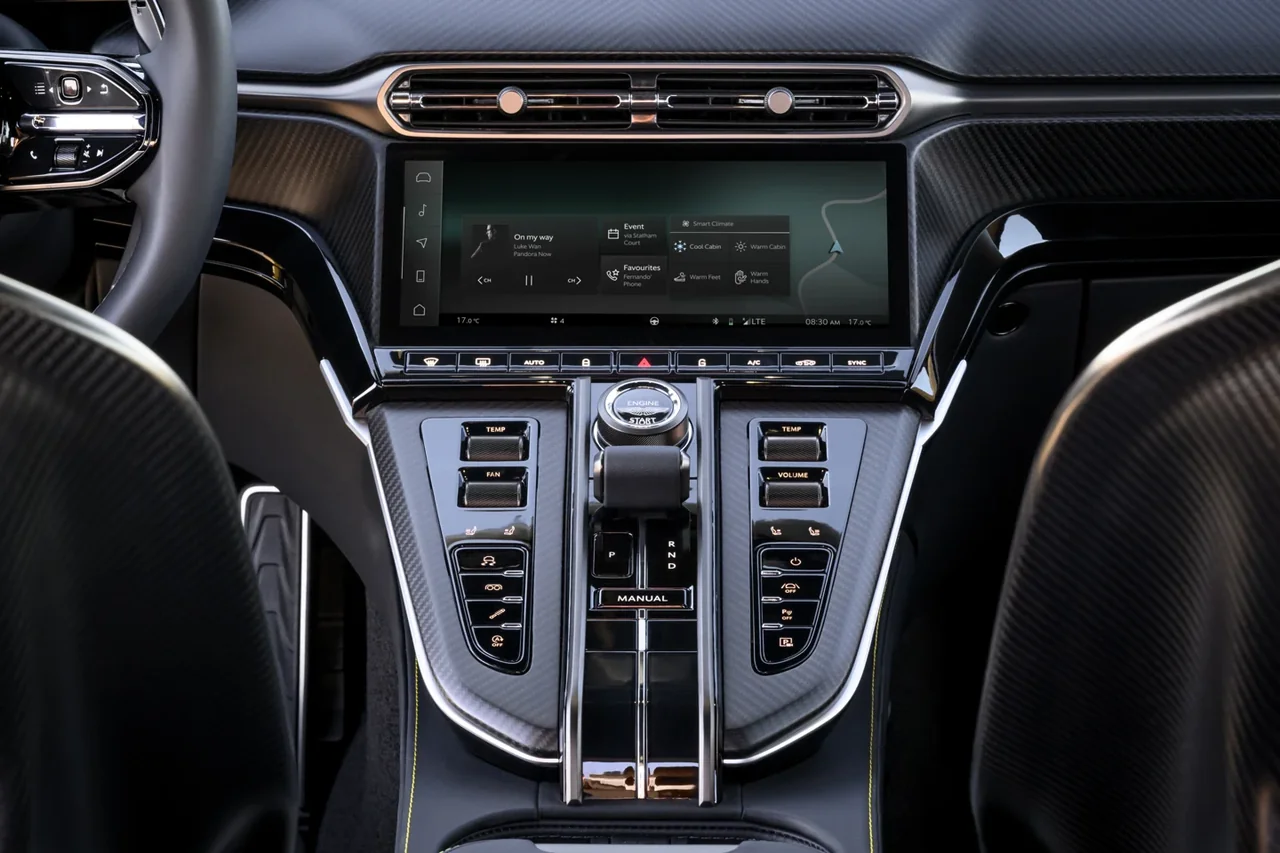
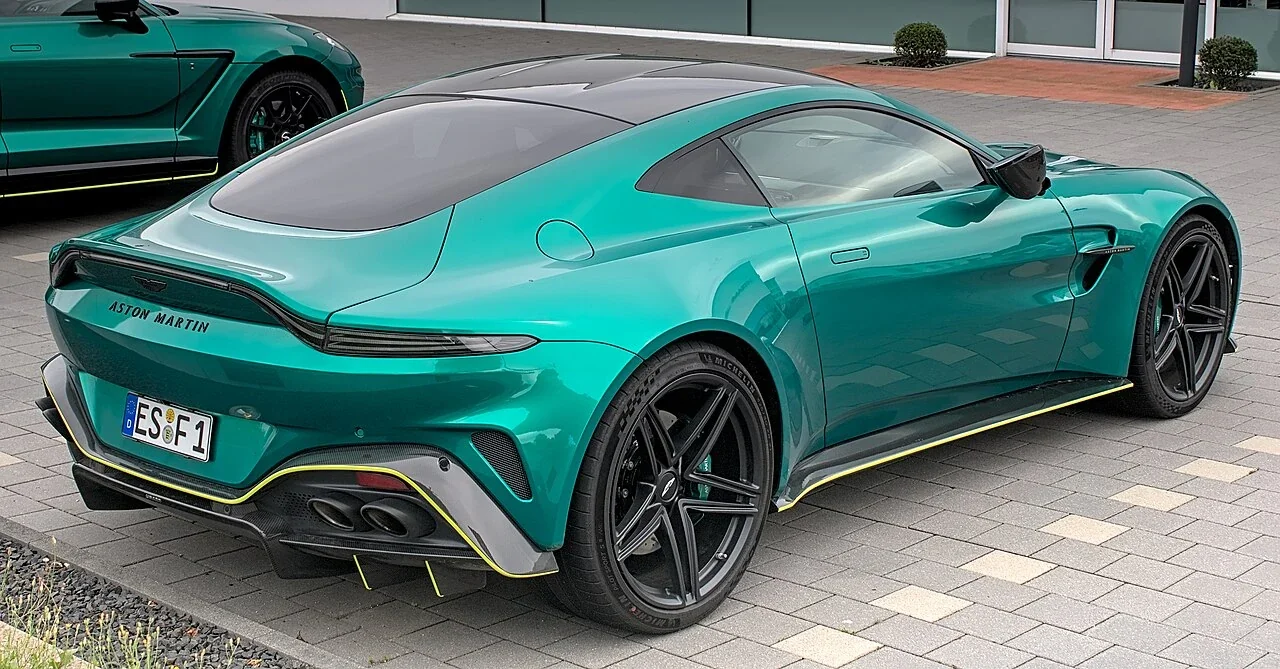
The rear quarters give the Aston Martin Vantage much of its presence. They also invite a practical question: how much space remains beside the car in your garage after the doors are open? Measuring a parking bay is more useful than imagining that an expensive camera system will make every tight space easy.
Bring the luggage you actually use to a viewing. Two people travelling with soft bags face a different problem from someone carrying a large rigid case. There are no rear passenger seats to absorb an unexpected third traveller. If this is replacing a four-seat coupe, that loss will recur even when the rear seats of the old car were rarely occupied.
The same test applies to the passenger. Their enjoyment should not be inferred from the driver’s enthusiasm. Repeated discomfort, difficult entry or nervousness around tight spaces can reduce how often a shared leisure car is used. The best specification is the one both occupants are happy to take out.
Buying an Aston Martin Vantage Without Buying Someone Else’s Neglect
A discounted purchase price does not discount the cost of tyres, bodywork or specialist diagnosis. Compare the whole first year: purchase, insurance, scheduled service, an appropriate tyre set and any work identified by an independent inspection. Keep optional cosmetic spending separate from the budget that makes the car dependable.
Request records, not assurances. Confirm that tyre specifications match the car, inspect wheel damage and uneven wear, and have the brakes assessed by someone familiar with the fitted system. Carbon-ceramic and iron brakes require different condition checks and replacement budgets. A carbon option is not automatically good value for a road-only buyer.
Look for evidence of accident repairs, undocumented modifications and unresolved electronic warnings. These are inspection priorities, not claims of established model-wide defects. A V8 sourced from an established engine family cannot establish the reliability of the entire Aston: cooling, chassis electronics, trim and dealer support still belong to this ownership experience.

Aston Martin Vantage, 911 or a More Relaxed Grand Tourer?
A Porsche 911 is the essential comparison because many buyers already understand its blend of performance and repeated use. The Vantage’s reason to exist alongside it is different: front-engine proportions, a V8 personality and the visual occasion of an Aston. Choose those qualities because you enjoy them, rather than treating rarity as a substitute for a good test drive.
A Lexus LC 500 asks another question. Would you rather have a car whose appeal is centred on unhurried journeys and a naturally aspirated soundtrack? Its priorities are worth considering even if it is not a direct performance match. A Maserati GranTurismo similarly belongs in the conversation when passenger flexibility matters more than a tightly focused two-seat layout.
This is where comparative value becomes personal. A less dramatic car used twice as often may be the more rewarding purchase. Conversely, someone with ordinary transport already covered can reasonably give presence and steering feel more weight than luggage flexibility.
Aston Martin Vantage Review: Cariary Perspective
Our four-star assessment recognises a convincing purpose and visible compromises. The facelifted Vantage gives the buyer something distinctive to admire and a much more credible environment in which to enjoy it. Its best argument is the combination of shape, engine and controls, not any single number.
The missing star reflects the conditions attached to that enjoyment. It requires space, a realistic maintenance budget and acceptance of a two-person sports-car role. These are manageable for the intended owner, but they should be settled before purchase rather than excused afterwards.
We would prioritise a well-documented standard car, comfortable seats and a specification suited to real roads over an extravagant option list. The right Vantage should make an ordinary departure feel worthwhile, without turning the ownership routine into the main event.
Who Should Buy It?
Recommended For
A two-seat-car buyer who values V8 character, distinctive proportions and responsive controls, with suitable parking and a specialist maintenance budget.
Not Recommended For
Someone needing rear seats, inexpensive running costs, a manual gearbox or a luxury car whose main job is quiet, effortless daily transport.
One-Line Verdict: A beautiful V8 coupe becomes a better purchase when its everyday compromises are chosen deliberately.
Frequently Asked Questions
Is this the Vantage S?
No. This review uses the standard 665 PS coupe introduced in 2024. Later S specifications and pricing should be checked separately.
Does it have a manual transmission?
This version uses an eight-speed automatic. Earlier or limited-production Aston Martin manuals are different models.
Is the Aston Martin Vantage a four-seater?
No. It has two seats. Check passenger and luggage requirements before comparing it with larger grand tourers.
What matters most on a used example?
Documented servicing, accident and modification history, correct tyres, brake condition and a specialist inspection of the complete vehicle.
Further Reading and Data Reference
Data reference date: September 7, 2026. Specifications and attributed test observations are linked where discussed. Cariary Point is an editorial buyer-fit assessment, not an owner road-test score or reliability rating.
For a different approach to performance and long-distance appeal, read the Cariary Bentley Continental GT review. Explore more Cariary car reviews and buyer perspectives.

