CARIARYCAR · DIARY · PERSPECTIVE
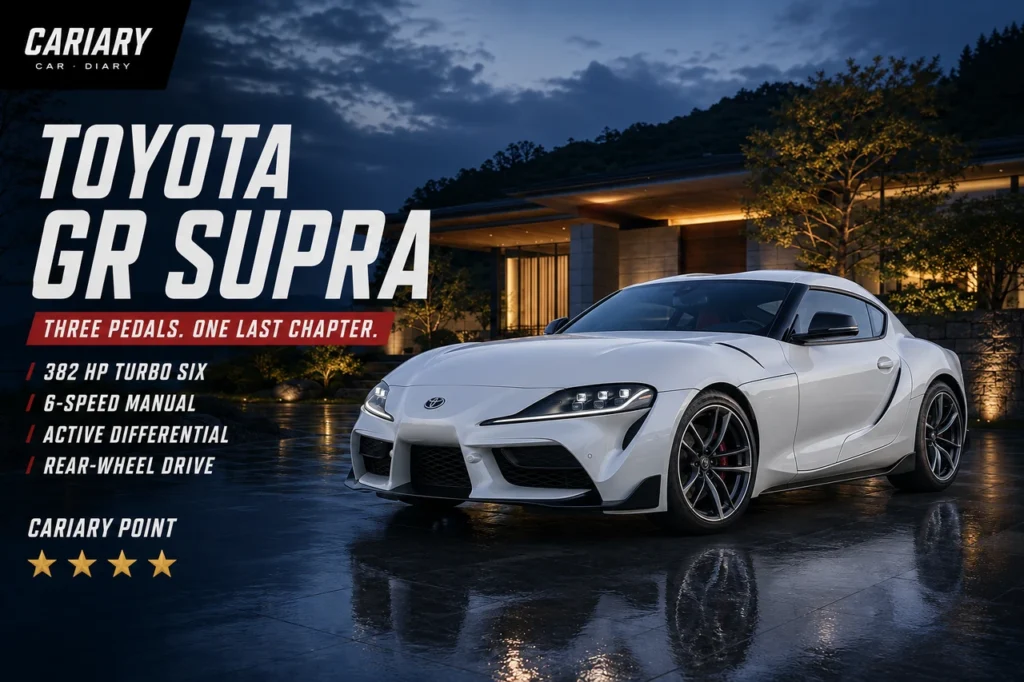
Cover: AI-generated Cariary editorial illustration, visually checked against the specified vehicle. It is not road-test photography.
The Toyota GR Supra becomes more interesting when the buying question moves beyond how quickly it accelerates. The 3.0 manual asks the driver to participate in a way the excellent automatic does not. That extra involvement can be the whole point of owning a sports car, even when it brings compromises in traffic and efficiency.
The end of a model cycle can make decisions feel urgent. It should also make them more careful. An ordinary six-cylinder manual in the right condition may fit its owner better than a special edition bought mainly because it sounds collectible. The aim here is to explain the car you will use, rather than sell the fear of missing one.
This research-based review covers the A90 GR Supra 3.0 manual, introduced for U.S. model year 2023, with the 2026 U.S. range as a price and final-model-year reference. Licensed photographs show Japanese-market RZ 6MT examples of the same generation; they are labelled and do not establish U.S. equipment. Cariary has not road-tested the car. Data checked September 7, 2026.
Four stars: the manual gives the six-cylinder Supra a persuasive reason to choose it beyond performance numbers. Compact two-seat packaging, restricted outward views and the costs of a powerful sports car remain central to buyer fit.
Toyota GR Supra: Key Specifications
| Reference market / range | U.S. 2026 GR Supra 3.0 and 3.0 Premium |
|---|---|
| Engine | 3.0-litre turbocharged inline-six |
| Output | 382 hp / 368 lb-ft |
| Transmission | 6-speed manual; 8-speed automatic available |
| Drive | Rear-wheel drive |
| 2026 listed base MSRP | $58,300 for 3.0; excludes delivery, taxes and options |
The Toyota GR Supra Is a Two-Seat Sports Car
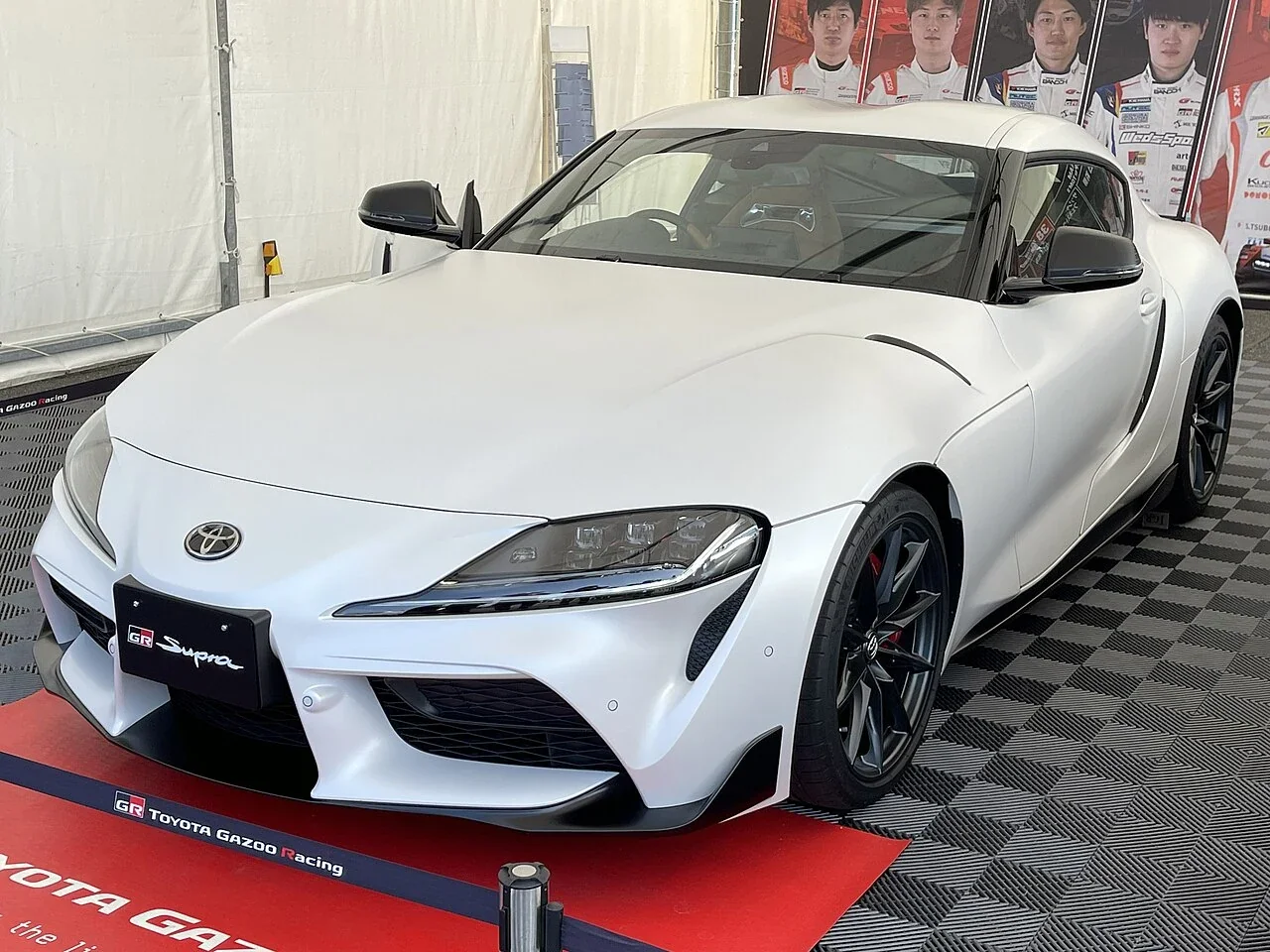
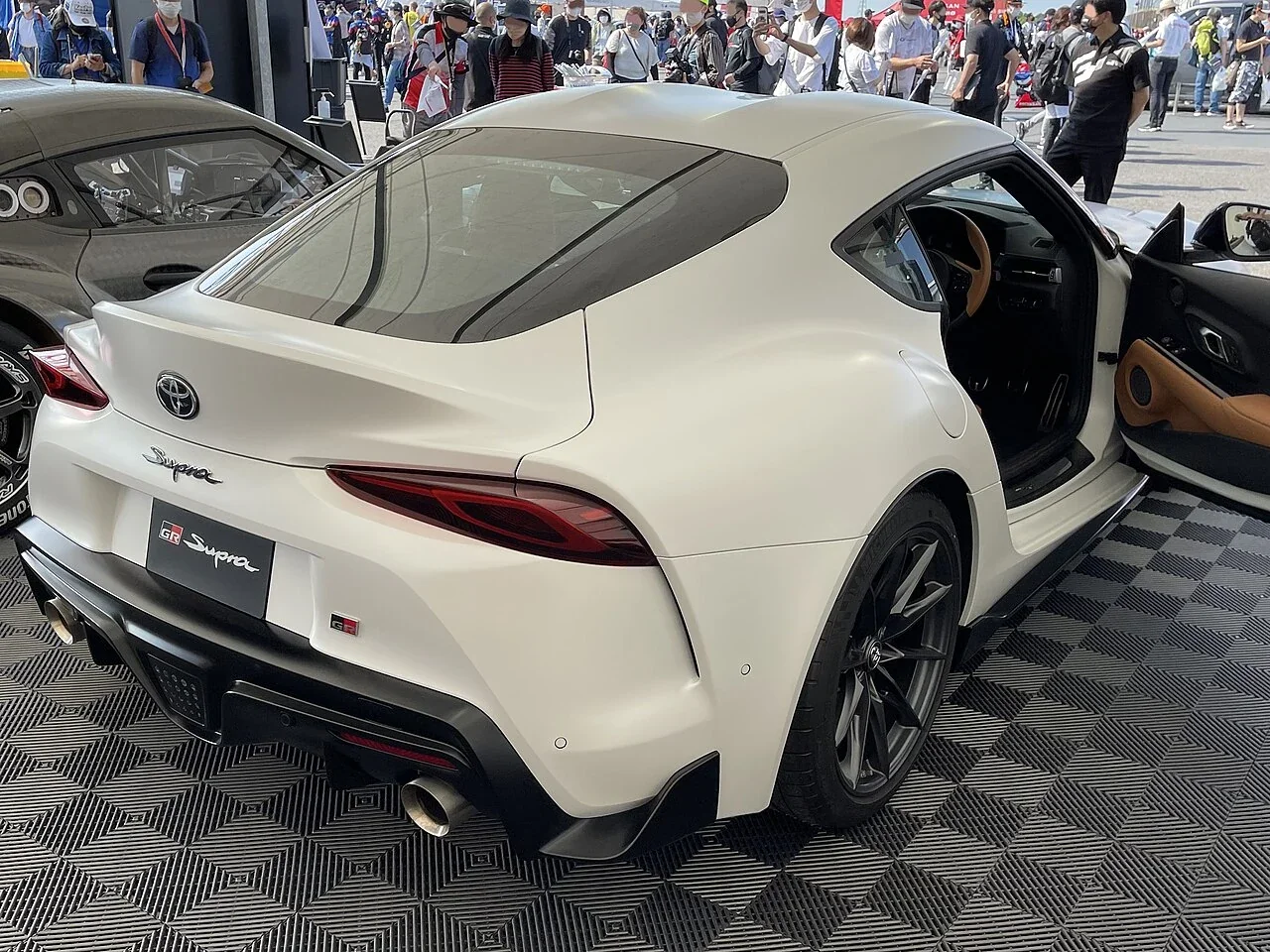
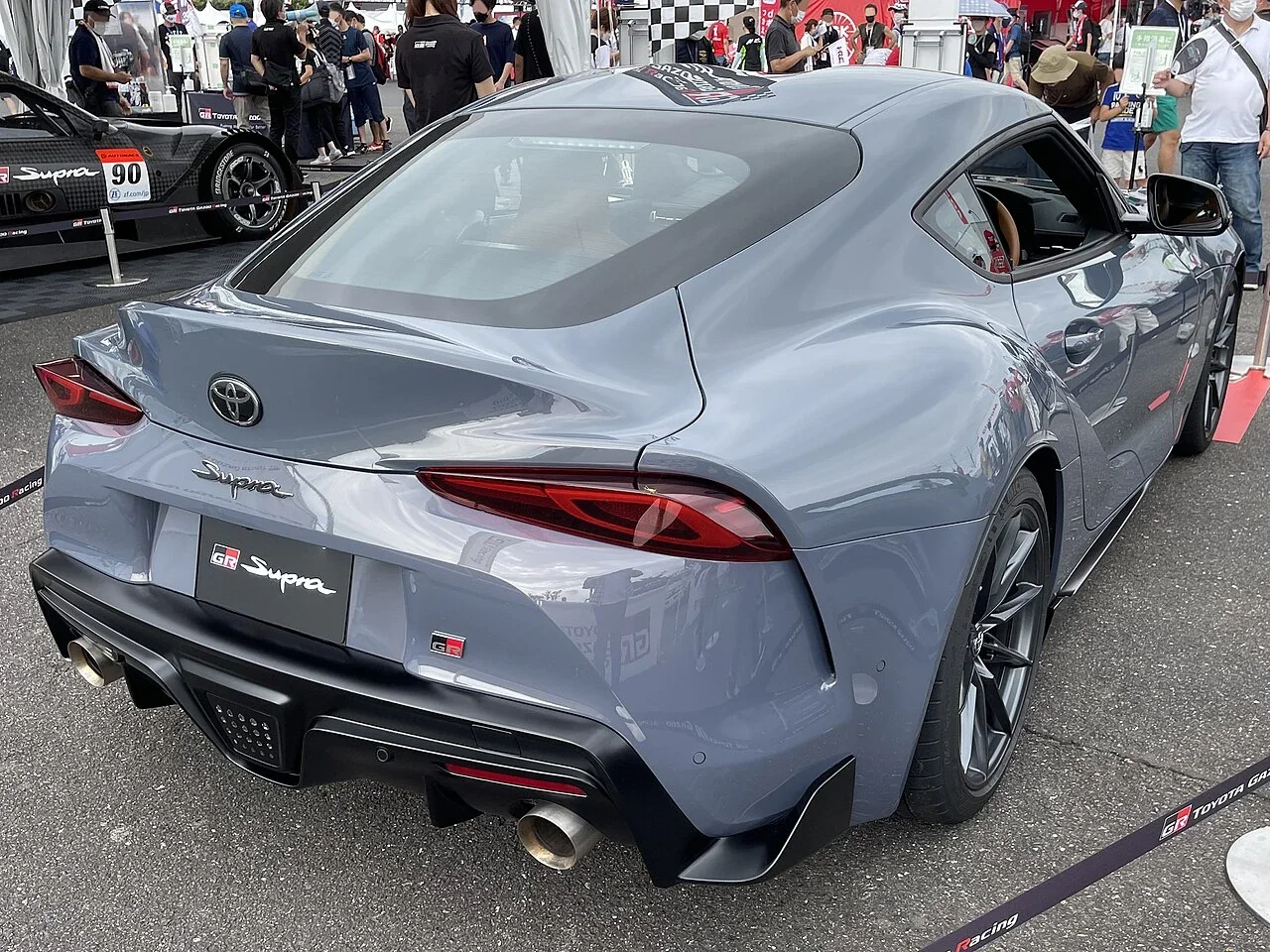
The A90 body makes its priorities visible. A long bonnet and cabin set far back give it traditional front-engine sports-car proportions, while the hatch provides access to a compact luggage area. This is not a family hatchback, and there are no rear seats waiting to make it one.
Toyota’s 2026 U.S. announcement identifies 3.0, 3.0 Premium and MkV Final Edition grades, with manual or automatic transmission choices. Do not assume that the appearance of ‘Final Edition’ in an advert describes every 2026 car.
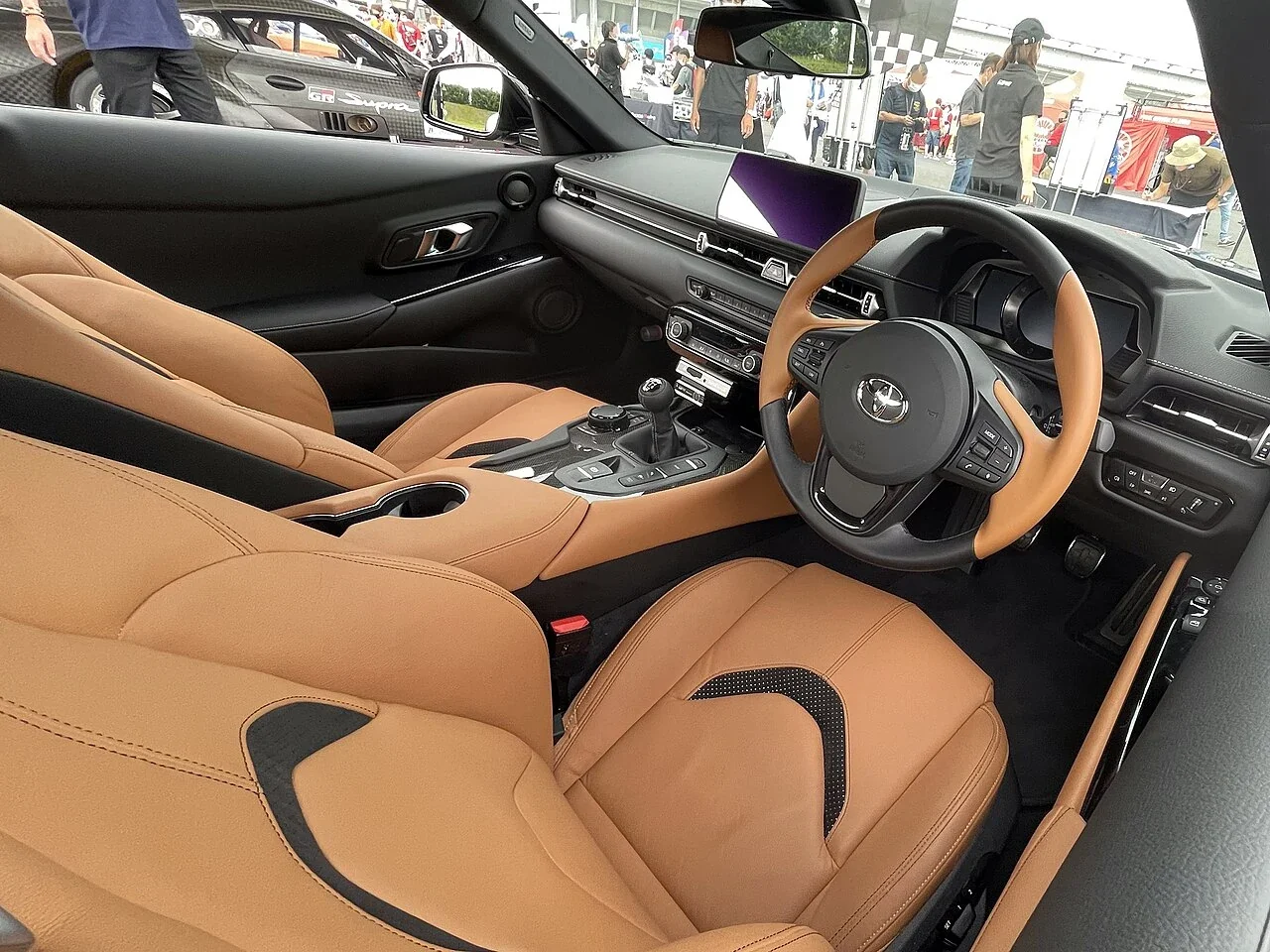
The photographs in this review show Japanese-market RZ manuals. Their right-hand-drive cabins are useful for examining the shape and controls, but a U.S. car has a different driving position and must be checked against its own equipment list. Clear labelling matters more than pretending every available photograph shows the same market.
Three Pedals Change What You Notice
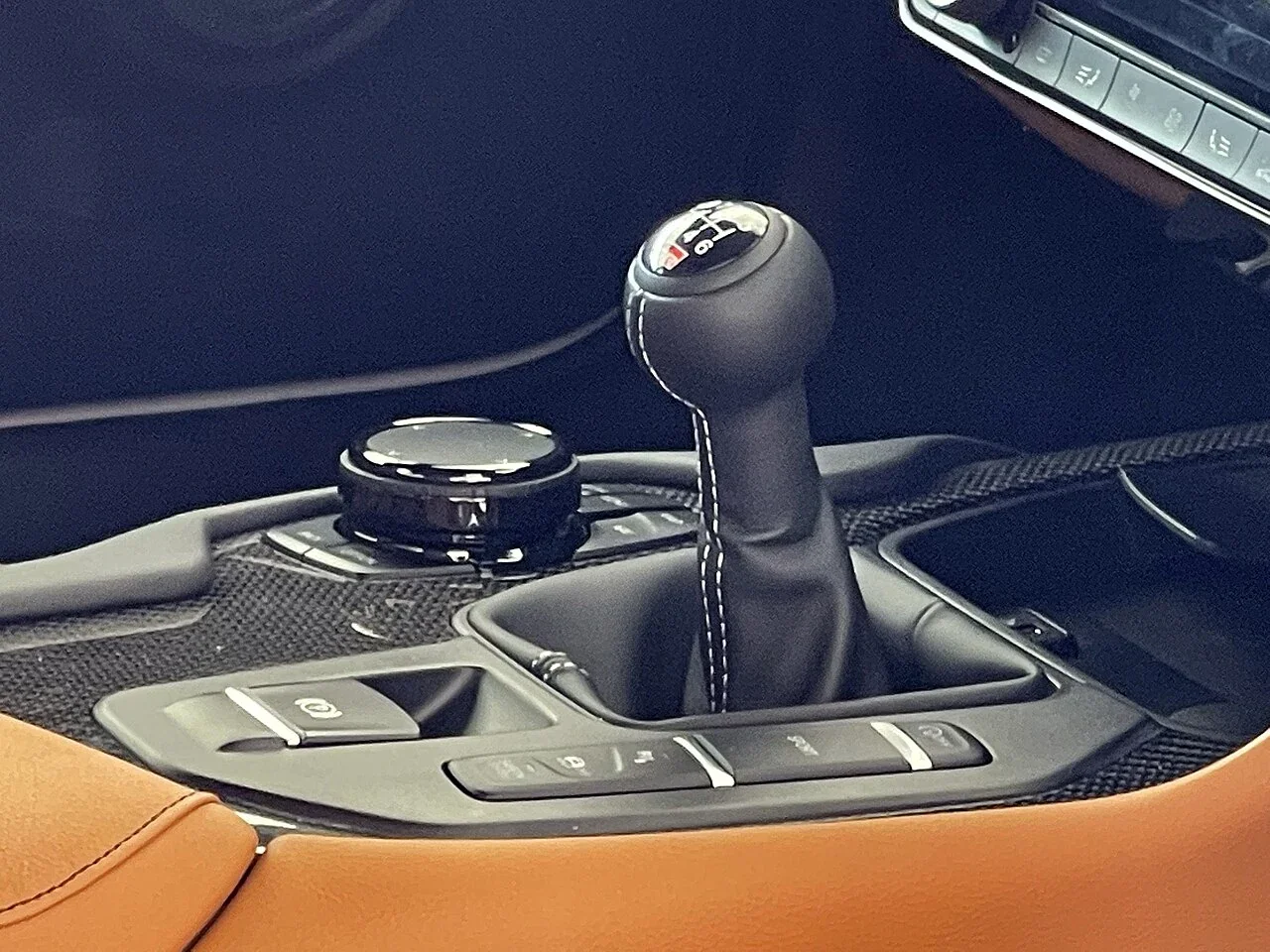
The appeal of the manual is not that it makes the automatic obsolete. It changes the driver’s job. A planned downshift, a well-timed clutch release and the small judgement needed to choose a gear become part of a journey that might otherwise pass almost without attention.
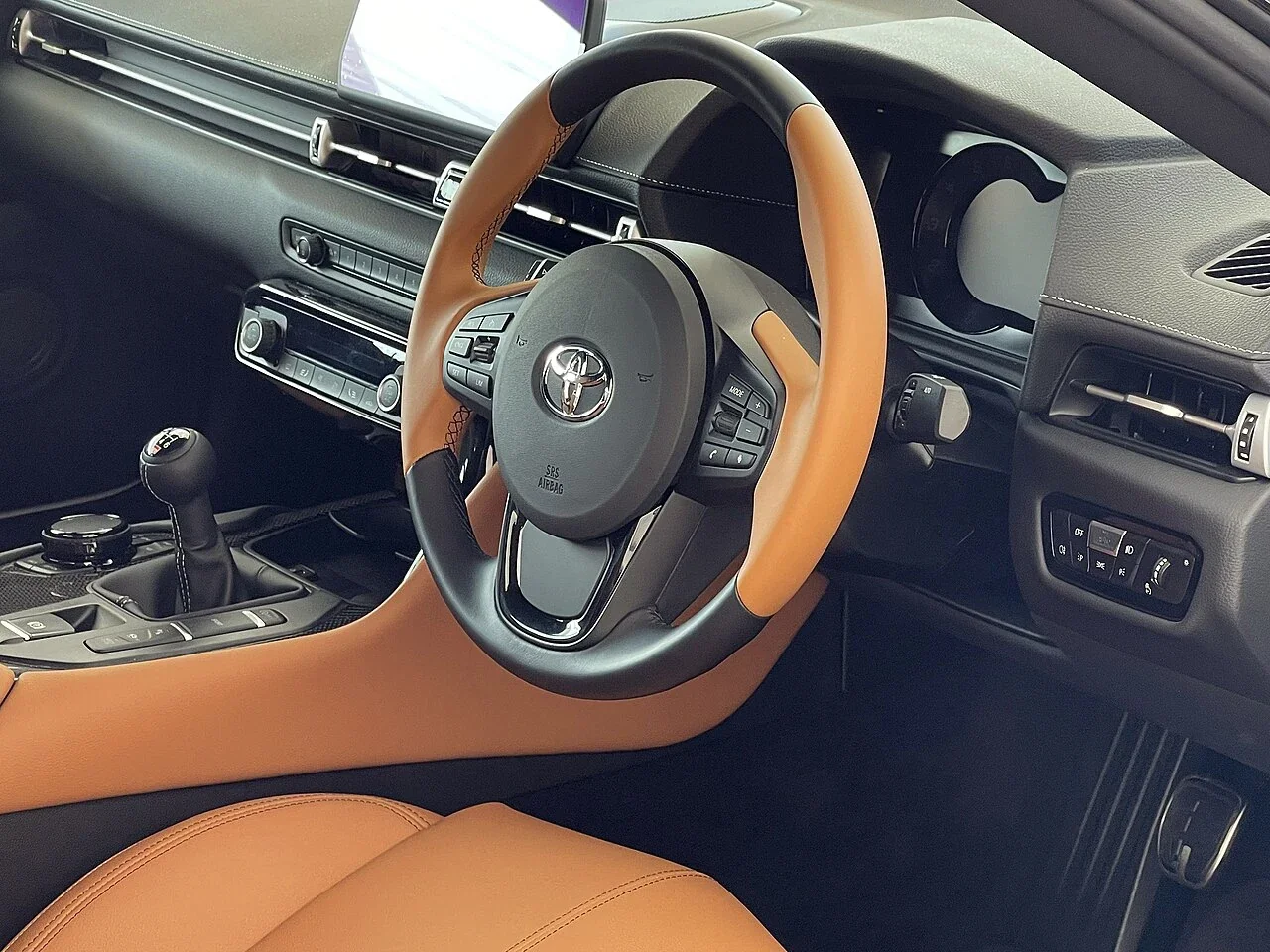
The real gear-lever photograph shows a conventional six-speed layout beside the rotary interface controller. These are controls worth trying together at a viewing. Reach for the lever without changing your seating position, check clearance around your hand and assess the clutch in slow traffic. A gearbox that feels special for five minutes must still suit a drive home after a long day.
Toyota developed the manual installation for the six-cylinder model rather than simply applying a different shift knob to the automatic. Its manual-transmission introduction explains the tailored clutch and gearing. For the buyer, the relevant outcome is a distinct version that deserves its own test drive.
How Much Performance Do You Need to Enjoy It?
The 382 hp U.S. rating supplies ample scope for a road car of this size. It also makes the condition of the rear tyres and the smoothness of the driver’s inputs more significant than a comparison of peak output alone. Available grip changes with temperature, surface and tyre condition; it is not a fixed quantity printed in a brochure.
In Car and Driver’s 2023 manual test, the car reached 60 mph in 3.9 seconds, with the publication’s stated rollout convention. That is an independent result for that test car, not a guaranteed time for every 2026 example. The same review found the clutch manageable and noted improved composure over imperfect surfaces.
Cariary’s inference is straightforward: the manual is quick enough that its value should be judged by interaction, not tenths of a second. If effortless acceleration is the main attraction, there is no need to apologise for choosing the automatic. It solves a different problem well.
Tyres and Brakes Matter More Than an Extra Badge
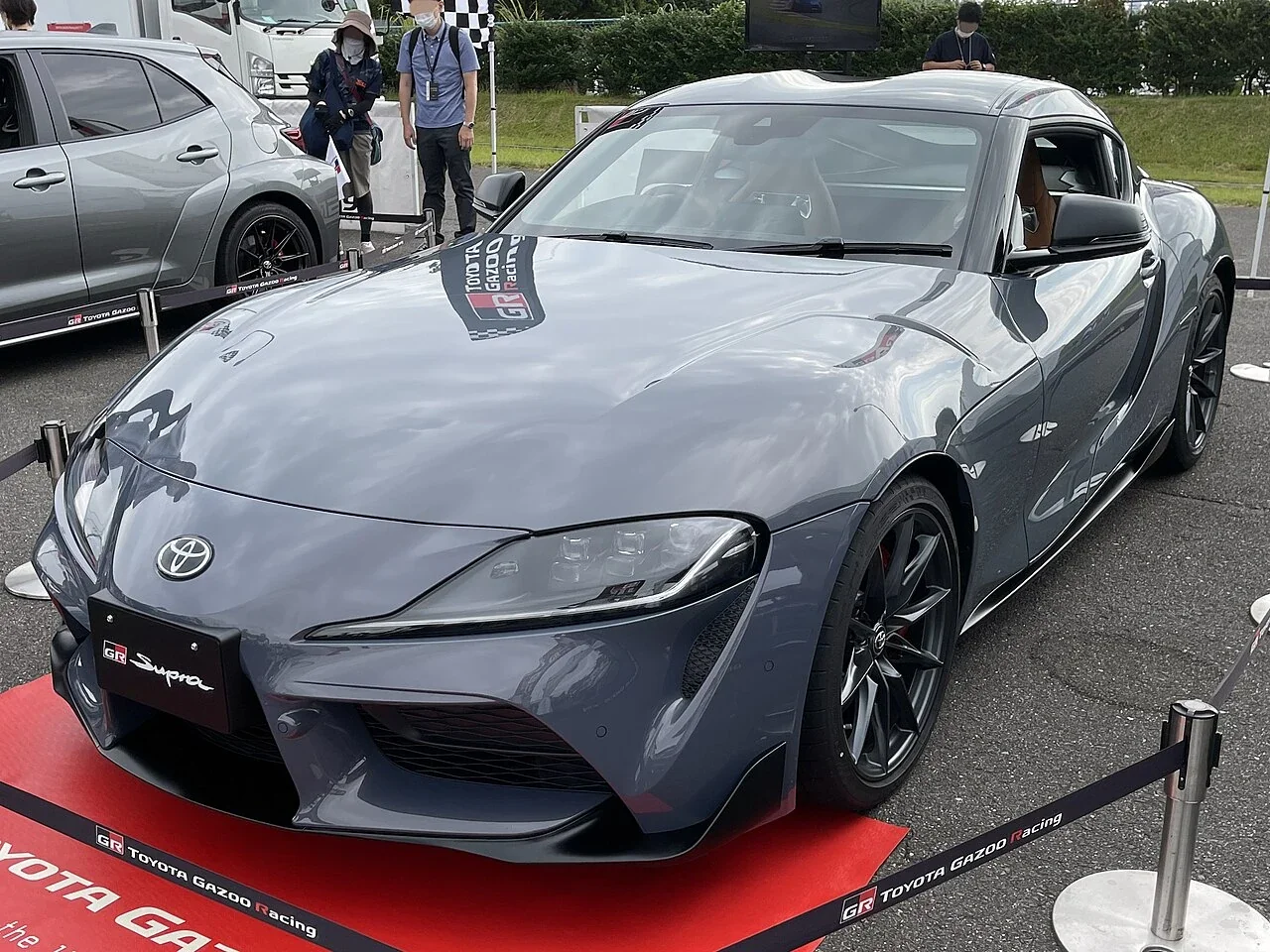
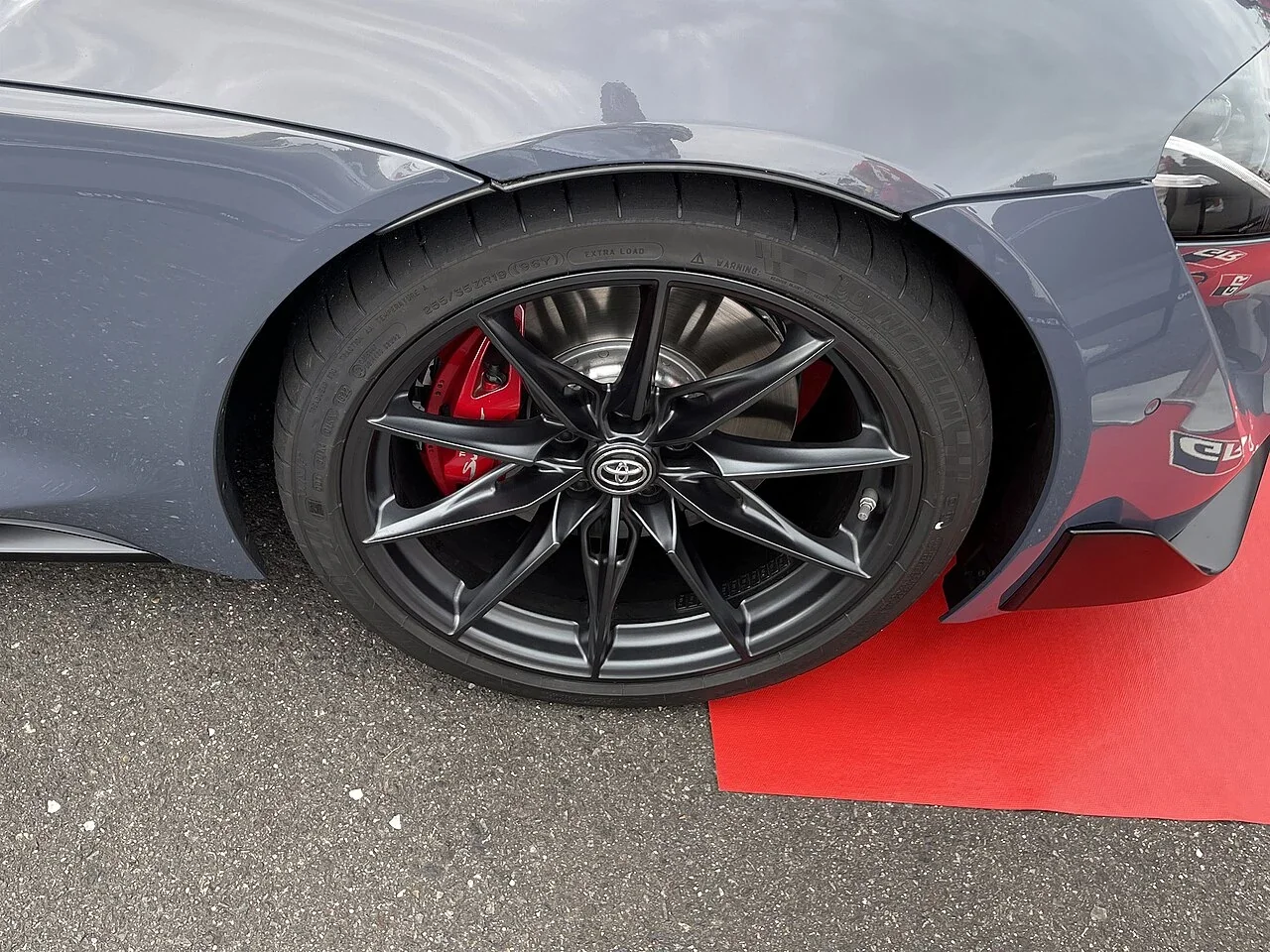
A rear-drive coupe needs a coherent tyre set, sensible pressures and sound alignment to communicate predictably. The wheel photograph below is more useful than an abstract performance graphic because it reminds a buyer that the working surface is a small patch of rubber, supported by components that wear.
Check tyre age, model and wear across the full tread, then ask why any replacements differ. The cheapest available tyre may change the experience more than an expensive styling option improves it. For regular cold-weather use, plan the appropriate seasonal equipment before deciding that a sports car will be your only transport.
Track use demands a separate consumables plan. Pads, fluid, tyres and inspection intervals should match the actual activity and the manufacturer’s guidance. These are general preparation questions, not evidence that every used Supra has been abused or that one track session makes a car a poor purchase.
A Cabin That Needs to Fit Your Body
The roof and thick rear quarters help produce the shape people admire from outside. From the driver’s seat, they make a careful visibility check worthwhile. Try an angled junction, look over both shoulders and assess the reversing view with your usual seating position. A camera is helpful, but it cannot make every sightline feel the same as an upright sedan.
The relatively intimate cabin can feel purposeful or restrictive depending on the occupant. Sit with the door closed, try the controls and check that your head and knees remain comfortable. Repeat entry and exit with the door only partly open, as it would be in a crowded car park.
Look past leather colour when checking equipment. Demonstrate the phone connection and audio functions that matter to you, then compare them with the exact market and grade. Familiar-looking hardware or a photograph from another country is not proof that a specific connectivity feature is present.
Toyota GR Supra Daily Use: More Than the Commute
A hatch opening makes luggage easier to reach, but shape and access still matter. Bring a weekend bag, sports equipment or the shopping container you actually use. Test how those items fit without blocking the driver’s view or requiring an elaborate packing routine.
Two-seat ownership is easy to rationalise until plans change. If the car is the household’s only vehicle, consider airport trips, an extra passenger and days when both people need different journeys. If another practical car is available, those limitations may be barely relevant. The same Supra can be a reasonable choice in one household and an awkward one in another.
A manual adds another shared-use question. Every regular driver should be comfortable with it, including slow manoeuvring. The point is not to eliminate all inconvenience. It is to ensure that the inconvenience buys an experience the people using the car actually value.
2026 Toyota GR Supra Price and Final Edition Differences
Toyota’s 2026 U.S. model information lists base MSRPs of $58,300 for 3.0, $61,450 for 3.0 Premium and $69,350 for MkV Final Edition. Delivery, options, tax and dealer charges change the transaction. Those list prices are reference points, not a claim that remaining stock is available at those amounts.
The U.S. MkV Final Edition adds chassis, brake and aerodynamic changes while retaining the U.S. range’s quoted engine output. It should not be confused with the differently specified A90 Final Edition marketed elsewhere. When reading a headline about a higher-output final Supra, check the market before applying it to a U.S. listing.
Toyota announced a spring 2026 production end for this generation. As of this review’s reference date, buyers should establish the actual status of dealer stock rather than assume a new factory order remains possible. Scarcity does not guarantee appreciation, and a collector narrative is not a substitute for a purchase you can afford to enjoy.
Toyota GR Supra Review: Ownership and Cariary Verdict
Before buying used, verify the service and accident records, identify any engine or software modifications and arrange an independent inspection by a workshop familiar with the car. Check cold starts, leaks, clutch operation, brake condition and the underbody. These are due-diligence items, not a diagnosis of a model-wide problem.
A Toyota badge does not mean running costs resemble a Corolla’s. Performance tyres, insurance and specialist work belong in the budget. Equally, shared development and component origins are not useful reasons to dismiss the car without driving it. Judge the completed product and the support available where you live.
A manual BMW M2 deserves consideration if passenger flexibility is important; a Cayman or Emira helps test whether mid-engine character matters more. Our four-star Supra verdict rewards a strong six-cylinder manual formula while recognising its cabin and practicality limits. The best purchase is a sound example that invites regular use, not merely the most dramatic edition name.
Who Should Buy It?
Recommended For
Drivers who want an involving six-cylinder manual coupe, accept two seats and can budget for performance-car consumables.
Not Recommended For
Buyers needing rear seats, easy all-round visibility, automatic-only household use or inexpensive running costs disguised by a familiar badge.
One-Line Verdict: Buy the manual Supra for the shifts you will enjoy, not the future value someone promises.
Frequently Asked Questions
When did the A90 Supra get a manual in the U.S.?
For model year 2023, on the six-cylinder version. Confirm the transmission of the specific car rather than relying on its registration year.
Is every 2026 Toyota GR Supra a Final Edition?
No. Toyota also offered 3.0 and 3.0 Premium grades for the 2026 U.S. range.
Are the photographs U.S.-market cars?
They show identified Japanese-market RZ 6MT cars of the same generation. Right-hand drive and local equipment are not presented as U.S. specifications.
Should I pay extra because production ended?
Only if the condition, specification and total price make sense to you. Production ending does not establish a future resale value.
Further Reading and Data Reference
Data reference date: September 7, 2026. Specifications and attributed test observations are linked where discussed. Cariary Point is an editorial buyer-fit assessment, not an owner road-test score or reliability rating.
For the broader model history and range, see the Cariary Toyota GR Supra vehicle profile. This review focuses on the specific manual version identified above.
For a different approach to performance and long-distance appeal, read the Cariary Bentley Continental GT review. Explore more Cariary car reviews and buyer perspectives.

