Car Maintenance becomes much less intimidating when we stop trying to memorize the whole vehicle. Most of us simply want to know what deserves attention, which jobs can wait, and how to keep the car dependable without paying for unnecessary work.
I wanted this guide to answer those everyday questions. It explains what common service items do, what to watch for, and how to turn the manufacturer’s schedule into a routine you can actually follow. It is not a promise that maintenance prevents every failure, or a substitute for diagnosing a problem.
Use this guide to know what to watch. Use your exact owner’s manual and maintenance schedule to know when to replace it. Model year, engine, transmission, market and driving conditions can all change the answer. Where a schedule specifies time or mileage, use whichever comes first.
Quick Car Maintenance Checklist
The following is a checking framework, not a universal replacement timetable. A routine check does not replace the manufacturer’s required service or an urgent inspection when something changes.
| Item | What to watch | General approach |
|---|---|---|
| Engine oil | Level, time, mileage, operating conditions | Follow the correct normal or severe-service schedule. |
| Oil filter | Service record and specified part | Usually replaced with engine oil. |
| Brake fluid | Service age, level, leaks, changed pedal feel | Follow time-based or condition-testing requirements. |
| Tires | Cold pressure, tread, age, damage | Check monthly and before a long trip. |
| Brake pads and rotors | Measured wear, noise, vibration | Inspect and replace according to condition and limits. |
| Transmission fluid | Gearbox type, service history, leaks | Follow the exact transmission’s procedure and schedule. |
| Differential and transfer case | Installed hardware, leaks, severe use | Check each applicable unit’s requirements. |
| Coolant | Cold reservoir level, specification, age | Follow initial and subsequent replacement intervals. |
| Engine air filter | Restriction, debris, seal condition | Scheduled inspection or replacement; dusty use matters. |
| Cabin filter | Airflow, debris, odors | Replace as scheduled or when necessary. |
| Spark plugs | Mileage, time, specified type, misfire | Engine-specific replacement, not a universal interval. |
| Low-voltage battery | Starting behavior, age, test results | Test when indicated; replacement depends on condition. |
| Belts | Wear, tension, damage, timing-belt history | Inspect accessories; follow timing-system requirements. |
| Rotation and alignment | Uneven wear, pulling, impact history | Follow permitted rotation pattern; inspect alignment as needed. |
| Wipers and lights | Streaking, damage, failed lamps | Check routinely; restore visibility promptly. |
Prioritize safety first: tires, brakes, steering, visibility and any urgent warning. Oil, coolant and a timing belt can also become immediately critical when a fault develops. A tidy category list should never make a serious symptom seem low priority.
Start With the Right Schedule
Find the service booklet for the actual model year, powertrain and country, not merely a car with the same badge. Check footnotes and the key: inspect means assess and correct or replace if necessary; replace is a scheduled action. They are not interchangeable.
There is no single rule such as oil every 5,000 km, transmission fluid every 60,000 km, or coolant every two years that works for all cars. A service reminder can help, but understand which items it tracks. Resetting it does not perform the maintenance.
As a specific example, the 2025 Subaru US warranty and maintenance booklet lists normal engine oil and filter changes at six months or 6,000 miles, approximately 9,600 km, for the vehicles covered by that schedule. Its footnotes shorten certain services under specified conditions. That is an example of how to read a schedule, not a Subaru rule for every year or market.
Normal and severe service
Repeated short trips, prolonged idling, dusty roads, towing, heavy loads and particular temperature extremes may trigger additional work. The manufacturer defines which conditions apply to which item. One severe-use condition does not automatically mean every fluid should be changed twice as often.
A car driven only a few kilometers at a time may repeatedly stop before its engine and fluids fully warm. Low mileage therefore does not necessarily mean easy service. Likewise, a long highway journey and hours of slow delivery driving can put very different demands on the same odometer distance.
Write down the relevant conditions alongside your schedule. Our warm-up explanation explores why gentle driving and fluid temperature matter without turning cold starts into a rigid countdown.
Engine Oil and Oil Filter
Oil separates moving surfaces, carries away some heat, helps keep contaminants suspended and protects against corrosion. It also operates certain hydraulic mechanisms inside the engine. The filter catches particles; it cannot reverse every chemical change in used oil.
Use the specified viscosity and the required performance approval. A bottle displaying the right viscosity alone is not necessarily the right oil. Follow the normal or severe schedule, including any maximum time limit associated with an oil-life monitor. Synthetic oil does not independently authorize extending the manufacturer’s interval.
Oil and filter are normally serviced together. Overdue oil can oxidize and lose useful properties, increasing the risk of deposits and wear in bearings, timing components or turbocharger lubrication systems. That is a reason to stay on schedule, not evidence that every slightly late service has destroyed an engine.
Level checks are separate from oil changes
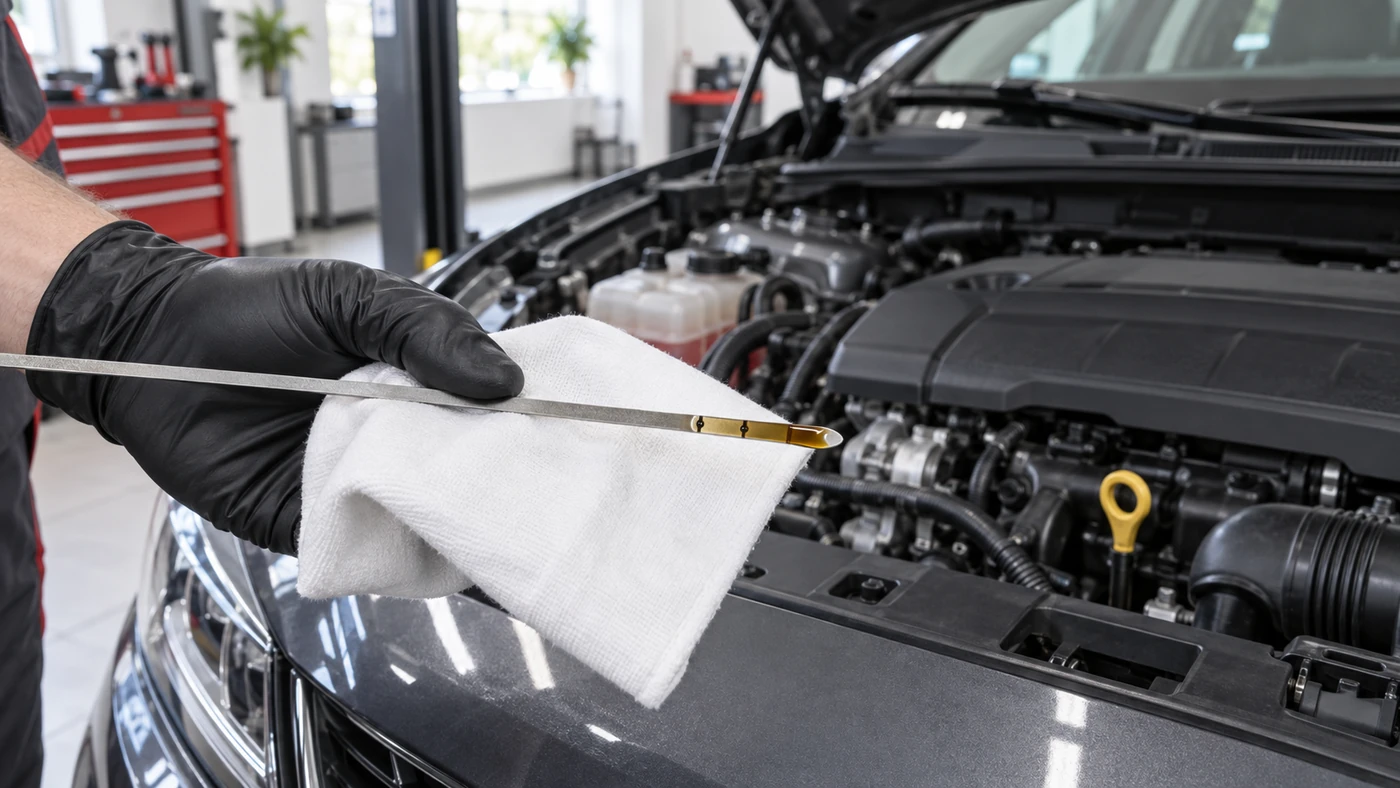
A recently serviced engine can still lose or consume oil. Check the level using the manual’s procedure: the required engine temperature and waiting time vary. With a dipstick, park level and follow the specified wipe, reinsert and read sequence. Some cars use an electronic measurement with its own operating conditions.
Do not overfill, and do not identify oil condition from darkness alone. An unusual change in consumption, a rising level or a recurring leak deserves diagnosis. An oil-pressure warning while running is not simply an oil-change reminder: pull over safely, switch off the engine and follow the warning instructions before further use.
Brake Fluid: Time Matters Too
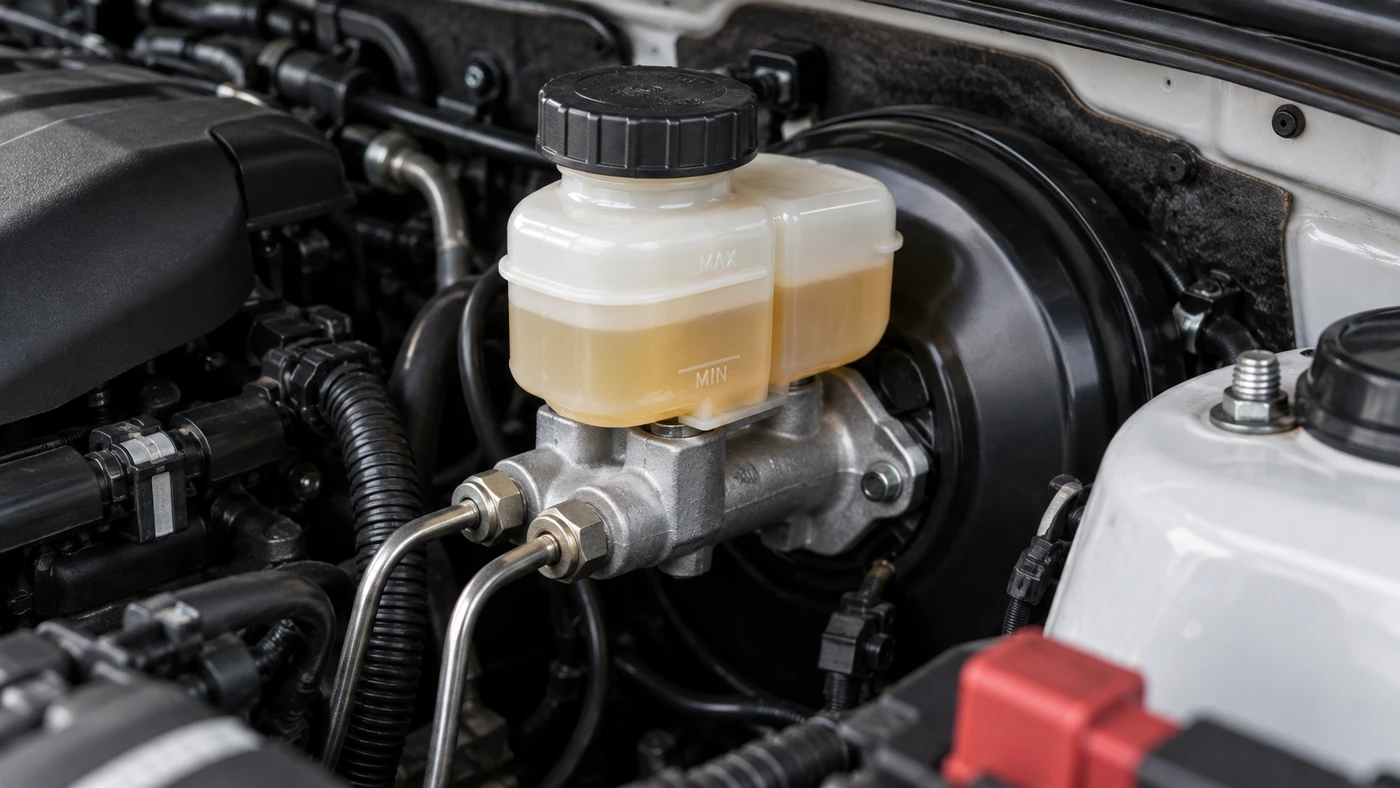
Brake fluid transmits hydraulic pressure through the braking system. Common glycol-based fluids absorb moisture over time. Moisture can lower boiling performance, and vapor produced under heat is compressible, unlike the liquid the system needs to transmit pressure reliably. Ferodo explains this vapor-lock mechanism.
This is why brake-fluid maintenance can be due even when the car travels little. Some schedules specify calendar replacement; others include testing and inspection. Do not apply a two-year interval universally, and do not use normal pedal feel as proof that the fluid is within specification.
Use the exact approved fluid. DOT 5 silicone fluid is not a higher-number substitute for DOT 3, DOT 4 or DOT 5.1 glycol-based fluids. Even among apparently similar grades, vehicle requirements and procedures matter.
A declining reservoir level can reflect pad wear or a leak. Blindly topping it up can conceal a problem and later cause overfilling when pads are replaced. Have unexplained loss inspected. A suddenly soft or sinking pedal, a fluid leak, or a brake warning with abnormal braking requires immediate attention; do not continue driving to see whether it clears. Brake-fluid replacement and bleeding are usually professional jobs, especially with electronic brake systems.
Tires: Pressure, Tread, Damage and Age
The tires handle accelerating, turning and stopping. Maintaining them is about keeping road contact dependable, not merely avoiding a puncture.
Check pressure cold
Check at least monthly and before a long trip, including a usable spare where fitted. Use the vehicle’s door placard or manual, with any specified load adjustment, rather than the maximum pressure printed on the tire. Front and rear targets may differ.
NHTSA defines a cold check as one made after the tires have not been driven for at least three hours. Do not bleed a warm tire down to a cold-pressure target simply because its pressure rose during driving. TPMS, the tire-pressure monitoring system, is a warning aid, not a substitute for checking. NHTSA’s tire guidance covers these points.
Insufficient pressure can increase heat and rolling resistance. Excessive pressure for the vehicle and load can worsen impact comfort and alter tire behavior. Wear patterns can provide clues, but center or shoulder wear alone is not a reliable diagnosis of pressure history.
Look across the tread, not at one convenient spot
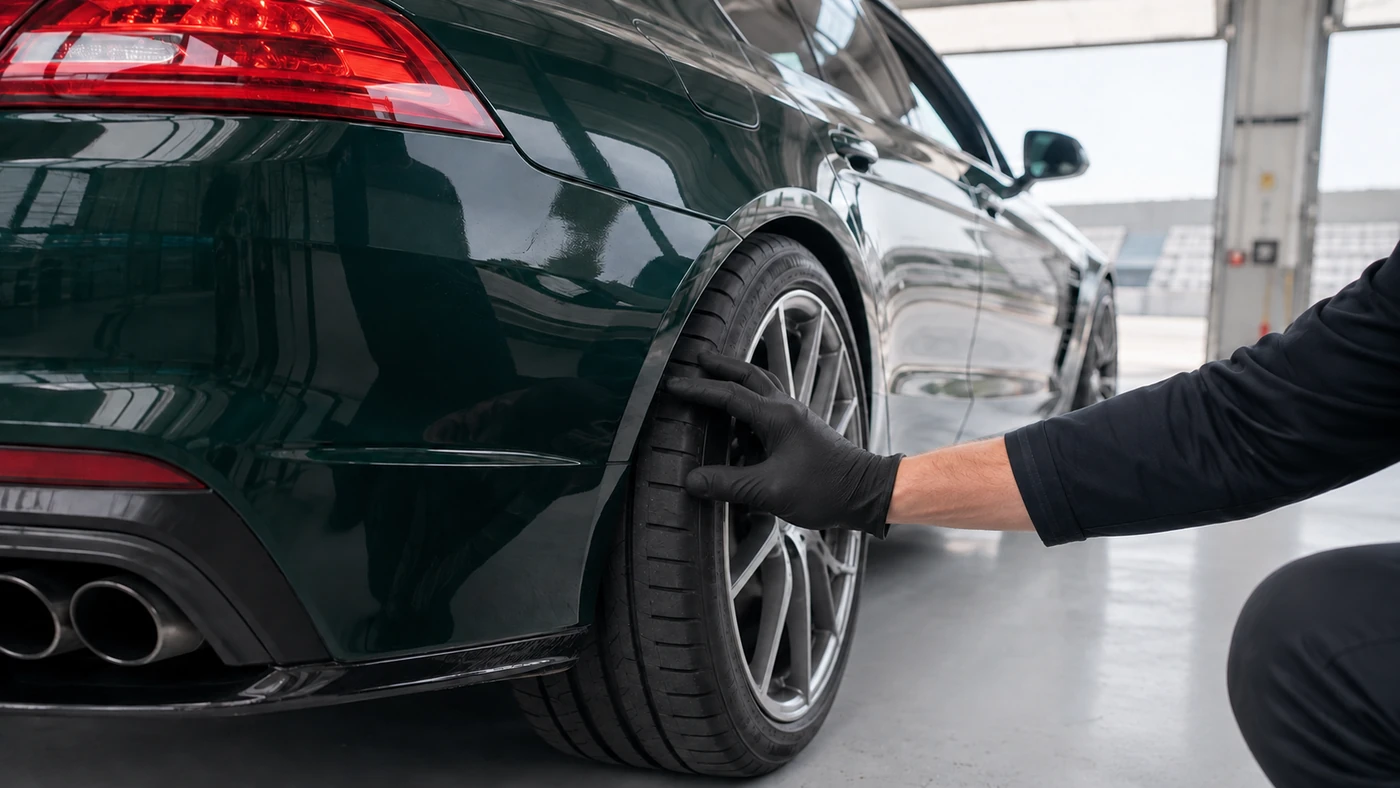
Wear bars are raised bridges inside the main grooves. When the surrounding tread reaches them, the tire needs replacement. A proper tread gauge helps assess multiple positions, including the less visible inner shoulder. A gloved touch or photograph does not measure tread depth.
Around 1.6 mm, or 2/32 inch, is a widely used wear threshold, but legal requirements differ by jurisdiction and tire application. Wet-weather capability can deteriorate before that point. A legal minimum is not a guarantee of good wet performance.
Inspect for cuts, exposed cords, cracks, bulges and unusual wear. A sidewall bulge may indicate structural damage: stop using that tire and arrange professional assessment or roadside help, rather than testing it at speed. New vibration may also need wheel, tire or suspension inspection.
Age matters even with tread remaining
On a modern DOT date code, the last four digits identify the week and year: 3524 means week 35 of 2024. The complete code may be visible on only one side. It does not tell you the tire’s condition by itself.
Michelin recommends professional inspection after five years of use and precautionary replacement by ten years from manufacture, even if tread remains. Follow any earlier vehicle or tire-maker requirement. Ten years is an outer precautionary limit in that advice, not a promised safe lifespan. Heat, storage, damage and use can require earlier replacement.
Tire Rotation and Wheel Alignment
Rotation can help distribute wear, but only when the tire sizes, wheel specifications and direction of rotation permit the chosen pattern. Staggered front and rear sizes may prevent front-to-rear rotation. Directional tires have additional restrictions. Follow the actual vehicle and tire guidance rather than a generic diagram.
Alignment concerns the directions and angles at which the wheels run. Have pulling, an off-center steering wheel, uneven wear or the aftermath of a substantial curb or pothole impact assessed. Pressure differences, tire defects and worn suspension parts can produce similar symptoms, so alignment should not be the automatic diagnosis.
Wheel balancing is different: it addresses an uneven rotating mass distribution. A vibration does not tell you on its own whether balancing, alignment or another repair is needed. Correcting the cause before fitting new tires can help avoid repeating the damage.
Brake Pads and Rotors
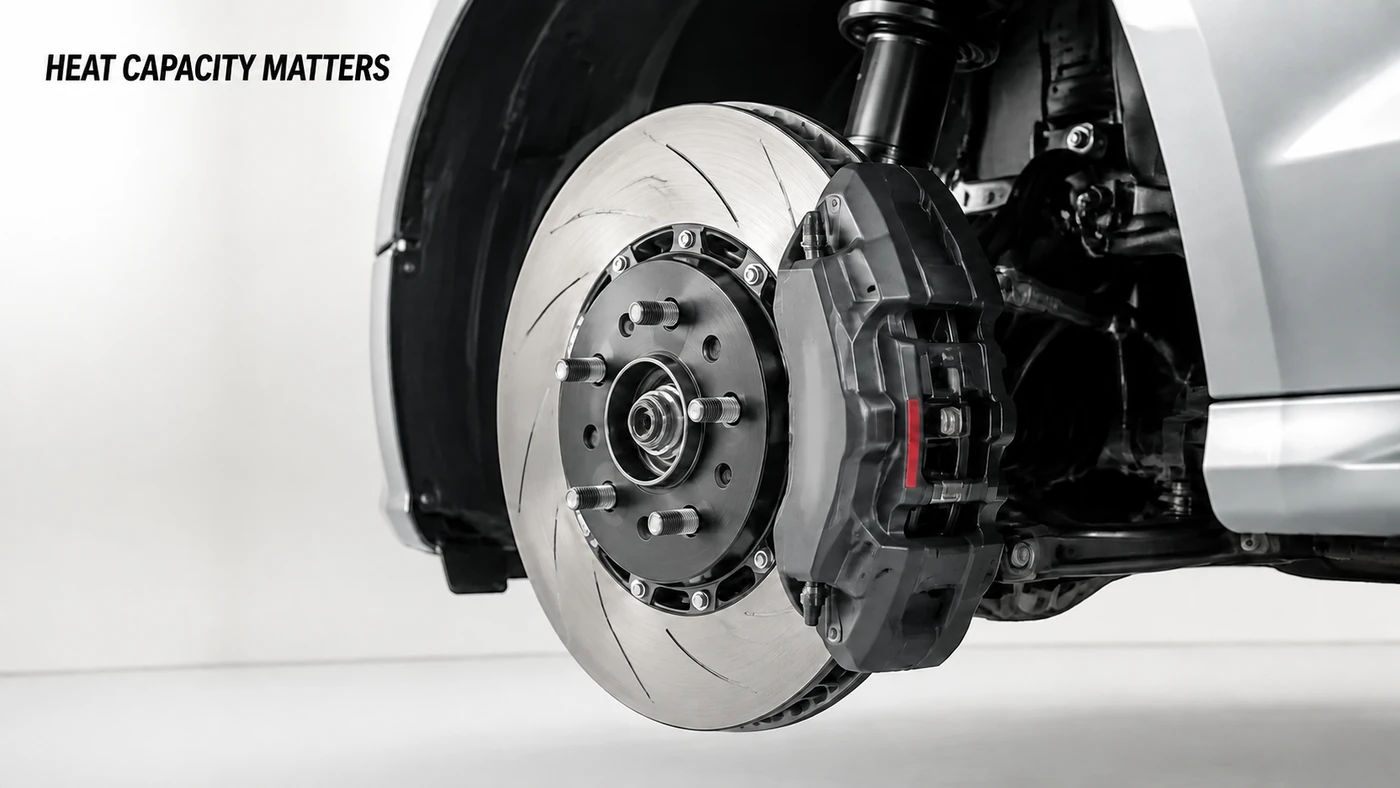
Pads and rotors are largely condition-based items. A city commute, highway journey and track session create very different braking workloads, so mileage alone is a poor replacement rule.
A technician should assess pad thickness, uneven wear, rotor thickness against the applicable minimum, and relevant damage. Check both sides and all affected wheels rather than assuming the most visible outer pad represents the whole brake. Follow model-specific limits; there is no single millimeter threshold suitable for every brake.
Squealing may come from a wear indicator or another cause. Grinding, reduced braking, severe scoring or cracks must not be ignored. Vibration under braking can involve disc thickness variation, runout or other wheel and suspension issues; calling every vibration a warped rotor skips diagnosis.
EV and hybrid regeneration can reduce friction-brake use, but it does not remove inspections. Corrosion or sticking can matter even with thick pads. Our Brake and Tire Basics guide connects the components to the forces at the road.
Transmission Fluid: What Does Lifetime Mean?
Automatic, dual-clutch, continuously variable and manual transmissions have different lubrication and control needs. Fluid may lubricate gears, remove heat, transmit hydraulic pressure or support wet-clutch operation. A dry-clutch DCT is not necessarily an oil-free gearbox.
Identify the exact unit and approved fluid. ATF, CVT fluid, DCT fluid and manual gear oil are not interchangeable labels. A hybrid e-CVT may have a very different construction from a belt-type CVT, despite the similar name.
An inspection-only normal schedule does not mean the fluid is physically immune to aging, and a lifetime-fill description is not permission to ignore leaks or severe-use instructions. Equally, a generic internet interval is not sufficient reason to order an invasive service. Check the manufacturer’s wording, special conditions and applicable service information.
The 2024 US gasoline RAV4 guide provides a concrete example. At its 60,000-mile/72-month entry, it adds automatic-transmission-fluid replacement for specified towing, carrier or heavy-loading use, and for extensive idling or low-speed commercial-style operation. See the Toyota maintenance log, page 45. This is not an interval for every Toyota or hybrid.
Some services require a specified fluid temperature, filling procedure, filter or scan tool. Do not request a universal power flush because the fluid looks dark. If shifts change, the gearbox overheats or fluid leaks, diagnose the symptom rather than treating a fluid change as a guaranteed cure.
Differential and Transfer-Case Fluids
A differential allows driven wheels to turn at different speeds in a corner. It may have its own oil, or share lubricant with a transaxle. Front-wheel-drive cars have a differential too; it simply may not be a separate service unit.
RWD and AWD owners should know whether their vehicle has separately serviced front or rear differentials, a transfer case, or another power-transfer unit. Some electric AWD layouts use separate drive units without a conventional mechanical transfer case. An AWD badge is not a complete fluid inventory.
Where required, these lubricants protect heavily loaded gears and bearings. Towing, heat and particular operating conditions may change the schedule. Limited-slip units can have specific fluid or additive requirements; never assume a general gear oil will suit every unit.
The same 2024 RAV4 log calls for rear differential oil replacement under specified heavy-use conditions and lists transfer-case work separately on applicable 4WD versions. That distinction is more useful than memorizing one universal mileage. Our Drivetrain Basics guide explains the hardware behind those separate entries.
Coolant: Long Life Is Not No Maintenance
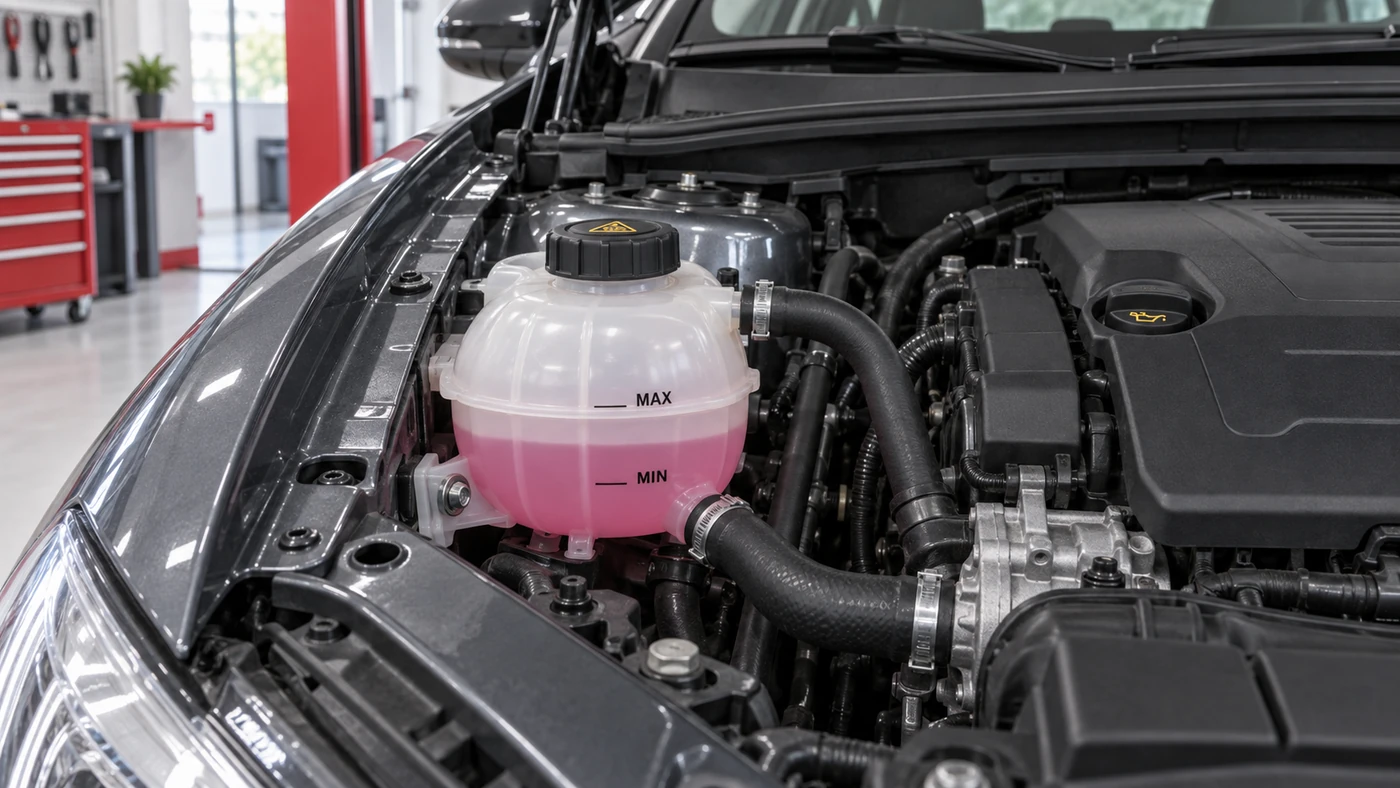
Coolant transfers heat and provides freeze, boiling and corrosion protection when used at the correct specification and concentration. It is not simply colored water.
Long-life formulations can have long initial intervals and shorter subsequent intervals. For example, the cited 2025 Subaru US booklet specifies the covered coolant’s first replacement after 11 years or 137,500 miles, followed by six years or 75,000 miles. Read the applicable footnotes and vehicle coverage. Do not apply that interval to a different coolant, an older Subaru or every cooling circuit.
Look at the accessible reservoir only under the manual’s cold-check conditions. A recurring drop, staining or a leak deserves inspection. Never remove a hot or pressurized coolant cap. A cooling fan can start unexpectedly; keep hands and clothing clear even when the engine is off.
Choose coolant by the required specification, not its color. Different additive chemistries can look similar, and the same chemistry can come in different colors. Mixing unsuitable products can undermine protection. Use the specified premix or dilution procedure; do not improvise with a random antifreeze or tap water.
Hybrids and EVs may have multiple circuits for batteries, motors or power electronics. Some are not owner-serviceable. Do not open high-voltage equipment or assume that checking one visible tank covers the entire vehicle.
Engine Air Filter and Cabin Filter
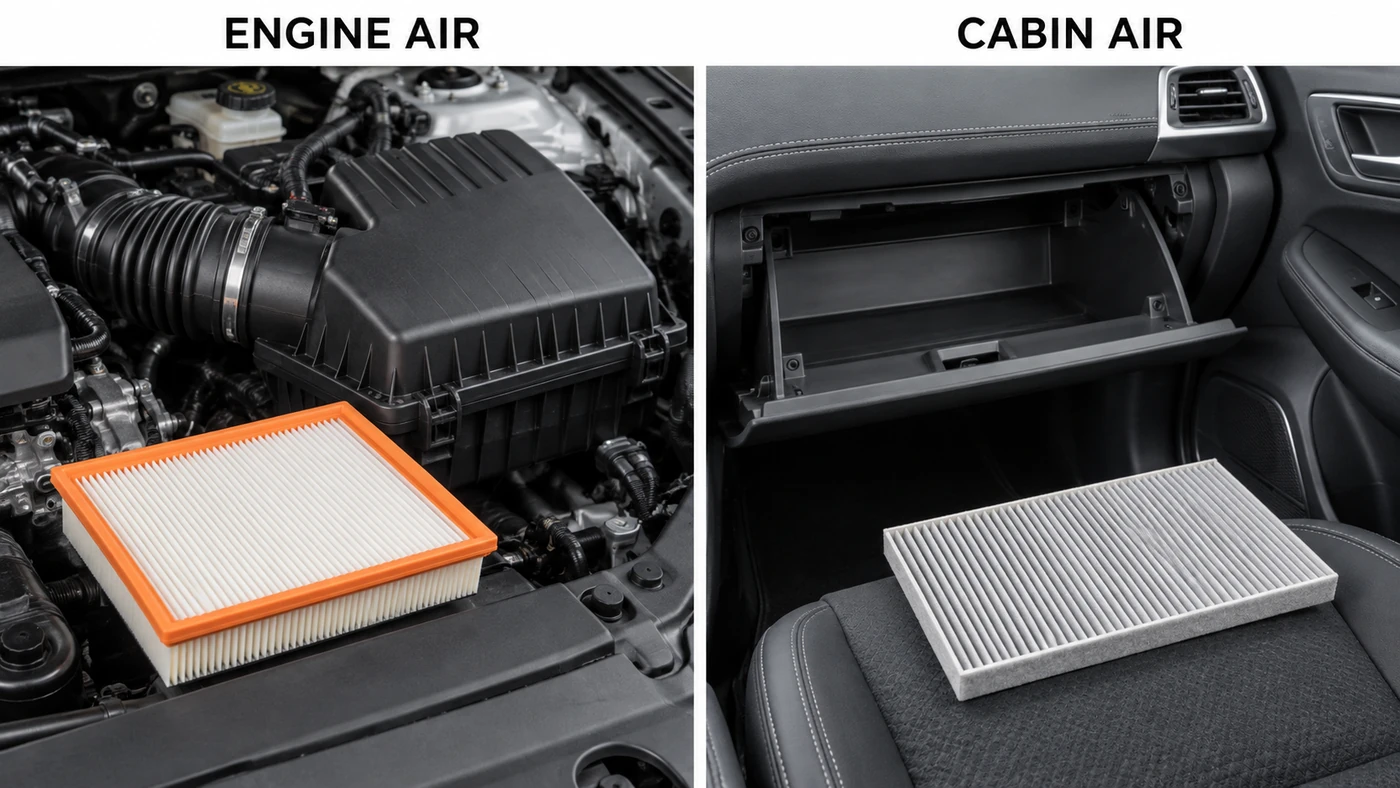
The engine air filter keeps debris out of the intake. Restriction can affect performance, and dusty conditions may call for more frequent inspection. Fit, sealing and the correct element matter as much as replacing a visibly dirty part.
On modern fuel-injected engines, replacing a clogged filter does not necessarily deliver a fuel-economy improvement; DOE and EPA guidance distinguishes potential acceleration benefit from fuel-economy claims. Do not promise a mileage gain from every new filter. Avoid cleaning or oiling a disposable element unless its manufacturer specifically permits that method.
The cabin filter serves occupants, not the engine. Restriction can reduce ventilation and demisting airflow; debris or moisture can contribute to odors. A persistent smell can also come from the HVAC system, so a new filter is not a universal cure.
Follow the replacement schedule and any severe-dust guidance. Some activated-carbon filters are dark when new, so color alone is not proof that they are overdue. The illustration shows the two jobs, not universal filter locations or dimensions.
Spark Plugs
Spark plugs ignite the mixture in a gasoline engine. Wear or faults can contribute to misfire, rough running, difficult starting or reduced performance, but those symptoms have other possible causes.
Use the exact specified plug and service interval. Electrode materials such as platinum or iridium are only part of the design; reach, heat range and other details must match the engine. Long-life material does not authorize an interval borrowed from another model.
A flashing malfunction indicator can signal a damaging misfire. Reduce demand, stop safely if the engine runs roughly or the manual directs it, and obtain prompt assistance. Do not continue a journey under load assuming that a future plug replacement will resolve it. Diesel glow plugs are different components, and a battery-electric car has no spark plugs.
The 12V or Low-Voltage Battery
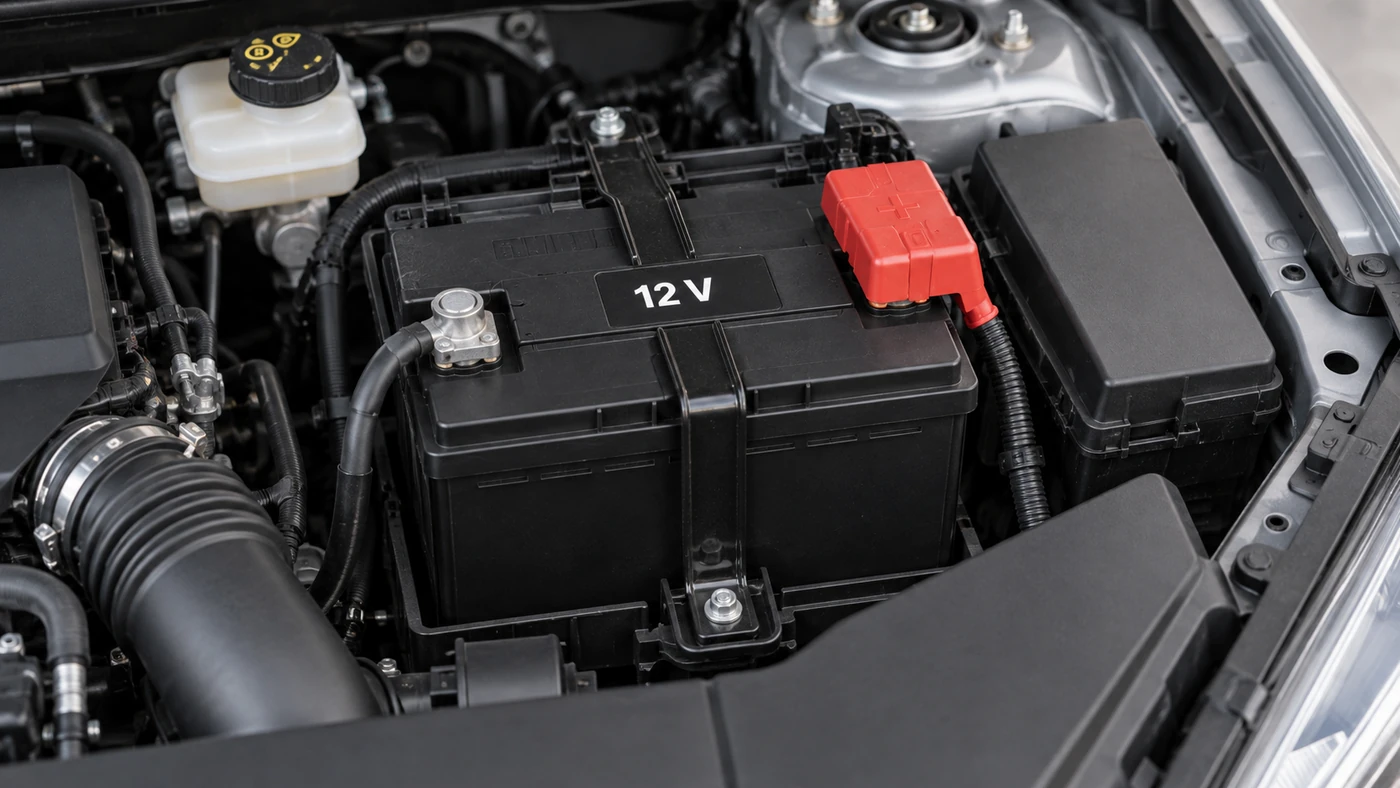
A weak low-voltage battery can leave a combustion car unable to crank. Hybrids and EVs also rely on a low-voltage system to power controls and start the vehicle’s operating sequence, even when the traction battery contains energy. Not every modern low-voltage system is exactly 12V or lead-acid.
Watch for slow cranking, repeated low-voltage messages or unexplained no-start events. Start-stop being unavailable has many possible causes, so it is not a battery diagnosis by itself. Testing should consider charge state, battery health and the charging system; one resting-voltage reading cannot establish remaining service life.
There is no universal replacement birthday. Climate, short trips, parking duration, electrical loads and battery type matter. As a conventional battery ages, routine testing becomes more useful, particularly before a demanding season or trip. Heat and cold affect batteries differently, but either can expose a marginal system.
Replace with the required type and specification. AGM and EFB start-stop applications may require particular replacements, and some vehicles need battery registration or adaptation. VARTA explains why start-stop replacement procedures matter. Leave damaged, swollen, leaking or unusually hot batteries to professionals; avoid sparks, short circuits and improvised charging.
Accessory Belts and Timing Components
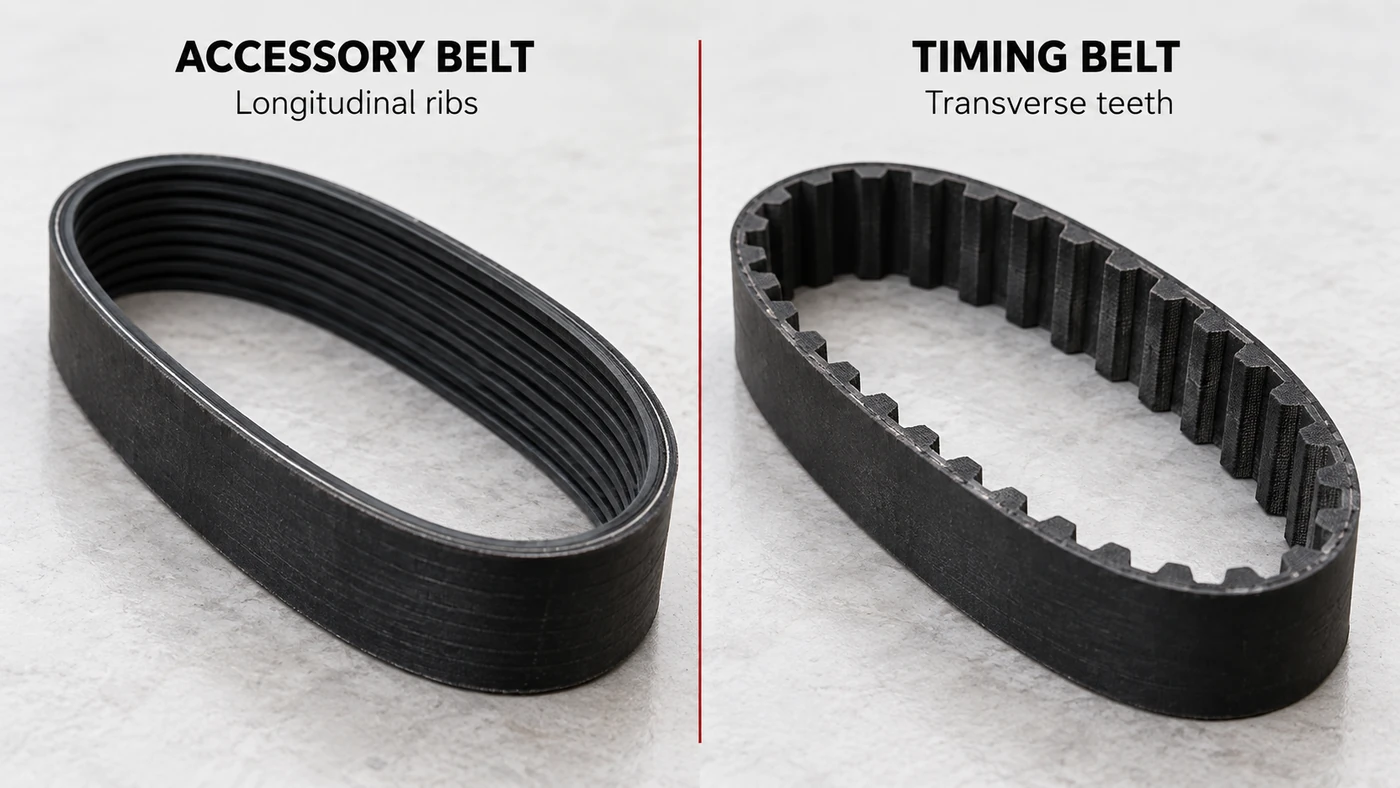
An accessory or serpentine belt can drive the alternator, air-conditioning compressor and, on some engines, the water pump. Its consequences of failure therefore depend on what it drives. Fraying, missing ribs, contamination, noise and tensioner problems deserve attention.
Do not look only for cracks. Modern EPDM belts can lose rib material without obvious cracking, as Gates explains in its belt-inspection guidance. Inspection includes the belt-drive system, not just a glance at the rubber. Never inspect by reaching toward a running belt.
A timing belt synchronizes the crankshaft and camshafts. Where scheduled replacement is specified, follow both time and mileage limits and the associated component procedure. Its history is especially important on a used vehicle. A fresh-looking accessory belt tells you nothing about a hidden timing belt.
A timing chain may have no fixed replacement interval, but that does not make it immune to wear or tensioner faults. Correct oil service matters. New timing-related noise needs diagnosis, not a blanket instruction to replace every chain at a certain mileage. Timing work normally belongs with a qualified technician.
Wipers, Washer Fluid and Lights
Replace wipers when damaged rubber, streaking or skipping prevents a clear view. First consider dirt on the glass or blade, and use the car’s service position where required. A blade that works acceptably on a dry afternoon can be inadequate in rain after dark.
Use washer fluid suitable for the climate. Plain water can freeze and may clean poorly; do not substitute engine coolant in the washer tank. Check the level without confusing it with another reservoir.
Include headlights, tail and brake lights, indicators, reverse lights and plate lamps in a walk-around. Use a helper or a safe reflection to check brake lights, with the car secured. Restore failed safety lighting promptly rather than waiting for an annual inspection.
Suspension, Steering, Bearings and Leaks
Maintenance includes inspection of dampers, bushes, joints, tie rods, boots and wheel bearings. New clunks, wandering, humming or vibration should be investigated. Fluid around a damper or a split protective boot can be a useful observation, but its severity still needs assessment.
Do not crawl under a car supported only by a jack. A professional inspection can check components that cannot be judged safely from a driveway photograph. Worn steering or suspension parts may be safety-critical, not merely a comfort concern.
Occasionally look at the parking space for a new leak. Air-conditioning condensate can be normal, but color or location alone cannot identify every fluid. Note when the mark appears and whether levels change; do not touch or taste an unknown liquid. Suspected brake-fluid or fuel leaks require urgent attention.
Warning Signs: Which Ones Cannot Wait?
Read the exact message and manual rather than judging solely by icon color. The following is a cautious response framework, not a diagnosis.
| Sign | Practical response |
|---|---|
| Oil-pressure warning while the engine runs | Stop safely and switch off. Follow the manual and arrange assistance; a normal level does not prove normal pressure. |
| Overheating warning, steam or rapidly rising temperature | Stop safely and follow the vehicle’s instructions. Do not open a hot coolant cap or continue to see whether it improves. |
| Brake warning with changed pedal feel or reduced braking | Stop safely and obtain assistance. Do not drive with a suspected hydraulic fault. |
| Flashing engine warning, especially with rough running | Avoid heavy load, stop safely and seek prompt help. A misfire can damage the catalyst. |
| Steady engine warning without other symptoms | Read the manual and arrange diagnosis promptly; it is not automatically catastrophic or harmless. |
| Bulged tire, exposed cords or severe new vibration | Stop safely and have the tire or vehicle assessed before further use. |
Ford’s warning-lamp guidance illustrates why different warnings call for different responses. An unfamiliar sound is also worth reporting early. Explain when it happens instead of confidently naming a failed component from its sound alone.
A Routine You Can Actually Keep
Monthly and before a long trip
Check cold tire pressures, visible tire damage, lights, wipers, washer fluid and new leaks. Review warning messages and check accessible levels using the manual’s procedure. Include the spare or tire-repair kit’s condition and expiry information where applicable. Do not turn an inspection into a risky roadside repair.
Before a journey, address doubtful braking, poor visibility, unexplained fluid loss or an unreliable battery rather than hoping the highway will fix it. Basic checks can reveal problems early; they cannot guarantee a breakdown-free trip.
At each service visit
Ask what was inspected, what was measured and what is due next. Useful items include tire wear, pads and rotors, fluid levels and leaks, belts, hoses, steering and suspension condition, and battery testing when indicated. A multi-point inspection should produce findings, not merely a colored sales checklist.
Once a year
Review the service history against both mileage and elapsed time. Confirm brake-fluid age, coolant history, timing-belt status where fitted, tire age and the next required work. A low-mileage year can still contain time-based deadlines.
Keep a record with date, mileage, item, part or fluid specification, workshop, result and next due date or mileage. Save invoices. Record an inspection as an inspection rather than pretending the part was replaced. Clear history helps the next technician and may also help a future owner understand the vehicle.
What to Check Yourself and What to Delegate
Beginner-friendly checks usually include pressures, visible tread and damage, tire date codes, accessible oil-level readings, the cold coolant reservoir, washer fluid, lights and wipers. Work on stable ground, secure the vehicle and follow its instructions. Stop when access or identification is uncertain.
Brake bleeding, measured brake assessment, alignment, suspension-joint inspection, timing work and many gearbox services require appropriate tools and procedures. Modern electronic parking brakes, battery systems and sealed gearboxes can add steps that a generic tutorial misses. High-voltage systems are not beginner DIY work.
Delegating is not failing to understand your car. Knowing what to ask, which specification applies and what evidence supports a replacement is a valuable maintenance skill.
Cariary Thoughts: Correct Maintenance, Not Maximum Maintenance
The most useful distinction for me is between being attentive and replacing everything early. Neglect can turn a small issue into a bigger repair, but unnecessary work also costs money and creates opportunities for mistakes.
When a workshop suggests an extra service, a fair question is: Is this required by my schedule, justified by my driving conditions, or supported by an inspection finding? Each can be a valid reason. A large package of treatments without a clear reason is harder to judge.
Keeping a car for ten years is not a contest to buy the most fluids. Correct parts, correct specifications, timely work and early diagnosis are the habits that make sense. Some failures still occur despite excellent care; this guide offers a method, not a durability guarantee.
One-line Summary
Check early, replace correctly, keep records, and let the manufacturer’s schedule set the deadlines.
FAQ
How often should engine oil be changed?
Use the exact engine’s normal or severe schedule, oil-life instructions and time limit. There is no universal kilometer interval. Level checks remain necessary between changes.
Does brake fluid need replacement if I hardly drive?
It may. Moisture-related aging and calendar requirements do not disappear with low mileage. Follow the specified replacement or testing regime, not pedal feel alone.
When should tires be replaced?
Consider tread, damage, age and the relevant manufacturer guidance together. A bulge or exposed cords can make a tire unsafe well before its tread wears out. Local minimums are not a guarantee of good wet grip.
Does lifetime transmission fluid mean I can ignore it?
No. Check the exact definition, severe-use requirements and inspection instructions. Do not invent an interval, but do not ignore leakage or symptoms either.
How often should differential oil or coolant be changed?
These are vehicle-specific. Identify every applicable unit or cooling circuit, its fluid specification and its first versus subsequent interval. Inspect and replace mean different things in a schedule.
How long should a car battery last?
There is no reliable universal lifespan. Climate, usage, battery type and charging conditions matter. A suitable test is more useful than replacing solely because a birthday arrived.
Do electric cars need this maintenance?
Many tire, brake, visibility, suspension and low-voltage checks still apply. Engine oil and spark plugs do not apply to a battery-electric vehicle, while cooling and drive-unit requirements depend on the model. Follow its own schedule.
What is the most important habit for long ownership?
Keep an accurate service record and act on scheduled work or new symptoms. You do not need to memorize every component; you need to avoid losing track of what is due and what has changed.
Related Thoughts
- Car Basics for Enthusiasts: understand the systems behind the checklist.
- Brake and Tire Basics: connect wear, braking and tire condition.
- Drivetrain Basics: identify the gearbox, differential and driven wheels.
- Do Modern Cars Still Need to Warm Up?: explore cold operation and gentle driving.
References
Data Reference Date: September 13, 2026. The dated manufacturer examples below apply to the vehicles and markets identified, not every vehicle sold by the brand.
- Subaru: 2025 US warranty and maintenance booklet, schedule and footnotes.
- Toyota: 2024 US RAV4 warranty and maintenance guide.
- NHTSA: TireWise maintenance guidance.
- Michelin: tire replacement, wear and age.
- Ferodo: brake-fluid vapor lock and braking efficiency.
- DOE and EPA: maintaining vehicle efficiency.
- VARTA: changing a start-stop battery.
- Gates: changes to belt inspection.
- Ford: warning lamps and indicators.

