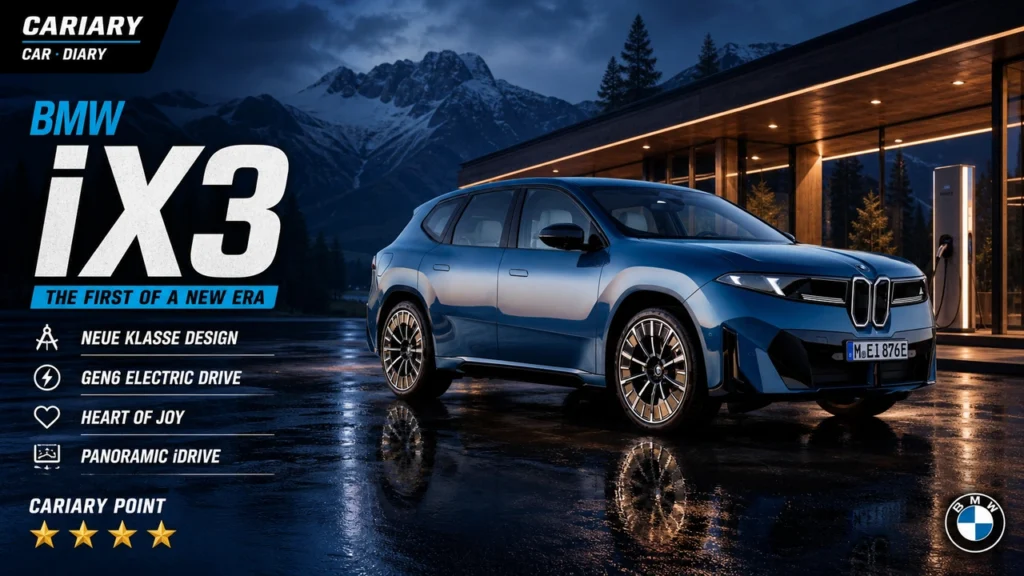
Quick Take
The new BMW iX3 is not important only because it is electric.
It is important because it shows BMW changing its mind.
For years, BMW made the kidney grille larger, louder, and harder to ignore. The iX3 goes in the opposite direction. The grille is smaller, cleaner, and more integrated into the front design. For an electric SUV, that makes sense. An EV does not need a huge combustion-engine-style intake to prove it is a BMW.
But the bigger revolution is inside.
The new iX3 introduces BMW Panoramic iDrive, a wide information display across the base of the windshield, paired with a large central touchscreen and a very different steering wheel. It feels like BMW looked at Tesla’s simplified dashboard idea and decided not to copy it directly, but to answer it in a BMW way.
That makes the iX3 one of BMW’s most important cars of the decade.
What Is It?
The BMW iX3 is a fully electric midsize SUV and the first production model of BMW’s Neue Klasse generation.
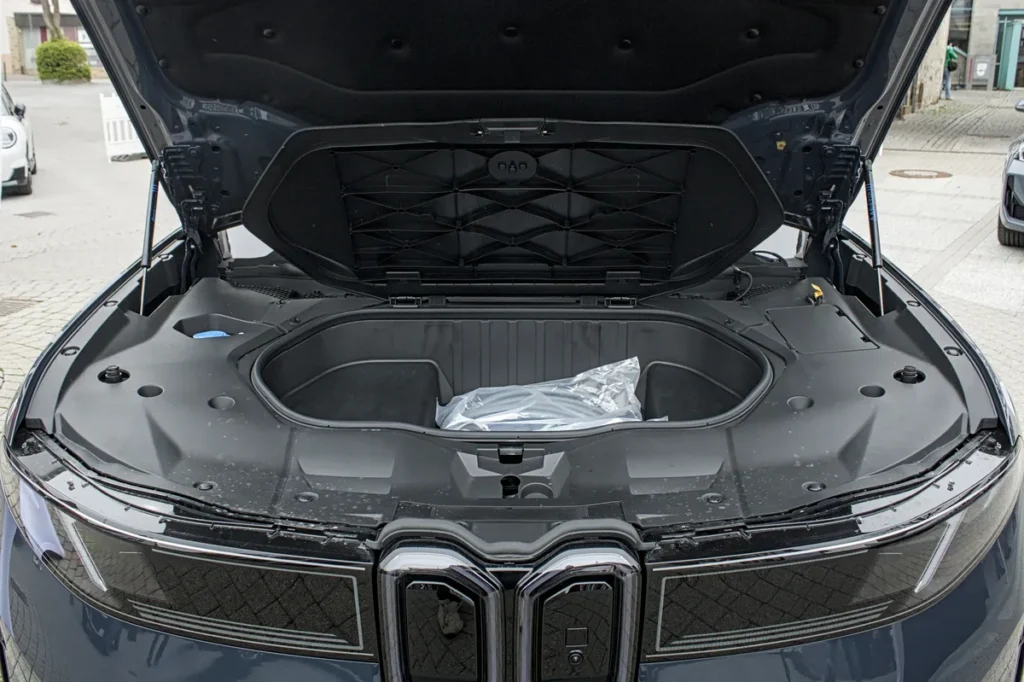
Image: Alexander Migl, CC BY-SA 4.0, via Wikimedia Commons
This is not just the old X3 with a battery. The new iX3 uses BMW’s next-generation EV platform, sixth-generation eDrive technology, a new interior interface, and a design language that will influence future BMW models.
BMW has announced the iX3 50 xDrive with dual motors, all-wheel drive, 463 hp, 476 lb-ft of torque, and a 0-60 mph time of 4.7 seconds in U.S. specification. BMW also says the model is expected to deliver up to around 400 miles of range in preliminary EPA-based estimates, while European WLTP figures reach up to 805 km depending on configuration.
So when people say “600 km on one charge,” the idea is realistic in context. Exact range depends on market, test cycle, weather, speed, wheels, and driving style. But the bigger point is clear: BMW did not design the iX3 as a short-range city EV. It is meant to be a serious long-distance electric SUV.
Why This Car Exists
BMW needed a new electric SUV that did more than follow the market.
The premium EV SUV space is crowded now. Tesla made the simple-screen EV interior feel normal. Porsche showed with
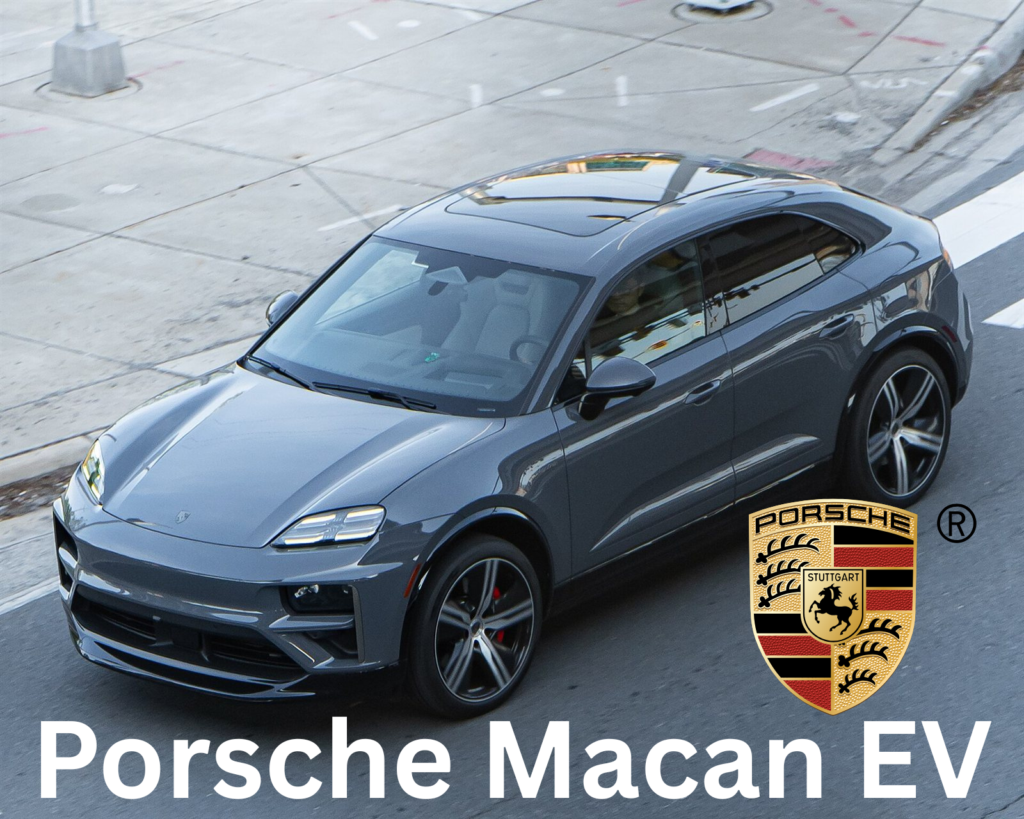
the Macan Electric that an electric SUV can still carry a performance-brand identity. Polestar has pushed clean Scandinavian design. Mercedes and Audi are also moving toward more software-heavy EV interiors.
BMW could not simply make another electric X3 and call it progress.
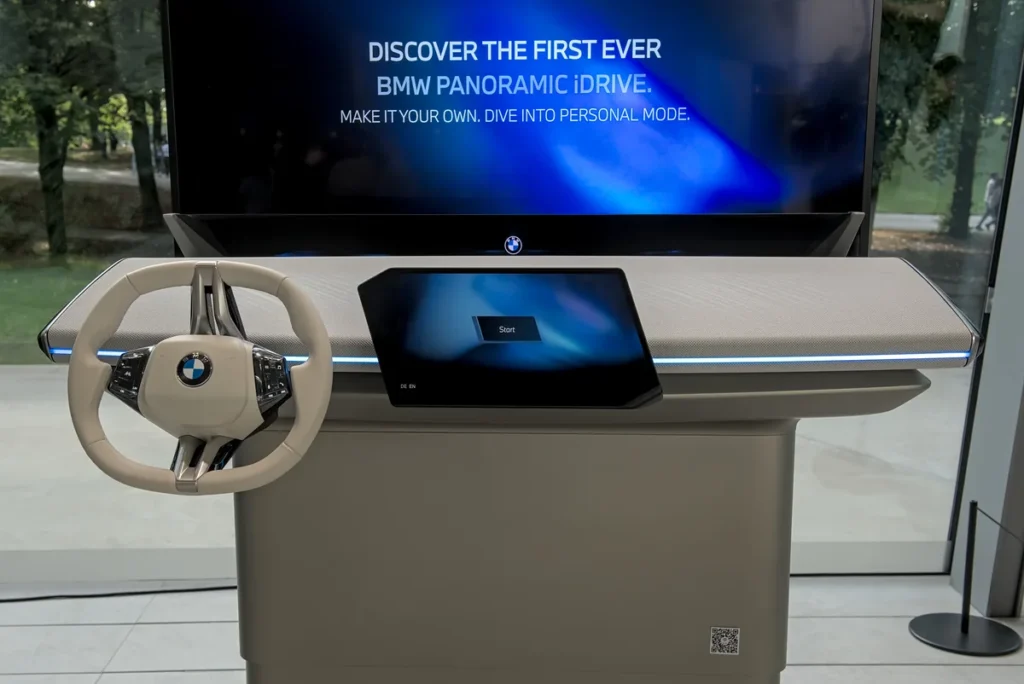
Image: Alexander Migl, CC BY-SA 4.0, via Wikimedia Commons
The iX3 exists because BMW needs to reset its EV language. It needs to show buyers that the next generation of BMW will not just be gasoline BMWs converted to electric power. The design, screen layout, driving interface, and charging experience all need to feel new.
That is why the iX3 matters more than its badge suggests.
It is a preview of BMW’s next decade.
Key Specs and Real-World Meaning
The iX3 50 xDrive is rated at 463 hp and 476 lb-ft of torque in U.S. specification. That is enough power for a premium electric SUV, but BMW is not trying to make this a Cybertruck-style numbers showpiece.
The important figures are range and charging.
BMW says the new iX3 uses an 800V architecture and can add up to 230 miles of range in about 10 minutes under ideal DC fast-charging conditions. A 10-80% charge is expected to take about 21 minutes on a suitable fast charger.
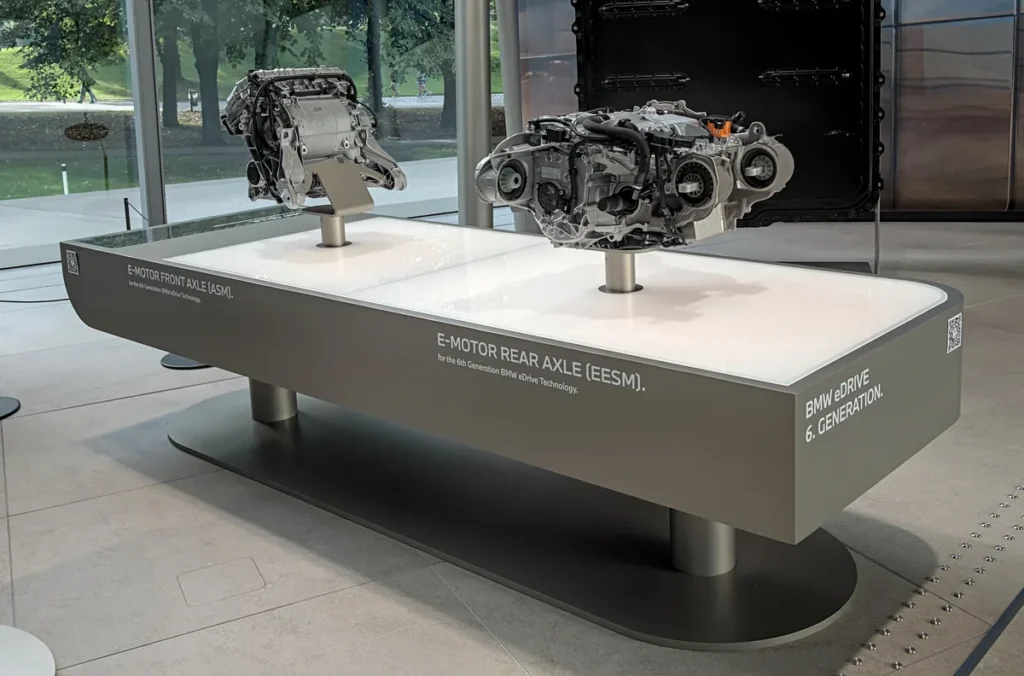
Image: Alexander Migl, CC BY-SA 4.0, via Wikimedia Commons
That matters because EV buyers do not only ask, “How far can it go?” They ask, “How stressful is it when I need to go farther?”
If the iX3 can consistently deliver strong real-world range and fast charging, it becomes much more practical than older premium EVs that looked expensive but felt limited on road trips.
Design and Identity
The most obvious design change is the grille.
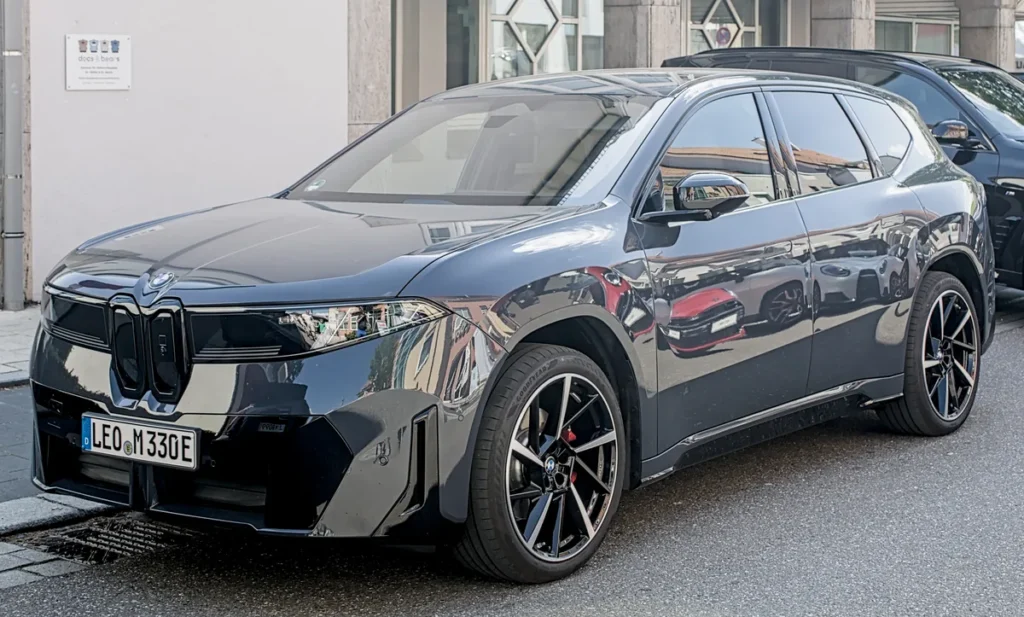
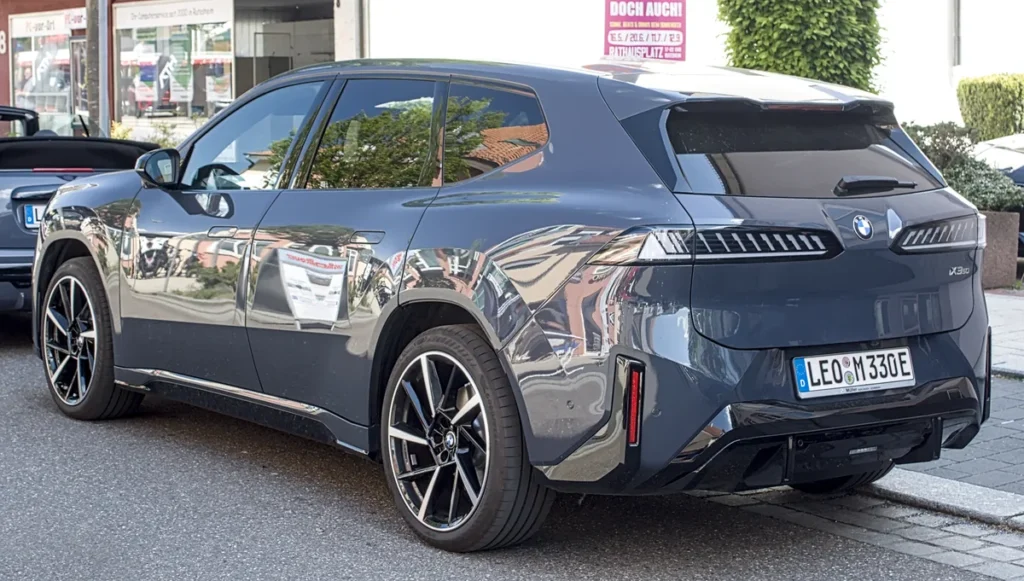
Image: Alexander Migl, CC BY-SA 4.0, via Wikimedia Commons
BMW’s kidney grille has always been one of the brand’s strongest identity points. In recent years, it also became one of the most controversial. Some BMW models made the grille so large that it dominated the entire front end.
The iX3 takes a different path.
The grille is still there, but it is slimmer and more vertical. It feels like a symbol rather than an intake. That is the right move for an EV. The car does not need to pretend it has the same cooling needs as a gasoline SUV.
This may be the first BMW in a while where the front end feels futuristic without being visually heavy.
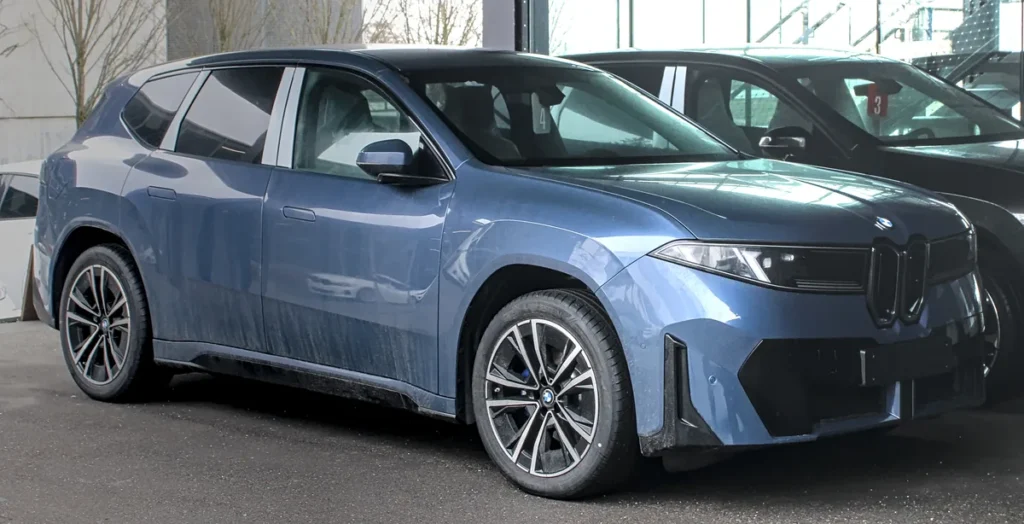
Image: Alexander Migl, CC BY-SA 4.0, via Wikimedia Commons
The iX3 still looks like an SUV. It has useful proportions, a practical roofline, and enough visual mass to feel premium. But it is cleaner than many recent BMWs. For buyers who felt BMW design had become too aggressive, the iX3 may feel like a reset.
Interior and Daily Use
The interior is where the iX3 makes its strongest statement.
BMW Panoramic iDrive moves key information across the lower windshield area, while the central touchscreen handles most functions. This makes the dashboard feel simpler and more open than a traditional BMW layout with a separate instrument cluster directly behind the steering wheel.
It is hard not to think about Tesla here.
When Cariary discussed
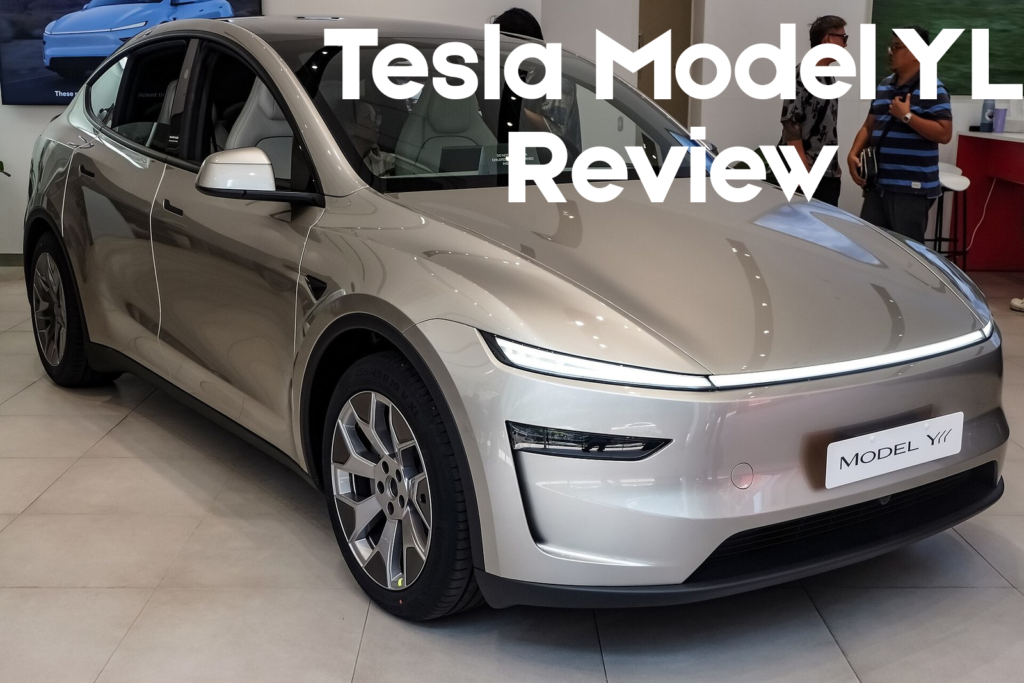
the Tesla Model Y L, one of the big themes was how Tesla made the dashboard feel clean by moving almost everything into one central screen. Many brands now seem to be following that idea in their own way. The iX3 may be BMW’s clearest step into that same design direction.
But BMW is not simply copying Tesla. The Panoramic Vision display is BMW’s attempt to keep driver information visible without building a traditional gauge cluster.
That is smart, at least in concept.
Steering Wheel and Interface Concern
The steering wheel may be the most controversial part of the iX3 interior.
The spoke layout looks almost like a cross shape, with control areas placed in a way that feels very different from a traditional BMW steering wheel. Visually, it makes the cabin look futuristic. But the real question is whether it feels natural while driving.
A steering wheel is not just a design object. It is something the driver touches constantly.
If the spokes, buttons, or grip points feel distracting, the design could become annoying even if it looks modern in photos. Some buyers may even wonder whether a simpler yoke-style idea would feel cleaner, though a conventional round wheel is still more practical for normal driving.
Cariary would want to test this in real traffic before calling it a success.
This could be a genuine innovation, or it could be a design decision that needs adaptation.
Range and Practicality
The iX3’s range is one of its strongest buyer arguments.
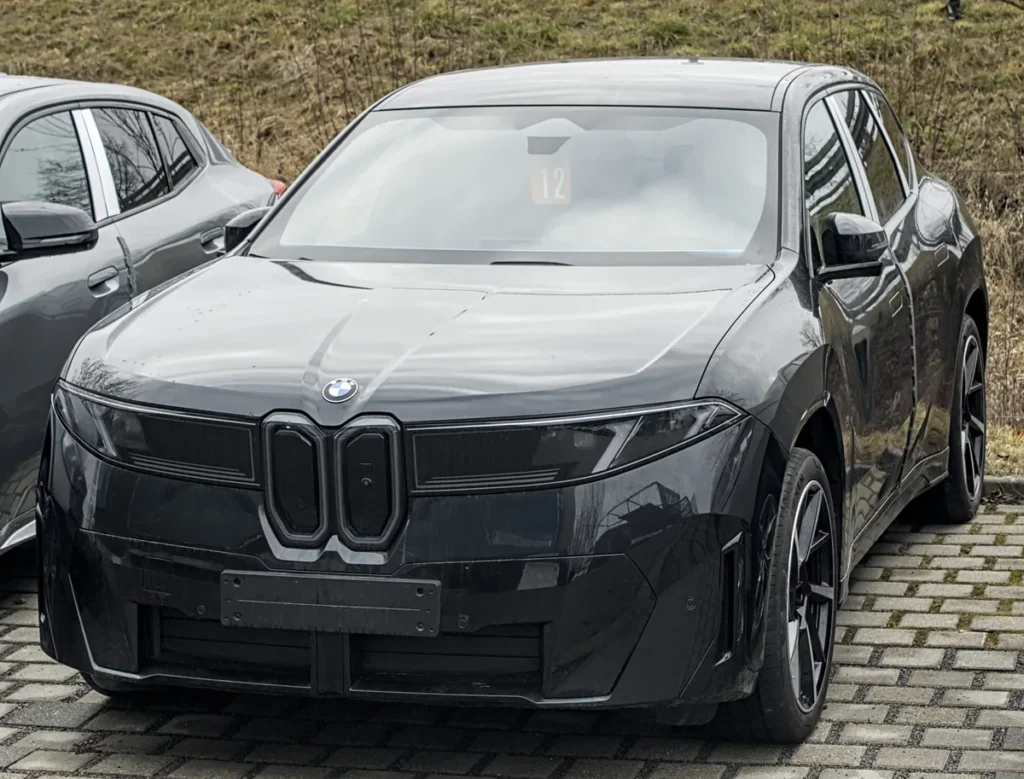
Image: Alexander Migl, CC BY-SA 4.0, via Wikimedia Commons
A claimed range around 600 km or more, depending on market and test cycle, changes how people think about an electric SUV. It means many owners can use it for commuting, family trips, and weekend travel without planning every drive around charging.
The key is not that every buyer will always see 600 km in real life. Cold weather, highway speed, heavy wheels, cargo, passengers, and driving style can all reduce range.
The key is that the iX3 starts from a high enough range target that real-world use should still feel practical.
For an EV SUV, that is the difference between “interesting” and “usable.”
Price-to-Value Judgment
BMW has positioned the new iX3 as a premium electric SUV, not a budget EV.
That means the iX3 needs to justify itself through more than badge value. Buyers will look at Tesla, Polestar, Porsche, Mercedes, Audi, Hyundai, Kia, and Genesis EVs. Some will offer lower prices. Some will offer more familiar charging ecosystems. Some will offer more emotional design.
The iX3’s value is that it brings BMW into the next EV generation with real substance: long range, fast charging, a new interface, and a cleaner design identity.
If the price lands close to mainstream premium EV SUVs, it could be very competitive. If options push it too high, buyers may start comparing it with the Porsche Macan Electric, where performance-brand appeal becomes harder to ignore.
The iX3 makes the most sense if BMW can keep the price realistic while making the technology feel genuinely new.
Competitor Comparison
The Tesla Model Y remains the practical benchmark. It has charging strength, software familiarity, and a simple cabin layout that many EV buyers already understand. The iX3 answers with a more premium brand feel, longer-range ambition, and a more BMW-like driving/interface identity.
The Porsche Macan Electric is the emotional premium EV SUV rival. It should appeal more to buyers who care about performance character and brand drama. The iX3 feels more like the rational premium EV SUV for buyers who want technology, range, and design maturity.
The Polestar 4 is another interesting comparison. It is more distinctive and design-led, with a stronger visual personality. The iX3 is likely to feel more mainstream and easier to understand for traditional luxury SUV buyers.
The Mercedes-Benz EQE SUV and Audi Q6 e-tron are closer German rivals. Mercedes leans toward comfort and luxury, Audi toward calm technology, and BMW is trying to use the iX3 to create a new digital-driving identity.
Recommended For
The BMW iX3 is recommended for buyers who want a premium electric SUV with long range, fast charging, and a more future-facing interior than the current luxury SUV norm.
It makes sense for people who like BMW but felt the brand’s recent grille design had become too heavy. It also makes sense for EV buyers who want something more premium than a Tesla but do not want to move into Porsche pricing.
The iX3 is especially interesting for buyers who care about dashboard design, range confidence, and the feeling that they are buying into BMW’s next generation rather than its past.
Not Recommended For
The iX3 is not recommended for buyers who want a traditional BMW cockpit with a normal gauge cluster and familiar buttons.
It may also not be ideal for drivers who dislike touchscreen-heavy interiors. BMW Panoramic iDrive may be clever, but it still represents a major shift away from old BMW ergonomics.
And if the steering wheel design feels awkward in person, some buyers may prefer a more conventional EV SUV.
Buyer Verdict
The BMW iX3 looks like one of the most important electric SUVs BMW has ever made.
Not because it has the most shocking horsepower. Not because it tries to look like a concept car. Not because it copies Tesla completely.
It matters because it shows BMW finally building an EV around a new design and interface philosophy.
The smaller kidney grille is a visual reset. Panoramic iDrive is an interior reset. The long-range battery and fast charging are practical resets. Together, they make the iX3 feel like a real step forward rather than a compliance EV.
The risk is that BMW may have pushed the steering wheel and interface too far for some traditional buyers.
But if the driving experience, range, and software work as promised, the iX3 could become the BMW EV that finally feels fully ready.
Cariary Perspective
Cariary sees the iX3 as BMW’s “new beginning” more than just another electric SUV.
For years, BMW’s design conversation was dominated by the grille. Some buyers liked the boldness. Others felt BMW was becoming too visually aggressive. The iX3 feels like BMW stepping back and saying: the future of the brand does not need a huge grille to be recognizable.
The interior may matter even more. Tesla proved that a clean dashboard could feel modern, and now BMW is trying to answer that idea without giving up driver focus completely. Panoramic iDrive could be one of the smartest interior moves BMW has made in years.
But the steering wheel is the part Cariary would watch carefully. It looks bold, maybe too bold. If it feels natural, BMW may look ahead of the curve. If it feels distracting, it may become the one part of the iX3 that buyers keep questioning.
Still, the overall direction is strong. The iX3 feels practical, modern, and brave in the right places. For BMW’s EV future, that is exactly what was needed.
One-Line Verdict
The BMW iX3 is the Neue Klasse SUV that trades BMW’s oversized-grille era for long range, a cleaner EV face, and a radically new interior.
FAQ
Is the new BMW iX3 based on the old X3?
No. The new iX3 is based on BMW’s Neue Klasse EV generation, not simply the old X3 platform with a battery added.
How far can the BMW iX3 drive on one charge?
BMW has announced very strong range targets, including up to 805 km under WLTP conditions and around 400 miles in preliminary U.S. estimates, depending on market and configuration. Real-world range will vary.
Does the BMW iX3 have a smaller kidney grille?
Yes. The new iX3 uses a smaller and cleaner interpretation of BMW’s kidney grille, which fits the EV design better than a large combustion-style front intake.
What is BMW Panoramic iDrive?
BMW Panoramic iDrive is a new interface that projects key information across the lower windshield area, supported by a central touchscreen and a redesigned steering wheel.
Is the BMW iX3 similar to a Tesla inside?
Not exactly, but it clearly moves in the same broad direction: fewer traditional displays, a cleaner dashboard, and more reliance on screen-based controls. BMW’s Panoramic Vision system is its own interpretation.
Should I buy the BMW iX3 or Tesla Model Y?
Choose the Tesla Model Y if charging ecosystem, software familiarity, and price efficiency matter most. Choose the iX3 if you want a more premium German EV SUV with BMW identity, long range, and a more advanced dashboard concept.
Related Cars
Tesla Model Y
Porsche Macan Electric
Audi Q6 e-tron
Mercedes-Benz EQE SUV
Polestar 4
Genesis Electrified GV70
Data Reference Date
August 6, 2026