Cover: AI-generated Cariary editorial illustration using European-specification design references.
This Audi RS3 review asks whether five-cylinder character is worth the price of a much larger car. The 2026 U.S. RS 3 Sedan makes its strongest case to someone who wants an ordinary journey to feel less ordinary—and can accept that its space and refinement still belong to a compact performance car.
Fast acceleration is easy to admire on a screen. Living with the car that produces it is a different decision. You will encounter parking ramps, traffic, passengers and worn pavement more often than a perfect launch. The interesting question is how much of the RS 3’s appeal survives those conditions.
This is a research-based buyer review of the facelifted 8Y-generation sedan, using U.S. 2026 specifications and prices. Cariary has not road-tested this vehicle. Independent test findings are identified by model year; the interpretation and four-star editorial verdict are ours.
Audi RS3 Review: Quick Verdict
CARIARY POINT: ★★★★ — 4/5. The RS 3 earns its place through a distinctive engine and serious chassis hardware in a manageable sedan body. Its case weakens when the shopping list puts passenger comfort, cabin space or value ahead of driving character. The fifth star stays out because the compromises remain present even when you are enjoying the engine.
- Choose it for: five-cylinder personality, compact proportions and a performance-focused daily driver.
- Think twice if: you expect the price to buy generous family space or a quiet luxury-car experience.
- The essential comparison: drive an S3 on the same route before deciding how much the extra character is worth.
Table of Contents
- The engine and the meaning of the numbers
- What the torque splitter contributes
- Design and the cabin decision
- Daily use and passengers
- Price, options and ownership
- RS 3 versus S3 and CLA 45 S
- Cariary Perspective
- Buyer questions
Five Cylinders Give the RS 3 Its Reason to Exist
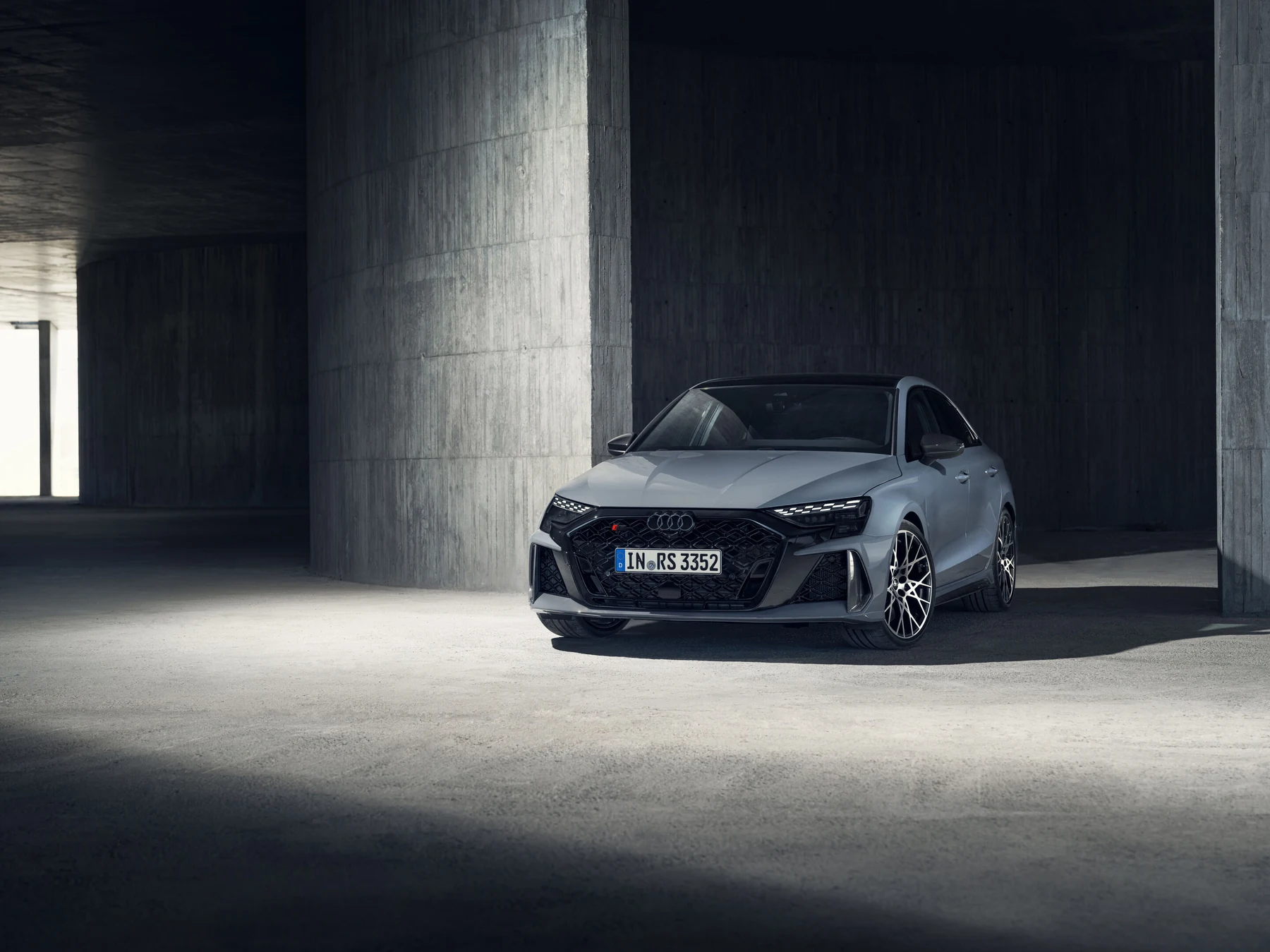
Audi’s 2026 U.S. specification lists a turbocharged 2.5-liter five-cylinder, 394 hp and 369 lb-ft, with a claimed 3.6-second 0–60 mph time. A seven-speed dual-clutch transmission sends power through quattro all-wheel drive. Those figures establish the performance; the unusual engine configuration establishes the identity.
For Cariary, the strongest argument is that an engine can give a car a recognizable personality without requiring a different body style or an impractically large footprint. Someone who enjoys mechanical sound has a reason to pay attention here. Someone who wants effortless, quiet transportation may hear the same characteristic as an unnecessary intrusion. Neither response needs to be corrected.
The appeal also has a time dimension. A screen interface can stop looking modern while an engine’s distinctive cadence remains enjoyable. That does not guarantee future collectability or higher resale value. It simply suggests a more durable source of personal satisfaction than buying the newest display layout.
Launch Acceleration Is Only One Part of the Story
Car and Driver’s instrumented 2025 RS3 test recorded 3.2 seconds to 60 mph, excluding 0.3 second of one-foot rollout, and 4.6 seconds from a rolling 5–60 mph start. It also reported launch-control heat limitations on its test car. These are that publication’s 2025 results, not a Cariary test or a reliability verdict on every RS 3.
The two acceleration figures answer different questions. One describes a prepared start; the other is closer to asking the powertrain to respond after the car is already moving. They should not be treated as interchangeable, and neither promises an identical result on your road. For a buyer, the practical lesson is to pay attention to response at ordinary speeds, rather than allowing a launch number to decide the entire purchase.
During a demonstration drive, leave the car in its normal automatic setting first. Notice whether the response suits the way you merge, follow traffic and accelerate from a junction. Then try the sportier setting where conditions permit. The difference between those two experiences matters more to a commuter than a decimal place in a standing-start comparison.
The Torque Splitter Changes More Than Traction
Audi’s facelift technical explanation describes revised coordination between the torque splitter, stability control, brake-based torque vectoring and adaptive damping. The rear axle can vary the torque sent to its two wheels. Directing more rear drive torque toward the outside of a corner helps the car turn, rather than merely helping it accelerate away.
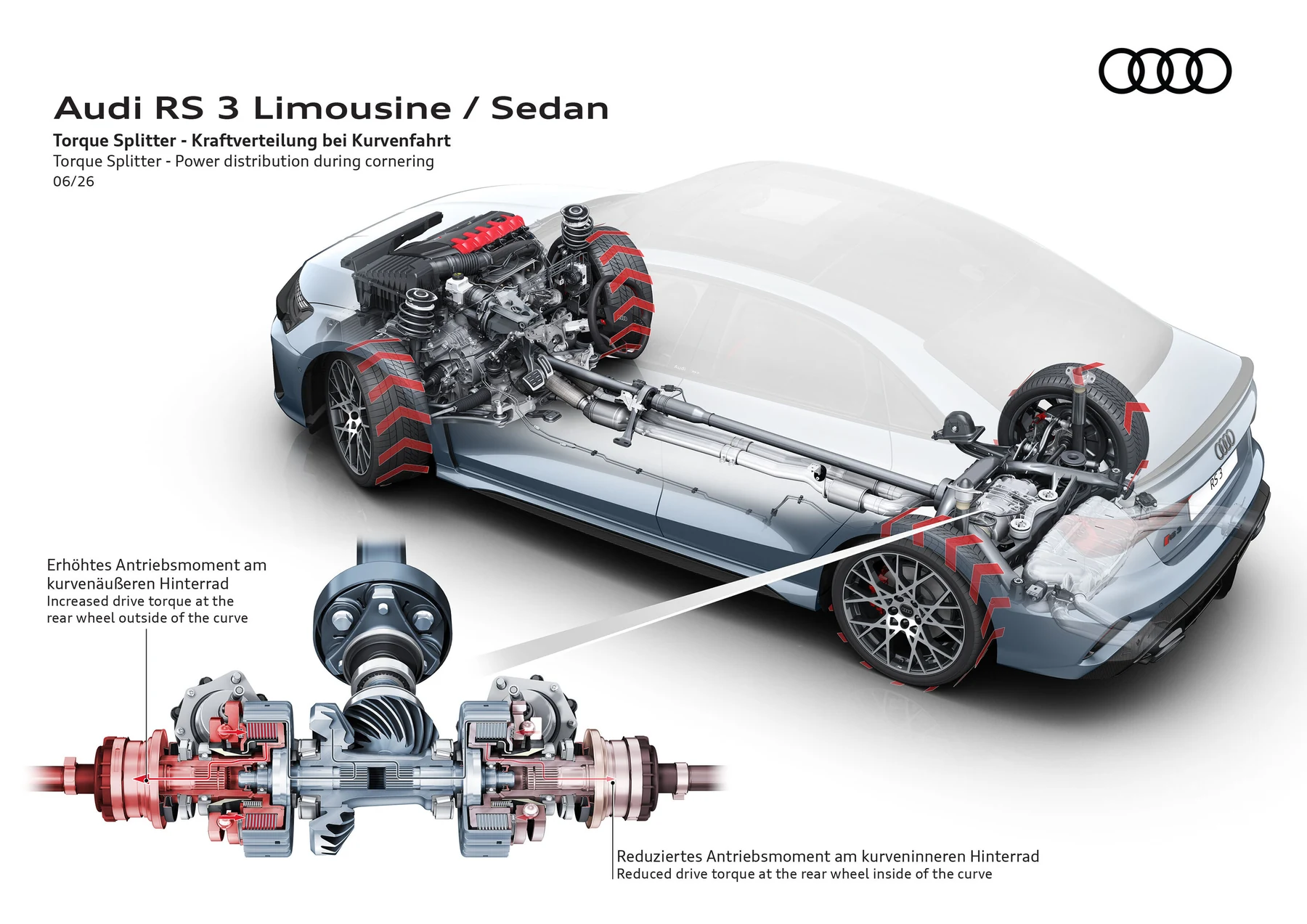
That distinction explains why chassis development matters even when the headline engine output stays familiar. A fast car needs to manage the transition into, through and out of a bend. Additional power cannot fix every weakness in that sequence. The hardware gives the RS 3 a more substantial engineering story than an engine tune and a badge.
It does not remove the importance of tires or road conditions. All-wheel drive can help deploy engine torque, but the tires still provide the contact needed for turning and stopping. Audi specifically warns that its high-performance summer tires are unsuitable for cold, snowy or icy conditions. A buyer in a cold climate should include an appropriate seasonal tire plan in the ownership decision.
The Design Makes a Small Sedan Look Deliberate
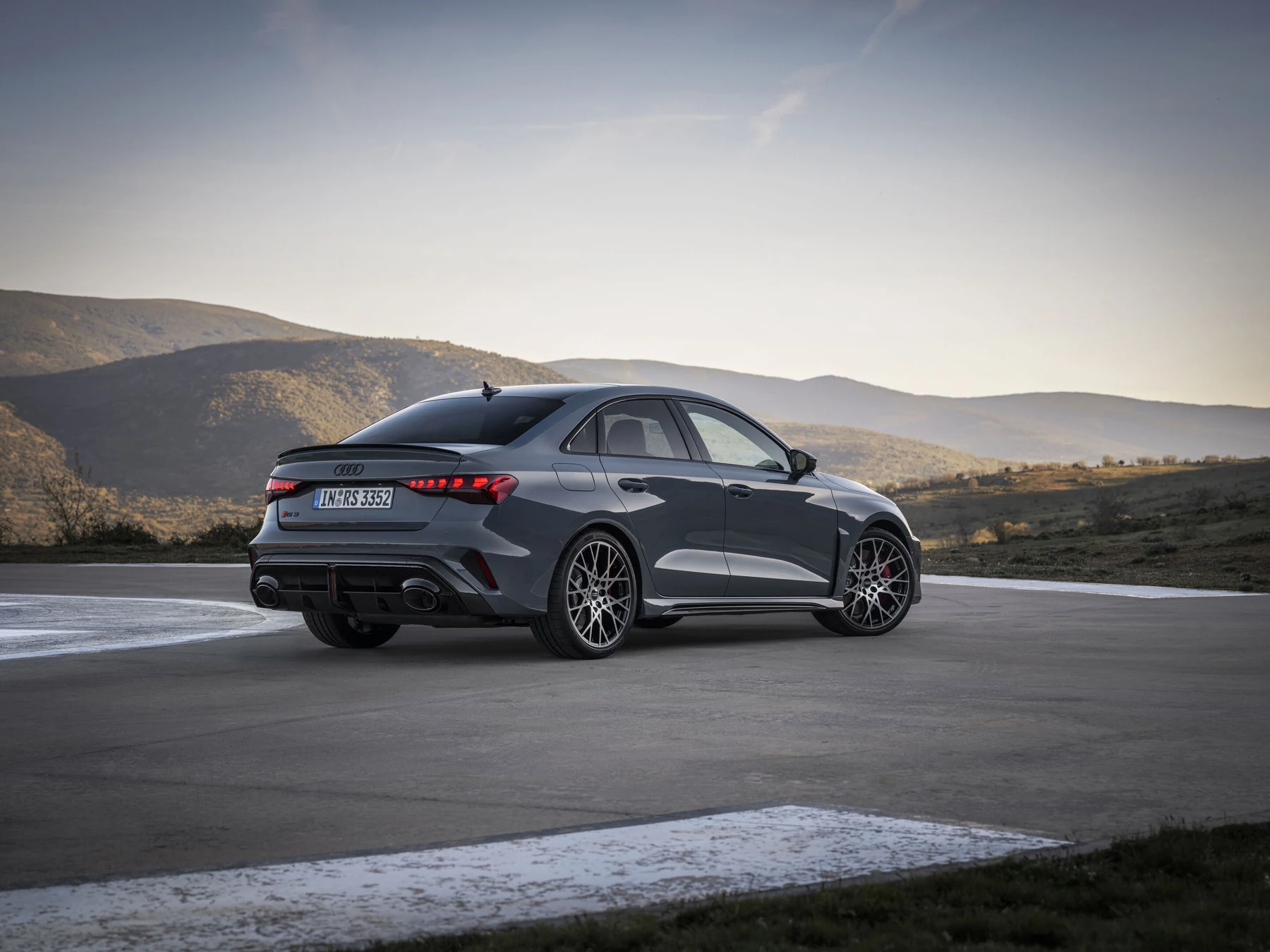
The official exterior photographs show a broad, dark grille, pronounced front openings and a body that keeps conventional sedan proportions. At the rear, the oval exhaust outlets and central reflector provide clear visual signatures. The result communicates intent without needing an enormous car around it.
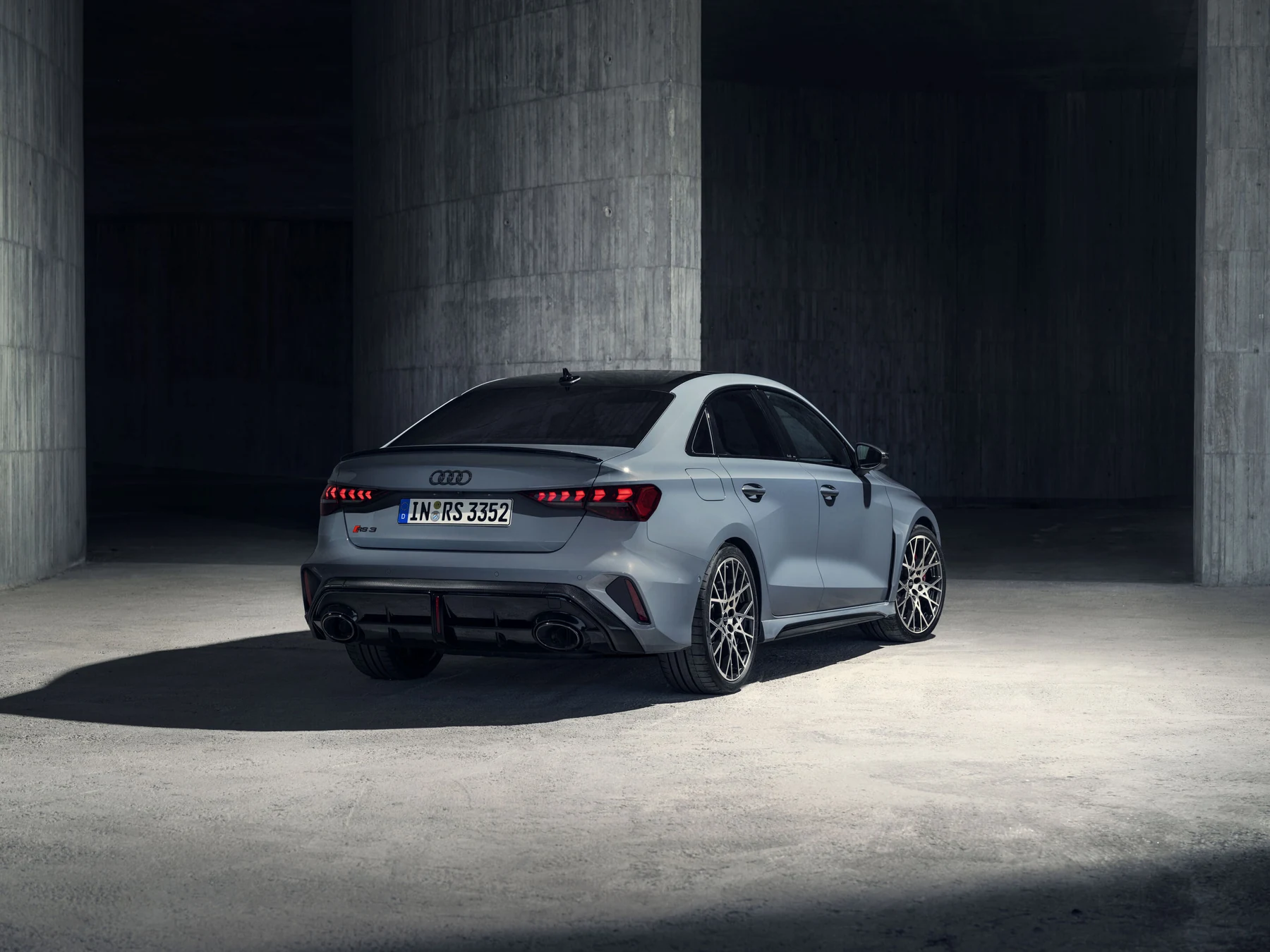
That compactness is part of the attraction. An owner can enjoy the shape every time the car is parked without needing to explain its lap time. It also makes the value judgment harder: the purchase price does not automatically produce the visual scale or spaciousness people associate with an expensive sedan. The buyer has to want this particular form of concentration.
Judge the Cabin by the Tasks You Repeat
The U.S. model’s steering wheel is flat at both the top and bottom, with RS shortcut buttons; a head-up display is standard for 2026. These are useful details to evaluate from the driver’s seat. Check whether the wheel shape suits your hands and whether the information appears where you naturally look.
Spend time on ordinary operations before exploring performance graphics. Set a destination, connect your phone, change the temperature and place a drink where it will actually live. A cabin that feels exciting for a few minutes can become irritating if a repeated action takes too much attention. Conversely, controls that become familiar quickly can matter more than a dramatic first impression.
Do not use European promotional seats as a promise of U.S. equipment. Specify and inspect the actual car you are buying. Seat fit is personal, and photos cannot establish thigh support, shoulder comfort or whether a particular driving position leaves enough room behind you.
Daily Use Is Where the Four-Star Verdict Gets Tested
The RS 3 has rear doors, but rear doors alone do not settle the family-car question. Put the driver’s seat in your normal position, then assess the space remaining behind it. If a child seat or bulky stroller belongs to your routine, bring it to the appointment. A measurement on a page cannot tell you how awkward a repeated loading task will feel.
A compact sedan can suit a driver or couple whose rear seats are used occasionally. A household regularly carrying adults, child seats and luggage has a different requirement. For that buyer, the question is whether the packaging still works on the busiest day of the week. It is better to discover a mismatch before purchase than to expect enthusiasm to make it disappear.
Car and Driver’s same 2025 review found daily comfort acceptable with standard seats and softer damping. Adaptive dampers give the RS 3 a way to vary its suspension response, but the presence of adjustment is not a promise of limousine comfort. Include broken pavement, a familiar speed hump and a stretch of highway in the test route. Bring the passenger who will use the car most often. Their tolerance for movement and noise belongs in the decision alongside yours.
The same approach applies to the exhaust option. Listen from inside the cabin at steady speed as well as during acceleration. A sound that rewards an occasional enthusiastic drive has to remain welcome on the trip home when everyone is tired. The ideal specification is the one that fits your repeated use, not the one with every performance option checked.
2026 Audi RS3 Price and Ownership: Protect the Budget
Audi lists a $66,100 starting MSRP. Its current U.S. pricing disclosure adds $1,395 destination, producing a $67,495 starting total before options, taxes and other charges. Actual dealer pricing can differ. These figures were checked on September 6, 2026.
The option list deserves discipline. Dynamic plus combines ceramic front brakes, special summer tires, a carbon engine cover and a 180-mph track-speed limiter. The last item contributes little to an ordinary commute. If your intended use is mostly public roads, understand the cost and purpose of the hardware before allowing the package name to sell itself.
Request replacement prices for the tires and brakes fitted to the specific car. Include insurance and a realistic mileage estimate in the calculation. A manageable monthly payment can conceal a maintenance budget that feels disproportionate later. These are costs worth establishing with actual quotations rather than generic estimates for the badge.
Audi Signature Care includes scheduled maintenance for eligible 2026-and-newer vehicles for the first three years or 30,000 miles, whichever comes first. That is helpful, but scheduled servicing is not the same as covering every wear item or every ownership expense. Check the covered work and eligibility for the vehicle being purchased.
Long-Term Confidence Requires More Than an Engine Reputation
This review does not have enough model-specific long-term evidence to promise exceptional reliability or predict a particular failure. A distinctive engine is a reason to consider the car, not proof that repair costs will be low. The relevant ownership system includes the transmission, rear-axle hardware, suspension and electronics as well as the engine.
For a used example, service records and the history of modifications matter more than a seller’s claim that the car was always treated gently. Arrange an independent inspection, verify the equipment and request evidence of completed maintenance. A cheaper entry price loses its appeal quickly if it is paired with uncertain history.
Likewise, do not build the purchase around an assumed future collector premium. Buy the character because you expect to enjoy it. Any eventual resale advantage should be a possibility, rather than money already counted in the budget.
RS 3 Versus S3 and Mercedes-AMG CLA 45 S
The S3 Is the Comparison That Can Save You Money
The 2026 U.S. Audi S3 starts at $52,000 before destination. Its 2.0-liter four-cylinder produces 328 hp, and it also offers standard quattro and a torque splitter. The $14,100 difference between starting MSRPs is not an equipment-adjusted quotation, but it is too large to ignore.
That comparison makes the RS 3 justify itself through more than the presence of rear-axle technology. If the S3 already supplies the speed and interaction you want, it may leave more money for travel, fuel and the rest of life. If the five-cylinder engine is what you keep returning to, the RS 3 has a clearer emotional purpose. Test both before converting that purpose into a purchase.
The CLA 45 S Offers Another Kind of Compact Performance
Our Mercedes-AMG CLA 45 S review examines the same broader tension between performance and everyday compromise. The Mercedes presents a different cabin and body shape; the Audi’s five-cylinder identity is its clearest point of separation. Choosing between them should include the seat, sight lines, controls and passenger experience, not just an output comparison.
The more revealing question is which car you would still want after the initial acceleration novelty fades. Their differences will continue to matter in the driveway and in traffic. For a wider view of those brand expectations, read Cariary’s AMG, BMW M and Audi RS perspective.
Cariary Perspective: Buy the Character You Will Keep Using
Recommended for: the enthusiast who specifically wants the five-cylinder engine, prefers a compact sedan and has verified that the space and ride suit daily life. The RS 3 also makes sense when an enjoyable routine matters more than having the largest cabin available for the money.
Not recommended for: buyers primarily seeking generous family accommodation, low running costs or maximum isolation from noise and road texture. It is also a questionable upgrade for someone already satisfied by an S3 and interested mainly in the higher badge.
Cariary’s four stars recognize a car with a persuasive reason to exist and meaningful compromises. The right owner will appreciate its personality repeatedly. The wrong owner will keep noticing what the price did not buy. Neither outcome is determined by a launch-control stopwatch.
One-line verdict: A compact sedan worth buying for its five-cylinder character—after you have made peace with the everyday bill.
Audi RS3 Review: Buyer Questions
Does this review cover the Sportback?
No. The price and equipment discussion covers the 2026 U.S. Sedan. European-specification facelift sedan photographs illustrate the design; equipment may differ. For the model overview, see the Audi RS 3 Car Profile.
Which test-drive checks should come first?
Start with seat comfort, ordinary automatic-mode response and your regular road surfaces. Then check passenger and luggage needs. Performance modes are easier to appreciate after those daily requirements have passed.
Should I automatically choose Dynamic plus?
No. Match the package to the way you will use the car and obtain replacement-cost quotations for its hardware. Track-focused equipment does not make every road-car purchase better.
Is a faster launch enough reason to choose it over an S3?
It is a narrow reason for a substantial expense. The stronger case is enjoying the RS 3’s particular engine and overall character often enough to justify the extra purchase and running costs.
Data reference date: September 6, 2026. U.S. dollars and U.S. 2026 model specifications unless stated otherwise. Independent acceleration evidence refers to Car and Driver’s 2025 test. Prices and equipment may change.

