Motorsport for Beginners starts with a question that sounds easier than it is: what should I actually watch? A Formula 1 car attacking a corner, a NASCAR pack running side by side, and a rally car disappearing into dust are all racing. But the interesting part of each picture is different.
You do not need to learn five rulebooks before choosing one. You need a reason to care about what happens next.
This is Cariary’s starting point for finding that reason. We have brought together our F1, NASCAR, WRC, 24 Hours of Le Mans, and Dakar guides, using a different question for each: where is the contest, and what should our eyes follow?
Quick Summary
- F1: Start here for driver rivalries, qualifying pressure, technology, and the timing of a pit stop.
- NASCAR: Try it for close racing, changing lanes, restarts, and decisions made in traffic.
- WRC: Watch the clock, the road surface, and the conversation between driver and co-driver.
- Le Mans: Follow one car and its class as speed, traffic, reliability, and teamwork accumulate over 24 hours.
- Dakar: Follow the daily story of navigation, terrain, repairs, and staying in contention across many days.
These are five entry points, not the whole of motorsport. There is no test to pass and no obligation to enjoy them in this order.
Motorsport for Beginners: Understand the Contest First
Before asking who has the fastest car, ask how this particular competition measures success. That one change makes a surprising amount of the television coverage easier to read.
Racing the Cars Around You
In F1 and NASCAR circuit races, drivers share a track and compete for position. Seeing a pass is immediately satisfying because we can watch one competitor move ahead of another.
Even here, the picture is incomplete. Cars can be on different laps or different pit strategies. A car leading while rivals have already stopped may not have the strongest position once it makes its own stop. The timing display supplies the context that the camera cannot.
Racing the Clock
WRC crews normally start timed stages at intervals. A clean road ahead does not mean there is no close contest. Two crews can be separated by seconds in the results without appearing together on screen.
Dakar also rewards competitive elapsed time rather than a simple side-by-side finish. But navigation and the scale of its terrain make it a different kind of challenge. Following the correct route is part of the performance, not merely preparation for it.
Racing Distance, Time, and a Whole Team
Le Mans adds another perspective. The target is to cover the greatest distance within the race’s duration, subject to the classification rules. Drivers share cars, and different classes compete on the same circuit.
That means the car being overtaken may still be leading its own race. Understanding its class can turn an apparently uneventful moment into an important battle.
One useful distinction: F1 and WRC are championships, while NASCAR organizes multiple series; this guide mainly means the Cup Series. Le Mans and Dakar are individual events associated with wider championship calendars. They are not five equivalent season names.
Five Ways to Race, at a Glance
| Starting point | Where it happens | How to read the result | The first thing to follow |
|---|---|---|---|
| F1 | Permanent circuits and street circuits | Race classification, then season points | One driver, the gap ahead, and pit timing |
| NASCAR Cup | Ovals of different shapes and lengths, plus road and street courses | Race finish and stage points within the season contest | One car number, its lane, and the next restart |
| WRC | Closed-road stages on surfaces such as gravel, asphalt, snow, and ice | Combined stage times and applicable penalties | Stage time versus overall rally position |
| Le Mans | The Circuit de la Sarthe in France | Distance completed and classification, overall and by class | One car number and its class rivals |
| Dakar | Long rally-raid routes across varied terrain | Accumulated competitive times and applicable adjustments within each category | Daily performance versus the overall gap |
This comparison is deliberately about watching, not ranking difficulty. Precision, strategy, teamwork, and mechanical sympathy matter across all five. Each simply makes a different part of that work easier to notice.
1. F1: Follow the Driver, Then the Decision
The question to watch: can this driver turn pace into track position?
Formula 1 is an inviting place to start if you enjoy a continuing sporting story. A driver, a teammate, a rival team, and the next race give you something recognizable to return to. Qualifying creates tension before the Grand Prix has even begun.
The cars are single-seaters with exposed wheels, built for this form of competition. Their performance is not just about engine output. How they use airflow, tires, and available energy matters too. You do not need to understand the engineering drawings to notice the consequences.
Watch a driver close on the car ahead. Does the gap keep shrinking, or does the chase stall? Then watch what happens when one of them stops for tires. A position can be gained through a better sequence of laps rather than a dramatic wheel-to-wheel pass. F1’s official beginner explainer is a useful introduction to that combination of qualifying, racing, and strategy.
Your First Viewing Habit
Choose one driver and learn the name abbreviation and car number shown in the broadcast. Paint schemes and helmets are interesting, but a timing display is a more dependable starting point than trying to recognize a helmet at speed.
For one stint, meaning a run between pit stops, follow just three things: position, the gap to the car ahead, and tire age. When a commentator says an undercut might work, they mean stopping earlier and using the subsequent pace advantage to get ahead when the rival stops. It is a possibility, not an automatic reward for pitting first.
One current-language caution: older F1 videos often discuss DRS. The 2026 rules introduced active aerodynamics and Overtake Mode instead. Do not assume an explanation from an older season describes today’s passing aids. The FIA’s explanation of the 2026 changes separates those functions.
Continue with Cariary’s guide to watching F1 for driver identification, tires, flags, and the terms that make a broadcast easier to follow.
2. NASCAR: Watch the Traffic, Not Just the Track Shape
The question to watch: who can create an opportunity inside this traffic?
A simple-looking oval can be misleading. Repeating the same corners does not mean repeating the same situation. The cars around a driver keep changing, and a promising lane can stop moving at exactly the wrong moment.
NASCAR also does not mean one kind of oval. Short tracks, larger ovals, and road or street courses create different demands. The official NASCAR track guide explains why track length, banking, surface, and configuration change the racing. A clip from a drafting track is not a complete picture of the Cup Series.
On drafting-focused tracks, watch how cars work in lines. Drafting means using the airflow associated with another car to reduce resistance; the interaction can help cars build speed together. Leaving a useful line can be costly if nobody follows. NASCAR’s drafting explainer gives the visual version of that idea.
Your First Viewing Habit
Pick a car number rather than relying on its sponsor colors, which can change between events. At a restart, watch that car for several laps. Does the chosen lane move forward? Does the driver have help? Is another car’s momentum about to become a passing opportunity?
Then notice the stage marker. A NASCAR stage is a segment of the race, with points awarded at designated stage finishes. It is not the same thing as a separate WRC timed road section. A team’s interest in points before the finish can explain a decision that otherwise seems odd.
For the 2026 season, NASCAR returned to a points-based Chase championship format without the previous elimination rounds. Our purpose here is not to make you memorize that system, but to avoid judging a current race using an old playoff explanation. NASCAR’s current Chase guide covers the details.
Continue with Cariary’s NASCAR viewing guide to explore drafting, tires, pit decisions, and why oval racing is far more strategic than it first appears.
3. WRC: Listen to the Road Before You See It
The question to watch: how quickly can this crew read and manage the road?
The World Rally Championship is compelling even before you understand the timing. The road is narrow, the surface changes, and the car seems to prepare for a corner before the camera has revealed it.
The voice beside the driver is part of the explanation. The co-driver reads pace notes, the crew’s detailed descriptions of the route ahead. They help the driver anticipate corners, crests, and hazards. Crews prepare or refine these notes during reconnaissance, often called recce. Skoda’s rally introduction explains this partnership.
The important point is not to decode every number immediately. Listen for a direction or warning, then watch the road produce what was called. That short delay between instruction and corner is a wonderful way to appreciate the teamwork.
Your First Viewing Habit
Watch one uninterrupted onboard passage. Pay attention to what happens before a corner: braking, a change in the car’s attitude, and preparation for the exit. A big slide looks exciting, but the result is the time, not the size of the slide.
Then compare the crew’s stage result with its overall rally position. A special stage is a timed competitive section. The overall contest combines those times with applicable penalties; ordinary connecting roads are not additional unrestricted races. Skoda Motorsport’s guide to rally stages explains the distinction.
Here is an invented example: Crew A begins a stage 12 seconds behind Crew B overall, then beats B by four seconds on that stage. With everything else unchanged, A is still eight seconds behind. A stage win and the rally lead are different achievements.
That little calculation gives a solitary car real opposition. Suddenly, the question is not just whether the driver looks fast. It is whether the crew is gaining enough time while keeping the car intact.
Continue with Cariary’s WRC beginner guide for stage timing, pace notes, tires, and the vehicle control behind the spectacle.
4. Le Mans: Follow a Car Through an Entire Day
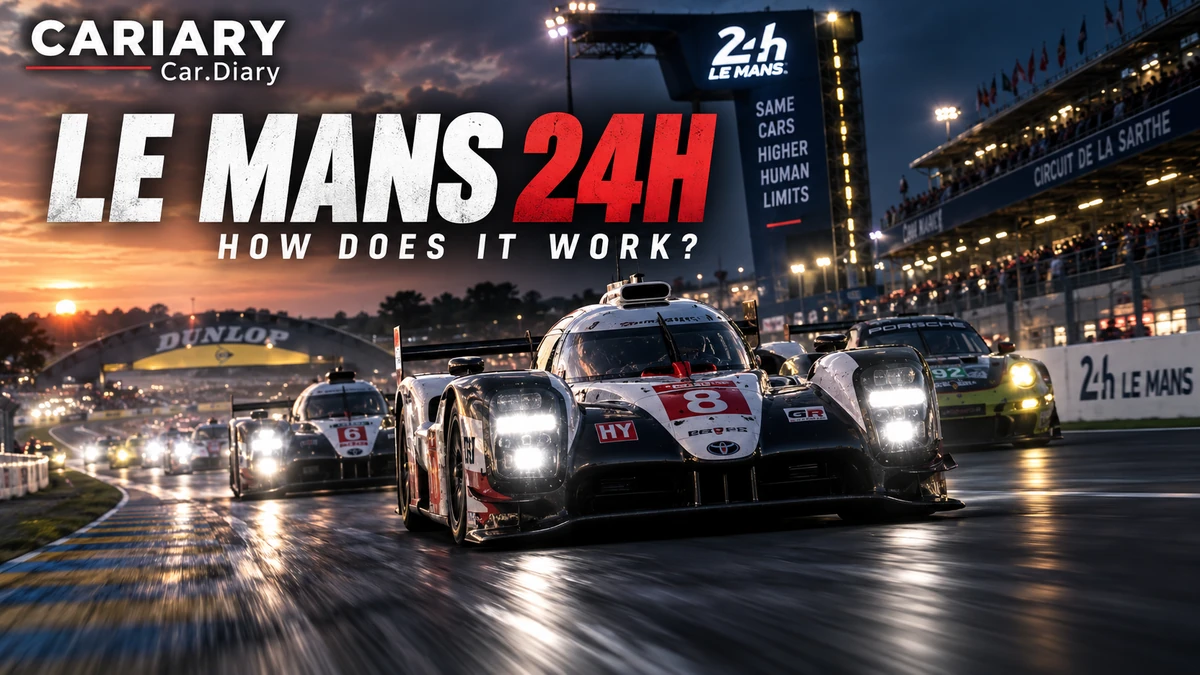
The question to watch: who can keep turning speed into distance?
The 24 Hours of Le Mans offers a different rhythm. The story does not end when daylight does. Cars return for fuel, tires, driver changes, and sometimes repairs, while the circuit keeps presenting traffic and changing conditions.
The key is to choose a car number, not just one driver. A crew shares the car, so your chosen entry continues its race when another driver takes over. Speed remains essential, but a repair can erase the benefit of many quick laps. The organizer’s look at endurance driving helps explain why a long race is not simply slow driving for longer.
Your First Viewing Habit
Find your car’s class before judging its position. The 2026 Le Mans field includes Hypercar, LMP2, and LMGT3, as shown in the official entry announcement. A prototype passing an LMGT3 car does not necessarily change either one’s position within its own class.
Hypercar is the headline prototype category; LMP2 is a separate prototype class. LMGT3 cars have a more recognizable relationship to road-going sports cars, but they remain dedicated competition machines. For class-specific details, start with the organizer’s Le Mans class guide.
Watch a pit cycle, then check the class order again. Imagine one car stops while its rival stays out. The temporary position change alone does not tell you who gained; compare them again once their stops make the picture more comparable.
You also do not need to watch all 24 hours. Try the start, a night-time section, an overnight recap, and the closing hour. On returning, ask three questions: where is our car, how large is the class gap, and did it lose time in the garage?
Continue with Cariary’s Le Mans viewing guide for classes, pit work, driver changes, and the meaning behind endurance-racing timing screens.
5. Dakar: Getting There Is Part of Being Fast
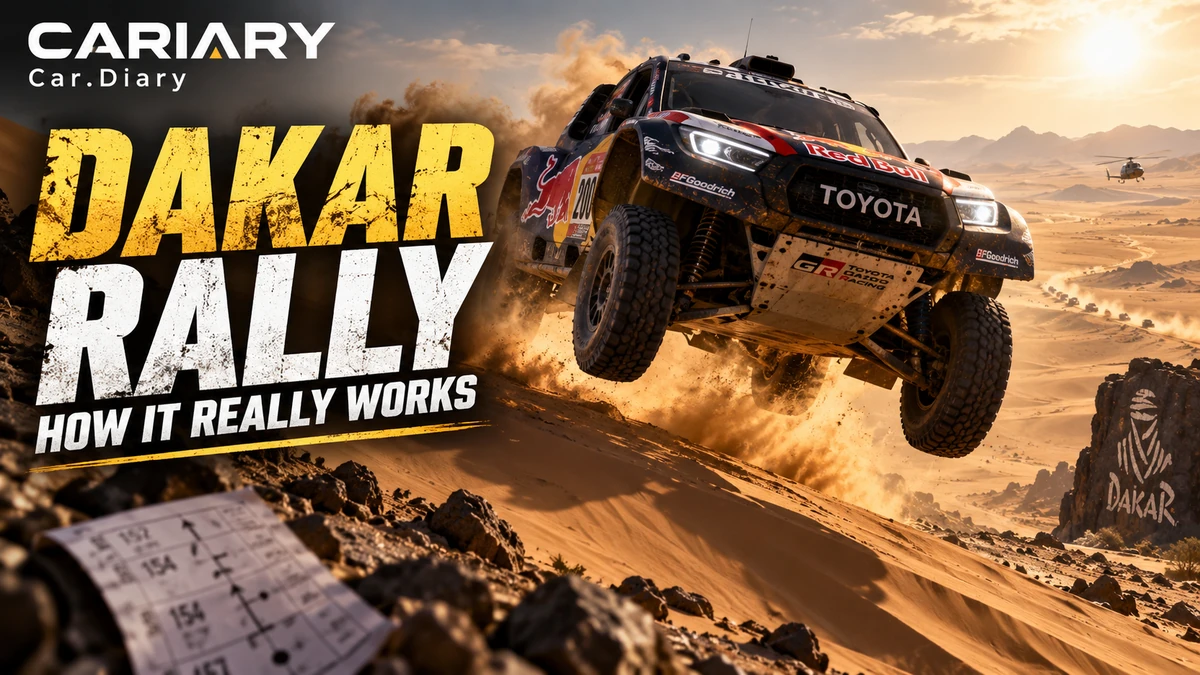
The question to watch: can this competitor stay fast without losing the route or the vehicle?
The Dakar Rally is a rally raid: a long-distance event in which navigation and varied terrain form part of the competition. It is not simply WRC with taller dunes.
In WRC, the crew’s pace notes anticipate a road examined during recce. Dakar competitors navigate using an organizer-issued roadbook, with route instructions, distances, and symbols. A fast vehicle heading the wrong way is not solving the right problem. The Dakar race-format guide describes that combination of timed sections and navigation.
Your First Viewing Habit
Choose one category first, such as cars or motorcycles. Do not read all the different vehicles as if they share a single equivalent contest. Look at the day’s result and then the overall standings within the category you selected.
A daily highlight package is a practical starting point. Follow it with three questions: who gained time, who lost it through navigation or damage, and how much did that change the overall gap? A spectacular jump may lead the video without explaining the result.
Also notice the work after the timed section. The bivouac is the event’s camp and service environment. Maintenance, preparation, and rest affect what can happen the next day. The organizer’s typical-day guide shows how much surrounds the competitive driving.
The satisfying part is watching a story accumulate. One day’s sensible pace can protect a position; another day’s problem can make a previously comfortable lead fragile. Finishing matters, but merely surviving is not enough to win. The challenge is to keep combining speed with sound decisions.
Continue with Cariary’s Dakar Rally guide for roadbooks, waypoints, vehicle categories, repairs, and the daily decisions behind the desert footage.
Which Motorsport Should You Watch First?
Rather than choosing the supposedly greatest championship, choose the kind of question you would enjoy answering. These are viewing suggestions, not hard boundaries between sports.
| If this interests you… | Try this first | A manageable first session |
|---|---|---|
| Can a driver and team outthink a close rival? | F1 | Qualifying highlights, then one driver’s first race stint |
| How does someone find space in a crowded contest? | NASCAR | A restart and the following run, tracking one number |
| How can a driver prepare for a corner that is not visible yet? | WRC | An onboard stage passage with co-driver audio |
| What changes when the race continues through the night? | Le Mans | A daylight segment, a night segment, then a recap |
| How do competitors keep progressing when terrain and navigation fight back? | Dakar | Daily highlights followed by category standings |
If one does not immediately click, change what you follow before dismissing it. An onboard view may make WRC clearer than a montage. Following an LMGT3 class battle may make Le Mans more accessible than tracking the entire field.
There is also nothing wrong with starting because a car looks beautiful, a driver seems interesting, or a manufacturer means something to you. Curiosity does not need a technical justification. Understanding can follow the attachment.
Your First 20 Minutes: One Person, One Number, One Question
Here is the routine I would use to make a first viewing less overwhelming. It works with a replay as well as live coverage, and it does not require another screen full of statistics.
- Identify the session. Are you watching qualifying, a race, a special stage, or a highlights package? A fast lap has a different meaning in each.
- Choose an anchor. Pick one driver, car number, crew, or category. Learn how the broadcast labels it.
- Find the relevant opponent. That may be the next car on the timing screen, the class leader, or a crew that completed the stage earlier.
- Ask one question. Is the gap shrinking? Did the pit stop help? Did a navigation problem change the overall result?
- Check the outcome. Look at the classification or recap before deciding what the pictures proved.
If you miss a term, keep watching. Note the word and look it up at the next pause. Stopping to research every abbreviation can make an exciting event feel like homework.
For live coverage, check the organizer’s current schedule and your local broadcaster or authorized streaming service. Availability, replay access, and regional rights can change. Confirm the event’s date and time zone before planning a viewing session, especially when using an older replay or article.
A Small Vocabulary That Travels Between Races
You do not need a universal dictionary. These terms are simply useful starting points, and their exact application depends on the competition.
| Term | Plain-English meaning | What to watch for |
|---|---|---|
| Qualifying | A session used to establish starting order under the event’s rules | One-lap speed is not the same as sustained race pace |
| Gap or interval | Time separating competitors; the display’s reference matters | Leader gap and gap to the car ahead are not identical |
| Stint | A continuous run between stops in common circuit-racing usage | Pace can change as tires, fuel, or conditions change |
| Pit stop | A stop in the designated pit area for permitted work | Lost time now may create an advantage later |
| Caution or safety car | A neutralized or restricted-running situation | Normal racing assumptions may no longer apply |
| Class | A category of cars competing under a shared set of rules | An overall position can hide a class-leading performance |
| Split time | An intermediate time check within a lap or stage | A competitor can gain early and lose later |
| Classification | The official ordering of the result | Penalties and eligibility can affect the outcome |
The F1 glossary is helpful for circuit terminology, but do not transfer every flag procedure or rule from one championship to another. Our individual guides give those words their proper setting.
Common Misconceptions That Make Racing Harder to Enjoy
The Car in Front Must Be Winning
Sometimes it is. Sometimes it is on a different lap, belongs to another class, or still owes a pit stop. In a rally, it may simply have started earlier. Use the relevant timing screen before interpreting the road order.
The Biggest Moment Must Be the Most Important One
A sideways car, a jump, or a dramatic pass is easy to replay. A clean pit exit, a correctly interpreted instruction, or several consistent laps may contribute more to the result. The spectacle brings us in; context explains what it achieved.
All Motorsport Rewards Exactly the Same Driver Skills
There is overlap, but the tasks differ. Reading traffic, managing tires, processing pace notes, and maintaining performance through a long event are not interchangeable tests. Comparing champions across disciplines is entertaining; declaring one skill set universally superior is much harder to justify.
You Must Watch Everything to Be a Real Fan
A full race, a stage replay, and a daily recap are different ways to participate. Start with the amount of attention you actually have. Following one developing story is more rewarding than leaving five broadcasts on without knowing what matters in any of them.
Cariary Thoughts: Find the Question That Makes You Stay
For me, putting these guides together changes the starting question. Instead of asking which racing series deserves our attention most, I would ask what we want to notice more clearly.
F1 can make a tiny time gap feel enormous. NASCAR can make the space beside a car feel valuable. WRC makes a voice in the passenger seat part of the picture. Le Mans makes returning to the same car hours later feel like continuing a story. Dakar makes the next correct decision matter as much as the next dramatic image.
Those are entry points, not exclusive identities. There is engineering in rallying, endurance in circuit racing, and strategy in every one of them. The more we understand one discipline, the more questions we can bring to another.
That is what I want this library to do: make it easier to begin, without pretending that beginning means understanding everything. Pick the thumbnail that makes you curious. Read a little. Watch something. Come back with a question the first guide did not occur to you to ask.
One-line Summary
The best way into motorsport is to find one contest you care about, then learn how that contest is actually being won.
FAQ
What Is the Best Motorsport for Beginners?
There is no universal first choice. F1 suits an interest in driver rivalries and strategy; NASCAR offers close traffic battles; WRC highlights car control and co-driver teamwork. Le Mans and Dakar reward following a longer story. Start with whichever question in this guide interests you most.
Are F1 and NASCAR Basically the Same?
Both include wheel-to-wheel circuit racing, but their cars, venues, procedures, and season structures differ. NASCAR is not confined to identical ovals, and F1’s qualifying or pit-stop logic should not be assumed to apply unchanged to a Cup race.
What Is the Main Difference Between WRC and Dakar?
WRC centers on timed special stages and crew-prepared pace notes. Dakar is a longer rally-raid event in which roadbook navigation is a central competitive task. Both demand speed and vehicle management, but the way competitors anticipate and find the route differs.
Do Drivers Race Alone for All 24 Hours at Le Mans?
No. Drivers share each car and take turns. Follow the car number and its class position to keep track of the entry as drivers change. The crew’s combined performance, not one person’s continuous driving, carries the car through the event.
Why Can a Car Near the Back Still Win at Le Mans?
It may be near the back of the overall order while leading its own class. Different classes compete together, so their results must also be read separately. Check which classification the broadcaster is displaying.
Can I Understand Racing Through Highlights?
Yes, especially when you pair them with a classification or recap. Highlights can omit the laps or decisions that created a result, however. Once a moment interests you, try a longer passage around it to see the cause as well as the outcome.
Do I Need to Learn Every Flag and Technical Rule First?
No. For watching, begin with session type, your chosen competitor, and the relevant gap or result. Add terminology as it becomes useful. Attending an event is different: follow the organizer’s spectator instructions and marshals, regardless of how familiar the racing seems.
Where Should I Go After This Guide?
Choose one of the five Cariary guides below and use it alongside a race, stage, or highlights package. There is no required reading order. Return here whenever you want to try a different kind of motorsport.
Explore the Cariary Motorsport Library
- How to Watch F1: identify drivers and understand tires, flags, and race terminology.
- How to Watch NASCAR: follow drafting, traffic, restarts, and pit decisions.
- WRC Beginner Guide: connect stage times with pace notes, tires, and driving technique.
- How to Watch Le Mans: read a multi-class endurance race without trying to watch every minute.
- Dakar Rally Explained: understand navigation, terrain, repairs, and the overall contest.
References
Data Reference Date: September 6, 2026. The viewing principles are broad; season rules and coverage arrangements should be checked against current organizer information. Existing Cariary thumbnails identify the linked articles; they are editorial artwork, not current entry lists or documentary race evidence.
- Formula 1: beginner video guide
- Formula 1: racing glossary
- FIA: Formula 1’s 2026 technical changes
- NASCAR: track types
- NASCAR: drafting explained
- NASCAR: the 2026 Chase format
- Skoda Storyboard: rally rules and pace notes
- Skoda Motorsport: legs and special stages
- FIA WEC: the 2026 Le Mans field and classes
- Le Mans: car classes
- Le Mans: endurance driving and stints
- Dakar: rally-raid format and navigation
- Dakar: a competitor’s typical day

