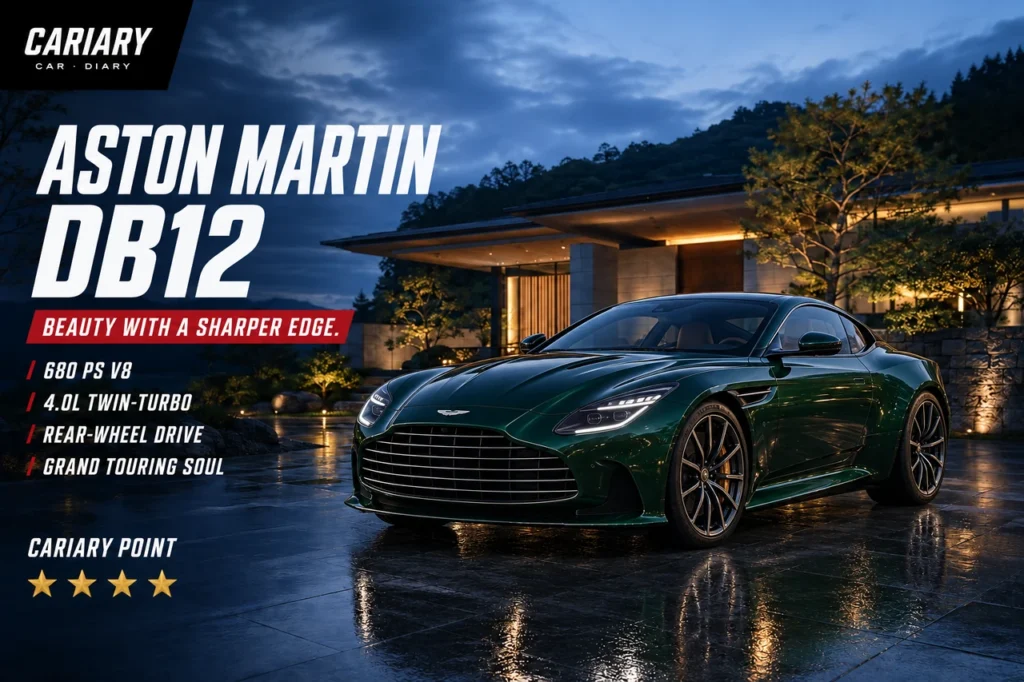
CARIARYCAR · DIARY · PERSPECTIVE
Cover: AI-generated Cariary editorial illustration, visually checked against the specified vehicle. It is not road-test photography.
This Aston Martin DB12 review begins inside the car, because the most useful change is not necessarily the one people notice from the pavement. The familiar long-hood silhouette remains a major attraction, but a grand tourer must make its driver happy for hours, not only during the walk toward it.
Aston Martin gave the DB12 a new cabin and its own infotainment system alongside a substantial V8 upgrade. That combination matters: a car can be beautiful and extremely fast yet lose its appeal through controls that interrupt every journey. The DB12 deserves attention because it addresses more than the obvious headline.
Cariary’s interest is in the original coupe as a complete ownership proposition. Its power is abundant, its design is memorable and its everyday usability has a clearer purpose. It still asks the buyer to accept a wide body, limited rear accommodation and a level of expense that beauty cannot make disappear.
This research-based Aston Martin DB12 review covers the original non-S coupe introduced in 2023, using its global launch specification and the 2024 U.S. model for context. It does not apply DB12 S or Volante figures to that car, and it is not a Cariary road test.
Four stars for a GT whose new cabin strengthens the case made by its design and V8. It is best approached as a special car for two people, with a careful check of comfort, software and specification before purchase.
Aston Martin DB12 Review: Key Specifications
| Reference | Original DB12 coupe, introduced 2023; non-S |
|---|---|
| Engine | 4.0-liter twin-turbo V8 |
| Output | 680 PS / 671 bhp; 800 Nm / 590 lb-ft |
| Transmission | Eight-speed automatic |
| Driven wheels | Rear-wheel drive, electronic rear differential |
| 0–60 mph | 3.5 seconds, manufacturer claim |
| Top speed | 202 mph, manufacturer claim |
| Seating concept | 2+2; rear-seat usability must be checked in person |
Aston Martin DB12 Review: Familiar Beauty, Different Priorities
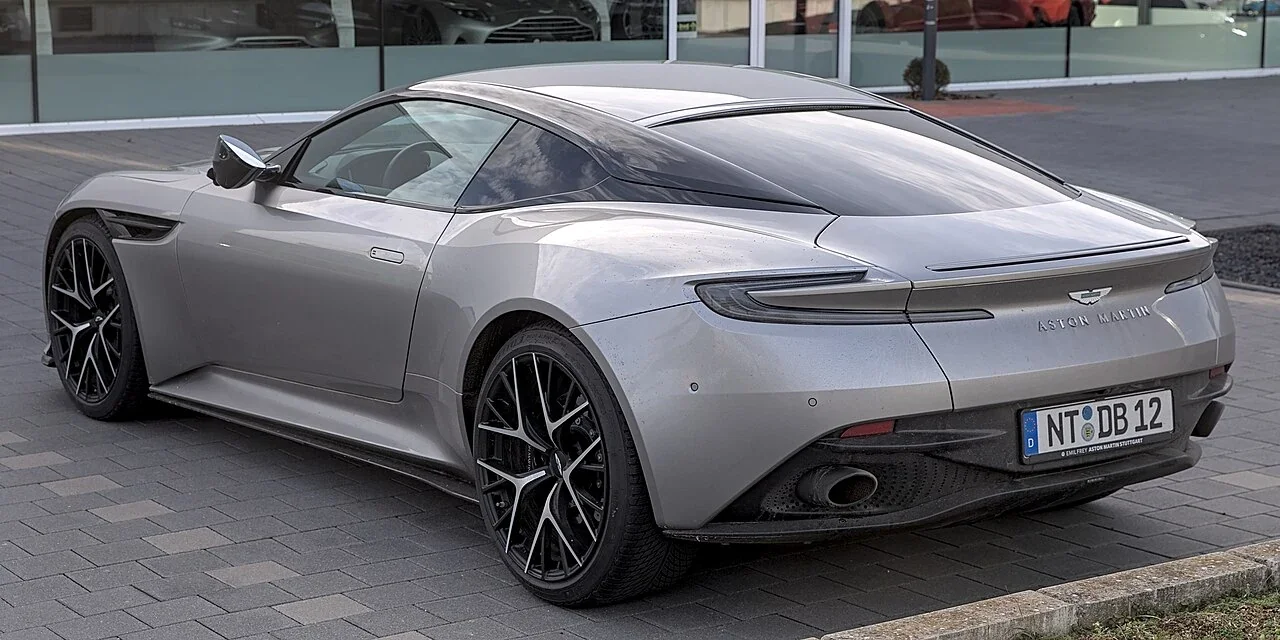
There is value in a design that does not need a complete reinvention. The DB12 retains a clear relationship between a long bonnet, a compact-looking cabin and a powerful rear stance. It feels like a grand tourer before the specification is explained, which is part of why this kind of car can remain desirable long after launch.
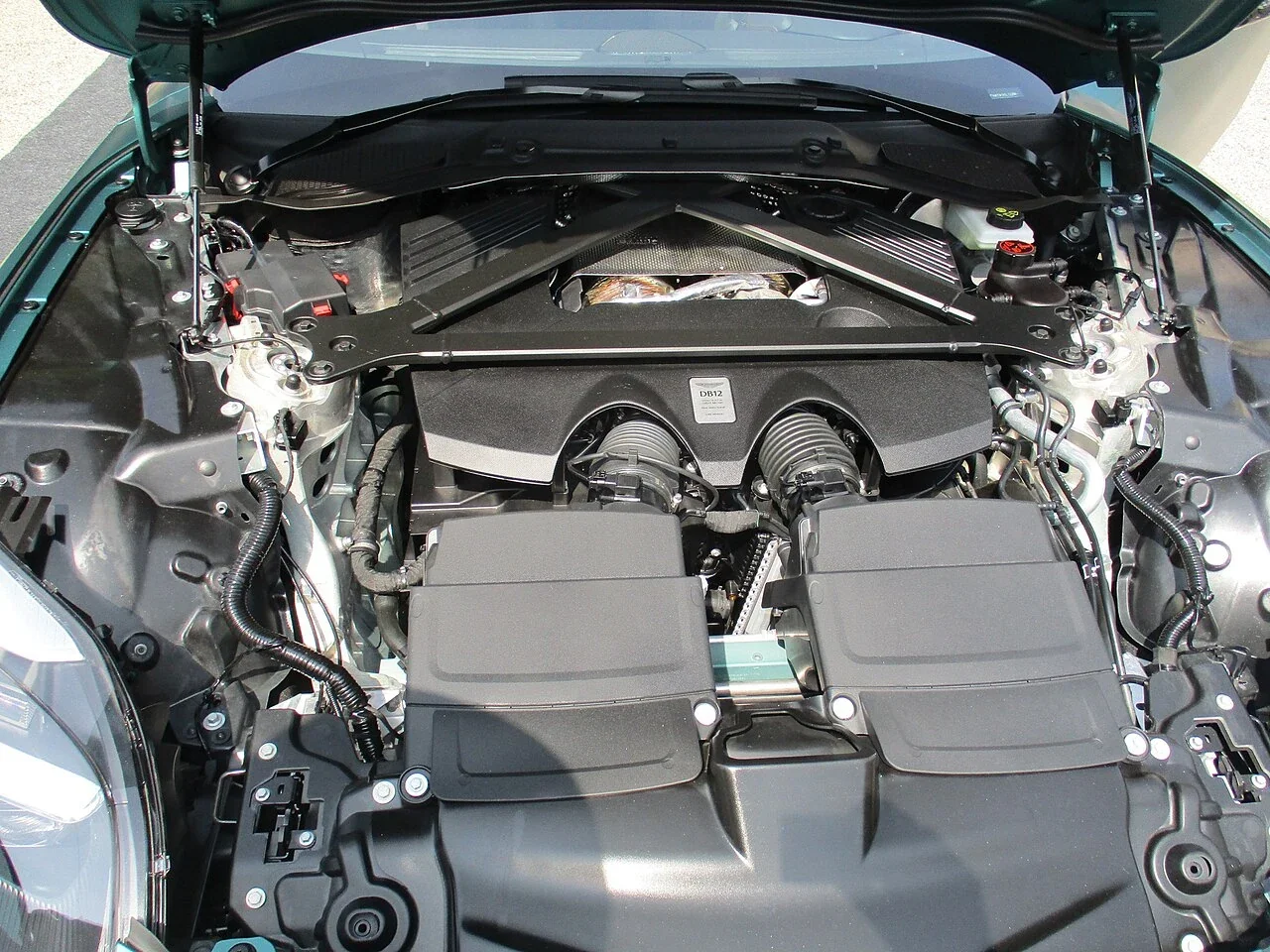
The design changes also serve the engineering. A larger front opening and revised cooling provision accompany the more powerful V8, as described in Aston Martin’s original DB12 announcement. The visible face is therefore connected to the work happening beneath it, rather than merely signaling a new model year.
For a buyer, continuity is not automatically a weakness. If the previous shape was already the attraction, a better cabin and a more developed chassis may be more valuable than an unfamiliar silhouette. The decision should concern the complete experience, not whether a passerby can identify the upgrade immediately.
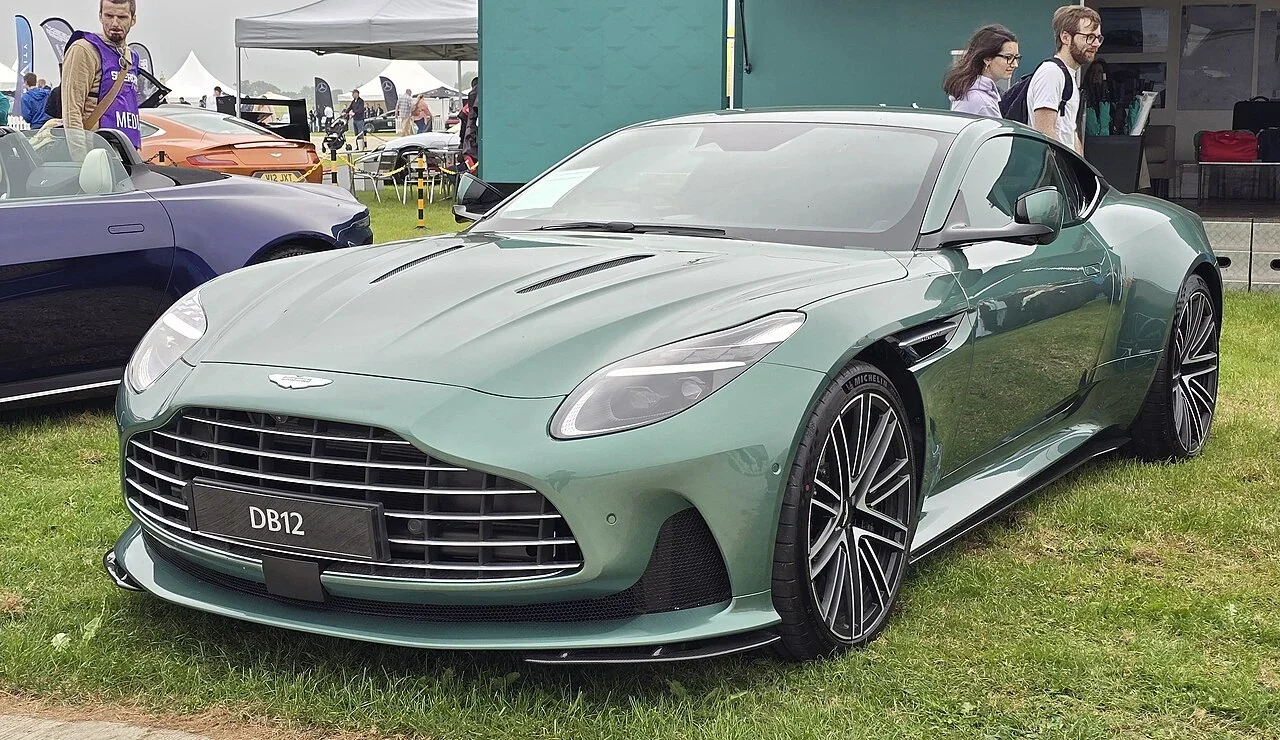
Look at the car in the color and wheel specification you would actually buy. Strong contrast can emphasize the grille and vents, while quieter colors bring the body’s length and curvature forward. Neither is the correct answer universally. Choose the version you expect to enjoy on an ordinary day, without a dramatic backdrop doing the persuasion.

The V8 Matters More Than the Number in the Name
DB12 is a model name, not a cylinder count. The original car uses a twin-turbocharged V8, and its quoted 680 PS and 671 bhp describe the same output in different units. Treating those figures as different tunes would create a false comparison before the shopping has even begun.
The engine’s purpose in a GT is broader than a standing start. A strong, accessible reserve allows the driver to make progress without constantly searching for the narrow part of a rev range where the car feels alive. That can make the journey feel less demanding while leaving enough character to make a deliberate drive worthwhile.
In its 2024 DB12 first drive, Car and Driver praised the engine’s strength and the chassis balance, while noting the car’s width on narrow streets and the limited rear seating. The publication drove pre-production coupes in France; those impressions are useful context, not a substitute for checking the car you intend to buy.
A buyer should therefore listen and respond at normal speeds as well as during a safe acceleration demonstration. If the sound, throttle response and way the gearbox settles into cruising are satisfying there, the car has a better chance of retaining its appeal than one purchased mainly for a number that cannot often be used.
A Chassis Designed Around More Than Straight-Line Pace
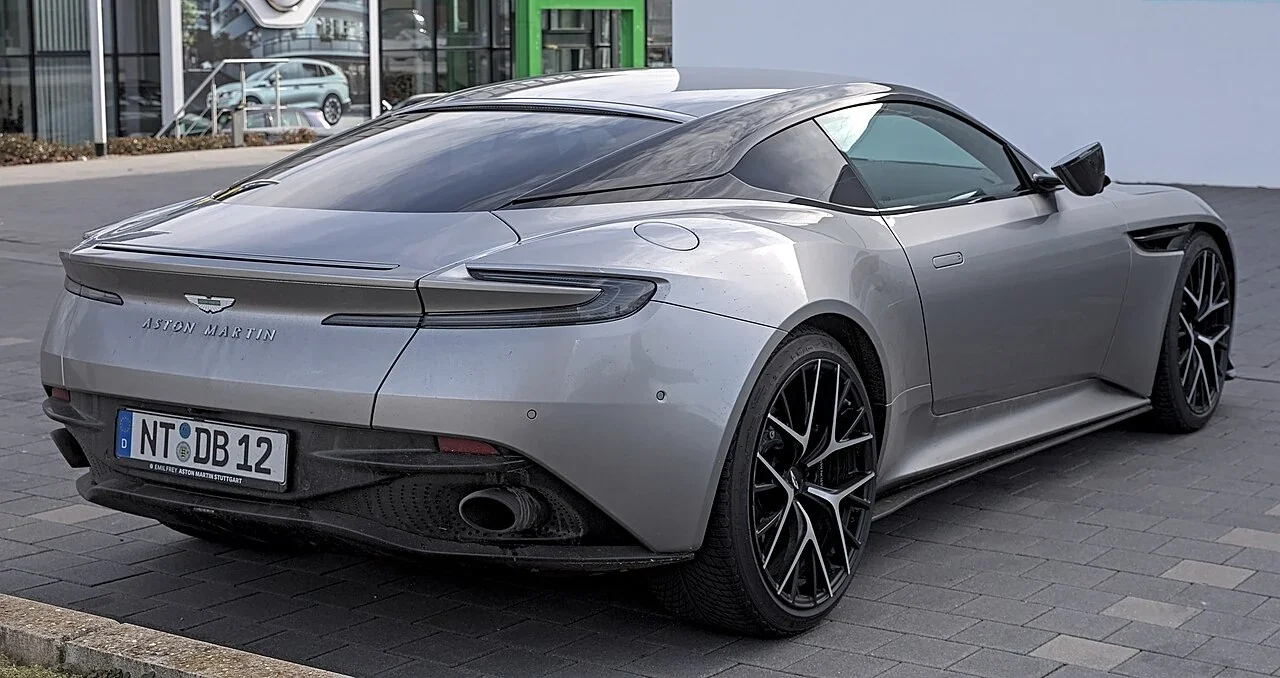
The original DB12 pairs rear-wheel drive with an electronically controlled rear differential and adaptive dampers. The manufacturer’s launch material describes a coordinated effort to improve the relationship between power delivery, body control and steering response. The important word for the buyer is relationship, rather than any single piece of hardware.
A differential that manages rear-wheel torque can help the car use its available grip. Adaptive damping can change how the body responds to road inputs. Neither should be understood as removing the need for appropriate tires, measured throttle inputs or room to respond to changing conditions.
The practical test is whether the car remains intelligible to you. Does a small steering input produce the movement you expect? Does the body settle in a way that lets you plan the next action? A GT can be fast without feeling frantic, and it can be controlled without needing its firmest setting on every road.
That distinction is especially relevant if the car will spend more time travelling than circulating a track. The most satisfying road setup may allow some movement while keeping that movement well managed. A car that feels disciplined and readable can encourage more frequent use than one that makes every imperfect surface feel like an interruption.
The New Cabin Is a Serious Part of the Upgrade
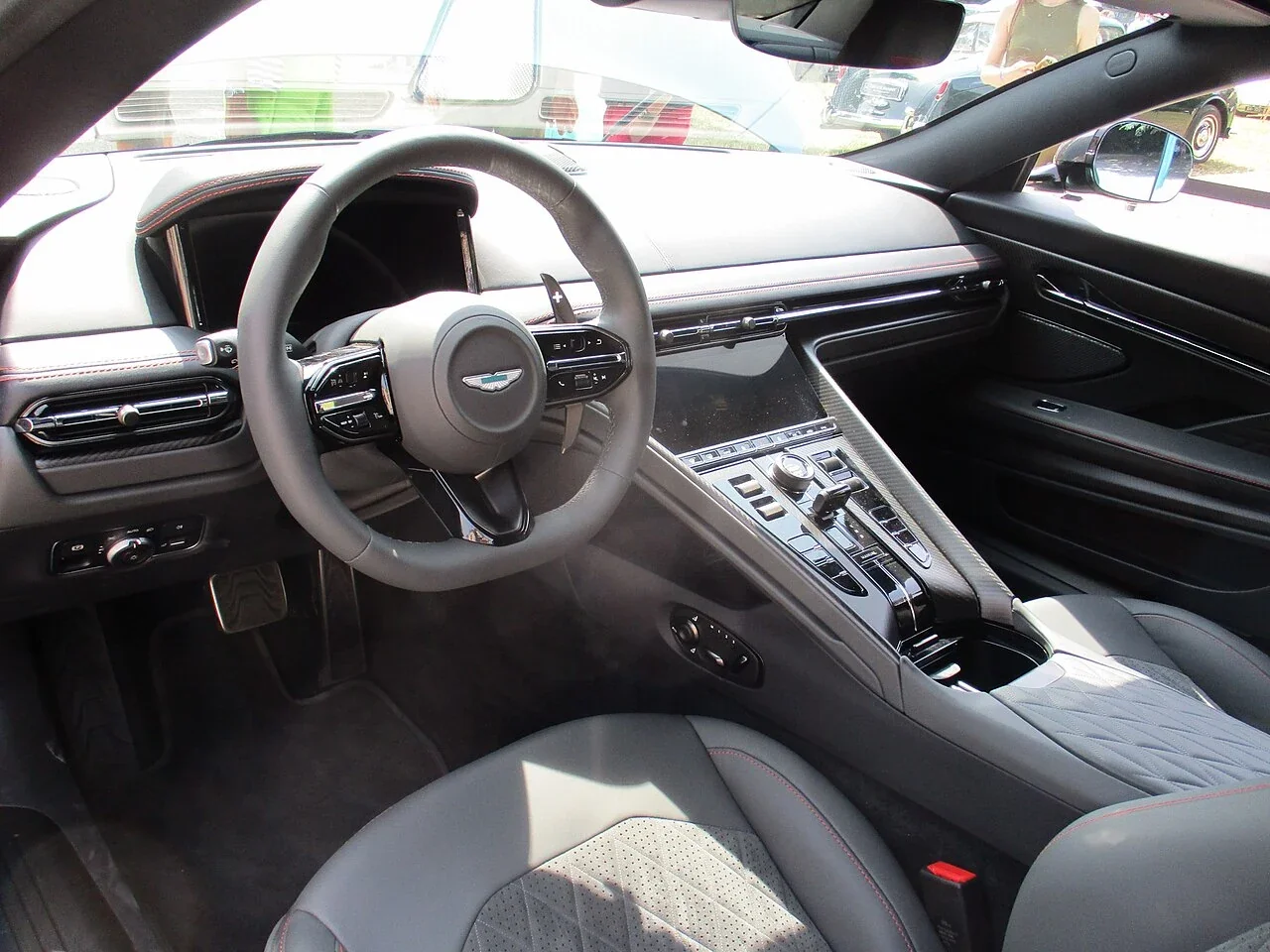
Aston Martin’s launch specification introduced a 10.25-inch touchscreen alongside physical controls for frequently used functions. The arrangement recognizes that a touch display and tactile switches can complement each other. A cabin does not become more modern simply by moving every familiar task behind glass.
This is a particularly important improvement for a car meant to cover distance. Temperature, audio and driving settings are repeated actions. When the controls are easy to locate and operate, they consume less of the attention that should remain on the journey. When they are awkward, even an expensive material surrounding them offers little consolation.
The photograph below shows the actual DB12 cabin arrangement rather than a generated interpretation. Use it to understand the layout, then check the individual car. Trim, seat choices and software can vary, and a photograph cannot tell you how quickly an interface responds or whether the seat supports your body.
Bring your phone to the viewing and demonstrate the functions you rely on. Check pairing, navigation, audio and camera behavior from a fresh start. Do not assume every feature described in an early review or on a current model page is installed and active on an earlier example. The operating result is more important than the brochure wording.
A Grand Tourer for Two, With Extra Space to Negotiate
The 2+2 description needs a realistic interpretation. Before treating the rear seats as a meaningful part of the purchase, try them with the front seats positioned for the people who will actually drive and travel. A seat that exists on paper may not solve the journey you have in mind.
For two-person travel, the cabin and luggage arrangement can be easier to appreciate. The challenge is choosing the right bags and understanding the available openings. Bring a realistic weekend load. If the car only works after leaving essential items behind, that is a compromise to recognize rather than a detail to postpone.
Access also deserves a calm assessment. Long coupe doors are attractive but ask for space beside the car. Think about the garage, office parking and the places where a passenger will get in. Repeatedly squeezing through a narrow opening can matter more to satisfaction than a minor difference in acceleration.
The DB12 is therefore best evaluated against a clear travel pattern. If most journeys involve two people and manageable luggage, its shape can fit the brief beautifully. If regular rear passengers or bulky equipment are central, a more accommodating body may provide more freedom and leave fewer decisions to negotiate before every departure.
Choose the Specification Around Your Roads
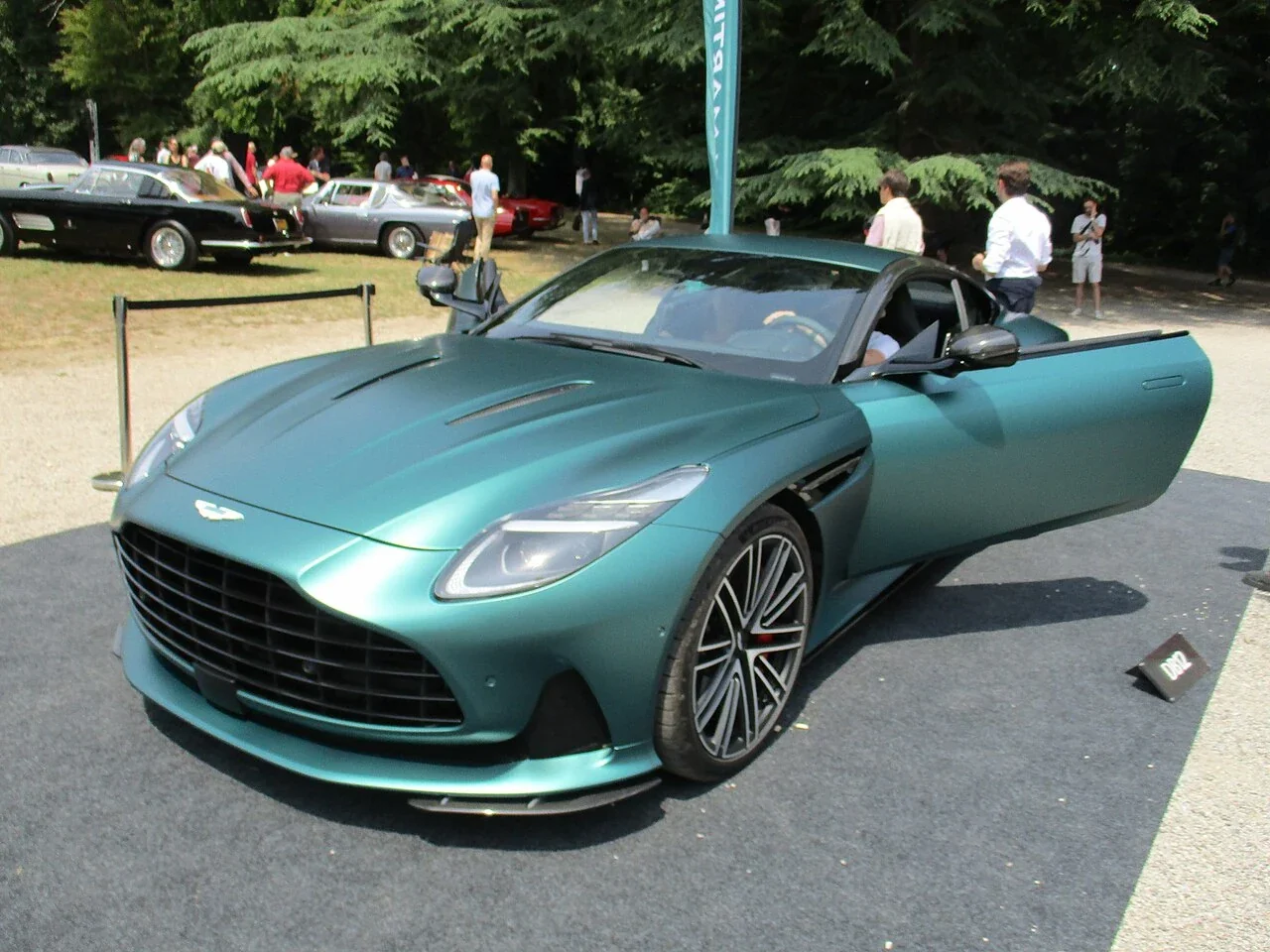
The original coupe offers different seat and brake choices, while its substantial wheels are an obvious part of the appearance. Those decisions influence more than how a photograph looks. Seat fit, tire behavior and brake condition should be assessed together with the routes and distances you expect to cover.
Do not choose carbon-ceramic brakes simply because they sound like the most complete specification. Establish why you want them, how their condition will be assessed and what replacement would involve. For a primarily road-driven GT, a well-maintained appropriate setup is more useful than an impressive option whose ownership implications were never considered.
Evaluate the ride on roads that resemble home. Smooth demonstration routes can flatter almost any expensive car. A stretch with joints, patched surfaces and low-speed bumps will reveal more about comfort and noise. Include your regular passenger, because the person enjoying the steering may overlook movement that becomes tiring in the other seat.
Color and materials deserve the same long-term perspective. A dramatic combination can remain a pleasure, but check glare, reflection and how the surfaces look in daylight. A specification chosen for repeated enjoyment will age better for its owner than one selected solely because it was the most striking image in a configurator.
Original DB12, DB12 S and Volante Are Different Decisions
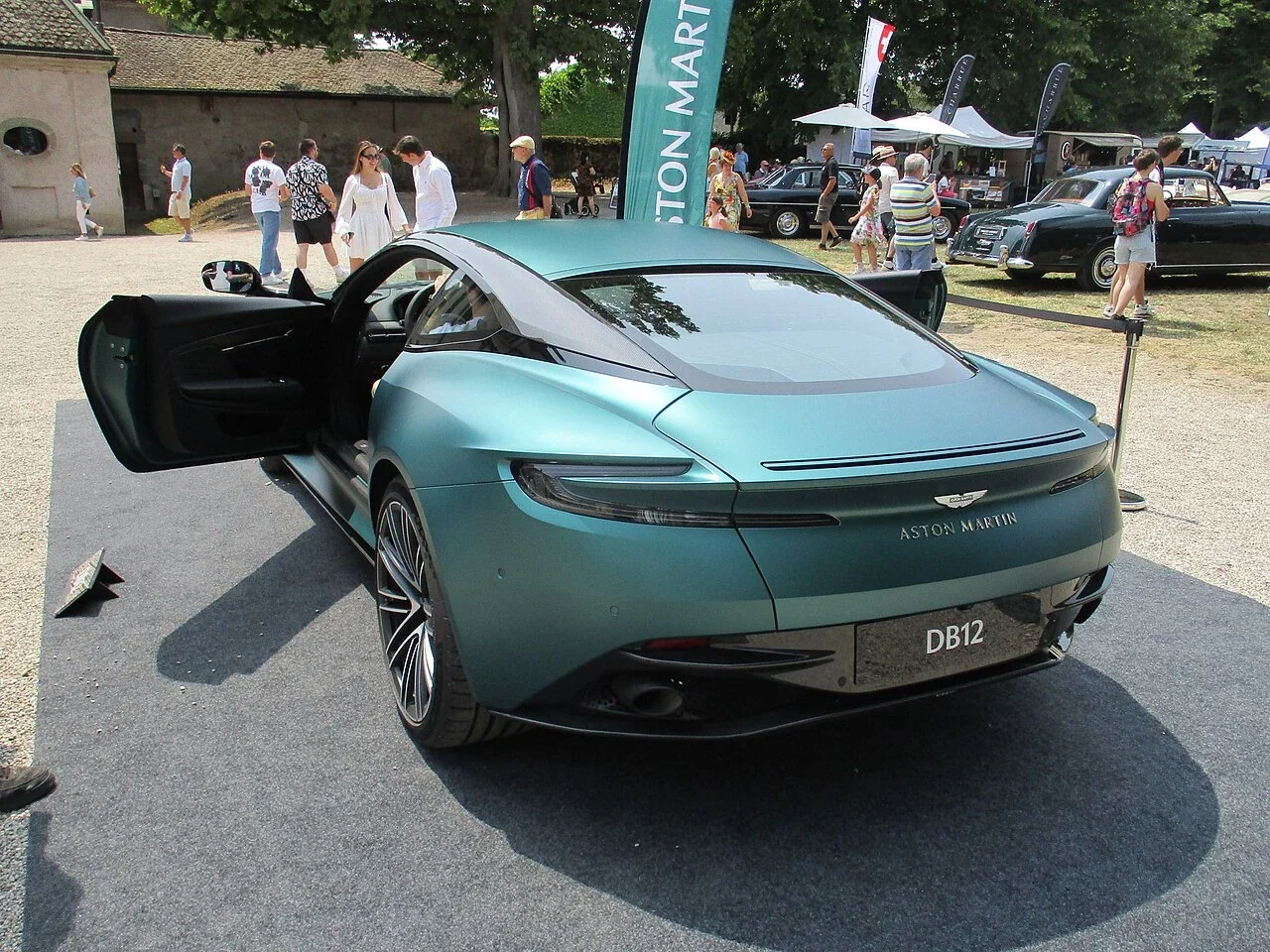
The original coupe should not be confused with the later DB12 S shown on Aston Martin’s current model page. The S is quoted at 700 PS. Its existence does not change the earlier car into a 700-PS model, and equipment listed for the S should not be silently carried into a used original coupe review.
A Volante is another distinct choice. Open-air driving changes the occasion and the way you experience the car, but it also changes what you need to assess. This article’s principal photographs and specification concern the fixed-roof coupe. Choose an open-top car because that experience matters to you, not because it happens to share the name.
Within the original coupe market, compare condition and options before comparing prices. A car whose seat, colors and equipment fit your needs may be more satisfying than a nominally better-value example that invites a series of expensive compromises. A later badge is not automatically worth abandoning the combination you actually wanted.
The existence of newer versions can also clarify the emotional question. Would you still enjoy the original if somebody parked an S next to it? If the answer depends mostly on which badge has the larger output, you may be buying a moving target. If it depends on design, response and the journey, the original has a more durable argument.
Ownership Should Protect the Reason You Bought It
A beautiful GT is easiest to enjoy when the maintenance plan is already credible. Ask for records, inspect for accident repairs and confirm which software and service work has been completed. A specialist inspection should assess the whole car, including cooling, brakes, suspension and the operation of its electrical equipment.
Arrange current insurance and service estimates around the actual example and location. Include tires and likely upcoming work in the comparison between listings. This review does not forecast depreciation or assign a universal annual cost; neither would reflect the differences between cars, markets and how owners use them.
For context, the Cariary Bentley Continental GT review considers another interpretation of grand touring, while the Vantage review explores Aston Martin’s more concentrated sports-car proposition. The useful comparison is the type of journey and feeling you want, not an attempt to make every competitor lose.
Cariary’s four-star judgment reflects an appealing balance. The DB12’s cabin gives substance to the promise made by its exterior, and the V8 supplies ample occasion. Its limits are not hidden: it remains wide, costly and restricted in the rear. For the buyer whose life fits those boundaries, that is a coherent and highly desirable GT.
Who Should Buy It?
Recommended For
Two-person touring buyers who value design, V8 character and tactile controls, and who can support the car with an appropriate maintenance budget.
Not Recommended For
Buyers needing regular adult rear-seat use, compact-car parking ease, inexpensive consumables or a purchase justified mainly by owning the newest badge.
One-Line Verdict: The DB12 strengthens a beautiful GT formula by making the time inside as important as the view outside.
Frequently Asked Questions
Does DB12 mean it has a V12?
No. The original DB12 discussed here uses a 4.0-liter twin-turbo V8. The model designation should not be read as the cylinder count.
Why do some sources say 680 and others 671?
They refer to different power units: 680 PS and 671 bhp for the original car. The later DB12 S has a separate 700-PS rating.
Does this article cover the DB12 S?
No. The S is mentioned to prevent specification confusion. The main review concerns the original non-S coupe introduced in 2023.
Are the rear seats suitable for regular adults?
Do not assume so from the 2+2 label. Test the actual seats with the front positions set correctly for your occupants and intended journeys.
Is the cabin entirely touchscreen-controlled?
No. The original design combines a central touchscreen with physical controls. Check how the particular car’s software and controls work with your own phone and habits.
Why is Cariary Point four stars?
Design, powertrain character and the improved cabin support a strong recommendation. Space, size and ownership demands mean it remains a car for a particular buyer rather than everyone.
Further Reading and Data Reference
Data reference date: September 11, 2026. Specifications and attributed test observations are linked where discussed. Cariary Point is an editorial buyer-fit assessment, not an owner road-test score or reliability rating.
Explore more Cariary car reviews and buyer perspectives.

