CARIARYCAR · DIARY · PERSPECTIVE
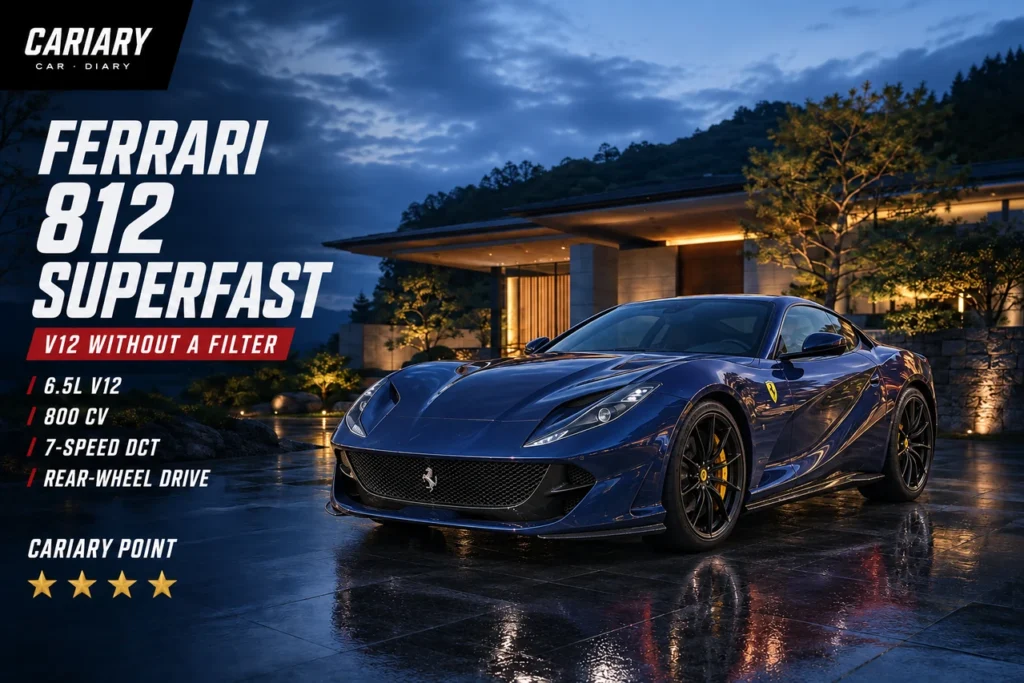
Cover: AI-generated Cariary editorial illustration, checked against the specified vehicle. It is not road-test photography.
This Ferrari 812 Superfast review starts with a simple attraction: a large, naturally aspirated V12 driving the rear wheels of a two-seat coupe. The complication is everything around it. Space to enjoy the engine, a realistic maintenance reserve and confidence in the particular car matter as much as the badge.
The 812 has a long hood and an unmistakably expensive presence, but treating it only as a glamorous grand tourer misses its demanding side. It offers an experience that an acceleration chart cannot fully price. That does not make every example a sensible purchase, or every owner a suitable match.
Scope: original fixed-roof Ferrari 812 Superfast, using its 2017 launch specifications and a 2018 U.S. instrumented test. This is a research-based buyer review, not a Cariary road test. The 812 GTS, Competizione and later 12Cilindri are separate models. Overseas photographs illustrate the original coupe; equipment varies.
Four stars for a distinctive engine-led experience, conditional on a sound car and an owner who can comfortably support it. The missing fifth star reflects expense, limited everyday flexibility and the difficulty of enjoying its full performance responsibly.
Ferrari 812 Superfast: Key Specifications
| Reference | Original 812 Superfast fixed-roof coupe |
|---|---|
| Engine | 6,496 cc naturally aspirated V12 |
| Rated output | 800 CV at 8,500 rpm (approximately 789 hp) |
| Torque | 718 Nm at 7,000 rpm |
| Transmission / drive | Seven-speed dual-clutch / rear-wheel drive |
| Manufacturer acceleration | 0–100 km/h: 2.9 seconds |
| Manufacturer maximum speed | More than 340 km/h |
| Seating | Two; no rear-seat accommodation |
Why the Ferrari 812 Superfast Still Matters
There are several ways to buy a very fast car. The 812 makes its case through the process of creating speed: a large engine without turbochargers, a long front section and a cabin placed noticeably behind it. This is a specific physical arrangement, not simply a power rating with Italian bodywork attached. Its appeal begins before a buyer gets anywhere near the claimed maximum speed.
Ferrari introduced the model in 2017. The company’s contemporary annual report identifies its front-engine transaxle architecture and electronic chassis systems. The important distinction is that a traditional engine layout does not mean an electronically primitive car. The romantic part and the sophisticated part coexist.
For a buyer, that changes the question from whether the 812 is modern enough to whether this particular kind of modern performance is desirable. Some owners want the sensation of working through an engine’s range; others want immediate, effortless thrust in almost any gear. Neither preference is wrong. The mistake is paying for an expensive experience whose defining feature you rarely seek.
6.5 Liters: Understand What the V12 Is Buying You
The official launch specifications give 800 CV at 8,500 rpm and 718 Nm at 7,000 rpm. CV is metric horsepower: calling this an 800-hp U.S. car without qualification blurs the units. The equivalent is approximately 789 hp. More revealing than either headline is where maximum power arrives: high in the rev range.
A naturally aspirated engine draws air without an exhaust-driven compressor. That removes one stage between the driver’s request and the air supply, although the complete response still depends on gearing, throttle control and engine speed. It does not mean unlimited traction, nor does it mean every low-speed movement must feel spectacular. The attraction is the relationship between rising revs, response and sound.
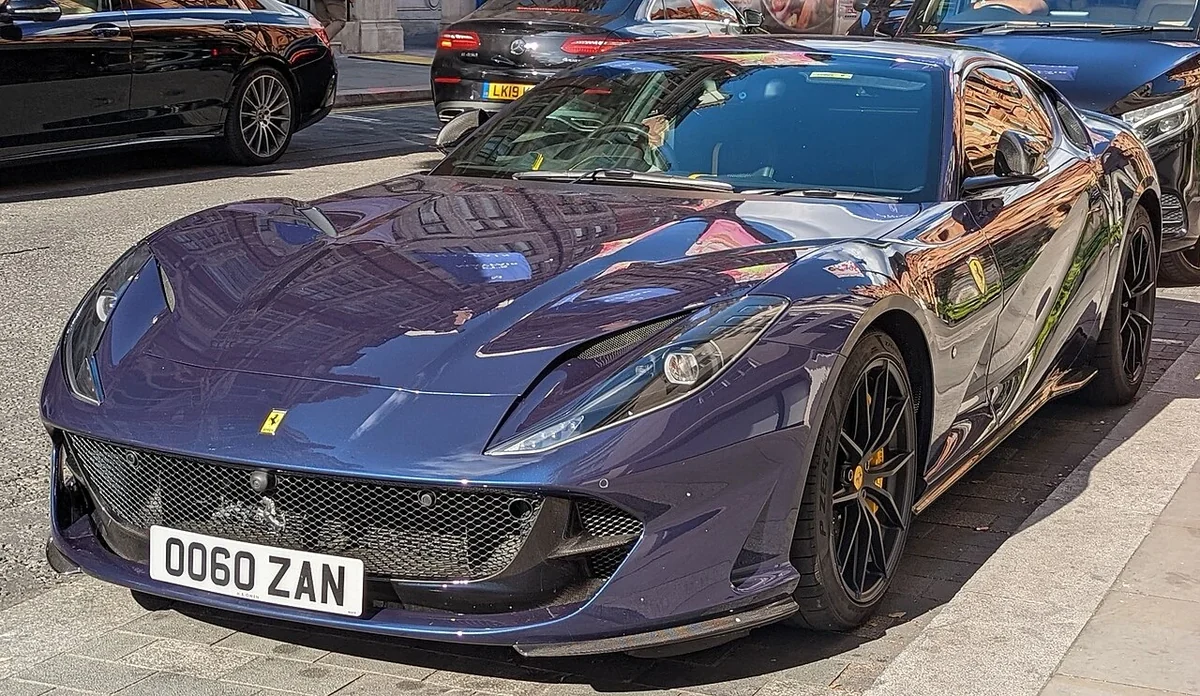
The real engine photograph below is useful precisely because it shows the actual installation. It is not a cutaway of the injection system. Buyers should be equally careful with videos promising that a visible carbon cover or a louder exhaust proves special internal hardware. Establish modifications through invoices and inspection. A mechanically standard, well-documented car can be a more rewarding purchase than an impressive-looking example with an uncertain history.
The Long Hood Is More Than Theater
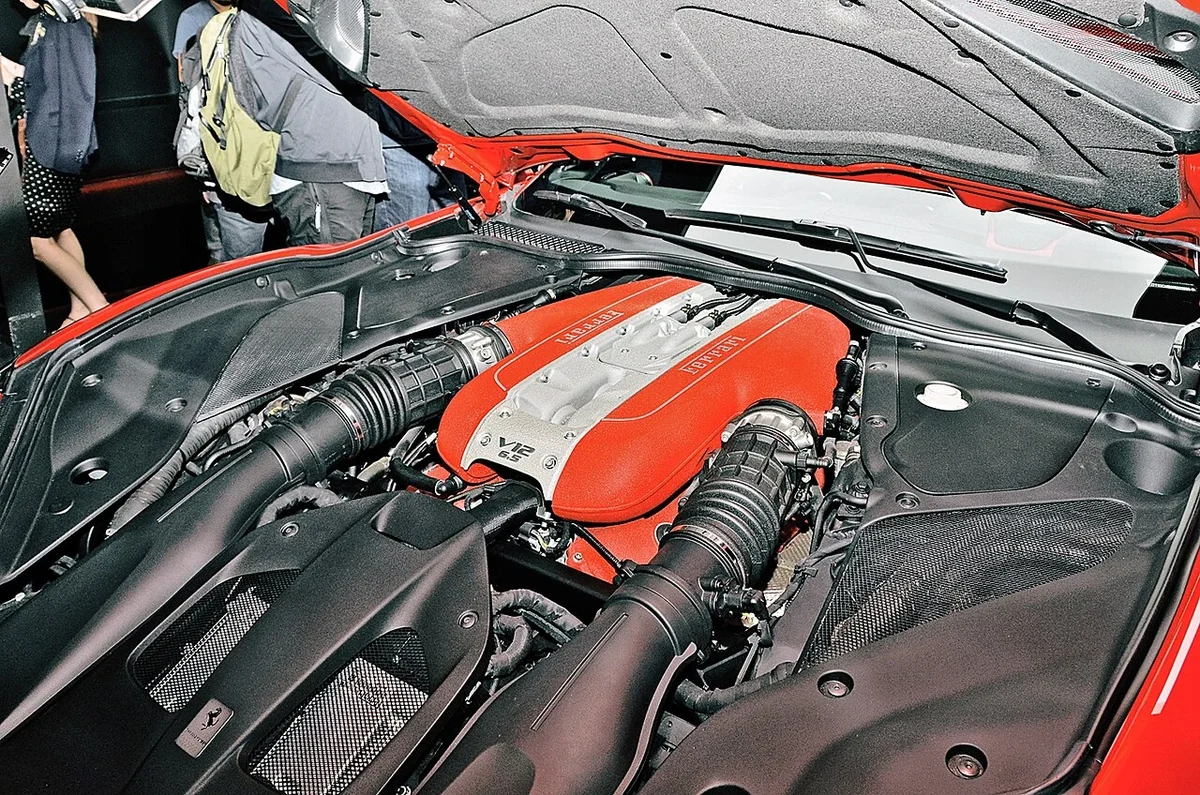
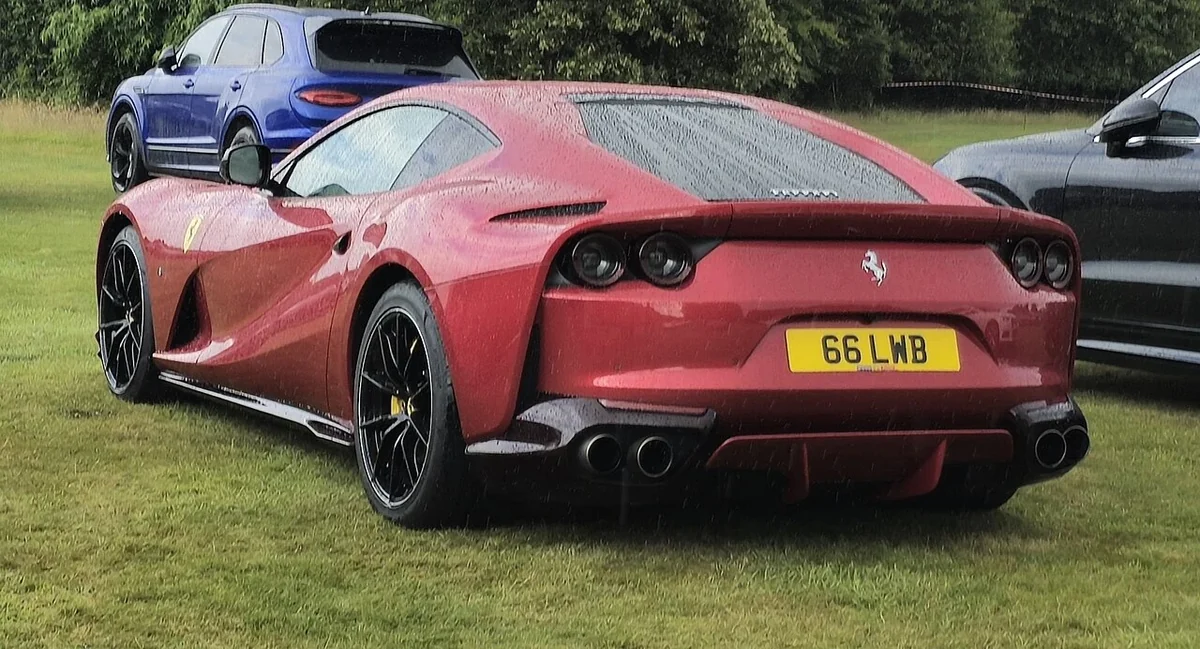
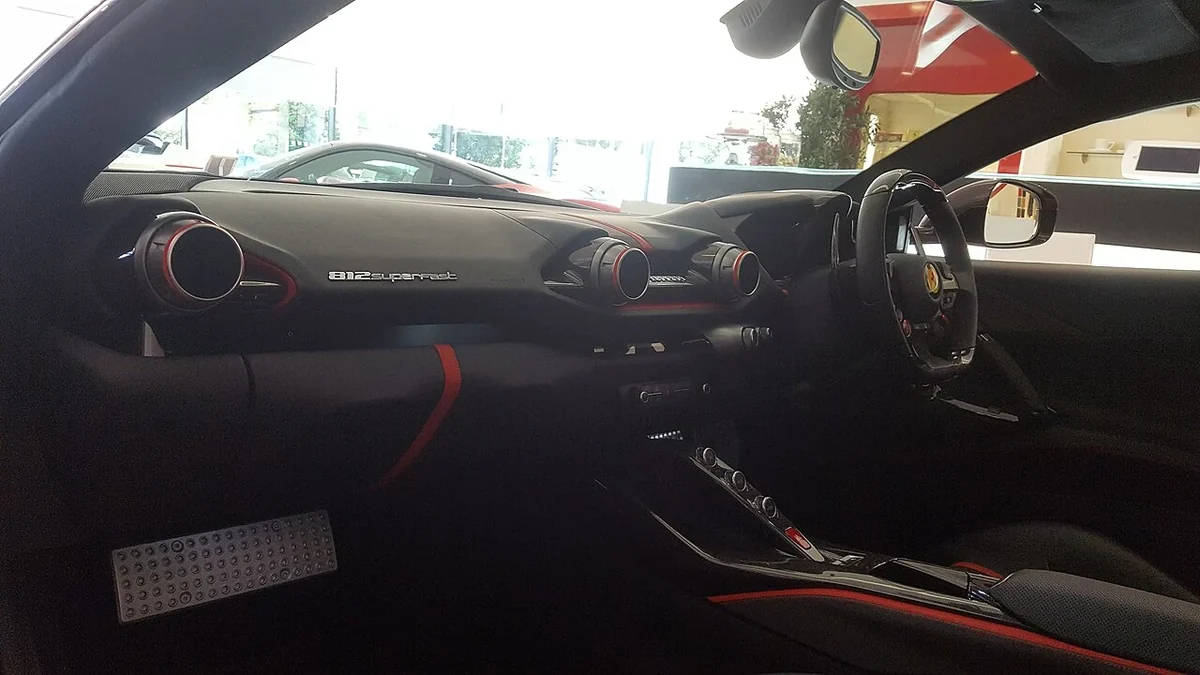
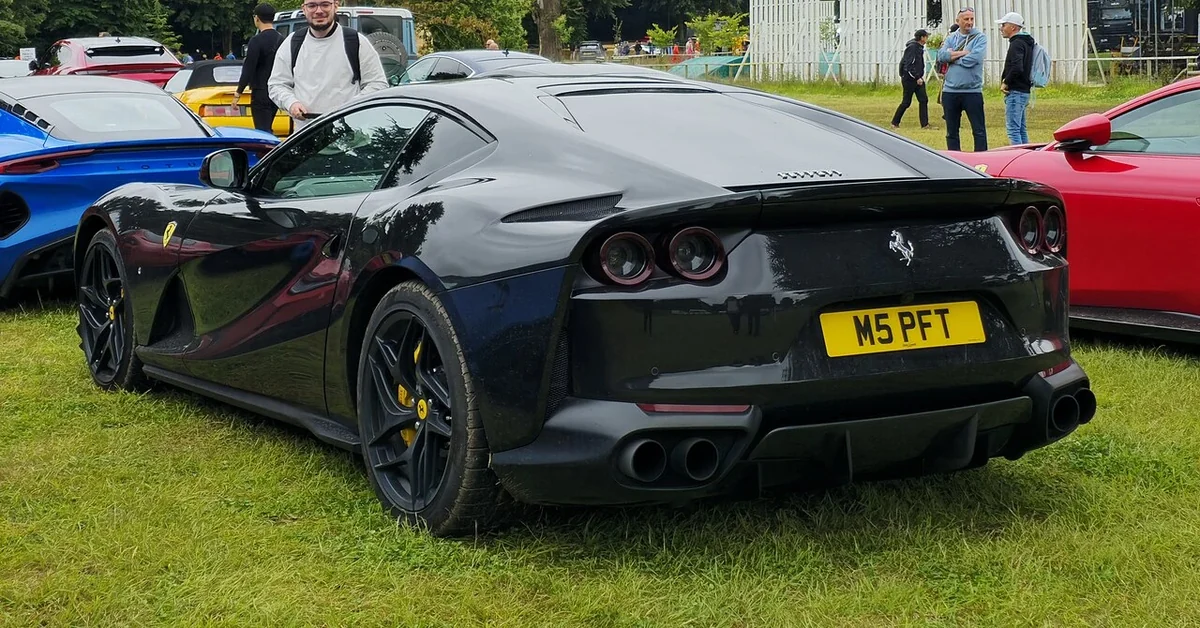
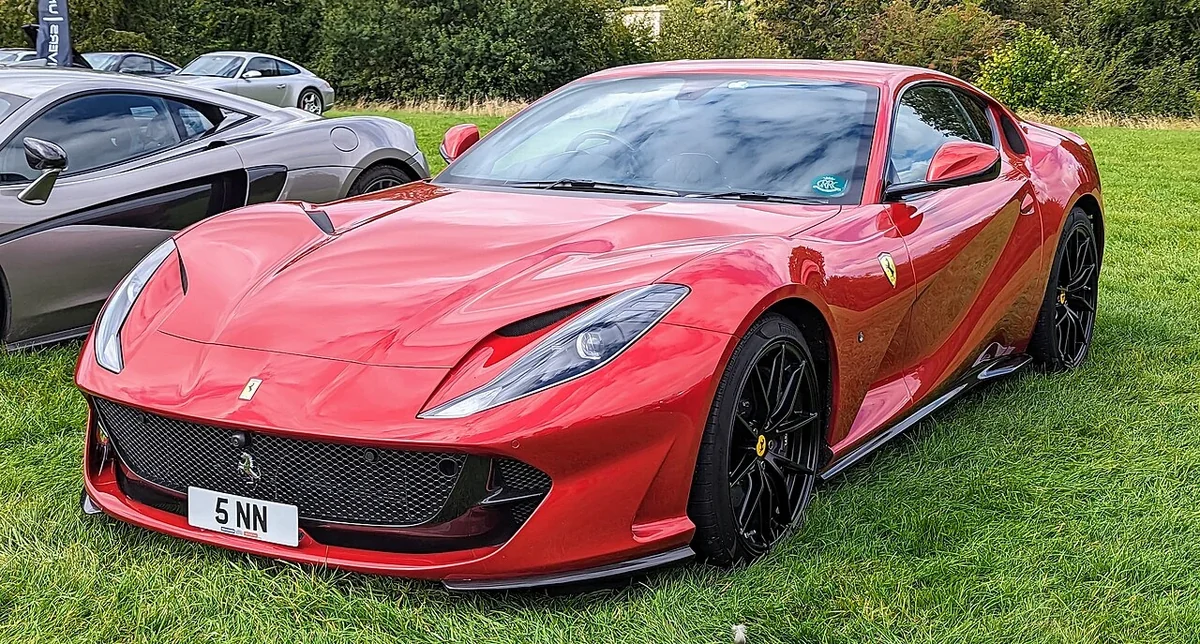
Look at the side of the coupe and then at its rear. The cabin, front section and substantial tail occupy clearly different parts of the shape. The four round rear lamps make the car identifiable without a huge external wing. These are observations from the original coupe photographs, not assumptions about the different bodywork of a Competizione.
A buyer attracted to the shape should spend time around an actual car in ordinary surroundings. A clean photograph hides the relationship between a low nose, a curb and a steep entrance. A wide parking space at an event says little about the clearance beside a concrete pillar at home. The most beautiful specification is the one you can take out without a complicated ritual every time.
Color and trim also change the ownership proposition. Dark paint can make the body appear calmer; bright paint emphasizes the same surfaces and attracts more attention. Neither choice improves mechanical condition. Decide whether you want a car that becomes a public event at every stop or one you feel comfortable leaving briefly outside a restaurant. That everyday confidence is part of usability, even when it never appears in a specification table.
Thrilling Performance Still Needs a Place to Happen
In its 2018 U.S. instrumented test, Car and Driver recorded 0–60 mph in 2.7 seconds, excluding 0.2 second of one-foot rollout. The testers praised the softer damper setting’s ride but criticized stop-start-related clutch re-engagement and the long-distance comfort of their carbon seats. Those are observations about that test car, not a universal verdict on every seat or individual 812.
Cariary’s interpretation is that spectacular capability and small repeated irritations can exist together. A car that amazes during an open-road burst may still annoy during the first ten minutes of every journey. A meaningful demonstration therefore needs normal junctions, low-speed parking and imperfect surfaces as well as a suitable stretch of road. Keep those impressions separate from the excitement of hearing a V12 start.
Electronic assistance should be treated as support rather than permission to ignore conditions. Tire temperature, water, road surface and the space available remain important in any powerful rear-drive car. The useful purchase question is not whether the owner can reproduce a magazine number. It is whether the car remains enjoyable at sensible speeds and whether a properly organized driving environment is available when more of its capability is desired.
Choose the Seat Before the Carbon Trim
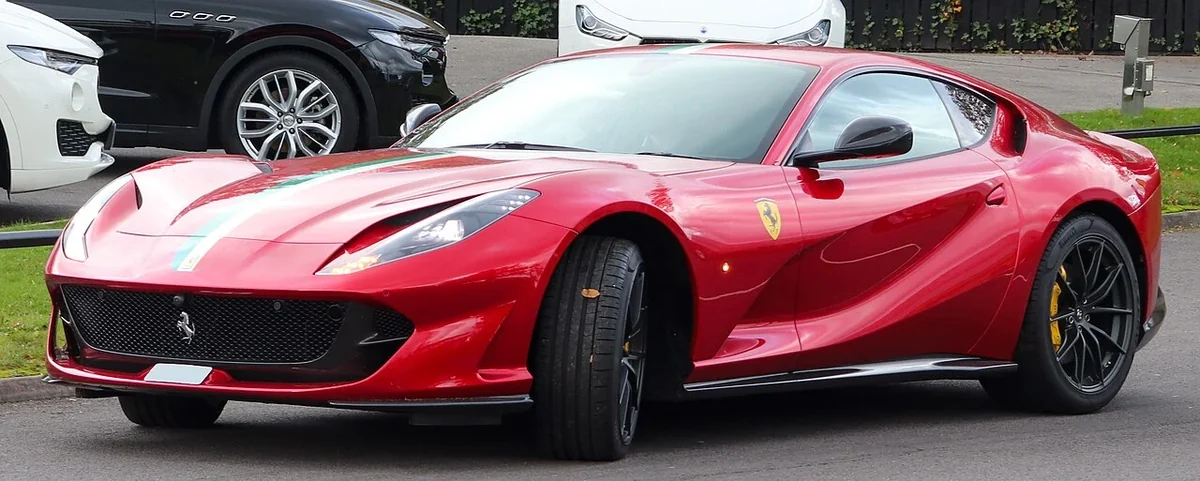
The photographed right-hand-drive cabin puts the driver’s controls and steering wheel at the center of the experience. It also makes an important buying point: seats and interior choices are not interchangeable details. A seat that looks purposeful in an advertisement may be the wrong shape for your shoulders, hips or preferred driving position.
Sit in the particular car for longer than a brief introduction. Adjust the steering wheel, check your view of the instruments and practice the normal controls while parked. Repeat the exercise with the person most likely to travel with you. A passenger who dislikes access, noise or seating can quietly turn an intended touring car into a solo weekend object.
The 812 is a two-seater. That sounds obvious, but it should be settled before discussions about color or mileage. There is no occasional rear seat to rescue a changed plan. Carry the luggage you actually use and try the available opening instead of accepting a volume figure as proof. Small soft bags, a bulky case and a delicate item can demand very different things from the same nominal space. Practicality here means fitting your routine, not competing with a family car.
The Used-Car Price Is Only the First Number
This review does not quote a current used-market price because location, taxes, specification and condition change the comparison substantially. Compare complete purchases: the car, immediate work, insurance, transport and a reserve for unexpected repairs. A lower asking price can be misleading when several expensive items are due together.
Ask an independent Ferrari specialist to assess the car before committing. The inspection should cover documented servicing, diagnostic history, fluid leaks, cooling performance, underbody contact and evidence of structural or cosmetic repair. Check tires by age and condition, not just remaining tread. Brake condition needs an appropriate professional assessment; a shiny wheel does not establish the state of the braking system behind it.
These are inspection priorities, not a claim that every 812 suffers the same faults. A clean inspection is also not a lifetime reliability guarantee. The objective is to replace uncertainty with a clearer starting point. If the budget only works when nothing goes wrong, the car is too expensive for that budget, even if finance makes the initial payment appear manageable. Enjoyment is easier when a warning light is a solvable inconvenience rather than a financial crisis.
Compare Experiences, Not Just Horsepower
A buyer considering the Ferrari 296 GTB is weighing a different Ferrari idea: a more compact, mid-engine hybrid proposition rather than a front-mounted V12 coupe. The meaningful comparison is the experience you want from the engine and the car’s layout. A faster result in one test does not automatically settle that choice.
The Lamborghini Huracán offers another route into an occasion-focused, naturally aspirated exotic. Compare visibility, entry, cabin fit and the way each car presents itself, not merely which badge feels more dramatic. For a buyer who mainly wants grand-touring style, the Lexus LC 500 is a useful reality check on how much exotic capability the brief actually requires.
An 812 owner does not need to apologize for choosing emotion. The discipline is to identify which emotion is worth paying for. If the V12 is the point, a cheaper or more convenient alternative may never satisfy the same wish. If the real goal is a beautiful coupe for dinner and occasional touring, the engine’s reputation should not distract from a rival that fits those journeys better. Different needs produce different winners.

Cariary Perspective: Buy the Miles You Will Actually Drive
Cariary’s four-star assessment recognizes a car with a clear reason to exist. The original 812 Superfast is appealing because its major ingredients form a coherent experience, rather than because every specification is unbeatable. Its engine is central to the purchase, and a buyer who understands that can reasonably accept substantial compromises elsewhere.
The fifth star would require fewer conditions around that recommendation. A narrow ownership brief, significant running exposure and the gap between available performance and ordinary roads all matter. These limitations do not make the car disappointing; they make an indiscriminate recommendation unhelpful. A review should protect the buyer’s enthusiasm by giving it a realistic setting.
Before signing, write down the trips you expect to take in the next year. Include who will come, where the car will stay and how often you will choose it over another vehicle. If that list is convincing, the 812 has a role beyond admiration. If the list is mostly hypothetical, pause. The best example is not simply the one with the fewest miles. It is the well-supported car you can add meaningful miles to without regretting the commitment.
Who Should Buy It?
Recommended For
Buyers specifically seeking a naturally aspirated V12 coupe, with suitable storage, access to a specialist and enough budget to maintain the car without rationing every outing.
Not Recommended For
Drivers needing one flexible household car, buyers relying on guaranteed appreciation, or anyone whose budget leaves no room for specialist repairs and consumables.
One-Line Verdict: An extraordinary V12 coupe makes sense when the experience is the goal and ownership costs are already accounted for.
Frequently Asked Questions
Is the Ferrari 812 Superfast a hybrid?
No. The original Superfast uses a naturally aspirated V12 without hybrid propulsion. Do not confuse its electronic chassis controls with an electric drive motor. The reason to choose it is the specific engine experience, not electric commuting ability.
Does 800 CV mean 800 U.S. horsepower?
No. The launch figure uses metric horsepower. It corresponds to roughly 789 hp. Keep units consistent when comparing it with U.S. specifications, and do not treat the conversion as a different engine tune.
Is this the same car as an 812 GTS?
No. This review covers the fixed-roof Superfast. The GTS is the open version, while the Competizione has its own specification. Compare body style, equipment and documented condition before assuming that conclusions or photographs transfer directly.
Can it work as a weekend touring car?
For two people whose seating and luggage needs fit, that is a plausible role. Try the actual seats, access and luggage opening first. A theoretical grand-touring identity is less useful than a successful rehearsal of the trip you intend to take.
Should low mileage decide the purchase?
No. Mileage belongs alongside service records, storage, repair history and an independent assessment. A low odometer reading cannot establish that a car has received the right attention or that age-related work has been completed.
Why does Cariary give it four stars?
The engine and identity are compelling, but the recommendation depends heavily on the buyer’s budget and intended use. Four stars are an editorial buyer-fit judgment, not an owner road-test score, reliability statistic or investment forecast.
Further Reading and Data Reference
Data reference date: September 13, 2026. Official specifications and attributed test observations are linked where discussed. Cariary Point is an editorial buyer-fit assessment, not an owner road-test score or reliability rating.
Explore more Cariary car reviews and buyer perspectives.

