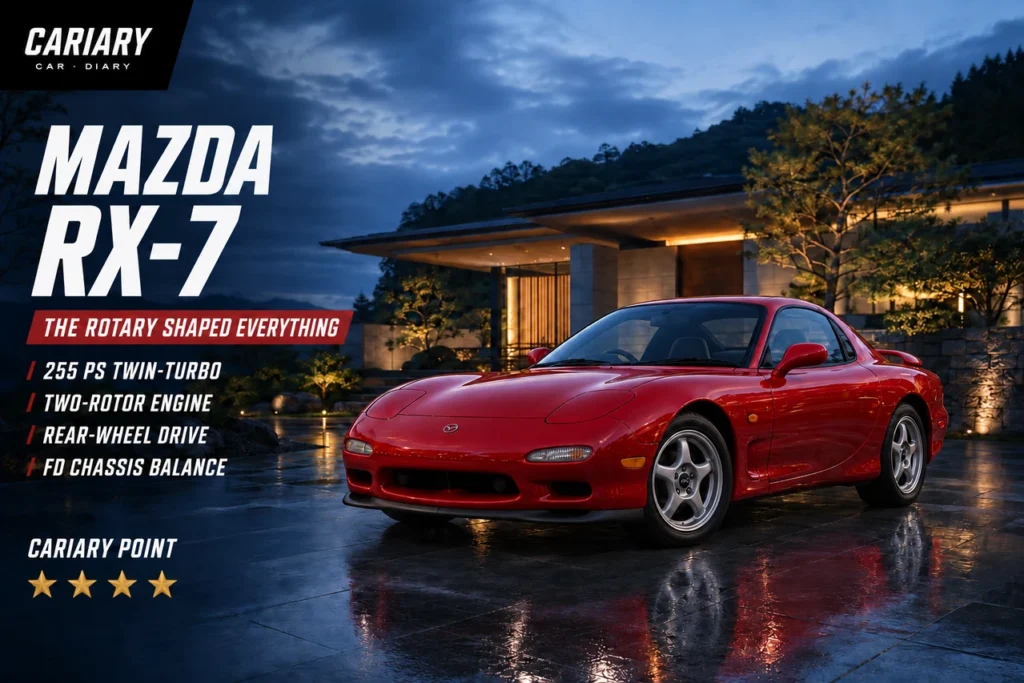
CARIARYCAR · DIARY · PERSPECTIVE
Cover: AI-generated Cariary editorial illustration, checked against the specified vehicle. It is not road-test photography.
This Mazda RX-7 review asks a question that gets lost beneath the rotary mythology: what did that unusual engine allow Mazda to do with the rest of the car? The FD’s appeal begins to make sense when you connect the engine to the low body, the placement of mass and the compact driving environment.
It is tempting to remember an RX-7 as a sound, a modified street car or an image from a game. Cariary’s interest is in the original engineering argument beneath those associations. A good FD should be judged as a complete sports car, not just a platform waiting for a bigger power figure.
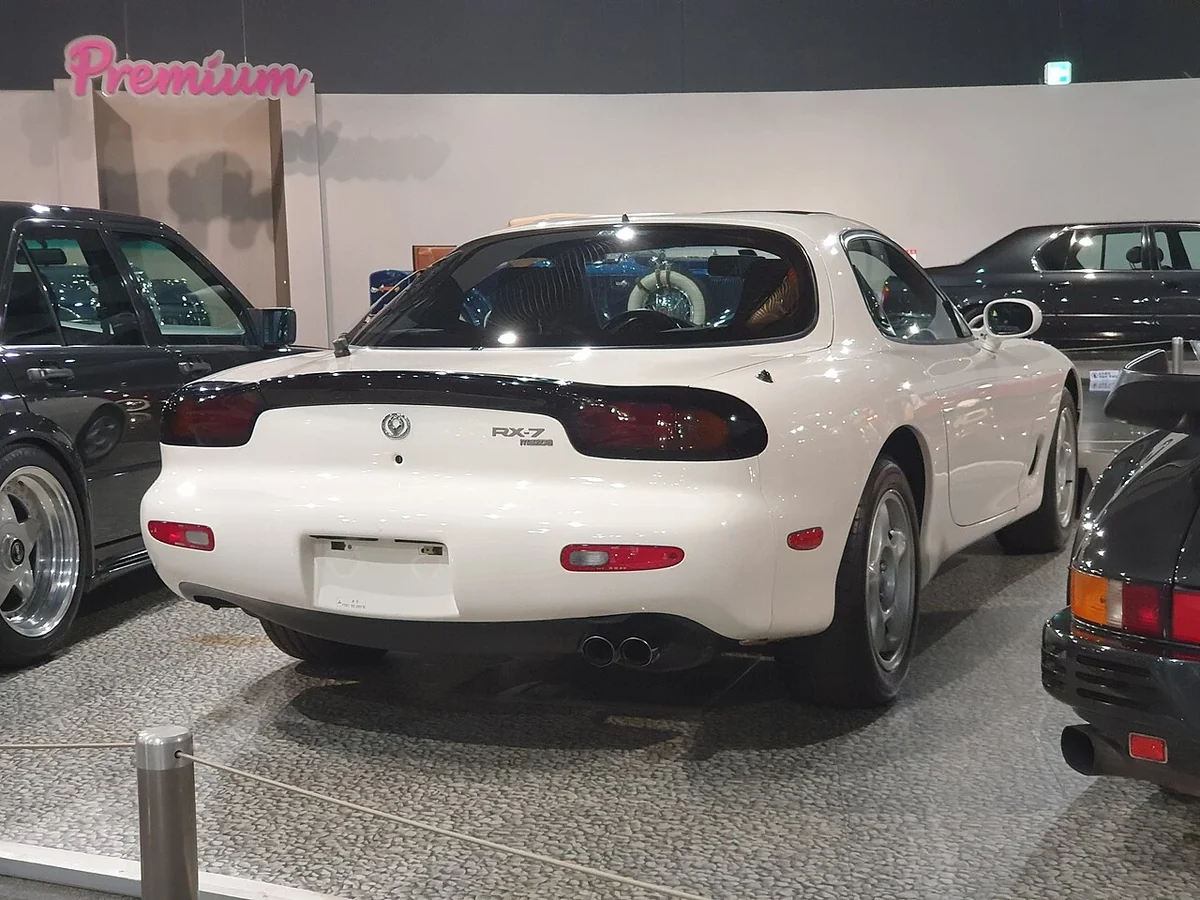
This research-based review uses the December 1991 Japanese-market ɛ̃fini RX-7 Type R as its specification reference, with clearly identified later-FD and export-car context. Cariary has not driven an RX-7. The photographs include different FD examples, a design model and a later Spirit R instrument panel; they are not all launch Type R equipment.
4/5 for compact proportions, a distinctive rotary-based layout and a coherent sports-car identity. The fifth star is withheld because age, previous modifications and specialist maintenance make the quality of the individual example unusually important to the buying decision.
Mazda RX-7: Key Specifications
| Reference | December 1991 Japan-market ɛ̃fini RX-7 Type R, E-FD3S |
|---|---|
| Engine | 13B-REW twin-rotor, sequential twin-turbo; nominal displacement 1,308 cc |
| Output / torque | 255 PS at 6,500 rpm; 294.2 Nm at 5,000 rpm |
| Transmission / drive | Five-speed manual; rear-wheel drive |
| Catalogue mass / seating | 1,260 kg; four occupants in this Japanese specification |
| Dimensions | 4,295 × 1,760 × 1,230 mm; wheelbase 2,425 mm |
| Source | GAZOO’s Japanese launch Type R catalogue |
Mazda RX-7 Design: Low, Compact and Still Distinctive
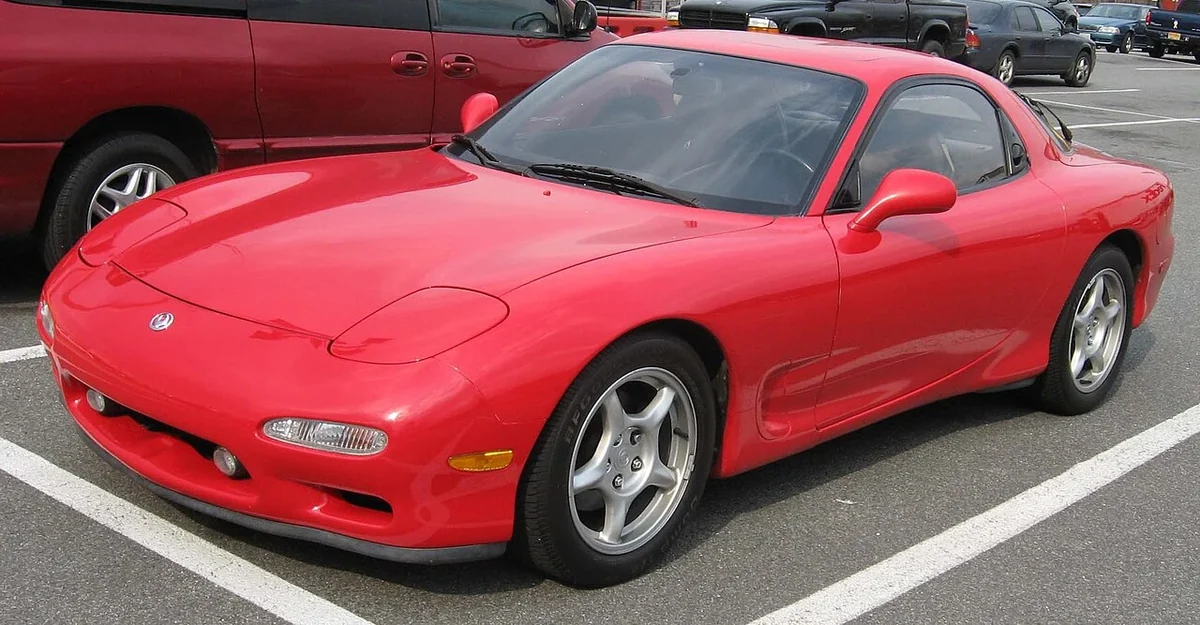
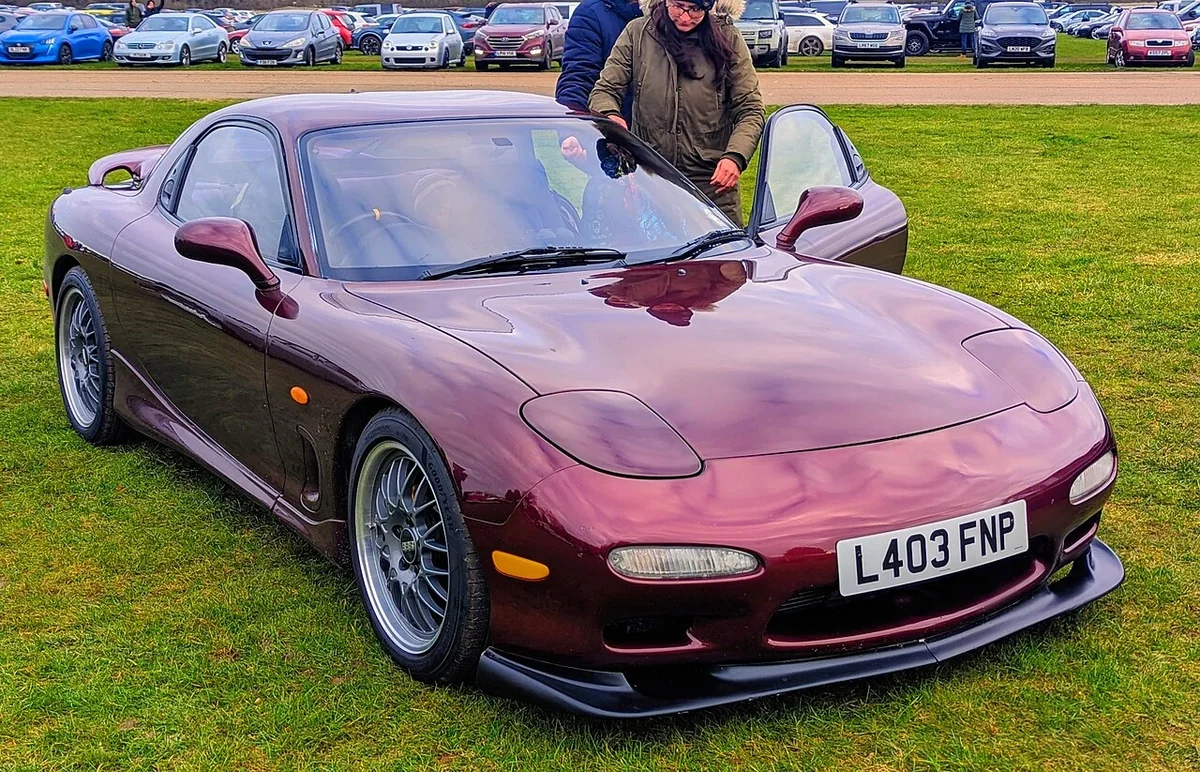
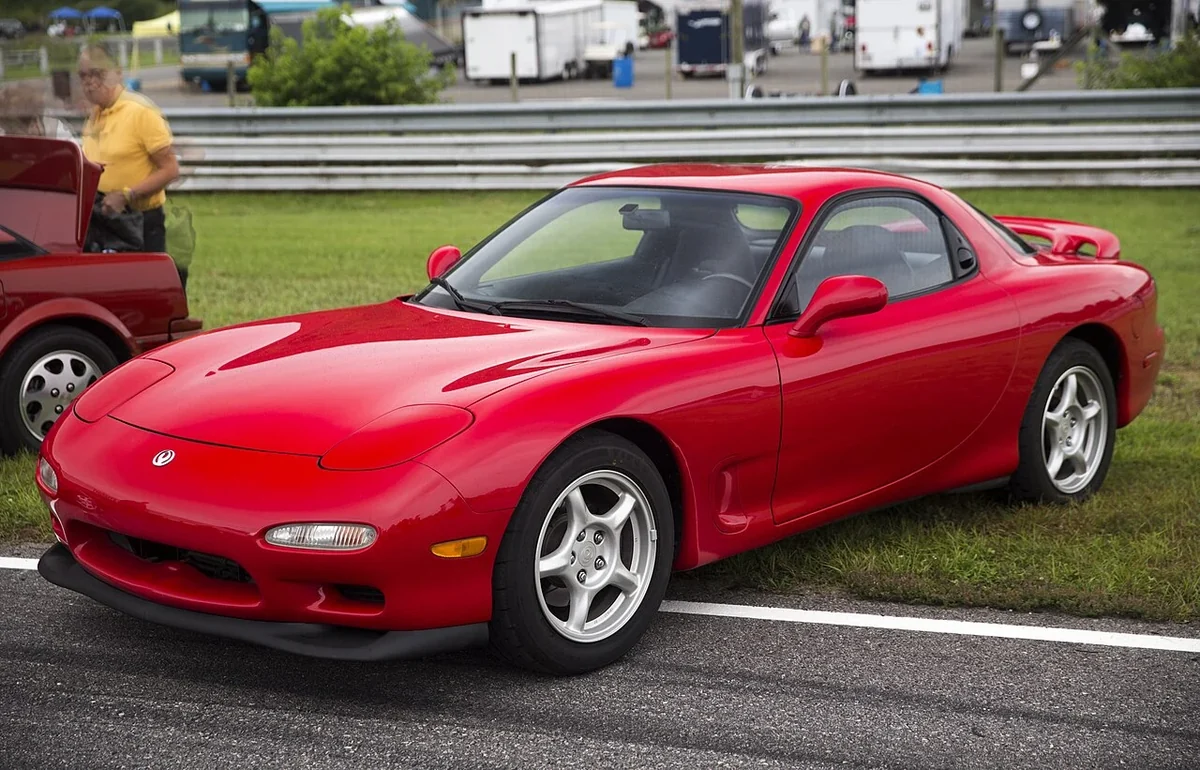
The FD does not need a large grille to announce itself. Its closed headlamps, smooth nose and tightly rounded cabin create a low, continuous shape. The early car in the photograph is especially useful because its surfaces remain legible without an oversized wing or aggressive replacement bumper.
For Cariary, the attraction is the relationship between the pieces. The cabin looks fitted into the body rather than placed above it. The front and rear arches give the small shape enough visual substance without making it look like a large grand tourer.
That matters to a used buyer. A body kit may express someone’s taste perfectly, but it can also obscure the original reason you liked the car. Decide whether you are looking for Mazda’s FD, a period tuning interpretation, or an extensively rebuilt project before judging an advertisement.
Designed Around a Rotary, Not Merely Fitted With One
Mazda’s FD development history records the decision to pursue a front-mid-engine, rear-drive layout, with low mass concentration and 50:50 axle distribution among the development priorities. This is the connection that makes the rotary more than a talking point.
An engine occupies space and places mass somewhere in a car. Packaging decisions influence where the body, cockpit and other systems can go. The FD’s small rotary therefore belongs in a discussion of the whole vehicle, not only in a paragraph explaining how its combustion differs from a piston engine.
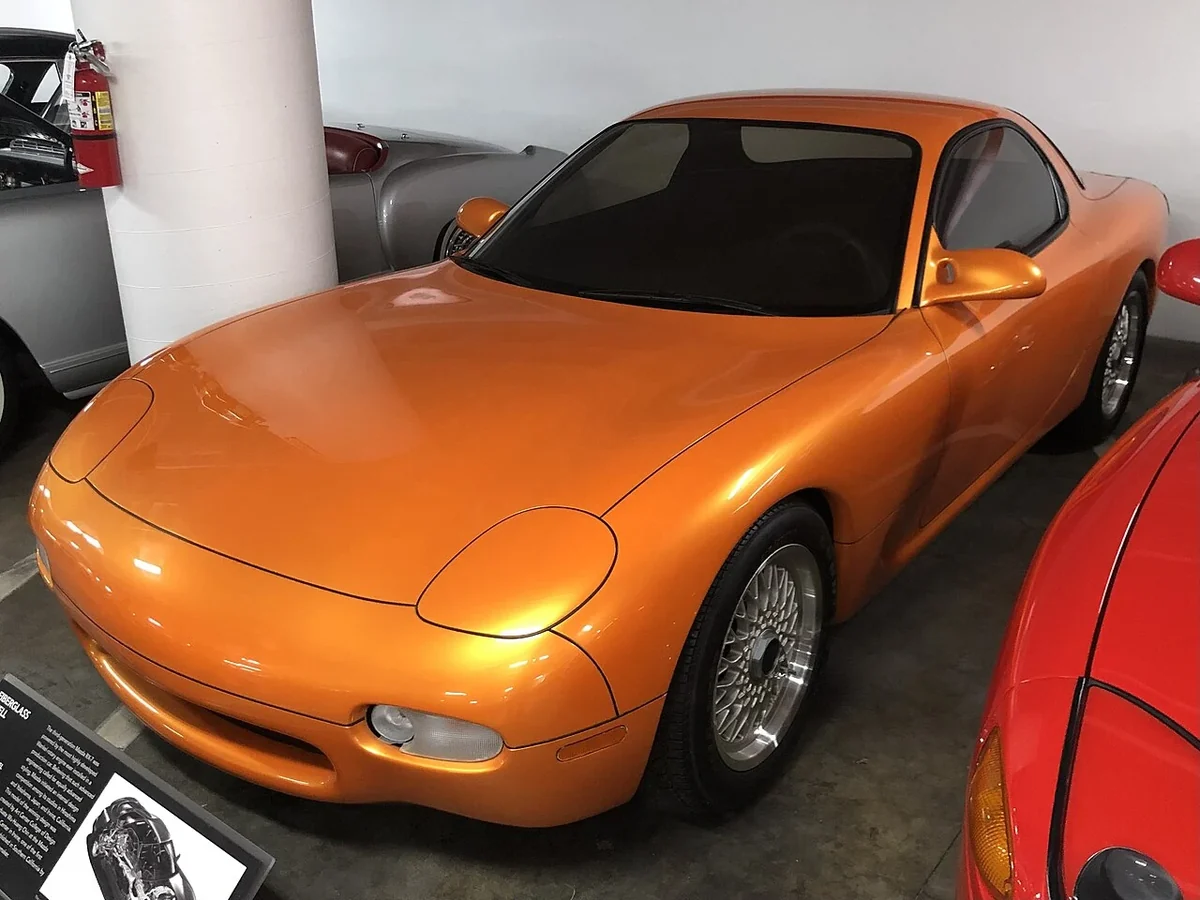
The photographed design model makes another distinction clear. A beautiful shell is evidence of a design proposal, not evidence of production performance. The satisfying part of the FD story is how close the finished car’s visual promise remains to its engineering purpose. We can admire that relationship without pretending every styling curve is a measured aerodynamic benefit.
255 PS Is a Starting Point, Not the Whole FD Story
GAZOO’s Japanese launch Type R catalogue identifies the early Japanese Type R used in our table. Its five-speed manual and rear-drive layout give the specification a particular context. It should not be silently combined with a later model’s power figure or an export car’s acceleration result.
The range evolved. Mazda’s December 1998 announcement raised the Japanese Type R and Type RS to 280 PS for the following January and introduced a revised front bumper and larger functional rear spoiler. That does not make every FD a 280 PS car.
For the buyer, model identification is part of understanding value. A desirable badge, a later wing and an engine rebuild do not independently prove a particular factory specification. Match the identity, equipment and documented work. The best car for you may be an earlier, well-kept example rather than the most impressive collection of names in an advertisement.
Mazda RX-7 Balance: More Than a 50:50 Number
Car Structure Basics explains why static axle distribution cannot certify perfect handling. Where mass sits within the wheelbase, how the suspension is tuned and what the tires are doing all matter. The FD’s balance should be understood as a design intention supported by a complete chassis, not a magic ratio.
In evo’s retrospective road test, the writer describes measured steering responses and an enjoyable balance, while also recalling how suddenly an earlier car moved beyond its limit on a damp road. The revisited example was a used UK car with an aftermarket exhaust, not our Japanese catalogue reference.
Those observations support a more interesting reading than simply calling the RX-7 easy or difficult. A car can communicate well through most of a corner and still demand restraint near its limit. The appeal is involvement; it is not a promise that attractive proportions and a famous chassis will correct a poor judgment.
A Cockpit That Keeps the Engine in the Conversation
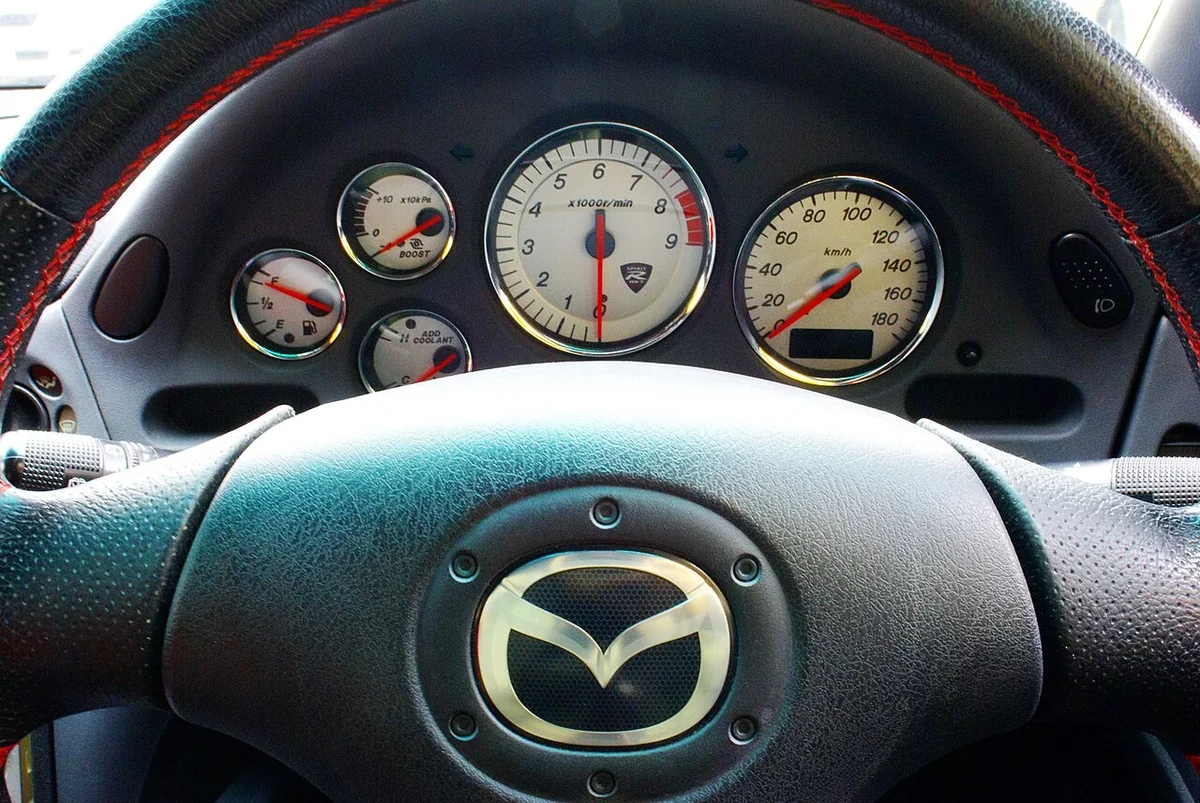
The later Spirit R instrument panel below places the tachometer at the center of the driver’s attention. It illustrates the FD family’s driver-focused presentation, while its details must not be mistaken for those of the 1991 Type R.
There is a useful lesson in that simple arrangement. A sports car need not add a large screen to tell you what matters. A prominent engine-speed display makes the mechanical process visible and gives the cabin a clear hierarchy.
However, nostalgia does not establish condition or comfort. Sit in the exact car, check visibility around its bodywork and operate its ventilation and controls. Interior age is part of living with a 1990s design. Decide what you can enjoy as character and what you would actually want repaired before paying for it.
The Badge Also Tells a Market Story
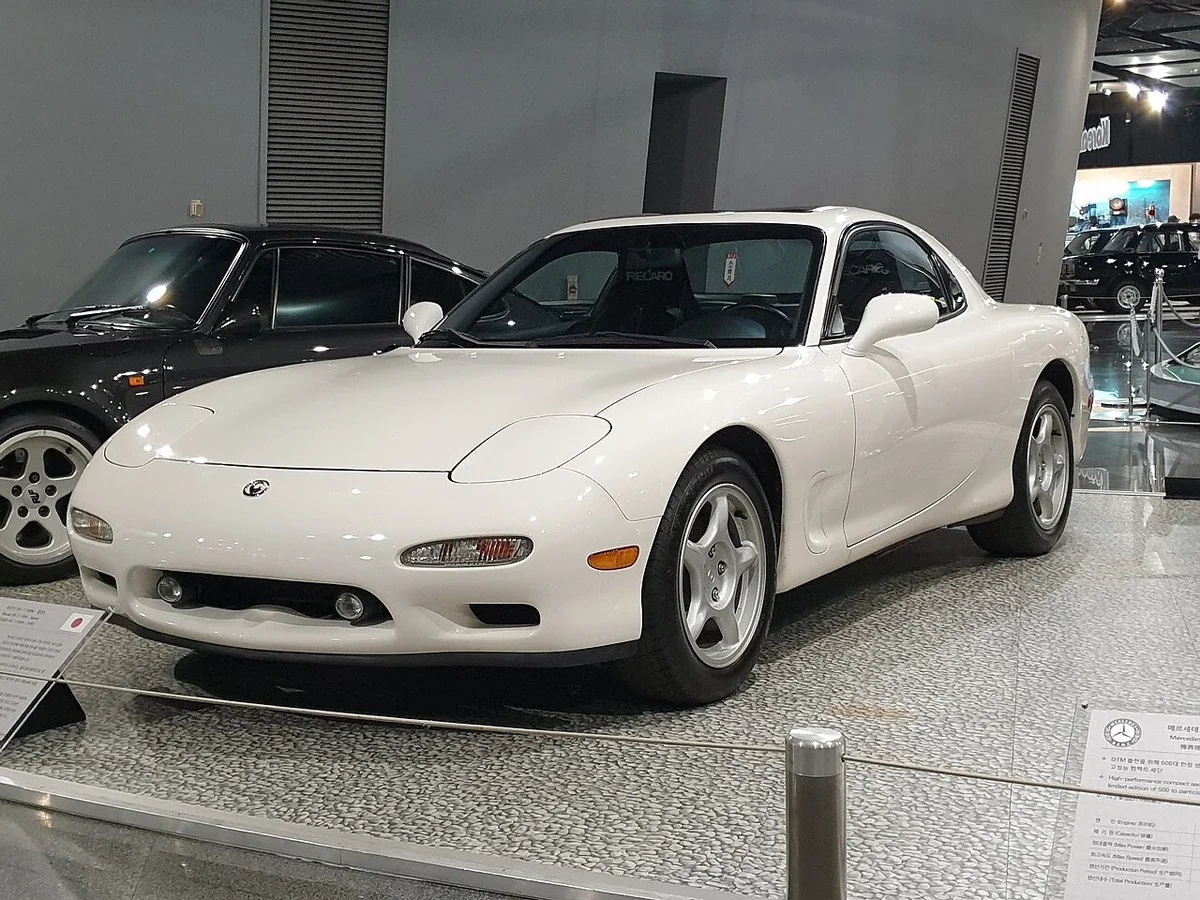
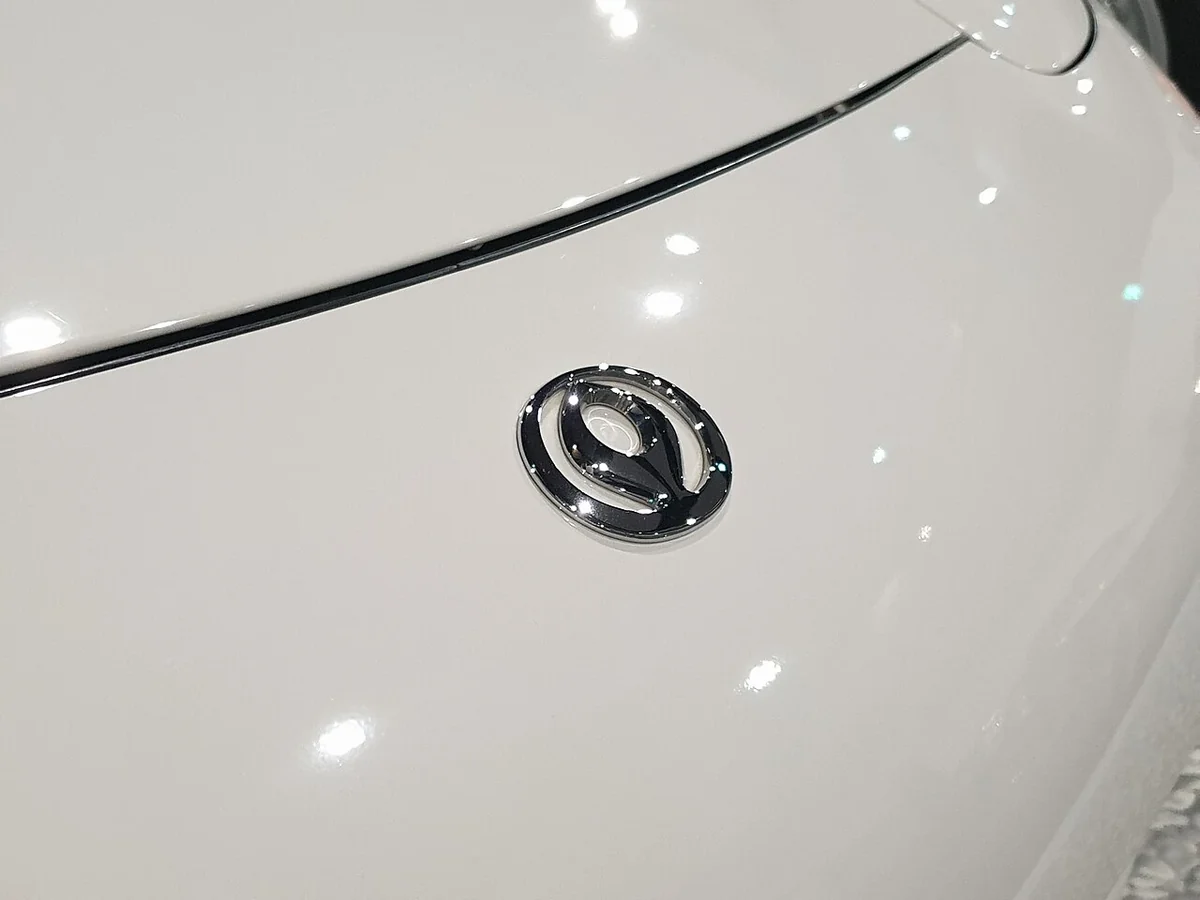
Mazda’s centenary account of the third-generation RX-7 places the 1991 launch within its rotary sports-car history and describes the weight-saving program called Zero Tactics. The Japanese ɛ̃fini identity visible in period cars is another reminder that export names do not tell the whole story.
This is why a global RX-7 review needs to resist making one universal specification. Seating, equipment, power ratings and market names can change while the recognizable FD silhouette remains. A source that is accurate about one car can still be the wrong source for another.
Cariary’s interpretation is that the FD rewards curiosity. The badge is an invitation to learn which version you are looking at, not a reason to declare it rarer or more valuable without evidence. That curiosity is useful ownership behavior as well as part of the pleasure of being a car enthusiast.
Used Ownership: Buy the Story You Can Verify
With an old performance car, maintenance history is part of the product. An engine rebuilt by a documented specialist is a different proposition from an unexplained claim that the engine is fresh. A modification with supporting work and records is different from an isolated power claim.
Cariary would commission a rotary-specialist inspection, including an appropriate compression assessment and a review of cooling, boost control and the history of any modifications. Ask the specialist what the findings mean for that particular car. This is buying advice, not a diagnosis or a universal prediction of engine life.
Do not spend the entire budget on the purchase. Price the work the inspection identifies, establish who will maintain the car and check parts availability in your market. A cheaper example that prevents you from using the qualities you bought it for may be poor value. No single international asking-price range would answer that individual decision honestly.
Cariary Perspective: Preserve the Whole Mazda RX-7
The Alpine A110 offers an interesting modern contrast: a different engine and structure, but another argument for enjoying a compact sports car rather than simply buying more output. This is a comparison of priorities, not a claim that the two cars have identical performance or ownership costs.
The FD earns four stars because the original idea remains persuasive: proportion, packaging and mechanical character reinforce each other. It loses the fifth because finding and sustaining that original experience now depends heavily on the example and the support around it.
The most revealing question is therefore not how much power a rotary can produce. It is how much of the RX-7’s complete character you want to keep. If the answer includes its scale, balance and uncluttered shape, a careful, modestly specified car can make more sense than a spectacular project. The Mazda RX-7 is worth understanding before it is worth modifying.
Who Should Buy It?
Recommended For
An enthusiast who values the FD as a complete design and can fund a properly documented car, a rotary-specialist inspection and ongoing care.
Not Recommended For
A buyer seeking modern convenience, predictable low-effort ownership or an inexpensive route to a large modified power figure.
One-Line Verdict: The FD’s rotary matters most because of the sports car Mazda built around it.
Frequently Asked Questions
Which Mazda RX-7 does this review cover?
The FD generation, using the December 1991 Japanese Type R as the numerical reference. Later and export examples are identified separately.
Did every FD make 280 PS?
No. The early Japanese reference here makes 255 PS. Mazda later announced 280 PS for specified Type R and Type RS versions; other trims and markets differ.
Is the RX-7 a two-seater?
It depends on specification. The Japanese launch Type R catalogue lists four occupants. Do not assume every export car or later variant has the same seating.
Does a rotary guarantee better handling?
No. Its size and placement can support a useful layout, but the finished car depends on structure, suspension, tires and condition.
Is a rebuilt or modified RX-7 automatically a bad buy?
No. The quality and documentation of the work matter. Have a suitable specialist assess the actual car rather than judging it only by the presence or absence of modifications.
Further Reading and Data Reference
Data reference date: September 27, 2026. Official specifications and attributed test observations are linked where discussed. Cariary Point is an editorial buyer-fit assessment, not an owner road-test score or reliability rating.
Explore more Cariary car reviews and buyer perspectives.

