Premium Fuel sounds like an upgrade you can buy without opening the bonnet. It costs more, performance cars often ask for it, and the number on the pump is higher. Surely that means a little more horsepower in every tank?
That was the part I wanted to understand. Some drivers really do get better performance from higher-octane gasoline. Others mainly get a more expensive receipt. Both experiences can be genuine, because the missing detail is the engine using the fuel.
The short answer is yes, but only when the engine is designed or calibrated to benefit from the extra knock resistance. A higher octane number is not a measurement of extra energy, and it is not a promise of extra power in every car.
Quick Summary
- Octane describes resistance to knock, not how much energy a liter or gallon contains.
- Higher octane can let a suitable engine deliver more of its intended performance; it cannot rewrite an ordinary engine’s limits.
- Required, recommended and permitted minimum are different instructions. Read the complete specification, not just the word premium.
- Fuel economy, detergency and horsepower are separate questions. Improvement in one does not establish improvement in the others.
- The right fuel is the compatible grade specified for your engine, market and, if modified, its actual calibration.
1. Why Premium Fuel Sounds Like More Power
The misunderstanding is easy to sympathize with. We see expensive sports cars using expensive gasoline, then reverse the relationship: perhaps expensive gasoline can make any car behave more like a sports car.
But the fuel is often there because the engine needs a particular combustion property. The engine’s demands explain the fuel choice, rather than the price of the fuel explaining the engine’s output.
Think of two people choosing equipment for different jobs. A specification that matters enormously to one person may offer the other nothing useful. That does not make the specification imaginary. It makes the application important.
Octane is one such specification. It is not a general quality score covering energy content, cleanliness, storage condition and suitability for every engine. Those are different properties, even when a fuel supplier markets them together.
That distinction also connects this article to Car Myth 1: Is AWD Really Safer in the Rain?. In that article, we separated acceleration traction from braking grip. Here, we need to separate knock resistance from energy and cleaning performance.
2. What Octane and Engine Knock Actually Mean
A spark should start an orderly burn
In a gasoline engine, the piston compresses the air-fuel charge. Near the end of compression, the spark plug initiates a flame that travels through the mixture. Burning gas builds pressure, and that pressure does useful work as the piston descends.
Combustion takes time. That is why the spark commonly occurs before the piston reaches its highest position, rather than waiting until the piston is already well down the cylinder.
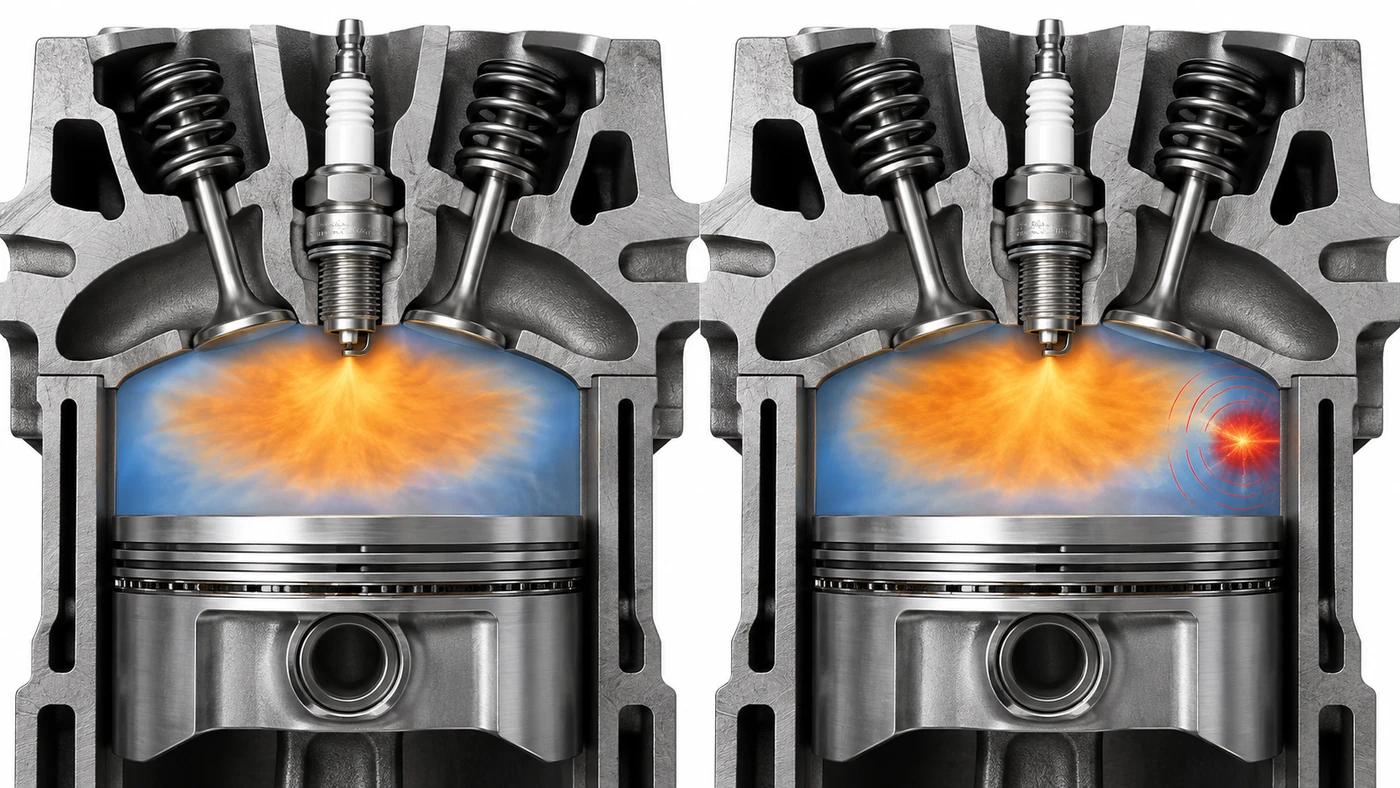
Now imagine some of the unburned mixture ahead of the flame becoming hot and compressed enough to ignite by itself. That remaining mixture is called the end gas. Its sudden combustion can excite sharp pressure oscillations inside the cylinder: the phenomenon we call knock.
Knock is not the same as pre-ignition
This is an important correction to a common explanation. Normal spark knock generally occurs after the spark has started combustion, when the remaining mixture self-ignites before the normal flame reaches it.
Pre-ignition means ignition begins before the intended spark event, potentially from a hot surface or another ignition source. The two abnormal events can interact, but they are not interchangeable names. NGK’s explanation of abnormal combustion makes this distinction useful to keep in mind.
Heavy or sustained knock can damage an engine. It may sound like metallic pinging, but drivers cannot reliably diagnose combustion by ear. The absence of an obvious noise is not proof that an unsuitable fuel is harmless.
What a higher octane rating buys
A higher octane rating indicates greater resistance to knock under standardized testing. It does not tell us that the fuel is harder for a spark plug to ignite normally, burns at one universally slower speed, or contains more energy per gallon.
Gasoline is a blend. Its energy content also depends on its composition, including ethanol content. The number on the pump is not an energy-density label. The US Energy Information Administration’s octane explainer provides the background to these rating methods.
RON and AKI: compare the method, not just the number
Global readers face an extra trap. Many countries display RON, or Research Octane Number. US and Canadian pumps commonly use AKI, the Anti-Knock Index, also written (R+M)/2. This averages RON with MON, the Motor Octane Number from a different test procedure.
For a hypothetical gasoline rated 98 RON and 88 MON, the arithmetic is (98 + 88) / 2 = 93 AKI. It is still one fuel, described using different methods.
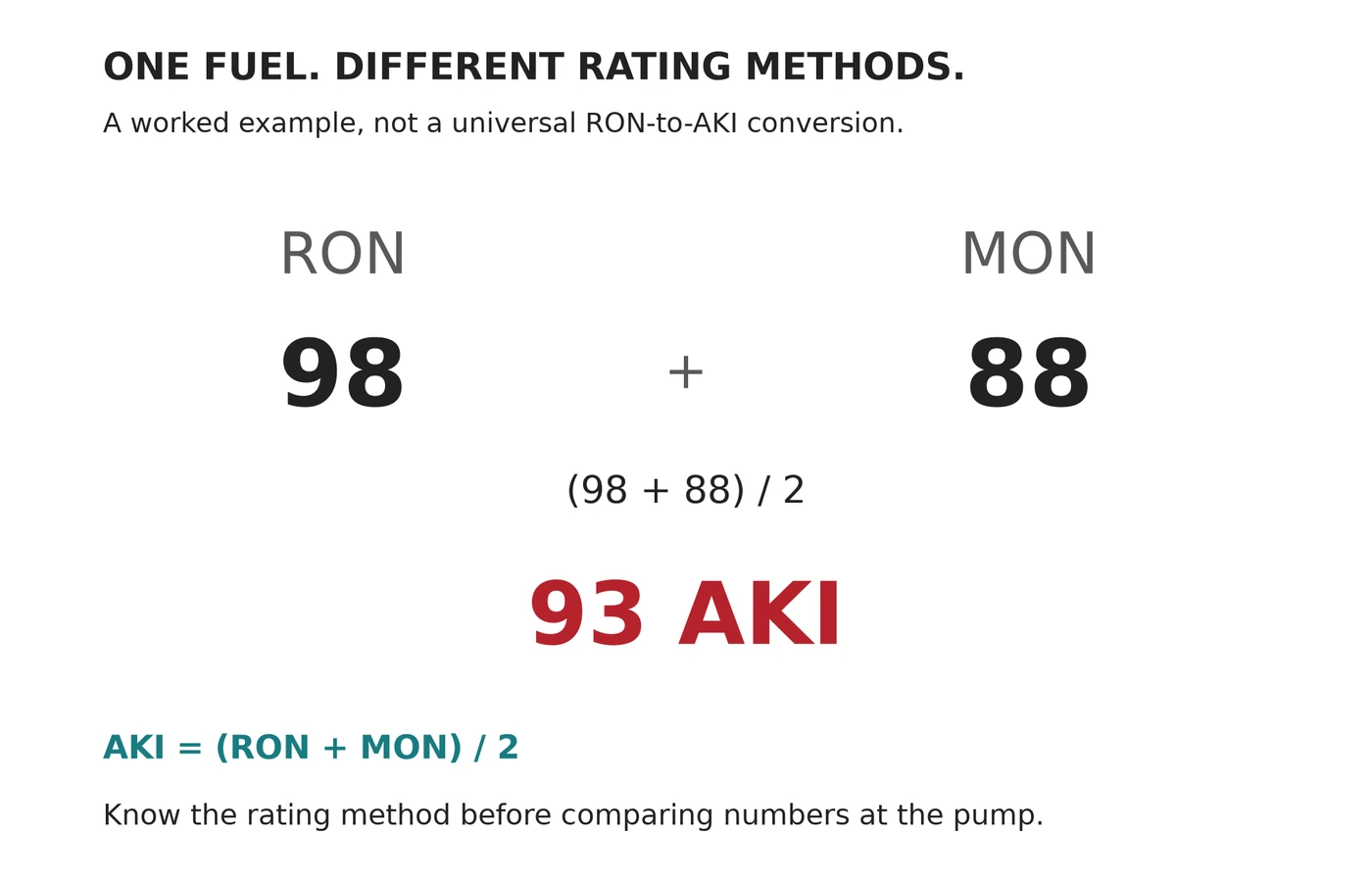
That example is not a universal conversion table. A fuel’s exact RON-to-AKI relationship depends on its MON too. Do not compare 91 on a US pump with 91 on a RON pump as though the specifications were identical, and do not assume the name premium means the same minimum rating everywhere.
3. Required, Recommended or Regular: Read the Whole Instruction
This is the most useful distinction at the pump. Look for the manufacturer-specified minimum number and rating method, then read any separate recommendation for maximum performance.
| Manual wording | What it means | What to do |
|---|---|---|
| Premium required | The specified minimum octane is an operating requirement, not an optional performance upgrade. | Use fuel meeting that minimum and all other compatibility requirements. |
| Premium recommended; lower grade explicitly permitted | The engine can operate on the stated lower grade, but higher octane may improve performance in relevant conditions. | Stay above the permitted minimum; follow the recommendation when seeking the specified performance. |
| Regular specified, with no claimed higher-octane benefit | The engine is intended to work on the specified regular grade. | Do not expect a meaningful power increase simply from buying a higher number. |
These are reading categories, not a universal naming law. Some cars specify midgrade. Others recommend one number but permit a different minimum only under stated conditions. A manual can be more precise than a marketing description or fuel-door shorthand.
The US Department of Energy’s fuel-selection guidance also distinguishes the grade an engine needs from an optional higher-octane choice. In a premium-required car, meeting the specification comes before a cost-saving calculation.
How the ECU responds
The ECU, the engine’s control computer, runs the engine according to programmed operating maps and feedback. Many engines use knock sensors attached to the engine structure. They detect characteristic vibrations, rather than directly measuring the octane in the tank.
If knock is detected, the controller can delay the spark relative to its previous setting. This is ignition timing retard. It reduces the tendency toward knock, but can also reduce torque or efficiency. Bosch explains the sensor and timing-control relationship in its technical description.
Depending on the engine, protection can also involve limiting boost, reducing load or changing fueling. The details vary; not every engine uses every response. Changes to combustion timing can also affect exhaust temperature, so a protective strategy is not simply one universally harmless adjustment.
The crucial boundary is the calibration. An ECU may learn and adapt within the limits its engineers provided, but higher octane does not automatically install a new performance map. Nor are knock sensors permission to ignore a minimum fuel requirement.
4. When Premium Fuel Really Can Change Performance
Why cylinder conditions matter
A turbocharger supplies additional air under pressure. More air allows more fuel to be burned, but the resulting operating conditions can also make knock control more demanding. Our Engine Power Basics guide connects turbocharging, intercooling, torque and horsepower before this next step.
Higher compression, greater boost, elevated intake temperatures and earlier spark timing can all influence knock tendency. Higher-octane gasoline can give an appropriately calibrated engine more room to operate as intended under those conditions.
That does not mean all turbo engines require premium. Some are explicitly designed to accept regular gasoline. Equally, a naturally aspirated engine can require high octane: a turbocharger is not a prerequisite for high cylinder pressures or demanding combustion conditions.
Compression ratio alone is not a fuel-selection calculator either. Chamber design, cooling, direct injection and valve timing influence the result. Mazda’s SKYACTIV explanation describes how these choices can make a relatively high ratio compatible with regular gasoline.
Atkinson- and Miller-type strategies also alter how the cylinder fills and how compression relates to expansion. For example, delaying intake-valve closure can reduce effective compression without shortening the expansion stroke. Toyota’s engineering review explains this approach. A geometric ratio does not describe the whole combustion process.
A real example: 2025 US Mazda3 Turbo
Mazda publishes 227 hp on 87-octane gasoline and 250 hp on 93-octane gasoline for the 2025 US Mazda3 Turbo. Its corresponding torque ratings are 310 and 320 lb-ft. These are US pump ratings, expressed here as AKI. See Mazda’s original model-year release.
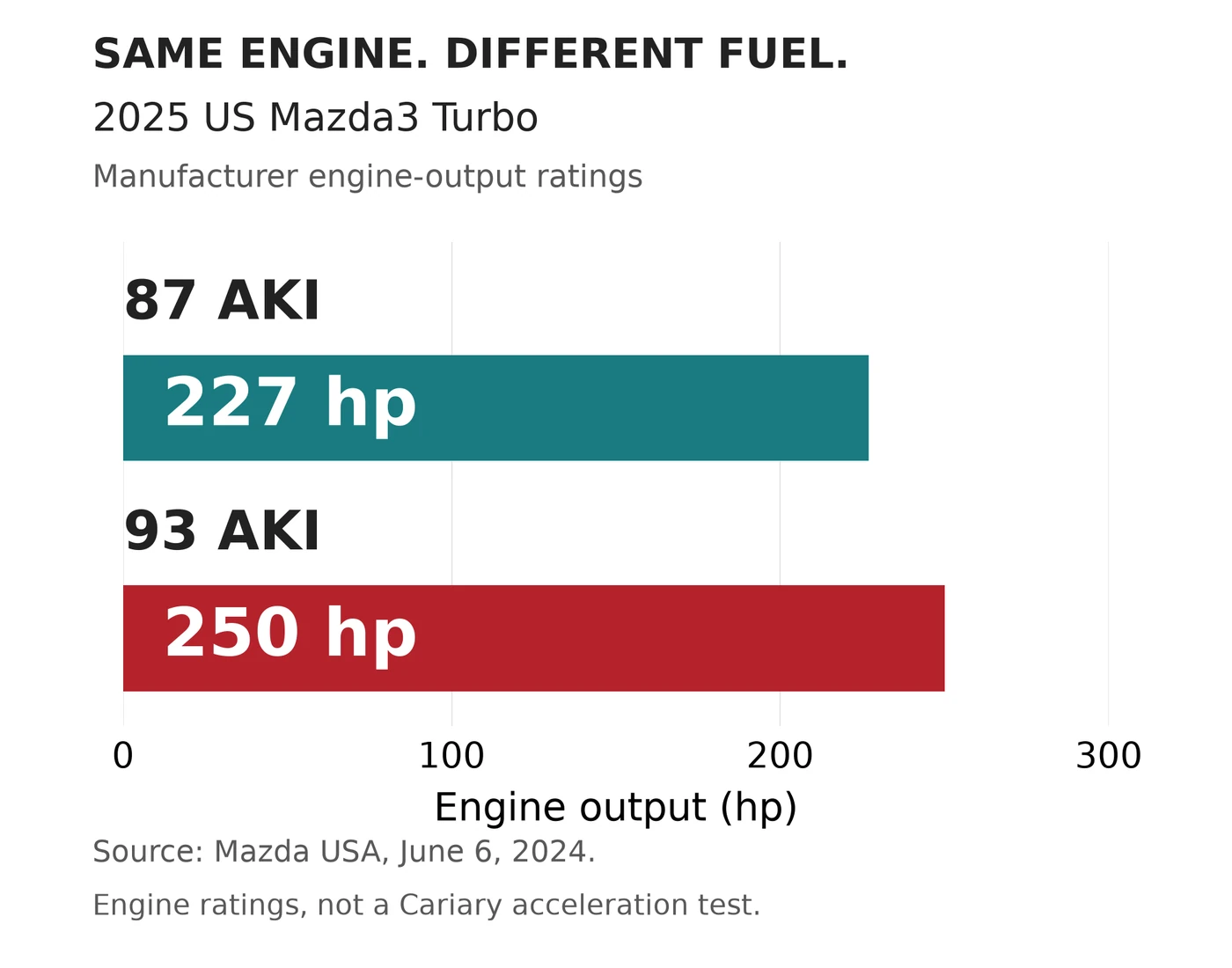
This is a concrete case where the higher-octane grade supports a different rated output. It is not a claim that any 227-hp engine becomes a 250-hp engine after a refill. Nor do those engine ratings tell us the exact change in acceleration time, wheel horsepower or the feeling at light throttle.
It would also be too pedantic to say the fuel cannot increase power at all. If the same suitable engine produces more output on the higher grade, the difference is real. The explanation is that the fuel enables operating conditions the engine can use, not that the octane number itself is stored horsepower.
Why heat and load can make the difference clearer
The US 2025 Ford Mustang manual’s fuel-quality section specifies a minimum 87 pump octane and recommends 91 or higher for best performance. It notes that benefits can be more noticeable in hot weather and demanding conditions.
That helps explain apparently conflicting owner reports. Gentle driving in cool weather may reveal little difference, while high load can make an octane-sensitive engine’s limits more relevant. Towing, long climbs and track use can raise demands, where permitted for the particular vehicle; none overrides the manual’s limits.
Three everyday interpretations
- A regular-specified commuter: if the engine already reaches its intended operating targets on regular, extra octane may change little that the driver can use.
- A premium-recommended performance car: the specified higher grade may allow better output, especially when the engine is working hard. The approved lower grade remains subject to the manual’s conditions.
- A modified car running a 98 RON calibration: the tune’s fuel requirement matters. Its stock manual no longer describes every changed operating limit, and a lower-octane refill is not a safe experiment.
The modified example is illustrative, not a tuning recommendation. Confirm the complete fuel specification with the calibration provider, including ethanol assumptions. Do not reset adaptations or disable protections to try to make an engine accept the wrong fuel.
5. Better Fuel Economy Does Not Always Mean Lower Cost
An engine that can use the octane advantage may achieve better efficiency in some conditions. But there is no universal MPG improvement attached to the premium label.
AAA’s 2016 testing of regular-specified vehicles found no significant benefit in the performance, economy or emissions measurements it examined. Its separate 2017 research on premium-recommended vehicles found modest average benefits under the tested conditions, with variation between vehicles.
Those are historical tests of selected vehicles, not a promise about every current engine. They are useful because they separate two different questions instead of averaging every car into one rule.
Now consider a deliberately fictional cost example. Regular costs $3.50 per US gallon, premium $4.20, and the car achieves 30 mpg on regular. Suppose premium improves that by 3%, to 30.9 mpg.
| Fictional calculation | Regular | Premium |
|---|---|---|
| Price per US gallon | $3.50 | $4.20 |
| Fuel economy | 30 mpg | 30.9 mpg |
| Fuel cost per mile | 11.67 cents | 13.59 cents |
The calculation is price per gallon divided by miles per gallon. Here, the pump price rises 20%, so MPG would need to rise 20%, to 36 mpg, just to match the original fuel cost per mile. The assumed 3% gain does not do that.
These are teaching numbers, not current prices or a measured result. A premium-required engine must still receive the correct fuel. For an engine that genuinely permits both grades, the calculation simply shows why greater range per tank and lower cost per mile are different outcomes.
6. Does Premium Mean Cleaner Fuel or a Cleaner Engine?
Not automatically. Octane and detergent performance are different specifications. Detergent additives help control deposits; octane describes knock resistance. The octane rating itself is not an engine-cleaning chemical.
Some suppliers put an enhanced additive package into a premium product. That is a claim about that product’s formulation, not proof that all high-octane gasoline cleans better than every regular grade.
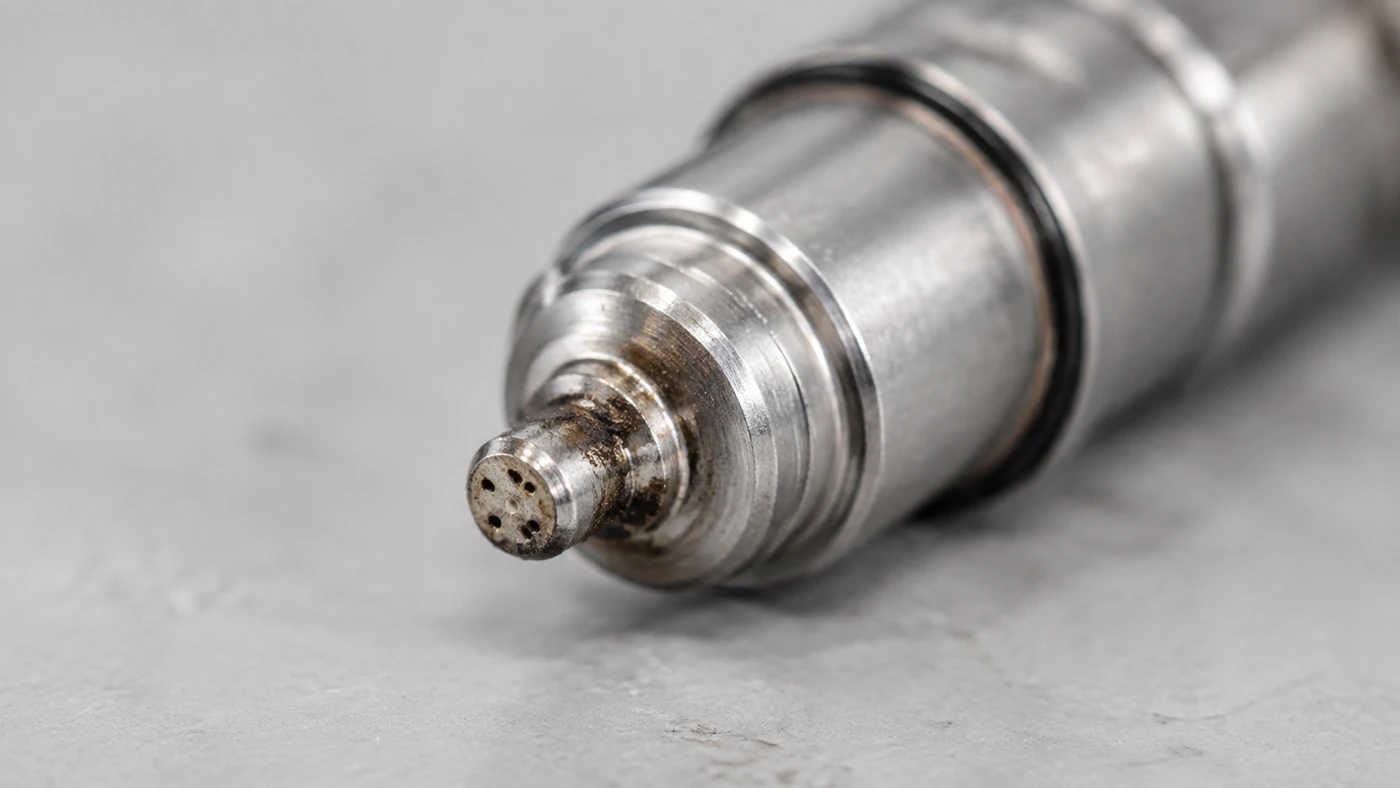
For example, the TOP TIER gasoline program’s retailer requirements apply across the participating retailer’s octane grades. That illustrates why a deposit-control standard and a premium-grade label should not be treated as synonyms. Availability and product standards vary by market.
Nor is a refill a guaranteed cure for existing deposits, rough running or a warning light. Deposit location, injector design, maintenance and the underlying fault all matter. A fuel additive cannot clean a surface merely because it exists somewhere inside the engine; the chemistry has to reach the relevant area and be suitable for the job.
Choose compatible fuel from a reliable supplier and follow the vehicle’s maintenance guidance. Treat persistent symptoms as an inspection question rather than repeatedly buying a higher number and hoping it fixes everything.
7. How to Choose the Correct Fuel Without Guesswork
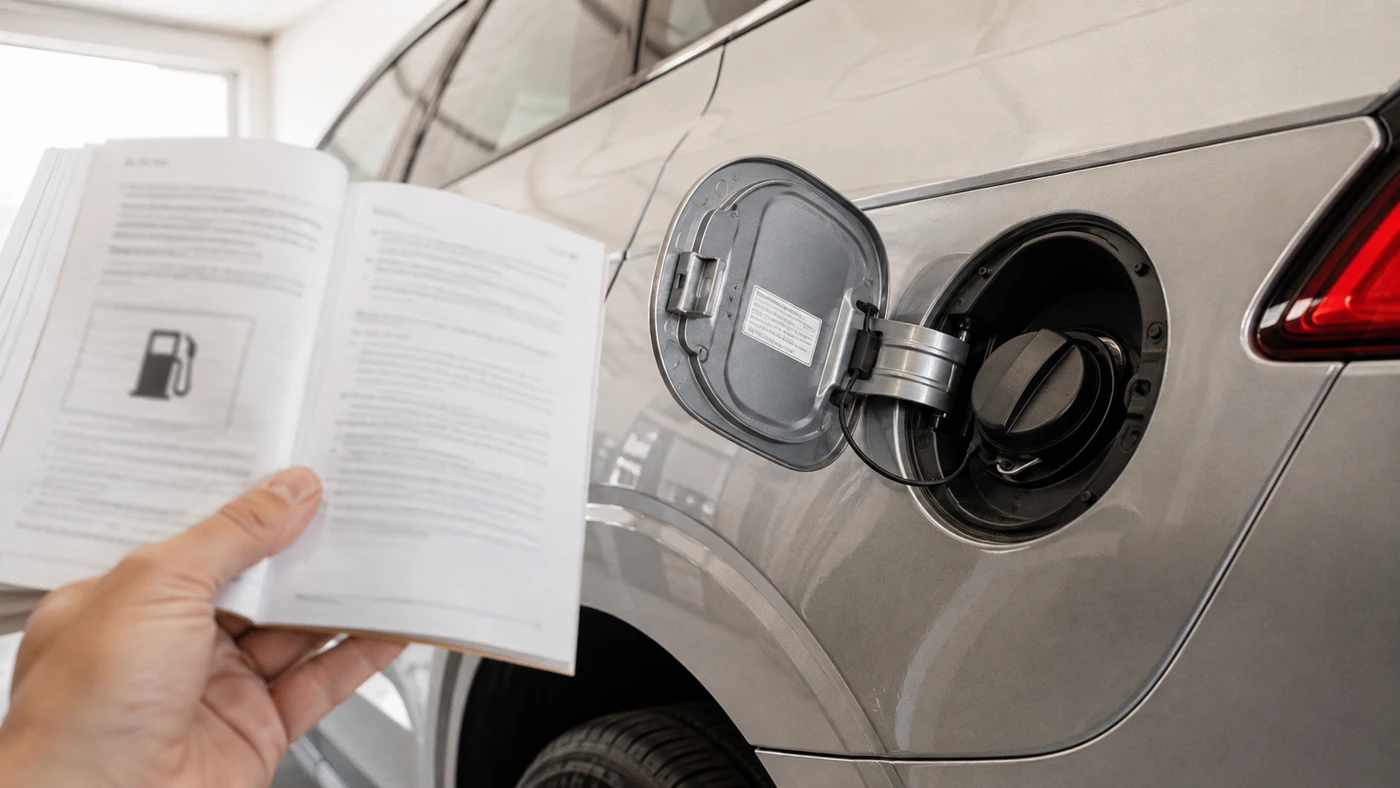
Start with the exact engine, model year and market. Read the manual and fuel-door label for the minimum octane, whether it is RON or AKI, the recommended grade, permitted ethanol content and any restrictions. A product name or nozzle color cannot replace those details.
Mixing regular and premium
Compatible unleaded gasoline grades normally mix in the tank. AAA’s description of gasoline production and grades notes that some pumps make midgrade by blending regular and premium.
However, adding some premium does not automatically make the entire tank meet a higher minimum. A halfway estimate is only a rough guide; octane blending behavior and the existing mixture matter. Do not rely on improvised tank arithmetic to meet a required rating, and do not mix gasoline with diesel, leaded fuel or an unapproved ethanol blend.
Accidentally using lower octane
First distinguish an approved lower grade from fuel below the specified minimum. A premium-recommended engine that explicitly allows regular is not the same situation as a premium-required engine receiving an unsuitable grade.
If you have filled below the minimum, check the manufacturer’s misfuel guidance and contact the dealer or roadside service for advice specific to the amount and engine. Do not assume you should drive a full tank out or that a small premium top-up corrects it.
If the manufacturer permits continued operation in that situation, avoid hard acceleration and high load until its corrective procedure is completed. If there is heavy knocking, rough running or a warning, stop safely and seek assistance. Knock control is a protective measure, not a guarantee against damage.
Diesel in a gasoline car, gasoline in a diesel, or another incompatible fuel is a different problem. Do not start or continue running the engine while trying to dilute the mistake; obtain professional misfuel assistance.
Tuned cars, race fuel and very high numbers
A tune may need a specific fuel to support its boost and timing demands. Follow that specification rather than assuming the factory minimum still applies. Extra octane beyond what a calibration can use does not create unlimited output.
Race fuel is not automatically a road-car upgrade. Formulations can have different oxygen or ethanol content, and some contain lead or other additives unsuitable for a street car’s sensors and catalyst. A big octane number does not establish emissions-system compatibility or road legality.
The Mustang manual, for example, separately restricts ethanol content, leaded gasoline and certain metallic additives. This is why octane is only one line of a complete fuel specification.
What if the car feels or sounds better?
That feeling may be real, but it is not a controlled measurement. Temperature, traffic, air-conditioning load, gear selection, the remaining fuel blend and the driver’s expectations can all complicate a comparison. A single refill does not isolate octane.
Premium does not inherently give an engine a better exhaust note either. Combustion control may change on some engines, but sound alone cannot establish a power gain. Manufacturer data or properly controlled testing is more informative than an enthusiastic drive home from the pump.
Common Misconceptions
| The shortcut | The more useful explanation |
|---|---|
| Higher octane means more energy. | The rating describes knock resistance, not energy content. |
| Every turbo needs premium. | Fuel requirements depend on the exact engine and calibration. |
| Naturally aspirated engines never need it. | High-performance naturally aspirated engines can also demand high octane. |
| Premium always cleans better. | Check the additive package and fuel standard separately. |
| Knock sensors make any grade safe. | Adaptation has limits and does not cancel the minimum specification. |
| A higher number always produces more power. | The engine must have a useful operating strategy for that fuel. |
| Using premium is always wasted money. | It can be necessary or genuinely beneficial in the right application. |
Cariary Thoughts
What changed my understanding was realizing that premium can be both unnecessary in one car and genuinely important in another. The word on the pump stays the same, but the job it needs to do changes.
I also think the phrase “premium does not add power” needs care. It is useful against the idea of bottled horsepower, but too absolute if a manufacturer publishes two output ratings for the same engine. The performance difference can be real; we simply need to explain why it exists.
For me, the better question is no longer, “Which gasoline is the best?” It is, “What does this engine need, and what can it actually use?” That makes the manual feel less like small print and more like an explanation of the engineering.
There is a familiar pattern here: a useful technology becomes a myth when its benefit gets generalized to every situation. Our complete Car Basics guide is built around connecting those specifications to the systems behind them. Fuel belongs in that same picture.
One-line Summary
Use the fuel your engine was designed for, not simply the fuel with the highest number on the pump.
FAQ
Does premium fuel increase horsepower?
It can in engines designed or calibrated to exploit higher knock resistance. It is not an automatic upgrade for an engine that already achieves its intended performance on regular gasoline. Check model-specific manufacturer data rather than assuming a universal gain.
What does octane actually measure?
Resistance to knock under standardized test conditions. It does not directly measure energy content, detergent concentration or how clean an engine will become. Also check whether the number is RON or AKI before comparing grades.
Is premium gasoline cleaner than regular?
Some products have different additive packages, but higher octane itself does not establish stronger cleaning. Deposit-control standards and compatible detergents should be evaluated separately from the octane label.
Can premium improve fuel economy?
Sometimes, in a suitable engine and operating conditions. A small MPG improvement may still cost more per mile because the fuel price increases. Meeting a required minimum remains essential regardless of that calculation.
Can I put regular gasoline in a premium car?
Only treat regular as an ordinary option when the exact engine’s instructions explicitly permit that grade. If it falls below the required minimum, follow the manufacturer’s corrective guidance rather than relying on knock sensors or a guessed blend.
Do all turbo engines need premium, and do tuned cars change the answer?
Not all turbo engines require it. The factory calibration determines the stock requirement. A modified calibration can impose a different specification, so confirm its octane method, minimum rating and fuel-composition requirements with the provider.
Is 100 RON always better than 98 RON?
It offers a higher rating by that test method, but a car may have no useful additional operating range to exploit it. Compatibility still matters, and those RON figures should not be confused with US AKI pump numbers.
Can I mix regular and premium gasoline?
Compatible unleaded grades generally mix, but the resulting tank must still meet the engine’s fuel requirements. Do not assume that any amount of premium makes an otherwise unsuitable tank safe, or that an arithmetic estimate certifies its octane.
Related Thoughts
- Previous in Car Myths: Is AWD Really Safer in the Rain?
- Understand the engine first: Engine Power Basics: 5 Essential Ideas to Enjoy Cars
- Explore the connected library: Car Basics for Enthusiasts: The Complete Guide
References
- US EIA: Octane in depth
- US Department of Energy: Selecting the right octane fuel
- NGK: Spark plug basics and abnormal combustion
- Bosch: Knock sensor operating principle
- Mazda USA: 2025 Mazda3 pricing and packaging, June 6, 2024
- Ford: 2025 US Mustang owner’s manual, selecting the correct fuel
- AAA: Regular-specified vehicle fuel testing, September 2016
- AAA: Premium-recommended vehicle testing, December 2017
- TOP TIER: Gasoline program retailer requirements
- AAA: Gasoline production and grades
- Mazda USA: SKYACTIV technology and knock control
- Toyota Technical Review: Fuel-efficiency improvement and effective compression
Data Reference Date: September 7, 2026. Fuel specifications are engine- and market-specific; model-year examples and historical tests are identified above. Generic generated images illustrate principles, while the Mazda output chart uses the cited manufacturer’s ratings.

